How to Train for Chaos without Making Training Chaotic

The current rage in conditioning training, especially when talking about combat conditioning, is to completely change up the workout for each and every session. This has the advantage of keeping the training fresh and throwing the body into chaos each time so it never knows what hit it.

The hardcore advocates of this type of conditioning stress that this environment will create a very broad and general fitness that prepares the trainee for almost every physical contingency, both known and unknowable.

This enables one to prepare for the chaos and uncertainty of combat by training in an uncertain and chaotic environment.
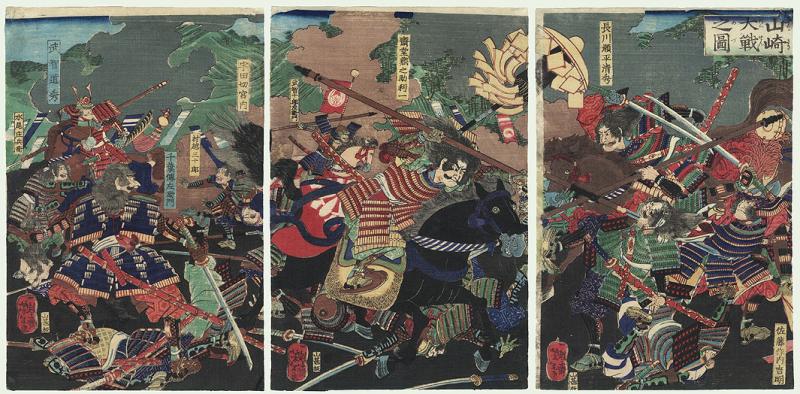
samurai

Seems to make a lot of sense on the surface, right?

However, one of the glaring problems with this type of training is that random training yields random results. It’s difficult to measure progress when the parameters are constantly shifting.

In order for the body to produce an adaptation for improved performance in life, sport, or martial art, we must apply specific stimulus as per the SAID Principle (Specific Adaptation to Imposed Demand). This basically means that the body adapts with a specific type of fitness to any demand which is imposed on it. When the same exercise is performed for too long, the body adapts to the stresses of each set and the adaptations or returns get smaller and smaller. Once it has adapted to the stress, then it’s time to change or increase the stress or else we fall into that trap of diminishing returns.

Usually though it takes the body a period of 4-to-6 weeks to adapt and then it is advisable to begin changing exercises. This does not mean that we need to completely throw away everything we have been doing; far from it. An exercise or drill can be changed by increasing intensity, increasing volume, decreasing rest periods, or increasing complexity or sophistication.

What this suggests is that a properly organized training program with incremental progression of increasing complexity and sophistication may actually prepare the body better than a set of random skills strewn together with a nebulous outcome in mind.

Yet we still crave the chaos, right?

So why not have it both ways?

Let’s program chaos into our training to instill the element of surprise and shock to the body. But, and this is key, we will ONLY do it once a week. This is enough to add the benefits of chaos training without suffering the negative aspects. The rest of the time you must follow a properly programmed training regimen to ensure all the multifaceted fitness qualities required to keep you strong, agile, mobile, and hostile are being met.

How do we program the chaos?

One of my favorite ways to do this is by picking 5-6 different exercises and setting an interval timer for 5 rounds of 3 minutes or 5 rounds of 5 minutes (depending on your fitness level). Instead of setting a rep scheme, move from one exercise to the next in any order you like performing as many or as little reps of each exercise.

If you need active recovery during the round or simply can’t figure out what to do for a few seconds – do Jumping Jacks. The only caveat is that you must not stop for the duration of the round. Take a 1 minute break between rounds to recover your breathing, then go again.

Here’s an example Chaos Training Workout:

1. Kettlebell Swings or Snatches
2. Jab/Cross Combo on Wave Bag
3. Sit Thrus
4. Med Ball Slams
5. Sandbag Burpees

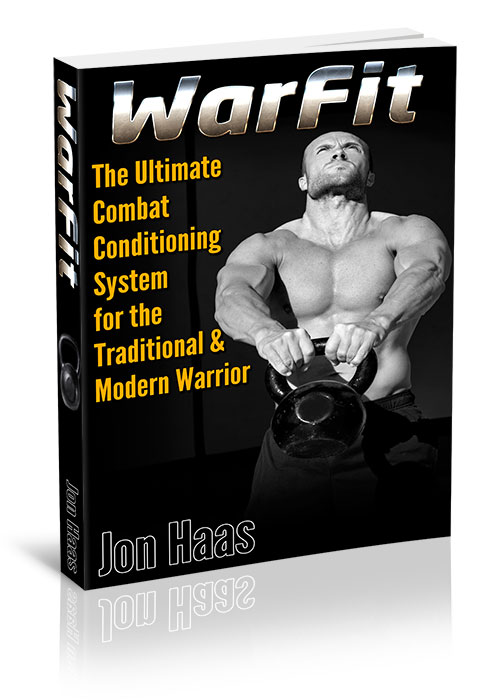
My brand new WarFit Combat Conditioning Program is perfect for the warrior athlete who wants to build superhuman strength, endurance, and conditioning…
warfit3d1


Martial Arts Training for Stability

Part 2 – Guest blog post by my friend, Jarell Lindsey from Lean Functional Muscle.  Part 1 is HERE.

Martial Arts Training for Stability

A mountain, snowcapped, reaching for the heavens but rooted down to Earth all the same. That is the image I visualize as the pinnacle of martial arts stability. This level of stability is something that marks mastery of the power in your craft. To be a martial artist, stability training is critical; to be a warrior, stability training is indispensable. Stability means being in a position of firmness; being able to combine that stability with mobility requires as much recovery as it does intensity.

Jarell Pic2

Intensity will be the most important factor in overall stability. Stability means “the strength to stand or endure”. You must have strength and endurance to have true stability, and the best way to obtain both is through intensity, like an ore refined under extreme heat. When it comes to endurance, mental and physical endurance are key. The greatest benefits of long distance running are in the mental benefits in endurance you’ll get from driving your body to the brink of its functionality. Nevertheless, I feel like interval cardio training is more advantageous for consistent cardio training as a martial artist.

Interval Training for Martial Arts

Interval cardio training allows you to train your spurts of intensity while increasing your recovery times overall. In a fight, there are often periods of ferocious exchanges followed by lulls to observe the opponent or recover; by training those intervals, you can get your heartbeat back near resting in a much quicker time than were you to solely train long distance. For instance, set your week up so that you perform 20-30 second sprints (it’ll be better to practice sprinting for time instead of sprinting for distance) throughout the week in sets, then perform a longer distance run toward the end of the week to test overall physical and mental endurance.

Remember that training your breathing is just as, if not more important for training your physical and mental endurance as cardio, so adopt a powerful breathing component into your training to help your stability and health.

You Must Train for Strength

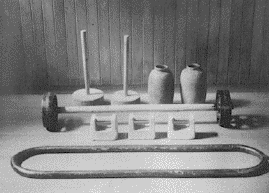
Alas, strength seems to be a given to have when it comes to martial arts. People can say that a martial artist does not need strength, just technique, and they’d be enabling the weakness of people in the pursuit of a war art by doing so. Strength training is critical to being a martial artist; karatekas and the Shaolin have had their own weight training implements for centuries, so whoever promoted the idea that martial artists should not weight train was jaded. However, traditional martial arts have just as many methods to build strength using your bodyweight, so a lack of weight shouldn’t be an excuse.

Jarell Pic1


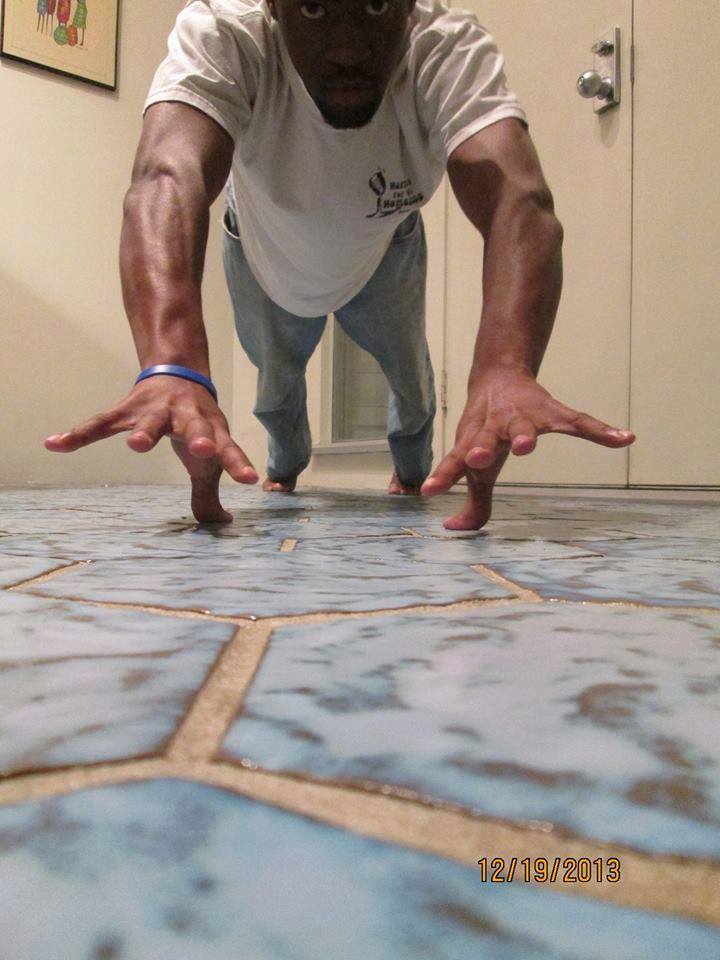
There are hordes of thoughts about the best method of strength training; what I will say is that your regimen should include something that builds your body from the inside out. For me, isometric exercises build strength from the tendons, ligaments, and nerves out to the muscles. I do training that isolates individual muscles for maximal muscle fatigue, and training that involves large muscle groups for fatigue of the central nervous system. As long as your training does not neglect internal principles of strength (like bodybuilding training that focuses solely on muscle without long-term development of the tendons), it can be a part of what gives you stability. Overall, intensity is key, so finding ways to progressively increase your intensity will progressively increase your stability. Coupled with mobility training that can prevent your powerful tendons from being overly rigid, your martial arts can reach an advanced level comparable to the legends of old.

Jarell Pic3

Martial Arts Training for Mobility

A guest blog post by my friend, Jarell Lindsey from Lean Functional Muscle.

Martial Arts Training for Mobility

The martial arts are diluted today. There are maxims and philosophies of how to dictate one’s life, and emphasis on the aspect of skill over strength, and not needing to be stronger than your opponent to claim victory. After all, there’s always someone stronger than you, right?

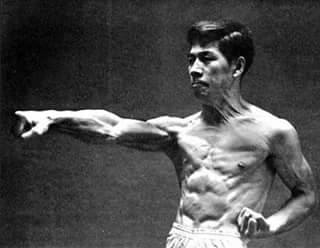
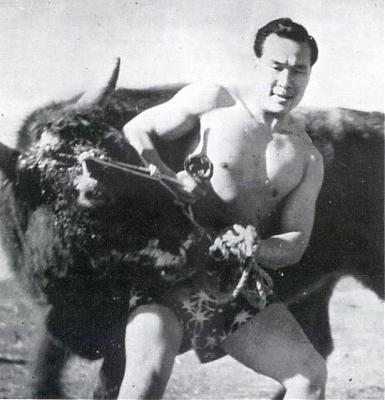
This is the most enabling psychology in the martial arts world today. The simple fact that someone out in the world is stronger than you is enough to fully discourage you from pursuing strength? Martial arts training is about more than that; traditional martial artists of yore weren’t only the most skillful at their arts; they were some of the most physically fit people you could ever encounter. If you look at the physiques of Sosai Oyama, Kanazawa Sensei, so on and so forth, these men had bodies made to fight. After all, TMA’s were designed to prepare fighters for war, not philosophy class.Jarell Post

How, then, does one begin such a pursuit for the physical fitness of the traditional martial arts warrior? Well there are two aspects that are fundamental to the physiology of every human: mobility and stability. Simple enough, let’s look at mobility here.

How Well Can You Move?

How well around can you move? No really, how efficiently can your body move as a unit? Perhaps you have a heavy squat, but can your butt reach the ground without the weight? In fact, most people have two vertebrae in their thoracic spines that all but fuse together, simply because we never make use of that full spinal mobility. If you want full physical preparation for any situation, ability to move your body in any given position should be a priority.

And the way to train mobility is not through intensity. I almost repeated that sentence for its importance; plyometric style programs may develop your explosive power, but is not the key to true mobility. In fact, I was taught that if you want to truly develop speed and control in a movement, practice it slowly. The difference is made with the tendons.

Intensity will be important for muscle training and stability, which I will cover in the next article, but variation and repetition has a precedence in mobility training. Tendons need high reps and consistency for proper development; the explosive movements, while helping the nerves in your muscle fire quicker, threaten the structural integrity of your tendons and ligaments. When practicing mobility slowly, the movements become ingrained into your body, and your connective tissues can develop alongside your nerves and muscles. Practicing those movements consistently over years is how gungfu is developed.

mas_oyama_bull


But for full mobility, variation is needed. Practice the basic, necessary movements daily over time, but when you can, add a variation to the movement you perform. Perhaps practice your squat with a posterior pelvic tilt to open the hips more. Maybe practice bringing your scapula further forward when you punch. Add different variations to your movements, but the variations must have a goal and build upon the basics, not deviate from them.

Kata (Alone) Will Never Build Internal Power

Trying to develop Internal Power by training kata (alone) in martial art is problematic.  On one hand, you may inadvertently have minor success in creating some internal connection over the course of 20-30 years of training, but you will most likely have no idea how you did it, no idea why it worked (minimally at best), and most importantly, no idea how to correctly transmit it to the next generation.

The only advice you will be able to offer your students and fellow seekers is to keep doing this (kata training) and somehow you *might* get the correct result.  This is insufficient and irresponsible, at best, on the part of the teacher.

Assuming that you want to stand out from the crowd as a powerful martial artist, and Internal Power/Aiki is your goal, then the scatter approach to trying (and for the most part, failing) to build IP through kata alone is a waste of a career.  I say this because there exist clearly defined, step-by-step processes that rewire the body for Internal Power specifically for martial arts.

Solo Training Precedes Kata Training

Power building models as solo training exercises have existed for hundreds (if not thousands) of years  throughout the martial arts from India to China to Japan.  Why anyone would try to reinvent the wheel by attempting to create their own hodgepodge of exercises or think that merely training kata would develop real Internal Power is a mystery to me.  The reality is that solo training exercises burn in specific ways of moving that are not normal which create a very stable, powerful structure capable of absorbing, re-translating, and projecting incoming force.

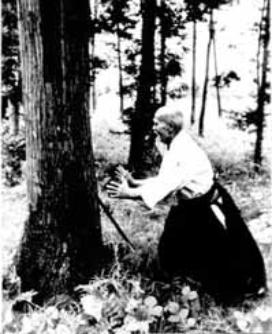
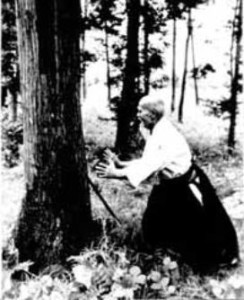
osensei_tree_kokyu1-272x334

Internal Power training is a type of General Physical Preparedness (GPP) for budo.  The goal of regular GPP for fitness, athletics, or martial arts is enhanced work capacity. This is the ability to run faster, jump higher, and hit harder. When work capacity increases, it allows the budding warrior to adapt more easily to increases in both mental and physical demands. In other words, it increases your capacity and level of readiness to absorb higher levels of specificity.

The solo training exercises for internal power training change the way outside forces act on the body.  The structure becomes dynamically stable so that applied force can either be distributed throughout the chain and dissipated or, at a higher level, simply reflected right back onto the opponent.  When force is reflected back this is what is known in Japanese as Yamabiko, or Mountain Echo.

Just to help further differentiate the two practices, solo training exercises for building internal power (there are other types of solo training exercises, obviously) are always made up of the following: standing, open/close, winding, spiraling, and breathing – all supported by Yin/Yang Theory (the union of opposites) and 6 directions (Heaven Earth Man).

Kata are for the purposes of patterning correct martial movement.

These solo training exercises are trained BEFORE kata to condition the body for powerful martial movement. They are not martial movement drills in and of themselves like sanshin no kata, kihon happo, and kata.

Kata – The Slow Boat to China

The reason it is so difficult to train IP via kata is that the vast majority of students get caught up in learning the movements of the kata correctly.  They get caught up in the application of technique and the idea of trying to make it work correctly.  What they don’t realize is that having a correctly trained body built by solo Internal Power exercises makes all the kata work much better and easier.

If you have a choice – why not learn a proven step-by-step method of developing unusual strength and Internal Power?


Join My New 21 Lessons on Internal Power Coaching Program <<==

Following a clearly defined path up the mountain is much faster and more effective than wandering around the base working on kata for 30 years and thinking you will somehow magically arrive at the summit.

Caution – While I did just say “more effective and faster” I by no means meant easier!!  Internal Power takes a lot of dedicated work.  Do not think it is a shortcut!

Gyokko Ryu’s Internal Power Training

There is no doubt in my mind that Hatsumi Sensei possesses unusual power in his budo.  Anyone who has trained with him can tell you that!  But what is it and where does it come from?  More importantly, how can YOU develop it as well?

Soke’s martial movement displays many of the characteristics associated with Internal Power training: ghostly movement, immovability (static and dynamic), shockingly powerful strikes with little windup, adhesion caused by movement, kuzushi on contact, and others. Continue reading

Logan Christopher’s The Indestructible Body Review

I have a confession to make…

I’m extremely jealous of Logan Christopher’s latest release, The Indestructible Body.  Considering my personal emphasis on mobility, flexibility, strength training, and injury-proofing for myself and my students (clients), this is the kind of program I would have love to have written!  The good news is that Logan has already done it, and done an outstanding job at putting the whole thing together.

Greater Than the Sum of Its Parts

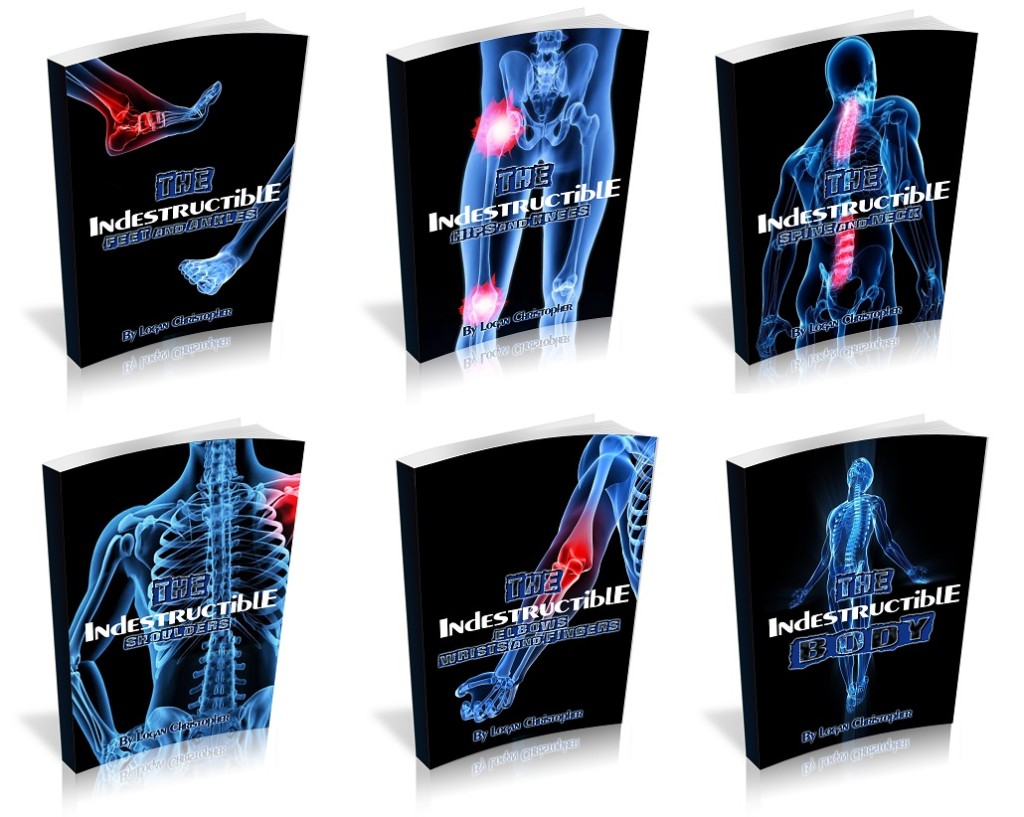
The Indestructible Body program is divided up into 6 component parts.  It groups areas of the body into the broad categories of Indestructible Elbows, Wrists, and Fingers, Indestructible Feet and Ankles, Indestructible Hips and Knees, Indestructible Shoulders, Indestructible Spine and Neck, and the Indestructible Body Foundations.

3dIndestructible-Body-Series-small

There are literally dozens of exercises for rehabbing old injuries and remaining injury free by injury-proofing the body.  When put together, the entire program will create a body-system wide reset that will have you feeling amazing and moving even better!

A Paradigm Shift

It’s time to shift your paradigm from a “normal” one to one of creating an Indestructible Body.  Age or injury (or both!) do not have to lead to weakness, immobility, and infirmity.  That’s simply the belief that most people choose to accept.  Logan does not.  I sure as hell do not.  I believe that we can, and should, spend the requisite time moving, exercising, working our body to create an incredible vehicle that not only carries us from birth to death but perhaps, just perhaps, extends that life a little farther out and sure as hell improves the overall quality of it.  All it takes is a few minutes several times a day, every day, to play, to move, to build a body that lasts.  A body that can DO things.  A body that is not constantly riddled with aches and pains.  A body that bounces back.  A body that becomes Indestructible.

If you are a martial artist, this program is for you!

If you are an athlete, this program is for you!

If you are a weekend warrior, this program is for you!

If you are military, law enforcement, or fire fighter, this program is for you!

If you workout regularly, this program is for you!

If you are a couch potato, this program is for you – you’ll thank me!

If you are a human being who wants an Indestructible Body, then this program is for you!!!

IndestructibleSeries-1024x817


For more information on Logan’s Indestructible Body program, please click HERE <<====


This Simple Practice RESETS Your Body

Let’s face it.  Some days we just need to hit the RESET button.  Whether due to stress, an accumulation of injuries, fatigue, or illness we need to find a way to RESET the body in order to allow its own natural healing function to take over.

Luckily, there is a very simple process whereby we can RESET ourselves and acquire a deep level of whole body relaxation.  It can be accomplished through the Yiquan training method of Wuji standing, otherwise known as Health Standing.

Wuji translates to “without poles” or “pre-heaven” meaning that yin and yang have not yet been determined.  It is a pure untapped potential and possibility.  It is from this untapped potential that we will begin to form a relaxed, connected body primed for internal power training.

Before we get into the particulars of the exercise, you need to know how to stand. Continue reading

We Were Once Warriors…

We Were Once Warriors…

For centuries the warrior has been the archetypical model of physical fitness and power.  This is due to the extreme nature of their training and overwhelming odds that they must have had to go through waging war in the ancient world.

The multifaceted development of skills required for the warrior’s brand of life and death combat is second to none.

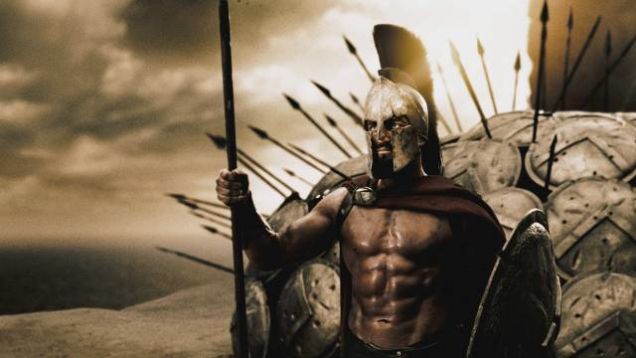
Spartans


Warriors needed to be able to carry heavy loads over long distances on uneven terrain, wield heavy weapons while wearing armor, wrestle and engage in other forms of hand-to-hand combat, fight for hours or perhaps even days on end in mud, sweat, and blood, all while continuing to display power, coordination, agility, and speed.

This was not a game with a medal or trophy at stake, but their lives and the lives of their comrades in arms, not to mention the entire village or tribe who were relying on them for protection.  All of this placed immense demands on the warrior physically, mentally, and spiritually.

Today’s Training from Yesterday’s Triumph

The skills we know today as fitness, or strength and conditioning, depending on whether your term is all inclusive or a specific subset, all evolved over time from man’s need and ability to wage war.  In fact, one of the earliest examples of sport in the western world is from ancient Greece; we now call it the Olympics.  These early games were created as a way for warriors to channel their aggressive and competitive natures, while simultaneously allowing them to hone their battle skills, in times of peace.

So we can see from this quick look back in time that originally almost all athletics and sport competitions were based on the martial skills of the warrior and utilized as a way to sustain and practice those skills.

Now, working backward this time, is there a way to reverse engineer a warrior’s training regimen and use it to improve the components of martial skill, conditioning, AND athletic performance?  Absolutely!!

Try This Warrior Workout on for Size

1)  Heavy Sandbag Carry (Zercher carry, bear hug carry, over head carry) – 3 x 300 ft.

2A) Pike Push-ups on Fists – 4 x 10

2B) Mixed Grip Pull-ups (change grip each set) – 4 x SM

2C)  Loaded Airborne Squats (load up with clubbell, Kettlebell, dumbbell, or sandbag) – 4 x 5/5

3)  H2H Touch & Go Kettlebell Swings x 100

If you train in MMA…

NOW go punch, kick, knee, and elbow a heavy bag or have a partner hold focus mitts for 3 rounds x 3-5 minutes each!  How is your performance?

Or, if you’re really daring and want to test your mettle, now is the time to go spar with a completely fresh opponent for 3 rounds of 3-5 minutes!  How has your performance changed?

If you train in Bujinkan or other form of combatives…

Do the same as above but utilizing the basic techniques of your particular style.  For Bujinkan peeps that means try out all the Kihon Happo on a fresh uke!

My brand new WarFit Combat Conditioning Program is perfect for the warrior athlete who wants to build superhuman strength, endurance, and conditioning:


How Far Can You Go?

Mediocrity ain’t in my vocabulary.  It should not be in yours either.  Average is for the weak.  Normal?  Bleh – no thanks.  This ride called life we are all on has but one go around.  No more tickets – you only get 1.  So why not push for outstanding?  Why dare to fulfill all your potential and be great?  Why not see how far you can go?

TS Elliot Quote

Only a small handful of great warrior sages come along every generation.  Why is that?  Is it genetics?  I don’t think so.  Is it the perfect storm of coincidence and circumstance that combine to create these masters?  Probably not.  So why are there so few?  It’s that they, the rare breed, possess the will power, the drive, the inner fire to go farther and climb higher than anyone else around them.

osensei_tree_kokyu1-272x334

sokaku-takeda-osaka-36-08


Wang pic

takamatsu

Do you have it in you?

Do you want it badly enough?

The means to be on of the elite is in your grasp.  The information and training is readily available, now more than any other time in history, for anyone with the desire to go out and get it.  The only failure is in your personal motivation and drive to go after it!  There are no real limitations on mastery, martial or otherwise – the only true limits are those you place on yourself!

The sad part is we fight for our own limitations.  We fight to be small, to be weak, to be comfortable, to be less than our God given potential.  We cling to our limits like a child clutching a blanket against the approaching darkness.  As if it can really protect us.  We tell ourselves that we can’t when what we really mean is, ‘it’s hard and I’m afraid of trying because I might fail…’

But we must be strong.

We must endure.

We must overcome.

We must fulfill our mission to completely exhaust all our potential and succeed mightily.

We must be great for no other reason than to see how far we can go.

Why not?  The end is the same for each one of us.  The ride will end all too soon. And it’s much better to burn out than to fade away!

Enter At Your Own Risk… 

Bushi1


Resolving the Tension Paradox for Martial Artists

In order to truly begin our quest for Integrated Strength, we must first resolve the tension paradox between conventional strength training and internal power…

“Don’t use muscle!”

“No power!”

“Relax!”

“Move naturally!” Continue reading