
Start with Letter One here <<==
The Beginning of the Path
Warriors –
Every worthwhile journey eventually arrives at a moment of decision.
Not a decision born of urgency or persuasion, but of quiet recognition. There comes a point when ideas that once seemed abstract begin to settle into experience, and what was previously understood only with the intellect begins to ask something of the heart. Philosophy, if it is genuine, cannot remain merely an interesting way of thinking. It must eventually become a way of living.
Over the course of these letters, I have invited you to reflect on a question that has quietly guided my own life for nearly four decades. We have considered the true purpose of martial training, explored the distinction between collecting techniques and cultivating the practitioner, and looked beyond individual styles in search of the enduring principles that have united the greatest traditions across cultures and generations. These reflections were never intended as arguments to be won, nor as doctrines to be accepted. They were simply an invitation to look beneath the surface of our practice and to consider that the deepest work of the martial artist may not be the perfection of technique, but the gradual transformation of the person who practices it.
That realization has changed every aspect of my own training.
When I was younger, I divided my practice into separate disciplines. Strength belonged in the gym. Standing belonged to the internal arts. Breath training belonged to Qigong. Martial technique belonged in the dojo. Each discipline occupied its own place, and I pursued them with genuine enthusiasm, believing that mastery would emerge through the accumulation of enough methods.
Only with time did I recognize that these distinctions existed largely within my own thinking. The body does not recognize such divisions. It simply expresses whatever it has become.
From that moment forward, I could no longer view my training as a collection of independent practices. Standing was no longer merely an exercise in posture. It became the cultivation of structure and patience. Breath training was no longer a technique to be mastered, but a means of discovering unity between intention and movement. Strength training ceased to be the pursuit of muscular development alone and became the patient construction of a body capable of expressing martial principles with increasing integrity. Even the simplest daily practice assumed a new significance, because every sincere repetition was no longer preparing me for a single technique—it was quietly shaping the practitioner who would eventually perform every technique.
Looking back, I no longer believe that I spent forty years studying separate subjects.
I believe I spent forty years listening to the same truth spoken through many different languages.
The Japanese traditions spoke it in one way.
The Chinese internal arts revealed it in another.
Old-time strongmen expressed it through physical culture.
Modern exercise science has begun to rediscover portions of it through research and experimentation.
Their methods often appeared different.
Their vocabulary was certainly different.
Yet beneath those differences I found a remarkable harmony. Each tradition, in its own way, pointed toward the same enduring reality: that the quality of the art can never exceed the quality of the practitioner who embodies it.
This realization gradually transformed not only my understanding of martial arts, but also my understanding of teaching.
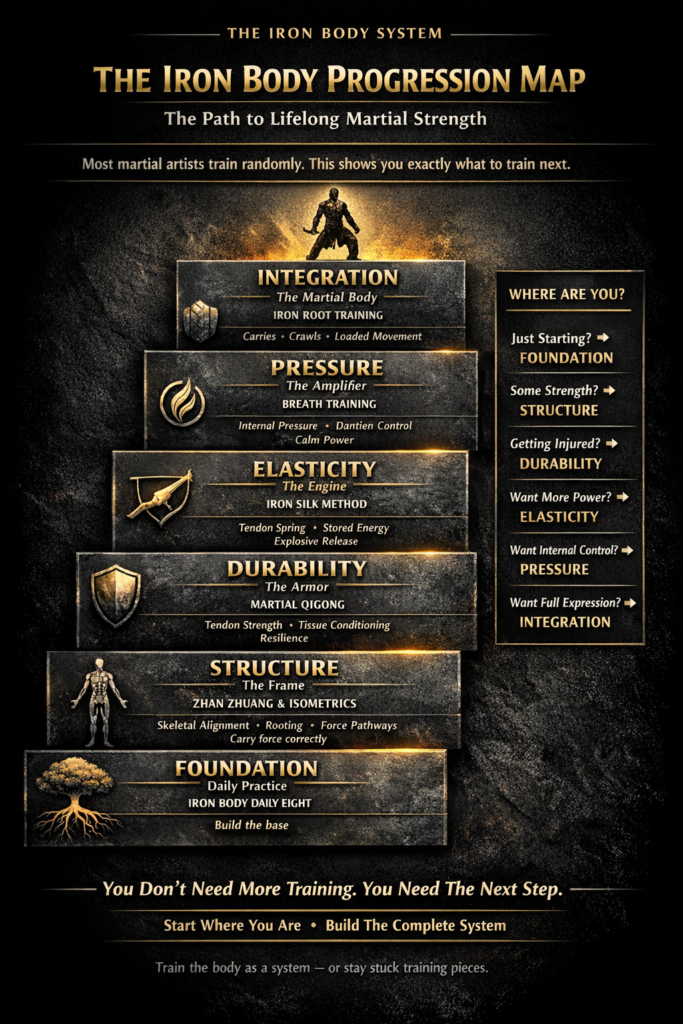
For many years I offered these ideas through individual courses. One explored standing practice. Another focused on Martial Qigong. Others examined structural isometrics, Iron Silk training, body conditioning, breathing methods, and classical forms. Each course illuminated an important principle, and each possessed value on its own. Yet something continued to trouble me. Students were receiving individual pieces of a much larger picture, while the deeper architecture remained largely unseen.
Only later did I understand what had been quietly emerging through all those years.
I had never been building a collection of courses.
I had been discovering a path.
Not a path that belonged to me, nor one that replaced the great traditions from which I had learned, but a path that sought to organize those enduring principles into a coherent way of practice. A path that could guide a martial artist not merely through the acquisition of knowledge, but through the lifelong cultivation of capacity, resilience, wisdom, and embodied skill.
Eventually I needed words to describe that path.
After many years of reflection, one simple sentence continued to return.
Build the Body Beneath the Art.
Those six words are not a slogan.
They are a reminder.
They remind me that every technique depends upon something deeper than technique. They remind me that the visible art grows from invisible cultivation, just as a great tree draws its life from roots that remain hidden beneath the earth. They remind me that no philosophy, however elegant, possesses any value until it becomes embodied in the ordinary discipline of daily practice.
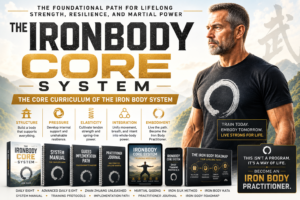
It was from this understanding that the Iron Body Core System eventually emerged.
I do not think of it as a product.
Nor do I think of it as the conclusion of my work.
It is simply the clearest expression I have yet found of the path I have been privileged to walk for nearly forty years. It is an attempt to bring together the principles that have shaped my own journey and to offer them in a form that another sincere practitioner might use as the foundation for his own.
If these letters have resonated with you, I suspect it is because they have not introduced you to something entirely new. More likely, they have given language to intuitions you have carried within yourself for many years. Perhaps you have already sensed that there must be something deeper than the endless accumulation of techniques. Perhaps you have felt that your body deserves the same patient cultivation that you have devoted to your art. Perhaps you have been searching, as I have, for the principles that unite rather than divide the many traditions of martial practice.
If that is true, then I extend this invitation with both humility and gratitude.
Walk the path with me.
Not because I possess all the answers, but because I have devoted much of my life to asking the questions that matter most. The Iron Body Core System is simply my attempt to share what that search has revealed thus far. The journey itself, however, belongs to each of us.
The masters whose lives have inspired us never asked us to become copies of themselves. They invited us to undertake the search for ourselves, to cultivate our own character, and to embody the principles they discovered through lives of sincere practice.
That invitation remains before us today exactly as it did generations ago.
May we have the patience to accept it.
May we have the discipline to continue it.
And may we never forget that the highest purpose of martial training is not merely to master technique, but to become the kind of human being through whom great technique may naturally arise.
Stronger Every Day,
Jon Haas
The Warrior Coach
 I’ve devoted much of my life to understanding one simple question: Why do some martial artists continue getting stronger, more capable, and more powerful as they age… while others slowly decline despite years of dedicated practice?
 Why This Is the Missing Link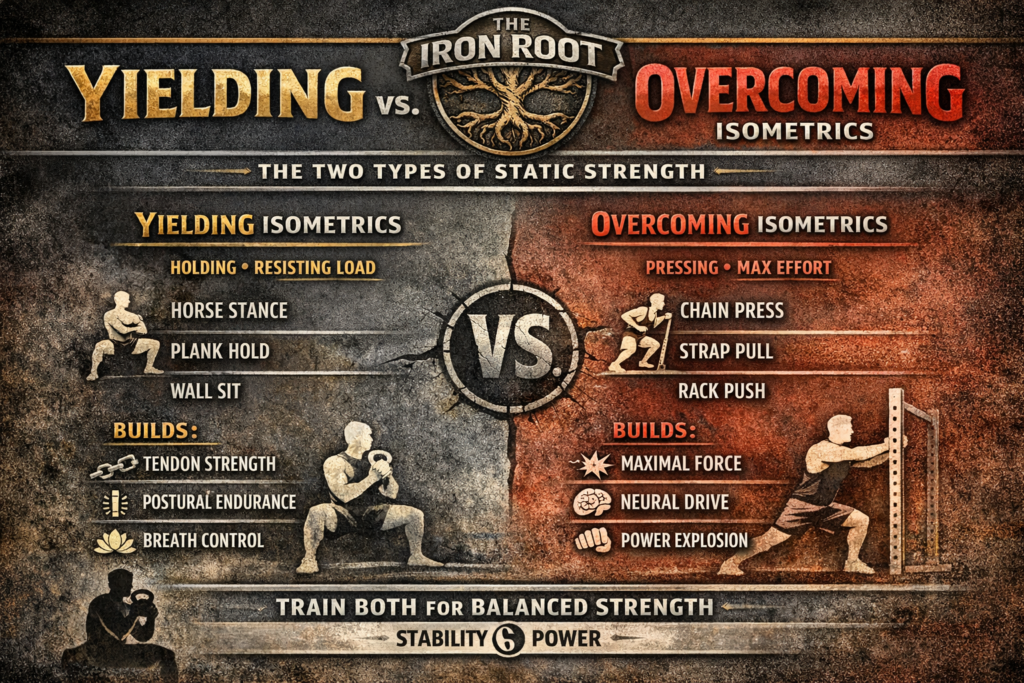
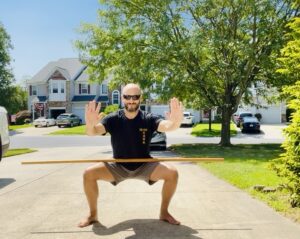
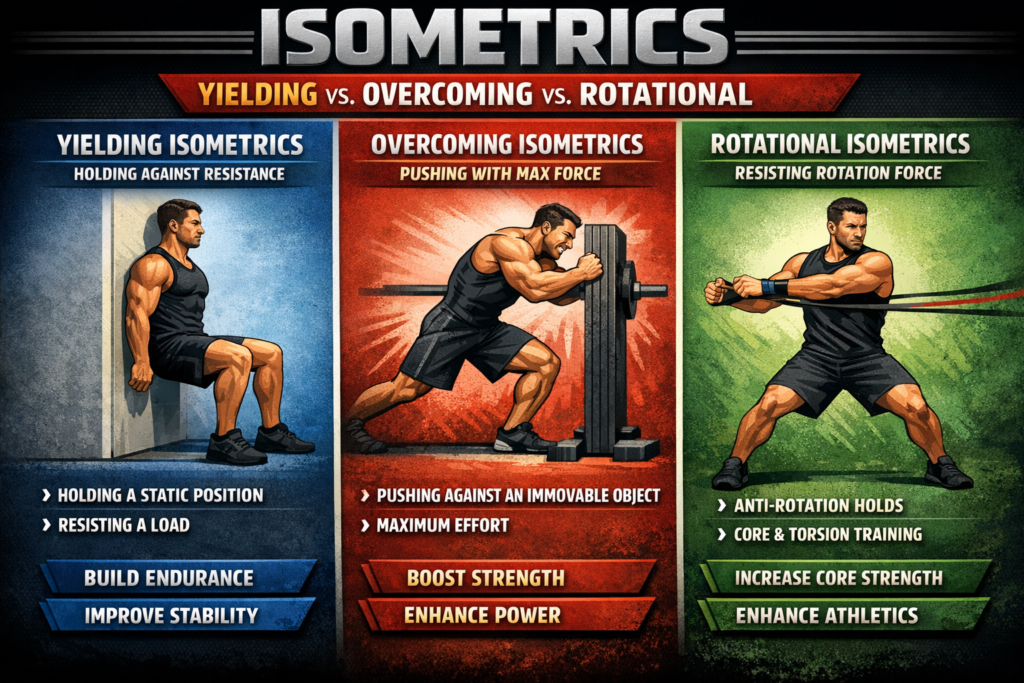
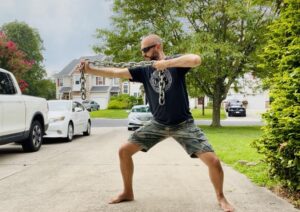 That makes them incredibly valuable for martial artists who want to improve:
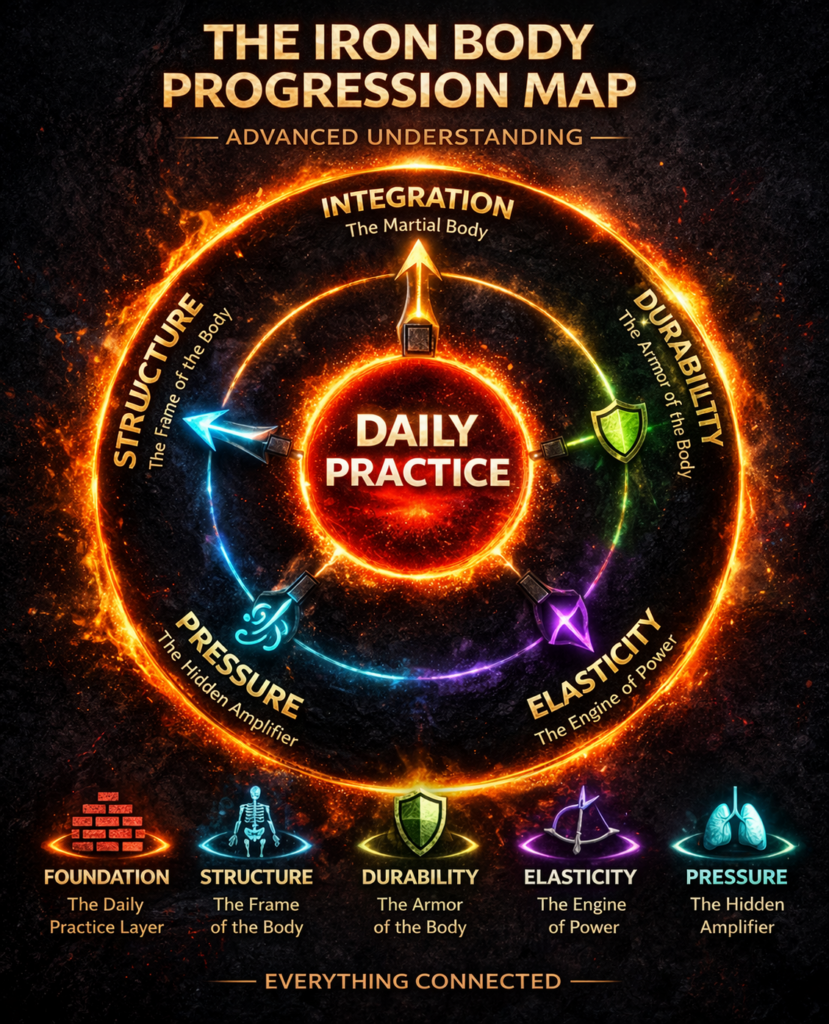
 The Five Pillars of the Iron Body
 Bringing It All Together