Theme for 2015 – Integrated Strength

New Years Day, 2015

Warrior Fitness HQ

Happy New Year, Warriors!

When I first began Warrior Fitness way back in 2008 the goal was simple – utilize my knowledge, training, and experience from several different disciplines under the broad heading of Strength & Conditioning to enhance the performance of martial arts.  I began by creating a unique series of functional training exercises that encompassed mobility, flexibility, strength, conditioning, balance, agility, coordination, and endurance. Continue reading

Stronger Than Fear

Are you stronger than your fear?

Or do you stay in your comfort zone and allow fear to get the better of you?  You can tell every time when you start to push against the edge of your comfort zone – you begin to feel afraid.  Maybe you don’t call it fear.  Maybe it’s resistance.  Maybe it’s discomfort.  Maybe it’s just a queasy feeling in the pit of your stomach that goes away if you you stop pushing forward.  Call it what ever you want.  I know what it is.  I call it by it’s true name – fear.

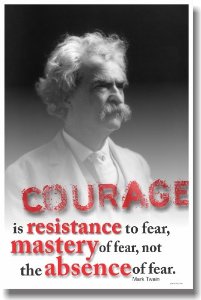
How do you become stronger than fear?  By feeling it, acknowledging it, and doing the thing you fear anyway.  As Mark Twain once said, “Courage is resistance to fear, mastery of fear, not the absence of fear.”

Mark Twain Courage

One way to face fear and push past it is by enduring brutal physical training.  This type of training is NOT for the faint of heart.  However, when you go through it, face it, and come out on the other end, you are a stronger person – mentally, physically, and spiritually.

Here is a sample of one conditioning workout with an MMA fighter I am currently training:

Internal Power and Bujinkan Training

When I first began talking about internal power in the context of Bujinkan training, I realized that many people might be skeptical of this type of training at the very least, or have many preconceived misconceptions that would not allow them to even consider the method as a viable form of training for budo.

Therefore I decided to write this blog post to gauge the interest of my readership and how accepting you might be of internal power training and my interpretation of its role within Bujinkan training. I hope you find it helpful!

What is Internal Power?

I think it’s best to start with the basics.  What is internal power and how can it useful to the practitioner of Bujinkan Budo Taijutsu?  Let me state this at the outset to hopefully clear up a rather unfortunate misinterpretation of IP.

Internal Power is physical.

It’s not some mystical mumbo jumbo or a throwing chi balls type of nonsense.

It is actually a way of conditioning the body through specific solo training exercises and paired partner training. The training method spans thousands of years and has been handed down through the ages within the warrior traditions of India, China, and Japan.  It is a body technology with a set method and detailed process of instruction that simply cannot be learned by osmosis.  It must be explicitly taught.
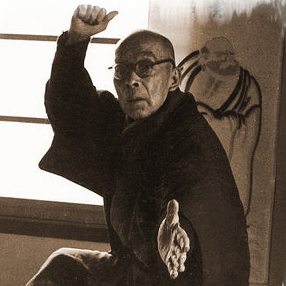
takamatsuSensei

The basis for the method is what is known as the union of opposites or In Yo Ho, in Japanese.

By creating opposing forces within the body (up/down, left/right, front/back) through the use of intent – your own mental direction using imagery, feeling, and visualization – we begin to increase the mind-body connection to a remarkable degree.

Through the solo training exercises we condition and strengthen the entire fascia network, as well as tendons and ligaments, throughout the body.  This process serves to create a connected body through the center so that when ‘one thing move, everything moves’.

The Ultimate Ukemi

Internal Power training changes the way outside forces act on the body.  The structure becomes dynamically stable so that applied force can either be distributed throughout the chain and dissipated or, at a higher level, simply reflected right back onto the opponent.  When force is reflected back this is what is known in Japanese as Yamabiko, or Mountain Echo.

At first blush it may sound like a party trick, but the budo applications are quite staggering.  Think about it.

How does every martial art technique work?

What is the first thing you are taught to do prior to applying a technique?

Break the opponent’s balance, right?  Get kuzushi.

What if no one can compromise your structure?

What does that do to every throw, lock, and take down applied to you?  Yeh.  You’re getting it now, aren’t’ you?

And that’s just the beginning.

Every time you move, you are completely and dynamically stable, balanced.  You gain the ability to hit like a truck using the full mass of a connected body without dedicating your weight.  (Remember – when one thing moves, everything moves.)

This becomes very profound, especially when you start to incorporate weapons.

And, since you are connected through the middle of your body due to the specific solo training exercises, you will finally and probably for the first time, actually be moving from center, hara, or dantien.

Sound interesting?

You can learn my full method of integrating and training the mind-body system HERE.
 

I am also more than happy to share what I know about internal power training, especially in the context of how it can be fully integrated into our Bujinkan Budo Taijutsu practice.  I teach it in my weekly classes and seminars upon request. Contact me HERE.

The Ninja 300 Warm-up

I thought I would share with you today the new Ninja Warm-up I’ve been using in my own daily personal practice.

Since the New Year routinely brings our training focus back to the basics I figured a great way to incorporate more Bujinkan Basics practice was to include them in my warm-up as well.

Of course, I still do my full body mobility routine as taught in the Martial Power Program and ukemi practice too. Continue reading

Protect. Break. Leave Behind.

How can we train for the friction and chaos of battle when following a set fitness routine?

Physical preparation for combat readiness must be, by its very nature, a multifaceted approach.  If the combatants have to be ready for anything, shouldn’t their fitness regimen reflect that?  Surely the idea of training random workouts each and every day must help better prepare the person to face any challenge, right?

Well, yes and no.

As with all things, fitness is a skill.  The body must be adequately prepared at a baseline level through rigorous training AND practice to establish a solid foundation of GPP.   To suddenly subject a trainee to an onslaught of arbitrarily selected workouts is only a recipe for creating a shallow level of skill in a bunch of random areas.  It is also a great way to cause injury rather than seek to prevent it.  Random training produces random, haphazard results.

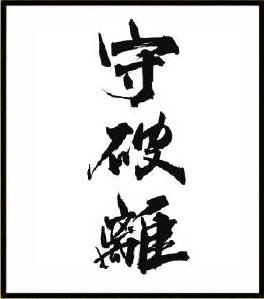
The Warrior Fitness Training methodology follows the Shu-Ha-Ri model of teaching prevalent in schools of traditional Japanese martial arts.  Shu-Ha-Ri translates to “protect the form, break the form, leave the form behind”.

shuharith

Usually within schools of traditional Japanese Budo this is a linear model where at the beginning of training the student is taught to carefully protect the form without deviation so as to template themselves to the teacher and to the martial system.  After becoming proficient in the exact techniques of the school the student is then encouraged to begin breaking the form.  And then slowly, very, very slowly, after decades of practice the student finally begins to transcend the form and leave it behind thus moving at the level of principle.

The Shu-Ha-Ri model is slightly different in the Bujinkan tradition that I study.  Rather than a strict linear progression, the model is not quite as fixed.  It may be Shu-Ha-Ri, Ri-Ha-Shu, Ha-Shu-Ri, or any combination of the three.  In this way, the student does not have to wait until he has trained for decades to learn how to break the form, nor does he always leave the form behind.  Instead the training progresses in an upward spiral where the teacher may start with the basics, circle up to breaking the form, and finally leave the form behind, followed by working again on the basics.  The same material is always looked at with fresh, new perspective and greater depth each time it is taught no matter where in the cycle it falls.  This allows for better all-around development and faster progression while still inculcating the basic forms and instilling a respect for technique.  It also gives the student the freedom to adapt to the friction and chaos of combat by learning how to both break and throw away the form when required yet still conforming to the strategic and tactical principles of the art.

How Does This Relate to Fitness?

What I have done is take the Shu-Ha-Ri model as taught within the Bujikan martial arts tradition and apply it to the programming in my Warrior Fitness Training System.  This means that within a complete training program, the student will undergo GPP (general physical preparation), SPP (specific physical preparation), TS (technical skills), and MT (mental/emotional toughness) to fully and completely prepare them for the task, goal, or mission at hand (For a more detailed description of each, please see my post on The 4 Levels of Preparation).

Following the Bujinkan model then, the progression of training may not necessarily be a straight line.  Depending on the level of the student, GPP will most likely form the bulk of the training but it will be cycled out of and back into throughout the duration of the program.  As the student progresses and increases in the skill of fitness, their training becomes blended at a higher level of SPP maybe only cycling back into GPP to shore up certain weaknesses and then coming right back out again.  This insures that the student is constantly progressing and also constantly prepared without having to resort to a random workout generator model of training.

Ready to take your Combat Conditioning to the next level? Pick up WarFit Now for Only $7!

The Secret to Becoming a Great Martial Artist

There is one very special, not so secret, secret to becoming a great martial artist.  Want to know what it is?

Do the work.

Train every day.  Yes, every day.  Great martial artists train all the time.  Not once a week.  Not every other day, not just during class.  Every day.  Multiple times a day.

The not so great martial artists are content to train only in class or at seminars.  They spend lots of time thinking about training, maybe, but the actual doing, not so much.

For you the process is simple – not easy.  Daily training.  How do you do this?  Figure it out.  You don’t have to think about when you’re going to take a shower during the day or brush your teeth, you just do it.  Make your training a priority and get it done.  While others are busy doing other things, you are training.  While others are busy daydreaming about training, you are training.  While others are busy running their mouths about training, you are – you guessed it – training.

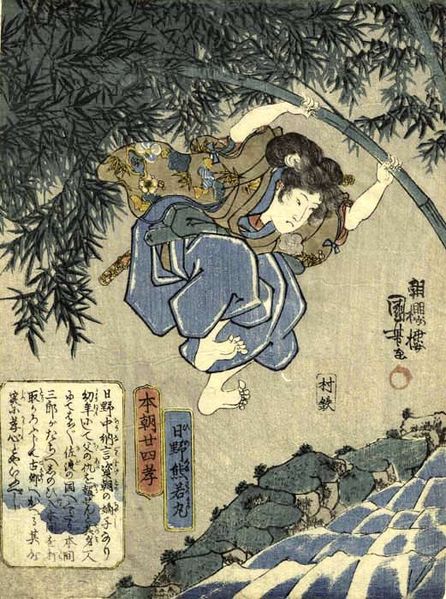
Ninja Artwork1


Soon it will begin to show.  The difference may not be too apparent at first, but consistency of training will win out.  It may not be so obvious in a year, or even 2.  But after 5 years it will be very noticeable.  After a decade, you will be miles ahead of the rest of the martial arts landscape.

You will move better.

You will feel different when they touch you.

You will have power in motion and in stillness.

You will stand out, not because of ego or anything like that but because the work you put in day after day, week after week, month after month, and year upon year will cause your skills to grow exponentially.  The growth and development created simply by training every day will become self evident.

So ask yourself – do you want to be a mediocre martial hobbyist (not that there’s anything wrong with that), or do you want to be legendary?

The choice is yours.  As for me, F__k being mediocre. 🙂


What If All the Stories Surrounding the Incredibly Powerful, Legendary Martial Artists of Old Were True?

What if greatness wasn’t random, but specifically engineered?

What if YOU Had Access to Their Secret Training Strategies for Building Whole-Body Strength & Power for Martial Arts – ANY Martial Art – in Your Hands?

Learn more ==>> 

Fitness Dangers for Bujinkan Students

Martial artists need to be extremely cautious when choosing a fitness program to compliment their training.  While the right program can support, enhance, and protect budo practice, the wrong one can just as easily derail it.

Bujinkan Budo Taijutsu relies on relaxed, whole-body power devoid of excess muscular tension to properly execute its techniques.

hatsumi sword


Think About This

Think about this – each and every action you repeat over and over again encodes in your nervous system and creates change in your body, no matter how you value that change.  Meaning that if you want to train yourself to move softly, subtly, and with relaxed power for your martial art practice yet you perform high tension power lifting exercises at the gym, guess what gets carried over to your budo?  Yup.  Too much tension.

If you are working towards using your whole body as a unit in budo practice so that when one thing moves, everything moves (can you do this?), but you perform bodybuilding style splits and isolation exercises in your strength training, what do you think happens to your functional integration?  Yup.  Bye-bye.

The critical thing to note here is that, as stated above, every action you do, no matter what your opinion of that action is, has an affect on your nervous system.  When 2 actions compete, both lose out.

Shouldn’t your supplementary training and fitness support and enhance your main goal of becoming a more proficient martial artist?  If it doesn’t, you might want to ask yourself what is more important to you?  These are tough questions for a life long, committed budoka to wrestle with – trust me!  I know.  I walk a thin line in my training every day.  But I made my choice long ago… You see, I love fitness, but budo is in my blood.

So when you go looking for a strength and conditioning program to support and protect your martial arts practice, remember something – I have been there, done that, and got the t shirt (several, actually).

Already Done For You

The research has been done.  The exercises, protocols, and programs have been rigorously tested.  The results are in.  I have created several Done For You programs that I KNOW will change your Bujinkan Budo Taijutsu practice for the better.  As a 20+ year veteran of the Bujinkan (I started training in 1989), I have put together these programs for you – Bujinkan students and teachers alike.  It’s all here….

Martial Power Cover1


WFBookCover2


WF UG Cover1


Ninja Mission Cover


Traditional Martial Artists of the World – UNITE!

Traditional martial arts all have a long history of intense, sometimes downright brutal, physical training to forge the warrior’s combative body, mindset, and spirit.

This training has, up until very recently in history, never been optional. If you did not have the strength of will to endure it and push through then you simply did not make the cut and were not taught higher level skills. Not that you would be considered somehow unworthy or anything silly like that, but you would be thought physically incapable and therefore not worth the teacher’s time to train you.

Each school of martial art had its own type of tanren or forging process to harden the aspiring martial student. Continue reading