10 Minutes and a Chair

So here is the challenge, you have only 10 minutes to train and the only piece of equipment available is a dining room chair.

Are you prepared?

Can you rock a great minimalist workout with this limited time and equipment? Or, should you just use the chair for a short snooze?

Here’s one answer:

Continue reading

Get Beach Fit – Warrior Style!

Summer is coming and, hey, let’s face it – even warriors need to look good at the beach, right?!  So, if you’re going to workout with the intention of getting is shape for summer, why not do it in a  balanced, functional manner that syncs up with and supports your other activities rather than distracting from them?  To that end, here’s a newly designed Warrior Fitness workout to help tone and sculpt that beach body!

muscle-288x300

Pull-up Pyramid

  • Start with 1, pyramid up to 3, then back down to 1
  • Depending on your fitness level, do pull-ups, chin-ups, or commando pull-ups

Push-ups

  • 5 Pike Push-ups(begin in downward facing dog posture, bend arms to touch head to ground)
  • 10 Hindu Push-ups
  • 5 Diamond Push-ups (hands are touching at pointer fingers and thumbs directly under chest)
  • 10 Fist Push-ups
  • End with a static hold mid range of the push-up position for 1 minute

Dips

  • 4 sets of 10
  • Use a bench, chair, or couch

Bodyweight Squats

  • 4 sets of 15
  • If too easy, make them jumping squats

Seiza Step-ups (Begin in seiza, Japanses kneeling posture, on the balls of your feet.  Step up right leg, followed by left leg to half squat so legs are 90 degrees, then back down to seiza.)

  • 4 sets of 10/10

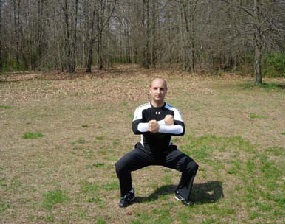
Static 1/2 Squat

  • Hold mid range of squat for 1 minute (wall sit)

V-ups

  • 2 sets of 10

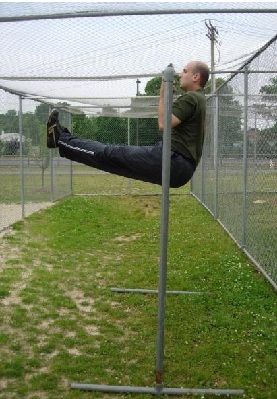
Warrior Sit-ups

  • 2 sets of 10

Plank

  • Finish with static plank hold for 1 minute
  • Side plank 30 seconds per side

Take a look at the vibration drills in this article to see how to shake out and release that residual muscle tension.

Want to know more?  The strength and conditioning exercises in Warrior Fitness will not only provide a strong, functional body, but help burn fat and build lean muscle as well.  When used in conjunction with the mobility warm-ups, breathing exercises, and compensatory cool-down movements in the book, Warrior Fitness is a fully balanced approach to fitness and conditioning!

Good luck and let me know how it goes!

Got Some Spare Time? Try Isometrics!

If you’re like me and can’t stand to waste any amount of time no matter how short, you’ll love how isometrics can fill in some strength gaps.  Nowadays, my days are jam-packed full with work, meetings, conference calls, networking, family time, training time, teaching time, writing time, and oh yeah – a little sleeping in my spare time.  Since there are never enough hours in the day to accomplish all the things I want to do (not to mention those pesky things I have to do!), I try to make the most of those few free minutes of downtime in between tasks so I can be just a little more productive.

The only way to constantly improve is to consistently work on improving your self.  One of my favorite quotes of all time is from Calvin Coolidge:

“Nothing in this world can take the place of persistence. Talent will not; nothing is more common than unsuccessful people with talent. Genius will not; unrewarded genius is almost a proverb. Education will not; the world is full of educated derelicts. Persistence and determination alone are omnipotent.”

And, since I don’t consider myself particularly talented, or even all that smart, it’s a good thing I am persistent!

So, let’s talk isometrics. 

Isometrics are a great way to work on increasing strength, or shoring up a strength deficiency in a certain movement or exercise, with virtually no equipment and very little time.  They are both effective and efficient – good news for us!

So what exactly are isometrics?  Basically, isometric exercise is exerting force against an immovable object.  The idea is that the length of the muscle does not change, but the tension remains constant during the exercise.  There are 2 general types of isometric exercise:

1.  Holding yourself (or a weight) in a static state.  For example holding the mid-point of a push-up position or the mid-point of a squat.  Or, holding yourself statically on a pull-up bar.
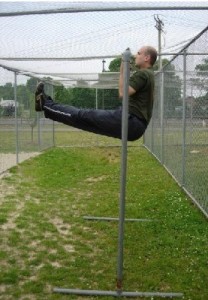
2.  The other type of isometric exercise consists of pushing or pulling against an immovable object.  This picture of Bruce Lee is a great example of just one of the ways he used to train isometrics.
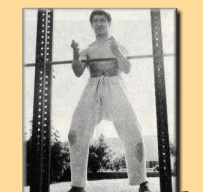
For our purposes, when training the first type of isometric drill, try holding the mid-range or hardest point of the exercise for 30 to 60 seconds.  Make sure to keep breathing!  Then shake it out – see the vibration exercises here  – and go again.

We will use much shorter time frames for the second type of isometric exercise.  Here we will be pushing or pulling against an immovable object as hard as possible (maximal contraction) for 1 to 3 seconds each rep.  Exert force as quickly as possible to improve speed strength.  Studies have found that the intention to move fast was more important for speed development than the actual speed of the the movement.  Interesting, eh?  Train about 4 to 6 reps per set and use the vibration exercises referenced above to remove residual muscle tension between sets.  Since there are innumerable variations here – pushing with the arms (one or both), pushing with the legs (one of both), pulling with the arms (one or both), pulling with the legs (one or both), not to mention the number of different joint angles one can use with either push or pull, I will leave it up to your creativity to determine how to best apply it in your training.  Let me know what you find works best for you.

I hope you enjoyed this short primer on isometrics.  We will be exploring them in more depth, as well as showing how isometrics can be used to not only increase strength, but increase power for your strikes in my upcoming book… Stay tuned!

16 Minutes of Pure Torture

Hope the catchy title got your attention!

Today we’re going to do a fun workout based on the Tabata Protocol.  If you are not familiar with Tabata, please check out the Warrior Fitness Tabata Primer found here, What’s Tabata You?

I highly suggest you warm up before doing this workout.  In fact, I insist on it.  What’s a good way to warm-up?  I’m glad you asked.  One of my favorite warm-ups is found here in my Morning Wake Up Routine.  Don’t let the fact that it says morning dissuade you.  It’s a quick, highly effective recharge/warm-up that can be used anytime of day.

Now, onto the workout.  Warmed up?  OK.  Here we go –

Remember, Tabata is 8 rounds of exercise, 20 seconds on, 10 seconds off, for a total of 4 minutes for each exercise.  Take one minute rest upon completion of each set of 8 rounds.

Exercise 1 – Bodyweight Squats

 1 minute Rest

Exercise 2 – Hindu Push-ups

 1 minute Rest

Exercise 3 – Sit Thrus

 1 minute Rest

Exercise 4 – Burpees

Out of breath?  Want to learn how to recover your breathing in between exercises and at the end of the conditioning session?  Check out the section on restoring breath in Evolve Your Breathing.

Enjoy!

Ukemi Flow Conditioning Workout

This one is for all the martial artists out there –  I created the following ukemi conditioning workout for myself a few years ago to specifically target the transitions between my rolls and begin to unlock flow.  Additionally, it has the effect of really getting your heart pumping and makes a great workout!  Start out slowly and smoothly by practicing for the first few rounds.  Groove the movement and then begin to increase the speed.  Remember, you do yourself and your training a disservice if you rush through the movements simply to say you accomplished the workout.  Flow is not something you do, it’s something you allow – you have to be able to get out of your own way!  That being said, give this a try and let me know how it works for you.

Ukemi Flow

  1. Begin in Shizen No Kamae (natural stance), squat down to ball of foot squat
  2. Zenpo Kaiten (front roll) over the right shoulder
  3. Ushiro Kaiten (back roll)
  4. Stand up into Shizen No Kamae (natural stance), squat down to ball of foot squat
  5. Zenpo Kaiten (front roll) over the left shoulder
  6. Ushiro Kaiten (back roll)
  7. Stand up into Shizen No Kamae (natural stance)
  8. Yoko Nagare (side roll) with the leg crossing in front to the right
  9. Yoko Nagare (side roll) with the leg crossing in front to the left
  10. Stand up into Shizen No Kamae (natural stance)
  11. Zempo Ukemi (forward break fall)
  12. Stand up into Shizen No Kamae (natural stance)
  13. Yoko Nagare (side roll) with the leg crossing behind to the right
  14. Yoko Nagare (side roll) with the leg crossing behind to the left
  15. Stand up into Shizen No Kamae (natural stance) – repeat!

Start out with 4 rounds of 3 minutes each with a 1 minute break between rounds.  Use the minute break to get your breathing back under control and shake out the tension.  When this becomes easier, decrease the rest period to 30 seconds between rounds. Finally, try to perform the Ukemi Flow continuously for 12 minutes.  You can also adjust the difficulty level of the flow by adding directional leaps at the end of each roll.  Or, it can be made easier by performing it from kneeling in Seiza no Kamae instead of standing.

Notes: Make sure you warm-up with brief joint mobility session prior to the workout.

Got your own version of an ukemi-specific workout?  Please share with us in the comments section below!

A Case for Mini Workouts

These days everyone is short on time.  Most are content to allow the daily grind and family time to fill their days while lamenting about the fact that they have no time for working out.  The complaints are common and heard often.  But somehow these same people are able to find time to watch an hour or more of TV every night before going to bed.

Now, I’m not going to ask you to forego your Sunday night Walking Dead episode (I certainly won’t!) in favor of hitting the gym for an hour, so don’t worry – just using the ability to watch TV as an example of “finding time”.

While it may be a stretch for many people to find 45 minutes to an hour each day for exercise or martial arts training, how about just finding 5 minutes?  Surely everyone can find a spare 5 minutes even a few times a day, right???

Recently, as my own daily grind has become busier and busier, I have been finding just how effective mini workouts can be to fill in the gaps in one’s training.  These types of workouts are often overlooked because of their brevity.

After all, how can one possibly get a complete workout in 5 minutes?!  Well, you can’t.  But that’s not the point.  The effects of mini workouts are cumulative.  In other words, they add up over time (that’s what cumulative means… :).

They are not meant to completely replace your regular training, but are meant to enhance it and compliment it.

They are an effective way to keep yourself on track and focused when short on time, or if you have already completed a full workout and still want to get in some extra training – nothing wrong with that either!  Remember, the goal of the mini workout is not to be too complicated or over-involved.  Make them short, sweet, and to the point!

Examples of Mini Workouts

Here are just a few ideas I’ve found that make ideal mini workouts:

  • 10 push-ups + 10 v-ups + 10 squats (repeat 3-5 x’s)
  • Finger tip push-ups (see how many you can do)
  • Tabata exercises (pick one and go)
  • 5 Kettlebell Snatches (each side) + 5 Kettlebell Swings (each side) + 10 Hindu Push-ups (Perform AMRAP for 5 or 10 minutes)
  • Isometrics
  • Breathing exercises combined with bodyweight training
  • Joint mobility work
  • Pull-ups (5-4-3-2-1 rep scheme)
  • Burpees or Sprawls for 50 to 100 reps

Mini Workouts for Martial Arts

The mini workout should be an essential aspect of any martial artist’s training.  It is said that great martial artists are training all the time.  Well known and respected masters from Musashi to Tesshu to Ueshiba to Hatsumi Soke have constantly extolled the importance of solo-training and dedicated practice.

While mini workouts do not form a complete picture of solo- training, they do play an important role.  In the future, I’ll be sharing a more extensive look at solo-training for martial arts, particularly for Bujinkan practitioners.  But for now, here’s a short list to get you started:

  • Ukemi practice – mix up rolls, change directions freely, roll over obstacles
  • San Shin no Kata
  • Solo flow drill – move continuously for 5 minutes. Flow from strikes to kicks to leaps to rolls, from kamae to kamae – be creative!
  • Kamae work in a mirror
  • Striking practice
  • Junan taiso (see above!)

Make sure to make time for mini workouts!

Warrior Fitness Workout of the Week #5

8 is Enough!

This week’s Warrior Fitness Workout of the Week:

  • 8 Pull-ups
  • 8 Burpees
  • 8 Mt. Climbers (left + right = 1 rep)
  • 8 Jumonji Squat Jumps
  • 8 Dumbbell Swings (4 each arm)

Complete 8 rounds as fast as possible.  Rest as needed.

Jumonji Squat


Jump!


Modifying Your Workout

Conditioning workouts are supposed to suck.  No doubt about it!  They push your body to its limits and increase mental toughness.  However, they should be approached incrementally, especially if you are not used to them.  In this particular workout, I’d recommend that beginners cut the volume of repetitions in half.  If you still find you are struggling, increase the rest period between rounds; try not to rest in between exercises, if you can help it.   Additionally, you may perform 4 rounds to start and work your way up to 8.  As you gain confidence and begin getting stronger, you can increase the number of repetitions and rounds, and decrease the rest periods.  Change one variable at a time so you are not forcing your body to adjust too rapidly.  Remember, injury is not the goal!

Notes: Make sure you warm-up with brief joint mobility session prior to the workout.  Remember that when you sign up for our mailing list you receive a free sample chapter on Joint Mobility from my Warrior Fitness book!

For further information on the Workouts of the Week, please see our User Guide here.


Tabata for Kids!

Usually my favorite place for the kids to exercise is outside.  There’s nothing like running around, climbing on the jungle gym at the local playground, or just enjoying a walk on a beautiful day in the  fresh air and sunshine to fulfill your children’s daily recommended allowance of exercise.  But how about those dull, rainy days when the kids are cooped up indoors?  For some reason, indoor activities always seem to lend themselves to sedentary type things, like: video games, watching tv, surfing the Internet, playing cards or boardgames, and reading (although my kids and I all love to read, and it is fundamental, of course), for example. 

Break Up a Boring Day with Exercise!

One way I’ve found to insert a daily dose of exercise that’s fun for the kids and short enough to hold thier attention span is working on Tabata Intervals with them.  Click here for a more in-depth discussion on Tabata.  These don’t require a lot of space so they are a perfect indoor, rainy day workout to get the kids moving.  Check it out –

The Exercises:

  • Jumping Jacks
  • Lunges
  • Base Switches(Start from all fours on hands and balls of feet. Lift right hand and left foot together.  Switch to crab walk position.  Pick up left hand and right foot. Switch back to base position. Continue.)
  • Mountain Climbers

Per the Tabata Protocol, each exercise is performed for 20 seconds on, 10 seconds rest for 8 rounds.  Rest for one minute and then move onto the next exercise.  Try not to push them too much or provide too much instruction.  Just enough for them to get the form down.  Let them move at their own speed through the exercises and they will gradually pick up the pace on their own  This workout provides 16 minutes of high intensity exercise for any kid.  Get them off the couch and away from the TV to get their daily dose of exercise!

How Dense are You?

In today’s hectic world it seems we are all continually struggling to fit more and more into less and less time.  Whether it’s squeezing more work into a 9 to 5 day, cramming more activities into a 2-day weekend, or condensing a week’s worth of email posts into a digestible digest version, it seems we are all trying to become more dense.  In that spirit, I’d like to offer the option of Density Training.  This is by no means the only way to train, nor is it recommended to use it as your sole form of conditioning, but when you are short on time and are looking for ways to do more with less, Density Training is definitely a viable option.

Density Training Concept

The concept of Density Training is pretty simple.  Do more work in the same amount of time or do the same amount of work in less time.  So, for example if you were using  push-ups as the exercise and the last time you used this protocol you managed to do 100 push-ups in 10 minutes, then this session you would either try to increase the number of push-ups you can do in 10 minutes or strive to do 100 push-ups in under 10 minutes.  Not rocket science, right?  What if this is your first time attempting this type of training?  Pick your exercise, let’s stick with push-ups for continuity’s sake, and pick an amount of time, say 10 minutes.  Then try to do as many push-ups as you possibly can in that 10 minutes.  Crank them out.  Push yourself (pun intended).  Remember the time limit used and amount of reps achieved, or preferably write it down, and the next time do more.  Simple as that.

More Options

Density Training can be used with almost any exercise.  Here are some additional examples:

  • Sprints – pick a relatively short distance, maybe 30 to 50 yards, and see how many sprints you can complete in 10 minutes
  • Rope Skipping – not my thing really, but hey, who’s discriminating?
  • Heavy Bag punching, kicking, elbowing, kneeing, or any combination – how many strikes can you throw in 10 minutes (Yes I know I keep using 10 minutes, but you don’t have to.  Find something that works for you.)
  • Any Bodyweight exercise – Burpees are great for this!
  • Make it martial arts specific and see how many sword cuts you can do in 10 minutes.  Just remember to keep the technique level high or you’re wasting your time!!

Remember, this is not the only option out there for those short on time, but it is a good one.  Give it a try and let me know how it works out for you.  Try it with different exercises.  Experiment.  Have fun!