Become Unreasonable

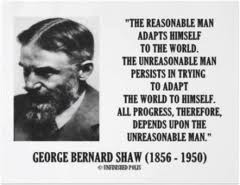
Being reasonable gets you mediocrity.  Being reasonable gets you the status quo.  Nothing great has ever been achieved by men and women who were reasonable.  Every major (and most minor) human achievement has been accomplished by unreasonable people.

It was unreasonable of Thomas Edison to fail over 10,000 times before creating the incandescent electric light bulb.

It was unreasonable to think that a man could walk on the moon until Neil Armstrong stepped onto its surface in July of 1969.

It was unreasonable to think the 4 minute mile could be broken until Roger Bannister broke it on May 6, 1954.

In the world of Bujinkan Martial Arts, it was unreasonable of Stephen K. Hayes to think he would be accepted as the first American to study the mysterious art of Japanese Ninjutsu, yet today he is known all over the world.
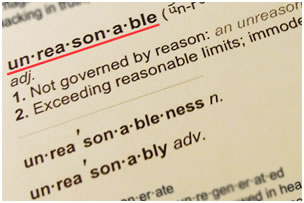
Unreasonable (1)

Over and over again, unreasonable people are succeeding, accomplishing great things, and leaving their mark on the world.  So tell me again, why would you want to be reasonable?

Do you ever get the feeling you were destined for greatness?  It starts like a slight nagging feeling in your gut that there’s something missing.  That you don’t quite fit in with the status quo.  It’s a dissatisfaction with ordinary or mediocre.  It’s the fleeting thought on the fringes of your consciousness that maybe, just maybe there’s something more than this for you.

“You take the blue pill, the story ends, you wake up in your bed and believe whatever you want to believe.  You take the red pill, you stay in Wonderland, and I show you how deep the rabbit hole goes.” – Morpheus

Unfortunately for the world, the majority of people out there will ignore that feeling.  They will make excuses why they can’t act on it.  They will be too busy, too tired, too involved in something or someone else, too lazy, too scared.  But not you.  You will act.  You will feel the fear just like all the rest of them, but your desire for greatness will allow you to overcome it.  You will have all the same excuses and rationales, maybe more, but the restlessness inside will not let you rest.

“Most men lead lives of quiet desperation and go to the grave with the song still in them” – Henry David Thoreau

To bring this from the general to the specific, how do we become unreasonable in our training?

For starters, I have never believed that any highly skilled martial arts master was special.  Never will.  You and I have the ability to be as great as any one of them.  What one man can do, another can do.  The only way to insure you never succeed is to put them up on a pedestal and tell yourself they are special.  That they are geniuses.  That they are a rare, unusual breed.  That they are set apart.  Nonsense!  You want it?  Train harder.  Train more.  Train better.  Become unreasonable in your training.

You must train yourself to be so good that they won’t be able to ignore your skill, no matter who you are and no matter what your rank – or lack of!

Learn the ancient warrior’s methods of building an unbreakable body HERE.
unreasonable

The 3 Paths of Warrior Fitness

The 3 Paths of the Warrior 

There are 3 Paths of the Warrior, along with the 4 Levels of Preparation, that form the basis of the entire training system.  While each path is unique with its own individual strategies, methods, and characteristics, they are also so deeply interconnected that the sum of the whole system of training is far greater than its individual parts.

The 3 paths are…

Path to Strength

Strength is not only about unleashing our innate physical supremacy, but comprised of mental fortitude and spiritual power as well.  The aim of this trifold path of strength is to forge the strongest version of yourself on all 3 levels of human ability.

The Path to Strength utilizes tools such as Russian kettlebells, Indian Clubs, old objects, and a considerable variety of unique bodyweight exercises to generate strength throughout the entire body in all ranges of motion.  Physical strength is not confined to merely muscle alone, but focuses on training the tendons, ligaments, and fascia as well.  This provides a much more stable and connected body.

Togakushi

Path to Rejuvenation

Health is not merely the absence of disease, but the allowing of the human body to operate at full capacity all of the time.  Rejuvenation increases the resilience of the body through restoration and compensation for the work of Strength.

The Path to Rejuvination is comprised of joint mobility work to keep the body well lubricated and injury free, yoga asana to systematically increase flexibility and act as compensatory movement, breathing and vibration training to flush the system with oxygen, remove residual tension, and energize the body.

Path to Martial Skill

Martial skill is not simply the ability to regurgitate dogma and technique, but the ability to spontaneously use the conditioned budo body to its utmost level and ability in a combative engagement.

Although the considerable bulk of my martial training over the past 30 years has been in the Japanese warrior arts of Bujinkan Budo Taijutsu, I have studied, and continue to study, several other martial arts from around the world as well.  The main arts, aside from the Bujinkan, from which I draw my experience are: Russian Systema – both Ryabko Systema and Systema ROSS, Chinese Yiquan, and the Aiki of Dan Harden.

How do you get started down the Warrior’s Path?  START HERE <<===

The Myth of Stagnation

Many people like to believe that if they don’t take the time to train themselves on a daily basis their skill levels will somehow remain stagnant, like on a plateau.  That their skills and abilities will somehow remain in stasis, neither improving or regressing until the next class, the next workshop, the next seminar, or the next time they can get their Daily Personal Practice on track again.  The truth of the matter is not so cut and dry.

Here’s the Reality

Here’s the reality – if you are not taking the time to train on a consistent basis than you are steadily declining in skill.  Each practice session you skip (not miss – skip.  Skipping is a choice), your skill level decreases slightly, your abilities atrophy just a bit.  There is no such thing as stagnation.  Your body cannot remain motionless if you are alive and breathing.  Either you are getting better through your daily commitment of consistently going deeper into your practice or you are getting worse.  No middle ground.  No fence sitting.  One side or the other.  Stop fooling yourself.

innovation_stagnation

The good news is, once you accept that stagnation is a myth, you can begin to look at your practice objectively and actually begin the steady climb to create real progress.  You see, real progress is not a sudden flurry of activity followed by a lull.  Real progress is only achieved in consistent, incremental steps day by day.  It’s the little things that count, not the big ones.  It’s the little steps that build and accumulate.

Do you think your yearly pilgrimage to Japan (or your martial arts/fitness training Mecca of choice) is causing your skill level to jump?  Nope.  It’s not.  Yes, it’s motivating.  Yes, it’s inspiring.  Yes, you are learning new things, getting corrections (hopefully!), and gaining new and deeper insights.  BUT – how do all those new insights come to fruition?  You don’t own them until they become assimilated by your nervous system.  That takes time.  That takes practice.

Deep, consistent practice.

That deep practice is the slow and steady grind of your consistent daily training.

That’s where the magic happens.  It happens in the grind.  In the regular training.  In the ordinary time.

That’s where REAL skill is built.  That’s how masters are made.

The Law of Threes – Part 2

Form of the 3 Hearts


In The Law of Threes – Part 1, we discussed the 3 physical components of Alignment, Movement, and Breathing, which form the basis for technique in the Warrior Fitness Training System.  The next trinity of principles we will look at is the sanshin no kata, or Form of 3 Hearts.

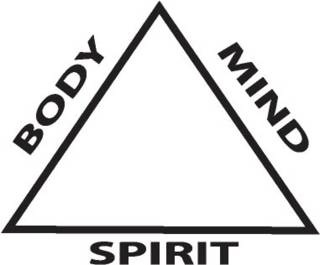
The 3 hearts I am referring to here are body, mind, and spirit.  While the prior 3 components make up the internal physical expression of technique, these 3 represent a unified metaphysical approach to technique.  It is the integrated use of mind, body, and spirit which brings life to and actualizes the practice of Warrior Fitness.

The following is how I distinguish the 3 Hearts:

Mind Intent, concentration and focus along with an understanding of the interrelationship of the exercises and how they integrate with and enhance the way we move in the world.

Body Forging a strong body to carry us through the challenges we face.

Spirit Pushing the edge to consistently increase resistance to failure.

When just one of the 3 hearts is absent or somehow out of balance, the technique itself becomes just a shallow, superficial representation of its true, powerful form.

body-mind-spirit

The techniques of both fitness and martial art must, by definition (at least the Warrior Fitness definition) engage the complete human being – body, mind, and spirit – to have the most lasting and transformative effect.  Without full commitment of the 3 Hearts not only is the technique itself a weak expression of its true power, but the person executing it, by default, does not receive the comprehensive benefit of the exercise.

“It is much better to deeply practice an exercise just 3-4 times while being fully engaged than to practice it 100 times without.” – Jon Haas


The Law of Threes – Part I

In the following 3 (or more) part series I will begin to lay out the specific philosophies of training in the Warrior Fitness System.  In each segment we will examine a particular set of principles, all of which happen to come in groups of 3; thus the entire series together is named, “The Law of Threes”.  These principles are the beginning of how to teach and train technique within the Warrior Fitness System.

In additional upcoming articles, I will also begin to delineate the 3 Paths of Warrior Fitness Training, as well as the 4 Levels of Training Preparation.

Today though, let’s begin with…

The 3 Physical Components of Technique

Within the Warrior Fitness Training System, there are 3 main components which must be present in order to express the correct form for each physical technique.  These 3 components are:

  • Alignment – how the structure of the body is used for the maximum expression of stability, power and efficiency.
  • Movement – how the body moves itself, with a weight, or with weapons to express maximum mobility, power and efficiency.
  • Breathing – how the body breathes to unite movement and alignment to correctly express energy, power and efficiency.

“It is the breath that gives life to and actualizes the techniques” – Masaaki Hatsumi, Bujinkan Soke

Each of these 3 components must be taught correctly and integrated within the body of the trainee before they can be said to be executing the correct form of the technique.

The components of Alignment, Movement, and Breathing relate to both fitness and martial art techniques.  For example, skills like the kettlebell swing, bodyweight squat, or push-up in fitness, as well as martial techniques like throwing a punch, striking with a stick, or cutting with a sword.

No matter what particular outer expression of the technique takes, these 3 physical elements of Alignment, Movement, and Breathing must be united within the practitioner to create whole body power and maximum efficiency.  Only in this way can one be said to be doing the techniques of Warrior Fitness accurately.

warriorfitness-Logo

How to Train More Every Day

The only way to go from average martial artists to outstanding is to train more.  You may be limited in how many classes you can attend on a weekly basis or how many seminars you can attend on a monthly basis, but you are not limited in how much solo training you can do on a day to day basis.  The key to greatness lies in solo training.  This is how you build yourself up to mastery.  Step by step, session by session, day by day.  There is no other way.

That being said, I humbly offer the following 4 suggestions on how to train more every day.


1)      Awareness, Awareness, Awareness

Keep your eyes, ears, and senses open to your surroundings.  Make it a habit to not allow anyone to sneak up on you or surprise you.  Make a game out of knowing where people around you are, even if you can’t “see” them.

ZanshinKanji

2)      Don’t Just Walk, Ninja Walk!

Take the opportunity no matter where you are to practice your balance, footwork, and movement skills.  This doesn’t mean you have to stalk your boss in the company restroom – unless you want to get fired!  But when you move, whether it’s in the office, walking down the street, in the grocery store, or out in the woods, pay attention to your balance, body control, and coordination.  Raise and lower each foot purposefully.  Do not let your walking be “controlled falling”.

3)      Mini Training Sessions

All of us seem to think that if we can’t dedicate a solid hour or so to solo training than we just don’t have the time to do it.  My solution for you is this – train in 5 minute increments.  No matter who you are and what type of work you do, you have 5 minutes to spare during your day.  If you look for it, you probably have many blocks of 5 minute increments during your day.  Don’t waste them!  Use them to train.  In 5 minutes you can practice all the Sanshin No Kata 5 times each side.  In 5 minutes you can do 100 push-ups (maybe!). In 5 minutes you can practice ukemi.  In 5 minutes you can do a flow drill.  Be creative, figure it out!  All those mini blocks of 5 minute training sessions add up to huge amounts of time over a week, month, year, and decade.  You’re in this for the long haul, aren’t you?

4)      Set a Goal

Figure out what your own personal training goals are and write them down.  Give yourself a deadline to achieve them.  Add actions steps to help you reach each one.  Develop a plan of attack and hold yourself accountable.  Need help developing a plan?  Ask me.  I can help you.  It’s what I do.


How Natural is Your Shizen No Kamae?

This may come as a shock, but I believe many people training in the martial arts today are doing shizen no kamae (natural posture) wrong.  How can this be?  After all, aren’t you supposed to be just standing there naturally?  Well, yes and no.

The problem stems from the fact that even though this is a “natural” posture, there are not that many people who stand naturally, naturally.  We need to be taught how to be natural; or perhaps it’s better to say we need to unlearn and strip away from our bearing all that is NOT natural to find a true shizen no kamae.

TenChiJin

In order for the body to be supported with minimal effort and tension, 2 forces that act on us all the time must be understood and mastered.  The 2 forces I am referring to are Ten (heaven) and Chi (earth).  Ten and Chi are controlled by Jin (man) standing in the middle of the 2 – TenChiJin.  Ten, the force of heaven, is gravity pulling the whole body down towards the earth.  Chi, or the force of earth, is support pushing the body up opposing the force of gravity.

The body itself though must be conditioned to manipulate these 2 forces (there is a kuden).  When the body is properly conditioned it then acts like a tensegrity structure – bones act like compressive struts pushing out while connective tissue pulls in.  This combined with an understanding of how the forces of heaven and earth work create a profound neutral within the body, or zero state.

How Do We Stand?

In practical terms though, how should we stand?  Let’s start with the head and work our way down…

Lift upwards slightly with the crown of the head allowing the chin to lower.

This straightens the vertebrae at the back of the neck. Shoulders are back and down sitting on the spine.

The back should be flat.

Do not tuck the pelvis.

The spine should be suspended from above like a skeleton hanging in a Science classroom.

Do not have the arms lay flush against the body.

There should be a golfball sized space under the armpits.

The bottom of the spine pulls straight down from the tail bone.

Feel like you are sitting on a high stool.

Allow the knees to bend slightly.

Feet should be shoulder width apart and pointed straight forward as if on railroad tracks.

Legs should feel like they are squeezing a beach ball.

Remember though, the ball puts outward pressure on the legs as they squeeze in.

Both directions, not just one.

The weight is carried in the hollow behind the balls of the feet.  In Chinese Medicine, this is known as the yongquan or bubbling well point.

All of the above points must be maintained to have a truly “natural” shizen no kamae.  Oh yeah, last point – RELAX! 🙂


The Secret to Becoming a Great Martial Artist

There is one very special, not so secret, secret to becoming a great martial artist.  Want to know what it is?

Do the work.

Train every day.  Yes, every day.  Great martial artists train all the time.  Not once a week.  Not every other day, not just during class.  Every day.  Multiple times a day.

The not so great martial artists are content to train only in class or at seminars.  They spend lots of time thinking about training, maybe, but the actual doing, not so much.

For you the process is simple – not easy.  Daily training.  How do you do this?  Figure it out.  You don’t have to think about when you’re going to take a shower during the day or brush your teeth, you just do it.  Make your training a priority and get it done.  While others are busy doing other things, you are training.  While others are busy daydreaming about training, you are training.  While others are busy running their mouths about training, you are – you guessed it – training.

Ninja Artwork1


Soon it will begin to show.  The difference may not be too apparent at first, but consistency of training will win out.  It may not be so obvious in a year, or even 2.  But after 5 years it will be very noticeable.  After a decade, you will be miles ahead of the rest of the martial arts landscape.

You will move better.

You will feel different when they touch you.

You will have power in motion and in stillness.

You will stand out, not because of ego or anything like that but because the work you put in day after day, week after week, month after month, and year upon year will cause your skills to grow exponentially.  The growth and development created simply by training every day will become self evident.

So ask yourself – do you want to be a mediocre martial hobbyist (not that there’s anything wrong with that), or do you want to be legendary?

The choice is yours.  As for me, F__k being mediocre. 🙂


What If All the Stories Surrounding the Incredibly Powerful, Legendary Martial Artists of Old Were True?

What if greatness wasn’t random, but specifically engineered?

What if YOU Had Access to Their Secret Training Strategies for Building Whole-Body Strength & Power for Martial Arts – ANY Martial Art – in Your Hands?

Learn more ==>> 

Fitness Dangers for Bujinkan Students

Martial artists need to be extremely cautious when choosing a fitness program to compliment their training.  While the right program can support, enhance, and protect budo practice, the wrong one can just as easily derail it.

Bujinkan Budo Taijutsu relies on relaxed, whole-body power devoid of excess muscular tension to properly execute its techniques.

hatsumi sword


Think About This

Think about this – each and every action you repeat over and over again encodes in your nervous system and creates change in your body, no matter how you value that change.  Meaning that if you want to train yourself to move softly, subtly, and with relaxed power for your martial art practice yet you perform high tension power lifting exercises at the gym, guess what gets carried over to your budo?  Yup.  Too much tension.

If you are working towards using your whole body as a unit in budo practice so that when one thing moves, everything moves (can you do this?), but you perform bodybuilding style splits and isolation exercises in your strength training, what do you think happens to your functional integration?  Yup.  Bye-bye.

The critical thing to note here is that, as stated above, every action you do, no matter what your opinion of that action is, has an affect on your nervous system.  When 2 actions compete, both lose out.

Shouldn’t your supplementary training and fitness support and enhance your main goal of becoming a more proficient martial artist?  If it doesn’t, you might want to ask yourself what is more important to you?  These are tough questions for a life long, committed budoka to wrestle with – trust me!  I know.  I walk a thin line in my training every day.  But I made my choice long ago… You see, I love fitness, but budo is in my blood.

So when you go looking for a strength and conditioning program to support and protect your martial arts practice, remember something – I have been there, done that, and got the t shirt (several, actually).

Already Done For You

The research has been done.  The exercises, protocols, and programs have been rigorously tested.  The results are in.  I have created several Done For You programs that I KNOW will change your Bujinkan Budo Taijutsu practice for the better.  As a 20+ year veteran of the Bujinkan (I started training in 1989), I have put together these programs for you – Bujinkan students and teachers alike.  It’s all here….

Martial Power Cover1


WFBookCover2


WF UG Cover1


Ninja Mission Cover


Traditional Martial Artists of the World – UNITE!

Traditional martial arts all have a long history of intense, sometimes downright brutal, physical training to forge the warrior’s combative body, mindset, and spirit.

This training has, up until very recently in history, never been optional. If you did not have the strength of will to endure it and push through then you simply did not make the cut and were not taught higher level skills. Not that you would be considered somehow unworthy or anything silly like that, but you would be thought physically incapable and therefore not worth the teacher’s time to train you.

Each school of martial art had its own type of tanren or forging process to harden the aspiring martial student. Continue reading