Imperfect Training for Injury Prevention


“All-round sports training must include the capability of coping with unexpected and sub-optimal conditions”

– Mel Siff, PHD author of Supertraining


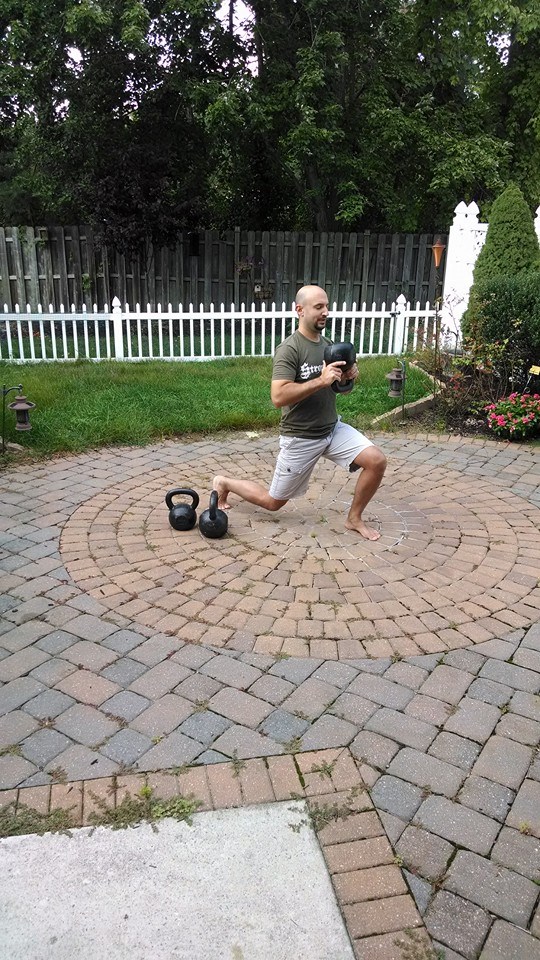
In a recent post, Are You Practicing Wrong, I covered why I think the idea of “perfect practice” is utter nonsense when it comes to training yourself how to improve at pretty much any skill.  In this post, I’d like to take it a step further and talk about how crucial Imperfect Training is to your overall development as a warrior. Continue reading

The UN-Natural Athlete

I was never what you would call a natural athlete growing up.  In fact, I pretty much sucked at every sport I tried – baseball, basketball, soccer, kickball, tennis… you name it, I sucked at it.  To make things worse I was also ridiculously shy and introverted as a kid, so that combination, on top of having little to no athletic skill, made things even worse! Continue reading

Settling for Imperfection

I’ve got some news for you.  You will never be perfect at anything.  Not your strength, not your conditioning, not your martial art, not your job, not your relationships, nothing.  You will never even be able to make the perfect peanut butter and jelly sandwich.  Nope.  Not ever.

So what does that mean?

Should you simply stop trying right now? I mean, since you’ll never be perfect at anything, what’s the point, right?  Why bother? Why struggle and make the effort?  Well, I think the struggle is the point. It’s the process, not the goal.  It’s what struggling and reaching and trying make of you that is the important thing.  The journey itself, not so much the destination.  In any worthwhile pursuit, like budo (martial arts to you non-budo people) for example, there is no end to the learning.  The study is so vast and so deep you could pursue it for several lifetimes and still not reach the end.

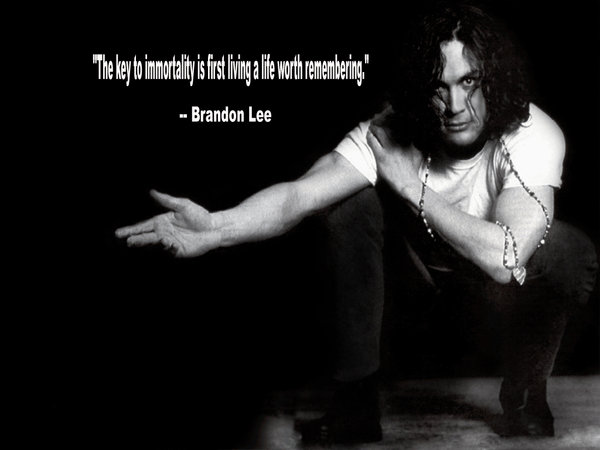
The late, great Brandon Lee once said, “With what level of imperfection will you settle?”  I think this is what he was talking about.

brandon lee

How content are you with your current level of skill in your martial arts practice? How satisfied are you with your current level of strength and conditioning at the gym? How happy are you with your current job, status, level of wealth, or relationship(s)?

Are you willing to settle for where you are right now in one or all of those categories, or do you want more?

The question you need to ask yourself in each of those areas is Brandon’s – with what level of imperfection will you settle? Where will you stop growing, pushing, struggling, changing, expanding your capacity, living up to your potential?  When will you stop?

Or will you ever stop?

Keep Going!

Never Take Ukemi Again

What if you never had to take ukemi again?

Not because you stopped training or avoided it or anything negative like that, but simply because no one who came in contact with you was able to throw you.

Interesting idea, eh?

Although for the sake of paired training and being a good training partner, perhaps a better model would be this – what if you only took ukemi from someone when you wanted to, and not when you had to?

What if you had the skill to naturally reflect incoming force so that an attacker was not able to throw you, joint lock you, take you down, or even off balance you? Continue reading

Training in the Elements

If you are a martial artist, it is essential to train your art outside in the elements.  Since most traditional arts were born outside, and not in a gym or dojo setting, it is important to every once in a while get back to the roots of your art.  Correct me if I’m wrong, but as far as I know most wars have been fought outside in the elements, through all different types of weather conditions, and on changing terrain.  I think we have all become way too spoiled and comfortable by training in a sheltered and heated (or air conditioned) dojo, on a flat, mat covered surface all the time.  Get out of your comfort zone!  Start to get comfortable being uncomfortable!  Get a little wet and dirty.  Have some fun! Continue reading

Internal Power and Bujinkan Training

When I first began talking about internal power in the context of Bujinkan training, I realized that many people might be skeptical of this type of training at the very least, or have many preconceived misconceptions that would not allow them to even consider the method as a viable form of training for budo.

Therefore I decided to write this blog post to gauge the interest of my readership and how accepting you might be of internal power training and my interpretation of its role within Bujinkan training. I hope you find it helpful!

What is Internal Power?

I think it’s best to start with the basics.  What is internal power and how can it useful to the practitioner of Bujinkan Budo Taijutsu?  Let me state this at the outset to hopefully clear up a rather unfortunate misinterpretation of IP.

Internal Power is physical.

It’s not some mystical mumbo jumbo or a throwing chi balls type of nonsense.

It is actually a way of conditioning the body through specific solo training exercises and paired partner training. The training method spans thousands of years and has been handed down through the ages within the warrior traditions of India, China, and Japan.  It is a body technology with a set method and detailed process of instruction that simply cannot be learned by osmosis.  It must be explicitly taught.
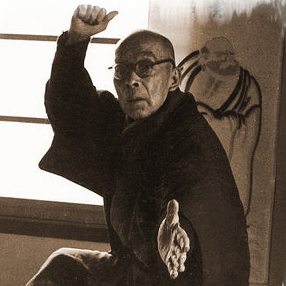
takamatsuSensei

The basis for the method is what is known as the union of opposites or In Yo Ho, in Japanese.

By creating opposing forces within the body (up/down, left/right, front/back) through the use of intent – your own mental direction using imagery, feeling, and visualization – we begin to increase the mind-body connection to a remarkable degree.

Through the solo training exercises we condition and strengthen the entire fascia network, as well as tendons and ligaments, throughout the body.  This process serves to create a connected body through the center so that when ‘one thing move, everything moves’.

The Ultimate Ukemi

Internal Power training changes the way outside forces act on the body.  The structure becomes dynamically stable so that applied force can either be distributed throughout the chain and dissipated or, at a higher level, simply reflected right back onto the opponent.  When force is reflected back this is what is known in Japanese as Yamabiko, or Mountain Echo.

At first blush it may sound like a party trick, but the budo applications are quite staggering.  Think about it.

How does every martial art technique work?

What is the first thing you are taught to do prior to applying a technique?

Break the opponent’s balance, right?  Get kuzushi.

What if no one can compromise your structure?

What does that do to every throw, lock, and take down applied to you?  Yeh.  You’re getting it now, aren’t’ you?

And that’s just the beginning.

Every time you move, you are completely and dynamically stable, balanced.  You gain the ability to hit like a truck using the full mass of a connected body without dedicating your weight.  (Remember – when one thing moves, everything moves.)

This becomes very profound, especially when you start to incorporate weapons.

And, since you are connected through the middle of your body due to the specific solo training exercises, you will finally and probably for the first time, actually be moving from center, hara, or dantien.

Sound interesting?

You can learn my full method of integrating and training the mind-body system HERE.
 

I am also more than happy to share what I know about internal power training, especially in the context of how it can be fully integrated into our Bujinkan Budo Taijutsu practice.  I teach it in my weekly classes and seminars upon request. Contact me HERE.

Are You a Martial Artist or Martial Hobbyist?

Sometimes the lines between martial artist and martial hobbyist get blurred.  How do you determine whether you are a true martial artist or just a martial hobbyist?  Here is a quick and easy way to find out…

Martial Hobbyist Quiz

  •  Do you train only when it is convenient?
  • Do you train only when you feel good?
  • Do you train only when you have nothing better to do?
  • Do you train as a way to get out of the house?
  • Do you train to socialize?
  • Do you train only when it’s fun?
  • Do you only train when you are in class?
  • Do you only train when someone is watching?

If you answered YES to one or more of these questions, then congratulations, you are a Martial Hobbyist.  Not that there’s anything wrong with that.

hobbyist

Martial Artist Quiz

  • Do you train regardless of whether you feel like it or not?
  • Do you train when you have a headache?
  • Do you train when other people are relaxing?
  • Do you train when it’s raining outside?
  • Do you train even when there is a new episode of Big Bang Theory on TV?
  • Do you train every day no matter what?
  • Do you train for life?
  • Do you train even when there are better things to do?
  • Do you train when it’s boring, repetitive, and dull?
  • Do you train on your own without supervision?
  • Do you constantly strive to get better each time you train?
  • Do you define yourself through your martial practice?
  • Do you look at everything else in life through the lens of your martial training?


If you answered YES to 3 or more of these questions, then congratulations, you are a Martial Artist.

Miyamoto_Musashi_Self-Portrait


This post was inspired by reading about a dedicated yoga practice earlier this morning and what it takes to achieve a committed, dedicated practice.  Hopefully no egos were bruised in the reading of this post!

By the way, if you want to move from hobbyist status to artist status, here is great article on How to Train More Every Day.  Enjoy!


Protect. Break. Leave Behind.

How can we train for the friction and chaos of battle when following a set fitness routine?

Physical preparation for combat readiness must be, by its very nature, a multifaceted approach.  If the combatants have to be ready for anything, shouldn’t their fitness regimen reflect that?  Surely the idea of training random workouts each and every day must help better prepare the person to face any challenge, right?

Well, yes and no.

As with all things, fitness is a skill.  The body must be adequately prepared at a baseline level through rigorous training AND practice to establish a solid foundation of GPP.   To suddenly subject a trainee to an onslaught of arbitrarily selected workouts is only a recipe for creating a shallow level of skill in a bunch of random areas.  It is also a great way to cause injury rather than seek to prevent it.  Random training produces random, haphazard results.

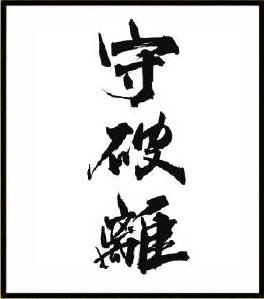
The Warrior Fitness Training methodology follows the Shu-Ha-Ri model of teaching prevalent in schools of traditional Japanese martial arts.  Shu-Ha-Ri translates to “protect the form, break the form, leave the form behind”.

shuharith

Usually within schools of traditional Japanese Budo this is a linear model where at the beginning of training the student is taught to carefully protect the form without deviation so as to template themselves to the teacher and to the martial system.  After becoming proficient in the exact techniques of the school the student is then encouraged to begin breaking the form.  And then slowly, very, very slowly, after decades of practice the student finally begins to transcend the form and leave it behind thus moving at the level of principle.

The Shu-Ha-Ri model is slightly different in the Bujinkan tradition that I study.  Rather than a strict linear progression, the model is not quite as fixed.  It may be Shu-Ha-Ri, Ri-Ha-Shu, Ha-Shu-Ri, or any combination of the three.  In this way, the student does not have to wait until he has trained for decades to learn how to break the form, nor does he always leave the form behind.  Instead the training progresses in an upward spiral where the teacher may start with the basics, circle up to breaking the form, and finally leave the form behind, followed by working again on the basics.  The same material is always looked at with fresh, new perspective and greater depth each time it is taught no matter where in the cycle it falls.  This allows for better all-around development and faster progression while still inculcating the basic forms and instilling a respect for technique.  It also gives the student the freedom to adapt to the friction and chaos of combat by learning how to both break and throw away the form when required yet still conforming to the strategic and tactical principles of the art.

How Does This Relate to Fitness?

What I have done is take the Shu-Ha-Ri model as taught within the Bujikan martial arts tradition and apply it to the programming in my Warrior Fitness Training System.  This means that within a complete training program, the student will undergo GPP (general physical preparation), SPP (specific physical preparation), TS (technical skills), and MT (mental/emotional toughness) to fully and completely prepare them for the task, goal, or mission at hand (For a more detailed description of each, please see my post on The 4 Levels of Preparation).

Following the Bujinkan model then, the progression of training may not necessarily be a straight line.  Depending on the level of the student, GPP will most likely form the bulk of the training but it will be cycled out of and back into throughout the duration of the program.  As the student progresses and increases in the skill of fitness, their training becomes blended at a higher level of SPP maybe only cycling back into GPP to shore up certain weaknesses and then coming right back out again.  This insures that the student is constantly progressing and also constantly prepared without having to resort to a random workout generator model of training.

Ready to take your Combat Conditioning to the next level? Pick up WarFit Now for Only $7!