The Secret to Becoming a Great Martial Artist

There is one very special, not so secret, secret to becoming a great martial artist.  Want to know what it is?

Do the work.

Train every day.  Yes, every day.  Great martial artists train all the time.  Not once a week.  Not every other day, not just during class.  Every day.  Multiple times a day.

The not so great martial artists are content to train only in class or at seminars.  They spend lots of time thinking about training, maybe, but the actual doing, not so much.

For you the process is simple – not easy.  Daily training.  How do you do this?  Figure it out.  You don’t have to think about when you’re going to take a shower during the day or brush your teeth, you just do it.  Make your training a priority and get it done.  While others are busy doing other things, you are training.  While others are busy daydreaming about training, you are training.  While others are busy running their mouths about training, you are – you guessed it – training.
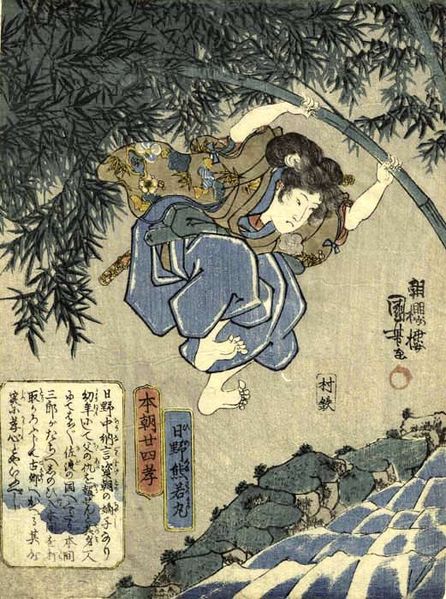
Ninja Artwork1


Soon it will begin to show.  The difference may not be too apparent at first, but consistency of training will win out.  It may not be so obvious in a year, or even 2.  But after 5 years it will be very noticeable.  After a decade, you will be miles ahead of the rest of the martial arts landscape.

You will move better.

You will feel different when they touch you.

You will have power in motion and in stillness.

You will stand out, not because of ego or anything like that but because the work you put in day after day, week after week, month after month, and year upon year will cause your skills to grow exponentially.  The growth and development created simply by training every day will become self evident.

So ask yourself – do you want to be a mediocre martial hobbyist (not that there’s anything wrong with that), or do you want to be legendary?

The choice is yours.  As for me, F__k being mediocre. 🙂
 

What If All the Stories Surrounding the Incredibly Powerful, Legendary Martial Artists of Old Were True?

What if greatness wasn’t random, but specifically engineered?

What if YOU Had Access to Their Secret Training Strategies for Building Whole-Body Strength & Power for Martial Arts – ANY Martial Art – in Your Hands?

Learn more ==>> 

Fitness Dangers for Bujinkan Students

Martial artists need to be extremely cautious when choosing a fitness program to compliment their training.  While the right program can support, enhance, and protect budo practice, the wrong one can just as easily derail it.

Bujinkan Budo Taijutsu relies on relaxed, whole-body power devoid of excess muscular tension to properly execute its techniques.

hatsumi sword


Think About This

Think about this – each and every action you repeat over and over again encodes in your nervous system and creates change in your body, no matter how you value that change.  Meaning that if you want to train yourself to move softly, subtly, and with relaxed power for your martial art practice yet you perform high tension power lifting exercises at the gym, guess what gets carried over to your budo?  Yup.  Too much tension.

If you are working towards using your whole body as a unit in budo practice so that when one thing moves, everything moves (can you do this?), but you perform bodybuilding style splits and isolation exercises in your strength training, what do you think happens to your functional integration?  Yup.  Bye-bye.

The critical thing to note here is that, as stated above, every action you do, no matter what your opinion of that action is, has an affect on your nervous system.  When 2 actions compete, both lose out.

Shouldn’t your supplementary training and fitness support and enhance your main goal of becoming a more proficient martial artist?  If it doesn’t, you might want to ask yourself what is more important to you?  These are tough questions for a life long, committed budoka to wrestle with – trust me!  I know.  I walk a thin line in my training every day.  But I made my choice long ago… You see, I love fitness, but budo is in my blood.

So when you go looking for a strength and conditioning program to support and protect your martial arts practice, remember something – I have been there, done that, and got the t shirt (several, actually).

Already Done For You

The research has been done.  The exercises, protocols, and programs have been rigorously tested.  The results are in.  I have created several Done For You programs that I KNOW will change your Bujinkan Budo Taijutsu practice for the better.  As a 20+ year veteran of the Bujinkan (I started training in 1989), I have put together these programs for you – Bujinkan students and teachers alike.  It’s all here….

Martial Power Cover1


WFBookCover2


WF UG Cover1


Ninja Mission Cover


Warrior Podcast with Eric Guttmann

In an effort to provide you, my dear readers, with the best information out there on strength, health, fitness, and martial arts, I am interviewing top coaches, professionals, martial arts masters, and ordinary people who do extraordinary things. Continue reading

Traditional Martial Artists of the World – UNITE!

Traditional martial arts all have a long history of intense, sometimes downright brutal, physical training to forge the warrior’s combative body, mindset, and spirit.

This training has, up until very recently in history, never been optional. If you did not have the strength of will to endure it and push through then you simply did not make the cut and were not taught higher level skills. Not that you would be considered somehow unworthy or anything silly like that, but you would be thought physically incapable and therefore not worth the teacher’s time to train you.

Each school of martial art had its own type of tanren or forging process to harden the aspiring martial student. Continue reading

Fighter Conditioning at the Cave

Guest post by my friend, Coach Frank DiMeo!

Ever since my early days of martial arts training I have always looked for ways to become more effective.

Much of the best information I gathered over the years came at a painful, and often humbling, price.

No matter what type of fighter you are, being stronger and faster is essential. Being able to “go the distance” is also a must as is developing greater stopping power in your strikes and kicks. Continue reading

Why I Hate Kickboxing

For months now people have been asking me to implement a Kick Boxing program at Warrior Fitness Gym.  I’ve been resisting the pressure mainly due to one important factor – I hate kick boxing. 🙂

Allow me to clarify.  I hate what real kick boxing has devolved into, the dreaded “cardio” kick boxing.  To me, cardio kick boxing is almost worse than Zumba as far as fitness goes. Continue reading

4 Principles For Punching Power

Principles of Striking Power


1.    Whole Body Power

All movement happens in real life happens in three dimensions, so why train exercises that only incorporate one or two?  Training muscles in isolation, unless it is used to rehab a specific injury, range of motion, or strengthen a particular muscle to add to the whole, does not work in martial art.  With very few special exceptions, the majority of exercises in this manual will train movements in three dimensions utilizing diagonal, rotary, and angular strength, not muscles. As discussed above, this is the goal of SPP – neurological adaptation.


2.  Stored Elastic Energy (SEE)

Stored Elastic Energy is basically the potential energy stored in tendons and connective tissue as a way to power movement.  An easy exercise to begin to feel stored elastic energy is to stand in a natural stance with feet shoulder width apart.  Bend your right arm and raise it up to shoulder height as if you were about to throw the most telegraphed punch in history (don’t worry, it’s just an exercise).  Now, lead from the elbow and pull your fist back.  Allow your torso to rotate, but keep the feet planted and the hips facing forward.  When you reach the end of your range of motion, hang out there for a second and feel the tension (torque) on the spine.  Now simply relax and release that torque to throw the punch.  Don’t add any driving forces with muscle.  You can’t propel it any faster; you’ll just slow it down.  Feel it?  Try it again.  Do it with the other arm.  Remember the feeling.  This is stored elastic energy (SEE). This point here about creating torque or stored elastic energy (SEE) in the spine is essential in being able to move powerfully without winding up or telegraphing the movement. If you are having trouble feeling it, try to exaggerate the movement. Make it much larger than necessary to study the feeling. It should feel like a tension in the lower back near the bottom of the spine. When this tension (torque) is relaxed (released), the movement happens.

WF UG Cover1

3.   Structure / Kamae

 Many people tend to use the terms alignment and structure almost interchangeably but in actuality, alignment is a component of structure. For example, looking at a natural standing posture, good alignment would be:

  • Crown up
  • Chin down
  • Shoulders packed down
  • Spine lifting up (through crown)
  • Spine pulling down (through the sacrum)
  • Hips under shoulders
  • Knees under hips
  • Mid-foot balance
  • Chest is relaxed
  • Butt not sticking out
  • Hips are open
  • Knees are over the toes
  • Weight evenly distributed (50/50)
  • No leaning forward or backward

This puts the whole body into proper alignment. Structure also includes (in my lexicon) the balance of tensions within the body’s soft tissues. Think of spine as the mast of a sail boat while the soft tissues (fascia) act as the stays keeping the tensional balance.


4.           Breathing

 How often do you think about breathing as it relates to striking?  Yet it is absolutely essential to maintain proper breathing when in combat or simply hitting a heavy bag, mitt, or an opponent.  Lack of breath control affects the rest of your body and hinders your overall performance.

This article is from my e-book manual, Warrior Fitness Guide to Striking Power.

Want to learn even more about how to bring together fitness training with your martial art practice for vast performance improvement?  Join me on a 6-week journey where I take you behind the curtain and show you how to build Martial Power!

MP

Intelligent Tension For Striking

How intelligent is your usage of tension in striking?

All too often in training our punching and kicking techniques, we find what I’ve come to label as “dumb tension”.  This is used by martial artists across the board either accidentally through lack of understanding of how the body should work, or taught and passed down from teacher to student on purpose through a lack of knowledge.

Dumb tension is defined as either the complete usage of whole body, generalized tension to attempt to deliver extra power to a specific kick or strike, OR the complete lack of any and all tension to attempt to whip a wet noodle-like strike at the opponent or target.  Both of these things miss the boat, in my opinion.

Walk the Middle Path

Intelligent Tension (IT) is simply walking the middle path between the two extremes and using the appropriate amount of tension required, and only that amount, to coordinate whole body power into a strike.  More tension does not necessarily equal more power in terms of striking.  Actually, the more tension recruited for a movement, the more you apply the brakes physiologically since your body is now moving against itself in an attempt to use generalized tension.  When both the agonist muscle and antagonist muscle are working against each other the result is less overall power delivery for the strike.  Learning to appropriately activate only the muscles necessary to accomplish the task removes the brakes, ups the power wattage, and increases the efficiency since you are no longer using energy you don’t need.

Additionally, the more tension created in a movement, the less mobility you have.  If you look at tension and mobility on one line with tension on one side and mobility on the other, the more you have of one, the less you have of the other.  When we train the nervous system to fire high tension all the time, we lose mobility and range of motion.  While this is perfectly acceptable and absolutely essential for a purely low-gear strength based activity like dead lifting, it is not fine for martial arts.

This article was a short excerpt from my manual, Warrior Fitness Guide to Striking Power.

WF UG Cover1

Get The Warrior Fitness Guide to Striking Power (e-book) and the original book, Warrior Fitness: Conditioning for Martial Arts (e-book) FREE when you pick up my brand new program –          WarFit Combat Conditioning!

warfit3d3


The Day That Changed My Life

I still remember it like it was yesterday.  I was 16 years old, sitting in the back seat of my parent’s car thumbing through the latest issue of Black Belt magazine when I came to a full page advertisement for the 1989 Tai Kai with Ninjutsu Grandmaster Masaaki Hatsumi.  To my shock and utter astonishment this 3-day seminar with the master ninja and his top students from Japan was being held in the United States.  Not only was it being held in the US, but in my home state of NJ, not even an hour drive from my house!  Something clicked in my brain – I HAD to go to this thing!  Continue reading

Stopping Power for Kicks & Strikes

The following is a guest post from my friend and fellow Underground Strength Coach, Frank DiMeo. 

It is always an honor to do a guest blog post for another coach, especially regarding martial arts and strength training.
To many people UFC is the only martial arts they are aware of, but the experienced martial artists know how broad a spectrum martial arts cover. Continue reading