Musashi on Posture in Strategy

In his classic work on the art of strategy, Go Rin No Sho, Musashi gives the following instructions on Posture in his art.

“Keep your neck straight, putting some force in the hollow of the nape; lower your shoulders, with the sensation that the torso from the shoulders down forms a unity; keep the back straight, do not stick out your buttocks, push your force downward from your knees to the tips of your toes, Advance the belly slightly forward so that the pelvis does not lose its stability…

It is necessary for you to have as your posture in strategy just the ordinary one, and it is essential that the posture of strategy be the ordinary one for you. This must be examined well.”
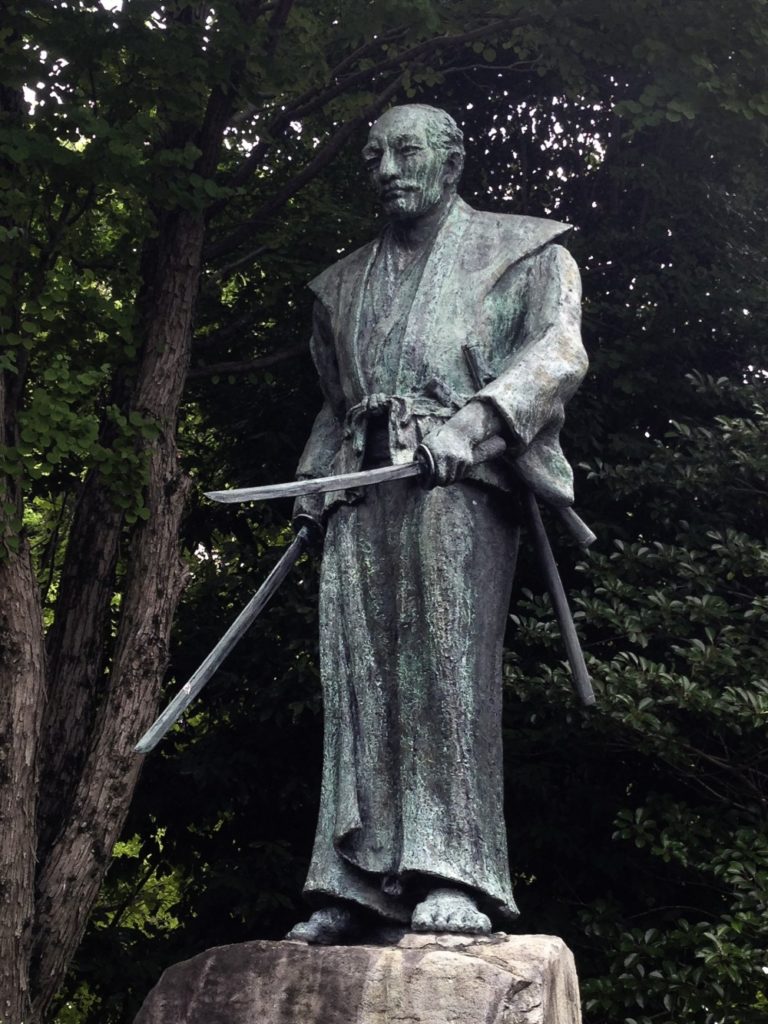

Notice how adamant he is that your stance for combat and your everyday stance be the same…

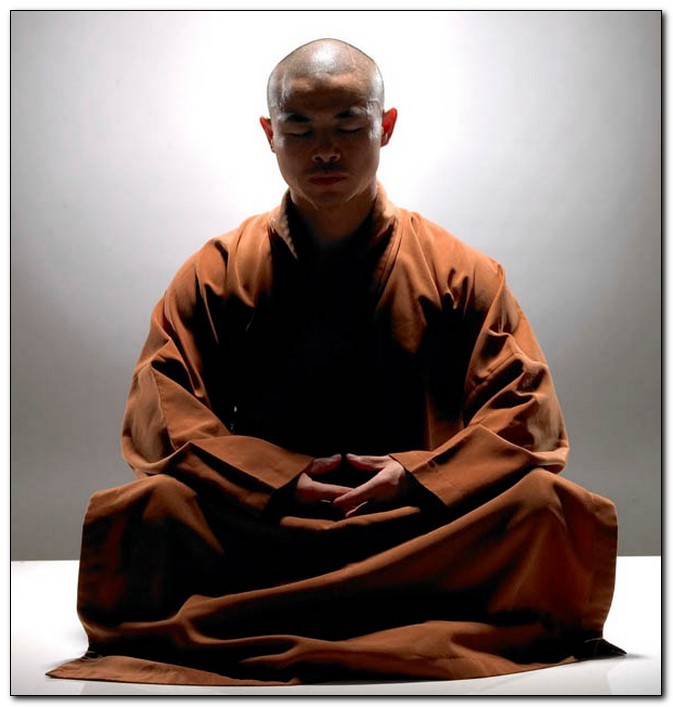
Isn’t it interesting that Musashi’s instructions for how to stand in his system of strategy sound remarkably similar to zhan zhuang (standing meditation) and shizen no kamae (natural posture).

Coincidence? I think not…

For comparison here is a video I made on how to stand in Shizen no Kamae (natural posture).


Now let’s take a deeper look into the standing practice as the world’s oldest and most effective form of Qigong.


Tachi Geiko (Standing Training) or Ritsu Zen (Standing Zen)

Zhan zhuang, or standing meditation exercise, has been used as a method of relaxation and health cultivation for thousands of years. The earliest known reference to standing appears inThe Yellow Emperor’s Classic of Chinese Medicine. Martial arts master Wang Xiangzhai wrote the following in his book on zhan zhuang:

“It is said that already 2000 years ago there existed the book Internal Canon, the gem of Chinese medicine, which even today is a guide for medical practice. The chapter Simple questions concentrates on cultivating health. For example we can read there: “In ancient times great masters stood on earth, supporting heaven, controlling yin and yang, breathing with essence of qi, standing alone, guarding spirit, with body being as one.”… Before the eastern Han dynasty many scholars and warriors knew the methods of “tranquil cultivating.” The exercises could be done walking, standing, sitting, lying. It was popular form of cultivating health. Later, during reign of Liang dynasty’s emperor Wu, Damo came to China to teach. He transmitted methods of “washing marrow” and “changing tendons.”
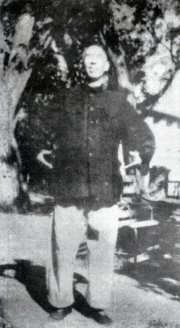
 

The health preserving and sustaining effects of zhan zhuang have been documented in hospitals and medical clinics across China. The reason this practice has such a profound impact on health and recovery from exercise is that the standing meditation acts like a system-wide reboot for the whole body. It stimulates the nervous system, increases circulation, and raises energy levels, while providing deep relaxation for both mind and body.

Aches, pains, old injuries, muscular tensions, and imbalances are highlighted and brought to the forefront by this method and then slowly dissolved over time and completely released. The practice provides a way of completely relaxing and letting go of the muscular tensions in the body, while the correct alignment of the bones delivers support, creating a profound neutral and relaxed, almost buoyant state. As the whole body and mind are exercised, both relax and stimulate the nervous system, increase circulation, open the joints, and raise energy level for a feeling of overall well-being.

This exercise looks easy from the outside. After all, you’re just standing there and not moving. However, inside, there is a lot going on – the breath and the qi (energy) are moving. This exercise is a challenging, sometimes frustrating, yet highly beneficial and rewarding practice. The only way to truly appreciate it is to experience it for yourself.


How Do We Stand?

In practical terms, how should we stand?  Let’s start with the head and work our way down.

  • Begin by standing in a natural stance. Feet shoulder width apart, knees slightly bent.
  • Lift upward slightly with the crown of the head, as if being pulled up by a string, allowing the chin to lower. This straightens the vertebrae at the back of the neck.
  • Shoulders are back and down sitting on the spine.
  • The back should be flat. Do not tuck the pelvis. The spine should be suspended from above like a skeleton hanging in a science classroom.
  • Hold the arms in front of the body, level with the solar plexus, as if hugging a tree. There should be a golf-ball sized space under the armpits.
  • The bottom of the spine pulls straight down from the tailbone, as if there is a weight attached to the sacrum. You should feel like you are sitting on a high stool yet trying to stand up at the same time.
  • Allow the knees to bend slightly. Feet should be shoulder width apart and pointed straight forward as if on railroad tracks.
  • Legs should feel like they are squeezing a beach ball. Remember, though, the ball puts outward pressure on the legs as they squeeze in, so there is pressure both directions, not just one.
  • The weight is carried in the hollow behind the balls of the feet. In Chinese medicine, this is known as the yongquan or bubbling well point.


All of the above points must be maintained to have a truly “natural” standing posture.


Maintaining a relaxed posture is key to beginning your standing meditation.
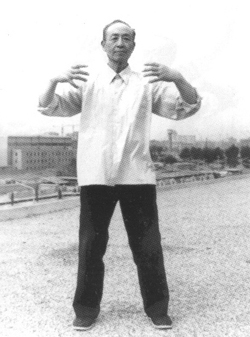
 

Supercharge Your Standing Practice

Now that you have the external mechanics down, let’s talk about how to supercharge your relaxation process.

  1. Mentally scan the body for areas of tension. The usual suspects will be the neck, shoulders, low back, and quads.


  1. Begin to actively release each area of tension one by one with your mind. For example, think of the tightness in your shoulders and relax it by telling yourself, “The tightness in my shoulders is letting go and relaxing.” Then proceed to the next area until you have systematically gone through them all.


  1. If one particular area is giving you trouble, then work on breathing into it. Inhale into the area, hold for a few seconds, and then exhale from the area to release it. Use this process over and over again until all the tension has let go.


  1. Once you have removed all the residual tension in the body, continue to stand holding that relaxed feeling. Think of your body as a drop of ink dissolving in the ocean, spreading out in all directions.


  1. Start with ten minutes of zhan zhuang standing. Work up to thirty minutes. In Chinese medicine, it is said that it takes approximately 28 minutes for the blood to complete one full cycle though the body, thus the recommendation to stand for thirty minutes. This can be increased to sixty minutes over time to allow for two full cycles of blood to be completed.


A New Way to Recover

In teaching this method to both my fitness clients and martial arts students I find that in addition to our usual compliment of recovery drills (consisting of mobility exercises, yoga asana, and compensatory movement), the addition of this simple practice of standing meditation has consistently accelerated our recovery process, allowed us to reach new levels of relaxation, and strengthened the mind-body connection beyond any other work we have done. Additionally, it has managed to increase energy levels while fortifying our bodies against the daily rigors of life, work, and family stresses.

While this method is elegantly simple to practice, requires little space and no special equipment, and can be done at virtually any time of day, it also is startlingly deep.

Go Deeper – Take the 100 Day Challenge!

Traditionally it is said that a minimum period of 100 days is necessary for the body to acclimatize and adapt to a practice. As our goal is to completely rewire the nervous system in order to change the body, 100 days seems like the perfect length of time.

How to Do It

  1. Work your way up to standing for 30 minutes a day for 100 days – think you can do it?
  2. Take the Integrated Strength Program challenge for 100 days and seriously upgrade your strength, health, and martial power!
5.5 Principles for More Effective Striking in ANY Martial Art

Part 1 of this series, Conditioning the Fists for Striking can be found HERE.

Being able to strike with power and precision involves a lot more than merely knowing the technique. Practice must include these principles of effective striking techniques for all martial arts…

1. Whole Body Power 

All movement in real life happens in three dimensions, so why train exercises that only incorporate one or two? Training muscles in isolation, unless it is used to rehab a specific injury, range of motion, or strengthen a particular muscle to add to the whole, does not work in martial art.

Our strike conditioning exercises must train movements in three dimensions utilizing diagonal, rotary, and angular strength, as well as prime moving muscles.

2. Stored Elastic Energy (SEE) 

Stored Elastic Energy is basically the potential energy stored in tendons and connective tissue as a way to power movement.

An easy exercise to begin to feel stored elastic energy is to stand in a natural stance with feet shoulder width apart.  Bend your right arm and raise it up to shoulder height as if you were about to throw the most telegraphed punch in history (don’t worry, it’s just an exercise).  Now, lead from the elbow and pull your fist back.  Allow your torso to rotate, but keep the feet planted and the hips facing forward.  When you reach the end of your range of motion, hang out there for a second and feel the tension (torque) on the spine.  Now simply relax and release that torque to throw the punch.  Don’t add any driving forces with muscle.  You can’t propel it any faster; you’ll just slow it down.

Feel it?

Try it again.

Do it with the other arm.  Remember the feeling.  This is stored elastic energy (SEE).

The point here about creating torque or stored elastic energy (SEE) in the spine is essential in being able to move powerfully without winding up or telegraphing the movement.

If you are having trouble feeling it, try to exaggerate the movement.

Make it much larger than necessary to study the feeling. It should feel like a tension in the lower back near the bottom of the spine. When this tension (torque) is relaxed (released), the movement happens.

3. Structure / Kamae 

Many people tend to use the terms alignment and structure almost interchangeably but in actuality, alignment is a component of structure.

For example, looking at a natural standing posture, good alignment would be:
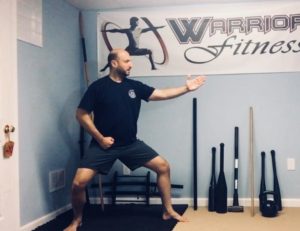
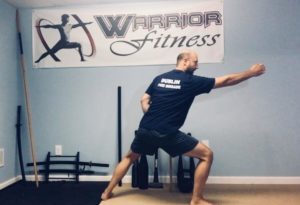
  • Crown up
  • Chin down
  • Shoulders packed down
  • Spine lifting up (through crown)
  • Spine pulling down (through the sacrum)
  • Hips under shoulders
  • Knees under hips
  • Mid-foot balance
  • Chest is relaxed
  • Butt not sticking out nor is pelvis tucked under
  • Knees are over the toes
  • Weight evenly distributed (50/50)
  • No leaning forward or backwardThis puts the whole body into proper alignment.


Structure also includes (in my lexicon) the balance of tensions within the body’s soft tissues. The bones act as compressive struts pushing outward from the center while the soft tissues (fascia) act as the stays pulling inward towards the center keeping the tensional balance in the body.

4. Breathing 

How often do you think about breathing as it relates to striking?

Yet it is absolutely essential to maintain proper breathing when in combat or simply hitting a heavy bag, mitt, or an opponent. Lack of breath control affects the rest of your body and hinders your overall performance.

5. The S.A.I.D Principle 

Why are all the above ideas important to understand in relation to striking and martial movement?

The SAID Principle – Specific Adaptation to Implied Demand says every activity that we repeat consistently causes an adaptation in the body.

The critical thing to note here is that it does not matter at all how we value this adaptation.  It can be something that we want like how healthy exercise increases lean muscle mass and burns excess fat, or it can be something we do not want like how eating junk food to an extreme causes our body to adapt by putting on weight.

Both of these are examples of activities that cause adaptations in the body.   Our goal is to train adaptations we value highly like the enhanced neural connections in our nervous system that increase our skill level. Keep this in mind when training.  We do not want to train bad habits!

5.5 Elements of Efficiency 

Efficiency is defined as the amount of useful work divided by the amount of total work.  In other words, how much effect are you producing for the amount of effort you are expending?

  • Ever see a batter “swing for the fences” only to completely miss the pitch?
  • Ever see someone try to pick something up that is really light, but they believe is heavy?
  • How about watching someone using the general whole-body tension we discussed above trying to hit a heavy bag?

How much effect, i.e. force from the strike embedded into the target, is gained from the huge effort expended?

You must train to have your strikes be both effective (devestatingly powerful) and efficient (uses the least amount of force or energy to accomplish the movement). Only then can you be said to have mastered the art of striking!


Learn exactly how to upgrade your striking skills in ANY martial art with these resources from Warrior Fitness Training Systems…

The Strength of Structure (and How to Train It)

As we discussed in the previous post (see here), all martial movement must be based on a platform of both mobility and stability. Today we will discuss stability.

Kamae is much more than just a stance or ready position. It is the platform from which all movements are made and from which all techniques are delivered. Your kamae is quite literally the foundation upon which your entire martial art practice rests.

A weak, or structurally flawed, kamae will limit the amount of power delivered and reduce the effectiveness of every technique employed. Conversely, a strong kamae is the key to the effective execution of all your techniques. A strong kamae carries the support of the ground and efficiently conducts that power through the user with minimal noise creating, in effect, a transparent power.

“You can’t shoot a cannon out of a canoe.”

Water provides a very poor base of support to maximally fire a cannon ball thus it will not travel very far. This is exactly what happens with a poorly constructed kamae. So much power bleeds off in different directions that the mean effect of the movement is extremely reduced and more energy is required in order to compensate for the inefficiency.

How Do We Build a Strong Kamae?

There are many different forms of strength training but only a few, very specific, methods of strengthening the structure (kamae). The key to strengthening structure, as you will see, is training the connective tissue – fascia, tendons, and ligaments, and strengthening the bones, rather than working on muscle. The benefits of this type of training are enormous; not only does having a stronger structure increase the effectiveness of martial movement and techniques, but also acts as a natural form of injury prevention by improving the strength and elasticity of the tissues and increasing the body’s overall resilience.

We will examine 4 main ones here from the EARTH section of Warrior Fitness working on strength, structure, and stability.

Loaded Carries – These provide a unique challenge to the body as they are a type of moving isometric exercise. Kettlebells or dumbbells are a great place to start, but loaded carries can be done with just about anything.

There are 3 basic loaded carries we will discuss here:

  • Farmer Walk – Hold 2 kettlebells at the sides and go for a walk. Try to maintain a neutral balance and move from center.
  • Rack Walk – Hold 2 kettlebells in the rack position and go for a walk. Try to maintain a neutral balance and move from center.
  • Overhead Carry – Hold 2 kettlebells overhead and go for a walk. Try to maintain a neutral balance and move from center.

Static Holds – Unlike lifting or carrying, static holds can be done anywhere with zero equipment. They also place a great emphasis on strengthening connective tissue for supporting the body.

  • Static Kamae Hold: Pick a kamae and hold it for time. The goal here is to relax in position and allow the connective tissue to do the work, not the muscle.
  • Static Push-up: Hold the top, middle, or bottom portion of a push-up for time. The goal here is to relax in position and allow the connective tissue to do the work, not the muscle.
  • Partial Lifts – Partials allow you to develop the connective tissues and bones in a way that full range of movement lifting cannot. By doing partials you are supporting more weight than you would be able to in a full range lift.

  • Push Testing – The push test is a very practical way of testing the quality of one’s solo training for internal power. The body, when properly trained, acts as an omni-directional structure.  This allows the practitioner to neutralize any incoming force by diffusing it throughout the structure rather than having to surrender to it or resist against it.


I cannot over emphasize how critical this type of training is to your development as a powerful martial artist. Not only does this type of training condition the connective tissues, bones, and muscles, but it forms the body into a cohesive unit that is both resilient and powerful.

Study this well, my friends!

Check out my bestselling Integrated Strength Program for more complete trainiing information…


Daily Mobility Practice – The Fountain of Youth

All movement skills, especially martial movement skills, must be built on a foundation of both stability and mobility. Today we will cover mobility.

A complete mobility practice moves each joint in the body through its complete range of motion bathing it in synovial fluid.

Movement is the only way your joints get nutrition!

Many trainers and coaches tend to look at the current rage of joint mobility protocols as recent innovations in sports science and training.  Everyone is talking about mobility for health, mobility for prehab or injury prevention, mobility for warm-ups, mobility for fending off the ravages of aging.  Everyone is talking about the benefits of increased range of motion for sport performance and martial art training enhancement.  And, just to be perfectly clear, this is a good thing.  They are all correct.  Mobility training is the rage for a reason.

However, as with many “new” types of training methods, mobility work is an ancient idea come full circle.


This is not a new idea.  In fact, Hua Tuo (2nd century AD), one of the patriarchs of Chinese Medicine and creator of the famous qigong set, The Five Animal Frolics, once said:

“Just as a door hinge will not rust if it is used, so the body will attain health by gently moving and exercising all of the limbs.”


Hua Tuo’s The Five Animal Frolics model movements from the crane, bear, monkey, tiger, and deer. Each animal emphasizes different health benefits and you can choose a specific animal for specific results. The movements form arcs, spirals, waves and spins, in order to accommodate all ranges of motion for the body.

Now what does that sound like?

Health by moving and exercising all the limbs… hmm… reminds me of a certain new exercise protocol called joint mobility. And this quote from Hua Tuo is just one example. There are many more within Chinese Medicine as well as Indian Yoga that all point to the same idea – mobility is essential for health. Or, more crudely but succinctly put, move it or lose it.

Each session can range from a quick 5-minute recharge to a 30-minute in-depth deep practice. It’s up to you and how your body feels on a particular day.

For example, did you do a ton of heavy lifting or a super intense metabolic conditioning session the day before?

Maybe a longer, deeper mobility session is required to aid in restoration and recovery.

Or, did you just get out of bed and maybe only have 5 minutes before you have to get ready for work?  A 5-minute quick-n-dirty mobility session will charge you up and get your body moving (literally!).

Daily Practice

I have been performing my mobility practice almost every day for over 15 years now.  However, there have been a few times when I decided to forego it for several days in a row just to see if I could notice a difference.  After 3-4 days without it I began to notice.  Muscles were tighter.  Movements were less fluid.  Joints were crunchy.  When I finally stopped my no mobility experiment on day 5, the contrast was amazing!

In my experience, mobility training and breathing exercises are the biggest bang for your buck daily practices that will only reward you more and more with each passing year.

Benefits of Mobility Training

In no particular order, here are some of the benefits of mobility training:

  • Lubricates joints and allows them to receive nutrition through synovial fluid
  • Aids in removal of toxins
  • Reduces joint pain and inflammation
  • Increases range of motion (flexibility in motion)
  • Increases energy by reducing unconsciously held tension
  • Prehab for injury prevention
  • Mobility is foundation of all sport, athletic, and martial movement
  • Decreased mobility leads to increased pain and stiffness

For your daily training, here is my own personal full-body joint mobility routine. Implement this first thing tomorrow morning and feel amazing all day long!

The Process of Becoming Masterful

“Remember that mastery is not attained once after a lifetime of practice, but earned every day.”

– Jon Haas

Usually when we think of someone who is a master, be it a master martial artist or the master of some other craft, we think of them as attaining mastery at the end of a long lifetime of practice.
But mastery is NOT something that’s attained once after years or decades of training – mastery is something that is EARNED every day!!
You can be masterful in one moment and then a fumbling fool in the next (ask me how I know!).
The goal of becoming masterful isn’t to wait until some distant future when every move you make is perfect and every word that comes out of your mouth is sage advice, it’s to consciously create those moments of mastery every day until you have more of them rather than less of them.

Daily practice is the key.

Do you ever think about what it would be like to be a master martial artist?

Not just to be awarded the title “master” but to really and truly embody all of the sublime skill of martial mastery at the highest level of human achievement…

What would it feel like to know, without a shadow of a doubt, that you could easily control and subdue the most violent opponent with the most minimal effort, like a lion playing with a cub?
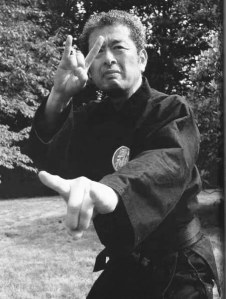
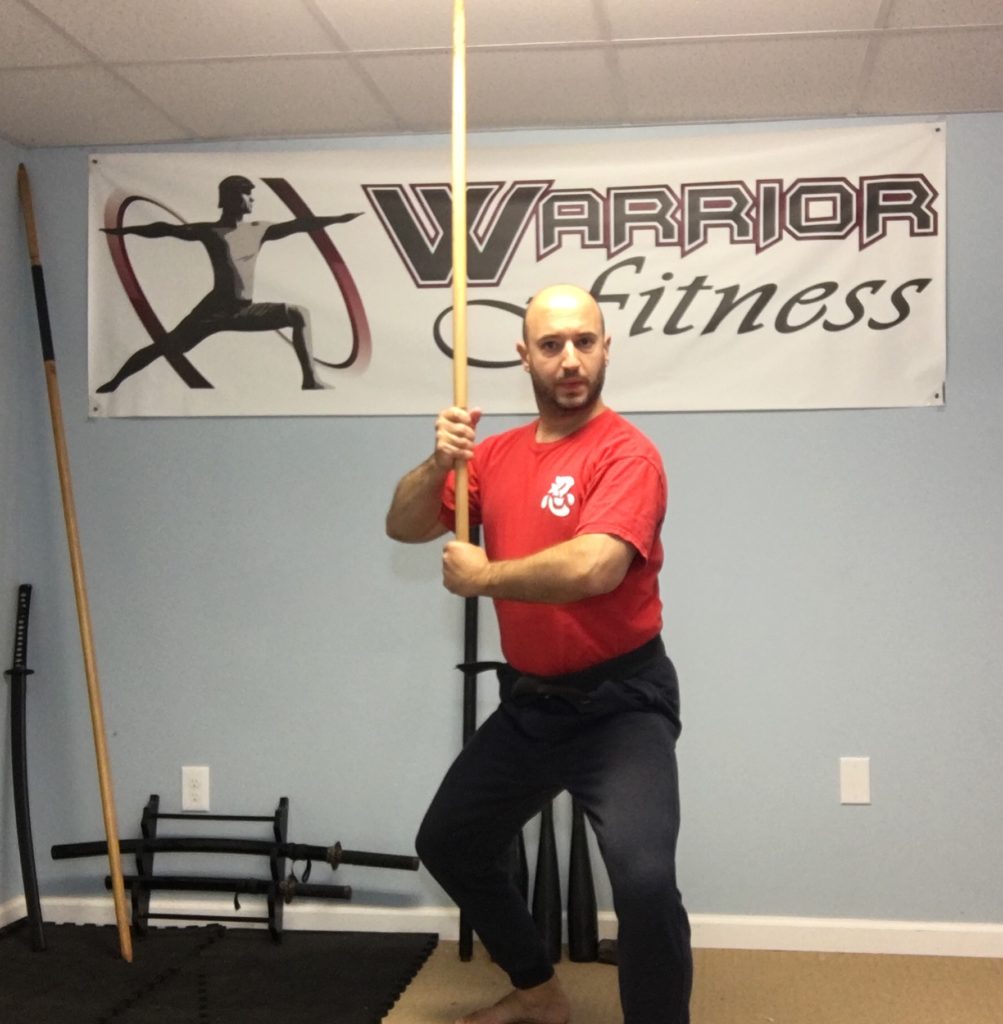
What if I told you that mastery is NOT something automatically attained after a lifetime of practice, but is instead conferred only upon those rare few individuals who, through their own efforts, take consistent, specific daily actions to achieve it?

Then mastery would not be just a far away, imagined future state, but instead a real and attainable goal built by taking action every day, right here and right now.


Remember This

Remember this – it is critical to your success – EVERY single legendary martial master: Musashi, Ueshiba, Bruce Lee, Kano, Takeda, Takamatsu, Gracie, Hatsumi, etc…

ALL of them began as unskilled, know nothing novices, white belts without a clue.

Their consistent daily training formed them, forged them, into the revered and feared masters that we know today.

“What one man can do, another can do.”

You can choose to follow in their footsteps. You can choose to be masterful, to be legendary.

However, as you follow them, do NOT seek to become them – instead, seek what they sought, the process of mastery.

Find the process of daily mastery <<==

Finally… There is a Researched, Tested, and PROVEN Method for Developing Internal Power and Unusual Strength from Martial Arts…

What is Specific Physical Preparation for Martial Arts?

Every once in a while it’s fun to think about how much the exercises we train on a daily and weekly basis actually translate, or carry over, to the activities for which we’re training.

Depending on your training program this can either be a great way to confirm that you are moving in the right direction, continuing to make progress and see results, or it can be a bit disheartening to realize just how little what you are doing actually carries over to your chosen field of endeavor.

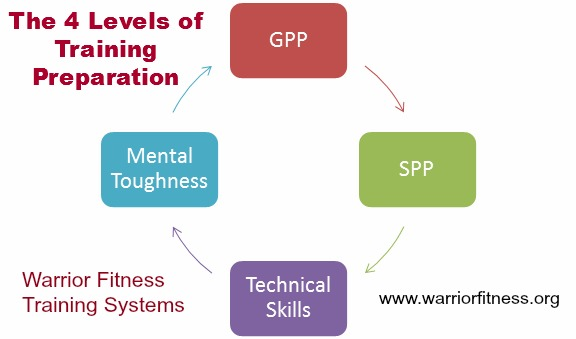
In the case of budo (martial arts) practice, like any other sport or physical activity, there must be exercises specifically crafted to enhance performance. A solid base of General Physical Preparation (GPP) is necessary, but not sufficient.

What is GPP?

The first step in ensuring you are building martial skills on top of a solid foundation is General Physical Preparedness (GPP). The goal of GPP is enhanced work capacity. This is the ability to run faster, jump higher, and hit harder.

When work capacity increases, it allows the budding warrior to adapt more easily to increases in both mental and physical demands. In other words, it increases your capacity and level of readiness to absorb higher levels of specificity in training. In order to be more, we must become more.

When talking about the martial arts, which tend to be seemingly limitless, one must possess the physical, mental, and spiritual endurance to “keep going!”


Moving From GPP to SPP

While the goal of GPP is muscular adaptation and general readiness for training, the main focus of SPP is neurological adaptation — to train movements, not muscles.

Specific Physical Preparedness builds on GPP by increasing the development of characteristics necessary for a particular sport or activity — or, in our case, martial arts.

It is a uniquely designed and targeted system for enhancing strength, flexibility, endurance, and conditioning which builds on the GPP base by furthering development in the exact physiological profile of the martial art.

Therefore, GPP helps to make you effective while SPP makes you efficient. The end stage goal is of course to be both effective and efficient in each and every movement.

The Training Process Cycle

If your strength and conditioning program is stuck in the GPP phase of development then you may not be realizing the type of performance gains that are possible with a specifically crafted SPP level.

Strength and conditioning training must eventually approach as close as possible to the demands of the activity to maximize the training effect.

Since your body adapts specifically to the stresses placed on it, you improve according to the type of training you do. This is exactly why your training program must cycle through from the general to the specific.

Ready to take your martial art training to the next level?

Check out the vast array of SPP for Martial Art Training Programs Available from Warrior Fitness Training Systems HERE <<===


On The Habit of Excellence

“We are what we repeatedly do. Excellence, then, is not an act, but a habit.” –  Aristotle


Lately I have been thinking about the virtue of excellence. This wasn’t always an important virtue to me. When I was younger (and dumber) I believed that I could get by on just being adequate at things and sort of drift my way through life. The only problem with drifting is that things only can drift one way, downstream.

No one has ever drifted to the top of the mountain.

Now I am convinced that we must all live the virtue of excellence in order to have full, complete, productive, and happy lives. And to be of service to others.

The most often talked about value in Greek culture is areté. Translated as “virtue,” the word actually means something closer to “being the best you can be,” or “reaching your highest human potential.”

This is our daily struggle and goal as warriors – to reach our highest human potential. You see the funny thing about excellence is that you can never achieve it, one and done. You must constantly strive to be in a state of excellence every day pushing higher and higher.

The man or woman of areté is a person of the highest effectiveness; they use all their faculties: strength, bravery, wit, and deceptiveness, to achieve real results.

In that spirit, here is the Strength Training Workout I just completed:

1A) Kettlebell Swings 4 x 25
1B) Barbell Back Squats 4 x 10, 6, 4, 2

2A) Pull-ups 4 x SM
2B) Kettlbell Military Press 4 x 6/6
2C) Split Stance DB Rows 4 x 6/6

3) Heavy Partial Squats 4 x 2

4A) DB Hammer Curls 3 x 6-8
4B) Lying KB Triceps Extensions 3 x 12
4C) Warrior Sit-ups 3 x 20

Phew… 

Pursue excellence!

I am opening up a few spots in my Warrior Online Coaching Program. If you are someone who is interested in pursuing excellence in your life, you can apply HERE directly.

 Don’t just think about how you can become excellent “some day”… Learn how to begin creating habits that will make you excellent NOW!

Breathing for Strength, Vitality, and Performance


For millennia breath control exercises have been the secret weapon of advanced yogis, qigong adepts, master healers, and warrior-monks to forge phenomenal strength, super human body control, and extraordinary vitality.

When disciplines such as yoga, Traditional Chinese Medicine, Internal Martial Arts, and Qigong have been successfully used over thousands of years to heal the sick, strengthen the weak, and bring energy to the depleted, you don’t question them – you study them!

While obviously these disciplines have their own unique modalities and practices, working with the breath is the common thread that runs through each of them. And there’s a very specific reason why each have evolved sophisticated breathing exercises that are used with such a high degree of success.

Breathing as a Bridge

Breathing is the only function of the human body that bridges both the autonomic and the voluntary nervous systems. You can breathe on complete autopilot all day long without ever consciously thinking about, and yet you can also choose to take a deep breath, exhale sharply, or even hold the breath at any time.

Herein lies the secret of breathing exercises – because it spans both sides of the nervous system specific breathing techniques are able to influence things such as heart rate, blood pressure, muscular tension, and stress levels.
Over the centuries, adepts of these disciplines (and others) have created literally hundreds of breathing exercises that have been consistently shown through practical experience to…

• Enhance whole body strength
• Increase lung capacity
• Reduce stress
• Improve endurance
• Fire up the body’s bioenergy
• Increase flexibility and range of motion
• Improve pain tolerance/reduce pain
• Build resilience and resistance to disease
• Improve performance under stress
• Not to mention relax, revitalize, and rejuvenate the body through meditation and relaxation exercises!

Relaxing Breath (Square Breathing)

The basic premise of our ability to influence the autonomic nervous system is that inhalation increases heart rate, which subsequently increase blood pressure, to a slight degree, while exhalation lowers heart rate and blood pressure to a slight degree. During our normal cycle of breathing, these changes are too minute to register, or even notice. But, by gradually lengthening our breath and extending the pause before inhaling and exhaling, we compound the effect. Stand in a natural position or sit comfortably on the floor with spine straight to perform this exercise.

1. Begin by exhaling through the mouth for 5 seconds.
2. Do not inhale. Try to extend the breath pause for 5 seconds.
3. Before tension begins to creep in, inhale for 5 seconds.
4. Hold the breath on the inhale for 5 seconds.
5. Repeat the cycle 10 times.
6. As this becomes easier, and your capacity expands, try increasing the duration to 6, 7, 8 seconds.

Breath Walking Meditation Exercise


Energizing Breath

In this breathing exercise we will utilize a protocol founded by yoga and improved upon by Russian sport science and martial art. Here we will divide the breath into 3 levels: clavicular (upper level), intercostal (mid level), Diaphragmatic (lower level). This exercise will focus only on the clavicular, or upper level. Use this powerful breathing exercise to fire up your energy and prepare your body for training!

1. Exhale through the mouth in a short, quick burst by compressing the upper chest.
2. Do not actively inhale. Allow the inhale to happen by relaxing the muscles in the chest.
3. Repeat rapidly 20 to 40 times.
4. Build up to where you can perform continuously for 60 seconds.
5. If you become dizzy, stop and sit down and breathe normally!

60 Second Energizing Breath Video


Here is another fantastic use for breathing….


Restoring Breath

This exercise is literally a life saver when doing high intensity interval training (HIIT) workouts! It can be used in between exercises as well as in between sets, during the rest period, and also at the end of the workout to normalize breathing and dramatically lower heart rate.
1. Forcefully exhale as deeply as possible by rolling your shoulders forward, tilting the pelvis up, and contracting the core strongly.
2. Pause before the inhale for a few seconds.
3. As stated above, do not actively inhale. Allow the breath to be sucked back in through the nose as your body returns to a natural standing posture.
4. Repeat for about 60 seconds, or as long as needed.


To learn more about how you can incorporate powerful breathing exercises into your own training, check out my Evolve Your Breathing Program.

Also, make sure to check out my review of Logan Christopher’s book, Upgrade Your Breath.

To learn more about the Warrior Fitness Training System, check out the free mini-course I have provided below…

Tanren Mini-Course <<===

The Downfall of Functional Training & How to Fix It

What Functional Training Has Become…

The field of functional training has degenerated into seeing who can perform the most meaningless stunt while looking the coolest (ahem… sometimes).

These exploits may look impressive to the uninitiated or easily amused, but they have virtually no carry over and zero application to movement in real life, on the sports field, or on the combative battlefield.

Not to mention their capacity for injury is high while their actual true functionality is exceedingly questionable…

Worse yet their flamboyancy distracts from, and gives a bad name to, real progressive, incremental functional strength training that has been the province of great warriors, strongmen, and great athletes for centuries. This leaves us in a sad state of affairs.

What Functional Training SHOULD Be…

Functional training should instead focus on developing multi-planar, multi-joint movement. It should increase stability, whole-body power, and enhance resistance to injury. It should multiply force production ability for all martial and athletic movement as well as stimulate neuromuscular patterns required for those movements.

Functional training should create a safety valve in ones movement for when the unexpected happens and movement goes awry.

It should provide the functional training practitioner with the ability to absorb and re-translate force without chance of injury.

The training methodologies that were developed and past down by warriors were the ultimate in what we today call “Functional Strength Training”. Certainly, what could be more functional than specific exercises and training methods devised to excel and survive in mortal combat?

These methods still survive today and are the province of a rare breed of modern warriors, martial artists, strongmen, and strength coaches….

Like the tempered steel of the warrior’s blade, the true art of functional strength training has been forged over the centuries by the fires of preparation for life and death combat.

How Do We Fix It…

The first part of fixing the mess of modern functional training is to answer the uncomfortable question – functional for what?

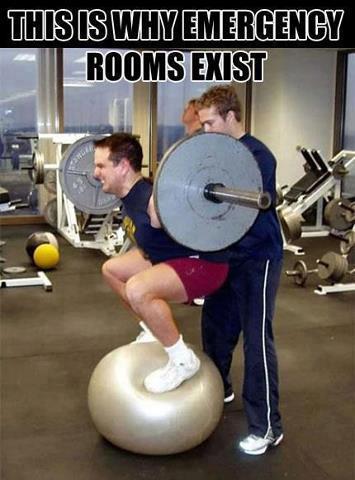
Let’s face it,  none of us really need to be good at pressing 5 lbs dumbbells while standing on a BOSU ball with one foot wearing an altitude mask. 🙂

So what do we need the outcome of purposeful training to be so that it will benefit and improve virtually all human movement?

We need connected whole body strength and power that seamlessly integrates with any martial, athletic, or life event endeavor. We need training that increases mobility, enhances strength, improves resistance to injury, and provides a foundation for excellent health and pain-free movement into old age.

What are we training to become more functional for? Living.

How Do We Train It?

Functional exercise, as we discussed above, is defined as multi-planar, multi-joint movement, in other words, three dimensional movements.  Which means that swinging a weight – club, mace, sledgehammer – is one of the most effective ways to truly train functional strength.

For the warrior, since combat always occurs in a volatile and unpredictable atmosphere, training must prepare the warrior to adapt and overcome.

You cannot be strong in only one direction or just one plane of movement – you must possess all around strength that can be brought to bear no matter what position or weird angle you may find yourself in, and having to move from.

Since sledgehammers are common place and easy to obtain at the local hardware store, they make an ideal functional strength training tool.

Using a sledge hammer in your training is a great way to develop the movement pathways used in striking. It will aid in force production, increase angular, diagonal, and rotational strength throughout the trunk and core, and provide an excellent grip strength workout all at the same time.

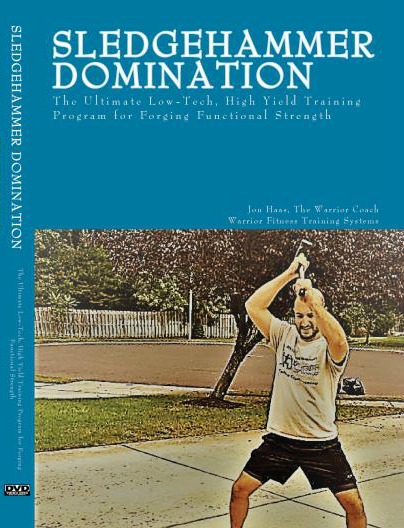
Sledgehammer Domination – Volume 1

“The Ultimate Low-Tech, High Yield Training Program for Forging Elite Functional Strength”


What is Fitness?

Fitness is probably one of the most controversial topics bandied about in social media, magazine articles, and by know-it-alls across the planet.  Just about every type of training under the broad heading of fitness has its own staunch supporters and sycophants, as well as its haters and rabid detractors.

Nothing really has a place of neutrality inside the world of fitness.  Here’s a quick idea what I mean:

Crossfit – Either drink the kool aid and become of them, or hate it with a passion

Running – Either sprint or don’t do it

Mobility – Either the tonic of youth and health or just another time wasting fad

Power Lifting – Either those guys are super strong, or just super fat

Zumba – well, let’s just not even call it fitness…

The list of training modalities and their relevant pros and cons goes on and on.  Chances are, if you are serious about your own brand of fitness, you have a love/hate list yourself.

But, are any of the above truly right or wrong?  Well, maybe the one about Zumba… 🙂

Seriously though.  How do we define fitness?  What the heck is it, really?

Here is my definition:  Fitness is having the requisite physical ability (strength, coordination, endurance, energy, power, balance, agility, etc.) to accomplish all your daily tasks, whether work or personal, and to be able to participate fully in any activity, sport, or recreation of your choice.

In other words, fitness is specific to what you as an individual are trying to accomplish daily and to the goals you are working towards.

The real question then is not, are you fit?  The real question is – what are you fit for?  Because the answer determines everything.

So, if all you do is sit on the couch and watch TV all day long and your body has adapted to that state by becoming soft, round, and couch shaped, than you are perfectly FIT for your activity!  Now this may fly in the face of your personal idea of fitness, but if you consider that fitness  is adapting to, and being able to adequately perform the activity of your choice, then you must accept both the marathon runner and the coach potato as being equally fit for their tasks.

By the way, can you be entirely fit and completely UN-healthy?  Yup.  Definitely.  So how do we hone our definition of fitness so that it includes not only looking good, but feeling good as well?

Simple.  Understand that the most important task which you must be fit for is that of being the strongest, healthiest, most productive individual you can be.  This not only insures that you live longer and better for yourself, but for your family and your contribution to society as well.  If this becomes your goal, how then will you change your current routine to make sure your training meets and achieves this objective?

Something to think about.  And, perhaps the topic of another article…