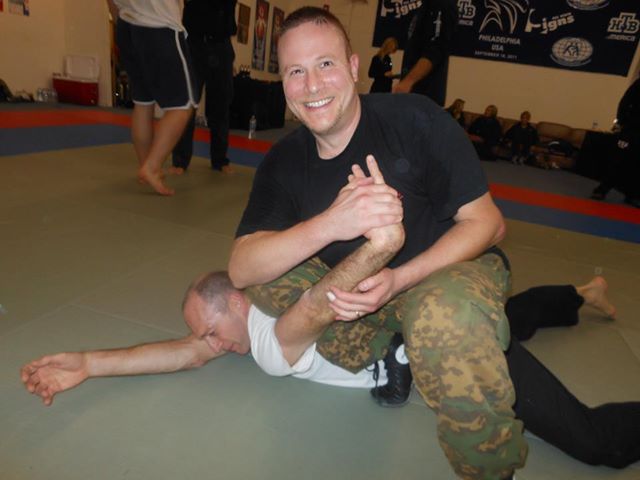
Training outside in the elements has always been one of my favorite ways to practice martial arts and the art of strength, or Warrior Fitness. There’s something special about the fresh air, sunshine, and changing terrain that gives life to the training and makes it hugely satisfying for me. In fact, my weekly Bujinkan Martial Arts class trains outside all year round in all sorts of weather from the bitterly cold and snowy winters to the blisteringly hot and humid summers. This type training not only helps increase our physical resilience, but our mental fortitude as well by helping us to become comfortable being uncomfortable. Continue reading
Category Archives: Stretching/Mobility
Breath and Body Coordination
Matching breath to body movement is a key skill in learning how to power movement with the breath. This matching can be as simple as inhaling on an expanding, opening, or lengthening movements and exhaling on contracting or closing movements.
Under resistance though we begin to look at the idea of exhaling on effort to coordinate breath and body. Here it can also become a little more sophisticated in using the activation of the core via the breath to send power out to the extremities.
The following is a short clip from my Evolve Your Breathing program showing how the breath can be used to power a push-up. The concept itself is easy enough to grasp, but the application is a lifetime of study.
Internally Rotate My What???
This post was inspired by a Facebook conversation started by my friend Jarell Lindsey talking about a mobility-based squatting motion with the feet parallel as opposed to splayed out (BTW, have you check out the Physical Culture Club page yet???)
There are many different ways to squat whether it is bodyweight only or with an implement such as a barbell, kettlebell, sandbag, or even another person.
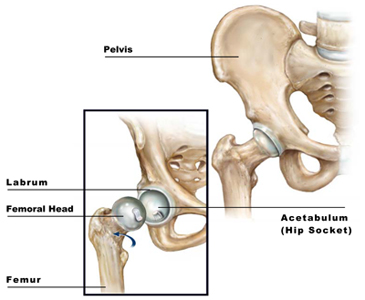
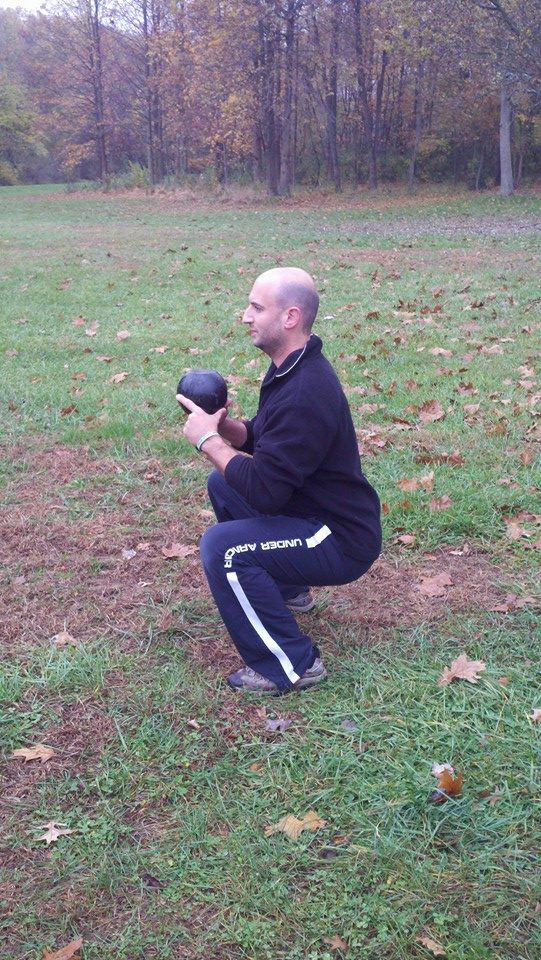
The particular squat I am talking about here is what I refer to as an Internal Rotation Squat. The Internal Rotation Squat differs from the traditional bodyweight squat in that the feet are parallel, as opposed to opened outward, and the squatting motion is accomplished by internally rotating the femoral heads within the hip sockets rather than relying on quad muscle power alone.
The Internal Rotation Squat requires MUCH more mobility, control, and mind power to accomplish since you must actually teach your body how to rotate the bones of the femurs within the hip sockets. This will take some practice!
Why Do This?
In order to begin generating what known as Internal Power (IP), you must have mobility in the inguinal area that the Chinese Internal Martial Arts refer to as the kwa. There is much, much more to IP than this, but having mobility in the kwa is an essential requirement. Additionally, even if you have no interest in IP or Chinese Martial Arts, having this type of mobility and control is an asset in any athletic endeavor or martial art, regardless of style.
Internal Rotation Squat – Bodyweight Version
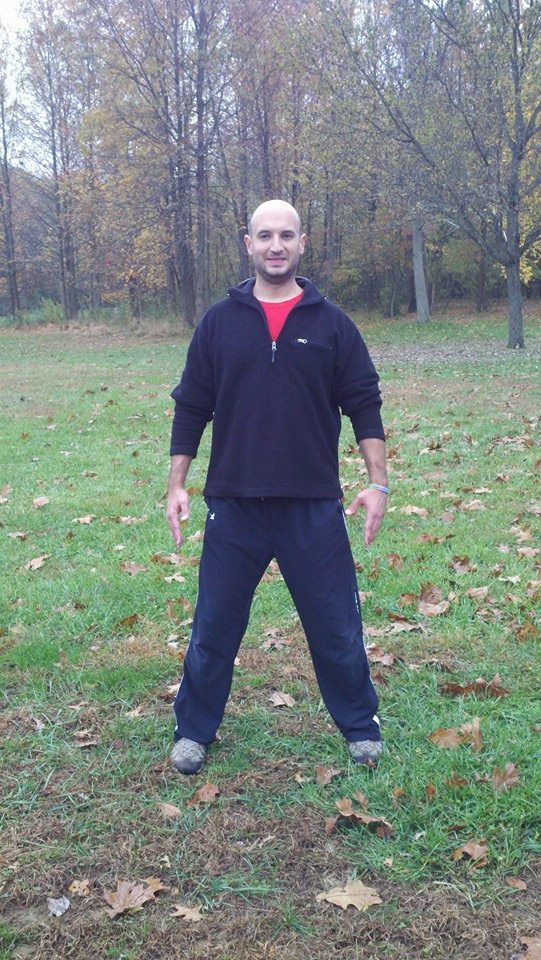
Begin with feet slightly more than shoulder-width apart. Keep the feet facing forwards, as if on railroad tracks.
This will be important later when working on winding the tissues, but for now, just do it. Place your fists on either side of the kwa (inguinal area) where the femur bones connect in to the hip sockets. Use the imagery of turning your fists to aid in turning the bones. Internally rotate the femoral heads and sit down into the kwa.
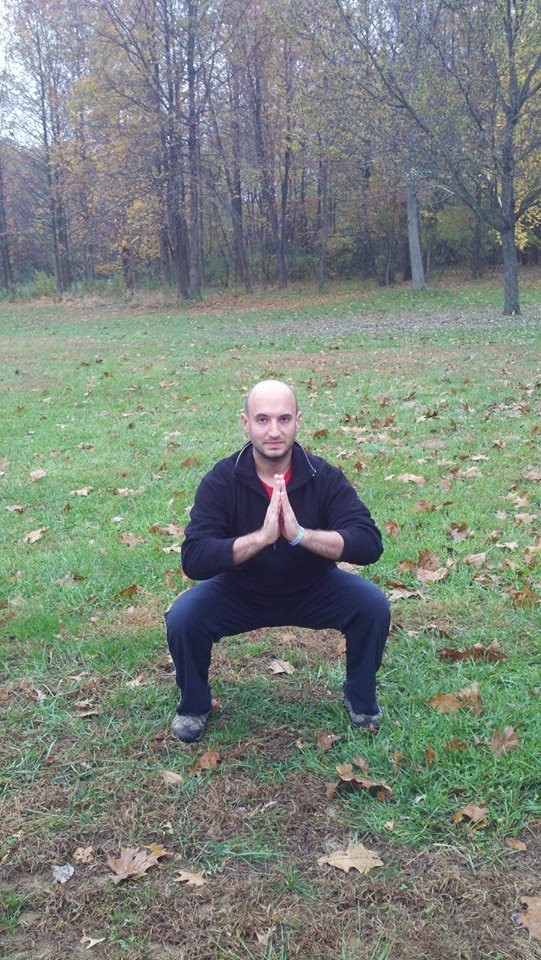
Squat as low as possible while keeping your back straight and the weight mid-foot balance. Pause at the bottom then externally rotate the femoral heads to stand back up.
Internal Rotation Squat – Goblet Squat Version
All requirements are the same as above with the addition of holding the kettlebell in front of your chest in the Goblet Squat position. Use the weight of the kettlebell to allow you to sink further into the kwa.
Thanks to Dan Harden for teaching me this exercise in the context of working on Aiki/IP. Any errors or omissions are my own and not the responsibility of my teachers. Also, thanks to Jaime for helping me to refine the squat and for taking the pictures!
Also, Dan Harden will be back in NJ in March 2014. Details on the seminar can be found HERE <<====
Mobility, Mobility, Mobility
What is, hands-down, the most effective, efficient, and time saving daily practice you can adopt for greater health and longevity?
In one word – Mobility, Mobility, Mobility!
I’m sure you are familiar with the phrase, “move it or lose it”, right? But how seriously do you take it?
A complete mobility practice moves each joint in the body through its complete range of motion bathing it in synovial fluid. Movement is the only way your joints get nutrition! Each session can range from a quick 5 minute recharge to a 30 minute in-depth deep practice. It’s up to you and how your body feels on a particular day. For example, did you do a ton of heavy lifting or a super intense metabolic conditioning session the day before? Maybe a longer, deeper mobility session is required to aid in restoration and recovery. Or, did you just get out of bed and maybe only have 5 minutes before you have to get ready for work? A 5 minute quick-n-dirty mobility session will charge you up and get your body moving (literally!).
Daily Practice
I have been performing my mobility practice almost every day for over 10 years now. However, there have been a few times when I decided to forego it for several days in a row just to see if I could notice a difference. After 3-4 days without it I began to notice. Muscles were tighter. Movements were less fluid. Joints were crunchy. When I finally stopped my no mobility experiment on day 5, the contrast was amazing!
In my experience, mobility training and breathing exercises are the biggest bang for your buck daily practices that will only reward you more and more with each passing year.
Benefits of Mobility Training
In no particular order, here are some of the benefits of mobility training:
- Lubricates joints and allows them to receive nutrition through synovial fluid
- Aids in removal of toxins
- Reduces joint pain and inflammation
- Increases range of motion (flexibility in motion)
- Increases energy by reducing unconsciously held tension
- Prehab for injury prevention
- Mobility is foundation of all sport, athletic, and martial movement
- Decreased mobility leads to increased pain and stiffness
Looking for a fantastic resource on mobility? I would suggest checking out my Martial Power Program or Ninja Missions Program 1. Both of these courses contain a different, yet highly effective mobility routines that will keep you healthy, active, and pain free for life!

No matter which program you choose, mobility training is the gift that keeps on giving – it literally pays health dividends that increase over time. Establish a daily practice and keep going!!
Brand New Services from Warrior Fitness!
Warrior Fitness is going mobile!!
You may have heard the news that I am closing the physical location of Warrior Fitness Gym this week. This is not a bad thing. The Warrior Fitness Training System existed prior to the gym location (I wrote the original Warrior Fitness book in 2008), and it will go on after it.
Now that I am no longer shackled to a brick and mortar location I have the ability to expand my global reach and provide even more coaching, teaching, and results to you.
This change allows me much greater adaptability and mobility to train my local clients here at home and also frees me to teach more workshops, seminars, and classes in other locations, both here in the US and abroad.
With that preface, I am introducing 3 brand new services from Warrior Fitness:
1) Local Warrior Training.
There are 3 new options here: Weekly Warrior Bootcamps in the park (see Class Schedule HERE) and Warrior Personal Training at your home, office, or other location. Corporate Warrior Training is also available – short, intense, highly effective workouts for the busy executive and employees to train both mind AND body!
Email me for details on scheduling and pricing.
2) Seminars and Workshops.
Topics include:
- Warrior Fitness Training,
- Building Martial Power,
- Bujinkan Budo Taijutsu,
- Building Power and Flow in Taijutsu,
- Women’s Self Defense,
- Combat Conditioning,
- Introduction to Internal Power for Bujinkan Martial Arts.
Email me for details on scheduling and pricing.
3) Online Coaching Opportunities.
I will put together an individualized program specifically tailored to you and your training goals. Check HERE for all the details.
Maintaining Preparedness
Guest blog post by Combat Systema Instructor, David Rusin.
If you are like most people, you don’t have the luxury of spending hours each day in the training hall to prepare yourself for violent confrontation. So for the time we are able to spend in training, it is in our best interest to get the most out of the opportunities we have.
Fortunately, most people will not have to experience a violent encounter. But daily life imposes demands upon our bodies, too. So the question becomes, are there things that we can do in our training that will help keep us prepared for violent threats while also translating into a positive experience in our everyday lives?
Joint Health and Mobility
An aspect of physical life which has a direct and immediate impact on the quality of our experience, regardless of the activity, is the health of our joints. Because of this, joint mobility exercises should be an integral part of a training regimen.
As we age the only way we are able to properly nourish and lubricate our joints is to move them through their full range of motion. You’ve probably heard the phrase, “use it or lose it.” With regard to joint mobility, this statement is literally true. Neglect of any particular range of motion (ROM) in a joint can result in a loss of mobility in that joint over time.
Having access to the full range of motion within our joints provides for more options when dealing with a threat of any type. Limited mobility yields limited options. Therefore, it is paramount that training includes means to recover any lost mobility, and to maintain access to the full range of motion in our joints.
Movement in Combat Systema
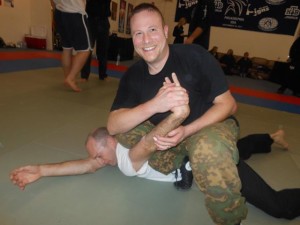
Here is a practical example of this concept. In Combat Systema we consider two ways of responding to externally applied force – movement by part and movement by whole. Movement by part simply means that only the part of the body upon which force is applied will move in response to that force. Movement by whole means the entire body will move in response to applied force.
When moving by part, our structural stability begins to become compromised at the point at which maximum range of motion of the affected body part is reached. Thus, the greater mobility and joint function we have available to us, the more we are able to accommodate external force, moving by part, without having our structure compromised.
An effective means of recovering and maintaining full mobility in the joints is through the use of joint circles. This simply means moving each joint through a circular pattern at the maximum ROM to which you currently have access. Slow, smooth and controlled motion is best in order to remain relaxed and to be sensitive to any problem areas. Breathing should be coordinated with the movements, which also facilitates moving through areas of tension.
Movement through multiple planes simultaneously is more efficient than movement through a single plane. Therefore, a progression from joint circles to figure eight or helical movement patterns develops greater efficiency of motion while also contributing to healthy joints. These movements also have direct martial value, such as with evasions and strikes, so incorporating them into regular practice has multiple benefits.
Injuries can often occur when sudden, unexpected motion outside our normal ROM occurs. If you have ever stepped off a curb or stair, and had your ankle twisted, you’ll understand this concept. A sprain or other injury can occur if the joint is not accustomed to movement through the maximum range of motion. In a violent encounter, sudden movement outside normal range of motion is a distinct possibility. Thus, recovering and maintaining full ROM in all of our joints, and developing a level of comfort moving through extreme ranges of motion can help to keep our joints safe in any situation.
The benefits of healthy joints affect not only our daily life where most demands are imposed upon us on a regular basis, but also help to keep the body better prepared for dealing with threats. Simple movement patterns such as joint circles and figure eights can be incorporated at the beginning of a training session to warm the joints up for the session. Done regularly, these exercises can also help to maintain bodily preparedness when not in the training hall.
About the Author
David Rusin has studied various forms of martial arts for over two decades. For the last 13 years his primary training focus has been the study of Russian Martial Arts. During this time he has achieved instructor certifications in the ROSS Training System of Russian Martial Art under the tutelage of the American national ROSS Instructor Cadre, and more recently in Combat Systema under that system’s founder, Kevin Secours. He currently offers private and group instruction in Russian Martial Art near his home in Ocean Township, NJ. He can be reached via email at RMAinNJ@gmail.com
How I Healed My Neck with Mobility & Breathing
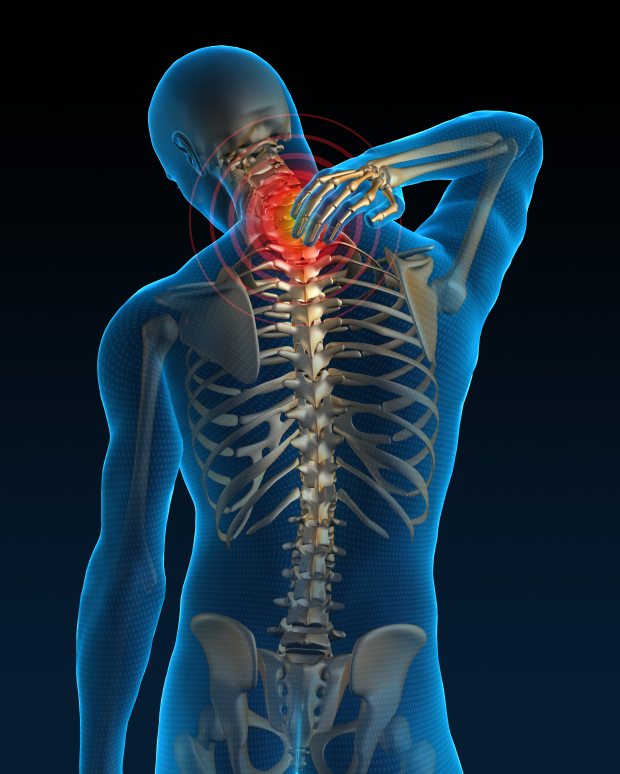
Several years ago, back in about 2004, I severely injured my neck. At the time it happened, it didn’t feel too bad. I thought it was something I would just shake off and keep going. However, when I woke up the following morning, I realized I was in severe pain and couldn’t move my neck.
After panic subsided and I managed to crawl out of bed into a hot shower, I figured the warm water would loosen it up and I’d be fine. The hot water provided some initial relief, which allowed me to begin to move slightly, but not by much.
Fast forward to later that day at the doctor’s office. She examined my neck, checked my range of motion (which was non-existent!) and then prescribed muscle relaxants and talked about surgery.
Surgery?
Drugs?
Ummm… no thank you!
Back at home, lying in my bed feeling sorry for myself, I began to think about how I could start to help myself and heal my own neck. I began to work on mobility far from the source of my pain. Starting with the fingers and hands, I worked my way up my arms and into the elbows. Since this felt okay, I tried the shoulders. That hurt. So I backed off. Again and again just working shallow range of motion on the rest of my body until I could reach, and begin to move the neck. Each time I was able to do a little more, go a bit farther.
When I was finally able to work into my neck, these are the exercises I did:
This was not an instantaneous process by far, but gradually, bit by bit, day by day, and week by week, I was able to increase the range of motion and decrease the pain. Eventually, I was able to completely restore the full, pain free mobility back to my entire body.
In the video above, I also mention some breathing exercises I did along with mobility to help heal myself. The main exercise is quite simple, yet extraordinarily powerful. Using your mind to locate the source of pain, inhale directly into the pain. Visualize the breath bringing healing energy into the area. Then exhale from the pain. Visualize your breath pulling the pain out of the body and expelling it. Repeat until you feel the pain begin to decrease and the area feel warm and energized.
If you would like to learn more about healing yourself with mobility, breathing and posture, I highly recommend you check out:
The Warrior’s Health System: Reintegrating Breathing, Movement, Alignment
Warrior Podcast with Eric Guttmann
In an effort to provide you, my dear readers, with the best information out there on strength, health, fitness, and martial arts, I am interviewing top coaches, professionals, martial arts masters, and ordinary people who do extraordinary things. Continue reading
Healing Yourself With Mobility – Part 3
Healing and Mobility Part 3 – Everyday healing of neck, vertigo, and surviving training mistakes with mobility
In everyday matters joint mobility also saves the day. If for some reason you sleep with a craned neck and you wake up with neck pain you can easily and quickly get rid of it or reduce it significantly before you even head out to work by doing joint mobility. I have done so on various occasions and believe me that it is better to work with a “little nagging pain” that goes away that day than endure the day with the kind of pain that makes you think about taking a pain killer or that seriously interferes with your quality of life.
Joint mobility also PROTECTS you by giving you a resilient body that can handle training mistakes a lot better. As an example I was in Cartagena, Colombia, (yes, the same city where the Secret Service got in trouble) with the Navy and I woke up early to do incline sprints on the 300 year old walled city. The particular incline I chose was made of cobblestones and had holes in it. On my second sprint up this incline I completely twisted my ankle 90 degrees. Because I had already warmed up my ankle to FULL mobility I was able to finish the sprint, and more importantly FINISH my workout like nothing had happened. In fact, when I came down to do another set of sprints after I twisted my ankle a local came to me and said to me in Spanish “I saw what had happened to your ankle” somewhat concerned for my ability to safely walk on back to the hotel. I simply laughed, shrugged it off, thanked him for his concern and FINISHED my work out by doing FOUR more sets of sprints. I know for a fact that if the same thing had happened to me in my college days I would have been done for, because the same thing DID happen to me when I was in track and field and it took three weeks to heal!
Joint mobility has also helped me with my wife. She had a case of vertigo a year ago and I taught her joint mobility, as the medicines the doctor gave her only made her feel worse. The joint mobility (and acupuncture I gave her) where the keys to her recovery. To this day she does the neck series everyday as a preventative and feels great every time she does it.
As I mentioned in my previous article, many of my friends I teach these drills comment on how their lower backs loosen up and become pain-free after the mobility series. In fact, it was at the prodding of these friends that I decided to do my FULL mobility DVD, because they wanted something they could study in their homes after I left.
Now, in the first article I mentioned my father’s statement of “If you do something everyday, then everyday you will be able to do it.” Every morning I go through my routine and establish full mobility in every joint. I easily touch my wrists to the ground every morning. Now I ask you, if I establish full mobility every morning and touch my wrists to the floor easily and gracefully every morning, am I going to have full mobility and easily touch my wrists to the floor at 100 years of age? The answers is ABSOLUTELY YES! All I have to do is keep doing my FULL mobility routine every morning.
I have been practicing joint mobility for five years now ever since I had the epiphany with my healed ankle. I have been studying, incorporating, experimenting and refining my routine based on the works and/or my personal interaction with Pavel, Steve Maxwell, Scott Sonnon, Navy kinesiologists, Chek Practitioners, Z-Health, Mike Mahler, Chuck Habbaken, Bud Jeffries and others.
If you want to get your hands on the best mobility training out there and the EXACT one I have used to heal myself multiple times from the injuries sustained through training and life then click in the link below:
As an added bonus I am including a FREE BONUS which is my SECRET stretching routine to open up the hip and lengthen the spine which I found are the keys to maximizing my Qigong practice (which would be the second thing I most recommend for longevity).Done together the joint mobility and stretches can be knocked out in under 26 minutes, yet your health and quality of life will expand to new and greater levels that will seem like a 1000% return on your investment.
Another bonus is a makeshift mobility test that you can do to gage whether you are at a Level 1, Level 2, or Level 3 joint mobility. If you train others you can also use it to gage where your clients are at and to monitor their progress over time.
So order this DVD now and try it for yourself. I know that you will feel immediately freer and open, even diminishing or completely getting rid off nagging pain if you are carrying any, at the end of the instructional session. That is right, I am saying that after going through the instructional part just ONCE you will feel an immediate improvement in your mobility! Commit to doing it everyday and you WILL have FULL mobility for the rest of your LIFE!
If you live in the New Jersey area and prefer personal instruction in mobility then I highly recommend you check out my friend Jon Haas’ school, Warrior Fitness at 4004 Sylon Blvd, Hainesport NJ, 08036, or give him a call at 609-556-8712 to set up an appointment or attend a class.Read Eric’s complete bio HERE.
Intelligent Tension For Striking
How intelligent is your usage of tension in striking?
All too often in training our punching and kicking techniques, we find what I’ve come to label as “dumb tension”. This is used by martial artists across the board either accidentally through lack of understanding of how the body should work, or taught and passed down from teacher to student on purpose through a lack of knowledge.
Dumb tension is defined as either the complete usage of whole body, generalized tension to attempt to deliver extra power to a specific kick or strike, OR the complete lack of any and all tension to attempt to whip a wet noodle-like strike at the opponent or target. Both of these things miss the boat, in my opinion.
Walk the Middle Path
Intelligent Tension (IT) is simply walking the middle path between the two extremes and using the appropriate amount of tension required, and only that amount, to coordinate whole body power into a strike. More tension does not necessarily equal more power in terms of striking. Actually, the more tension recruited for a movement, the more you apply the brakes physiologically since your body is now moving against itself in an attempt to use generalized tension. When both the agonist muscle and antagonist muscle are working against each other the result is less overall power delivery for the strike. Learning to appropriately activate only the muscles necessary to accomplish the task removes the brakes, ups the power wattage, and increases the efficiency since you are no longer using energy you don’t need.
Additionally, the more tension created in a movement, the less mobility you have. If you look at tension and mobility on one line with tension on one side and mobility on the other, the more you have of one, the less you have of the other. When we train the nervous system to fire high tension all the time, we lose mobility and range of motion. While this is perfectly acceptable and absolutely essential for a purely low-gear strength based activity like dead lifting, it is not fine for martial arts.
This article was a short excerpt from my manual, Warrior Fitness Guide to Striking Power.
Get The Warrior Fitness Guide to Striking Power (e-book) and the original book, Warrior Fitness: Conditioning for Martial Arts (e-book) FREE when you pick up my brand new program – WarFit Combat Conditioning!