Breathe Through Your Heels

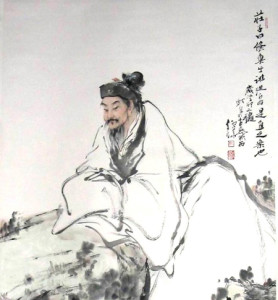
Chuang Tzu (c.370-286 BC) said, “The breathing of the superior man comes from his heels, while men generally breathe only from their throats…”


When performing these types of exercises it is important to realize that breathing is not simply a mechanical process where we see our lungs operating as a kind of bellows, drawing in and pushing out the air.  Rather, we should understand that breathing is a complete physiological process of cellular respiration – our entire body breathes!

Mental imagery or visualization can aid in increasing the effectiveness of the above exercises.  When inhaling, imagine the body filling up with calm, relaxing energy; feel it permeate the entire body, pouring through every cell.  When exhaling, visualize all the metabolic waste products, stress, and unnecessary tensions being exhaled from the entire body.  It’s a very simple add-on, but it works wonderfully.  Give it a try!

From my book, Warrior Fitness: Conditioning for Martial Arts


Chuangtzu


Want to be a truly Superior Man?  Learn how to Evolve Your Breathing!

EVOLVE_SPOT-1 (2)

How to Train More Every Day

The only way to go from average martial artists to outstanding is to train more.  You may be limited in how many classes you can attend on a weekly basis or how many seminars you can attend on a monthly basis, but you are not limited in how much solo training you can do on a day to day basis.  The key to greatness lies in solo training.  This is how you build yourself up to mastery.  Step by step, session by session, day by day.  There is no other way.

That being said, I humbly offer the following 4 suggestions on how to train more every day.


1)      Awareness, Awareness, Awareness

Keep your eyes, ears, and senses open to your surroundings.  Make it a habit to not allow anyone to sneak up on you or surprise you.  Make a game out of knowing where people around you are, even if you can’t “see” them.

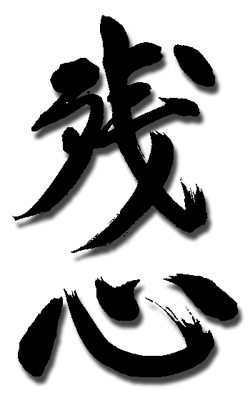
ZanshinKanji

2)      Don’t Just Walk, Ninja Walk!

Take the opportunity no matter where you are to practice your balance, footwork, and movement skills.  This doesn’t mean you have to stalk your boss in the company restroom – unless you want to get fired!  But when you move, whether it’s in the office, walking down the street, in the grocery store, or out in the woods, pay attention to your balance, body control, and coordination.  Raise and lower each foot purposefully.  Do not let your walking be “controlled falling”.

3)      Mini Training Sessions

All of us seem to think that if we can’t dedicate a solid hour or so to solo training than we just don’t have the time to do it.  My solution for you is this – train in 5 minute increments.  No matter who you are and what type of work you do, you have 5 minutes to spare during your day.  If you look for it, you probably have many blocks of 5 minute increments during your day.  Don’t waste them!  Use them to train.  In 5 minutes you can practice all the Sanshin No Kata 5 times each side.  In 5 minutes you can do 100 push-ups (maybe!). In 5 minutes you can practice ukemi.  In 5 minutes you can do a flow drill.  Be creative, figure it out!  All those mini blocks of 5 minute training sessions add up to huge amounts of time over a week, month, year, and decade.  You’re in this for the long haul, aren’t you?

4)      Set a Goal

Figure out what your own personal training goals are and write them down.  Give yourself a deadline to achieve them.  Add actions steps to help you reach each one.  Develop a plan of attack and hold yourself accountable.  Need help developing a plan?  Ask me.  I can help you.  It’s what I do.


How Natural is Your Shizen No Kamae?

This may come as a shock, but I believe many people training in the martial arts today are doing shizen no kamae (natural posture) wrong.  How can this be?  After all, aren’t you supposed to be just standing there naturally?  Well, yes and no.

The problem stems from the fact that even though this is a “natural” posture, there are not that many people who stand naturally, naturally.  We need to be taught how to be natural; or perhaps it’s better to say we need to unlearn and strip away from our bearing all that is NOT natural to find a true shizen no kamae.

TenChiJin

In order for the body to be supported with minimal effort and tension, 2 forces that act on us all the time must be understood and mastered.  The 2 forces I am referring to are Ten (heaven) and Chi (earth).  Ten and Chi are controlled by Jin (man) standing in the middle of the 2 – TenChiJin.  Ten, the force of heaven, is gravity pulling the whole body down towards the earth.  Chi, or the force of earth, is support pushing the body up opposing the force of gravity.

The body itself though must be conditioned to manipulate these 2 forces (there is a kuden).  When the body is properly conditioned it then acts like a tensegrity structure – bones act like compressive struts pushing out while connective tissue pulls in.  This combined with an understanding of how the forces of heaven and earth work create a profound neutral within the body, or zero state.

How Do We Stand?

In practical terms though, how should we stand?  Let’s start with the head and work our way down…

Lift upwards slightly with the crown of the head allowing the chin to lower.

This straightens the vertebrae at the back of the neck. Shoulders are back and down sitting on the spine.

The back should be flat.

Do not tuck the pelvis.

The spine should be suspended from above like a skeleton hanging in a Science classroom.

Do not have the arms lay flush against the body.

There should be a golfball sized space under the armpits.

The bottom of the spine pulls straight down from the tail bone.

Feel like you are sitting on a high stool.

Allow the knees to bend slightly.

Feet should be shoulder width apart and pointed straight forward as if on railroad tracks.

Legs should feel like they are squeezing a beach ball.

Remember though, the ball puts outward pressure on the legs as they squeeze in.

Both directions, not just one.

The weight is carried in the hollow behind the balls of the feet.  In Chinese Medicine, this is known as the yongquan or bubbling well point.

All of the above points must be maintained to have a truly “natural” shizen no kamae.  Oh yeah, last point – RELAX! 🙂


The Secret to Becoming a Great Martial Artist

There is one very special, not so secret, secret to becoming a great martial artist.  Want to know what it is?

Do the work.

Train every day.  Yes, every day.  Great martial artists train all the time.  Not once a week.  Not every other day, not just during class.  Every day.  Multiple times a day.

The not so great martial artists are content to train only in class or at seminars.  They spend lots of time thinking about training, maybe, but the actual doing, not so much.

For you the process is simple – not easy.  Daily training.  How do you do this?  Figure it out.  You don’t have to think about when you’re going to take a shower during the day or brush your teeth, you just do it.  Make your training a priority and get it done.  While others are busy doing other things, you are training.  While others are busy daydreaming about training, you are training.  While others are busy running their mouths about training, you are – you guessed it – training.

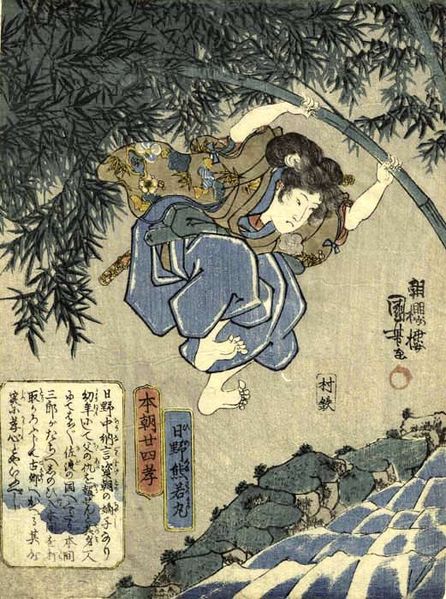
Ninja Artwork1


Soon it will begin to show.  The difference may not be too apparent at first, but consistency of training will win out.  It may not be so obvious in a year, or even 2.  But after 5 years it will be very noticeable.  After a decade, you will be miles ahead of the rest of the martial arts landscape.

You will move better.

You will feel different when they touch you.

You will have power in motion and in stillness.

You will stand out, not because of ego or anything like that but because the work you put in day after day, week after week, month after month, and year upon year will cause your skills to grow exponentially.  The growth and development created simply by training every day will become self evident.

So ask yourself – do you want to be a mediocre martial hobbyist (not that there’s anything wrong with that), or do you want to be legendary?

The choice is yours.  As for me, F__k being mediocre. 🙂


What If All the Stories Surrounding the Incredibly Powerful, Legendary Martial Artists of Old Were True?

What if greatness wasn’t random, but specifically engineered?

What if YOU Had Access to Their Secret Training Strategies for Building Whole-Body Strength & Power for Martial Arts – ANY Martial Art – in Your Hands?

Learn more ==>> 

Maintaining Preparedness

Guest blog post by Combat Systema Instructor, David Rusin.

If you are like most people, you don’t have the luxury of spending hours each day in the training hall to prepare yourself for violent confrontation. So for the time we are able to spend in training, it is in our best interest to get the most out of the opportunities we have.

Fortunately, most people will not have to experience a violent encounter. But daily life imposes demands upon our bodies, too. So the question becomes, are there things that we can do in our training that will help keep us prepared for violent threats while also translating into a positive experience in our everyday lives?

Joint Health and Mobility

An aspect of physical life which has a direct and immediate impact on the quality of our experience, regardless of the activity, is the health of our joints. Because of this, joint mobility exercises should be an integral part of a training regimen.

As we age the only way we are able to properly nourish and lubricate our joints is to move them through their full range of motion. You’ve probably heard the phrase, “use it or lose it.” With regard to joint mobility, this statement is literally true. Neglect of any particular range of motion (ROM) in a joint can result in a loss of mobility in that joint over time.

Having access to the full range of motion within our joints provides for more options when dealing with a threat of any type. Limited mobility yields limited options. Therefore, it is paramount that training includes means to recover any lost mobility, and to maintain access to the full range of motion in our joints.
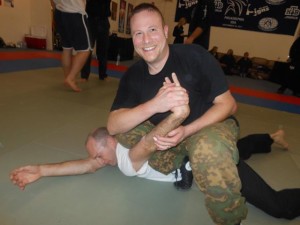
Dave Rusin Systema


Movement in Combat Systema

Here is a practical example of this concept. In Combat Systema we consider two ways of responding to externally applied force – movement by part and movement by whole. Movement by part simply means that only the part of the body upon which force is applied will move in response to that force. Movement by whole means the entire body will move in response to applied force.

When moving by part, our structural stability begins to become compromised at the point at which maximum range of motion of the affected body part is reached. Thus, the greater mobility and joint function we have available to us, the more we are able to accommodate external force, moving by part, without having our structure compromised.

An effective means of recovering and maintaining full mobility in the joints is through the use of joint circles. This simply means moving each joint through a circular pattern at the maximum ROM to which you currently have access. Slow, smooth and controlled motion is best in order to remain relaxed and to be sensitive to any problem areas. Breathing should be coordinated with the movements, which also facilitates moving through areas of tension.

Movement through multiple planes simultaneously is more efficient than movement through a single plane. Therefore, a progression from joint circles to figure eight or helical movement patterns develops greater efficiency of motion while also contributing to healthy joints. These movements also have direct martial value, such as with evasions and strikes, so incorporating them into regular practice has multiple benefits.

Injuries can often occur when sudden, unexpected motion outside our normal ROM occurs. If you have ever stepped off a curb or stair, and had your ankle twisted, you’ll understand this concept. A sprain or other injury can occur if the joint is not accustomed to movement through the maximum range of motion. In a violent encounter, sudden movement outside normal range of motion is a distinct possibility. Thus, recovering and maintaining full ROM in all of our joints, and developing a level of comfort moving through extreme ranges of motion can help to keep our joints safe in any situation.

The benefits of healthy joints affect not only our daily life where most demands are imposed upon us on a regular basis, but also help to keep the body better prepared for dealing with threats. Simple movement patterns such as joint circles and figure eights can be incorporated at the beginning of a training session to warm the joints up for the session. Done regularly, these exercises can also help to maintain bodily preparedness when not in the training hall.

About the Author

David Rusin has studied various forms of martial arts for over two decades. For the last 13 years his primary training focus has been the study of Russian Martial Arts. During this time he has achieved instructor certifications in the ROSS Training System of Russian Martial Art under the tutelage of the American national ROSS Instructor Cadre, and more recently in Combat Systema under that system’s founder, Kevin Secours. He currently offers private and group instruction in Russian Martial Art near his home in Ocean Township, NJ. He can be reached via email at RMAinNJ@gmail.com
Fitness Dangers for Bujinkan Students

Martial artists need to be extremely cautious when choosing a fitness program to compliment their training.  While the right program can support, enhance, and protect budo practice, the wrong one can just as easily derail it.

Bujinkan Budo Taijutsu relies on relaxed, whole-body power devoid of excess muscular tension to properly execute its techniques.

hatsumi sword


Think About This

Think about this – each and every action you repeat over and over again encodes in your nervous system and creates change in your body, no matter how you value that change.  Meaning that if you want to train yourself to move softly, subtly, and with relaxed power for your martial art practice yet you perform high tension power lifting exercises at the gym, guess what gets carried over to your budo?  Yup.  Too much tension.

If you are working towards using your whole body as a unit in budo practice so that when one thing moves, everything moves (can you do this?), but you perform bodybuilding style splits and isolation exercises in your strength training, what do you think happens to your functional integration?  Yup.  Bye-bye.

The critical thing to note here is that, as stated above, every action you do, no matter what your opinion of that action is, has an affect on your nervous system.  When 2 actions compete, both lose out.

Shouldn’t your supplementary training and fitness support and enhance your main goal of becoming a more proficient martial artist?  If it doesn’t, you might want to ask yourself what is more important to you?  These are tough questions for a life long, committed budoka to wrestle with – trust me!  I know.  I walk a thin line in my training every day.  But I made my choice long ago… You see, I love fitness, but budo is in my blood.

So when you go looking for a strength and conditioning program to support and protect your martial arts practice, remember something – I have been there, done that, and got the t shirt (several, actually).

Already Done For You

The research has been done.  The exercises, protocols, and programs have been rigorously tested.  The results are in.  I have created several Done For You programs that I KNOW will change your Bujinkan Budo Taijutsu practice for the better.  As a 20+ year veteran of the Bujinkan (I started training in 1989), I have put together these programs for you – Bujinkan students and teachers alike.  It’s all here….

Martial Power Cover1


WFBookCover2


WF UG Cover1


Ninja Mission Cover


My Heavy Metal Strength Meditation Part 4

Guest blog post by Eric Guttmann, U.S. Navy Officer, Author, Fitness Enthusiast and More!

My Heavy Metal Strength Meditation Part 4 – THE RESULTS: Leaner, Stronger, Faster.


For 8 weeks prior to my Navy Physical Readiness Test (PRT) I developed a program focused exclusively on Tire Flipping.  If you have been following these articles then you know that the main goal was to achieve 100 consecutive tire flips with the 300lb tire with an emphasis on tying the breath to the movement.  I will now report on the results that this type of training had on my body and performance as measured by the U.S. Navy.
The Navy’s Physical Readiness Test (PRT) is a two part process that is now called the Physical Fitness Assessment (PFA).  The first part, conducted 1-2 days prior to the physical test measures your height & weight and compares it to a chart that determines if you are within Navy standards.  If you are overweight then you get your bodyfat measured by a tape measure test.  They measure your waist and neck circumference and plug it into a chart with your height and weight that spits out an approximate bodyfat percentage.  Males need to be under 22% bodyfat to pass this assessment and be “within standards.” If you score higher than 22% then you FAILED the PFA.
Because of my bodybuilding and strength workouts I have ALWAYS been over the “magical” weight for my height in the last 17 years of military service and have gotten used to getting my bodyfat measured at every PFA.  Here is what happened at this PFA.  For the first time in 17 years I actually dropped below 215lbs, my exact weight was 211.4lbs.  I did not alter my diet at all, in fact my diet was a little off because I have been eating a lot of Cuban food in Miami and when I take my kids out to eat I would be eating ice cream and desserts with them.  I do make an effort to eat “clean” 80% of the time.  The only thing I did different was the physical training.  So it seems that extended tire flipping, which for this article means 100 consecutive tire flips, is a weight loss mechanism.  Judging by the way my abs and obliques were more defined I would also forward that it is a fat-loss mechanism.
Now here is the really interesting part.  I mentioned that as part of my regimen I added gravity boots.  Hanging upside down helps to decompress the spine and provides extra blood flow to the head.  For the last 17 years my height has always been the same, 73 inches.  When they measured me my height was a little over 73 inches and I heard the Petty Officer who took my measurement say “he is over 73 inches so mark down 74.”  This means I was probably ½ inch taller for them to round up.  This really blew me away!  You hear of people shrinking with age, but have you ever heard of anyone adding a little height to their frame?  This for me is confirmation that the gravity boots add an important component to recovery, spine health, and longevity!
Armed with my two official measurement of 211.4lbs and 74 inches the Petty Officers administering the PFA go to the “magical” Navy chart that determines if I am within “standards” and lo and behold for the first time in 17 years I did not need to do the tape measure test!  Thus, tire flipping and gravity boots have the capacity to alter the body by making it leaner and taller, but let’s see what happens when you are tested physically…
The Navy PRT consists of two minutes of sit-ups, two minutes of pushups, and a 1.5 mile run for time.  There is a chart that determines your score based on the number of repetitions for your age and gender.  There is a max number which means you “aced” the test.  For a 39 year old male (that would be ME) my max scores were 95 situps and 76 pushups.  I achieved the 95 situps and 76 pushups with ease.  I did not do a single situp or pushup in the previous 8 weeks.  I DID do Dru Patrick’s Last Man Standing drill to train my core on my recovery day. Now, the really interesting thing happened with the run.
I do occasional sprint workouts when I get into a groove, but I checked my training journals and had not done any type of running or sprinting for six months.  In other words, the last time I ran was my previous PRT.  Since I do not like running, what I do at the PRT is find a guy with a pace I like and just trail in behind him.  The key is to pick the right pace, too slow and you feel antsy, too fast and you will get smoked before your time.  This time I decided to follow the beat of my own drum and just concentrate on my breathing, just like I do when I do the tire flipping.  While the breath pattern was different the idea was the same – use the breathing discipline I developed through tire flipping and apply it to the run.  I ended up doing a “weird” pattern almost intuitively that was: inhale, exhale, inhale, exhale, and 4 short exhales.  I felt that the key was in removing the excess waste products and that is what the 4 short exhales at the end of the breathing cycle sought to accomplish.
Keeping the breathing pattern up for the first mile was easy, but after that I noticed that I wanted to change it.  Here is where the discipline kicked in and I forced myself to keep the pattern.  Lo and behold to my surprise I ran it in 11:45, 30 seconds FASTER than my previous runs!  It was also the first time in 5 years that I ran the test in under 12 minutes!  While part of it may be due to being a little lighter, a lot had to do with the breathing discipline and conditioning developed through tire flipping.

In conclusion, the Heavy Metal Strength Meditation was a success!  I dropped 4 lbs of weight and you could make the case that most of it was fat loss, I increased my height, I “maxed” the situps and pushups with ease without training those specific exercises, and I ran the best run I have had in five years.  In case you are curious and want to try it here is the curriculum I followed: My Heavy Metal Strength Meditation Part 3

Very respectfully,
Eric Guttmann
PS As you can see joint mobility is an integral part of the recovery day, to get my FULL Mobility program click HERE:
If flipping a 300lb tire 100 consecutive times is a little out of your league right now then get in combat ready shape using Extreme Military Fitness by clicking HERE and after the 12 weeks you will be primed and ready to tackle on the Heavy Metal Strength Meditation:
If you like the energy in these articles then get Listen Up and read 1-5 pages in the morning to put you in the right mindset to tackle on any task or life change you want to accomplish, whether it be physical, mental, financial, or lifestyle.

Read Eric’s complete bio HERE

How I Healed My Neck with Mobility & Breathing

Several years ago, back in about 2004, I severely injured my neck.  At the time it happened, it didn’t feel too bad.  I thought it was something I would just shake off and keep going.  However, when I woke up the following morning, I realized I was in severe pain and couldn’t move my neck.

After panic subsided and I managed to crawl out of bed into a hot shower, I figured the warm water would loosen it up and I’d be fine.  The hot water provided some initial relief, which allowed me to begin to move slightly, but not by much.

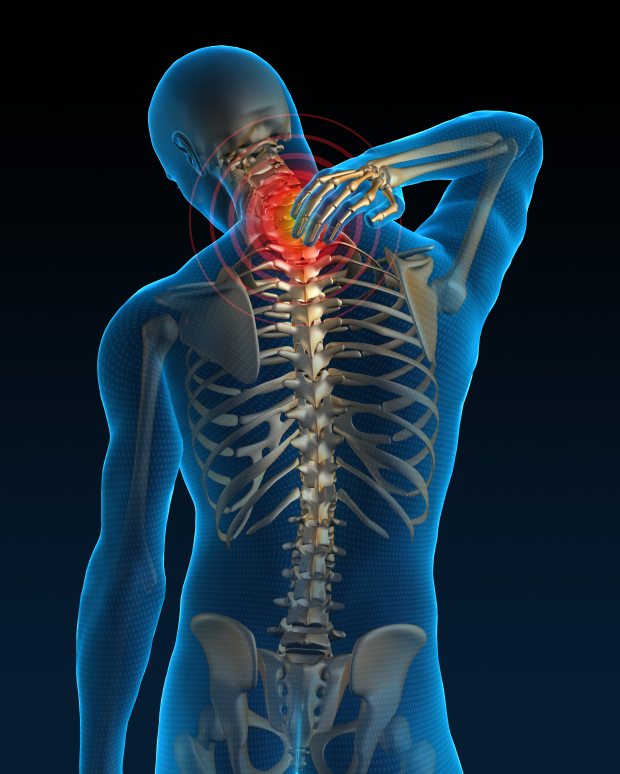
Neck pain

Fast forward to later that day at the doctor’s office.  She examined my neck, checked my range of motion (which was non-existent!) and then prescribed muscle relaxants and talked about surgery.

Surgery?

Drugs?

Ummm… no thank you!

Back at home, lying in my bed feeling sorry for myself, I began to think about how I could start to help myself and heal my own neck.  I began to work on mobility far from the source of my pain.  Starting with the fingers and hands, I worked my way up my arms and into the elbows.  Since this felt okay, I tried the shoulders.  That hurt.  So I backed off.  Again and again just working shallow range of motion on the rest of my body until I could reach, and begin to move the neck.  Each time I was able to do a little more, go a bit farther.

When I was finally able to work into my neck, these are the exercises I did:

This was not an instantaneous process by far, but gradually, bit by bit, day by day, and week by week, I was able to increase the range of motion and decrease the pain.  Eventually, I was able to completely restore the full, pain free mobility back to my entire body.

In the video above, I also mention some breathing exercises I did along with mobility to help heal myself.  The main exercise is quite simple, yet extraordinarily powerful.  Using your mind to locate the source of pain, inhale directly into the pain.  Visualize the breath bringing healing energy into the area.  Then exhale from the pain.  Visualize your breath pulling the pain out of the body and expelling it.  Repeat until you feel the pain begin to decrease and the area feel warm and energized.

If you would like to learn more about healing yourself with mobility, breathing and posture, I highly recommend you check out:

The Warrior’s Health System: Reintegrating Breathing, Movement, Alignment


Warrior Podcast with Eric Guttmann

In an effort to provide you, my dear readers, with the best information out there on strength, health, fitness, and martial arts, I am interviewing top coaches, professionals, martial arts masters, and ordinary people who do extraordinary things. Continue reading

Traditional Martial Artists of the World – UNITE!

Traditional martial arts all have a long history of intense, sometimes downright brutal, physical training to forge the warrior’s combative body, mindset, and spirit.

This training has, up until very recently in history, never been optional. If you did not have the strength of will to endure it and push through then you simply did not make the cut and were not taught higher level skills. Not that you would be considered somehow unworthy or anything silly like that, but you would be thought physically incapable and therefore not worth the teacher’s time to train you.

Each school of martial art had its own type of tanren or forging process to harden the aspiring martial student. Continue reading