Be Dangerous to be Kind

Inside the heart of every man lives a warrior waiting to be unleashed. Unfortunately, this fierceness, for the majority of men, lies dormant and untested. But, I assure you, it is there.

As boys we pretended to be superheroes, Jedi knights, or ninja warriors.  I know I did all 3 with matching costumes, capes, and weapons to boot. In fact, I distinctly remember when I was 6 or 7 leaping off the back deck of my parent’s house in New Hampshire fully garbed in Superman Underoos (on the outside of my clothes, of course!) and cape fully expecting to fly.

We ran wild, climbed trees, built forts, engaged in mock sword battles, and real fist fights as boys – not to test our mettle, but really just as an open and honest expression of our warrior nature.

As we grew up though, things changed. We grew tame (lame?). The wildness was repressed and replaced under the well meaning familial and societal pressure of becoming a responsible adult. We went to school, got a job working for the man, and become domesticated.

We shed our capes in favor of business suits.

We took off our Lone Ranger masks and put on listless, polite faces.

We put down our pretend weapons and picked up pocket protectors.

We suppressed the wildness and ferocity of the warrior in our hearts and tried to follow the expected path – college, corporate job, marriage, family, retirement, death.  One more masculine casualty – a would be warrior turned tame and toothless, a tiger no more, really just an aging house cat.

But is that really all there is?

Doesn’t the wildness remain?

Yes. I assure you it most certainly does. For as I stated earlier, inside the heart of a man – every man, no matter who you are – lies a warrior.
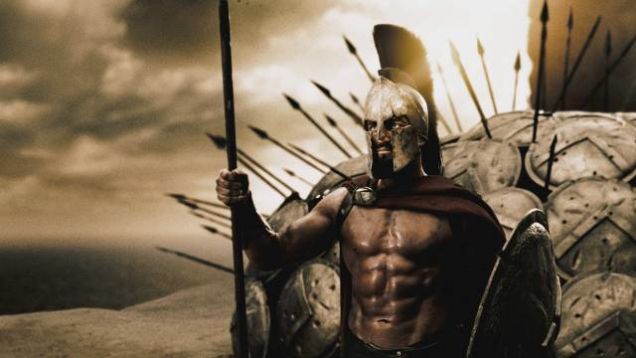
Being a warrior is not confined to myths and legends or historical anachronisms. Nor is it merely the province of those in uniform who stand on the front lines and protect us with their own (though they truly embody the warrior spirit).

No, warriorship, at its essence is the birthright of every man. For all of us are made with a warrior’s heart, strong and dangerous.

Yes, dangerous.  The most dangerous men I have ever met have also been among the kindest and friendliest. Is this a contradiction? No, not at all. Only the truly powerful can choose to be truly gentle. Those who lack strength and courage have no choice.

A warrior must have the strength, skill, and ability to wield violence. Notice that I did not say, “be a violent man”. There is a vast difference. The warrior’s capacity for violence is tempered by discipline, a sense of justice, and a strong moral code.

Moreover, the warrior’s role in society is that of a protector and defender of life. His strength must never be used to intimidate, but only to motivate, to inspire, and to protect.

Méthode Naturelle creator Georges Hébert wrote at the beginning of the 20th century, “Être fort pour être utile” – Be strong to be useful

Those of us who walk this path of strength have a duty to use our strength to help others and to defend and protect those who are not as strong.

As Spiderman once said – “With great power come great responsibility.” 🙂

Strength must have a higher purpose.

The Warrior’s Creed

This might be my own personal bias, but I believe a warrior has a greater responsibility, one of both self and others.  My perception has been colored, for the better, I think, by my teacher, Jack Hoban, author of The Ethical Warrior: Values, Morals and Ethics – For Life, Work and Service, and his mentor, Dr. Robert L. Humphrey.

These 2 men are both true warriors whom I admire greatly.  Jack served as a U.S. Marine Corps officer and is a master level instructor in the Bujinkan martial arts.  Dr. Humphrey was a boxer and Marine Corps officer who survived the battle of Iwo Jima in World War II.

There is much, much more to both of their stories, but for now, we can sum up the essence of what it means to be a warrior like so:


“The Warrior Creed”

Wherever I go,
Everyone is a little bit safer because I am there.
Wherever I am,
Anyone in need has a friend.
When I return home,
Everyone is happy I am there.
It’s a better life! 

-Dr. Robert L. Humphrey


Everyone who calls themselves a warrior believes that they should possess greater strength, greater power, and greater skill; should they not also possess greater compassion for others and a greater sense of responsibility for helping others as well?


For those who have the strength and the skill, but no accountability, they cannot be called warriors – they are merely thugs.


Ready to Upgrade Your Power? Click HERE now.
10 Books Every Warrior Should Read

I am what you would call an avid reader. Some would even say my reading habit borders on a reading obsession since at any one time I can be found to have at least three, sometimes four books going simultaneously. I have several on my nightstand next to my bed, a couple on the coffee table downstairs, one or two on the kitchen counter and, of course, my bathroom book.

Usually I am reading one book on fitness or health, one book on business, and one fiction.  I also continuously have audio books playing in my car anytime I drive, creating a mobile library.

Great warriors train all the time. Reading is a form of training that must be practiced by the warrior on a daily basis. Feeding and training the mind is just as important as feeding and training the body. Remember – knowledge is power!

Here are 10 books that are a must in every warrior’s library. Expand your mind and pick up these books!

Also, if you have any recommendations, be sure to let me know in the Comments section below – I am always on the look out for new books to add to my collection.


1) The Warrior Ethos by Steven Pressfield

WARS CHANGE, WARRIORS DON’T We are all warriors. Each of us struggles every day to define and defend our sense of purpose and integrity, to justify our existence on the planet and to understand, if only within our own hearts, who we are and what we believe in. Do we fight by a code? If so, what is it? What is the Warrior Ethos? Where did it come from? What form does it take today? How do we (and how can we) use it and be true to it in our internal and external lives?

2) The Ethical Warrior: Values, Morals and Ethics – For Life, Work and Service by Jack Hoban

Jack Hoban was shaped by service in the U.S. Marine Corps, a life-changing epiphany at a Cold War bar, and mentorship under two masters: The 34th generation grandmaster of the shadowy art of the Ninja and a sage of the Natural Law who may just have deciphered the meaning of life. He now delivers a revolutionary view of moral values for our time epitomized by the Ethical Warrior – protector of self and others as equal human beings. Hoban’s methodology reaches from the Greek ancients to the counterinsurgency efforts of today’s Marines to provide ethical clarity and confidence in our moral actions.

Having been exposed to both Dr. Humphrey’s and Jack’s teaching on this since I began studying Bujinkan martial arts back in 1989, I cannot recommend this book enough!!

3) The Book of Five Rings by Miyamoto Musashi

Composed in 1643 by the famed duelist and undefeated samurai Miyamoto Musashi, The Book of Five Rings analyzes the process of struggle and mastery over conflict that underlies every level of human interaction. For Musashi, the way of the martial arts was a mastery of the mind rather than simply technical prowess—and it is this path to mastery that is the core teaching in The Book of Five Rings. This brilliant manifesto is written not only for martial artists but for anyone who wants to apply the timeless principles of this text to their life.

The classic book on strategy by Japan’s most famous swordsman. This book is one I read over again every few years and constantly find more nuance and deeper understanding as my training and years of experience grow.

4) Lone Survivor: The Eyewitness Account of Operation Redwing and the Lost Heroes of SEAL Team 10 by Marcus Lutrell

This is the story of the only survivor of Operation Redwing, SEAL fire team leader Marcus Luttrell, and the extraordinary firefight that led to the largest loss of life in American Navy SEAL history. His squadmates fought valiantly beside him until he was the only one left alive, blasted by an RPG into a place where his pursuers could not find him. Over the next four days, terribly injured and presumed dead, Luttrell crawled for miles through the mountains and was taken in by sympathetic villagers who risked their lives to keep him safe from surrounding Taliban warriors.

5) The Rise of Theodore Roosevelt (Modern Library Paperbacks) by Edmund Morris

This book tells the story of TR’s irresistible rise to power. (He himself compared his trajectory to that of a rocket.) It is, in effect, the biography of seven men—a naturalist, a writer, a lover, a hunter, a ranchman, a soldier, and a politician—who merged at age forty-two to become the youngest President in our history. Rarely has any public figure exercised such a charismatic hold on the popular imagination. Edith Wharton likened TR’s vitality to radium. H. G. Wells said that he was  “a very symbol of the creative will in man.” Walter Lippmann characterized him simply as our only “lovable” chief executive.

6) Eric Greitens: Resilience : Hard-Won Wisdom for Living a Better Life (Hardcover); 2015 Edition by Eric Greitens

Eric’s letters—drawing on both his own experience and wisdom from ancient and modern thinkers—are now gathered and edited into this timeless guidebook. Greitens shows how we can build purpose, confront pain, practice compassion, develop a vocation, find a mentor, create happiness, and much more. Resilience is an inspiring meditation for the warrior in each of us.

7) Meditations (Penguin Classics) by Marcus Aurelius (1995) Mass Market Paperback by Marcus Aurelius

One of the world’s most celebrated and persuasive books, Meditations, by the Roman ruler Marcus Aurelius (A.D. 121– 180), fuses the stoic statutes he used to adapt to his life as a warrior and manager of a domain. Rising to the royal position of authority in A.D. 161, Aurelius discovered his rule assailed by catastrophic events and war. In the wake of these difficulties, he set down a progression of private reflections, plotting a logic of sense of duty regarding prudence above joy and peacefulness above joy. Mirroring the sovereign’s own particular honorable and generous set of accepted rules, this persuasive and moving work draws and advances the convention of Stoicism, which focused on the look for internal peace and moral sureness in a clearly confused world.

8) Unbeatable Mind: Forge Resiliency and Mental Toughness to Succeed at an Elite Level (Third Edition) by Mark Divine

You are capable of twenty times more than what you believe. Are you living in your 20X factor?  Or have you settled for a lesser productivity taught by society, your upbringing, or the things you believe about yourself?  I want to wake up the authentic, connected warrior within you.

But waking up to a bigger reality is only the first step.  The next step is learning to win in your mind before you ever enter the battlefield of life.  Unbeatable Mind will teach you to starve your fear, overcome negativity and connect with a deeper and heightened sensitivity to what’s going on around you.  You’ll clear emotional blocks, step into the shoes of self-mastery, and become the leader of others you know you were made to be.

9) Spiritual Journey of Joseph L. Greenstein: The Mighty Atom by Ed Spielman (1-Mar-1998) Paperback by Ed Spielman

The Spiritual Journey of Joseph L. Greenstein, World’s Strongest Man is a fully-documented and illustrated biography that also details the methods Greenstein used to train himself for the “impossible”. As a vaudeville star, he bit through iron bars, crushed steel spikes in his hands, and held back airplanes tied to his hair. These feats were all the more amazing because he stood only five feet four inches and weighed in at just 145 pounds. But The Mighty Atom had developed his own technique for tapping into the “life-force; ” a technique that encompassed Asian methods of concentration, Jewish mystical writings, and a then-unheard-of vegetarian natural diet. He unlearned the subconscious mechanism that forces us to stop when we think we have reached our physical limits. Each time he broke an iron chain, he revealed the enormous potential of the life-force. That potential exists inside every one of us and, as The Mighty Atom showed, it is within our grasp.

This is literally one of my all-time favorite books!

10) The Unfettered Mind: Writings from a Zen Master to a Master Swordsman by Takuan Soho

Here’s the classic samurai-era text that fused Japanese swordsmanship with Zen, and influenced the direction that the art has taken ever since. Written by the 17th-century Zen master Takuan Soho (1573–1645), The Unfettered Mind is a book of advice on swordsmanship and the cultivation of right mind and intention. It was written as a guide for the samurai Yagyu Munenori, who was a great swordsman and rival to the legendary Miyamoto Musashi.

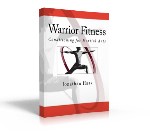
Pick up a free copy of my book, Warrior Fitness: Conditioning for Martial Arts HERE


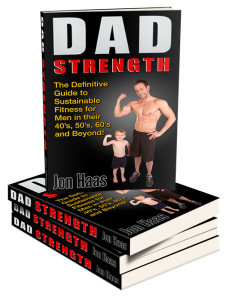
MEN – Pick up a free copy of my book, Dad Strength HERE 

The Process of Becoming Masterful

“Remember that mastery is not attained once after a lifetime of practice, but earned every day.”

– Jon Haas

Usually when we think of someone who is a master, be it a master martial artist or the master of some other craft, we think of them as attaining mastery at the end of a long lifetime of practice.
But mastery is NOT something that’s attained once after years or decades of training – mastery is something that is EARNED every day!!
You can be masterful in one moment and then a fumbling fool in the next (ask me how I know!).
The goal of becoming masterful isn’t to wait until some distant future when every move you make is perfect and every word that comes out of your mouth is sage advice, it’s to consciously create those moments of mastery every day until you have more of them rather than less of them.

Daily practice is the key.

Do you ever think about what it would be like to be a master martial artist?

Not just to be awarded the title “master” but to really and truly embody all of the sublime skill of martial mastery at the highest level of human achievement…

What would it feel like to know, without a shadow of a doubt, that you could easily control and subdue the most violent opponent with the most minimal effort, like a lion playing with a cub?
What if I told you that mastery is NOT something automatically attained after a lifetime of practice, but is instead conferred only upon those rare few individuals who, through their own efforts, take consistent, specific daily actions to achieve it?

Then mastery would not be just a far away, imagined future state, but instead a real and attainable goal built by taking action every day, right here and right now.


Remember This

Remember this – it is critical to your success – EVERY single legendary martial master: Musashi, Ueshiba, Bruce Lee, Kano, Takeda, Takamatsu, Gracie, Hatsumi, etc…

ALL of them began as unskilled, know nothing novices, white belts without a clue.

Their consistent daily training formed them, forged them, into the revered and feared masters that we know today.

“What one man can do, another can do.”

You can choose to follow in their footsteps. You can choose to be masterful, to be legendary.

However, as you follow them, do NOT seek to become them – instead, seek what they sought, the process of mastery.

Find the process of daily mastery <<==

Finally… There is a Researched, Tested, and PROVEN Method for Developing Internal Power and Unusual Strength from Martial Arts…

What is Specific Physical Preparation for Martial Arts?

Every once in a while it’s fun to think about how much the exercises we train on a daily and weekly basis actually translate, or carry over, to the activities for which we’re training.

Depending on your training program this can either be a great way to confirm that you are moving in the right direction, continuing to make progress and see results, or it can be a bit disheartening to realize just how little what you are doing actually carries over to your chosen field of endeavor.

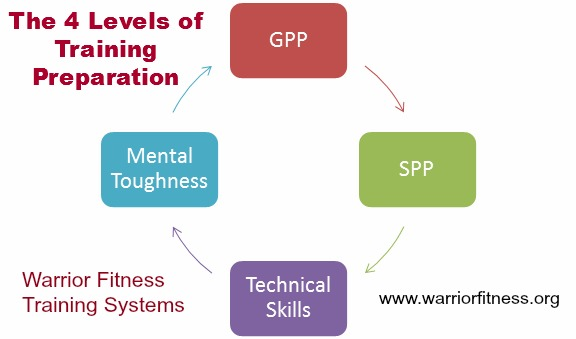
In the case of budo (martial arts) practice, like any other sport or physical activity, there must be exercises specifically crafted to enhance performance. A solid base of General Physical Preparation (GPP) is necessary, but not sufficient.

What is GPP?

The first step in ensuring you are building martial skills on top of a solid foundation is General Physical Preparedness (GPP). The goal of GPP is enhanced work capacity. This is the ability to run faster, jump higher, and hit harder.

When work capacity increases, it allows the budding warrior to adapt more easily to increases in both mental and physical demands. In other words, it increases your capacity and level of readiness to absorb higher levels of specificity in training. In order to be more, we must become more.

When talking about the martial arts, which tend to be seemingly limitless, one must possess the physical, mental, and spiritual endurance to “keep going!”


Moving From GPP to SPP

While the goal of GPP is muscular adaptation and general readiness for training, the main focus of SPP is neurological adaptation — to train movements, not muscles.

Specific Physical Preparedness builds on GPP by increasing the development of characteristics necessary for a particular sport or activity — or, in our case, martial arts.

It is a uniquely designed and targeted system for enhancing strength, flexibility, endurance, and conditioning which builds on the GPP base by furthering development in the exact physiological profile of the martial art.

Therefore, GPP helps to make you effective while SPP makes you efficient. The end stage goal is of course to be both effective and efficient in each and every movement.

The Training Process Cycle

If your strength and conditioning program is stuck in the GPP phase of development then you may not be realizing the type of performance gains that are possible with a specifically crafted SPP level.

Strength and conditioning training must eventually approach as close as possible to the demands of the activity to maximize the training effect.

Since your body adapts specifically to the stresses placed on it, you improve according to the type of training you do. This is exactly why your training program must cycle through from the general to the specific.

Ready to take your martial art training to the next level?

Check out the vast array of SPP for Martial Art Training Programs Available from Warrior Fitness Training Systems HERE <<===


On The Habit of Excellence

“We are what we repeatedly do. Excellence, then, is not an act, but a habit.” –  Aristotle


Lately I have been thinking about the virtue of excellence. This wasn’t always an important virtue to me. When I was younger (and dumber) I believed that I could get by on just being adequate at things and sort of drift my way through life. The only problem with drifting is that things only can drift one way, downstream.

No one has ever drifted to the top of the mountain.

Now I am convinced that we must all live the virtue of excellence in order to have full, complete, productive, and happy lives. And to be of service to others.

The most often talked about value in Greek culture is areté. Translated as “virtue,” the word actually means something closer to “being the best you can be,” or “reaching your highest human potential.”

This is our daily struggle and goal as warriors – to reach our highest human potential. You see the funny thing about excellence is that you can never achieve it, one and done. You must constantly strive to be in a state of excellence every day pushing higher and higher.

The man or woman of areté is a person of the highest effectiveness; they use all their faculties: strength, bravery, wit, and deceptiveness, to achieve real results.

In that spirit, here is the Strength Training Workout I just completed:

1A) Kettlebell Swings 4 x 25
1B) Barbell Back Squats 4 x 10, 6, 4, 2

2A) Pull-ups 4 x SM
2B) Kettlbell Military Press 4 x 6/6
2C) Split Stance DB Rows 4 x 6/6

3) Heavy Partial Squats 4 x 2

4A) DB Hammer Curls 3 x 6-8
4B) Lying KB Triceps Extensions 3 x 12
4C) Warrior Sit-ups 3 x 20

Phew… 

Pursue excellence!

I am opening up a few spots in my Warrior Online Coaching Program. If you are someone who is interested in pursuing excellence in your life, you can apply HERE directly.

 Don’t just think about how you can become excellent “some day”… Learn how to begin creating habits that will make you excellent NOW!

Breathing for Strength, Vitality, and Performance


For millennia breath control exercises have been the secret weapon of advanced yogis, qigong adepts, master healers, and warrior-monks to forge phenomenal strength, super human body control, and extraordinary vitality.

When disciplines such as yoga, Traditional Chinese Medicine, Internal Martial Arts, and Qigong have been successfully used over thousands of years to heal the sick, strengthen the weak, and bring energy to the depleted, you don’t question them – you study them!

While obviously these disciplines have their own unique modalities and practices, working with the breath is the common thread that runs through each of them. And there’s a very specific reason why each have evolved sophisticated breathing exercises that are used with such a high degree of success.

Breathing as a Bridge

Breathing is the only function of the human body that bridges both the autonomic and the voluntary nervous systems. You can breathe on complete autopilot all day long without ever consciously thinking about, and yet you can also choose to take a deep breath, exhale sharply, or even hold the breath at any time.

Herein lies the secret of breathing exercises – because it spans both sides of the nervous system specific breathing techniques are able to influence things such as heart rate, blood pressure, muscular tension, and stress levels.
Over the centuries, adepts of these disciplines (and others) have created literally hundreds of breathing exercises that have been consistently shown through practical experience to…

• Enhance whole body strength
• Increase lung capacity
• Reduce stress
• Improve endurance
• Fire up the body’s bioenergy
• Increase flexibility and range of motion
• Improve pain tolerance/reduce pain
• Build resilience and resistance to disease
• Improve performance under stress
• Not to mention relax, revitalize, and rejuvenate the body through meditation and relaxation exercises!

Relaxing Breath (Square Breathing)

The basic premise of our ability to influence the autonomic nervous system is that inhalation increases heart rate, which subsequently increase blood pressure, to a slight degree, while exhalation lowers heart rate and blood pressure to a slight degree. During our normal cycle of breathing, these changes are too minute to register, or even notice. But, by gradually lengthening our breath and extending the pause before inhaling and exhaling, we compound the effect. Stand in a natural position or sit comfortably on the floor with spine straight to perform this exercise.

1. Begin by exhaling through the mouth for 5 seconds.
2. Do not inhale. Try to extend the breath pause for 5 seconds.
3. Before tension begins to creep in, inhale for 5 seconds.
4. Hold the breath on the inhale for 5 seconds.
5. Repeat the cycle 10 times.
6. As this becomes easier, and your capacity expands, try increasing the duration to 6, 7, 8 seconds.

Breath Walking Meditation Exercise


Energizing Breath

In this breathing exercise we will utilize a protocol founded by yoga and improved upon by Russian sport science and martial art. Here we will divide the breath into 3 levels: clavicular (upper level), intercostal (mid level), Diaphragmatic (lower level). This exercise will focus only on the clavicular, or upper level. Use this powerful breathing exercise to fire up your energy and prepare your body for training!

1. Exhale through the mouth in a short, quick burst by compressing the upper chest.
2. Do not actively inhale. Allow the inhale to happen by relaxing the muscles in the chest.
3. Repeat rapidly 20 to 40 times.
4. Build up to where you can perform continuously for 60 seconds.
5. If you become dizzy, stop and sit down and breathe normally!

60 Second Energizing Breath Video


Here is another fantastic use for breathing….


Restoring Breath

This exercise is literally a life saver when doing high intensity interval training (HIIT) workouts! It can be used in between exercises as well as in between sets, during the rest period, and also at the end of the workout to normalize breathing and dramatically lower heart rate.
1. Forcefully exhale as deeply as possible by rolling your shoulders forward, tilting the pelvis up, and contracting the core strongly.
2. Pause before the inhale for a few seconds.
3. As stated above, do not actively inhale. Allow the breath to be sucked back in through the nose as your body returns to a natural standing posture.
4. Repeat for about 60 seconds, or as long as needed.


To learn more about how you can incorporate powerful breathing exercises into your own training, check out my Evolve Your Breathing Program.

Also, make sure to check out my review of Logan Christopher’s book, Upgrade Your Breath.

To learn more about the Warrior Fitness Training System, check out the free mini-course I have provided below…

Tanren Mini-Course <<===

The Downfall of Functional Training & How to Fix It

What Functional Training Has Become…

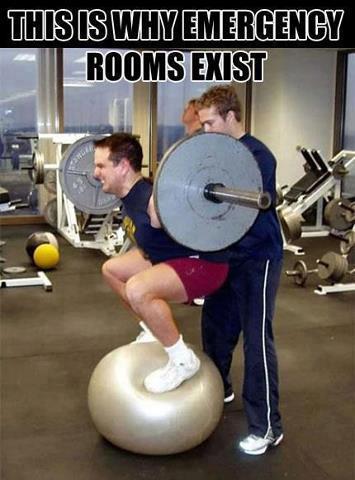
The field of functional training has degenerated into seeing who can perform the most meaningless stunt while looking the coolest (ahem… sometimes).

These exploits may look impressive to the uninitiated or easily amused, but they have virtually no carry over and zero application to movement in real life, on the sports field, or on the combative battlefield.

Not to mention their capacity for injury is high while their actual true functionality is exceedingly questionable…

Worse yet their flamboyancy distracts from, and gives a bad name to, real progressive, incremental functional strength training that has been the province of great warriors, strongmen, and great athletes for centuries. This leaves us in a sad state of affairs.

What Functional Training SHOULD Be…

Functional training should instead focus on developing multi-planar, multi-joint movement. It should increase stability, whole-body power, and enhance resistance to injury. It should multiply force production ability for all martial and athletic movement as well as stimulate neuromuscular patterns required for those movements.

Functional training should create a safety valve in ones movement for when the unexpected happens and movement goes awry.

It should provide the functional training practitioner with the ability to absorb and re-translate force without chance of injury.

The training methodologies that were developed and past down by warriors were the ultimate in what we today call “Functional Strength Training”. Certainly, what could be more functional than specific exercises and training methods devised to excel and survive in mortal combat?

These methods still survive today and are the province of a rare breed of modern warriors, martial artists, strongmen, and strength coaches….

Like the tempered steel of the warrior’s blade, the true art of functional strength training has been forged over the centuries by the fires of preparation for life and death combat.

How Do We Fix It…

The first part of fixing the mess of modern functional training is to answer the uncomfortable question – functional for what?

Let’s face it,  none of us really need to be good at pressing 5 lbs dumbbells while standing on a BOSU ball with one foot wearing an altitude mask. 🙂

So what do we need the outcome of purposeful training to be so that it will benefit and improve virtually all human movement?

We need connected whole body strength and power that seamlessly integrates with any martial, athletic, or life event endeavor. We need training that increases mobility, enhances strength, improves resistance to injury, and provides a foundation for excellent health and pain-free movement into old age.

What are we training to become more functional for? Living.

How Do We Train It?

Functional exercise, as we discussed above, is defined as multi-planar, multi-joint movement, in other words, three dimensional movements.  Which means that swinging a weight – club, mace, sledgehammer – is one of the most effective ways to truly train functional strength.

For the warrior, since combat always occurs in a volatile and unpredictable atmosphere, training must prepare the warrior to adapt and overcome.

You cannot be strong in only one direction or just one plane of movement – you must possess all around strength that can be brought to bear no matter what position or weird angle you may find yourself in, and having to move from.

Since sledgehammers are common place and easy to obtain at the local hardware store, they make an ideal functional strength training tool.

Using a sledge hammer in your training is a great way to develop the movement pathways used in striking. It will aid in force production, increase angular, diagonal, and rotational strength throughout the trunk and core, and provide an excellent grip strength workout all at the same time.

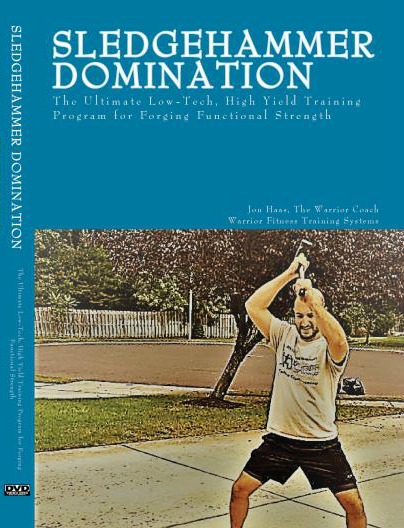
Sledgehammer Domination – Volume 1

“The Ultimate Low-Tech, High Yield Training Program for Forging Elite Functional Strength”


What is Fitness?

Fitness is probably one of the most controversial topics bandied about in social media, magazine articles, and by know-it-alls across the planet.  Just about every type of training under the broad heading of fitness has its own staunch supporters and sycophants, as well as its haters and rabid detractors.

Nothing really has a place of neutrality inside the world of fitness.  Here’s a quick idea what I mean:

Crossfit – Either drink the kool aid and become of them, or hate it with a passion

Running – Either sprint or don’t do it

Mobility – Either the tonic of youth and health or just another time wasting fad

Power Lifting – Either those guys are super strong, or just super fat

Zumba – well, let’s just not even call it fitness…

The list of training modalities and their relevant pros and cons goes on and on.  Chances are, if you are serious about your own brand of fitness, you have a love/hate list yourself.

But, are any of the above truly right or wrong?  Well, maybe the one about Zumba… 🙂

Seriously though.  How do we define fitness?  What the heck is it, really?

Here is my definition:  Fitness is having the requisite physical ability (strength, coordination, endurance, energy, power, balance, agility, etc.) to accomplish all your daily tasks, whether work or personal, and to be able to participate fully in any activity, sport, or recreation of your choice.

In other words, fitness is specific to what you as an individual are trying to accomplish daily and to the goals you are working towards.

The real question then is not, are you fit?  The real question is – what are you fit for?  Because the answer determines everything.

So, if all you do is sit on the couch and watch TV all day long and your body has adapted to that state by becoming soft, round, and couch shaped, than you are perfectly FIT for your activity!  Now this may fly in the face of your personal idea of fitness, but if you consider that fitness  is adapting to, and being able to adequately perform the activity of your choice, then you must accept both the marathon runner and the coach potato as being equally fit for their tasks.

By the way, can you be entirely fit and completely UN-healthy?  Yup.  Definitely.  So how do we hone our definition of fitness so that it includes not only looking good, but feeling good as well?

Simple.  Understand that the most important task which you must be fit for is that of being the strongest, healthiest, most productive individual you can be.  This not only insures that you live longer and better for yourself, but for your family and your contribution to society as well.  If this becomes your goal, how then will you change your current routine to make sure your training meets and achieves this objective?

Something to think about.  And, perhaps the topic of another article…

The Top 3.5 Reasons Training is Hard

The other day a student said to me during training: “This is hard.”

My reply was, “Well of course it’s hard. You don’t come to me to learn how to do things you’re already good at, do you?” 

But why is this difficult?

In my experience,training is hard for approximately 3.5 main reasons…

1. You are learning new skills. It’s hard to be good at movements, exercises, and concepts that are new to you. Your nervous system must adapt to the new and different stimulus and create, or sharpen pathways to build competence and skill.

2. You must work on your weak points. Working on things you are already good at is fun, but the only way to truly become all-around strong is to eliminate your weak points.

3. Your ego. No one wants to look inept or silly. But the only way to become better means that we must put ego aside in order to learn.

3.5. Superficial Expert Status. The amount of information available today gives people immediate access to any body of knowledge out there, no matter how obscure, in a matter of seconds.  We have all become SMEs – “Superficial Matter Experts”.  We think that just because we know “about” something we actually understand it. No one wants to spend the time and effort required to learn something deeply.

But these reasons are exactly why we need to train. And why we need to train with people who have greater, or more specialized knowledge, higher levels of experience, and greater levels of skill than we do.

This is why I still train with my martial arts teachers. This is why I still have a strength coach. This is why I participate in masterminds and have business coaches.

Because I know that I need to be pushed and challenged in order to grow, just like I must push and challenge my students and clients in order for them to grow.

Ready to be pushed and challenged?

It begins here <<===

Fasting, Cold Showers, and Black Coffee

This week I decided to run a little experiment and see how long I could fast. I felt that after all the overeating and indulging of the holidays that my body, especially my digestive system, could use a break.

I was inspired by my friend Logan Christopher doing a 5 day fast over New Years. He mentioned using this book The Complete Guide to Fasting: Heal Your Body Through Intermittent, Alternate-Day, and Extended Fasting  as a resource so I picked it up and started reading.
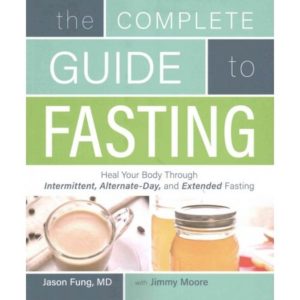
fasting-book

I started my fast Sunday night at 10 PM and continued until Wednesday afternoon at 4 PM for a total of 66 hours. This was by far the longest I’ve ever gone without food.

My normal routine includes daily Intermittent Fasting, but that usually only lasts between 16-18 hours. Here’s a video I made last year talking about how to do it.

What did I consume?

  • Water with lemon
  • Green tea
  • Herbal tea
  • Black coffee with a splash of half and half

How did I feel?

To be honest, I felt great! I was hungry in brief intervals, but it passed. My energy levels were steady for most of it although in the afternoons I felt sleepy and a little drained. Otherwise I had great mental clarity, focus, and energy throughout the whole thing.

I normally use cold exposure and breathing exercises as part of my daily routine but I felt the beneficial effects were magnified even more during my fast. Read about my cold exposure training here.

Did I workout?

Yes I did. Mostly light kettlebell work, hitting the heavy bag, mobility, and cleansing Qigong.

What are some of the benefits of fasting?

  • Fat loss (obviously)
  • Lowers blood sugar (not dangerously low because the body burns fat as fuel – ketosis)
  • Increased insulin sensitivity (remember obesity other metabolic syndromes are caused by insulin resistance)
  • Increased levels of growth hormone
  • Increased clarity, focus, and energy
  • Improved heart health
  • Anti-aging effects
  • Boosts brain power

Why did I stop?

To be honest, I wasn’t hungry. I actually broke my fast because I wanted the socialization experience of eating dinner with my kids. Plus I had to cook for them anyway. 🙂

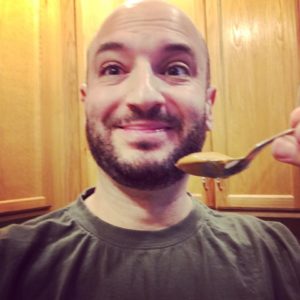
I broke the fast with 1 spoonful of natural peanut butter. After an hour or so I had an arugula salad with cucumbers, carrots, and some red pepper in an olive oil and lemon juice dressing.

jon-peanut-butter

All in all it was a great experience. I plan to continue my foray into fasting!

Got questions? Let me know! Happy to help.