The Year of Strength

I have dubbed 2020 “The Year of Strength”.

Why?

Because in strength is what holds us all together.

The strength of love.
The strength of family.
The strength of relationships.
The strength of community.

Yes of course the strength to physically defend ourselves and others. But also the mental strength to make the right choices. The spiritual strength to move past our own physcial and mental/emotional limitations and still be able to keep going when people depend on us or circumstances align against us.

The strength of character to do the right things even when no one is watching or holding us accountable.

The strength of will to persevere no matter what type of challenges life may throw at us.

In my philosophy, as you know, physical training is the microcosm of the macro. The strength of body translates over into all aspects of our lives and our psyche. Being stronger physically makes all of us more useful to each other and of course harder to kill. 🙂

So look forward to much more coming your way to give you all the tools you need to strengthen all 3 parts of yourself – physical, mental, and spiritual – from Warrior Fitness this year.

Happy New Year, my friends. Let’s make it a STRONG one!

Stronger Every Day!

PS – Looking for a crucible of physical training to put yourself through this year? Want to come out stronger, harder, leaner, and vastly healthier in just 6 short weeks? Warrior Fight Club training starts tomorrow – get in on the action HERE!!!

Powerful Morning Ritual To Start Your Day


Here is a great way to set yourself up for success on a daily basis.

Spend the first hour of each day working on your own personal development. Discipline yourself to get up earlier and work on yourself each morning – This powerful practice will literally transform your life!


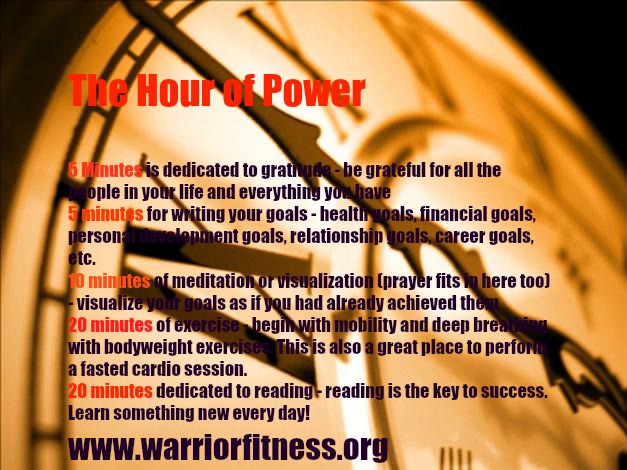
The Hour of Power

Step 1 – 5 minutes is dedicated to gratitude

Practice being grateful for all the people in your life and everything you have. When you start from a place of gratitude each morning, it’s much more powerful to begin each day from a place of abundance, realizing just how many things are going right in your life, rather than coming from a place of lack.

Step 2 – 5 minutes for writing your goals

Take a fresh sheet of paper and write out all your goals on a daily basis – health goals, financial goals, personal development goals, relationship goals, career goals, etc. When you write your goals make sure to write them in the first person and as if they are already accomplished.

For example, if you have a goal to earn one million dollars in your business, you would write – “I earn $1,000,000 in my business.”

Step 3 – 10 minutes of meditation or visualization (prayer fits in here too)

Visualize your goals as if you had already achieved them.

Every morning I sit down on the floor, close my eyes and focus on my breathing.

After each exhale I retain the breath because this is when your body is most quiet – after an exhale, before the next inhale – and silently say to myself, “Every day in every way I am getting stronger and stronger. Every day in every way I am getting better and better.”

I say it several times while holding the breath on the exhale, each time more intently.

When I open my eyes, I am clear, focused, charged up, and ready to start my day!

Here’s a short video I made describing the process…

Give it a try and let me know how it works for you!

Step 4 – 20 minutes of exercise – begin with mobility and deep breathing with bodyweight exercises.

Do you jump out of bed every morning brimming with energy, ready to take on the day?  Yeh, me neither. 🙂

What I have found is that doing 3 simple exercises as soon as I get out of bed in the morning helps to rev up my energy levels and kick start my day.

Tomorrow morning, and every morning after that, I want you to perform the following 3 exercises.  You will be amazed at the powerful effect they have on stimulating your metabolism and getting you ready to kick butt for the day!!

What are the 3 exercises?

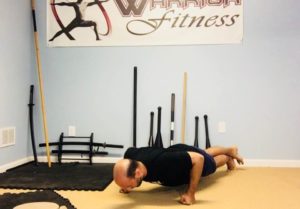
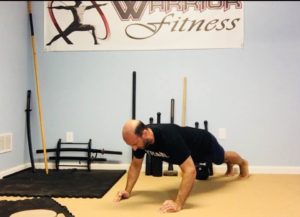
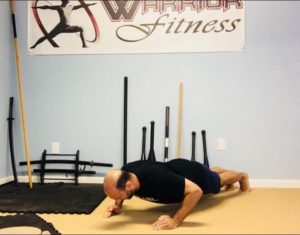
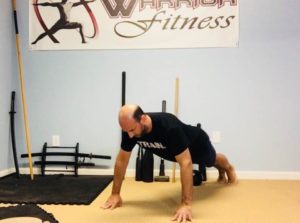
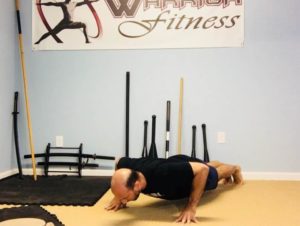
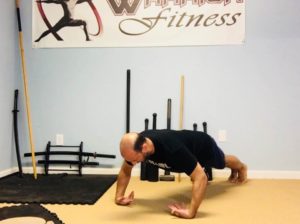
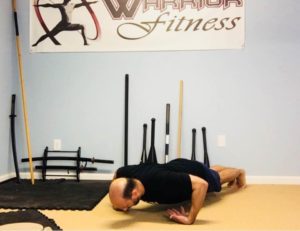
  • Breathing Push-ups x 10
  • Breathing Squats x 10
  • Breathing Leg Raises x 10

For each exercise, exhale fully and deeply (diaphragmaticly) while lowering down, and inhale fully and deeply by expanding the belly when raising the body.  Make sure to fully actualize the breath in every movement.

That’s all.  Just one set of 10 for each of those 3 exercises to kick start your day.

Step 5 – 20 minutes dedicated to reading

Great warriors train all the time. Reading is a form of training that must be practiced by the warrior on a daily basis. Feeding and training the mind is just as important as feeding and training the body. Remember – knowledge is power!

Fill your mind with creative, positive and motivational ideas, concepts, and philosiphies – reading is the key to success. Learn something new every day!

Here are 10 books that are a must in every warrior’s library. Expand your mind and pick up these books!

(PS – don’t have a full hour in the morning? change the amount of time spent in each area to fit your schedule)

You will find this powerful practice a great way to start your day and propel you towards success in every area of your life. Make sure that you implement it tomorrow morning!

Looking for more powerful practices to enhance your health, strength, and life?

Check out my new Warrior Lifestyle Coaching Program <<==


10 Step Upper Body Pushing Progressions

10 Step Upper Body Pushing Progressions
By Logan Christopher

Back in 8th grade my older brother started training me to get ready to go out for the football team in high school. He was a star player and hoped I would follow in his footsteps.

Unfortunately, to say I was weak and unathletic was an understatement. When I started, I couldn’t even do a regular pushup in good form!
Fast forward many years later and I’m repping out full range handstand pushups.

That is what progressive strength training can do when you follow it consistently. Progression is a fairly simple concept, but one that most trainees unfortunately don’t really get. This is especially true when it comes to bodyweight training.

My goal in this article is to give you the keys to progression by showing how you too can go from not even being able to do a regular pushup to full range handstand pushups. (And if you’re anywhere in between that means you’ll just get there with fewer steps.)

The trick with bodyweight exercise is to do progressively harder variations of an exercise over time. This is done by manipulating leverage, range of motion, body position and more. Here’s the ten steps and then we’ll dive into details on each one.

1.         Knee pushup

2.         Incline pushup

3.         Regular pushup

4.         Decline pushup

5.         Pike pushup

6.         Handstand shrug

7.         Partial handstand pushup

8.         Handstand pushup

9.         Elevated handstand pushup

10.       Full range handstand pushup

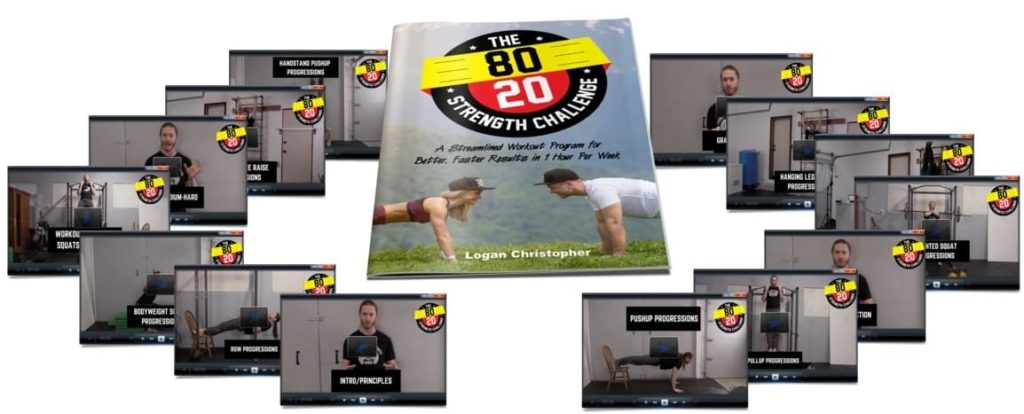
These are the ten steps for this exercise series as I lay out inside of The 80/20 Strength Challenge. There’s more detail inside the course, but below is enough to get started with.

Step 1 – Knee Pushup

Kneel down. Place your hands flat on the ground approximately shoulder width apart. Straighten your body so that you are one line from the thighs, the back, up to the shoulders. Do not let the hips pike up or sag. The head should be kept in a neutral position.

Start with the arms locked out then allow the elbows to unlock and the body to be lowered by the strength of the arms. Do not protrude your head or sink your hips to touch the ground. Lower under control until your chest touches the ground then push back up. This is one repetition and should be repeated.

 Step 2 – Incline Pushup

Get something stable like a chair (without wheels). Make sure this will not move, fold or otherwise put you in danger. Platforms, steps, or various other objects can be used.

Place your hands on the chair. Walk your feet back so that your body can be a straight line from the legs through the back. Do not let the hips pike or sag. I’m going to be saying that a lot. Lower by the strength of your chest and arms. You might touch your chest to the chair. It depends a bit on the angle and the chair. Push back up. This constitutes one rep. Repeat.

Step 3 – Regular Pushup

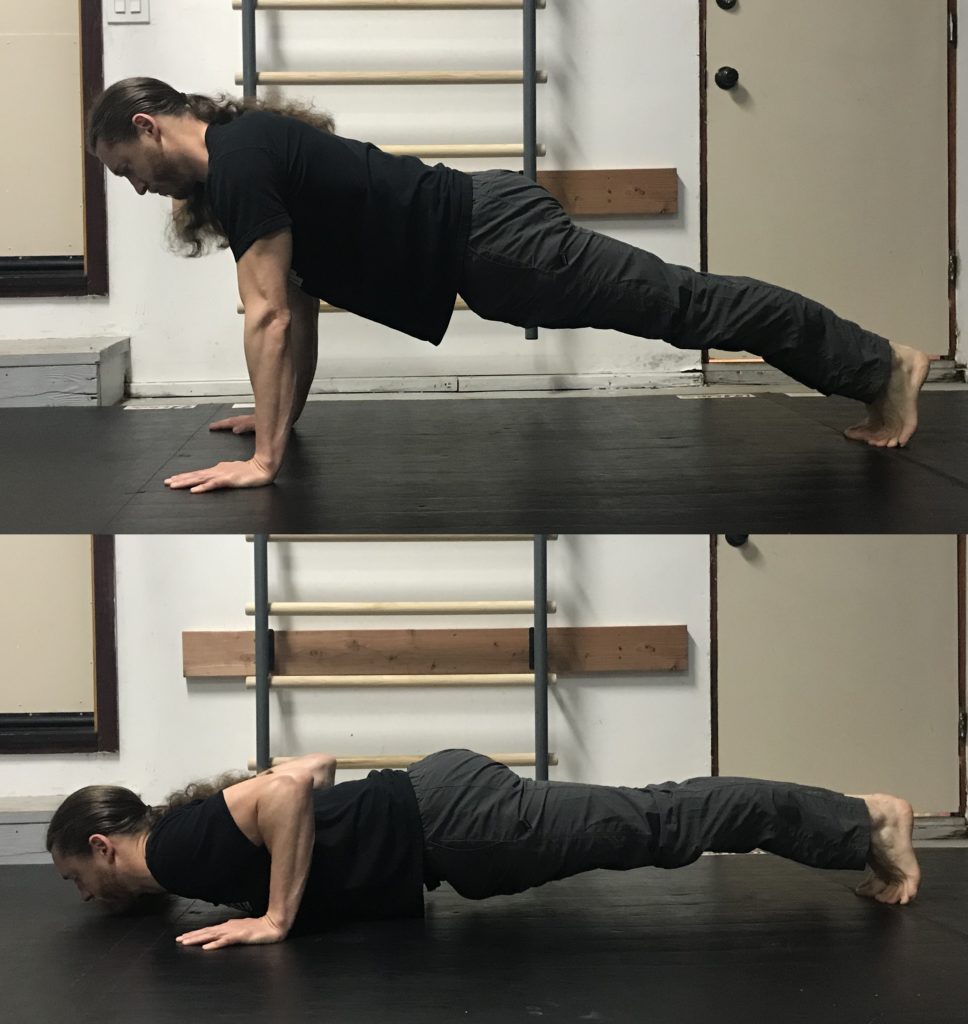
To maintain good form your body should be kept tight. Do not allow any sagging in the hips. Do not have your butt sticking up in the air either. Your body should form a straight line and be kept rigid like a board.

Your hands are placed on the ground shoulder width apart with the fingers pointing forward. Lower your body with your arms and the elbows close to the sides. Do not make the common mistake of letting your elbows flare out to the sides. This can be bad for your shoulder joints. Keep the elbows in! Your chest should touch the floor lightly and then you press back up. Repeat for reps.

Step 4 – Decline Pushup

Using the same stable chair or other object as before, this time place your feet on it and your hands on the ground. Otherwise, the form is the same as in the normal pushup.

Step 5 – Pike Pushup

Place your hands on the ground shoulder width apart and fingers facing forward. You must keep your legs straight with your butt up in the air when you perform this exercise. This is that same as a downward dog position in yoga.

Bend your arms while keeping your legs straight. Your heels will come off the floor. Touch your head or nose to the ground and push back up. Your elbows should not flare out to the sides much, if at all, but stay in line with your body.

Step 6 – Handstand Shrug

From the pressed out handstand position relax your shoulders and think of bringing them toward your armpits. Pull them into the socket. But do not bend your elbows. The arms should remain tensed and locked out throughout this exercise. Even think about squeezing the triceps hard enough to cramp them. The movement is made solely by the shoulder girdle. It is awkward at first but can be mastered with a bit of practice.

After you have lowered by action of the shrug you press back up. Repeat back and forth. Once again, do not bend the arms. This exercise only takes you through an inch or so of motion. With practice, you can do a large number of repetitions in this exercise.

Step 7 – Partial Handstand Pushup

We switch from the handstand shrug to bending the elbows, but only for a partial range of motion (ROM). The easiest way to do this is to place a stack of books or something similar under your head. Thus, instead of lowering your head all the way to the ground, it only touches these books then you press back up.

Once your stack is in place, get up into the handstand in the same steps as before. Once locked out, bend the elbows so that the top of your head lowers down to the stack. As soon as it touches press back up to lockout. Repeat. Remember to breathe.

Step 8 – Handstand Pushup

Kick up into a handstand against the wall. Keep your head in line with your arms. Bend the elbows and lower yourself under control until your crown touches the floor then press back up to lockout. It is best to touch the top of your head to the ground, instead of looking down and touching your nose. The latter is harder and then causes more arch in the back. Arch is not bad, unless it is overdone.

Step 9 – Elevated Handstand Pushup

You can use many objects for this. Pushup handles, parallettes, steps, mats, chairs, blocks of wood, kettlebells, hand balancing stands and stools all work. One caveat with whatever you choose to use. I shouldn’t need to tell you that dire consequences could result from using unstable or poor equipment. As long as it provides a stable place to put your hands and it will hold your full body weight it will work.

Step 10 – Full Range Handstand Pushup

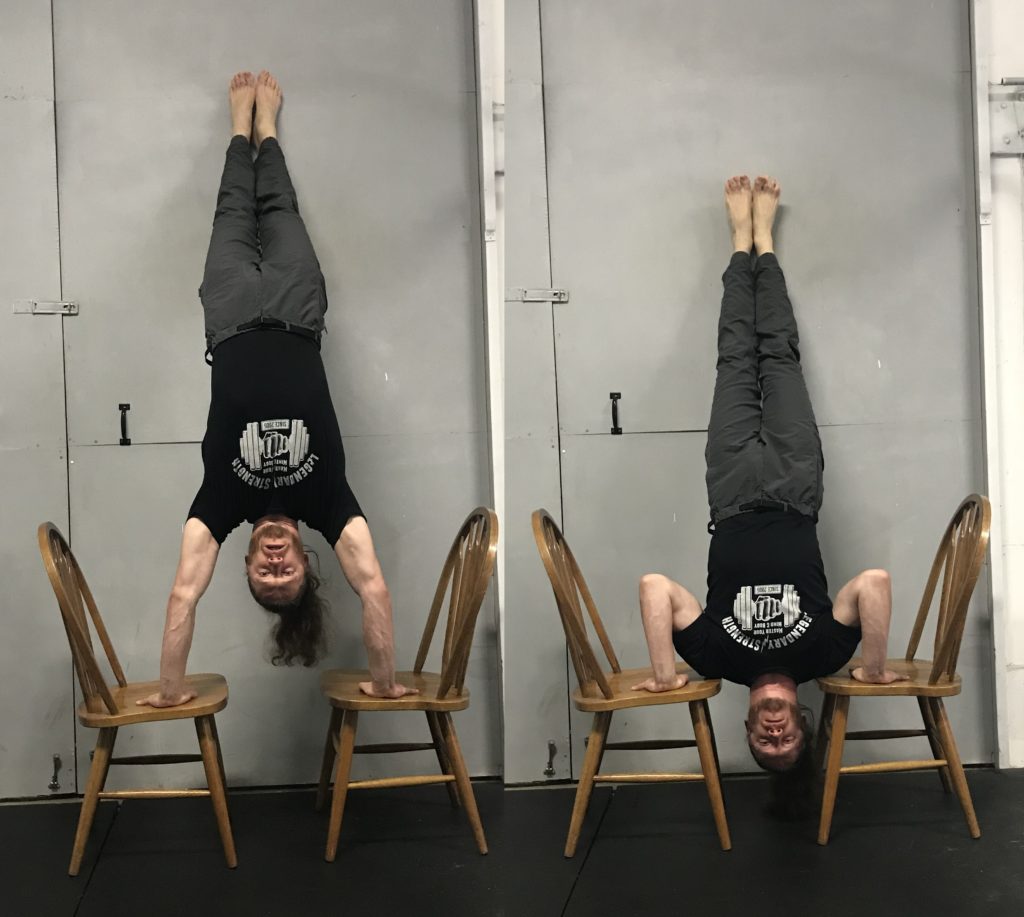
The handstand pushup as covered in any of the prior steps is actually only a partial range movement. Step 8 is just the top half of a press. The previous move extends this a bit further. But here with the full range handstand pushup we’re finally going to get the complete range of motion.

Kick up to a handstand against the wall with your hands firmly placed on two sturdy objects like chairs. Lower under control until your hands are touching your shoulders. Press back up to lock out.
How to Progress from Step to Step

You obviously won’t go from one exercise to the next in a single workout, but that’s where another key aspect of progression comes in. I’m talking about volume!

It doesn’t matter what step you’re at, in your workouts you want to build up the amount of volume that you can do.

How many reps can you do in a single set?

If you can do five today, aim for six next time.

How many total reps, spread across many sets, can you do?

If you can do 30 total reps today, aim for 31 or more next time.

Increase these numbers over time and it means you’re getting stronger. Get stronger and soon enough you’ll be able to move onto the next step. And then the next step.

Over time, this is how you too can go from not being able to do regular pushups to full range handstand pushups. It’s how I did it and it’s how you can too.

Want more? Inside The 80/20 Strength Challenge you’ll find more details on the above exercises, as well as similar progressions for squats, inverted rows to pullups, hanging knee and leg raises. You’ll also find a precise structure that makes sure you improve in all of these in just one hour per week of work.

Find out more details here.
 

Why Body Skills are Critical to Martial Arts

Body skills are the foundation of ALL martial and athletic movement.

In fact, in my mind, they are the foundation of all good, powerful, pain-free human movement!

What are body skills?

They are the qualities that connect, support, mobilize, and strengthen the body from the inside out. They create a highly resilient, dynamically stable body that underpins all other skill acquisition. In short, you want to get better at the specific skill sets within your martial art, quickly – train the body!

Learn how to develop high level body skills for martial art 

The Trinity of Training for Health and Strength

The ancients who created yoga, qigong, and various systems of martial arts knew a thing or 2 about training the body as a whole, integrated unit and not a series of disparate parts.

In fact the word yoga means “to yolk” or to unite together.

Each separate system that came down to us from the ancient world had one thing in common no matter where they originated…

They all utilized breath, posture, and movement to create a balanced healthy body, energetic, and free from pain.

When you combine exercises using all 3 modalities you get a powerful synergistic effect on health and strength that modern methods lack.

Learn exactly how to unite all 3 here =>

Shadow Strength utilizes a proprietary set of exercises drawn from traditional martial arts and trained in a unique combination to skyrocket your internal strength, power, and resistance to injury.

Using breath, posture, and martial mobility, Shadow Strength breaks down the barriers to superhuman strength and an unbreakable body.

Learn more here =>> http://warriorfitness.org/shadow/

Top 30 Testosterone Boosting Foods

It’s no secret that our manhood is in jeopardy.

Lack of proper nutrition and exercise, processed foods, and environmental toxins are all conspiring to plummet men’s testosterone levels to an all-time low.

Optimal levels of testosterone are absolutely necessary to help us burn fat, build muscle, reduce depression, be successful, and, all other factors aside, it is the very thing that makes us men.

Here are 5 simple, yet powerful steps you can take right now to begin combating this epidemic and bringing back manliness!

1) Limit your exposure to plastics. Plastics contain phytoestrogens that increase the amount of estrogen in the body – not something we want!

2) Strength Training – the proper strength training protocol can boost both testosterone and growth hormone. Testosterone is responsible for both building muscle AND burning fat!

3) Cold Showers – Take a cold shower twice a day. It’s also great for mental toughness!

4) Eat your nuts. – Have a handful of Almonds and 3 Brazil Nuts first thing in the morning and again before bed to increase healthy fats.

5) Vitamins – Take Vitamin D, Fish Oil, and Zinc. All are necessary for testosterone production!


The Top 30 Testosterone Boosting Foods


These foods both directly boost testosterone and help to limit estrogen exposure.

One important thing to note is that low fat, low cholesterol diets have been the worst thing to happen to men in the past 40 years.

Remember – Cholesterol is the building block of all sex hormones, testosterone included – so eat your cholesterol!


  • Grass fed beef
  • Bacon
  • Eggs (free range)
  • Bison
  • Brazil Nuts
  • Macadamia Nuts
  • Almonds
  • Butter
  • Blue Cheese
  • Oysters & other shell fish
  • Broccoli
  • Cauliflower
  • Cabbage
  • Brussel Sprouts
  • Kale
  • Pomegranate
  • Avocado
  • Blackberries
  • Blueberries
  • Acai Berries
  • Olive Oil
  • Coconut Oil
  • MCT Oil
  • Coffee
  • Onions
  • Ginger
  • Parsley
  • Garlic
  • Raw Milk
  • Liver
  • Bonus Testosterone Boosting Super Food – Pine Pollen


FREE BOOK REVEALS… How To Go From Dad to Super Dad!
Download Your Free Copy of ** Dad Strength: The Definitive Guide to Sustainable Fitness for Men in Their 40’s, 50’s, 60’s , and Beyond! **

A 3-Phased Approach to Recover, Build, and Sustain Strength Quickly and Easily as You Get Older!

Download your copy here <<===


Need more personalized help?

Want me to work with you one-on-one to create a specifically designed program for you to burn fat, build muscle, increase energy, and optimize your testosterone levels?

Go HERE now to apply for a spot in my distance coaching program!

Musashi on Posture in Strategy

In his classic work on the art of strategy, Go Rin No Sho, Musashi gives the following instructions on Posture in his art.

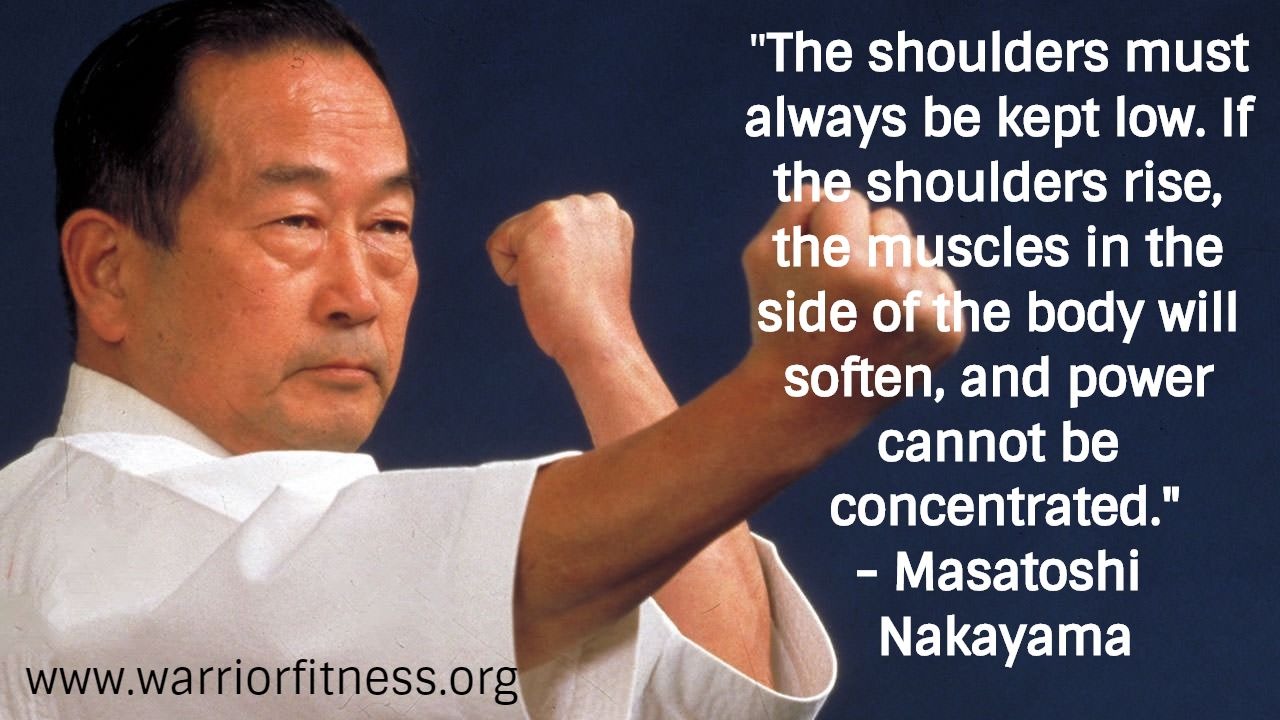
“Keep your neck straight, putting some force in the hollow of the nape; lower your shoulders, with the sensation that the torso from the shoulders down forms a unity; keep the back straight, do not stick out your buttocks, push your force downward from your knees to the tips of your toes, Advance the belly slightly forward so that the pelvis does not lose its stability…

It is necessary for you to have as your posture in strategy just the ordinary one, and it is essential that the posture of strategy be the ordinary one for you. This must be examined well.”


Notice how adamant he is that your stance for combat and your everyday stance be the same…

Isn’t it interesting that Musashi’s instructions for how to stand in his system of strategy sound remarkably similar to zhan zhuang (standing meditation) and shizen no kamae (natural posture).

Coincidence? I think not…

For comparison here is a video I made on how to stand in Shizen no Kamae (natural posture).


Now let’s take a deeper look into the standing practice as the world’s oldest and most effective form of Qigong.


Tachi Geiko (Standing Training) or Ritsu Zen (Standing Zen)

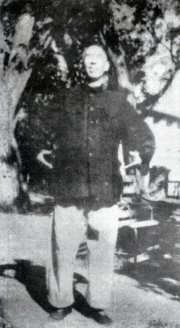
Zhan zhuang, or standing meditation exercise, has been used as a method of relaxation and health cultivation for thousands of years. The earliest known reference to standing appears inThe Yellow Emperor’s Classic of Chinese Medicine. Martial arts master Wang Xiangzhai wrote the following in his book on zhan zhuang:

“It is said that already 2000 years ago there existed the book Internal Canon, the gem of Chinese medicine, which even today is a guide for medical practice. The chapter Simple questions concentrates on cultivating health. For example we can read there: “In ancient times great masters stood on earth, supporting heaven, controlling yin and yang, breathing with essence of qi, standing alone, guarding spirit, with body being as one.”… Before the eastern Han dynasty many scholars and warriors knew the methods of “tranquil cultivating.” The exercises could be done walking, standing, sitting, lying. It was popular form of cultivating health. Later, during reign of Liang dynasty’s emperor Wu, Damo came to China to teach. He transmitted methods of “washing marrow” and “changing tendons.”


The health preserving and sustaining effects of zhan zhuang have been documented in hospitals and medical clinics across China. The reason this practice has such a profound impact on health and recovery from exercise is that the standing meditation acts like a system-wide reboot for the whole body. It stimulates the nervous system, increases circulation, and raises energy levels, while providing deep relaxation for both mind and body.

Aches, pains, old injuries, muscular tensions, and imbalances are highlighted and brought to the forefront by this method and then slowly dissolved over time and completely released. The practice provides a way of completely relaxing and letting go of the muscular tensions in the body, while the correct alignment of the bones delivers support, creating a profound neutral and relaxed, almost buoyant state. As the whole body and mind are exercised, both relax and stimulate the nervous system, increase circulation, open the joints, and raise energy level for a feeling of overall well-being.

This exercise looks easy from the outside. After all, you’re just standing there and not moving. However, inside, there is a lot going on – the breath and the qi (energy) are moving. This exercise is a challenging, sometimes frustrating, yet highly beneficial and rewarding practice. The only way to truly appreciate it is to experience it for yourself.


How Do We Stand?

In practical terms, how should we stand?  Let’s start with the head and work our way down.

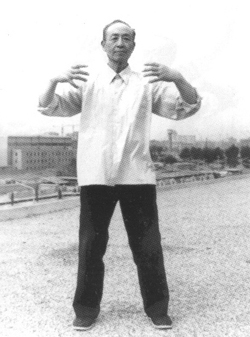
  • Begin by standing in a natural stance. Feet shoulder width apart, knees slightly bent.
  • Lift upward slightly with the crown of the head, as if being pulled up by a string, allowing the chin to lower. This straightens the vertebrae at the back of the neck.
  • Shoulders are back and down sitting on the spine.
  • The back should be flat. Do not tuck the pelvis. The spine should be suspended from above like a skeleton hanging in a science classroom.
  • Hold the arms in front of the body, level with the solar plexus, as if hugging a tree. There should be a golf-ball sized space under the armpits.
  • The bottom of the spine pulls straight down from the tailbone, as if there is a weight attached to the sacrum. You should feel like you are sitting on a high stool yet trying to stand up at the same time.
  • Allow the knees to bend slightly. Feet should be shoulder width apart and pointed straight forward as if on railroad tracks.
  • Legs should feel like they are squeezing a beach ball. Remember, though, the ball puts outward pressure on the legs as they squeeze in, so there is pressure both directions, not just one.
  • The weight is carried in the hollow behind the balls of the feet. In Chinese medicine, this is known as the yongquan or bubbling well point.


All of the above points must be maintained to have a truly “natural” standing posture.


Maintaining a relaxed posture is key to beginning your standing meditation.


Supercharge Your Standing Practice

Now that you have the external mechanics down, let’s talk about how to supercharge your relaxation process.

  1. Mentally scan the body for areas of tension. The usual suspects will be the neck, shoulders, low back, and quads.


  1. Begin to actively release each area of tension one by one with your mind. For example, think of the tightness in your shoulders and relax it by telling yourself, “The tightness in my shoulders is letting go and relaxing.” Then proceed to the next area until you have systematically gone through them all.


  1. If one particular area is giving you trouble, then work on breathing into it. Inhale into the area, hold for a few seconds, and then exhale from the area to release it. Use this process over and over again until all the tension has let go.


  1. Once you have removed all the residual tension in the body, continue to stand holding that relaxed feeling. Think of your body as a drop of ink dissolving in the ocean, spreading out in all directions.


  1. Start with ten minutes of zhan zhuang standing. Work up to thirty minutes. In Chinese medicine, it is said that it takes approximately 28 minutes for the blood to complete one full cycle though the body, thus the recommendation to stand for thirty minutes. This can be increased to sixty minutes over time to allow for two full cycles of blood to be completed.


A New Way to Recover

In teaching this method to both my fitness clients and martial arts students I find that in addition to our usual compliment of recovery drills (consisting of mobility exercises, yoga asana, and compensatory movement), the addition of this simple practice of standing meditation has consistently accelerated our recovery process, allowed us to reach new levels of relaxation, and strengthened the mind-body connection beyond any other work we have done. Additionally, it has managed to increase energy levels while fortifying our bodies against the daily rigors of life, work, and family stresses.

While this method is elegantly simple to practice, requires little space and no special equipment, and can be done at virtually any time of day, it also is startlingly deep.

Go Deeper – Take the 100 Day Challenge!

Traditionally it is said that a minimum period of 100 days is necessary for the body to acclimatize and adapt to a practice. As our goal is to completely rewire the nervous system in order to change the body, 100 days seems like the perfect length of time.

How to Do It

  1. Work your way up to standing for 30 minutes a day for 100 days – think you can do it?
  2. Take the Integrated Strength Program challenge for 100 days and seriously upgrade your strength, health, and martial power!

5.5 Principles for More Effective Striking in ANY Martial Art

Part 1 of this series, Conditioning the Fists for Striking can be found HERE.

Being able to strike with power and precision involves a lot more than merely knowing the technique. Practice must include these principles of effective striking techniques for all martial arts…

1. Whole Body Power 

All movement in real life happens in three dimensions, so why train exercises that only incorporate one or two? Training muscles in isolation, unless it is used to rehab a specific injury, range of motion, or strengthen a particular muscle to add to the whole, does not work in martial art.

Our strike conditioning exercises must train movements in three dimensions utilizing diagonal, rotary, and angular strength, as well as prime moving muscles.

2. Stored Elastic Energy (SEE) 

Stored Elastic Energy is basically the potential energy stored in tendons and connective tissue as a way to power movement.

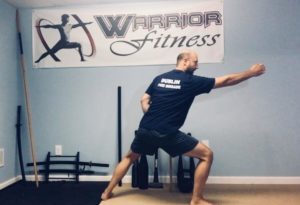
An easy exercise to begin to feel stored elastic energy is to stand in a natural stance with feet shoulder width apart.  Bend your right arm and raise it up to shoulder height as if you were about to throw the most telegraphed punch in history (don’t worry, it’s just an exercise).  Now, lead from the elbow and pull your fist back.  Allow your torso to rotate, but keep the feet planted and the hips facing forward.  When you reach the end of your range of motion, hang out there for a second and feel the tension (torque) on the spine.  Now simply relax and release that torque to throw the punch.  Don’t add any driving forces with muscle.  You can’t propel it any faster; you’ll just slow it down.

Feel it?

Try it again.

Do it with the other arm.  Remember the feeling.  This is stored elastic energy (SEE).

The point here about creating torque or stored elastic energy (SEE) in the spine is essential in being able to move powerfully without winding up or telegraphing the movement.

If you are having trouble feeling it, try to exaggerate the movement.

Make it much larger than necessary to study the feeling. It should feel like a tension in the lower back near the bottom of the spine. When this tension (torque) is relaxed (released), the movement happens.

3. Structure / Kamae 

Many people tend to use the terms alignment and structure almost interchangeably but in actuality, alignment is a component of structure.

For example, looking at a natural standing posture, good alignment would be:
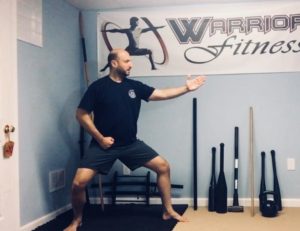
  • Crown up
  • Chin down
  • Shoulders packed down
  • Spine lifting up (through crown)
  • Spine pulling down (through the sacrum)
  • Hips under shoulders
  • Knees under hips
  • Mid-foot balance
  • Chest is relaxed
  • Butt not sticking out nor is pelvis tucked under
  • Knees are over the toes
  • Weight evenly distributed (50/50)
  • No leaning forward or backwardThis puts the whole body into proper alignment.


Structure also includes (in my lexicon) the balance of tensions within the body’s soft tissues. The bones act as compressive struts pushing outward from the center while the soft tissues (fascia) act as the stays pulling inward towards the center keeping the tensional balance in the body.

4. Breathing 

How often do you think about breathing as it relates to striking?

Yet it is absolutely essential to maintain proper breathing when in combat or simply hitting a heavy bag, mitt, or an opponent. Lack of breath control affects the rest of your body and hinders your overall performance.

5. The S.A.I.D Principle 

Why are all the above ideas important to understand in relation to striking and martial movement?

The SAID Principle – Specific Adaptation to Implied Demand says every activity that we repeat consistently causes an adaptation in the body.

The critical thing to note here is that it does not matter at all how we value this adaptation.  It can be something that we want like how healthy exercise increases lean muscle mass and burns excess fat, or it can be something we do not want like how eating junk food to an extreme causes our body to adapt by putting on weight.

Both of these are examples of activities that cause adaptations in the body.   Our goal is to train adaptations we value highly like the enhanced neural connections in our nervous system that increase our skill level. Keep this in mind when training.  We do not want to train bad habits!

5.5 Elements of Efficiency 

Efficiency is defined as the amount of useful work divided by the amount of total work.  In other words, how much effect are you producing for the amount of effort you are expending?

  • Ever see a batter “swing for the fences” only to completely miss the pitch?
  • Ever see someone try to pick something up that is really light, but they believe is heavy?
  • How about watching someone using the general whole-body tension we discussed above trying to hit a heavy bag?

How much effect, i.e. force from the strike embedded into the target, is gained from the huge effort expended?

You must train to have your strikes be both effective (devestatingly powerful) and efficient (uses the least amount of force or energy to accomplish the movement). Only then can you be said to have mastered the art of striking!


Learn exactly how to upgrade your striking skills in ANY martial art with these resources from Warrior Fitness Training Systems…

Conditioning the Fists for Striking

One of the most underdeveloped aspects of the martial artist’s arsenal is the conditioning of his fists for striking.
The tendon strength, wrist strength and flexibility, and the overall structure of the strike is an exploitable weakness that needs to be addressed.

In this article we will examine several different push-up variations and isometric exercises to fortify the structure of our strikes.

This type of training will work to enhance the power generation of all manner of striking.

Do these push-ups slowly and purposefully with full attention to the movement.  These are not meant to pump up your beach muscles, rather they will strengthen the connective tissue in your hands, wrists, forearms, and shoulders to build structure and encourage the correct alignment for all your strikes.

Fudo-ken (fist) Push-ups 

Place the weight of the body on the fists.  Make sure the wrists do not bend. After performing several repetitions (or as a separate exercise) simply hold the body in the Fudo-ken push-up position. Relax as much as possible and allow the correct structure to support the body on the fists. Try this in the upper position, lower position, and halfway point of the push-up.


Do the same isometric holds with each exercise.


Shuto (sword hand) Push-ups 

Hold the hands in the form of a shuto strike.  They should close to a 45 degree angle with the thumbs supporting the fingers.  The weight is on the meaty, inside portion of the hand.


Fingertip Push-ups 

Place the pads of the fingers on the ground like you are clawing it.  Try to squeeze the ground as you press up.


Wrist Push-ups

Place the wrists on the ground. These will be very difficult at first if you have not done them before.  Take them slowly.  If necessary, perform them on your knees to build strength.


Train these basic exercises thoroughly. Study this well!

Be sure to check out part 2 of this article, 5.5 Principles for More Effective Strking in ANY Martial Art.

Learn exactly how to upgrade your striking skills in ANY martial art with these resources from Warrior Fitness Training Systems…


The Strength of Structure (and How to Train It)

As we discussed in the previous post (see here), all martial movement must be based on a platform of both mobility and stability. Today we will discuss stability.

Kamae is much more than just a stance or ready position. It is the platform from which all movements are made and from which all techniques are delivered. Your kamae is quite literally the foundation upon which your entire martial art practice rests.

A weak, or structurally flawed, kamae will limit the amount of power delivered and reduce the effectiveness of every technique employed. Conversely, a strong kamae is the key to the effective execution of all your techniques. A strong kamae carries the support of the ground and efficiently conducts that power through the user with minimal noise creating, in effect, a transparent power.

“You can’t shoot a cannon out of a canoe.”

Water provides a very poor base of support to maximally fire a cannon ball thus it will not travel very far. This is exactly what happens with a poorly constructed kamae. So much power bleeds off in different directions that the mean effect of the movement is extremely reduced and more energy is required in order to compensate for the inefficiency.

How Do We Build a Strong Kamae?

There are many different forms of strength training but only a few, very specific, methods of strengthening the structure (kamae). The key to strengthening structure, as you will see, is training the connective tissue – fascia, tendons, and ligaments, and strengthening the bones, rather than working on muscle. The benefits of this type of training are enormous; not only does having a stronger structure increase the effectiveness of martial movement and techniques, but also acts as a natural form of injury prevention by improving the strength and elasticity of the tissues and increasing the body’s overall resilience.

We will examine 4 main ones here from the EARTH section of Warrior Fitness working on strength, structure, and stability.

Loaded Carries – These provide a unique challenge to the body as they are a type of moving isometric exercise. Kettlebells or dumbbells are a great place to start, but loaded carries can be done with just about anything.

There are 3 basic loaded carries we will discuss here:

  • Farmer Walk – Hold 2 kettlebells at the sides and go for a walk. Try to maintain a neutral balance and move from center.
  • Rack Walk – Hold 2 kettlebells in the rack position and go for a walk. Try to maintain a neutral balance and move from center.
  • Overhead Carry – Hold 2 kettlebells overhead and go for a walk. Try to maintain a neutral balance and move from center.

Static Holds – Unlike lifting or carrying, static holds can be done anywhere with zero equipment. They also place a great emphasis on strengthening connective tissue for supporting the body.

  • Static Kamae Hold: Pick a kamae and hold it for time. The goal here is to relax in position and allow the connective tissue to do the work, not the muscle.
  • Static Push-up: Hold the top, middle, or bottom portion of a push-up for time. The goal here is to relax in position and allow the connective tissue to do the work, not the muscle.
  • Partial Lifts – Partials allow you to develop the connective tissues and bones in a way that full range of movement lifting cannot. By doing partials you are supporting more weight than you would be able to in a full range lift.

  • Push Testing – The push test is a very practical way of testing the quality of one’s solo training for internal power. The body, when properly trained, acts as an omni-directional structure.  This allows the practitioner to neutralize any incoming force by diffusing it throughout the structure rather than having to surrender to it or resist against it.


I cannot over emphasize how critical this type of training is to your development as a powerful martial artist. Not only does this type of training condition the connective tissues, bones, and muscles, but it forms the body into a cohesive unit that is both resilient and powerful.

Study this well, my friends!

Check out my bestselling Integrated Strength Program for more complete trainiing information…


Daily Mobility Practice – The Fountain of Youth

All movement skills, especially martial movement skills, must be built on a foundation of both stability and mobility. Today we will cover mobility.

A complete mobility practice moves each joint in the body through its complete range of motion bathing it in synovial fluid.

Movement is the only way your joints get nutrition!

Many trainers and coaches tend to look at the current rage of joint mobility protocols as recent innovations in sports science and training.  Everyone is talking about mobility for health, mobility for prehab or injury prevention, mobility for warm-ups, mobility for fending off the ravages of aging.  Everyone is talking about the benefits of increased range of motion for sport performance and martial art training enhancement.  And, just to be perfectly clear, this is a good thing.  They are all correct.  Mobility training is the rage for a reason.

However, as with many “new” types of training methods, mobility work is an ancient idea come full circle.


This is not a new idea.  In fact, Hua Tuo (2nd century AD), one of the patriarchs of Chinese Medicine and creator of the famous qigong set, The Five Animal Frolics, once said:

“Just as a door hinge will not rust if it is used, so the body will attain health by gently moving and exercising all of the limbs.”


Hua Tuo’s The Five Animal Frolics model movements from the crane, bear, monkey, tiger, and deer. Each animal emphasizes different health benefits and you can choose a specific animal for specific results. The movements form arcs, spirals, waves and spins, in order to accommodate all ranges of motion for the body.

Now what does that sound like?

Health by moving and exercising all the limbs… hmm… reminds me of a certain new exercise protocol called joint mobility. And this quote from Hua Tuo is just one example. There are many more within Chinese Medicine as well as Indian Yoga that all point to the same idea – mobility is essential for health. Or, more crudely but succinctly put, move it or lose it.

Each session can range from a quick 5-minute recharge to a 30-minute in-depth deep practice. It’s up to you and how your body feels on a particular day.

For example, did you do a ton of heavy lifting or a super intense metabolic conditioning session the day before?

Maybe a longer, deeper mobility session is required to aid in restoration and recovery.

Or, did you just get out of bed and maybe only have 5 minutes before you have to get ready for work?  A 5-minute quick-n-dirty mobility session will charge you up and get your body moving (literally!).

Daily Practice

I have been performing my mobility practice almost every day for over 15 years now.  However, there have been a few times when I decided to forego it for several days in a row just to see if I could notice a difference.  After 3-4 days without it I began to notice.  Muscles were tighter.  Movements were less fluid.  Joints were crunchy.  When I finally stopped my no mobility experiment on day 5, the contrast was amazing!

In my experience, mobility training and breathing exercises are the biggest bang for your buck daily practices that will only reward you more and more with each passing year.

Benefits of Mobility Training

In no particular order, here are some of the benefits of mobility training:

  • Lubricates joints and allows them to receive nutrition through synovial fluid
  • Aids in removal of toxins
  • Reduces joint pain and inflammation
  • Increases range of motion (flexibility in motion)
  • Increases energy by reducing unconsciously held tension
  • Prehab for injury prevention
  • Mobility is foundation of all sport, athletic, and martial movement
  • Decreased mobility leads to increased pain and stiffness

For your daily training, here is my own personal full-body joint mobility routine. Implement this first thing tomorrow morning and feel amazing all day long!