The Five Pillars of the Iron Body

How Martial Artists Build Lifelong Strength, Power, and Durability

There is a quiet truth that most martial artists eventually discover.

Technique alone is not enough.

You can know hundreds of techniques, understand strategy, and have decades of experience… but if the body itself is not developed correctly, that knowledge cannot be fully expressed.

The greatest martial artists throughout history understood something very important:

They didn’t just train techniques.

They trained the body itself.

They forged a body that was:

• elastic
• structurally aligned
• internally powerful
• externally durable
• and capable of integrating all these qualities into real movement

This type of body is what I like to call The Iron Body.

And over the decades, after studying internal martial arts, strength training, Qigong, and traditional conditioning methods, I’ve come to understand that the martial body develops through five essential pillars.


The Five Pillars of the Iron Body

Every powerful martial artist develops five core qualities:

  1. Elasticity

  2. Structure

  3. Pressure

  4. Durability

  5. Integration

When these pillars are trained together, the body becomes both powerful and resilient.

Let’s look at each one.


Pillar One: Elasticity

The Spring of the Body

Muscular strength is useful, but true martial power comes from something deeper.

The body must behave like a bow.

When tendons and connective tissue become elastic, they store energy during movement and release it explosively.

This is why skilled martial artists often appear relaxed yet generate tremendous force.

They are not relying on muscular tension.

They are using elastic power.

Training methods that develop elasticity include:

• Yi Jin Jing tendon training
• structural isometrics
• slow movement exercises
• controlled connective tissue loading

This is exactly the focus of my Iron Silk Method program.

Iron Silk is designed to restore the elastic connective tissue qualities that allow martial power to feel effortless.

When elasticity develops, many practitioners notice:

• strikes feel heavier
• movements become smoother
• the body feels springy instead of stiff

Elasticity is the engine of martial power.


Pillar Two: Structure

The Frame That Carries Force

Power does not come only from the muscles or tendons.

It must travel through the body.

Structure is what allows force to move efficiently through the skeleton into the ground.

When structure is correct:

• the body becomes stable
• pressure flows through the frame
• muscles remain relaxed

When structure collapses, power disappears.

This is why many internal martial arts emphasize standing practice.

Standing training teaches the body to align:

• feet
• hips
• spine
• shoulders
• head

When these elements are stacked correctly, the body becomes capable of carrying tremendous force without strain.

This is the focus of Zhan Zhuang training.

Zhan Zhuang develops:

• posture
• root
• internal connection
• relaxed strength

Over time, standing practice creates a body that feels heavy and stable under pressure.


Pillar Three: Pressure

Breath-Driven Internal Power

Breathing is far more than a relaxation tool.

In traditional martial arts, breath is used to create internal pressure.

This pressure stabilizes the body and fuels movement.

Practices that develop internal pressure include:

• dantien breathing
• whole-body breathing
• compression and expansion drills

When breath and structure work together, something powerful happens.

The body begins to move as one connected unit.

This type of breathing is a key component of both Iron Silk and Martial Qigong training.


Pillar Four: Durability

The Armor of the Body

Elasticity creates power.

Structure directs power.

Breath fuels power.

But the body must also be able to handle power.

That’s where durability comes in.

Durability refers to the strengthening of:

• bones
• tendons
• muscles
• skin
• connective tissue

Historically this was developed through hard Qigong training.

Practices included:

• static posture strength training
• tendon conditioning
• iron body methods
• breath-powered tension

This is exactly what is taught inside my Martial Qigong course.

Martial Qigong develops the external strength and durability that allows martial artists to remain strong and resilient as they age.

Without durability, elasticity becomes fragile.

With durability, the body becomes capable of absorbing and delivering force safely.


Pillar Five: Integration

Turning Training Into Martial Power

The final pillar is integration.

Integration is where everything comes together.

Elasticity, structure, breath, and durability must eventually become one coordinated system.

This is what allows martial artists to move naturally and generate power without thinking.

Integration is developed through:

• slow martial movement
• striking mechanics
• grappling pressure drills
• standing meditation

At this stage, the body begins to express power effortlessly.

Many practitioners describe this as:

• heavy hands
• relaxed strength
• effortless issuing

This is the stage where training becomes true martial skill.


The Foundation of Everything: Daily Practice

All five pillars rest on one essential foundation.

Daily practice.

The martial body is not built through occasional effort.

It is built through consistent, intelligent training over time.

Even short daily practice sessions can create profound changes in the body.

A simple daily structure might include:

Standing practice 
Iron Silk tendon training
Breathing exercises
Martial Qigong conditioning

Over weeks and months, these practices gradually transform the body.

This is how martial artists develop strength that lasts decades instead of years.


Bringing It All Together

When the five pillars are trained together, the body begins to change in remarkable ways.

Elastic connective tissue creates explosive power.

Structure carries force efficiently.

Breath generates internal pressure.

Durability protects the body.

Integration turns all of this into martial ability.

This is the essence of The Iron Body Protocol.

And it is exactly what my training programs are designed to develop.

Iron Silk Method builds elasticity and tendon power
Martial Qigong develops durability and external strength
Zhan Zhuang standing practice creates structure and internal connection

Together, they form a complete system for building a powerful, resilient martial body.


Train for the Long Path

Martial arts are not just about fighting.

They are about developing the body and mind over a lifetime.

When you train the five pillars consistently, the goal is simple:

To become stronger, healthier, and more capable every year.

Not weaker.

Not slower.

But better.

That is the path of the Iron Body.

Train with intent.

— Jon Haas
The Warrior Coach
Breathing for Strength, Vitality, and Performance


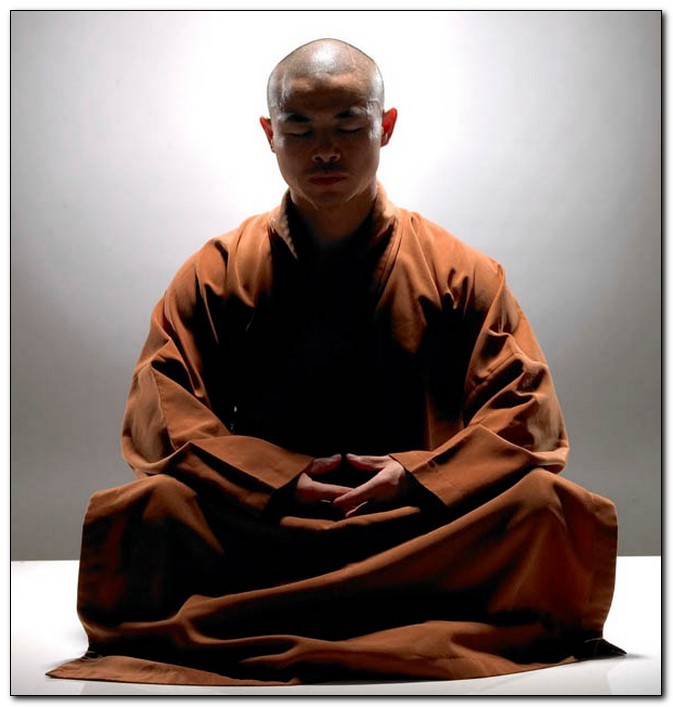
For millennia breath control exercises have been the secret weapon of advanced yogis, qigong adepts, master healers, and warrior-monks to forge phenomenal strength, super human body control, and extraordinary vitality.

When disciplines such as yoga, Traditional Chinese Medicine, Internal Martial Arts, and Qigong have been successfully used over thousands of years to heal the sick, strengthen the weak, and bring energy to the depleted, you don’t question them – you study them!

While obviously these disciplines have their own unique modalities and practices, working with the breath is the common thread that runs through each of them. And there’s a very specific reason why each have evolved sophisticated breathing exercises that are used with such a high degree of success.

Breathing as a Bridge

Breathing is the only function of the human body that bridges both the autonomic and the voluntary nervous systems. You can breathe on complete autopilot all day long without ever consciously thinking about, and yet you can also choose to take a deep breath, exhale sharply, or even hold the breath at any time.

Herein lies the secret of breathing exercises – because it spans both sides of the nervous system specific breathing techniques are able to influence things such as heart rate, blood pressure, muscular tension, and stress levels.
Over the centuries, adepts of these disciplines (and others) have created literally hundreds of breathing exercises that have been consistently shown through practical experience to…

• Enhance whole body strength
• Increase lung capacity
• Reduce stress
• Improve endurance
• Fire up the body’s bioenergy
• Increase flexibility and range of motion
• Improve pain tolerance/reduce pain
• Build resilience and resistance to disease
• Improve performance under stress
• Not to mention relax, revitalize, and rejuvenate the body through meditation and relaxation exercises!

Relaxing Breath (Square Breathing)

The basic premise of our ability to influence the autonomic nervous system is that inhalation increases heart rate, which subsequently increase blood pressure, to a slight degree, while exhalation lowers heart rate and blood pressure to a slight degree. During our normal cycle of breathing, these changes are too minute to register, or even notice. But, by gradually lengthening our breath and extending the pause before inhaling and exhaling, we compound the effect. Stand in a natural position or sit comfortably on the floor with spine straight to perform this exercise.

1. Begin by exhaling through the mouth for 5 seconds.
2. Do not inhale. Try to extend the breath pause for 5 seconds.
3. Before tension begins to creep in, inhale for 5 seconds.
4. Hold the breath on the inhale for 5 seconds.
5. Repeat the cycle 10 times.
6. As this becomes easier, and your capacity expands, try increasing the duration to 6, 7, 8 seconds.

Breath Walking Meditation Exercise


Energizing Breath

In this breathing exercise we will utilize a protocol founded by yoga and improved upon by Russian sport science and martial art. Here we will divide the breath into 3 levels: clavicular (upper level), intercostal (mid level), Diaphragmatic (lower level). This exercise will focus only on the clavicular, or upper level. Use this powerful breathing exercise to fire up your energy and prepare your body for training!

1. Exhale through the mouth in a short, quick burst by compressing the upper chest.
2. Do not actively inhale. Allow the inhale to happen by relaxing the muscles in the chest.
3. Repeat rapidly 20 to 40 times.
4. Build up to where you can perform continuously for 60 seconds.
5. If you become dizzy, stop and sit down and breathe normally!

60 Second Energizing Breath Video


Here is another fantastic use for breathing….


Restoring Breath

This exercise is literally a life saver when doing high intensity interval training (HIIT) workouts! It can be used in between exercises as well as in between sets, during the rest period, and also at the end of the workout to normalize breathing and dramatically lower heart rate.
1. Forcefully exhale as deeply as possible by rolling your shoulders forward, tilting the pelvis up, and contracting the core strongly.
2. Pause before the inhale for a few seconds.
3. As stated above, do not actively inhale. Allow the breath to be sucked back in through the nose as your body returns to a natural standing posture.
4. Repeat for about 60 seconds, or as long as needed.


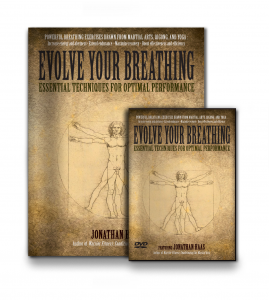
To learn more about how you can incorporate powerful breathing exercises into your own training, check out my Evolve Your Breathing Program.

Also, make sure to check out my review of Logan Christopher’s book, Upgrade Your Breath.

To learn more about the Warrior Fitness Training System, check out the free mini-course I have provided below…

Tanren Mini-Course <<===

Research of Martial Arts (Book Review)

I love reading martial arts books.  Over the course of my career, I have probably read hundreds of them.  There are currently a dozen or more on my book shelf.  I had to get rid of some that I no longer read to make space for the ones I constantly go back and refer to over and over again.  Unfortunately, in recent years martial arts books have become boring and predictable.  They have little real content and lots of pictures of techniques that don’t really mean anything unless you are taught them in person.  I literally cannot remember the last martial arts book I read in the past few years that was worth talking about.  Until now… Continue reading

My Super Secret Recovery Method

In addition to my usual compliment of recovery drills consisting of mobility exercises, yoga asana, and compensatory movement, for the past year and a half I have been using a top secret protocol in my exercise recovery work. This exceedingly simple-seeming protocol has consistently accelerated my recovery, allowed me to reach new levels of relaxation, and strengthened the mind-body connection beyond any work I have ever done. It has also managed to increase energy levels while fortifying my body against the daily rigors of life, work, and family stresses. Continue reading

Yiquan Seminar Announcement


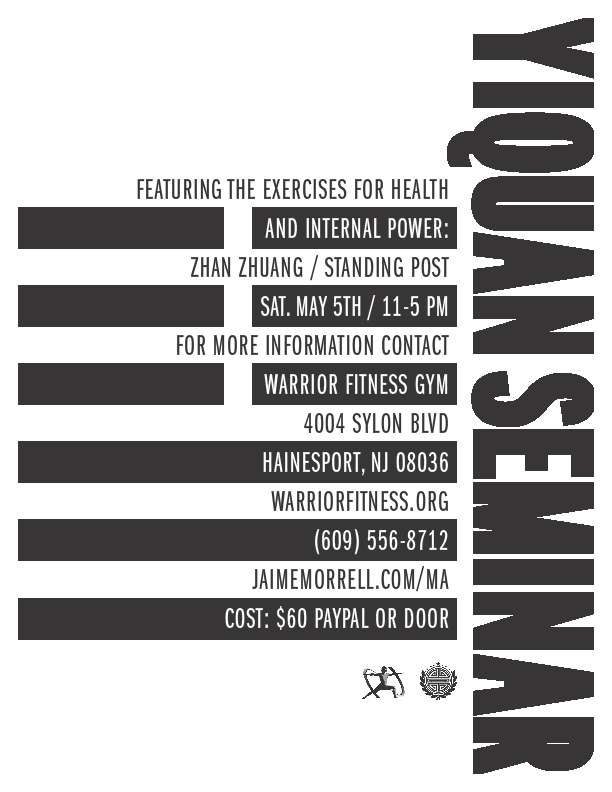
Warrior Fitness Gym is proud to present a seminar with Jaime Morrell on Yiquan, featuring exercises for health and internal power.

For more information on Yiquan please see our 2 part interview with Jaime Morrell:

An Introduction to Yiquan: Martial Art, Health, and Physical Fitness

An Introduction to Yiquan: Part 2

Map and Directions to Warrior Fitness Gym are HERE.

Any questions on the Yiquan Seminar or Warrior Fitness Gym Programs, call Jon at (609) 556-8712 or email me HERE.

To pay online, click Paypal link below: