How to Train for Chaos without Making Training Chaotic

The current rage in conditioning training, especially when talking about combat conditioning, is to completely change up the workout for each and every session. This has the advantage of keeping the training fresh and throwing the body into chaos each time so it never knows what hit it.

The hardcore advocates of this type of conditioning stress that this environment will create a very broad and general fitness that prepares the trainee for almost every physical contingency, both known and unknowable.

This enables one to prepare for the chaos and uncertainty of combat by training in an uncertain and chaotic environment.
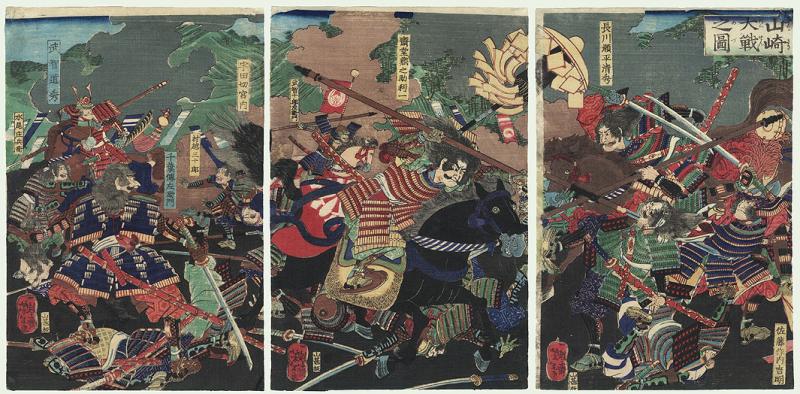
samurai

Seems to make a lot of sense on the surface, right?

However, one of the glaring problems with this type of training is that random training yields random results. It’s difficult to measure progress when the parameters are constantly shifting.

In order for the body to produce an adaptation for improved performance in life, sport, or martial art, we must apply specific stimulus as per the SAID Principle (Specific Adaptation to Imposed Demand). This basically means that the body adapts with a specific type of fitness to any demand which is imposed on it. When the same exercise is performed for too long, the body adapts to the stresses of each set and the adaptations or returns get smaller and smaller. Once it has adapted to the stress, then it’s time to change or increase the stress or else we fall into that trap of diminishing returns.

Usually though it takes the body a period of 4-to-6 weeks to adapt and then it is advisable to begin changing exercises. This does not mean that we need to completely throw away everything we have been doing; far from it. An exercise or drill can be changed by increasing intensity, increasing volume, decreasing rest periods, or increasing complexity or sophistication.

What this suggests is that a properly organized training program with incremental progression of increasing complexity and sophistication may actually prepare the body better than a set of random skills strewn together with a nebulous outcome in mind.

Yet we still crave the chaos, right?

So why not have it both ways?

Let’s program chaos into our training to instill the element of surprise and shock to the body. But, and this is key, we will ONLY do it once a week. This is enough to add the benefits of chaos training without suffering the negative aspects. The rest of the time you must follow a properly programmed training regimen to ensure all the multifaceted fitness qualities required to keep you strong, agile, mobile, and hostile are being met.

How do we program the chaos?

One of my favorite ways to do this is by picking 5-6 different exercises and setting an interval timer for 5 rounds of 3 minutes or 5 rounds of 5 minutes (depending on your fitness level). Instead of setting a rep scheme, move from one exercise to the next in any order you like performing as many or as little reps of each exercise.

If you need active recovery during the round or simply can’t figure out what to do for a few seconds – do Jumping Jacks. The only caveat is that you must not stop for the duration of the round. Take a 1 minute break between rounds to recover your breathing, then go again.

Here’s an example Chaos Training Workout:

1. Kettlebell Swings or Snatches
2. Jab/Cross Combo on Wave Bag
3. Sit Thrus
4. Med Ball Slams
5. Sandbag Burpees

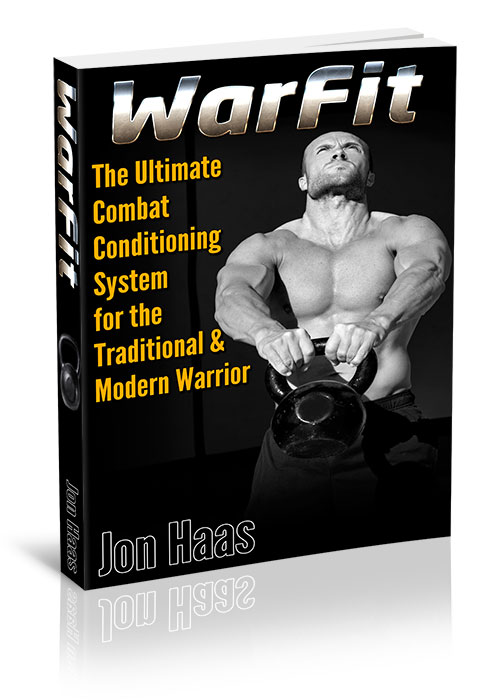
My brand new WarFit Combat Conditioning Program is perfect for the warrior athlete who wants to build superhuman strength, endurance, and conditioning…
warfit3d1


The Secret to Motivation is ____________

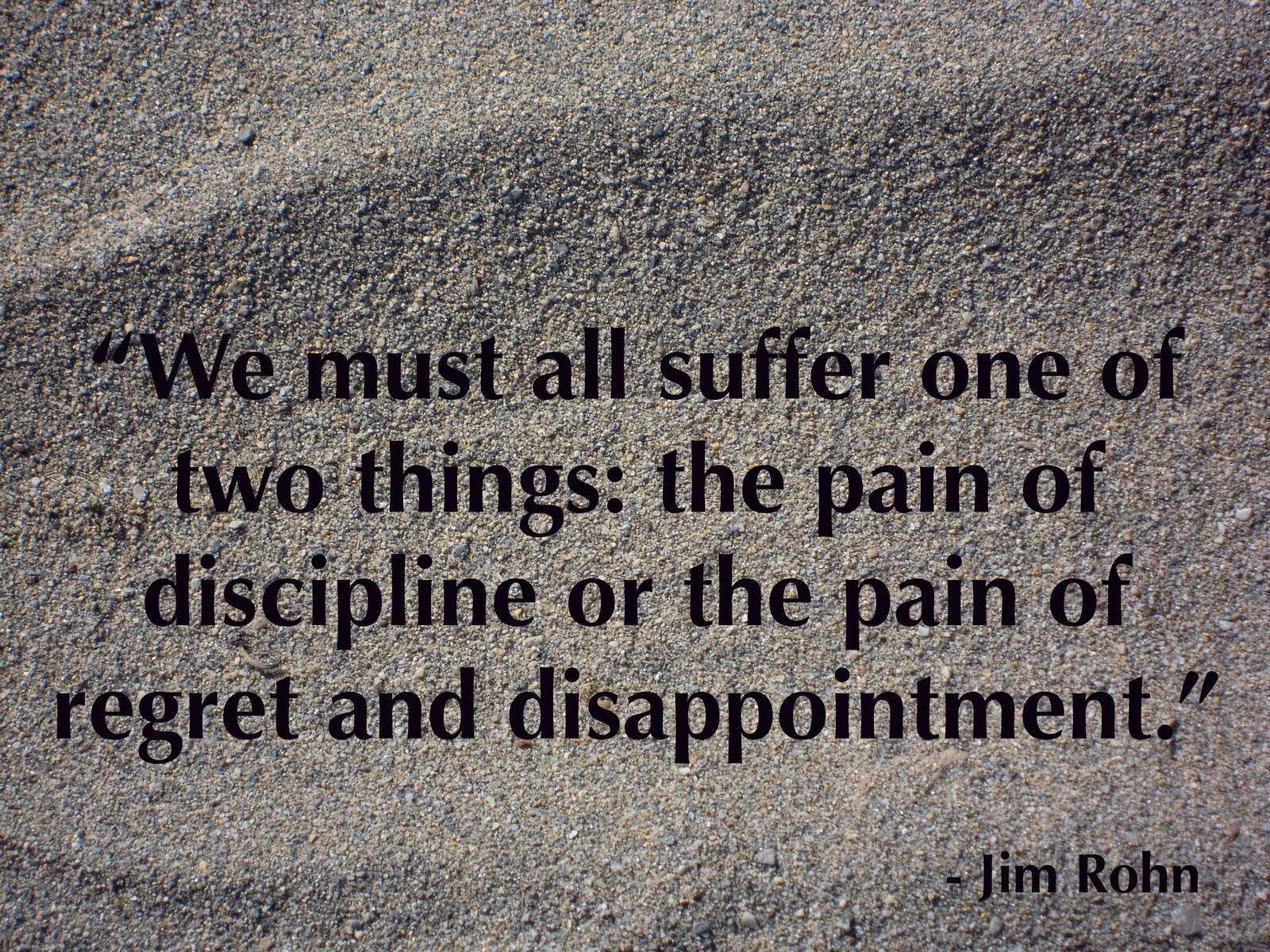
A few weeks ago I sent a question out to my email list (HINT – if you haven’t signed up yet, subscribe on the right!) asking what topics they had questions about and wanted to see more blog posts on.  Several great questions and suggestions came back.  One that was repeated often was the question of motivation – “How do I motivate myself to train more?  How do you motivate yourself?”

Here’s my answer to both questions.


What are your thoughts?  Drop me some comments below!

2 pains

Weakest Direction Theory is BS

Warning: The following post is going to conflict with the most basic, fundamental principle you “know” to be true in martial arts.  Chances are you learned this principle on your first day of martial arts class.  Since that day you have repeated it almost every class.  You have taught it as truth to every new person you’ve ever trained with.  It’s so ingrained into your psyche that it’s practically dogma.  Most likely you will read this a instantly brand me a Budo Heretic.  Yup.  It’s that controversial…

Continue reading

Internal Power and Bujinkan Training

When I first began talking about internal power in the context of Bujinkan training, I realized that many people might be skeptical of this type of training at the very least, or have many preconceived misconceptions that would not allow them to even consider the method as a viable form of training for budo.

Therefore I decided to write this blog post to gauge the interest of my readership and how accepting you might be of internal power training and my interpretation of its role within Bujinkan training. I hope you find it helpful!

What is Internal Power?

I think it’s best to start with the basics.  What is internal power and how can it useful to the practitioner of Bujinkan Budo Taijutsu?  Let me state this at the outset to hopefully clear up a rather unfortunate misinterpretation of IP.

Internal Power is physical.

It’s not some mystical mumbo jumbo or a throwing chi balls type of nonsense.

It is actually a way of conditioning the body through specific solo training exercises and paired partner training. The training method spans thousands of years and has been handed down through the ages within the warrior traditions of India, China, and Japan.  It is a body technology with a set method and detailed process of instruction that simply cannot be learned by osmosis.  It must be explicitly taught.

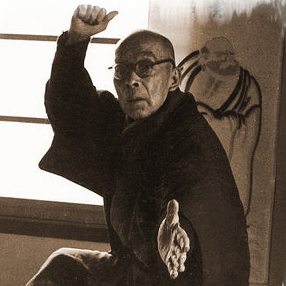
takamatsuSensei

The basis for the method is what is known as the union of opposites or In Yo Ho, in Japanese.

By creating opposing forces within the body (up/down, left/right, front/back) through the use of intent – your own mental direction using imagery, feeling, and visualization – we begin to increase the mind-body connection to a remarkable degree.

Through the solo training exercises we condition and strengthen the entire fascia network, as well as tendons and ligaments, throughout the body.  This process serves to create a connected body through the center so that when ‘one thing move, everything moves’.

The Ultimate Ukemi

Internal Power training changes the way outside forces act on the body.  The structure becomes dynamically stable so that applied force can either be distributed throughout the chain and dissipated or, at a higher level, simply reflected right back onto the opponent.  When force is reflected back this is what is known in Japanese as Yamabiko, or Mountain Echo.

At first blush it may sound like a party trick, but the budo applications are quite staggering.  Think about it.

How does every martial art technique work?

What is the first thing you are taught to do prior to applying a technique?

Break the opponent’s balance, right?  Get kuzushi.

What if no one can compromise your structure?

What does that do to every throw, lock, and take down applied to you?  Yeh.  You’re getting it now, aren’t’ you?

And that’s just the beginning.

Every time you move, you are completely and dynamically stable, balanced.  You gain the ability to hit like a truck using the full mass of a connected body without dedicating your weight.  (Remember – when one thing moves, everything moves.)

This becomes very profound, especially when you start to incorporate weapons.

And, since you are connected through the middle of your body due to the specific solo training exercises, you will finally and probably for the first time, actually be moving from center, hara, or dantien.

Sound interesting?

You can learn my full method of integrating and training the mind-body system HERE.


I am also more than happy to share what I know about internal power training, especially in the context of how it can be fully integrated into our Bujinkan Budo Taijutsu practice.  I teach it in my weekly classes and seminars upon request. Contact me HERE.

The Ninja 300 Warm-up

I thought I would share with you today the new Ninja Warm-up I’ve been using in my own daily personal practice.

Since the New Year routinely brings our training focus back to the basics I figured a great way to incorporate more Bujinkan Basics practice was to include them in my warm-up as well.

Of course, I still do my full body mobility routine as taught in the Martial Power Program and ukemi practice too. Continue reading

What Muscles Does This Work?

As humans we have a unique, sometimes almost obsessive need to catalog, categorize, and label things.  Exercise is no different.

In the midst of a tough workout session, almost invariably someone will suddenly stop and ask the pressing question – “by the way, what muscles is this working?”

muscles_human_body_front1

Why do our brains do this?

In my opinion, it’s part curiosity, part obsessive need to categorize, but also part delaying tactic.  Just like the little kid who suddenly has a million and one questions about anything under the sun in order to delay having to go to bed, we ask a seemingly pertinent question to delay having to do the exercise a little longer.  Because we associate some type of pain with the workout, be it the physical pain of muscle ache, or the psychological pain of having to push through our limits, we do the logical thing (to us) and stall the inevitable.  The question allows us to push that pause button in the movement and stop for a few moments while we regroup ourselves for the effort ahead.

But What Muscles Does It Work?

Within the Warrior Fitness Training System, the answer to the question of which muscles are working in a particular exercise requires a little more explanation.  In conventional fitness training the answer is usually confined to something like, “well, this exercise works your biceps, that next exercise works your chest, and this last one is working your lats.”

The exercises we do in Warrior Fitness tend to have a much broader, system-wide effect.  Our exercises are always multi-planar, multi-joint, and 3 dimensional.  So the short answer to the question of which muscles does this work is usually – All of them!

How can this be?

Instead of viewing the body as made up of individual muscles, Warrior Fitness teaches that the body is one interconnected system where the whole is much greater than the sum of its parts, so that when one thing moves everything moves.  Why do I teach it this way?  Well, because that’s how the body is actually built.  More on this later…

What this idea does is allow us to express power in a much more functional way for combat, sport, and life.  Real power is expressed in only 2 ways – from the ground up and from the center out, oftentimes as a combination of both.  Never is power expressed by an individual muscle group alone.  It’s way too weak and ineffective.

The choice is yours.  How do you want to train?  Whole body integrated power is my method of choice.

My latest program, Ninja Missions Program 1 is a fantastic example of how to train for this whole body power.  Make sure you do yourself and your training a favor and check it out!!

Ninja Mission Cover


The Myth of Stagnation

Many people like to believe that if they don’t take the time to train themselves on a daily basis their skill levels will somehow remain stagnant, like on a plateau.  That their skills and abilities will somehow remain in stasis, neither improving or regressing until the next class, the next workshop, the next seminar, or the next time they can get their Daily Personal Practice on track again.  The truth of the matter is not so cut and dry.

Here’s the Reality

Here’s the reality – if you are not taking the time to train on a consistent basis than you are steadily declining in skill.  Each practice session you skip (not miss – skip.  Skipping is a choice), your skill level decreases slightly, your abilities atrophy just a bit.  There is no such thing as stagnation.  Your body cannot remain motionless if you are alive and breathing.  Either you are getting better through your daily commitment of consistently going deeper into your practice or you are getting worse.  No middle ground.  No fence sitting.  One side or the other.  Stop fooling yourself.

innovation_stagnation

The good news is, once you accept that stagnation is a myth, you can begin to look at your practice objectively and actually begin the steady climb to create real progress.  You see, real progress is not a sudden flurry of activity followed by a lull.  Real progress is only achieved in consistent, incremental steps day by day.  It’s the little things that count, not the big ones.  It’s the little steps that build and accumulate.

Do you think your yearly pilgrimage to Japan (or your martial arts/fitness training Mecca of choice) is causing your skill level to jump?  Nope.  It’s not.  Yes, it’s motivating.  Yes, it’s inspiring.  Yes, you are learning new things, getting corrections (hopefully!), and gaining new and deeper insights.  BUT – how do all those new insights come to fruition?  You don’t own them until they become assimilated by your nervous system.  That takes time.  That takes practice.

Deep, consistent practice.

That deep practice is the slow and steady grind of your consistent daily training.

That’s where the magic happens.  It happens in the grind.  In the regular training.  In the ordinary time.

That’s where REAL skill is built.  That’s how masters are made.

The Year in Review

As we begin to turn the calendar page and close the door on 2012, I wanted to look back and share with you some highlights of the year for Warrior Fitness. Although it was a very busy and prouctive year all around, a few major accomplishments really stand out in my mind.

Here are a few of them in pictures….

Warrior Fitness Gym opened in January

WFG Pic

Several Bujinkan Martial Arts seminars were co-taught with my best Buyu, Josh Sager (more coming in 2013!)

jon and josh

I was named Head Strength and Conditioning Coach for VX Global and even got my own channel on VX TV!

VX Coach

First Ever VX USA Certification Seminar held at Warrior Fitness Gym (more coming in 2013!)


VX Cert


I was certified as a VX Coach Level 1


VX Coach


Released the Dad Strength Program for Father’s Day, 2012

Dad Strength Cover

Ran the Tough Mudder in October with my brother, Dave and best friend, Jason (who’s up for another in 2013?  Team Warrior Fitness!)


ToughMudder1


Held the first ever Flippin Awesome Tire Battle at Warrior Fitness Gym!

Released the Evolve Your Breathing Program in December

EVOLVE_SPOT-1 (2)

1st Seminar at Warrior Fitness Gym with my good friend, Craig Gray (more coming in 2013 – see HERE!)

Jon and Craig

Oh Yeah, and I turned 40 in December… Shhh… don’t tell anyone!

40


Wishing a Happy, Prosperous, and Strong New Year to all my family, friends, clients, and followers locally and around the world – thank you for all your support, it’s an honor to serve you!

Keep a sharp lookout on 2013 – more awesome and amazing things are coming your way from Warrior Fitness!

Next year – The Year of the Warrior!

Bye bye 2012…

2012


The Day That Changed My Life

I still remember it like it was yesterday.  I was 16 years old, sitting in the back seat of my parent’s car thumbing through the latest issue of Black Belt magazine when I came to a full page advertisement for the 1989 Tai Kai with Ninjutsu Grandmaster Masaaki Hatsumi.  To my shock and utter astonishment this 3-day seminar with the master ninja and his top students from Japan was being held in the United States.  Not only was it being held in the US, but in my home state of NJ, not even an hour drive from my house!  Something clicked in my brain – I HAD to go to this thing!  Continue reading

Training in Confined Spaces

If you have Warrior Fitness Training style questions, send them to me.  I answer any and all serious (well, mostly serious) questions about training, my Warrior Fitness System, my views on fitness, martial arts, self defense, strength & conditioning, or training for sport/athletic performance.  

Here’s a video answer to a question I received the other day from Robert, a Bujinkan student in Sweden. Continue reading