Breathing for Strength, Vitality, and Performance


For millennia breath control exercises have been the secret weapon of advanced yogis, qigong adepts, master healers, and warrior-monks to forge phenomenal strength, super human body control, and extraordinary vitality.

When disciplines such as yoga, Traditional Chinese Medicine, Internal Martial Arts, and Qigong have been successfully used over thousands of years to heal the sick, strengthen the weak, and bring energy to the depleted, you don’t question them – you study them!
While obviously these disciplines have their own unique modalities and practices, working with the breath is the common thread that runs through each of them. And there’s a very specific reason why each have evolved sophisticated breathing exercises that are used with such a high degree of success.

Breathing as a Bridge

Breathing is the only function of the human body that bridges both the autonomic and the voluntary nervous systems. You can breathe on complete autopilot all day long without ever consciously thinking about, and yet you can also choose to take a deep breath, exhale sharply, or even hold the breath at any time.

Herein lies the secret of breathing exercises – because it spans both sides of the nervous system specific breathing techniques are able to influence things such as heart rate, blood pressure, muscular tension, and stress levels.
Over the centuries, adepts of these disciplines (and others) have created literally hundreds of breathing exercises that have been consistently shown through practical experience to…

• Enhance whole body strength
• Increase lung capacity
• Reduce stress
• Improve endurance
• Fire up the body’s bioenergy
• Increase flexibility and range of motion
• Improve pain tolerance/reduce pain
• Build resilience and resistance to disease
• Improve performance under stress
• Not to mention relax, revitalize, and rejuvenate the body through meditation and relaxation exercises!

Relaxing Breath (Square Breathing)

The basic premise of our ability to influence the autonomic nervous system is that inhalation increases heart rate, which subsequently increase blood pressure, to a slight degree, while exhalation lowers heart rate and blood pressure to a slight degree. During our normal cycle of breathing, these changes are too minute to register, or even notice. But, by gradually lengthening our breath and extending the pause before inhaling and exhaling, we compound the effect. Stand in a natural position or sit comfortably on the floor with spine straight to perform this exercise.

1. Begin by exhaling through the mouth for 5 seconds.
2. Do not inhale. Try to extend the breath pause for 5 seconds.
3. Before tension begins to creep in, inhale for 5 seconds.
4. Hold the breath on the inhale for 5 seconds.
5. Repeat the cycle 10 times.
6. As this becomes easier, and your capacity expands, try increasing the duration to 6, 7, 8 seconds.

Breath Walking Meditation Exercise


Energizing Breath

In this breathing exercise we will utilize a protocol founded by yoga and improved upon by Russian sport science and martial art. Here we will divide the breath into 3 levels: clavicular (upper level), intercostal (mid level), Diaphragmatic (lower level). This exercise will focus only on the clavicular, or upper level. Use this powerful breathing exercise to fire up your energy and prepare your body for training!

1. Exhale through the mouth in a short, quick burst by compressing the upper chest.
2. Do not actively inhale. Allow the inhale to happen by relaxing the muscles in the chest.
3. Repeat rapidly 20 to 40 times.
4. Build up to where you can perform continuously for 60 seconds.
5. If you become dizzy, stop and sit down and breathe normally!

60 Second Energizing Breath Video


Here is another fantastic use for breathing….


Restoring Breath

This exercise is literally a life saver when doing high intensity interval training (HIIT) workouts! It can be used in between exercises as well as in between sets, during the rest period, and also at the end of the workout to normalize breathing and dramatically lower heart rate.
1. Forcefully exhale as deeply as possible by rolling your shoulders forward, tilting the pelvis up, and contracting the core strongly.
2. Pause before the inhale for a few seconds.
3. As stated above, do not actively inhale. Allow the breath to be sucked back in through the nose as your body returns to a natural standing posture.
4. Repeat for about 60 seconds, or as long as needed.


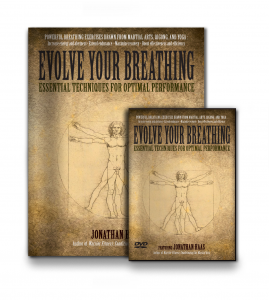
To learn more about how you can incorporate powerful breathing exercises into your own training, check out my Evolve Your Breathing Program.
Also, make sure to check out my review of Logan Christopher’s book, Upgrade Your Breath.

To learn more about the Warrior Fitness Training System, check out the free mini-course I have provided below…

Tanren Mini-Course <<===

The Yin and Yang of Strength

The art and science of becoming stronger can be broken down into 2 main methods.

  1. The Addition of Driving Forces (Yang), and
  2. The Subtraction of Restrictive Forces (Yin)

When most people train for strength they focus solely on the Yang of Strength – the addition of driving forces.

But this will only get you so far…

It’s like driving a car around all day with the emergency brake on.  You can still get where you need to go, but that extra, unnecessary drag is killing the car’s performance and guzzling gas (consuming energy).

What is the hidden drag in your performance?

Residual muscle tension, or tonus, is the continuous, passive partial contraction of muscles in the body that aids in posture and support. Any type of strength training exercise, stress, fear, and trauma, will all cause an unwanted and unnecessary increase in the normal residual muscle tension of the body.

Usmuscle-boundually this extra tonus goes unnoticed, or worse is simply deemed an acceptable and natural side effect of living.  The problem with this added tension is that the continuous contraction of muscle throughout the day, ever day, is using up energy.  Energy that can, and should, be available to us is being siphoned off thereby putting the brakes on our performance.
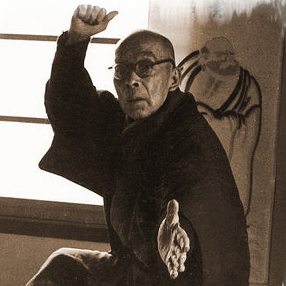
Rather than increasing our energy, freeing our movement, and allowing us to access our full strength potential as human beings, the consistent focus on the Yang of Strength makes us literally muscle bound.

The Yin of Strength

The Yin of Strength is how we strategically and systematically remove those restrictive forces to reveal our true strength potential as an Integrated Human Being.

What specific recovery methods are used?

  • Mobility Training
  • Yoga Postures to act as compensatory movement
  • Vibration Training to literally shake out the tension
  • Breathing Exercises
  • Foam Rolling and Fascial Release
  • Qigong

Check out my latest program, Vital Force: The Yin of Strength

Gyokko Ryu’s Internal Power Training

There is no doubt in my mind that Hatsumi Sensei possesses unusual power in his budo.  Anyone who has trained with him can tell you that!  But what is it and where does it come from?  More importantly, how can YOU develop it as well?

Soke’s martial movement displays many of the characteristics associated with Internal Power training: ghostly movement, immovability (static and dynamic), shockingly powerful strikes with little windup, adhesion caused by movement, kuzushi on contact, and others. Continue reading

Never Take Ukemi Again

What if you never had to take ukemi again?

Not because you stopped training or avoided it or anything negative like that, but simply because no one who came in contact with you was able to throw you.

Interesting idea, eh?

Although for the sake of paired training and being a good training partner, perhaps a better model would be this – what if you only took ukemi from someone when you wanted to, and not when you had to?

What if you had the skill to naturally reflect incoming force so that an attacker was not able to throw you, joint lock you, take you down, or even off balance you? Continue reading

3 Months to Live

I had a very interesting conversation the other day with an elderly Chinese gentleman.  At 74 years young he still works part-time as a medical doctor and is in excellent health.  He told me that back in 1982 in China he was diagnosed with a very severe lung problem, which was slowly reducing his breathing capacity.  The doctor at the time gave him only 3 months to live!!  I looked at him in amazement and said- “Well, obviously you are still alive and in good health, so what happened?” Continue reading

Internal Power and Bujinkan Training

When I first began talking about internal power in the context of Bujinkan training, I realized that many people might be skeptical of this type of training at the very least, or have many preconceived misconceptions that would not allow them to even consider the method as a viable form of training for budo.

Therefore I decided to write this blog post to gauge the interest of my readership and how accepting you might be of internal power training and my interpretation of its role within Bujinkan training. I hope you find it helpful!

What is Internal Power?

I think it’s best to start with the basics.  What is internal power and how can it useful to the practitioner of Bujinkan Budo Taijutsu?  Let me state this at the outset to hopefully clear up a rather unfortunate misinterpretation of IP.

Internal Power is physical.

It’s not some mystical mumbo jumbo or a throwing chi balls type of nonsense.

It is actually a way of conditioning the body through specific solo training exercises and paired partner training. The training method spans thousands of years and has been handed down through the ages within the warrior traditions of India, China, and Japan.  It is a body technology with a set method and detailed process of instruction that simply cannot be learned by osmosis.  It must be explicitly taught.

takamatsuSensei

The basis for the method is what is known as the union of opposites or In Yo Ho, in Japanese.

By creating opposing forces within the body (up/down, left/right, front/back) through the use of intent – your own mental direction using imagery, feeling, and visualization – we begin to increase the mind-body connection to a remarkable degree.

Through the solo training exercises we condition and strengthen the entire fascia network, as well as tendons and ligaments, throughout the body.  This process serves to create a connected body through the center so that when ‘one thing move, everything moves’.

The Ultimate Ukemi

Internal Power training changes the way outside forces act on the body.  The structure becomes dynamically stable so that applied force can either be distributed throughout the chain and dissipated or, at a higher level, simply reflected right back onto the opponent.  When force is reflected back this is what is known in Japanese as Yamabiko, or Mountain Echo.

At first blush it may sound like a party trick, but the budo applications are quite staggering.  Think about it.

How does every martial art technique work?

What is the first thing you are taught to do prior to applying a technique?

Break the opponent’s balance, right?  Get kuzushi.

What if no one can compromise your structure?

What does that do to every throw, lock, and take down applied to you?  Yeh.  You’re getting it now, aren’t’ you?

And that’s just the beginning.

Every time you move, you are completely and dynamically stable, balanced.  You gain the ability to hit like a truck using the full mass of a connected body without dedicating your weight.  (Remember – when one thing moves, everything moves.)

This becomes very profound, especially when you start to incorporate weapons.

And, since you are connected through the middle of your body due to the specific solo training exercises, you will finally and probably for the first time, actually be moving from center, hara, or dantien.

Sound interesting?

You can learn my full method of integrating and training the mind-body system HERE.


I am also more than happy to share what I know about internal power training, especially in the context of how it can be fully integrated into our Bujinkan Budo Taijutsu practice.  I teach it in my weekly classes and seminars upon request. Contact me HERE.

Imagine You With Less Pain

Many trainers and coaches tend to look at the current rage of joint mobility protocols as recent innovations in sports science and training.  Everyone is talking about mobility for health, mobility for prehab or injury prevention, mobility for warm-ups, mobility for fending off the ravages of aging.  Everyone is talking about the benefits of increased range of motion for sport performance and martial art training enhancement.  And, just to be perfectly clear, this is a good thing.  They are all correct.  Mobility training is the rage for a reason. Continue reading

Morning Wake Up Routine

Ever have one of those mornings when you have to be up early for work or school, but simply can’t summon the energy to start your day?  This is a routine I have been using successfully for years to shake out the cobwebs and get me moving on the mornings when just a cup of coffee isn’t going to do it.  It’s not your fault, and bear that in mind – some people just aren’t morning people.
Back when I was travelling for weeks on end and putting in long hours every day for consulting work this routine was my morning staple in the hotel room before meeting my colleagues for breakfast.  I find it most effective on the mornings when I am most tired.  Just as an aside, it doesn’t have to be used in the mornings, it has benefits any time of the day when you need a little pick me up.  One caution, and although this should be obvious I’ll say it anyway, don’t do it before going to bed – you won’t sleep!

The Routine

Joint Mobility

This has the effect of increasing synovial fluid to lubricate the joints while at the same time increasing blood flow to the surrounding muscles.  For the quick version we will concentrate on the neck, shoulders, hips, and spine.

Neck:

  1. Up/Down – lift up from crown of head; slide down along plane of jaw for 3 to 6 repetitions.
  2. Left/Right – turn head as far left as possible without pain, turn as far right as possible for 3 to 6 repetitions.
  3. Full circles in both directions.

Shoulders:

  1. Roll both shoulders – lift shoulders up towards ears, roll backward fully articulating the range of motion (ROM), drop them down as far as comfortable for 3 repetitions, then repeat by rolling forward for 3 reps.
  2. Alternate shoulder rolls – roll left shoulder back as described above while pushing right shoulder forward then switch.  Perform 3 times each.
  3. Swing both arms as fast as possible windmilling them forward for 20 seconds then backward for 20 seconds.

Hips:

  1. Circle hips clockwise and counter-clockwise 10 times in each direction.

Spine:

  1. Keep the spine straight and fold forward at the hips, then rotate around to the left and back to center, then forward and around to the right.
  2. Keep the spine straight and fold backward at the hips, then rotate around to the left and back to center, then forward and around to the right.

Energizing Breath

In this breathing exercise we will utilize a protocol founded by yoga and improved upon by Russian sport science and martial art.  Here the breath is divided into 3 levels: clavicular (upper level), intercostal (mid level), and diaphragmatic (lower level).  This exercise will focus only on the clavicular, or upper level.  For more information on breathing exercises, please see Evolve Your Breathing.

  1. Exhale through the mouth in a short, quick burst by compressing the upper chest.
  2. Do not actively inhale.  Allow the inhale to happen by relaxing the muscles in the chest.
  3. Repeat rapidly 20 to 40 times.
  4. Build up to where you can perform continuously for 60 seconds.
  5. If you become dizzy, stop and sit down!

Slap Yourself Silly!

This is actually an ancient Qigong exercise designed to improve circulation and disperse stagnant energy.  The execution is pretty simple.  You may want to avoid practicing this in public though!

  1. Gently, but vigorously, slap your shoulders, upper back, and lower back with the palms of the hands.
  2. Then slap down the inside of one arm and up the outside.  Switch arms.
  3. Slap down the outside of both legs – you can slap a little harder here – and up the inside.

Enjoy and Wake Up!