A Word on Recovery

Training harder demands training smarter.

We all know people who think they can continue to grow and continue to make gains indefinitely by simply pushing harder and harder in their training day in and day out.  But what always happens to them?  Injury, burn out, sickness, stagnation.  Then what?  Well, once they get back on their feet they start the same cycle all over again.  Why? Because maybe, just maybe they weren’t pushing hard enough or using enough brute force last time to succeed and this time will be different.  Riiigghhht…

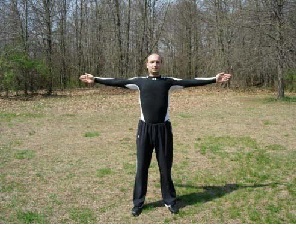
How about this instead?

Continue reading

Prepare Yourself Every Day

Ever have one of those days when nothing goes right?

The alarm clock is blaring yet you hit the snooze again for the 5th time dreading the prospect of getting up and facing the day.  When you finally drag yourself out of from under the covers and realize just how late it is, your heart jumps into overdrive as you rush through your morning routine desperately trying to get out of the house to make it in to work on time.  If you have small children to get ready for school, daycare, or other activities as well, that simply throws more chaos into the mix.

In your rush, you forgot to eat breakfast and left your steaming mug of coffee sitting on the kitchen counter while you ran out of the house.  Traffic sucks, of course, because you’re late, and when you finally get in to work there are 6 messages from your boss wondering why you missed the morning project meeting…  and your day goes downhill from there.

Some days it just seems like the universe is conspiring against you and this time it’s personal!

What do you do?

How do you respond to the myriad changes and vicissitudes life throws at you?

Do you find yourself tossed about like a small boat on a rough sea constantly overreacting and over-correcting with each wave?

Or, do you have a quiet calm reserve of energy and strength that allows you to maintain a state of fudoshin – “immovable spirit”?

Fudoshin is a state of mind that remains undisturbed and not easily upset by either internal thoughts or external factors.  It is the even keel that keeps your craft steady and on course during rough seas of life.

How do you develop fudoshin though?  How do you cultivate that quiet reserve of strength and energy?

Prepare Yourself Daily

Daily preparation is the key.  A reserve of strength must be built up gradually and nurtured daily, even when you don’t need it, especially when you don’t need it, so it’s there when you do.  Like a savings account you invest a little bit each day so that when the unexpected happens the funds are there for you to draw upon.  So let’s get to the nuts and bolts.

How do you prepare yourself daily?  Here’s what I do…

  1. Get up earlier each morning.  Yes, earlier.  Allow 30 to 45 minutes BEFORE you actually need to be up to get ready for the day.
  2. Grab a cup of coffee.  I love my coffee; there’s nothing like that first sip in the morning.  Feel free to skip this step if you don’t drink coffee. 🙂
  3. Head outside for a breath of fresh morning air (feel free to bring your coffee).  According to Chinese Medicine, early morning is the springtime of the day and thus best for planting seeds to cultivate good health.
  4. Stand tall, feet shoulder width apart, knees slightly bent, spine straight.  Raise the arms laterally up over head breathing in slowly and deeply with the movement.  As you inhale imagine the oxygen and energy carried by the breath is filling up your entire body.  Hold the full breath for a moment or two, then slowly exhale completely bringing the arms back down.  On the exhale, imagine the body is expelling tiredness.  Repeat 3 to 5 times.  Feel free to add other imagery to this exercise as well.  For example, on the inhale imagine drawing in the positive qualities of strength, health, and confidence, and on the exhale imagine the breath drawing out and expelling negative qualities of weakness, sickness, and fear.
  5. Perform a full, head to toe joint mobility routine to further wake up and enliven the body.  For a complete discussion on joint mobility work and much, much more, see my book, Warrior Fitness: Conditioning for Martial Arts.
  6. Depending on how much extra time you have, relax a few more minutes enjoying the strength and energy you have cultivated – and finish that cup of coffee before heading in to start your day!


 Life is Stressful – Prepare Yourself!


What’s Hindering Your Performance?

What’s sapping your energy and, unbeknownst to you, hindering your performance in martial arts, athletics, or simply the daily art of living, working, and taking care of your family?  Residual muscle tension, or tonus, is the continuous, passive partial contraction of muscles in the body that aids in posture and support.  Unfortunately, any type of exercise, stress, fear, and trauma, all cause an unwanted and unnecessary increase in the normal residual muscle tension of the body.  Usually this extra tonus goes unnoticed, or worse is simply deemed an acceptable and natural side effect of living.  The problem with this added tension is that the continuous contraction of muscle throughout the day, ever day, is using up energy.  Energy that can, and should, be available to us is being siphoned off thereby putting the brakes on our performance.  It’s like driving a car around all day with the emergency brake on.  You can still get where you need to go, but that extra, unnecessary drag is killing the car’s performance and guzzling gas.

So how do we remove these insidious restrictive forces on our body?  Besides a daily dose of joint mobility, which has been covered extensively in Warrior Fitness: Conditioning for Martial Arts, and in various other posts, I have come across 2 methods that work wonders:

1.  Tension/Relaxation Exercises

At first glance, it may seem odd to increase tension in order to relieve tension, but remember, residual muscle tension is held unconsciously while these exercises will intentionally increase muscular tension for the purposes of identifying and releasing it.  Stand naturally and lift your shoulders as high as possible up to your ears while simultaneously squeezing them as tight as possible.  Hold for a couple seconds then drop with an exhale.  Do it again.  Feel the tension in your shoulders, neck, and upper back start to release?  You can do this locally with any area of the body, or the whole body all together.  For example, tense your left arm as tight as possible on an inhalation, hold for 3 seconds, then completely relax on an exhale.  Do this with the legs, the abdomen, chest, back, shoulders.  Tense each area while inhaling, hold for 3 seconds, then release and relax on the exhale.

2.  Vibration Exercises

These are very simple, yet highly effective exercises which have been used for centuries in yoga and qigong to shake out and release residual muscle tension in the body.  So how do you do them?  Stand naturally, feet shoulder-width apart, knees slightly bent.  Spine straight.  Lift up from the crown of your head.  Begin to bounce gently with the legs shaking the whole body up and down.  On each down bounce allow the body to exhale – don’t force it.  Don’t try to breath, just let the motion breath the body.  Slightly round the shoulders and tuck the pelvis to help the motion push air out.  Continue shaking the body up and down for about 30 seconds to a minute.  Stay loose.  Stay relaxed.  Shake out the tension.

These 2 simple exercises, done on a daily basis, will go a long way toward helping you recover the energy that’s been bound up in holding residual muscle tension.  Let me know how they work out for you!

EVOLVE_SPOT-1 (2)

The Top 7.5 Reasons Warrior Fitness is for You

Since Top 10 lists have been so overused of late, especially in the internet blog area, here are 7 and a 1/2 reasons why the Warrior Fitness program is for you.

1.  No gym memberships required!  Still paying for a gym membership you don’t use, or not getting the results you want from your gym?  Start thinking outside the gym with Warrior Fitness!

2.  Low-tech fitness solutions.  Don’t have the budget for expensive training equipment?  Warrior Fitness offers a complete body-weight workout for strength and conditioning.

3.  Quality workouts that work around your schedule.  It doesn’t take hours in a gym to achieve the results you’re looking for.  Our program encourages quality over quantity.  Got 15 minutes?  Then you have time for a workout.

4.  Lose fat, gain lean muscle.  Our workouts are short, but intense to encourage lean muscle growth while stimulating fat loss.  No more boring hours of mindless cardio!

5.  Sample workouts and programing guidance.  Do some fitness training manuals you’ve purchased in the past leave you wondering how to put it all together or how to fit into your schedule?  Warrior Fitness provides sample workouts you can follow or use as templates to create your own.

6.  Ongoing support and new ideas.  Got questions?  Send me an email.  Post a question in the comments section.  I’m here to make sure you are successful!

7.  Fully integratable with your martial arts training.  Ever wonder which fitness programs make sense to use within the context of your martial arts training?  Ever feel like you may be hindering your progress by the type of workouts you’re doing instead of enhancing it?  Since the program is designed by a martial artist with 30 years of experience and a fitness training background, Warrior Fitness provides a clear path to integrating your fitness and martial arts.

7.5  Comprehensive!  Warrior Fitness covers supremely functional strength and conditioning drills, joint mobility, flexibility, breathing exercises, workout recovery, performance enhancement for martial arts, internal strength development, and more!

Your Keys to Progress

How many people do you know who rarely, if ever, get the results they are seeking from their exercise regimen?  You may be one of them!  The question is, why don’t you (they) get results?  These people may be “exercise nuts” or “gym rats” or even “exer-holics”, or they could just be fascinated with the idea of exercise, but never actually doing any.  The four points below summarize what I feel to be the most important keys to progress when it comes to getting results and achieving your health and fitness goals, whatever they may be.

1.  Joint mobility on a daily basis. 

Daily joint mobility is a requirement to keep your progress moving forward.  Not only does it provide nutrition and lubrication for every joint in your body, but it also aids in removing waste products and deposits that tend to form over time causing pain.  The mobility increases our range of motion and acts as a prehab for enabling us to avoid injuries.  Additionally, it is an excellent way to warm-up the body prior to exercise or to get ready for the day first thing in the morning by increasing local blood flow to muscles.

2.  Yoga asana as compensatory movement for post-exercise cool down work. 

Since every action we do, as in exercise, or don’t do, as in couch sitting, causes an adaptation in our body, movements need to be specifically unloaded to bring us back into balance.  Compensatory movements remove tension caused by exercise and leaving us with the beneficial effects.  These movements are generally used as a cool down right after exercise or as a low impact recovery workout in and of themselves.  The selection of yoga asana (postures) has to be paired with each exercise performed as the complementary functional opposite of the movement to have the maximum desired effect.  By effectively integrating compensatory movements into your program, you can accelerate your progress, avoid injury, and keep moving forward.

3.  An incremental approach. 

Incremental progression is what keeps us from doing too much too soon and causing an injury.  Often we find that our bravado outweighs our brain when it comes to exercises, especially in the beginning.  We tend to want to jump right into the deep end in order to “get results faster”, but often end up injured, exhausted, or both with this approach and are unable to sustain the effort.  Health is about the long haul, not the short term effort.  If your program is unsustainable then it really has no value nor will it aid you in achieving your goals. 

4.  A plan sewing together all of the above. 

Having a plan is what brings all the prior elements together in cohesive, useable manner.  There is a tendency among some people out there to avoid having a program and to simply do the type of exercise they feel like on a particular day.  They also change the selection constantly in order to avoid boredom or so they can be “ready for anything”.  On the surface, this seems logical, but in reality unpredictable exercise selection simply leads to unpredictable results.  That’s no way to make progress.

Morning Wake Up Routine

Ever have one of those mornings when you have to be up early for work or school, but simply can’t summon the energy to start your day?  This is a routine I have been using successfully for years to shake out the cobwebs and get me moving on the mornings when just a cup of coffee isn’t going to do it.  It’s not your fault, and bear that in mind – some people just aren’t morning people.
Back when I was travelling for weeks on end and putting in long hours every day for consulting work this routine was my morning staple in the hotel room before meeting my colleagues for breakfast.  I find it most effective on the mornings when I am most tired.  Just as an aside, it doesn’t have to be used in the mornings, it has benefits any time of the day when you need a little pick me up.  One caution, and although this should be obvious I’ll say it anyway, don’t do it before going to bed – you won’t sleep!

The Routine

Joint Mobility

This has the effect of increasing synovial fluid to lubricate the joints while at the same time increasing blood flow to the surrounding muscles.  For the quick version we will concentrate on the neck, shoulders, hips, and spine.

Neck:

  1. Up/Down – lift up from crown of head; slide down along plane of jaw for 3 to 6 repetitions.
  2. Left/Right – turn head as far left as possible without pain, turn as far right as possible for 3 to 6 repetitions.
  3. Full circles in both directions.

Shoulders:

  1. Roll both shoulders – lift shoulders up towards ears, roll backward fully articulating the range of motion (ROM), drop them down as far as comfortable for 3 repetitions, then repeat by rolling forward for 3 reps.
  2. Alternate shoulder rolls – roll left shoulder back as described above while pushing right shoulder forward then switch.  Perform 3 times each.
  3. Swing both arms as fast as possible windmilling them forward for 20 seconds then backward for 20 seconds.

Hips:

  1. Circle hips clockwise and counter-clockwise 10 times in each direction.

Spine:

  1. Keep the spine straight and fold forward at the hips, then rotate around to the left and back to center, then forward and around to the right.
  2. Keep the spine straight and fold backward at the hips, then rotate around to the left and back to center, then forward and around to the right.

Energizing Breath

In this breathing exercise we will utilize a protocol founded by yoga and improved upon by Russian sport science and martial art.  Here the breath is divided into 3 levels: clavicular (upper level), intercostal (mid level), and diaphragmatic (lower level).  This exercise will focus only on the clavicular, or upper level.  For more information on breathing exercises, please see Evolve Your Breathing.

  1. Exhale through the mouth in a short, quick burst by compressing the upper chest.
  2. Do not actively inhale.  Allow the inhale to happen by relaxing the muscles in the chest.
  3. Repeat rapidly 20 to 40 times.
  4. Build up to where you can perform continuously for 60 seconds.
  5. If you become dizzy, stop and sit down!

Slap Yourself Silly!

This is actually an ancient Qigong exercise designed to improve circulation and disperse stagnant energy.  The execution is pretty simple.  You may want to avoid practicing this in public though!

  1. Gently, but vigorously, slap your shoulders, upper back, and lower back with the palms of the hands.
  2. Then slap down the inside of one arm and up the outside.  Switch arms.
  3. Slap down the outside of both legs – you can slap a little harder here – and up the inside.

Enjoy and Wake Up!

So Ya Wanna Be a Ninja?

Masaaki Hatsumi, Grandmaster of the Bujinkan Dojo, once stated, “endurance is of primary importance for the ninja.”  One definition of endurance is the ability to resist fatigue.  Looking at the kanji (Chinese character) for Nin, there is the ideogram for “sword” over the ideogram for “heart” giving Nin a meaning of, “even though you hold a sword over my heart, I will endure.” 

How many of us training in the Bujinkan, or any other martial art, can truthfully claim that ability?  How long can you train?  How far can you push yourself?  In martial art, endurance, or the ability to “keep going” is defined in years, not minutes, hours, or days.  How can we create an effective training program that will instill in us the ability to continue, to endure?

Physical Endurance

Let’s begin by examining the concept of physical endurance.  There are 3 basic types of physical endurance:

  1. Aerobic endurance
  2. Anaerobic endurance
  3. Strength endurance

We discussed the body’s 3 energy systems and how using the Tabata Protocol can effectively improve both the aerobic and anaerobic systems here.  Strength endurance is defined as the ability to effectively maintain muscular functioning under work conditions of long duration.  There are two basic ways to increase the ability of your body to do more physical work.  One is the continuous adding of weights, sets, reps, and time to push the body to create an adaptation to allow it to perform more work for a longer duration.  As we discussed previously in the article on GPP, the body’s capacity is expanded.  Progress is incremental and continuous for as long as one is able to keep increasing driving forces in the body.  The next one, however, is often overlooked in our “just add more volume” culture.  More is always better, right?  If one vitamin is good for you, take 4, that’s even better (please don’t!).  But, there is another way to allow the body to continue training in addition (no pun intended) to adding more work.  By removing restrictions in your body, like unnecessary tension or extra body weight or lack of flexibility/mobility in a particular area, you then free up resources in your body that were spent holding that tension that you weren’t even aware of on a conscious level.  These restrictions, once removed, allow even greater leaps in performance than simply adding more work.  When the 2 are combined, it’s a powerful combination!

How Do We Program It?

By programming our workouts so that we effectively build in both the removal of restrictive forces, while also increasing driving forces, we can maximize our progress.  This idea is present in traditional methods of Hatha Yoga in the form of balancing strength and surrender.  Contrary to popular opinion, yogi’s do not simply work to become more flexible.  They actively work to increase both strength and flexibility as complimentary opposites in order to achieve a state of balance.  Now, I’m not asking you to become a yogi here, merely pointing out that this is not a new concept at all, but has been used by traditional arts for thousands of years.  Our program for developing ninja-like endurance will utilize both joint mobility exercises and yoga asana (poses), as well as breathing exercises, to aid in the removal of restrictive forces binding your training and slowing your progress.  Next week I will be putting out an article on breathing exercises that can be used for relaxation, stress management, removing residual tension, and also for increasing energy – keep your eyes out!

For an example of some easy yoga postures that can start helping you right now, head over to my good friend Josh Sager’s excellent blog, Fretterverse, and check out my article on Yoga for Guitarists.   A free sample joint mobility training program can be obtained simply by signing up for the Warrior Fitness Mailing List at the top right of the page.  Sign up now and begin working on removing restrictive forces today!

And, don’t forget to check out Warrior Fitness: Conditioning for Martial Artists for more exercises, options, explanations, and program design!

Stay tuned for a sampleStrength Endurance Workout coming soon!

8 Ways to Fit in Your Fitness

It’s often been said that if you want something done you should give it to a busy person.  While this may be true of some busy people, namely the ones who are highly motivated, highly productive, and highly efficient, what about all the other busy people?

What about those who are busy through poor time management skills, or maybe those who are simply overwhelmed?  How about them?  Does the task they are given merely get thrown on top of a growing pile of “To-Do’s”, or even worse, shuffled to the bottom?  What if the task they are given, or give themselves, is directly related to increasing their quality of life and most likely longevity as well?  What if that task will help them be more productive at all their other tasks by reducing stress levels, increasing energy, and their overall sense of well being?  What if that task would help them to reduce, remove, or otherwise prevent a host of daily aches, pains, and illnesses that are stoically (or sometimes not so) suffered as things that “just happen” as we grow older?


Here’s a list of 8 ways for these busy people to fit in their fitness and reclaim a healthy lifestyle:

1.  Plan it out.

Scheduling is the key to successful time management.  Look at your weekly calendar and plan to exercise just as you would plan an important client meeting, a lunch with an old friend, or coaching your kid’s Little League team.

2.  Exercise wherever you are.

Joint mobility sessions can be done at your desk – see here.

3.  Take the Stairs.

Work in an office building?  Take the stairs instead of the elevator.  See how fast you can make it to your floor – beat those lazy suckers in the elevator to your floor!

4. Get outside.

Have a lunch break?  Go outside and go for a walk.  10 minutes in the fresh air will do wonders for you.  Eat at your desk while you work and then go for a walk.  Want to make your walk more productive?  Try inhaling for 5 steps, holding you breath on the inhale for 5 steps, exhaling for 5 steps, then holding the breath after the exhale for 5 steps.  When you can comfortably do that for the entire duration of your walk, increase to 6, 8, 10 steps!

5. Get up earlier.

Get up earlier and workout **warning – this one requires effort and commitment!!**

6.  Exercise together.

Spend quality time with your kids.  Exercise together – see Warrior Fitness for Kids.

7.  Brief workouts.

Got a spare 15 minutes?  Bring the intensity and lose the long, boring workouts.  See the Warrior Fitness WOWs for some ideas.

8.  Isometrics.

These require very little time to be effective, need no equipment, and can be done literally anywhere.

Obviously, this list is neither exhaustive nor all inclusive,  but I do hope it has helped you and sparked some ideas to help you fit in your fitness no matter how busy you are.  What ideas do you have?

5 Ways to Help Decrease the Stress

Today’s corporate warriors are often besieged with too many tasks, meetings, email, cell phone calls, pagers going off, Blackberrys buzzing, etc. Individually, these things are not significant, but when combined together in a constant barrage, all day long, they produce a cacophony of stimulation which, if not addressed through specific countermeasures, can cause a significant stress response in the brain. This stress response emanates from our primal, survival oriented center of the brain which, in times of crisis, can overload and over run the higher brain functions – i.e., those that allow us to plan, prioritize, manage time and people, and be creative.

Article in Harvard Business Review

 According to an article in Harvard Business Review, when busy executives begin to experience symptoms of this stress response in the brain, they often forget important details, lose the ability to prioritize tasks, and generally feel overwhelmed. Overall tension in the body increases, as well as other important markers such as heart rate and blood pressure.

The ability to reduce and manage stress is a key issue in the overcoming of these symptoms in busy workers. Stress can be reduced in various ways such as relaxation, meditation, vacation, diet, and exercise. It is the last two, diet and exercise, that I am focusing on in my recommendations today.

5 Ways to Help Decrease the Stress

  1. Begin to increase complex carbohydrates at every meal. (Complex carbohydrates are whole wheat, multi-grain, etc.)
  2. As you increase complex carbohydrates, begin to eliminate simple carbohydrates. (Simple carbohydrates are white flour, white sugar, and white rice)
  3. Eat protein and vegetables (or fruit) with every meal.
  4. Exercise at least 3 days a week for a 1/2 hour or more.
  5. Daily short exercise breaks – this can be done at your desk or standing up in the office. It is a quick “10 Minute Recharge” for stress reduction and to increase energy throughout the day. This consists of moving all the joints in the body in circles or waves to increase mobility, increase blood flow in muscles and prevent stagnation. These joint mobility exercises coupled with active exhalation breathing aid in the reduction of stress and help to lower blood pressure.

These exercises can be taught quickly and easily, but the benefits are enormous.

For all the aspiring Corporate Warriors out there, how do you deal with stress?

Warrior Fitness Book FAQs

1. Are the Warrior Fitness workouts applicable to beginners?

Absolutely! The workouts in the Warrior Fitness program are completely scalable based on your level of fitness.  Each exercise is explained step-by-step.

2. Is nutrition covered in the book?

Nutrition is an important aspect of a complete, healthy lifestyle, but is not discussed in the Warrior Fitness book. My own personal ideas about nutrition can be summed up fairly simply though. Eat lean proteins, lots of fruit and vegetables, and some complex carbohydrates. Eliminate or reduce white sugar, white rice, and white flour from your diet. Drink plenty of clean water and green tea.

3. Does the Warrior Fitness program teach Amatsu medicine , a traditional system of Japanese Natural Medicine taught by Hatsumi Soke?

No. I have not been taught any Amatsu medicine within the context of my Bujinkan training.

4. Is this program just Junan Taiso (basic stretching exercises used as warm-ups for martial arts practice)?

No. The Warrior Fitness book provides a comprehensive program consisting of joint mobility, flexibility, strength, conditioning, breath work, and recovery. Much more than simply junan taiso exercises.

5. Do I have to workout every day?

You do not need to do a full workout, but I highly recommend doing some movement everyday! Joint mobility work, combined with breathing exercises can take as little as 15 to 20 minutes in the morning. It’s a great way to start your day!

6. How much time do the Warrior Fitness strength and conditioning workouts require?

The workouts contained in the Warrior Fitness book are designed to be fast and effective. You can achieve a quality workout in 15 minutes, if you are short on time. Longer workouts can also be programmed, depending on how much time is available.

7. Do I need a gym membership for this program to work?

Definitely not! Warrior Fitness workouts are designed to be done anywhere with little to no equipment necessary.

8. How do I fit in working out and the skill training for my martial art?

Excellent question. This is where scheduling and time management skills come in handy. Time will not simply appear out of thin air. You must make time. However, the most important advice I can give on this topic is that if you do not have time for both skill work (martial art training) and conditioning, skill work must take the priority! You are training to be a martial artist after all.

9. Is this book applicable only for those training in the martial arts?

No. This book is certainly not just for people in the martial arts. The exercises and ideas contained within are applicable to anyone of any range of fitness and ability. Pick up a copy today and see for yourself!

Please feel free to email me here with any additional thoughts or questions concerning the book.