5.5 Principles for More Effective Striking in ANY Martial Art

Part 1 of this series, Conditioning the Fists for Striking can be found HERE.

Being able to strike with power and precision involves a lot more than merely knowing the technique. Practice must include these principles of effective striking techniques for all martial arts…

1. Whole Body Power 

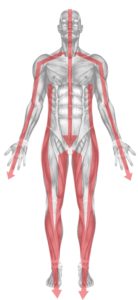
All movement in real life happens in three dimensions, so why train exercises that only incorporate one or two? Training muscles in isolation, unless it is used to rehab a specific injury, range of motion, or strengthen a particular muscle to add to the whole, does not work in martial art.

Our strike conditioning exercises must train movements in three dimensions utilizing diagonal, rotary, and angular strength, as well as prime moving muscles.
2. Stored Elastic Energy (SEE) 

Stored Elastic Energy is basically the potential energy stored in tendons and connective tissue as a way to power movement.

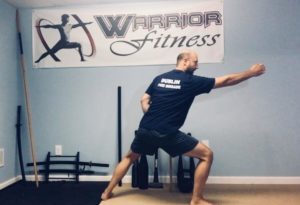
An easy exercise to begin to feel stored elastic energy is to stand in a natural stance with feet shoulder width apart.  Bend your right arm and raise it up to shoulder height as if you were about to throw the most telegraphed punch in history (don’t worry, it’s just an exercise).  Now, lead from the elbow and pull your fist back.  Allow your torso to rotate, but keep the feet planted and the hips facing forward.  When you reach the end of your range of motion, hang out there for a second and feel the tension (torque) on the spine.  Now simply relax and release that torque to throw the punch.  Don’t add any driving forces with muscle.  You can’t propel it any faster; you’ll just slow it down.

Feel it?

Try it again.

Do it with the other arm.  Remember the feeling.  This is stored elastic energy (SEE).

The point here about creating torque or stored elastic energy (SEE) in the spine is essential in being able to move powerfully without winding up or telegraphing the movement.

If you are having trouble feeling it, try to exaggerate the movement.

Make it much larger than necessary to study the feeling. It should feel like a tension in the lower back near the bottom of the spine. When this tension (torque) is relaxed (released), the movement happens.

3. Structure / Kamae 

Many people tend to use the terms alignment and structure almost interchangeably but in actuality, alignment is a component of structure.
For example, looking at a natural standing posture, good alignment would be:

  • Crown up
  • Chin down
  • Shoulders packed down
  • Spine lifting up (through crown)
  • Spine pulling down (through the sacrum)
  • Hips under shoulders
  • Knees under hips
  • Mid-foot balance
  • Chest is relaxed
  • Butt not sticking out nor is pelvis tucked under
  • Knees are over the toes
  • Weight evenly distributed (50/50)
  • No leaning forward or backwardThis puts the whole body into proper alignment.
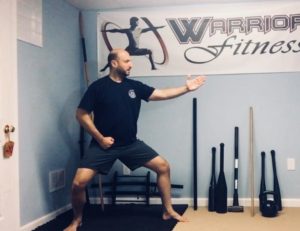


Structure also includes (in my lexicon) the balance of tensions within the body’s soft tissues. The bones act as compressive struts pushing outward from the center while the soft tissues (fascia) act as the stays pulling inward towards the center keeping the tensional balance in the body.

4. Breathing 

How often do you think about breathing as it relates to striking?

Yet it is absolutely essential to maintain proper breathing when in combat or simply hitting a heavy bag, mitt, or an opponent. Lack of breath control affects the rest of your body and hinders your overall performance.
5. The S.A.I.D Principle 

Why are all the above ideas important to understand in relation to striking and martial movement?

The SAID Principle – Specific Adaptation to Implied Demand says every activity that we repeat consistently causes an adaptation in the body.

The critical thing to note here is that it does not matter at all how we value this adaptation.  It can be something that we want like how healthy exercise increases lean muscle mass and burns excess fat, or it can be something we do not want like how eating junk food to an extreme causes our body to adapt by putting on weight.

Both of these are examples of activities that cause adaptations in the body.   Our goal is to train adaptations we value highly like the enhanced neural connections in our nervous system that increase our skill level. Keep this in mind when training.  We do not want to train bad habits!

5.5 Elements of Efficiency 

Efficiency is defined as the amount of useful work divided by the amount of total work.  In other words, how much effect are you producing for the amount of effort you are expending?

  • Ever see a batter “swing for the fences” only to completely miss the pitch?
  • Ever see someone try to pick something up that is really light, but they believe is heavy?
  • How about watching someone using the general whole-body tension we discussed above trying to hit a heavy bag?

How much effect, i.e. force from the strike embedded into the target, is gained from the huge effort expended?

You must train to have your strikes be both effective (devestatingly powerful) and efficient (uses the least amount of force or energy to accomplish the movement). Only then can you be said to have mastered the art of striking!


Learn exactly how to upgrade your striking skills in ANY martial art with these resources from Warrior Fitness Training Systems…
Conditioning the Fists for Striking

One of the most underdeveloped aspects of the martial artist’s arsenal is the conditioning of his fists for striking.
The tendon strength, wrist strength and flexibility, and the overall structure of the strike is an exploitable weakness that needs to be addressed.

In this article we will examine several different push-up variations and isometric exercises to fortify the structure of our strikes.

This type of training will work to enhance the power generation of all manner of striking.

Do these push-ups slowly and purposefully with full attention to the movement.  These are not meant to pump up your beach muscles, rather they will strengthen the connective tissue in your hands, wrists, forearms, and shoulders to build structure and encourage the correct alignment for all your strikes.

Fudo-ken (fist) Push-ups 

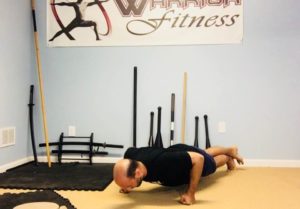
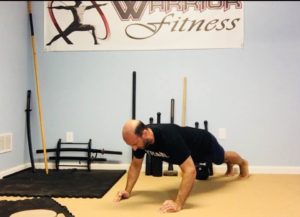
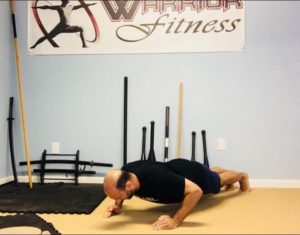
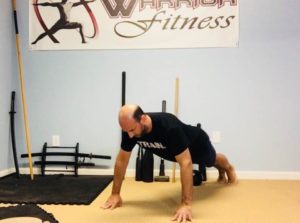
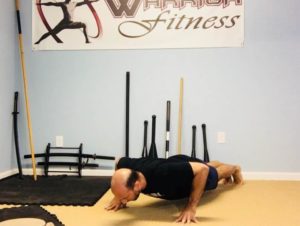
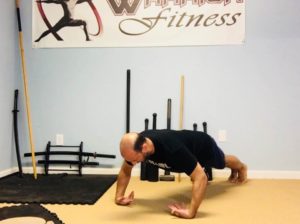
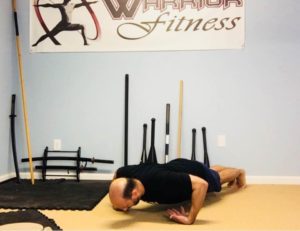
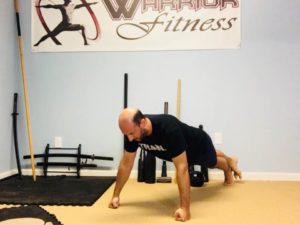
Place the weight of the body on the fists.  Make sure the wrists do not bend. After performing several repetitions (or as a separate exercise) simply hold the body in the Fudo-ken push-up position. Relax as much as possible and allow the correct structure to support the body on the fists. Try this in the upper position, lower position, and halfway point of the push-up.


Do the same isometric holds with each exercise.


Shuto (sword hand) Push-ups 

Hold the hands in the form of a shuto strike.  They should close to a 45 degree angle with the thumbs supporting the fingers.  The weight is on the meaty, inside portion of the hand.


Fingertip Push-ups 

Place the pads of the fingers on the ground like you are clawing it.  Try to squeeze the ground as you press up.


Wrist Push-ups

Place the wrists on the ground. These will be very difficult at first if you have not done them before.  Take them slowly.  If necessary, perform them on your knees to build strength.


Train these basic exercises thoroughly. Study this well!

Be sure to check out part 2 of this article, 5.5 Principles for More Effective Strking in ANY Martial Art.

Learn exactly how to upgrade your striking skills in ANY martial art with these resources from Warrior Fitness Training Systems…


The Process of Becoming Masterful

“Remember that mastery is not attained once after a lifetime of practice, but earned every day.”

– Jon Haas

Usually when we think of someone who is a master, be it a master martial artist or the master of some other craft, we think of them as attaining mastery at the end of a long lifetime of practice.
But mastery is NOT something that’s attained once after years or decades of training – mastery is something that is EARNED every day!!
You can be masterful in one moment and then a fumbling fool in the next (ask me how I know!).
The goal of becoming masterful isn’t to wait until some distant future when every move you make is perfect and every word that comes out of your mouth is sage advice, it’s to consciously create those moments of mastery every day until you have more of them rather than less of them.

Daily practice is the key.

Do you ever think about what it would be like to be a master martial artist?

Not just to be awarded the title “master” but to really and truly embody all of the sublime skill of martial mastery at the highest level of human achievement…

What would it feel like to know, without a shadow of a doubt, that you could easily control and subdue the most violent opponent with the most minimal effort, like a lion playing with a cub?
What if I told you that mastery is NOT something automatically attained after a lifetime of practice, but is instead conferred only upon those rare few individuals who, through their own efforts, take consistent, specific daily actions to achieve it?

Then mastery would not be just a far away, imagined future state, but instead a real and attainable goal built by taking action every day, right here and right now.


Remember This

Remember this – it is critical to your success – EVERY single legendary martial master: Musashi, Ueshiba, Bruce Lee, Kano, Takeda, Takamatsu, Gracie, Hatsumi, etc…

ALL of them began as unskilled, know nothing novices, white belts without a clue.

Their consistent daily training formed them, forged them, into the revered and feared masters that we know today.

“What one man can do, another can do.”

You can choose to follow in their footsteps. You can choose to be masterful, to be legendary.

However, as you follow them, do NOT seek to become them – instead, seek what they sought, the process of mastery.

Find the process of daily mastery <<==

Finally… There is a Researched, Tested, and PROVEN Method for Developing Internal Power and Unusual Strength from Martial Arts…

What is Specific Physical Preparation for Martial Arts?

Every once in a while it’s fun to think about how much the exercises we train on a daily and weekly basis actually translate, or carry over, to the activities for which we’re training.

Depending on your training program this can either be a great way to confirm that you are moving in the right direction, continuing to make progress and see results, or it can be a bit disheartening to realize just how little what you are doing actually carries over to your chosen field of endeavor.

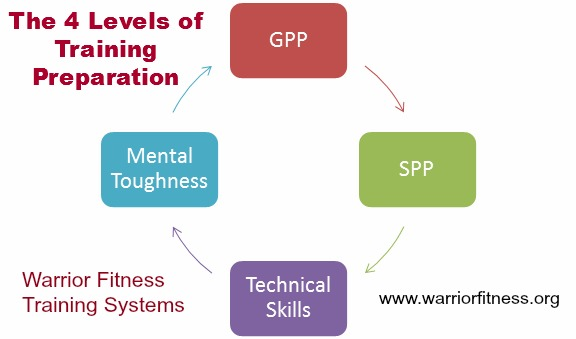
In the case of budo (martial arts) practice, like any other sport or physical activity, there must be exercises specifically crafted to enhance performance. A solid base of General Physical Preparation (GPP) is necessary, but not sufficient.

What is GPP?

The first step in ensuring you are building martial skills on top of a solid foundation is General Physical Preparedness (GPP). The goal of GPP is enhanced work capacity. This is the ability to run faster, jump higher, and hit harder.

When work capacity increases, it allows the budding warrior to adapt more easily to increases in both mental and physical demands. In other words, it increases your capacity and level of readiness to absorb higher levels of specificity in training. In order to be more, we must become more.

When talking about the martial arts, which tend to be seemingly limitless, one must possess the physical, mental, and spiritual endurance to “keep going!”


Moving From GPP to SPP

While the goal of GPP is muscular adaptation and general readiness for training, the main focus of SPP is neurological adaptation — to train movements, not muscles.

Specific Physical Preparedness builds on GPP by increasing the development of characteristics necessary for a particular sport or activity — or, in our case, martial arts.

It is a uniquely designed and targeted system for enhancing strength, flexibility, endurance, and conditioning which builds on the GPP base by furthering development in the exact physiological profile of the martial art.

Therefore, GPP helps to make you effective while SPP makes you efficient. The end stage goal is of course to be both effective and efficient in each and every movement.

The Training Process Cycle

If your strength and conditioning program is stuck in the GPP phase of development then you may not be realizing the type of performance gains that are possible with a specifically crafted SPP level.

Strength and conditioning training must eventually approach as close as possible to the demands of the activity to maximize the training effect.

Since your body adapts specifically to the stresses placed on it, you improve according to the type of training you do. This is exactly why your training program must cycle through from the general to the specific.

Ready to take your martial art training to the next level?

Check out the vast array of SPP for Martial Art Training Programs Available from Warrior Fitness Training Systems HERE <<===


On The Habit of Excellence

“We are what we repeatedly do. Excellence, then, is not an act, but a habit.” –  Aristotle


Lately I have been thinking about the virtue of excellence. This wasn’t always an important virtue to me. When I was younger (and dumber) I believed that I could get by on just being adequate at things and sort of drift my way through life. The only problem with drifting is that things only can drift one way, downstream.

No one has ever drifted to the top of the mountain.

Now I am convinced that we must all live the virtue of excellence in order to have full, complete, productive, and happy lives. And to be of service to others.

The most often talked about value in Greek culture is areté. Translated as “virtue,” the word actually means something closer to “being the best you can be,” or “reaching your highest human potential.”

This is our daily struggle and goal as warriors – to reach our highest human potential. You see the funny thing about excellence is that you can never achieve it, one and done. You must constantly strive to be in a state of excellence every day pushing higher and higher.

The man or woman of areté is a person of the highest effectiveness; they use all their faculties: strength, bravery, wit, and deceptiveness, to achieve real results.

In that spirit, here is the Strength Training Workout I just completed:

1A) Kettlebell Swings 4 x 25
1B) Barbell Back Squats 4 x 10, 6, 4, 2

2A) Pull-ups 4 x SM
2B) Kettlbell Military Press 4 x 6/6
2C) Split Stance DB Rows 4 x 6/6

3) Heavy Partial Squats 4 x 2

4A) DB Hammer Curls 3 x 6-8
4B) Lying KB Triceps Extensions 3 x 12
4C) Warrior Sit-ups 3 x 20

Phew… 

Pursue excellence!

I am opening up a few spots in my Warrior Online Coaching Program. If you are someone who is interested in pursuing excellence in your life, you can apply HERE directly.

 Don’t just think about how you can become excellent “some day”… Learn how to begin creating habits that will make you excellent NOW!

HeavyBody Foundations Course – My Review

The HeavyBody Foundations course is the first section in Coach Chris Davis’ new Martial Body System. The Martial Body system is an attribute-based approach to training. This non-denominational systematic method of training the body is not only revolutionary, but much needed by today’s martial artist!

Coach Chris has spent many years training with high level martial masters from several different arts, researching their approach, understanding and highlighting the commonalities between BJJ world champions, UFC fighters, Chinese martial artists, Koryu adepts and cleverly reverse engineering them into a cohesive, attribute based approach to building the ultimate body for martial arts.

The approach has been “specifically and painstakingly developed with the sole goal of creating real and lasting changes to how martial artists from any style feel to their partners or opponents, and how their body remains strong, healthy and able to perform as they age.”

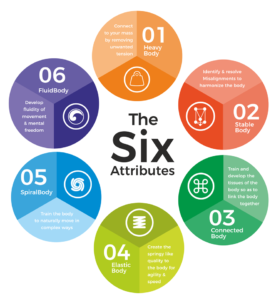
The 6 qualities are presented in the MartialBody system are:

HeavyBody | StableBody | ConnectedBody | ElasticBody | SpiralBody | FluidBody

HeavyBody Foundations

The aim of the HeavyBody section is to develop the quality of heaviness through relaxation in martial exchanges. This allows the practitioner to fully utilize their connection to gravity and turn off unwanted tension in the body.

The course is broken down into 5 chapters, each complete with a series of introductory explanation videos, demonstrations and instructions for each exercise, as well as warm-up and cool down routines, and follow along routines covering all aspects of the training. Coach Chris also covers several examples of push testing designed to act as real time feedback for the process. All in all, an excellent resource for any martial artists!

As you will see inside the course, the exercises act on multiple levels and are designed to increase the level of relaxation, open up the joints, and condition and massage the tissues.

Coach Chris takes great care in explaining and demonstrating each exercise in detail as well as providing commentary as to how each one will develop the HeavyBody attribute and be useful in striking or grappling. I found myself getting up from my computer and turning the monitor around so I could work through the exercises with him as he was demonstrating on video – as they say, FEELING is believing!

HeavyBody may be the first foundations course, but foundation does not mean basic. It is, in my opinion, essential training for all martial artists, regardless of style. The exercises in this module are meant to be trained over a lifetime always coming back and plumbing greater depth.

My recommendation? HeavyBody foundations is a MUST for ANY martial artist’s library. Pick up this course NOW and get started training today!

Get your copy here.


UPDATE – The new courses: StableBody FoundationsConnectedBody Foundations, and ElasticBody Foundations are Available Now!

The Downfall of Functional Training & How to Fix It

What Functional Training Has Become…

The field of functional training has degenerated into seeing who can perform the most meaningless stunt while looking the coolest (ahem… sometimes).

These exploits may look impressive to the uninitiated or easily amused, but they have virtually no carry over and zero application to movement in real life, on the sports field, or on the combative battlefield.

Not to mention their capacity for injury is high while their actual true functionality is exceedingly questionable…

Worse yet their flamboyancy distracts from, and gives a bad name to, real progressive, incremental functional strength training that has been the province of great warriors, strongmen, and great athletes for centuries. This leaves us in a sad state of affairs.

What Functional Training SHOULD Be…

Functional training should instead focus on developing multi-planar, multi-joint movement. It should increase stability, whole-body power, and enhance resistance to injury. It should multiply force production ability for all martial and athletic movement as well as stimulate neuromuscular patterns required for those movements.

Functional training should create a safety valve in ones movement for when the unexpected happens and movement goes awry.

It should provide the functional training practitioner with the ability to absorb and re-translate force without chance of injury.

The training methodologies that were developed and past down by warriors were the ultimate in what we today call “Functional Strength Training”. Certainly, what could be more functional than specific exercises and training methods devised to excel and survive in mortal combat?

These methods still survive today and are the province of a rare breed of modern warriors, martial artists, strongmen, and strength coaches….

Like the tempered steel of the warrior’s blade, the true art of functional strength training has been forged over the centuries by the fires of preparation for life and death combat.

How Do We Fix It…

The first part of fixing the mess of modern functional training is to answer the uncomfortable question – functional for what?

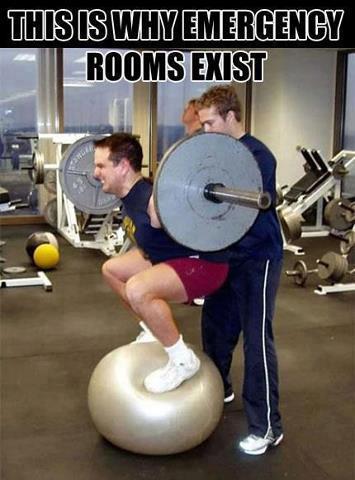
Let’s face it,  none of us really need to be good at pressing 5 lbs dumbbells while standing on a BOSU ball with one foot wearing an altitude mask. 🙂

So what do we need the outcome of purposeful training to be so that it will benefit and improve virtually all human movement?

We need connected whole body strength and power that seamlessly integrates with any martial, athletic, or life event endeavor. We need training that increases mobility, enhances strength, improves resistance to injury, and provides a foundation for excellent health and pain-free movement into old age.

What are we training to become more functional for? Living.

How Do We Train It?

Functional exercise, as we discussed above, is defined as multi-planar, multi-joint movement, in other words, three dimensional movements.  Which means that swinging a weight – club, mace, sledgehammer – is one of the most effective ways to truly train functional strength.

For the warrior, since combat always occurs in a volatile and unpredictable atmosphere, training must prepare the warrior to adapt and overcome.

You cannot be strong in only one direction or just one plane of movement – you must possess all around strength that can be brought to bear no matter what position or weird angle you may find yourself in, and having to move from.

Since sledgehammers are common place and easy to obtain at the local hardware store, they make an ideal functional strength training tool.

Using a sledge hammer in your training is a great way to develop the movement pathways used in striking. It will aid in force production, increase angular, diagonal, and rotational strength throughout the trunk and core, and provide an excellent grip strength workout all at the same time.

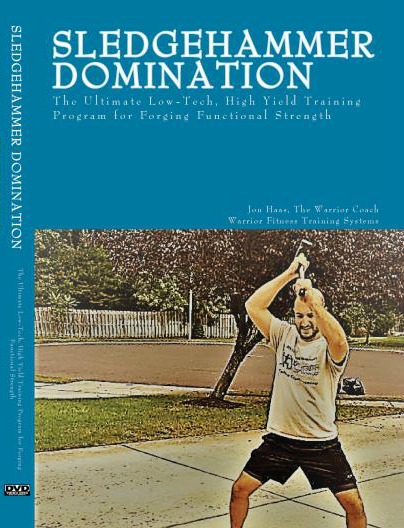
Sledgehammer Domination – Volume 1

“The Ultimate Low-Tech, High Yield Training Program for Forging Elite Functional Strength”


The Top 3.5 Reasons Training is Hard

The other day a student said to me during training: “This is hard.”

My reply was, “Well of course it’s hard. You don’t come to me to learn how to do things you’re already good at, do you?” 

But why is this difficult?

In my experience,training is hard for approximately 3.5 main reasons…

1. You are learning new skills. It’s hard to be good at movements, exercises, and concepts that are new to you. Your nervous system must adapt to the new and different stimulus and create, or sharpen pathways to build competence and skill.

2. You must work on your weak points. Working on things you are already good at is fun, but the only way to truly become all-around strong is to eliminate your weak points.

3. Your ego. No one wants to look inept or silly. But the only way to become better means that we must put ego aside in order to learn.

3.5. Superficial Expert Status. The amount of information available today gives people immediate access to any body of knowledge out there, no matter how obscure, in a matter of seconds.  We have all become SMEs – “Superficial Matter Experts”.  We think that just because we know “about” something we actually understand it. No one wants to spend the time and effort required to learn something deeply.

But these reasons are exactly why we need to train. And why we need to train with people who have greater, or more specialized knowledge, higher levels of experience, and greater levels of skill than we do.

This is why I still train with my martial arts teachers. This is why I still have a strength coach. This is why I participate in masterminds and have business coaches.

Because I know that I need to be pushed and challenged in order to grow, just like I must push and challenge my students and clients in order for them to grow.

Ready to be pushed and challenged?

It begins here <<===

Bored With Push-Ups? Try These!

Push-ups should build all-around 3 dimensional strength from every conceivable angle and hand position. If you’re bored with your current push-up regimen, give these a try and let me know what you think!


Screwing Push-ups

Knife Push-ups

Wrist to Fist Push-ups

How to Train Wrist to Fist Push-ups

Multi-Directional Push-ups

Whole Body Plyometric Frog Hop (not technically “push-ups” but close enough and fun!)

The Aiki Push-up


Read more about how to use different push-up variations to condition your fists for striking HERE.


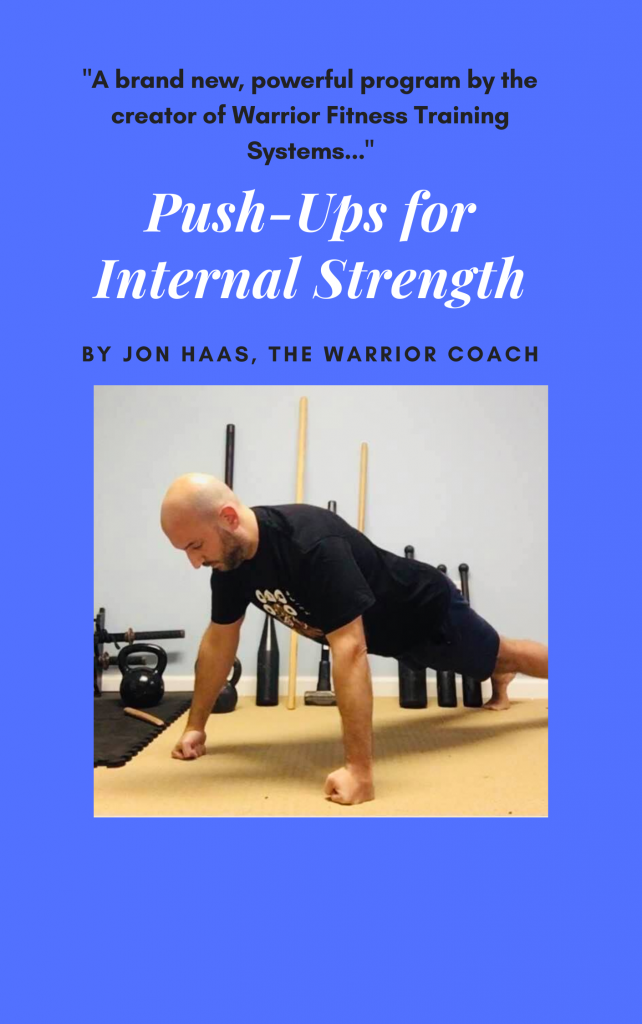
Learn the secret step-by-step method used to build fierce internal strength and martial art power from a little known way to perform push-ups in the latest release from Warrior Fitness, The Push-ups for Internal Strength Program


Musashi’s Rules – “Forge Yourself in the Way”

If something is worth doing, it’s worth doing every day.

Musashi instinctively knew this.  He became the greatest swordsman Japan ever produced by practicing what he preached.

The concept of forging oneself through the rigors of daily training was so important to him that he made it a rule for those who would follow his way of martial strategy.

But this article isn’t about Musashi, it’s about you and tapping into your own innate greatness.

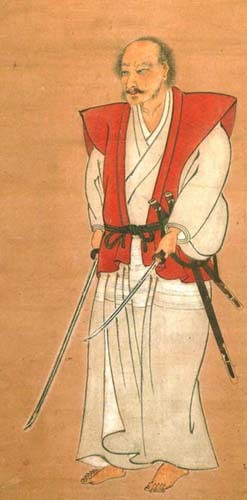
musashi

Forge Yourself in the Way

Forging must be done daily. There is no way to forge body, mind, and spirit into a finely honed blade without constant hammering and firing through the steel tempering process of training.

  • Half-assed training won’t cut it.
  • Training only when you feel like it won’t get you there.
  • Training without a properly focused strategy will not work.
  • Training the same way over and over again and expecting different results is the definition of insanity.

So What Works?

The only answer to the question of how does one become a great martial artist (and I’m assuming you want to be great otherwise you wouldn’t be reading this blog…) is this – TRAIN MORE.

But, like anything else, there’s a caveat.

Train smarter AND Train Harder.

As I always say, there are no secret techniques but there ARE secret (or less well known) training strategies that will improve all aspects of martial performance in much less time.

Training more and training harder are NOT the only variables. Anyone who thinks this way is an amateur.

Click HERE Now to Get All the Details!