Create Your Own Adversity!

“Let me embrace thee, sour adversity, for wise men say it is the wisest course.”  ~William Shakespeare

Philosophers and sages throughout the ages have consistently extolled the virtues of facing adversity for the purposes of becoming a better, stronger person.

No matter what form this adversity takes, wisdom dictates that it must be faced head-on, weathered through, and successfully beaten by coming out the other side, maybe scarred, but assuredly battle-hardened and spiritually tougher.

Oftentimes, adversity comes to us unbidden simply due to the path we choose to follow, or even for no fathomable reason at all.  It tends to be one of those things life throws at us unexpectedly to “help” us prove our mettle and forge our character.

It has been said that “God comforts the disturbed and disturbs the comfortable”.  If this is so, perhaps creating your own adversity isn’t a bad thing at all.

The goal in creating your own adversity is to design a challenge that will push the limits of your physical strength, mental toughness, and spiritual fortitude in order to propel you forward to the next level in your training.  For the warrior, this process is known as Shugyo.  Shugyo (修行) may be defined as “conducting oneself in a way that inspires mastery”.  These periods of severe training were usually undertaken by warriors to achieve a type of enlightening experience which opened their minds by destroying their concept of previously perceived limits.  It is the same for us today.

Ueshiba Morihei, the founder of Aikido, was well known for taking his students up into the mountains for periods of Shugyo.

“Once a year, Morihei took several of his best disciples to train with him on Mount Kurama, located near Kyoto. The small group lived on rice, pickles, miso soup, and wild herbs. Morihei would rise at five AM to pray. After morning prayers and misogi, they would swing heavy swords five hundred times and then practice footwork. From ten AM to noon they trained in body techniques. Afternoon training ran from three to five PM; the disciples took turns acting as Morihei’s partner as he ran through series after series of techniques. In the evenings the disciples would review the day’s training. Every three days, Morihei would announce at midnight ‘time for night training’…”
Excerpt from “Invincible Warrior”, by John Stevens pg. 125

Now, do you have to seclude yourself in the mountains for several days in order to practice Shugyo?

No.  For most of us, that’s not realistic or practical, but that doesn’t mean we can’t create the same type of experience for ourselves.

So, how do we do it?

Create Your Own Adversity!

Caution:This type of training is not for everyone.  Before you begin, there are a few common sense type precautions you should take.  First, prepare adequately.  For example, you would not go out to run the NY Marathon tomorrow if you’ve never run more than 5 miles.  Second, if you decide to conduct your Shugyo outdoors, let someone know where you’re going, what you’re doing, and how long you’ll be gone, or better yet, take them with you!  Third and most importantly, think before you do and plan accordingly.

1.  Pick a time or day that has personal significance to you – it can be your birthday, New Years Day, or the anniversary of something important in your life.  Is this absolutely necessary?  No.  You can pick next Tuesday if you’d like, but I think tying your Shugyo to a significant day makes it more special.

2.  Decide what form your Shugyo will take.  This must be unique to your goals and capabilities.  Choose something that is currently beyond your reach, but not so far as to make it completely unattainable.  You want to focus and hone your physical, mental, and spiritual abilities, not your imagination.  Some examples are:

  • Run a marathon
  • Run a Spartan Race or Tough Mudder
  • Climb a mountain
  • 1000 cuts with a heavy bokken (wooden sword)
  • 1000 Kettlebell snatches
  • 1000 Kettlebell Swings
  • 1000 reps of any basic techniques or combination of techniques
  • Sparring 20 opponents in a row, nonstop
  • 1000 Push-ups/Squats/Sit-ups

While any of the above would more than qualify as Shugyo, my personal preference is to plan an entire day where the whole becomes greater than the sum of the individual parts.  Some recommendations for the parts are:

Junan Taiso warm-up, run (distance TBD by you), practice the basic strikes, kicks, and footwork of your particular martial art, Bujinkan Budo Taijutsu for me (high reps to push your limits, of course!), weapons practice (sword cuts, spear thrusts, bo swinging, etc.), high repetition bodyweight exercise(s) or workout with weights (dumbbells, kettlebells, clubbells, sandbags), end with an extra long yoga session to wring out all the tension accumulated throughout the day followed by meditation and rest.

3.  Create a training program to get you there.  Let’s face it, most of the above examples are not something most people can decide to do in a day, they take time, preparation, and work to bring the goal within reach.  Remember the “6 P’s”: Proper Prior Planning Prevents Poor Performance!

4.  Get to work!!

Creating your own adversity through Shugyo has the effect of focusing not just your mind, but your entire being for the purposes of expanding your potential.  Push yourself harder than you ever thought possible and blow through your preconceived limitations – remember, the only limits that truly exist are those set up in your own mind – there are no limits!

“God brings men into deep waters, not to drown them, but to cleanse them.”  ~John Aughey

A Day in the Life…

At the suggestion of my good friend, and West Coast Buyu, Dave Furukawa, I am presenting a look at one of my daily workouts.  Please see Dave’s comments on my previous post here for reference.

This is a record of my activity from yesterday, Memorial Day 2010:

Morning

Life begins early here, even on long holiday weekends, since our 19 month old, Juliana, doesn’t distinguish weekends from weekdays yet!  So at 6 am I was up making coffee and searching through her Elmo DVDs to find the particular episode she wanted that morning.  As the coffee was brewing I began working through my joint mobility routine in the kitchen.  Each joint from neck down to ankles and toes is rotated through its entire range of motion to flush the joints with synovial fluid and increase blood flow to the surrounding muscles.  This has the effect of lubricating the joints and removing the “rust”, as well as awakening the entire body.

As interest in her Elmo episode waned and Juliana wandered off to “read” her books and play with toys, I began working through San Shin no Kata, the Bujinkan basic movement exercises.  Each movement was practiced stationary, then walking forward and backward with emphasis on using the spine to generate power for the movements.

Mid-Afternoon

In the afternoon I took the kids to the playground.  My older daughter, Caitlin, rode her bike while I pushed the baby along in her little buggy.  As I walked each step was coordinated with breathing to work on breath capacity.  For example, inhale for 5-steps, hold on the inhale for 5-steps, exhale for 5-steps, then hold on the exhale for 5-steps.  This can be done continuously with the same pattern or you can alter the number of steps for each breath cycle up or down to make it easier or more challenging.  See my post entitled Breathing 101 for more breathing related exercises.  At the playground, in between pushing the kids on the swings and taking the little one down the slide, I used the monkey bars for random amounts of pull-ups and chin-ups.

Evening

Finally got the kids to bed around 8:30 and went down to the basement gym for my workout proper.  My current program is geared towards developing unarmed striking power and basic weapons work. 

  • Brief joint mobility warm-up
  • Suburi with Yari (spear) – 3 rounds of 10 thrusts from Seigan no Kamae, 10 thrusts from Jodan no Kamae, each side
  • Suburi with heavy bokken – 3 rounds of 10 cuts from Jodan no Kamae, advancing and retreating
  • Swipes with 15 lb clubbell – 3 sets of 10
  • Mills with 15 lb clubbell (think omote shuto type movement) – 3 sets of 10
  • Reverse Mills with 15 lb clubbell (think ura shuto type movement) – 3 sets of 10
  • Clean to Order with 25 lb clubbell – 3 sets of 5 each arm
  • Clean to Order with 45 lb clubbell – 1 set of 5 each arm
  • 5 minutes of various yoga asana to cool-down

This is just a quick glimpse into a much larger program that I am testing on myself for eventual release.  For more information on my previous programs, please check out my ebook, Warrior Fitness: Conditioning for Martial Arts.

Sometimes It’s OK to Not Follow the Program

Every have one of those days when no matter how fun, exciting, and productive your workout program happens to be, you just don’t feel like doing it?  I don’t mean out of lack of enthusiasm or laziness here though; motivation is not the problem.  You’re energetic and ready to train, but really just want to break out of the mold for a minute instead of sticking to the program.  This happened to me last night.  I went downstairs to my basement gym after putting the kids to bed ready, willing, and able to train.  I went through my standard head to toe joint mobility warm-up (sign up for the Warrior Fitness Mailing List to recieve a free chapter on Joint Mobility from my book, Warrior Fitness), followed by some breathing exercises to flush my bloodstream with oxygen and give me a little extra “go”, and then it hit me.  I had no desire to do my planned workout for the day.  Boom.  Just like that.  No warning, no indication, no nothing.  I stood there stunned for a minute just sort of staring into space, looking around the gym with a “what the heck do I do now” expression on my face.  Now don’t get me wrong here, I love the workout program I created for myself that I’ve been following for the past 3 weeks.  My results have been spectacular, my energy levels high, and I have, until last night, genuinely been looking forward to the workouts.  The exercises I was scheduled to perform were a combination of dumbbell lifts and bodyweight exercises designed to push my anaerobic threshold and build lean muscle while burning fat.  Great stuff!  So, what was the problem? 

What Did I Do?

I took a look around my little corner basement gym and my eyes settled on a pair of 15 lb clubbells against the wall, next to the dumbbell rack and thought to myself, Hmmm… haven’t picked those up in a while…. why not?  So I scrapped my preplanned workout for the day and picked up a clubbell.  I started out with some basic cleans to order, then moved into working shield casts, followed by mills, reverse mills.  No sets.  No rep scheme.  No timed rest intervals.  No plan.  Just playing with the movements and enjoying the freedom.  By the time I was done, 30 minutes had gone by and I was drenched in sweat and smiling ear to ear.

Sometimes it’s ok to not follow the program.  But, tomorrow it’s back to the dumbbells!

Warrior Fitness Recommended Equipment

A question I often receive through email (which, by the way is great, please keep them coming!) is whether or not Warrior Fitness is strictly a bodyweight training system.  In short, no it’s not, but let me expand on that.  Bodyweight training is an outstanding way to exercise.  It requires absolutely no equipment, no gym membership, a small amount of space, and can be done virtually anywhere.  It works equally well for the business traveler, the stay at home parent, or the vacationer.  In my opinion bodyweight training should be the foundation of your fitness program, especially if you are just starting out.  My rationale behind this is a simple one: if you cannot master your own bodyweight first, you really have no business adding weight.  Now, obviously there are exceptions to this rule.  For example, if you are being treated by a Physical Therapist and they recommend a weighted exercise to help your condition, then you must follow their advice.  Additionally, I said it should be the foundation of your program, but that doesn’t mean equipment cannot be added for variety, to increase the combined exercises effectiveness, or to shore up a particular strength or mobility deficit. 

With that out of the way, here is a short list of the equipment I do use for myself and with my clients and highly recommend.

The Equipment List


1.  Sandbags – Cheap and easy to make yourself.  Great for taking strength and conditioning outside the box.  Want to make one?  Get an army duffle bag, two 50 lb bags of sand from your local Home Dept, a box of gallon freezer bags, and some duct tape.  Fill the freezer bags with sand.  Double bag them, then duct tape them to make sure they are secure.  Place the duct-taped, sand filled freezer bags inside the duffel bag (make heavier or lighter depending on your preference), zip up the bag, secure it, and you’re good to go!

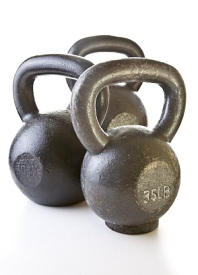
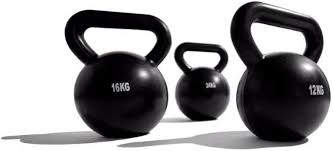
2.  Kettlebells – I got my first kettlebell from Dragondoor back in 2002 when they were the only supplier outside of Russia.  Nowadays kettlebells have gone mainstream and can be found at your local Walmart (along with pretty much anything and everything else!).

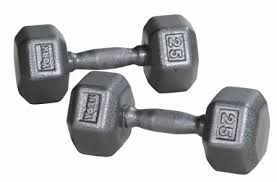
3.  Dumbbells – The cheaper kettlebell alternative, just not as cool looking.

4. Clubbells – These are excellent for targeting angular and rotational strength, as well as sport or activity-specific performance enhancement.  They are currently only available through RMAX.

5.  Resistance Bands – Can be obtained from Elite Fitness Systems here

6.  Pull-up Bar – I made my own in the basement from a couple pieces of wood, some rope, and a metal bar, but there are also portable pull-up bars you can buy for under $40.  Here’s an example: EZ Chin Up Bar – Portable, Powerful, Personal and Effective Exercise Machine.  The other option is to train outside and use a sturdy tree branch.  This is an excellent alternative when the weather turns warmer!
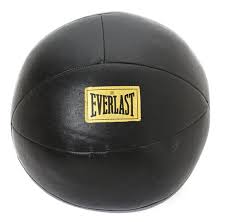
7. Medicine Balls – Can be found at Sports Authority,  or most other sporting good stores, for about $30.

8.  Sledge Hammer and Tire–  Hitting a tire with a sledge hammer is not only an incredible conditioning exercise, it’s also really fun and great stress relief!  Make sure you do this outside though!  Pick up a sledge hammer from your local Home Depot or Lowes.  I got mine for about $25.  Tires are usually free.  Stop by any Tire and Auto shop and ask them for a used tire.  Since they are disposing of them anyway, they are more than happy to allow you to take one.   

As you can see, each piece of equipment is portable, able to cover a wide array of exercises and levels of ability, and, with the exception of clubbells and kettlebells, are all inexpensive to make or buy.  Which one is best?  All of them and none of them, depending on the specific goals you set for your health and fitness.  They are all tools in the Warrior’s arsenal to be used as needed.  Stay tuned for more information as to how the Warrior Fitness Training System utilizes all of the above fitness equipment!