5.5 Principles for More Effective Striking in ANY Martial Art

Part 1 of this series, Conditioning the Fists for Striking can be found HERE.

Being able to strike with power and precision involves a lot more than merely knowing the technique. Practice must include these principles of effective striking techniques for all martial arts…

1. Whole Body Power 

All movement in real life happens in three dimensions, so why train exercises that only incorporate one or two? Training muscles in isolation, unless it is used to rehab a specific injury, range of motion, or strengthen a particular muscle to add to the whole, does not work in martial art.

Our strike conditioning exercises must train movements in three dimensions utilizing diagonal, rotary, and angular strength, as well as prime moving muscles.
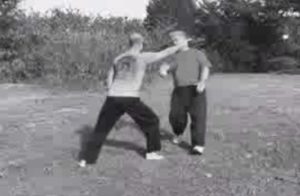
2. Stored Elastic Energy (SEE) 

Stored Elastic Energy is basically the potential energy stored in tendons and connective tissue as a way to power movement.

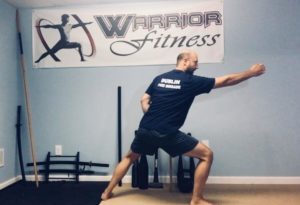
An easy exercise to begin to feel stored elastic energy is to stand in a natural stance with feet shoulder width apart.  Bend your right arm and raise it up to shoulder height as if you were about to throw the most telegraphed punch in history (don’t worry, it’s just an exercise).  Now, lead from the elbow and pull your fist back.  Allow your torso to rotate, but keep the feet planted and the hips facing forward.  When you reach the end of your range of motion, hang out there for a second and feel the tension (torque) on the spine.  Now simply relax and release that torque to throw the punch.  Don’t add any driving forces with muscle.  You can’t propel it any faster; you’ll just slow it down.

Feel it?

Try it again.

Do it with the other arm.  Remember the feeling.  This is stored elastic energy (SEE).

The point here about creating torque or stored elastic energy (SEE) in the spine is essential in being able to move powerfully without winding up or telegraphing the movement.

If you are having trouble feeling it, try to exaggerate the movement.

Make it much larger than necessary to study the feeling. It should feel like a tension in the lower back near the bottom of the spine. When this tension (torque) is relaxed (released), the movement happens.

3. Structure / Kamae 

Many people tend to use the terms alignment and structure almost interchangeably but in actuality, alignment is a component of structure.
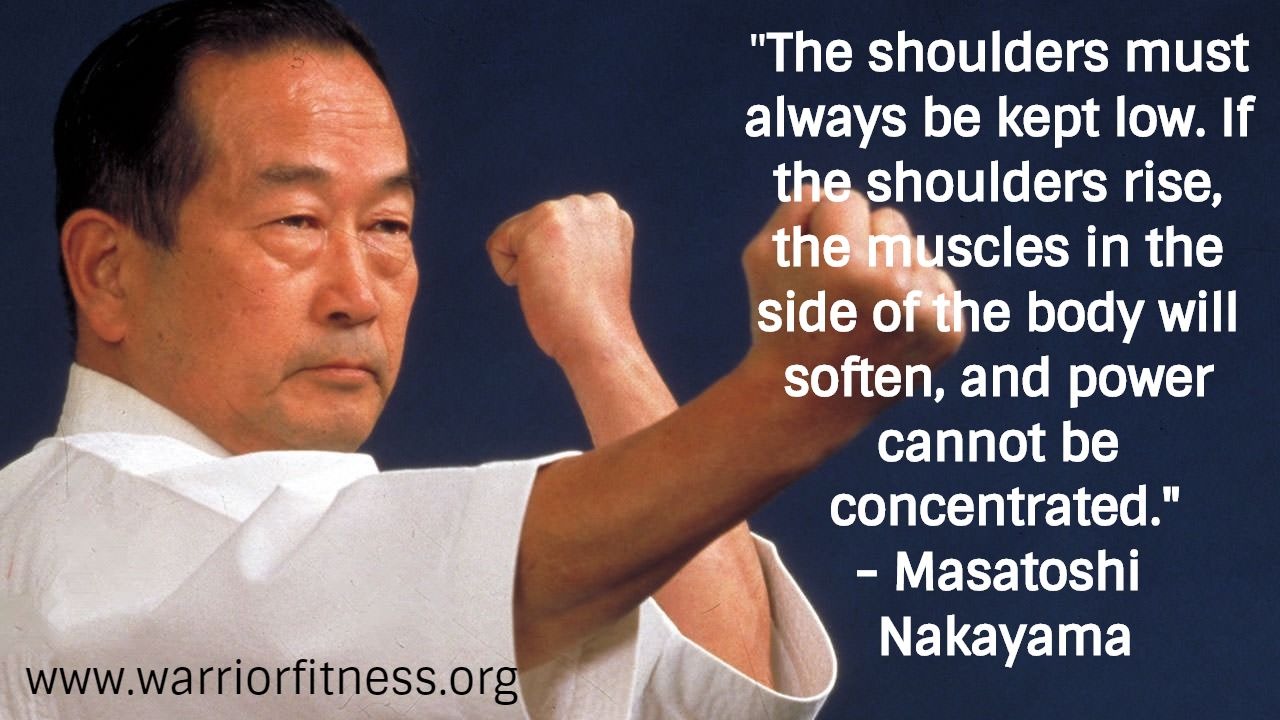
For example, looking at a natural standing posture, good alignment would be:

  • Crown up
  • Chin down
  • Shoulders packed down
  • Spine lifting up (through crown)
  • Spine pulling down (through the sacrum)
  • Hips under shoulders
  • Knees under hips
  • Mid-foot balance
  • Chest is relaxed
  • Butt not sticking out nor is pelvis tucked under
  • Knees are over the toes
  • Weight evenly distributed (50/50)
  • No leaning forward or backwardThis puts the whole body into proper alignment.
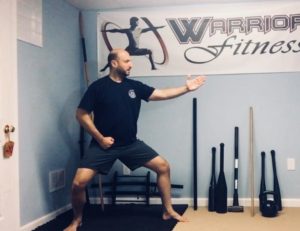


Structure also includes (in my lexicon) the balance of tensions within the body’s soft tissues. The bones act as compressive struts pushing outward from the center while the soft tissues (fascia) act as the stays pulling inward towards the center keeping the tensional balance in the body.

4. Breathing 

How often do you think about breathing as it relates to striking?

Yet it is absolutely essential to maintain proper breathing when in combat or simply hitting a heavy bag, mitt, or an opponent. Lack of breath control affects the rest of your body and hinders your overall performance.
5. The S.A.I.D Principle 

Why are all the above ideas important to understand in relation to striking and martial movement?

The SAID Principle – Specific Adaptation to Implied Demand says every activity that we repeat consistently causes an adaptation in the body.

The critical thing to note here is that it does not matter at all how we value this adaptation.  It can be something that we want like how healthy exercise increases lean muscle mass and burns excess fat, or it can be something we do not want like how eating junk food to an extreme causes our body to adapt by putting on weight.

Both of these are examples of activities that cause adaptations in the body.   Our goal is to train adaptations we value highly like the enhanced neural connections in our nervous system that increase our skill level. Keep this in mind when training.  We do not want to train bad habits!

5.5 Elements of Efficiency 

Efficiency is defined as the amount of useful work divided by the amount of total work.  In other words, how much effect are you producing for the amount of effort you are expending?

  • Ever see a batter “swing for the fences” only to completely miss the pitch?
  • Ever see someone try to pick something up that is really light, but they believe is heavy?
  • How about watching someone using the general whole-body tension we discussed above trying to hit a heavy bag?

How much effect, i.e. force from the strike embedded into the target, is gained from the huge effort expended?

You must train to have your strikes be both effective (devestatingly powerful) and efficient (uses the least amount of force or energy to accomplish the movement). Only then can you be said to have mastered the art of striking!


Learn exactly how to upgrade your striking skills in ANY martial art with these resources from Warrior Fitness Training Systems…
The Downfall of Functional Training & How to Fix It

What Functional Training Has Become…

The field of functional training has degenerated into seeing who can perform the most meaningless stunt while looking the coolest (ahem… sometimes).

These exploits may look impressive to the uninitiated or easily amused, but they have virtually no carry over and zero application to movement in real life, on the sports field, or on the combative battlefield.

Not to mention their capacity for injury is high while their actual true functionality is exceedingly questionable…

Worse yet their flamboyancy distracts from, and gives a bad name to, real progressive, incremental functional strength training that has been the province of great warriors, strongmen, and great athletes for centuries. This leaves us in a sad state of affairs.

What Functional Training SHOULD Be…

Functional training should instead focus on developing multi-planar, multi-joint movement. It should increase stability, whole-body power, and enhance resistance to injury. It should multiply force production ability for all martial and athletic movement as well as stimulate neuromuscular patterns required for those movements.

Functional training should create a safety valve in ones movement for when the unexpected happens and movement goes awry.

It should provide the functional training practitioner with the ability to absorb and re-translate force without chance of injury.

The training methodologies that were developed and past down by warriors were the ultimate in what we today call “Functional Strength Training”. Certainly, what could be more functional than specific exercises and training methods devised to excel and survive in mortal combat?

These methods still survive today and are the province of a rare breed of modern warriors, martial artists, strongmen, and strength coaches….

Like the tempered steel of the warrior’s blade, the true art of functional strength training has been forged over the centuries by the fires of preparation for life and death combat.

How Do We Fix It…

The first part of fixing the mess of modern functional training is to answer the uncomfortable question – functional for what?

Let’s face it,  none of us really need to be good at pressing 5 lbs dumbbells while standing on a BOSU ball with one foot wearing an altitude mask. 🙂

So what do we need the outcome of purposeful training to be so that it will benefit and improve virtually all human movement?

We need connected whole body strength and power that seamlessly integrates with any martial, athletic, or life event endeavor. We need training that increases mobility, enhances strength, improves resistance to injury, and provides a foundation for excellent health and pain-free movement into old age.

What are we training to become more functional for? Living.

How Do We Train It?

Functional exercise, as we discussed above, is defined as multi-planar, multi-joint movement, in other words, three dimensional movements.  Which means that swinging a weight – club, mace, sledgehammer – is one of the most effective ways to truly train functional strength.

For the warrior, since combat always occurs in a volatile and unpredictable atmosphere, training must prepare the warrior to adapt and overcome.

You cannot be strong in only one direction or just one plane of movement – you must possess all around strength that can be brought to bear no matter what position or weird angle you may find yourself in, and having to move from.

Since sledgehammers are common place and easy to obtain at the local hardware store, they make an ideal functional strength training tool.

Using a sledge hammer in your training is a great way to develop the movement pathways used in striking. It will aid in force production, increase angular, diagonal, and rotational strength throughout the trunk and core, and provide an excellent grip strength workout all at the same time.

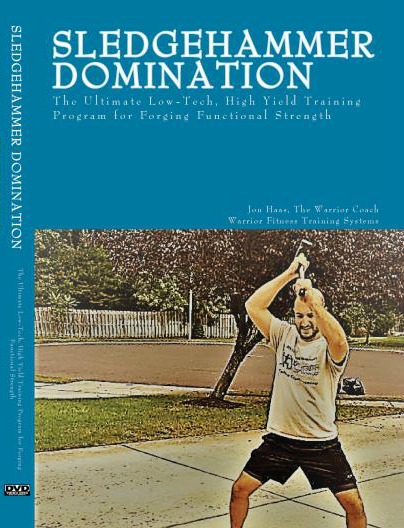
Sledgehammer Domination – Volume 1

“The Ultimate Low-Tech, High Yield Training Program for Forging Elite Functional Strength”


How to Train for Chaos without Making Training Chaotic

The current rage in conditioning training, especially when talking about combat conditioning, is to completely change up the workout for each and every session. This has the advantage of keeping the training fresh and throwing the body into chaos each time so it never knows what hit it.

The hardcore advocates of this type of conditioning stress that this environment will create a very broad and general fitness that prepares the trainee for almost every physical contingency, both known and unknowable.

This enables one to prepare for the chaos and uncertainty of combat by training in an uncertain and chaotic environment.

samurai

Seems to make a lot of sense on the surface, right?

However, one of the glaring problems with this type of training is that random training yields random results. It’s difficult to measure progress when the parameters are constantly shifting.

In order for the body to produce an adaptation for improved performance in life, sport, or martial art, we must apply specific stimulus as per the SAID Principle (Specific Adaptation to Imposed Demand). This basically means that the body adapts with a specific type of fitness to any demand which is imposed on it. When the same exercise is performed for too long, the body adapts to the stresses of each set and the adaptations or returns get smaller and smaller. Once it has adapted to the stress, then it’s time to change or increase the stress or else we fall into that trap of diminishing returns.

Usually though it takes the body a period of 4-to-6 weeks to adapt and then it is advisable to begin changing exercises. This does not mean that we need to completely throw away everything we have been doing; far from it. An exercise or drill can be changed by increasing intensity, increasing volume, decreasing rest periods, or increasing complexity or sophistication.

What this suggests is that a properly organized training program with incremental progression of increasing complexity and sophistication may actually prepare the body better than a set of random skills strewn together with a nebulous outcome in mind.

Yet we still crave the chaos, right?

So why not have it both ways?

Let’s program chaos into our training to instill the element of surprise and shock to the body. But, and this is key, we will ONLY do it once a week. This is enough to add the benefits of chaos training without suffering the negative aspects. The rest of the time you must follow a properly programmed training regimen to ensure all the multifaceted fitness qualities required to keep you strong, agile, mobile, and hostile are being met.

How do we program the chaos?

One of my favorite ways to do this is by picking 5-6 different exercises and setting an interval timer for 5 rounds of 3 minutes or 5 rounds of 5 minutes (depending on your fitness level). Instead of setting a rep scheme, move from one exercise to the next in any order you like performing as many or as little reps of each exercise.

If you need active recovery during the round or simply can’t figure out what to do for a few seconds – do Jumping Jacks. The only caveat is that you must not stop for the duration of the round. Take a 1 minute break between rounds to recover your breathing, then go again.

Here’s an example Chaos Training Workout:

1. Kettlebell Swings or Snatches
2. Jab/Cross Combo on Wave Bag
3. Sit Thrus
4. Med Ball Slams
5. Sandbag Burpees

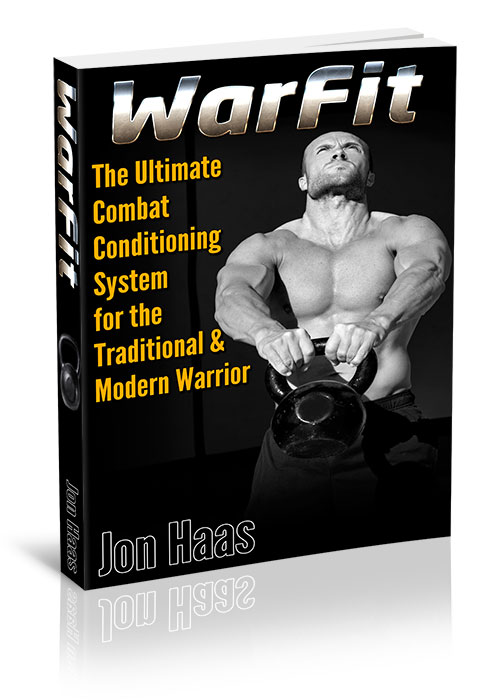
My brand new WarFit Combat Conditioning Program is perfect for the warrior athlete who wants to build superhuman strength, endurance, and conditioning…

warfit3d1


We Were Once Warriors…

We Were Once Warriors…

For centuries the warrior has been the archetypical model of physical fitness and power.  This is due to the extreme nature of their training and overwhelming odds that they must have had to go through waging war in the ancient world.

The multifaceted development of skills required for the warrior’s brand of life and death combat is second to none.

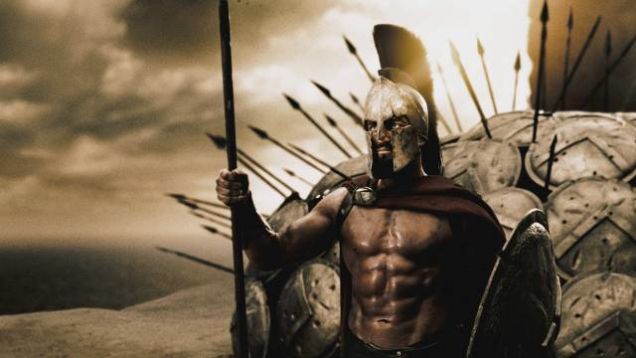
Spartans


Warriors needed to be able to carry heavy loads over long distances on uneven terrain, wield heavy weapons while wearing armor, wrestle and engage in other forms of hand-to-hand combat, fight for hours or perhaps even days on end in mud, sweat, and blood, all while continuing to display power, coordination, agility, and speed.

This was not a game with a medal or trophy at stake, but their lives and the lives of their comrades in arms, not to mention the entire village or tribe who were relying on them for protection.  All of this placed immense demands on the warrior physically, mentally, and spiritually.

Today’s Training from Yesterday’s Triumph

The skills we know today as fitness, or strength and conditioning, depending on whether your term is all inclusive or a specific subset, all evolved over time from man’s need and ability to wage war.  In fact, one of the earliest examples of sport in the western world is from ancient Greece; we now call it the Olympics.  These early games were created as a way for warriors to channel their aggressive and competitive natures, while simultaneously allowing them to hone their battle skills, in times of peace.

So we can see from this quick look back in time that originally almost all athletics and sport competitions were based on the martial skills of the warrior and utilized as a way to sustain and practice those skills.

Now, working backward this time, is there a way to reverse engineer a warrior’s training regimen and use it to improve the components of martial skill, conditioning, AND athletic performance?  Absolutely!!

Try This Warrior Workout on for Size

1)  Heavy Sandbag Carry (Zercher carry, bear hug carry, over head carry) – 3 x 300 ft.

2A) Pike Push-ups on Fists – 4 x 10

2B) Mixed Grip Pull-ups (change grip each set) – 4 x SM

2C)  Loaded Airborne Squats (load up with clubbell, Kettlebell, dumbbell, or sandbag) – 4 x 5/5

3)  H2H Touch & Go Kettlebell Swings x 100

If you train in MMA…

NOW go punch, kick, knee, and elbow a heavy bag or have a partner hold focus mitts for 3 rounds x 3-5 minutes each!  How is your performance?

Or, if you’re really daring and want to test your mettle, now is the time to go spar with a completely fresh opponent for 3 rounds of 3-5 minutes!  How has your performance changed?

If you train in Bujinkan or other form of combatives…

Do the same as above but utilizing the basic techniques of your particular style.  For Bujinkan peeps that means try out all the Kihon Happo on a fresh uke!

My brand new WarFit Combat Conditioning Program is perfect for the warrior athlete who wants to build superhuman strength, endurance, and conditioning:


Stronger Than Fear

Are you stronger than your fear?

Or do you stay in your comfort zone and allow fear to get the better of you?  You can tell every time when you start to push against the edge of your comfort zone – you begin to feel afraid.  Maybe you don’t call it fear.  Maybe it’s resistance.  Maybe it’s discomfort.  Maybe it’s just a queasy feeling in the pit of your stomach that goes away if you you stop pushing forward.  Call it what ever you want.  I know what it is.  I call it by it’s true name – fear.

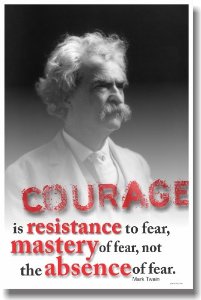
How do you become stronger than fear?  By feeling it, acknowledging it, and doing the thing you fear anyway.  As Mark Twain once said, “Courage is resistance to fear, mastery of fear, not the absence of fear.”

Mark Twain Courage

One way to face fear and push past it is by enduring brutal physical training.  This type of training is NOT for the faint of heart.  However, when you go through it, face it, and come out on the other end, you are a stronger person – mentally, physically, and spiritually.

Here is a sample of one conditioning workout with an MMA fighter I am currently training:

Fighter Conditioning at the Cave

Guest post by my friend, Coach Frank DiMeo!

Ever since my early days of martial arts training I have always looked for ways to become more effective.

Much of the best information I gathered over the years came at a painful, and often humbling, price.

No matter what type of fighter you are, being stronger and faster is essential. Being able to “go the distance” is also a must as is developing greater stopping power in your strikes and kicks. Continue reading