The fit Warrior requires a strong body to move freely in the world. Bodyweight conditioning, strength training, fat loss, flexibility, martial arts, yoga, and joint mobility are covered here.
There’s an 8-second strength and muscle-building trick once used by a Russian spy to literally bend steel jail bars and rip open his heavy shackles to escape prison… not once, but 4 TIMES! Anyway…
World famous strongman competitors and legendary bodybuilders like Arnold Schwarzenegger have used this technique to make their most stubborn body parts more powerful, dense, and eye-popping…
Even some of the “baddest” cage-fighters like Connor McGregor and Georges St. Pierre…
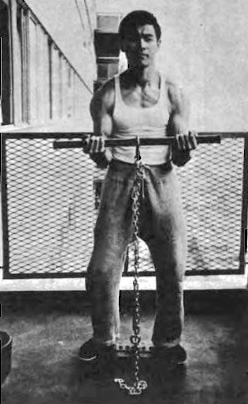
And history’s best martial artists like Bruce Lee and Jean Claude Van Damme have used this method to build lethal force that can instantly put an end to any fight…
I’m talking about a specific kind of isometrics. Which…
According to a recent study published in the Journal of Applied Physiology this method boosts strength by 45% while increasing muscle growth by 5%…
WITHOUT having to perform endless amounts of sets and reps that bombard your joints with painful inflammation and injury…
Basically, adding this one max static muscle stimulation technique to your workouts will have you building muscle FASTER…
While keeping you “in the game” for decades to come. Check it out…
As we discussed in the previous post (see here), all martial movement must be based on a platform of both mobility and stability. Today we will discuss stability.
Kamae is much more than just a stance or ready position. It is the platform from which all movements are made and from which all techniques are delivered. Your kamae is quite literally the foundation upon which your entire martial art practice rests.
A weak, or structurally flawed, kamae will limit the amount of power delivered and reduce the effectiveness of every technique employed. Conversely, a strong kamae is the key to the effective execution of all your techniques. A strong kamae carries the support of the ground and efficiently conducts that power through the user with minimal noise creating, in effect, a transparent power.
“You can’t shoot a cannon out of a canoe.”
Water provides a very poor base of support to maximally fire a cannon ball thus it will not travel very far. This is exactly what happens with a poorly constructed kamae. So much power bleeds off in different directions that the mean effect of the movement is extremely reduced and more energy is required in order to compensate for the inefficiency.
How Do We Build a Strong Kamae?
There are many different forms of strength training but only a few, very specific, methods of strengthening the structure (kamae). The key to strengthening structure, as you will see, is training the connective tissue – fascia, tendons, and ligaments, and strengthening the bones, rather than working on muscle. The benefits of this type of training are enormous; not only does having a stronger structure increase the effectiveness of martial movement and techniques, but also acts as a natural form of injury prevention by improving the strength and elasticity of the tissues and increasing the body’s overall resilience.
We will examine 4 main ones here from the EARTH section of Warrior Fitness working on strength, structure, and stability.
Loaded Carries – These provide a unique challenge to the body as they are a type of moving isometric exercise. Kettlebells or dumbbells are a great place to start, but loaded carries can be done with just about anything.
There are 3 basic loaded carries we will discuss here:
Farmer Walk – Hold 2 kettlebells at the sides and go for a walk. Try to maintain a neutral balance and move from center.
Rack Walk – Hold 2 kettlebells in the rack position and go for a walk. Try to maintain a neutral balance and move from center.
Overhead Carry – Hold 2 kettlebells overhead and go for a walk. Try to maintain a neutral balance and move from center.
Static Holds – Unlike lifting or carrying, static holds can be done anywhere with zero equipment. They also place a great emphasis on strengthening connective tissue for supporting the body.
Static Kamae Hold: Pick a kamae and hold it for time. The goal here is to relax in position and allow the connective tissue to do the work, not the muscle.
Static Push-up: Hold the top, middle, or bottom portion of a push-up for time. The goal here is to relax in position and allow the connective tissue to do the work, not the muscle.
Partial Lifts – Partials allow you to develop the connective tissues and bones in a way that full range of movement lifting cannot. By doing partials you are supporting more weight than you would be able to in a full range lift.
Push Testing – The push test is a very practical way of testing the quality of one’s solo training for internal power. The body, when properly trained, acts as an omni-directional structure. This allows the practitioner to neutralize any incoming force by diffusing it throughout the structure rather than having to surrender to it or resist against it.
I cannot over emphasize how critical this type of training is to your development as a powerful martial artist. Not only does this type of training condition the connective tissues, bones, and muscles, but it forms the body into a cohesive unit that is both resilient and powerful.
All movement skills, especially martial movement skills, must be built on a foundation of both stability and mobility. Today we will cover mobility.
A complete mobility practice moves each joint in the body through its complete range of motion bathing it in synovial fluid.
Movement is the only way your joints get nutrition!
Many trainers and coaches tend to look at the current rage of joint mobility protocols as recent innovations in sports science and training. Everyone is talking about mobility for health, mobility for prehab or injury prevention, mobility for warm-ups, mobility for fending off the ravages of aging. Everyone is talking about the benefits of increased range of motion for sport performance and martial art training enhancement. And, just to be perfectly clear, this is a good thing. They are all correct. Mobility training is the rage for a reason.
However, as with many “new” types of training methods, mobility work is an ancient idea come full circle.
This is not a new idea. In fact, Hua Tuo (2nd century AD), one of the patriarchs of Chinese Medicine and creator of the famous qigong set, The Five Animal Frolics, once said:
“Just as a door hinge will not rust if it is used, so the body will attain health by gently moving and exercising all of the limbs.”
Hua Tuo’s The Five Animal Frolics model movements from the crane, bear, monkey, tiger, and deer. Each animal emphasizes different health benefits and you can choose a specific animal for specific results. The movements form arcs, spirals, waves and spins, in order to accommodate all ranges of motion for the body.
Now what does that sound like?
Health by moving and exercising all the limbs… hmm… reminds me of a certain new exercise protocol called joint mobility. And this quote from Hua Tuo is just one example. There are many more within Chinese Medicine as well as Indian Yoga that all point to the same idea – mobility is essential for health. Or, more crudely but succinctly put, move it or lose it.
Each session can range from a quick 5-minute recharge to a 30-minute in-depth deep practice. It’s up to you and how your body feels on a particular day.
For example, did you do a ton of heavy lifting or a super intense metabolic conditioning session the day before?
Maybe a longer, deeper mobility session is required to aid in restoration and recovery.
Or, did you just get out of bed and maybe only have 5 minutes before you have to get ready for work? A 5-minute quick-n-dirty mobility session will charge you up and get your body moving (literally!).
Daily Practice
I have been performing my mobility practice almost every day for over 15 years now. However, there have been a few times when I decided to forego it for several days in a row just to see if I could notice a difference. After 3-4 days without it I began to notice. Muscles were tighter. Movements were less fluid. Joints were crunchy. When I finally stopped my no mobility experiment on day 5, the contrast was amazing!
In my experience, mobility training and breathing exercises are the biggest bang for your buck daily practices that will only reward you more and more with each passing year.
Benefits of Mobility Training
In no particular order, here are some of the benefits of mobility training:
Lubricates joints and allows them to receive nutrition through synovial fluid
Aids in removal of toxins
Reduces joint pain and inflammation
Increases range of motion (flexibility in motion)
Increases energy by reducing unconsciously held tension
Prehab for injury prevention
Mobility is foundation of all sport, athletic, and martial movement
Decreased mobility leads to increased pain and stiffness
For your daily training, here is my own personal full-body joint mobility routine. Implement this first thing tomorrow morning and feel amazing all day long!
“Remember that mastery is not attained once after a lifetime of practice, but earned every day.”
– Jon Haas
Usually when we think of someone who is a master, be it a master martial artist or the master of some other craft, we think of them as attaining mastery at the end of a long lifetime of practice.
But mastery is NOT something that’s attained once after years or decades of training – mastery is something that is EARNED every day!!
You can be masterful in one moment and then a fumbling fool in the next (ask me how I know!).
The goal of becoming masterful isn’t to wait until some distant future when every move you make is perfect and every word that comes out of your mouth is sage advice, it’s to consciously create those moments of mastery every day until you have more of them rather than less of them.
Daily practice is the key.
Do you ever think about what it would be like to be a master martial artist?
Not just to be awarded the title “master” but to really and truly embody all of the sublime skill of martial mastery at the highest level of human achievement…
What would it feel like to know, without a shadow of a doubt, that you could easily control and subdue the most violent opponent with the most minimal effort, like a lion playing with a cub?
What if I told you that mastery is NOT something automatically attained after a lifetime of practice, but is instead conferred only upon those rare few individuals who, through their own efforts, take consistent, specific daily actions to achieve it?
Then mastery would not be just a far away, imagined future state, but instead a real and attainable goal built by taking action every day, right here and right now.
Remember This
Remember this – it is critical to your success – EVERY single legendary martial master: Musashi, Ueshiba, Bruce Lee, Kano, Takeda, Takamatsu, Gracie, Hatsumi, etc…
ALL of them began as unskilled, know nothing novices, white belts without a clue.
Their consistent daily training formed them, forged them, into the revered and feared masters that we know today.
“What one man can do, another can do.”
You can choose to follow in their footsteps. You can choose to be masterful, to be legendary.
However, as you follow them, do NOT seek to become them – instead, seek what they sought, the process of mastery.
For millennia breath control exercises have been the secret weapon of advanced yogis, qigong adepts, master healers, and warrior-monks to forge phenomenal strength, super human body control, and extraordinary vitality.
When disciplines such as yoga, Traditional Chinese Medicine, Internal Martial Arts, and Qigong have been successfully used over thousands of years to heal the sick, strengthen the weak, and bring energy to the depleted, you don’t question them – you study them!
While obviously these disciplines have their own unique modalities and practices, working with the breath is the common thread that runs through each of them. And there’s a very specific reason why each have evolved sophisticated breathing exercises that are used with such a high degree of success.
Breathing as a Bridge
Breathing is the only function of the human body that bridges both the autonomic and the voluntary nervous systems. You can breathe on complete autopilot all day long without ever consciously thinking about, and yet you can also choose to take a deep breath, exhale sharply, or even hold the breath at any time.
Herein lies the secret of breathing exercises – because it spans both sides of the nervous system specific breathing techniques are able to influence things such as heart rate, blood pressure, muscular tension, and stress levels.
Over the centuries, adepts of these disciplines (and others) have created literally hundreds of breathing exercises that have been consistently shown through practical experience to…
• Enhance whole body strength
• Increase lung capacity
• Reduce stress
• Improve endurance
• Fire up the body’s bioenergy
• Increase flexibility and range of motion
• Improve pain tolerance/reduce pain
• Build resilience and resistance to disease
• Improve performance under stress
• Not to mention relax, revitalize, and rejuvenate the body through meditation and relaxation exercises!
Relaxing Breath (Square Breathing)
The basic premise of our ability to influence the autonomic nervous system is that inhalation increases heart rate, which subsequently increase blood pressure, to a slight degree, while exhalation lowers heart rate and blood pressure to a slight degree. During our normal cycle of breathing, these changes are too minute to register, or even notice. But, by gradually lengthening our breath and extending the pause before inhaling and exhaling, we compound the effect. Stand in a natural position or sit comfortably on the floor with spine straight to perform this exercise.
1. Begin by exhaling through the mouth for 5 seconds.
2. Do not inhale. Try to extend the breath pause for 5 seconds.
3. Before tension begins to creep in, inhale for 5 seconds.
4. Hold the breath on the inhale for 5 seconds.
5. Repeat the cycle 10 times.
6. As this becomes easier, and your capacity expands, try increasing the duration to 6, 7, 8 seconds.
Breath Walking Meditation Exercise
Energizing Breath
In this breathing exercise we will utilize a protocol founded by yoga and improved upon by Russian sport science and martial art. Here we will divide the breath into 3 levels: clavicular (upper level), intercostal (mid level), Diaphragmatic (lower level). This exercise will focus only on the clavicular, or upper level. Use this powerful breathing exercise to fire up your energy and prepare your body for training!
1. Exhale through the mouth in a short, quick burst by compressing the upper chest.
2. Do not actively inhale. Allow the inhale to happen by relaxing the muscles in the chest.
3. Repeat rapidly 20 to 40 times.
4. Build up to where you can perform continuously for 60 seconds.
5. If you become dizzy, stop and sit down and breathe normally!
60 Second Energizing Breath Video
Here is another fantastic use for breathing….
Restoring Breath
This exercise is literally a life saver when doing high intensity interval training (HIIT) workouts! It can be used in between exercises as well as in between sets, during the rest period, and also at the end of the workout to normalize breathing and dramatically lower heart rate.
1. Forcefully exhale as deeply as possible by rolling your shoulders forward, tilting the pelvis up, and contracting the core strongly.
2. Pause before the inhale for a few seconds.
3. As stated above, do not actively inhale. Allow the breath to be sucked back in through the nose as your body returns to a natural standing posture.
4. Repeat for about 60 seconds, or as long as needed.
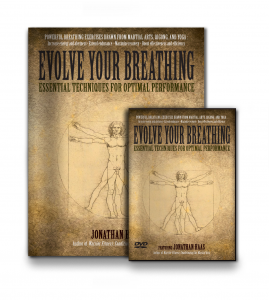
To learn more about how you can incorporate powerful breathing exercises into your own training, check out my Evolve Your Breathing Program.
Also, make sure to check out my review of Logan Christopher’s book, Upgrade Your Breath.
To learn more about the Warrior Fitness Training System, check out the free mini-course I have provided below…
The other day a student said to me during training: “This is hard.”
My reply was, “Well of course it’s hard. You don’t come to me to learn how to do things you’re already good at, do you?”
But why is this difficult?
In my experience,training is hard for approximately 3.5 main reasons…
1. You are learning new skills. It’s hard to be good at movements, exercises, and concepts that are new to you. Your nervous system must adapt to the new and different stimulus and create, or sharpen pathways to build competence and skill.
2. You must work on your weak points. Working on things you are already good at is fun, but the only way to truly become all-around strong is to eliminate your weak points.
3. Your ego. No one wants to look inept or silly. But the only way to become better means that we must put ego aside in order to learn.
3.5. Superficial Expert Status. The amount of information available today gives people immediate access to any body of knowledge out there, no matter how obscure, in a matter of seconds. We have all become SMEs – “Superficial Matter Experts”. We think that just because we know “about” something we actually understand it. No one wants to spend the time and effort required to learn something deeply.
But these reasons are exactly why we need to train. And why we need to train with people who have greater, or more specialized knowledge, higher levels of experience, and greater levels of skill than we do.
This is why I still train with my martial arts teachers. This is why I still have a strength coach. This is why I participate in masterminds and have business coaches.
Because I know that I need to be pushed and challenged in order to grow, just like I must push and challenge my students and clients in order for them to grow.
Push-ups should build all-around 3 dimensional strength from every conceivable angle and hand position. If you’re bored with your current push-up regimen, give these a try and let me know what you think!
Screwing Push-ups
Knife Push-ups
Wrist to Fist Push-ups
How to Train Wrist to Fist Push-ups
Multi-Directional Push-ups
Whole Body Plyometric Frog Hop (not technically “push-ups” but close enough and fun!)
The Aiki Push-up
Read more about how to use different push-up variations to condition your fists for striking HERE.
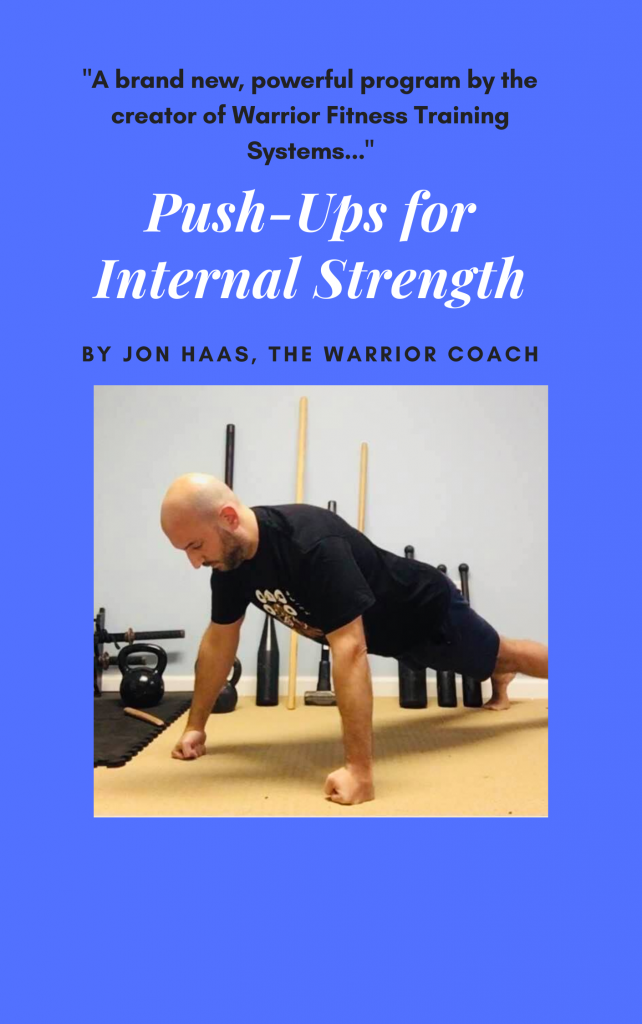
Learn the secret step-by-step method used to build fierce internal strength and martial art power from a little known way to perform push-ups in the latest release from Warrior Fitness, The Push-ups for Internal Strength Program
If something is worth doing, it’s worth doing every day.
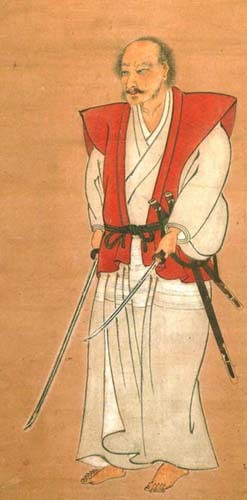
Musashi instinctively knew this. He became the greatest swordsman Japan ever produced by practicing what he preached.
The concept of forging oneself through the rigors of daily training was so important to him that he made it a rule for those who would follow his way of martial strategy.
But this article isn’t about Musashi, it’s about you and tapping into your own innate greatness.
Forge Yourself in the Way
Forging must be done daily. There is no way to forge body, mind, and spirit into a finely honed blade without constant hammering and firing through the steel tempering process of training.
Half-assed training won’t cut it.
Training only when you feel like it won’t get you there.
Training without a properly focused strategy will not work.
Training the same way over and over again and expecting different results is the definition of insanity.
So What Works?
The only answer to the question of how does one become a great martial artist (and I’m assuming you want to be great otherwise you wouldn’t be reading this blog…) is this – TRAIN MORE.
But, like anything else, there’s a caveat.
Train smarter AND Train Harder.
As I always say, there are no secret techniques but there ARE secret (or less well known) training strategies that will improve all aspects of martial performance in much less time.
Training more and training harder are NOT the only variables. Anyone who thinks this way is an amateur.
The art and science of becoming stronger can be broken down into 2 main methods.
The Addition of Driving Forces (Yang), and
The Subtraction of Restrictive Forces (Yin)
When most people train for strength they focus solely on the Yang of Strength – the addition of driving forces.
But this will only get you so far…
It’s like driving a car around all day with the emergency brake on. You can still get where you need to go, but that extra, unnecessary drag is killing the car’s performance and guzzling gas (consuming energy).
What is the hidden drag in your performance?
Residual muscle tension, or tonus, is the continuous, passive partial contraction of muscles in the body that aids in posture and support. Any type of strength training exercise, stress, fear, and trauma, will all cause an unwanted and unnecessary increase in the normal residual muscle tension of the body.
Usually this extra tonus goes unnoticed, or worse is simply deemed an acceptable and natural side effect of living. The problem with this added tension is that the continuous contraction of muscle throughout the day, ever day, is using up energy. Energy that can, and should, be available to us is being siphoned off thereby putting the brakes on our performance.
Rather than increasing our energy, freeing our movement, and allowing us to access our full strength potential as human beings, the consistent focus on the Yang of Strength makes us literally muscle bound.
The Yin of Strength
The Yin of Strength is how we strategically and systematically remove those restrictive forces to reveal our true strength potential as an Integrated Human Being.
What specific recovery methods are used?
Mobility Training
Yoga Postures to act as compensatory movement
Vibration Training to literally shake out the tension
I was scanning the posts of a fitness forum the other day, and I came across something that confused me a bit.
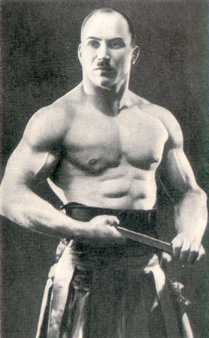
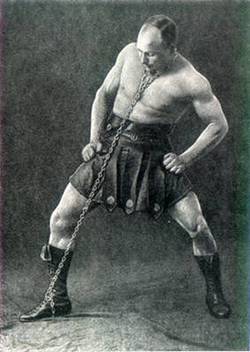
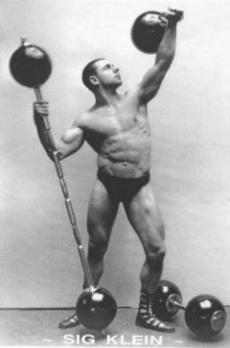
The post was regarding the physique of one Sig Klein, you may have heard of him, and how a modern bodyweight trainer could achieve a physique comparable to such a strength legend.
What could have been a great platform to discuss the merits of old school training methods became a complete misunderstanding of their use. For instance, the poster spoke on how lever work and static training lacked appropriate intensity for muscular growth, despite the incredible physiques that gymnasts possess above most other disciplines of fitness.
He furthermore went to say how he had trained with gymnasts before, and noted that they rarely trained to exhaustion, and more for technique than for musculature; therefore, he wanted a method that would help him develop the musculature, regardless of technique.
Funny that.
For, you see, one of my first lessons in biology was that, even on a molecular level, function begets form. The function of an organelle determines the way that it is structured.
Why wouldn’t it be the same on a macroscopic level? Gymnasts, traceurs, rock climbers, and martial artists all train for function over form, and they offer some of the best physiques the training world has to offer.
If you truly want a physique like Sig Klein with the strength to boot, training for function is key.
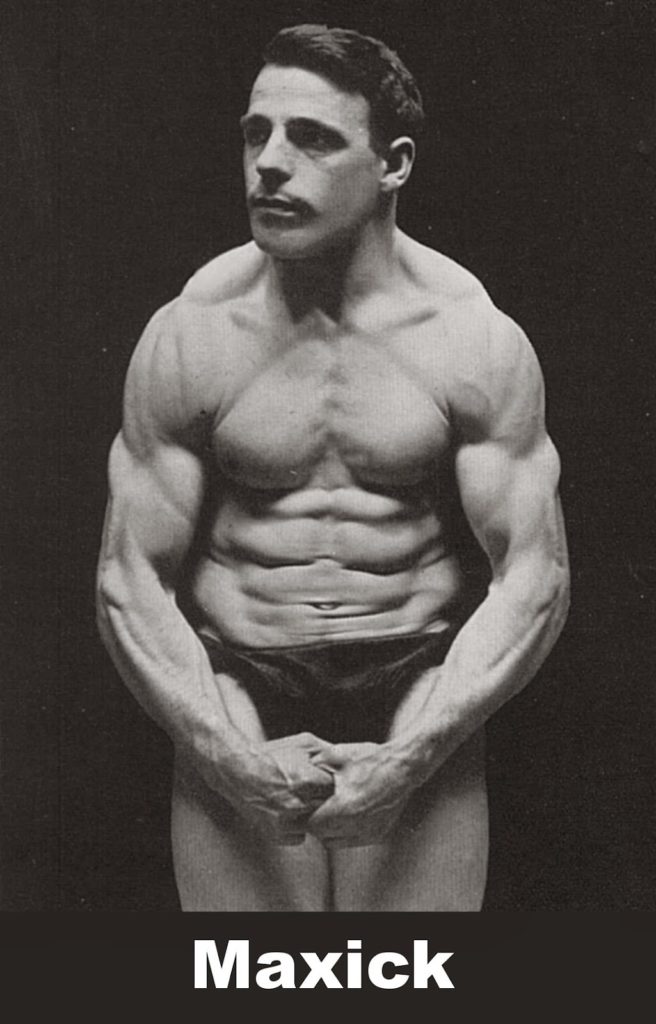
Furthermore, the poster said that the gymnasts never trained to exhaustion. From the training journals of Maxick, one of the strongest oldtime strongmen there ever were, you train daily so as not to train to exhaustion.
Your body doesn’t get stronger from training; it gets stronger from nourishment from your breath, your food, your blood and organs, etc. Many oldtime strongmen, including Sig Klein, rarely ever trained to failure. Nevertheless, they’d train their whole bodies everyday in a way that nourished their strength without fatiguing it.
Function begets form, my dear Watson.
Observe how well you function, not as a crane, tiger, or bear style, but as the functional patterns of a human, and watch your strength and physique truly begin to soar.
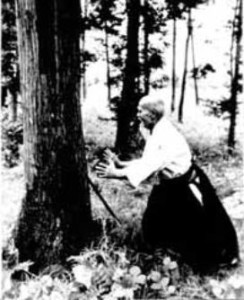 What would it feel like to know, without a shadow of a doubt, that you could easily control and subdue the most violent opponent with the most minimal effort, like a lion playing with a cub?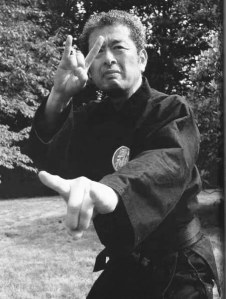

 ually this extra tonus goes unnoticed, or worse is simply deemed an acceptable and natural side effect of living. The problem with this added tension is that the continuous contraction of muscle throughout the day, ever day, is using up energy. Energy that can, and should, be available to us is being siphoned off thereby putting the brakes on our performance.
 more, the poster said that the gymnasts never trained to exhaustion. From the training journals of Maxick, one of the strongest oldtime strongmen there ever were, you train daily so as not to train to exhaustion.