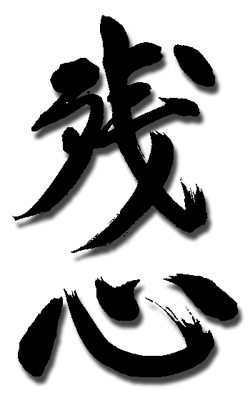
The Ninja 300 Warm-up

I thought I would share with you today the new Ninja Warm-up I’ve been using in my own daily personal practice.

Since the New Year routinely brings our training focus back to the basics I figured a great way to incorporate more Bujinkan Basics practice was to include them in my warm-up as well.

Of course, I still do my full body mobility routine as taught in the Martial Power Program and ukemi practice too. Continue reading

Kettlebell Training for Bujinkan Footwork

Recently I was asked about how to use a single kettlebell to train footwork for Bujinkan martial arts.  Here is a video I put together showing a couple different exercises to enhance stability and mobility for footwork training using the kettlebell.  Enjoy!! Continue reading

4 Tips for Bruce Lee Strength

Thanks to my friend, Jarell Lindsey, owner of Muscular Strength System, for this awesome guest blog post!

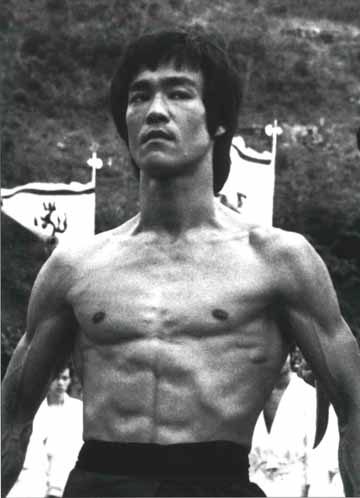
Bruce Lee is the face of fitness in America. Even 40 years after his death, he is an icon for one of the best physiques that the movie industry has ever seen, and every ounce of his flesh produced terrible strength.  At his bodyweight of around 140, Bruce Lee was known to completely demolish 300 lb heavy bags with his kicks, and punch with a force strong enough to completely splinter pieces of wood. More than power, he had dexterity, able to catch pieces of rice thrown into the air with a pair of chopsticks. He trained for function first and foremost, and the rest seemed to follow.
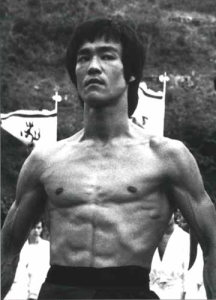
Bruce Lee

So how can one hope to even get near Bruce Lee’s strength? Just as it wasn’t for him, it will not be easy for you. In all honesty, Bruce Lee was one of those one-of-a-kind people, but that shouldn’t discourage you from training your utmost for Bruce Lee strength.  Here are four tips on how to get there:


Dedication. First, if you don’t have dedication, you can forget about the rest of these tips, because you’ll never get anywhere near the Dragon’s level of strength without using his greatest strength, which was his almost manic level of dedication to training. You better believe that if there was a single moment in the day that Bruce Lee wasn’t training, he was thinking about it. Moments like watching TV or standing in line were opportunities for extra training. A walk along the beach turned into sprints or multiple-mile jogs. Are you this dedicated to your strength? If not, that’s okay for now, because you can get there. But you’ve gotta start by doing at least one fitness related thing a day. If you can’t go to the gym everyday, walk a mile or two in the morning. If you feel up to it, make it a jog. Always think about how to improve your strength in the little things you do everyday, and it’ll become second nature.


Pyramids. Bruce Lee did a lot of pyramid training with his workouts; for a man who exercised only for function, pyramids were key. The biggest argument that martial artists had against lifting weights was that it’d make them slow and bulky. Bruce Lee proved that, by starting heavy and working your way down, you can improve strength and power without sacrificing speed. Say, for punch power, Bruce would start punching with 50 lbs for 10 reps, 40 lbs for 15 reps, 30 lbs for 20 reps and so on. So, are you ready for some intense functional strength? Incorporate these into your workouts.


Cardio. I know a lot of big, strong guys who don’t think cardio is necessary as long as they just “lift weights faster”. If Bruce Lee, who had one of the best physiques of the modern era, wasn’t too good for cardio, I’m not either. Truth of the matter is, cardio will give you the endurance to go much longer and harder in your workouts, and leaving out cardio keeps you from reaching your best fitness potential. If you’re a fighter, you know how important cardio is to keep you sane and stable for those last few rounds or that final period of the fight. It takes more that just heavy lifting to have athletic function. Bruce Lee really pushed the limit with his cardio, running 5 and 10 miles like an Energizer bunny, but the most important thing I’ve taken from his running is his interval training. Bruce wouldn’t just run aimlessly for years or sprint himself to heaven; he’d sprint, jog, shadowbox, jog and shadowbox, sprint, and repeat or switch up the pattern. This interval training is the king of cardio; it teaches the heart to be able to spike it’s activity rate from a resting heart rate more comfortably. Basically, interval cardio teaches your heart to go from 0 to 60 faster than other forms of cardio, or a lack of cardio altogether.


Isometrics. This was Bruce Lee’s secret weapon in his training, and it should be yours too. Think of isometrics as taking your body and filling it up with titanium. Isometric exercises train you from the inside out, strengthening your bones and tendons/ligaments in addition to your muscles. This is what helped Bruce Lee get that “sinewy strength” people often talk about. Isometrics are interesting because you don’t move at all during your exercise, but it gives you some incredible strength benefits. You can push or pull against an immovable object like a wall, or you can load the machine up with supra-maximal weight in your strongest range and contract against it like there’s no tomorrow. Trust me, your limbs will feel like they just got treated with adamantium, and your resulting strength will be proof of that. Happy training 🙂


About the Author  
JarellJarell Lindsey is an avid physical culturist, and owner of MuscularStrengthSystem.com. He is an advocate of isometric training, and enjoys catch wrestling, sparring, or exercising in his free time. His training advice can be found on fitness, martial arts, and health sites across the web. Coming from a family plagued with various health conditions, he has been in pursuit of the best methods of health management and strength training around since youth. He is currently studying for a Bachelors in Exercise Science, and he hopes to motivate more youth to pursue physical fitness as a lifestyle. He offers training and diet advice, interviews from leading fitness experts, and self improvement advice. Ultimately, he encourages a physical culture revolution to overcome the modern health crisis.
Are You a Martial Artist or Martial Hobbyist?

Sometimes the lines between martial artist and martial hobbyist get blurred.  How do you determine whether you are a true martial artist or just a martial hobbyist?  Here is a quick and easy way to find out…

Martial Hobbyist Quiz

  •  Do you train only when it is convenient?
  • Do you train only when you feel good?
  • Do you train only when you have nothing better to do?
  • Do you train as a way to get out of the house?
  • Do you train to socialize?
  • Do you train only when it’s fun?
  • Do you only train when you are in class?
  • Do you only train when someone is watching?

If you answered YES to one or more of these questions, then congratulations, you are a Martial Hobbyist.  Not that there’s anything wrong with that.

hobbyist

Martial Artist Quiz

  • Do you train regardless of whether you feel like it or not?
  • Do you train when you have a headache?
  • Do you train when other people are relaxing?
  • Do you train when it’s raining outside?
  • Do you train even when there is a new episode of Big Bang Theory on TV?
  • Do you train every day no matter what?
  • Do you train for life?
  • Do you train even when there are better things to do?
  • Do you train when it’s boring, repetitive, and dull?
  • Do you train on your own without supervision?
  • Do you constantly strive to get better each time you train?
  • Do you define yourself through your martial practice?
  • Do you look at everything else in life through the lens of your martial training?


If you answered YES to 3 or more of these questions, then congratulations, you are a Martial Artist.

Miyamoto_Musashi_Self-Portrait


This post was inspired by reading about a dedicated yoga practice earlier this morning and what it takes to achieve a committed, dedicated practice.  Hopefully no egos were bruised in the reading of this post!

By the way, if you want to move from hobbyist status to artist status, here is great article on How to Train More Every Day.  Enjoy!


Internally Rotate My What???

This post was inspired by a Facebook conversation started by my friend Jarell Lindsey talking about a mobility-based squatting motion with the feet parallel as opposed to splayed out (BTW, have you check out the Physical Culture Club page yet???)

There are many different ways to squat whether it is bodyweight only or with an implement such as a barbell, kettlebell, sandbag, or even another person.

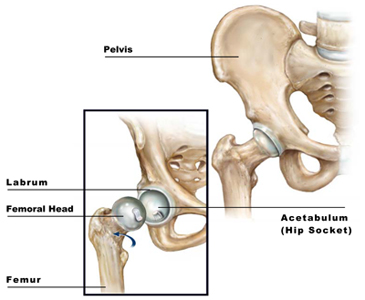
The particular squat I am talking about here is what I refer to as an Internal Rotation Squat.  The Internal Rotation Squat differs from the traditional bodyweight squat in that the feet are parallel, as opposed to opened outward, and the squatting motion is accomplished by internally rotating the femoral heads within the hip sockets rather than relying on quad muscle power alone.

hip-anatomy-new

The Internal Rotation Squat requires MUCH more mobility, control, and mind power to accomplish since you must actually teach your body how to rotate the bones of the femurs within the hip sockets.  This will take some practice!

 Why Do This?

In order to begin generating what known as Internal Power (IP), you must have mobility in the inguinal area that the Chinese Internal Martial Arts refer to as the kwa.  There is much, much more to IP than this, but having mobility in the kwa is an essential requirement.  Additionally, even if you have no interest in IP or Chinese Martial Arts, having this type of mobility and control is an asset in any athletic endeavor or martial art, regardless of style.

Internal Rotation Squat – Bodyweight Version

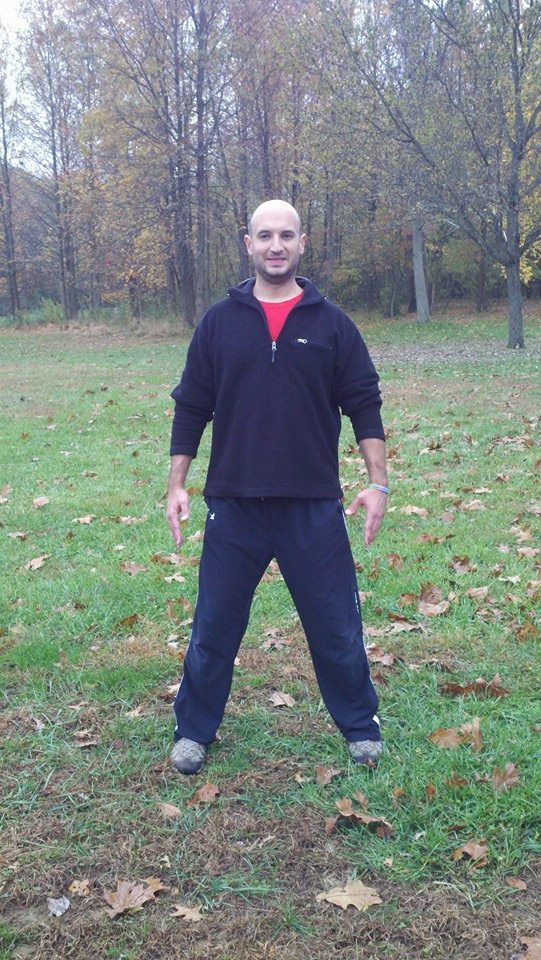
Begin with feet slightly more than shoulder-width apart.  Keep the feet facing forwards, as if on railroad tracks.

Squat1

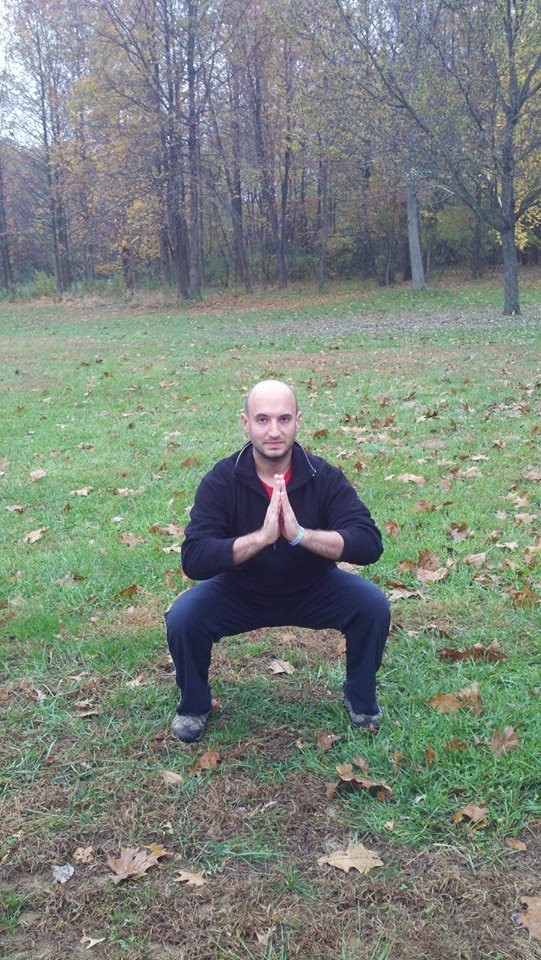
This will be important later when working on winding the tissues, but for now, just do it.  Place your fists on either side of the kwa (inguinal area) where the femur bones connect in to the hip sockets.  Use the imagery of turning your fists to aid in turning the bones.  Internally rotate the femoral heads and sit down into the kwa.

Squat2

Squat as low as possible while keeping your back straight and the weight mid-foot balance.  Pause at the bottom then externally rotate the femoral heads to stand back up.

Internal Rotation Squat – Goblet Squat Version

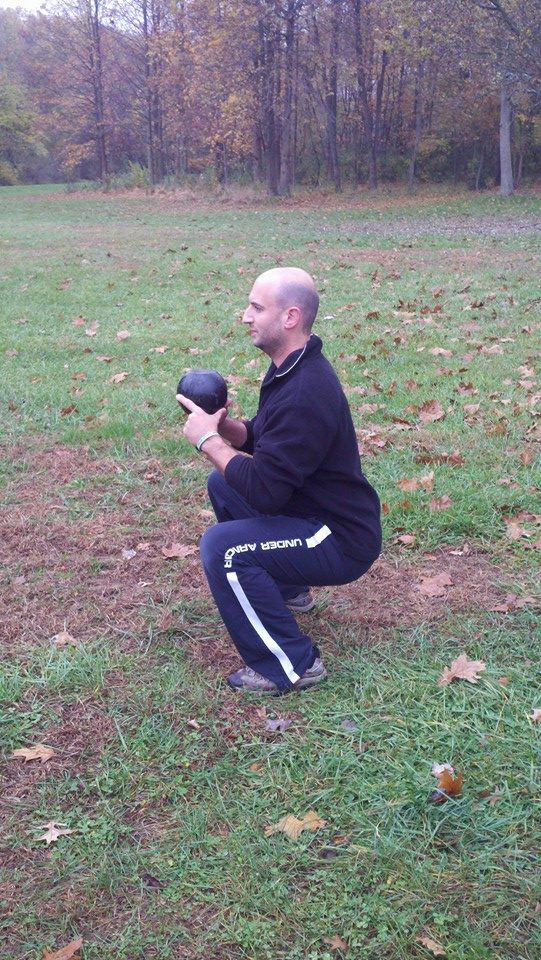
All requirements are the same as above with the addition of holding the kettlebell in front of your chest in the Goblet Squat position.  Use the weight of the kettlebell to allow you to sink further into the kwa.

Goblet Squat2

Thanks to Dan Harden for teaching me this exercise in the context of working on Aiki/IP.  Any errors or omissions are my own and not the responsibility of my teachers.  Also, thanks to Jaime for helping me to refine the squat and for taking the pictures!

Also, Dan Harden will be back in NJ in March 2014.  Details on the seminar can be found HERE <<====


Protect. Break. Leave Behind.

How can we train for the friction and chaos of battle when following a set fitness routine?

Physical preparation for combat readiness must be, by its very nature, a multifaceted approach.  If the combatants have to be ready for anything, shouldn’t their fitness regimen reflect that?  Surely the idea of training random workouts each and every day must help better prepare the person to face any challenge, right?

Well, yes and no.

As with all things, fitness is a skill.  The body must be adequately prepared at a baseline level through rigorous training AND practice to establish a solid foundation of GPP.   To suddenly subject a trainee to an onslaught of arbitrarily selected workouts is only a recipe for creating a shallow level of skill in a bunch of random areas.  It is also a great way to cause injury rather than seek to prevent it.  Random training produces random, haphazard results.

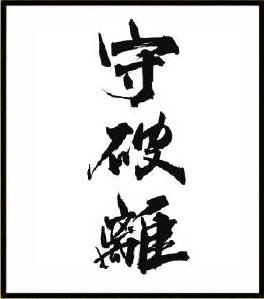
The Warrior Fitness Training methodology follows the Shu-Ha-Ri model of teaching prevalent in schools of traditional Japanese martial arts.  Shu-Ha-Ri translates to “protect the form, break the form, leave the form behind”.

shuharith

Usually within schools of traditional Japanese Budo this is a linear model where at the beginning of training the student is taught to carefully protect the form without deviation so as to template themselves to the teacher and to the martial system.  After becoming proficient in the exact techniques of the school the student is then encouraged to begin breaking the form.  And then slowly, very, very slowly, after decades of practice the student finally begins to transcend the form and leave it behind thus moving at the level of principle.

The Shu-Ha-Ri model is slightly different in the Bujinkan tradition that I study.  Rather than a strict linear progression, the model is not quite as fixed.  It may be Shu-Ha-Ri, Ri-Ha-Shu, Ha-Shu-Ri, or any combination of the three.  In this way, the student does not have to wait until he has trained for decades to learn how to break the form, nor does he always leave the form behind.  Instead the training progresses in an upward spiral where the teacher may start with the basics, circle up to breaking the form, and finally leave the form behind, followed by working again on the basics.  The same material is always looked at with fresh, new perspective and greater depth each time it is taught no matter where in the cycle it falls.  This allows for better all-around development and faster progression while still inculcating the basic forms and instilling a respect for technique.  It also gives the student the freedom to adapt to the friction and chaos of combat by learning how to both break and throw away the form when required yet still conforming to the strategic and tactical principles of the art.

How Does This Relate to Fitness?

What I have done is take the Shu-Ha-Ri model as taught within the Bujikan martial arts tradition and apply it to the programming in my Warrior Fitness Training System.  This means that within a complete training program, the student will undergo GPP (general physical preparation), SPP (specific physical preparation), TS (technical skills), and MT (mental/emotional toughness) to fully and completely prepare them for the task, goal, or mission at hand (For a more detailed description of each, please see my post on The 4 Levels of Preparation).

Following the Bujinkan model then, the progression of training may not necessarily be a straight line.  Depending on the level of the student, GPP will most likely form the bulk of the training but it will be cycled out of and back into throughout the duration of the program.  As the student progresses and increases in the skill of fitness, their training becomes blended at a higher level of SPP maybe only cycling back into GPP to shore up certain weaknesses and then coming right back out again.  This insures that the student is constantly progressing and also constantly prepared without having to resort to a random workout generator model of training.

Ready to take your Combat Conditioning to the next level? Pick up WarFit Now for Only $7!

The Myth of Stagnation

Many people like to believe that if they don’t take the time to train themselves on a daily basis their skill levels will somehow remain stagnant, like on a plateau.  That their skills and abilities will somehow remain in stasis, neither improving or regressing until the next class, the next workshop, the next seminar, or the next time they can get their Daily Personal Practice on track again.  The truth of the matter is not so cut and dry.

Here’s the Reality

Here’s the reality – if you are not taking the time to train on a consistent basis than you are steadily declining in skill.  Each practice session you skip (not miss – skip.  Skipping is a choice), your skill level decreases slightly, your abilities atrophy just a bit.  There is no such thing as stagnation.  Your body cannot remain motionless if you are alive and breathing.  Either you are getting better through your daily commitment of consistently going deeper into your practice or you are getting worse.  No middle ground.  No fence sitting.  One side or the other.  Stop fooling yourself.

innovation_stagnation

The good news is, once you accept that stagnation is a myth, you can begin to look at your practice objectively and actually begin the steady climb to create real progress.  You see, real progress is not a sudden flurry of activity followed by a lull.  Real progress is only achieved in consistent, incremental steps day by day.  It’s the little things that count, not the big ones.  It’s the little steps that build and accumulate.

Do you think your yearly pilgrimage to Japan (or your martial arts/fitness training Mecca of choice) is causing your skill level to jump?  Nope.  It’s not.  Yes, it’s motivating.  Yes, it’s inspiring.  Yes, you are learning new things, getting corrections (hopefully!), and gaining new and deeper insights.  BUT – how do all those new insights come to fruition?  You don’t own them until they become assimilated by your nervous system.  That takes time.  That takes practice.

Deep, consistent practice.

That deep practice is the slow and steady grind of your consistent daily training.

That’s where the magic happens.  It happens in the grind.  In the regular training.  In the ordinary time.

That’s where REAL skill is built.  That’s how masters are made.

Brand New Services from Warrior Fitness!

Warrior Fitness is going mobile!!

You may have heard the news that I am closing the physical location of Warrior Fitness Gym this week.  This is not a bad thing.  The Warrior Fitness Training System existed prior to the gym location (I wrote the original Warrior Fitness book in 2008), and it will go on after it.

Now that I am no longer shackled to a brick and mortar location I have the ability to expand my global reach and provide even more coaching, teaching, and results to you.

This change allows me much greater adaptability and mobility to train my local clients here at home and also frees me to teach more workshops, seminars, and classes in other locations, both here in the US and abroad.

With that preface, I am introducing 3 brand new services from Warrior Fitness:


1) Local Warrior Training.

There are 3 new options here: Weekly Warrior Bootcamps in the park (see Class Schedule HERE) and Warrior Personal Training at your home, office, or other location.  Corporate Warrior Training is also available – short, intense, highly effective workouts for the busy executive and employees to train both mind AND body!

Email me for details on scheduling and pricing.


2) Seminars and Workshops.

Topics include:

  • Warrior Fitness Training,
  • Building Martial Power,
  • Bujinkan Budo Taijutsu,
  • Building Power and Flow in Taijutsu,
  • Women’s Self Defense,
  • Combat Conditioning,
  • Introduction to Internal Power for Bujinkan Martial Arts.

Email me for details on scheduling and pricing.

3) Online Coaching Opportunities.

I will put together an individualized program specifically tailored to you and your training goals.  Check HERE for all the details.


journey1_large

How to Train More Every Day

The only way to go from average martial artists to outstanding is to train more.  You may be limited in how many classes you can attend on a weekly basis or how many seminars you can attend on a monthly basis, but you are not limited in how much solo training you can do on a day to day basis.  The key to greatness lies in solo training.  This is how you build yourself up to mastery.  Step by step, session by session, day by day.  There is no other way.

That being said, I humbly offer the following 4 suggestions on how to train more every day.


1)      Awareness, Awareness, Awareness

Keep your eyes, ears, and senses open to your surroundings.  Make it a habit to not allow anyone to sneak up on you or surprise you.  Make a game out of knowing where people around you are, even if you can’t “see” them.

ZanshinKanji

2)      Don’t Just Walk, Ninja Walk!

Take the opportunity no matter where you are to practice your balance, footwork, and movement skills.  This doesn’t mean you have to stalk your boss in the company restroom – unless you want to get fired!  But when you move, whether it’s in the office, walking down the street, in the grocery store, or out in the woods, pay attention to your balance, body control, and coordination.  Raise and lower each foot purposefully.  Do not let your walking be “controlled falling”.

3)      Mini Training Sessions

All of us seem to think that if we can’t dedicate a solid hour or so to solo training than we just don’t have the time to do it.  My solution for you is this – train in 5 minute increments.  No matter who you are and what type of work you do, you have 5 minutes to spare during your day.  If you look for it, you probably have many blocks of 5 minute increments during your day.  Don’t waste them!  Use them to train.  In 5 minutes you can practice all the Sanshin No Kata 5 times each side.  In 5 minutes you can do 100 push-ups (maybe!). In 5 minutes you can practice ukemi.  In 5 minutes you can do a flow drill.  Be creative, figure it out!  All those mini blocks of 5 minute training sessions add up to huge amounts of time over a week, month, year, and decade.  You’re in this for the long haul, aren’t you?

4)      Set a Goal

Figure out what your own personal training goals are and write them down.  Give yourself a deadline to achieve them.  Add actions steps to help you reach each one.  Develop a plan of attack and hold yourself accountable.  Need help developing a plan?  Ask me.  I can help you.  It’s what I do.


How Natural is Your Shizen No Kamae?

This may come as a shock, but I believe many people training in the martial arts today are doing shizen no kamae (natural posture) wrong.  How can this be?  After all, aren’t you supposed to be just standing there naturally?  Well, yes and no.

The problem stems from the fact that even though this is a “natural” posture, there are not that many people who stand naturally, naturally.  We need to be taught how to be natural; or perhaps it’s better to say we need to unlearn and strip away from our bearing all that is NOT natural to find a true shizen no kamae.

TenChiJin

In order for the body to be supported with minimal effort and tension, 2 forces that act on us all the time must be understood and mastered.  The 2 forces I am referring to are Ten (heaven) and Chi (earth).  Ten and Chi are controlled by Jin (man) standing in the middle of the 2 – TenChiJin.  Ten, the force of heaven, is gravity pulling the whole body down towards the earth.  Chi, or the force of earth, is support pushing the body up opposing the force of gravity.

The body itself though must be conditioned to manipulate these 2 forces (there is a kuden).  When the body is properly conditioned it then acts like a tensegrity structure – bones act like compressive struts pushing out while connective tissue pulls in.  This combined with an understanding of how the forces of heaven and earth work create a profound neutral within the body, or zero state.

How Do We Stand?

In practical terms though, how should we stand?  Let’s start with the head and work our way down…

Lift upwards slightly with the crown of the head allowing the chin to lower.

This straightens the vertebrae at the back of the neck. Shoulders are back and down sitting on the spine.

The back should be flat.

Do not tuck the pelvis.

The spine should be suspended from above like a skeleton hanging in a Science classroom.

Do not have the arms lay flush against the body.

There should be a golfball sized space under the armpits.

The bottom of the spine pulls straight down from the tail bone.

Feel like you are sitting on a high stool.

Allow the knees to bend slightly.

Feet should be shoulder width apart and pointed straight forward as if on railroad tracks.

Legs should feel like they are squeezing a beach ball.

Remember though, the ball puts outward pressure on the legs as they squeeze in.

Both directions, not just one.

The weight is carried in the hollow behind the balls of the feet.  In Chinese Medicine, this is known as the yongquan or bubbling well point.

All of the above points must be maintained to have a truly “natural” shizen no kamae.  Oh yeah, last point – RELAX! 🙂