As we discussed in the previous post (see here), all martial movement must be based on a platform of both mobility and stability. Today we will discuss stability.
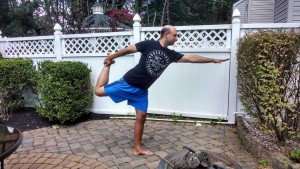
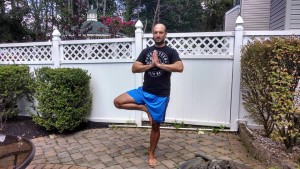
Kamae is much more than just a stance or ready position. It is the platform from which all movements are made and from which all techniques are delivered. Your kamae is quite literally the foundation upon which your entire martial art practice rests.
A weak, or structurally flawed, kamae will limit the amount of power delivered and reduce the effectiveness of every technique employed. Conversely, a strong kamae is the key to the effective execution of all your techniques. A strong kamae carries the support of the ground and efficiently conducts that power through the user with minimal noise creating, in effect, a transparent power.
“You can’t shoot a cannon out of a canoe.”
Water provides a very poor base of support to maximally fire a cannon ball thus it will not travel very far. This is exactly what happens with a poorly constructed kamae. So much power bleeds off in different directions that the mean effect of the movement is extremely reduced and more energy is required in order to compensate for the inefficiency.
How Do We Build a Strong Kamae?
There are many different forms of strength training but only a few, very specific, methods of strengthening the structure (kamae). The key to strengthening structure, as you will see, is training the connective tissue – fascia, tendons, and ligaments, and strengthening the bones, rather than working on muscle. The benefits of this type of training are enormous; not only does having a stronger structure increase the effectiveness of martial movement and techniques, but also acts as a natural form of injury prevention by improving the strength and elasticity of the tissues and increasing the body’s overall resilience.
We will examine 4 main ones here from the EARTH section of Warrior Fitness working on strength, structure, and stability.
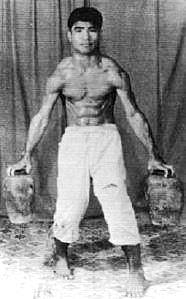
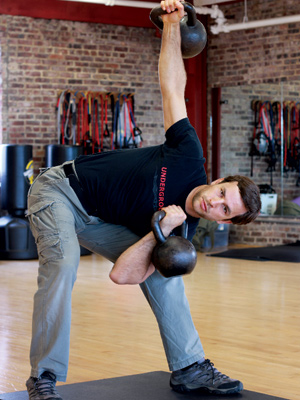
Loaded Carries – These provide a unique challenge to the body as they are a type of moving isometric exercise. Kettlebells or dumbbells are a great place to start, but loaded carries can be done with just about anything.
There are 3 basic loaded carries we will discuss here:
Farmer Walk – Hold 2 kettlebells at the sides and go for a walk. Try to maintain a neutral balance and move from center.
Rack Walk – Hold 2 kettlebells in the rack position and go for a walk. Try to maintain a neutral balance and move from center.
Overhead Carry – Hold 2 kettlebells overhead and go for a walk. Try to maintain a neutral balance and move from center.
Static Holds – Unlike lifting or carrying, static holds can be done anywhere with zero equipment. They also place a great emphasis on strengthening connective tissue for supporting the body.
Static Kamae Hold: Pick a kamae and hold it for time. The goal here is to relax in position and allow the connective tissue to do the work, not the muscle.
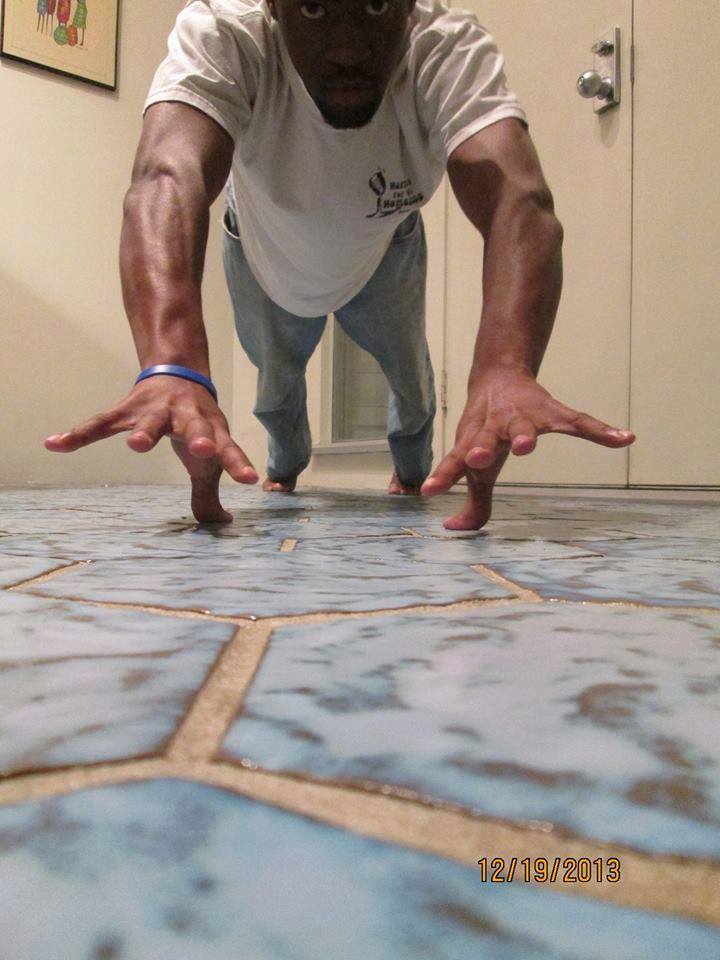
Static Push-up: Hold the top, middle, or bottom portion of a push-up for time. The goal here is to relax in position and allow the connective tissue to do the work, not the muscle.
Partial Lifts – Partials allow you to develop the connective tissues and bones in a way that full range of movement lifting cannot. By doing partials you are supporting more weight than you would be able to in a full range lift.
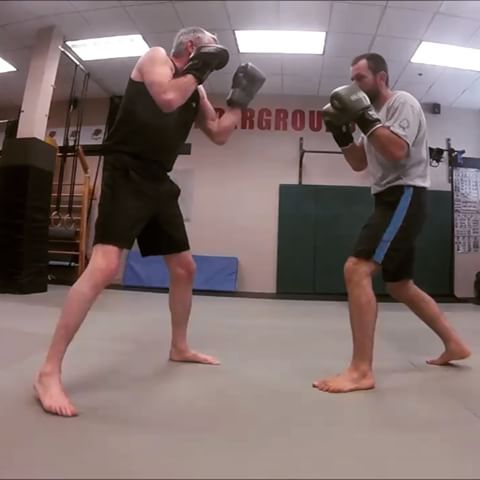
Push Testing – The push test is a very practical way of testing the quality of one’s solo training for internal power. The body, when properly trained, acts as an omni-directional structure. This allows the practitioner to neutralize any incoming force by diffusing it throughout the structure rather than having to surrender to it or resist against it.
I cannot over emphasize how critical this type of training is to your development as a powerful martial artist. Not only does this type of training condition the connective tissues, bones, and muscles, but it forms the body into a cohesive unit that is both resilient and powerful.
“Remember that mastery is not attained once after a lifetime of practice, but earned every day.”
– Jon Haas
Usually when we think of someone who is a master, be it a master martial artist or the master of some other craft, we think of them as attaining mastery at the end of a long lifetime of practice.
But mastery is NOT something that’s attained once after years or decades of training – mastery is something that is EARNED every day!!
You can be masterful in one moment and then a fumbling fool in the next (ask me how I know!).
The goal of becoming masterful isn’t to wait until some distant future when every move you make is perfect and every word that comes out of your mouth is sage advice, it’s to consciously create those moments of mastery every day until you have more of them rather than less of them.
Daily practice is the key.
Do you ever think about what it would be like to be a master martial artist?
Not just to be awarded the title “master” but to really and truly embody all of the sublime skill of martial mastery at the highest level of human achievement…
What would it feel like to know, without a shadow of a doubt, that you could easily control and subdue the most violent opponent with the most minimal effort, like a lion playing with a cub?
What if I told you that mastery is NOT something automatically attained after a lifetime of practice, but is instead conferred only upon those rare few individuals who, through their own efforts, take consistent, specific daily actions to achieve it?
Then mastery would not be just a far away, imagined future state, but instead a real and attainable goal built by taking action every day, right here and right now.
Remember This
Remember this – it is critical to your success – EVERY single legendary martial master: Musashi, Ueshiba, Bruce Lee, Kano, Takeda, Takamatsu, Gracie, Hatsumi, etc…
ALL of them began as unskilled, know nothing novices, white belts without a clue.
Their consistent daily training formed them, forged them, into the revered and feared masters that we know today.
“What one man can do, another can do.”
You can choose to follow in their footsteps. You can choose to be masterful, to be legendary.
However, as you follow them, do NOT seek to become them – instead, seek what they sought, the process of mastery.
If something is worth doing, it’s worth doing every day.
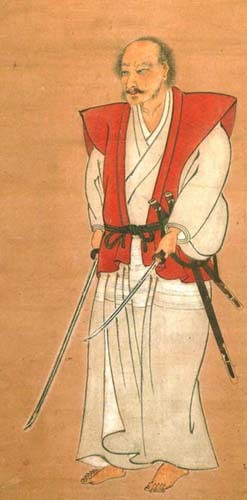
Musashi instinctively knew this. He became the greatest swordsman Japan ever produced by practicing what he preached.
The concept of forging oneself through the rigors of daily training was so important to him that he made it a rule for those who would follow his way of martial strategy.
But this article isn’t about Musashi, it’s about you and tapping into your own innate greatness.
Forge Yourself in the Way
Forging must be done daily. There is no way to forge body, mind, and spirit into a finely honed blade without constant hammering and firing through the steel tempering process of training.
Half-assed training won’t cut it.
Training only when you feel like it won’t get you there.
Training without a properly focused strategy will not work.
Training the same way over and over again and expecting different results is the definition of insanity.
So What Works?
The only answer to the question of how does one become a great martial artist (and I’m assuming you want to be great otherwise you wouldn’t be reading this blog…) is this – TRAIN MORE.
But, like anything else, there’s a caveat.
Train smarter AND Train Harder.
As I always say, there are no secret techniques but there ARE secret (or less well known) training strategies that will improve all aspects of martial performance in much less time.
Training more and training harder are NOT the only variables. Anyone who thinks this way is an amateur.
High Intensity Interval Training (HIIT) is one of the best ways to train for endurance. It will enhance all 3 energy systems in the body, as well as prime the nervous system to recover automatically during lulls in activity.
Simply put, HIIT alternates periods of high intensity exercise with periods of rest and recovery. It can be performed with almost any exercise and can be utilized both with and without equipment.
The variety and adaptability of this style of training is second to none in results.
How else does improving your endurance through this type of conditioning aid your martial arts training?
I’m glad you asked!
If the benefits discussed above weren’t enough, consider that having a high level of conditioning also aids in learning new skills.
How’s that possible?
To put it simply, when the central nervous system (CNS) is fatigued, the body cannot effectively process new skills, especially technically advanced skills. So, in essence your lack of a general level of fitness and conditioning will actually impede your learning process as you will tire more readily and not have the ability to recover quickly enough during training.
Want to train more, at a higher level, for a longer period of time?
Want to get more out of your training time both at home and in the dojo?
Want to build new skills and enhance your technical arsenal?
As humans we have a tendency to Romanticize things of the distant past – Knights in shining armor, damsels in distress, Prehistoric eating habits, the idea of the Noble Savage, Warrior Princesses… Perhaps it’s Disney’s fault. 🙂
Regardless, the past, especially the distant past was never all sunshine and rainbows – even for Pocahontas!
Life was, as Thomas Hobbs one put it, “Nasty, brutish, and short.” Everything could potentially kill you: a cut, an injury, an infection, the wrong plant, spoiled meat, a virus, an insect, a wild animal, and – most especially – another human being!
It was this omnipresent threat of death by fellow human beings that provided the impetus for the birth of the warrior in ancient tribes. Thus the warrior had a vital role in a prehistoric tribe – to protect and defend the people, and also in many cases, proactively and aggressively engage enemy tribes and wage war.
The Role of the Warrior in Society
The role of the warrior was to do all that he could to ensure the survival of his tribe and the continuity of his people. This, along with the hunter, was a prominent and extremely vital role in society. (Please note that I am not romanticizing or making any moral judgement on this.)
Necessity, as they say, is the mother of invention. And what was more necessary, and prized, for the survival of the tribe than a highly skilled hunter/warrior, especially living at a time when certain death lurked around every corner of the ancient world?
Because these skills were so essential to survival the ancient warrior class needed a way to hone and perfect them in a real and practical manner without killing one another (at least not on purpose). Thus tribal games, and eventually more formalized games – like the original Greek Olympics – were created to practice the skills of the warrior without having to actually go to war.
The original purpose of sports, aside from fun, entertainment, and distraction, was preparation for war. Boxing, wrestling, javelin throwing, discus, sprinting, endurance running, equestrian, feats of strength, tests of agility, team competitions – were ALL specific physical preparation for combat.
True Functional Strength Training
The training methodologies that were developed and past down by warriors were the ultimate in what we would today call “Functional Strength Training”. Certainly, what could be more functional than specific exercises and training methods devised to excel and survive in mortal combat?
These methods still survive today and are the province of a rare breed of modern warriors, martial artists, strongmen, and strength coaches….
Like the tempered steel of the warrior’s blade, the art of functional strength training has been forged over the centuries by the fires of preparation for life and death combat.
Today’s masters of functional strength training stand on the shoulders of giants as they reach back into the past and look towards the future.
Interviews with Today’s Functional Strength Training Masters
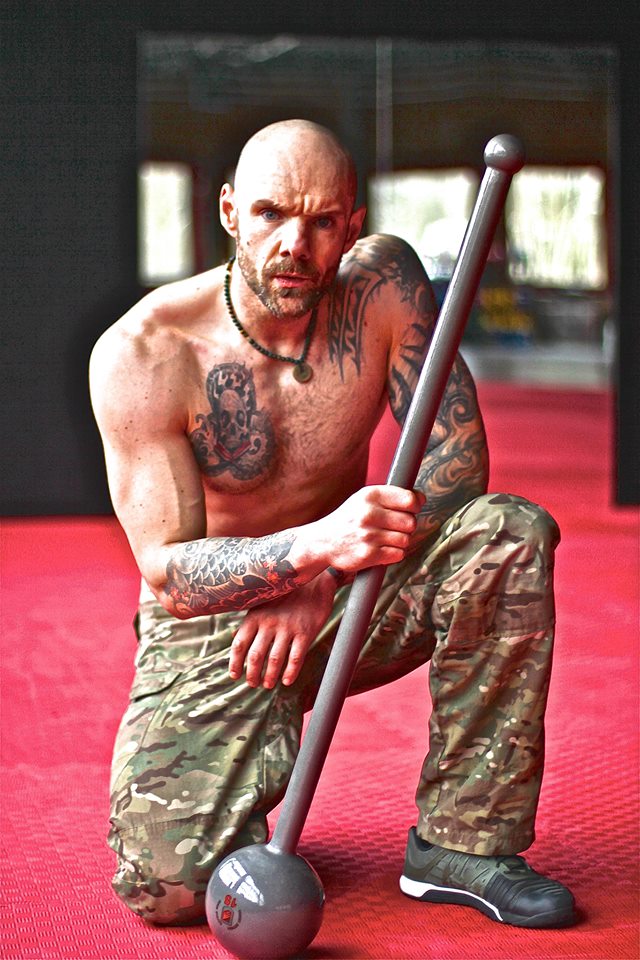
Rik Brown aka “Mr. Maceman”
1) What is your background and what inspired you to pursue and train these ancient methods of functional strength?
My background is from a lifetime of training, mostly as a failure as a bodybuilder, despite training in the best gyms in southern California.
Searching for some type of training that I could make work for me,I discovered kettlebells, clubs,and that led me to discovering the Mace.
I like the fact that they have stood the test of time,that they were meant for training people who’s LIVES depended on their mastery of a certain training modality. I also like the idea that they are somewhat difficult to learn,that weeds out the pretenders.
2) What separates these methods of functional strength training from more modern modalities?
What separates these methods is that they are to build and develop ATTRIBUTES, not just cosmetically change your appearance. One more inch on your bicep will not help you do much more….. maybe take up more space.. remember, muscle pays rent on the property of your body. The rent it pays is OXYGEN, and a need of increased calories. The ancient warrior did not have access to drive through fast food restaurants.
3) What benefits have you noticed personally, and among your students, of these methods?
I have noticed a slower,but longer lasting improvement, and strength that shows up in many areas of living and daily life.
4) How do you perceive the future of functional strength training?
I see that soon people will have a clear choice between functional,and fashionable training,and ND that competitive events will enter the scene.
5) What advice would you give to new students of these ancient methods?
By all means,seek professional instruction from qualified teachers. Personal training in Orange Co (near where I am) is widely available and that individual focus can help you learn the right way to do exercises while minimizing the potential for pain.
6) Anything else you’d like to share about your experience in training these methods?
Among all the different choices there are for unconventional training, you can find at least one that expresses yourself. Fall in love with that method,even though it may not be considered a “complete ” method of fitness. Better to do an incomplete method for the rest of your life,than to do the perfect training methods for a few years and quit.
Rik Brown “Mr.Maceman” is the most sought after, and widely traveled Mace training instructor in the world. Having conducted numerous clinics,workshops,and certifications on both coasts of the United States, in addition to multiple teaching tours of Europe and Scandinavia. He is the author of “The Illustrated Guide to Mace Training “,and many magazine articles and podcasts. He is still very active in Mace teaching,and competition. He is married, a father of 3, with 9 grandchildren, he lives in Southern California.
http://ZachEven-Esh.com/start-here Subscribe for 3 FREE Training Courses: The Bodyweight Bodybuilding Basics (Special Report), Top 11 Bodyweight Bodybuilding Exercises Video & FREAK Strength Training Course
1) What is your background and what inspired you to pursue and train these ancient methods of functional strength?
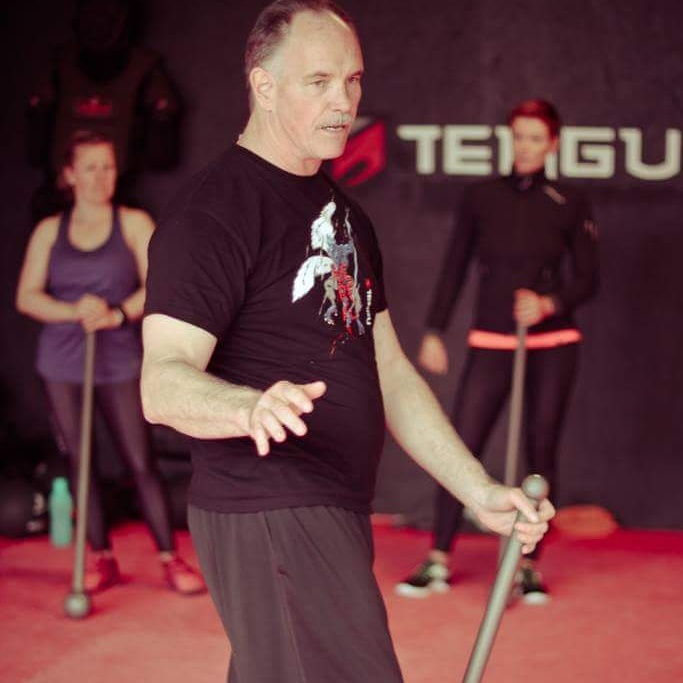
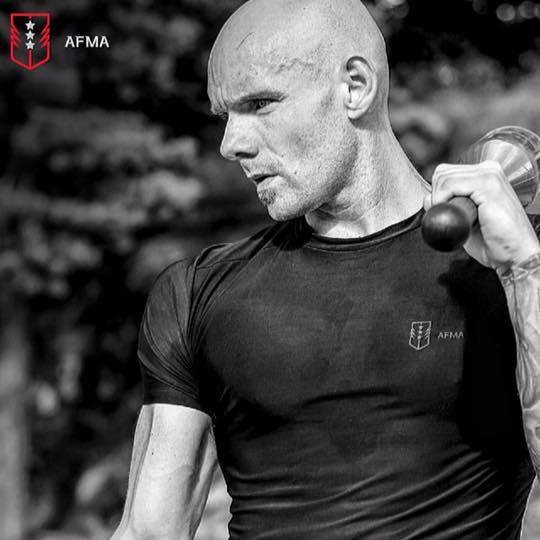
My name is Pawel Widuto. Me and my UK friend, Head Coach Paul Gray from Firepower Gym are founders of system known as Art of Functional Movement. In the course of 10 years in fitness industry, I was trying out numerous systems. I believe one should learn from the best, that’s why I started my adventure with Kettlebell under the watchful eye of Coach Allan Fallrø, IKFF Norway. My Clubbell and tactical fitness education were under guidance of Scott Sonnon and Alberto Galazzi.
Since being a kid, I practiced swimming, running, basketball, volleyball. Then, I became fascinated with martial arts – I trained Karate Kyokushinkai for 5 years in the dojo of of Marek Wieczorek in Olsztyn. During my studies, I was also training with Renaissance fencing group (i.e. history reenactment group) – long sword was my primary weapon. In 2003, having just graduated from university, I came to Norway hoping I would find a place for me there. And I kept on practicing: first, Kickboxing at Andre Sollund’s in Ski (Norway), next I sank into FMA -knife and stick were taught by Antonio Faedda in Sardinia – still, there were many more coaches I owe loads of knowledge and sweat left on the mats.
4 years ago I have created Tengu Fitness Concept- initially a small group of students that grew quite fast. During one of my CST Certifications I’ve met a great Coach from UK- Paul Gray, and after many long conversations, discussions and workshops conducted together – we decided to create our own system we called “Art of Functional Movement”. So for all of you out there scratching your heads- here it is: “Tengu Fitness is who we are- Art of Functional Movement is what we do”
I have called my training facility- Tengu Fitness- Art of Functional Movement Academy
2)What separates these methods of functional strength training from more modern modalities?
I think the most profound difference from the mainstream fitness systems is the way we periodize them and flavor our workouts. We all creatures of this earth so how come we shouldn’t train/ move like it?
We based our system on ELEMENT CYCLE – circle of elements – which we use for scheduling training, weekly and monthly periodization as well as diagnostic tool for our athletes development.
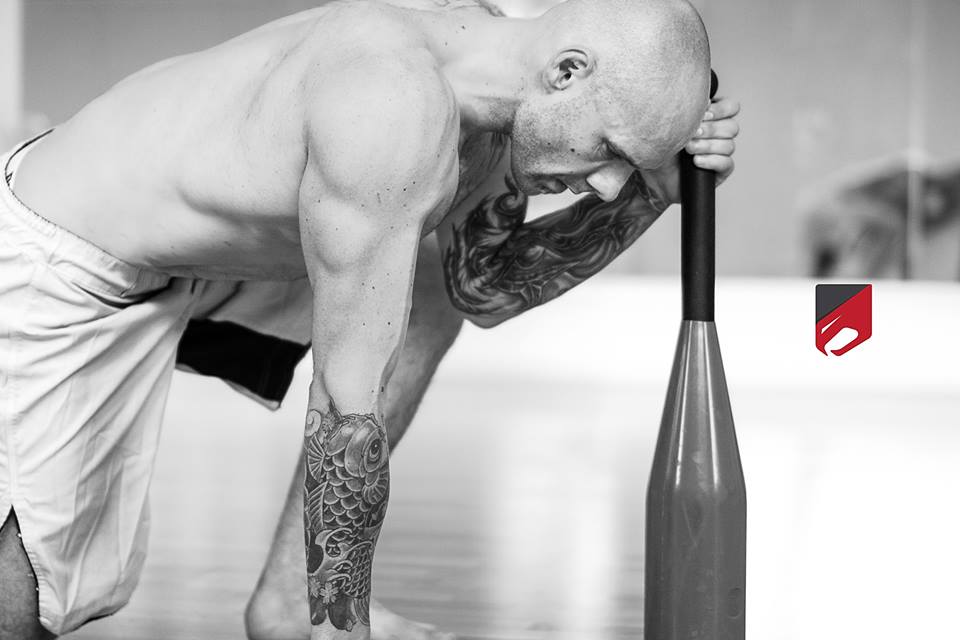
Definition of elements: FIRE – it defines our cardiovascular endurance, fat percentage, mental toughness. Training is short, 20-30 minutes, created on the basis of simple ,ballistic exercises with or without tools. Length of intervals and breaks in between influences the intensiveness of training which is the highest among four cycle elements. WATER –defines our mobility, smooth movement, changing positions, awareness of breathing and moving. It perfectly points out weak spots in our mobility. Training is usually built without tools, on the mats , based on yoga and Pilates, but also martial arts – eg. Indonesian silat. EARTH –defines our ability of fundamental movement, (deadlifts, squats, presses),but also our strength, muscles and tolerance of discomfort. Training is simple, with linear movement and big, usually submaximum weights. It takes around 30 minutes to 1 hour with longer breaks between series. It’s medium-high intensity workout. AIR –defines our stability, balance, coordination, movement complexity, ability to control weights in different angles of space. Training is not only for body, it also engages mentally. Training is built on complex movements, often ballistic exercises engaging whole body in different planes. Medium intensity, highly technical.
This way- we give our student right stimuli and not overloading them throughout the week.
3) What benefits have you noticed personally, and among your students, of these methods?
Training within our system challenge the weaknesses we see in general “chair shaped” population. Most importantly activates their posterior chain, heels the alignment and posture. Strengthen and stabilize wrists, improve strength of grip, forearms, improve blood flow of shoulder joints, but also increases explosiveness of hit, general dynamics and improves your cardio vascular endurance. It’s a perfect training for a modern warrior, but one should not neglect this form of training while recovering from injury, during rehabilitation when the most important thing is to recover full range of movement.
4) How do you perceive the future of functional strength training?
I boldly believe that type of training we provide our students is a step ahead of other training systems out there and there is one important reason to it. Our system is not build around certain tool- it is movement based.
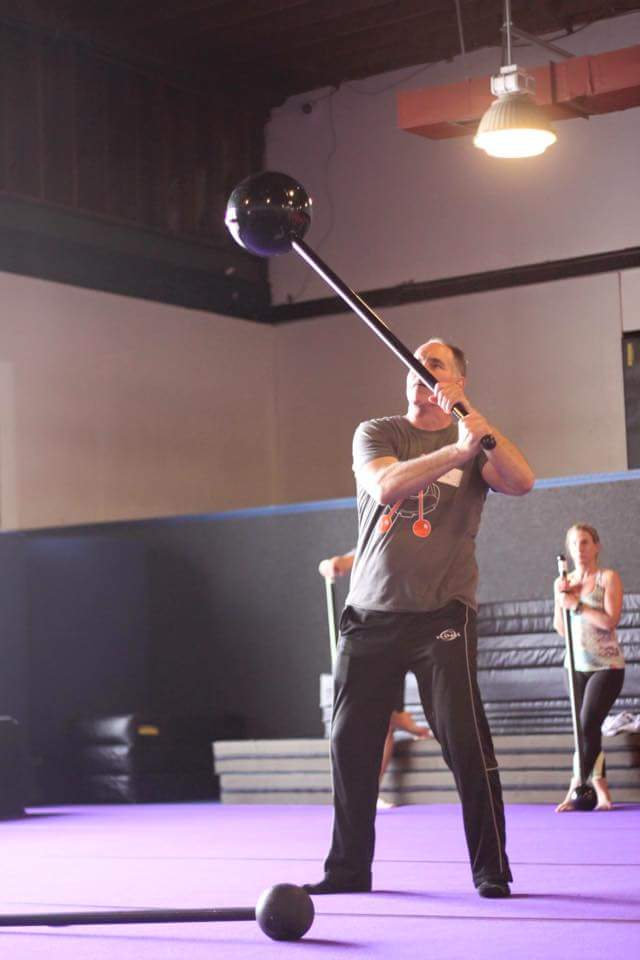
There is NO perfect tool out there. There are tools more suitable for rotational movement, and there are tools that suit linear movement. That’s why we decided to focus on technique instead. In our hierarchy we always put technique before the tool choice and pick the tool that is the best for the purpose in the session. We use kettlebells, clubs, short maces (aka bulavas) , maces, sandbags, dumbbells, barbells, TRX and rings but we never choose technique to suit the tool- it’s the other way around.
5) What advice would you give to new students of these ancient methods?
Guys- it is simple- train holistic. Swing, jump, throw, climb, push, pull, press, dance, punch and choke- but use your heart and brain to keep the balance. Do not overload certain parts of your body doing just “ this one thing you good at” you wish to train your whole life right? So train like you want to. I have seen too many abused joints in my career to keep my mouth shut about it. In the end of the day- you train to be healthy and strong- not strong and in pain.
6) Anything else you’d like to add about your training methods?
We are blessed to live in the times when we can explore and play with the movements, getting unlimited inspiration from the social media network. I personally contribute to that – posting all of my work online for my students and everybody else to see. If you guys wish to get to know my work better- please visit those links. Its all there.
Personal Profile
https://www.facebook.com/pawel.widuto
Company profile:
https://www.facebook.com/tengu.no/
Instagram profile:
https://www.instagram.com/tengufitness
youtube channel:
https://www.youtube.com/channel/UCtAsdDmgKblZNg7tLPVKvNA
Linked in:
https://no.linkedin.com/in/pawel-widuto-76681549
my blog :
http://blog.tengu.no
my Downloadable Bodyweight training program:
http://www.tengu.no/nn/earthquake-training-program.html
Logan Christopher
1) What is your background and what inspired you to pursue and train these ancient methods of functional strength?
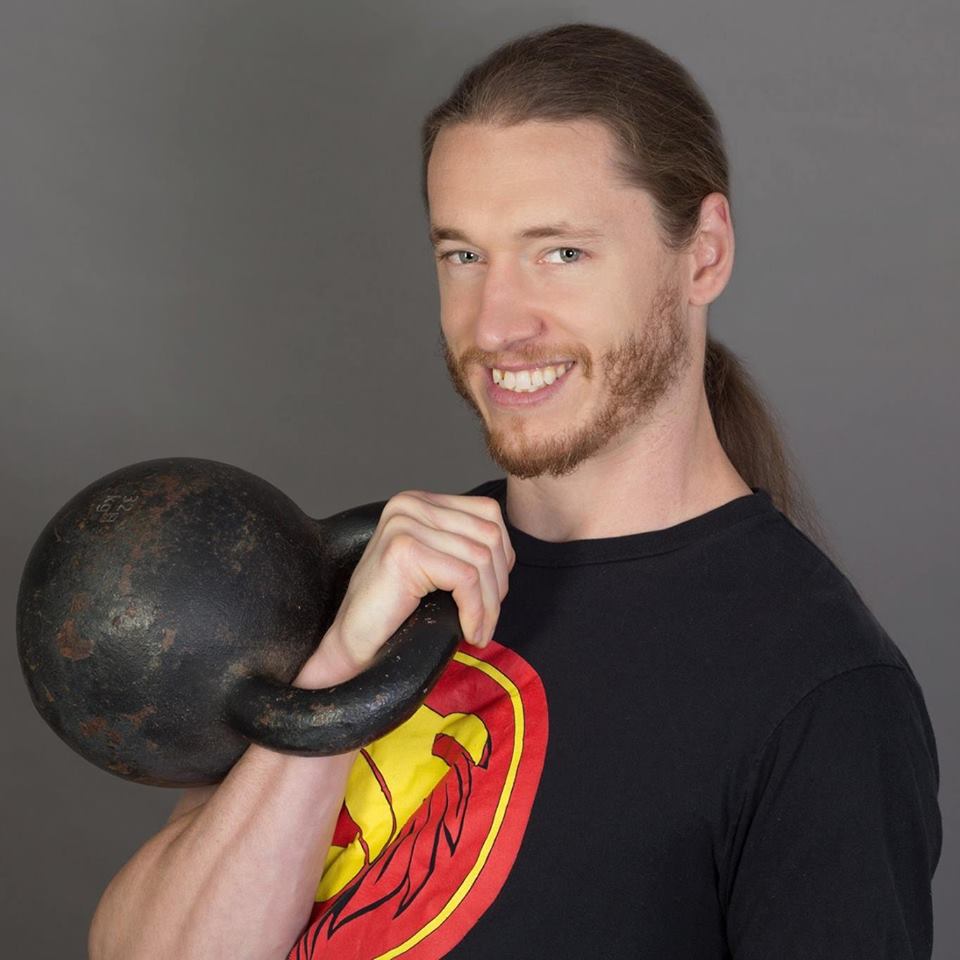
I was not an athletic kid. I had no natural talents when it came to anything physical. As I grew up and began to see the value in these things in others, I also realized that I could do something about it.
My journey really began with bodyweight exercises. Here I began to see results. Here I began to be able to do things that others could not. Here I began to become confident in myself. This in turn led to kettlebells, oldtime strongman training, and other functional methods to further the journey.
For me physical training has always extended beyond merely physical. I see functional training as a crucible in which we can reshape ourselves, body, mind and soul. Because of our modern day world, it is one of the few ways left we can truly reconnect to that manliness, to that archetypical warrior energy.
2) What separates these methods of functional strength training from more modern modalities?
Most modern training is a pale comparison to what it can be.
First of all, the purpose of it is superficial. Many people train only to look better naked. There is nothing wrong with wanting that, but if that is all you seek then it is only about the physical, the outside layer of your self.
Secondly, much of modern training looks at the human body as a collection of parts, and each part is trained individually. The Western mindset likes to divide things. While this can be useful, it is detrimental when you lose sight of the big picture, the holistic human body.
It is this same thinking that divorces the physical from the mind. Functional training, in general, trains the body as a whole. To further it, functional training ought to also extend beyond the whole physical body, turning training into a mental, emotional and even spiritual endeavor.
Thirdly, much of modern training is devoid of the elements and as such, detrimental to health. Riding on a stationary bike indoors, breathing in recycled air, pumped full of EMF’s, no sunlight, no earth, drinking neon power drinks and slugging down protein powders full of barely nameable chemicals is all far removed from nature.
Thus we learn to think like machines, move poorly and then are surprised when our health fails and we need to be propped up with replacement parts and pharmaceuticals. Functional training is more connected to nature, to healthy practices as well as moving the human body as it is intended too.
3) What benefits have you noticed personally, and among your students, of these methods?
It has transformed my life in so many ways its beyond count. Granted, I have turned it into a career, but even if I didn’t go down that path the changes would still be hugely significant.
• I move well, capable of playing any sport, any physical activity, plus doing all my daily activities without strain.
• I am free of pain. My training supports this freedom instead of taking away from it as seems to be the case for many others.
• I am radiantly healthy, almost never getting sick, unless I push my body to its ever expanding limits, which I sometimes do, because I can.
• I am loaded with energy.
• I am confident as this strength has carried over into many other areas of life.
And I have helped many people to do the same. We all have our own personal journey so it depends on where you’ve been, where you’re starting at, and where you want to go, but I believe this is doable at any age, in almost every circumstance.
4) How do you perceive the future of functional strength training?
While functional strength training has grown, it still hasn’t quite reached the tipping point in the mainstream. That journey will continue to happen.
Going back to what I wrote earlier, in addition to more functional movement, I see a move towards the incorporation of more natural elements into functional training. Training outside to get sunlight (which provides much more than just vitamin D). Training barefoot to get a physical connection to the earth (which lowers stress, enhances recovery, improves sleep quality, etc.). Training in fresh air because air quality impacts so much.
Training in a natural environment and doing things like lifting natural stones and logs further allows you to tap into that primal nature that people are missing and craving. There will continue to be new devices created, yet this turn back to the ancient natural world will continue to grow.
5) What advice would you give to new students of these ancient methods?
You must think long term. In general, that is not something we human beings are great at, and our culture of instant gratification further exacerbates this.
Sure you may have a goal of what you’d like to hit in 30 days. That is all well and good. But do you think of where you’ll be in your strength and movement practice a year from now? What about in a decade?
If you can think long term like this, and stay persistent in your actions towards this aim, the results will amaze you. Ten years and beyond of dedicated effort in anything will be transformative.
6) Anything else you’d like to share about your experience in training these methods?
Have fun with it! I often tell people that if I had to run on a treadmill for an hour at a gym I wouldn’t want to workout either. Instead I get to lift heavy weights, move my body in amazing ways, juggle kettlebells, bend steel and so much more. The enjoyment I get out of training is motivation enough to keep doing it.
There are so many possible and valid ways to train functionally. In my opinion, every tool and method has its advantages and disadvantages, which is why I do so many different things, so that I reap the benefits of each. And anyone getting start should try out many things in order to find what best suits them.
1) What is your background and what inspired you to pursue and train these ancient methods of functional strength?
I actually got started in strength due to a car accident. As a kid, I spent a month in the hospital and then several months in a body cast. As a result, I had to learn to walk again. As part of rehab my mom enrolled me in Tae Kwon Do, which really helped my physical agility and peaked my interest in all things physical. From there I went on to play American football, which lead me to competitive powerlifting. Over the years that lead me to one of my passions which was becoming a professional performing old-time style strongman. Along the way I also did competitive modern strongman, Highland Games, various forms of wrestling, shoot fighting, and kettlebell lifting, etc.
The combination of all of these lead me to study the history of strength and begin trying to match the feats of old time strongmen and ancient warriors. We think modern training has progressed, but actually it’s more shifted emphasis than had a true progression. People have been training and doing amazing feats of strength and agility for thousands of years. I think its at least as interesting to match yourself against men from a thousand years ago as it is men on the modern training platforms today.
2) What separates these methods of functional strength training from more modern modalities?
True historical training is less specialized than modern training. It comes from a time when life was less specialized and you had to be able to do everything. Now we focus solely on one thing. We’re a competitive “this,” and truly most modern training is simply about how you look. One hundred or a thousand years ago you might want to be strong, but you also needed to be able to move, balance and fight and last all day. You might have to do it at any time. There wasn’t a sports season, or a periodized training block. There was life and you had to be ready for it.
I believe in the ancient style of being anti-specialized and anti-fragile. That doesn’t mean that their training was simpler or didn’t involve technical prowess. It means there’s no point in over complicating things and your bros think your abs look good. Also, some strength is just time-tested. Henry Rollins said in a famous article of his, “Two hundred pounds of iron is always two hundred pounds,”
However – A three hundred pound stone is the same for me as it was one of my ancestors 5,000 years ago. You can either pick it up and carry it, or you can’t. No picky rules, no air conditioned gyms, no pre-workout supplements – You either get the job done, or you don’t.
3) What benefits have you noticed personally, and among your students, of these methods?
You get what you train for. If your training is pointed towards making you functional in all around way, then that’s what you get. My training is pointed to make me able to do things other humans can’t do. It has given me a broader ability in strength than I ever thought possible. Strength not just limited to barbells and dumbbells, but carrying over to any possible implement, to sports, to combat, to life. It has radically changed my health, shot my cardiovascular system through the roof and actually helped unite my mind, body and spirit into something that I didn’t believe training could do in the beginning. It has opened a door for a deeper level of ability where all the forces in you are pointed in the same direction. Many of the people I’ve trained have noticed the same benefits.
4) How do you perceive the future of functional strength training?
I perceive it as bright, but I think we need to not fall into the trap that most modern training has done. I see us going two ways:
Real leaders teaching people how to get amazing physical abilities with what may be unconventional training, but training based in reality.
Or
Super-specialized, watered-down, feeding-into-modern-narcissism type training that allows you to say you’re cool and do unconventional training, but isn’t actually getting anything done for you, because it’s just a shadow of the hard work that true training requires.
This is three-pound kettlebells standing on an unstable surface, because it’s the cool thing to do at the moment – Not – really building power with legitimate exercise. Legitimate exercise doesn’t have to be the boring often useless stuff you see in a gym, but unconventional doesn’t need to mean convoluted just to be different. We should all be doing a combination of basic things as well as training that stretches into different areas than most people are even aware of. The real point is don’t make it weird just to sell and don’t make it fluff. Do the real work and bring back the real strength that man should have, but most of us have walked away from.
5) What advice would you give to new students of these ancient methods?
The unconventional training landscape has become much like the martial arts training landscape. Lots of people running strip mall McDojos and very few real teachers. Seek out the real teachers. If your guru looks good, but can’t fight, lift or train his way out of paper bag, find a different guy. Maybe one who is less pretty, but you wouldn’t mind fighting a live grizzly bear with in a dark alley, in the rain, after you ran up hill to get there, armed only with your loose leaf training notebook.
Unconventional training also follows some other premises of martial arts that you should pay attention to. Basics, basics, basics, then advanced stuff. If you can throw a triple tornado, double back spin, flipping ninja kick, but can’t throw a straight right punch, you’ve missed the point. Some of your training should be very basic, very heavy work with barbells and dumbbells. Some of it should test your heart, your movement, your balance. Train them all in a progressive way and don’t be afraid to work hard. Also – ignore the idiots who tell you, you should be “pumping your guns bro with these curls instead of that silly stuff you’re doing.”
6) Anything else you’d like to share about your experience in training these methods?
Yes, there is enough training out there to explore for a lifetime and never be bored. I’ve been training 28 years and over that time I’ve experimented with just about everything there is to do. I’m still finding new things to try and new abilities to build. Don’t judge other people’s training until you’ve tried it. Constantly build new physical skills and new neuro-pathways with new challenges. The basics are your base to then explore the heights of what’s possible with the human body. Never let yourself off the hook, because you’re big, small, young, old or whatever – You can build amazing strength and ability if you just do the work. Begin building your own intuition, because you need great trainers, but eventually you will have to find the way to unlock your own physical capabilities and then… have fun. This should be savage work that frightens the spandex wearers and your neighbors, but it should also be drinking deeply of life and laughing the whole time.
1) What is your background and what inspired you to pursue and train these ancient methods of functional strength?
I’m Italian, but I moved to San Diego 3 years ago. I went from a Bed & Breakfast owner to an Unconventional Trainer. My wife is American and we used to come to the USA just for vacation couple months, but when me and my wife 5 years ago found out that she was pregnant we decided to stay here longer and let the baby be born in Cali. The day my Angel was born the doctors found out she had heart problems and she needed an open heart surgery. So we decided to stay here for good and I had to sell my business in Italy. Here I’m with no job in a foreign country… I looked around and I realized the easiest job I could get was as a personal trainer. I started using unconventional training methods more than 10 years ago, in Italy, yes I was probably like all of you the “crazy” guy lifting sand bags and logs on the beach and carrying big rocks for miles, I always loved to train outside.
The first training method I adopted was the “methode naturelle” of Georges Hébert. I was competing in professional windsurfing since early age, and around my thirties I discovered the Kitesurfing, with a group of other crazy friends we started to develop the educational program of kitesurf, safety dvds. Due to a shoulder injury I had to stop competing and the Doctor recommended surgery. While the Doctor was talking, in my mind I was already thinking of an effective rehabilitation method for after the surgery. I saw an old video of this Russian guy performing the Turkish Get Up, this Russian guy was Oleh Ilika, Ghirevoy Sport World Champion, the next day I ordered a set of KB and start practicing the TGU watching Pavel’s videos. Day by day I noticed that my shoulder was getting better and I was able to lift more weight with the TGU, and after couple months, the pain was completely gone!!
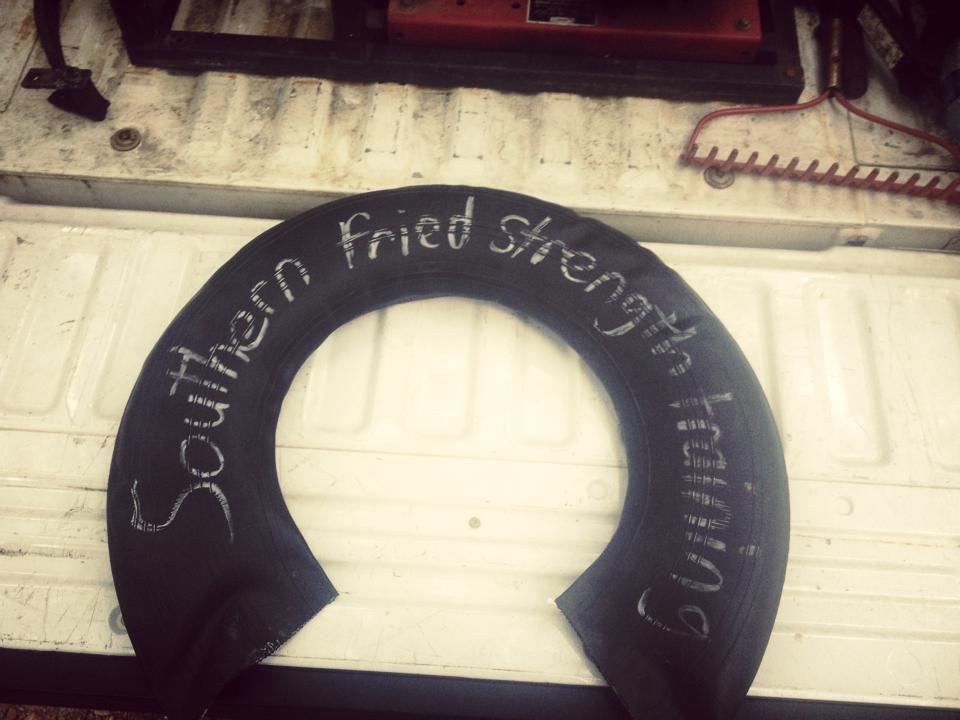
I decided to research for more dynamic 3 dimensional exercises and I founded the Bulgarian Bag, one hour later I already was building my first BB out of a inner tube of a car tire filled of sand and sealed with zip ties and duck tape. One month later I attended a BB workshop with Ivan Ivanov. His energy and passion was really inspiring to me at that time. Later on I attended a Ghirevoy workshop with Oleh Ilika, the most humble and inspiring human being I ever met. One year after that I got my BB certification in San Diego with Navy Seal Steve Nave and my Ghirevoy certification with Oleh. I worked with Steve Nave for two years before he passed away from a Heart Attack this year, that was really a big loss for the entire fitness community, he probably was the person who mostl inspired me and encouraged me to always thinking outside of the box and to follow my dream no matter what other people think.
But something was missing in my training routine and I decided that I needed in my body weight program more than just squats, push ups and pull ups. I was looking for a full body weight system, and TacFit came along… I invited Alberto Gallazzi to my home town in Italy for a private workshop about TacFit and Clubbels and that was exactly what I was looking for my workout, a great add to my training routine.
One year later I got my certification in Seattle! At that time become a personal trainer was not in my mind, I was getting all those certification just for my personal interest, for me was like a challenge to compete against myself and be able to achieve and pass the physical test and be able to control also the mental and physical stress for the certification.
Then, with a friend, I decided to open the House of Pain, a full organized area right on the beach in Italy designed for people looking for a different and fun ways to train. I was running my Bed and Breakfast and working successfully on the House of Pain project at the same time, but when I came back to USA we decided to stay, because of my daughter’s heart problem.
A few months after I moved to the USA, I had the luck to train Andre Galvao, Brazilian Jiu Jitsu world champion using my system and one year later also Clark Gracie, Pan American BJJ champion. At the same time I was also training Thierry Sokoudjou UFC fighter, and now here I’m always looking for more unconventional methods to train.
At moment I’m collaborating with ONNIT for a new “secret” project, that will be out in the next few months, a new concept of Bulgarian Bag that will be the revolution of concept of training unconventional. We will also run workshops and certifications all over around the world, stay tuned! I also created UR, Unconventional Republic, under this brand I will connect unconventional trainers from all over the world and make possible explore and exchange idea about unconventional training systems.
2) What separates these methods of functional strength training from more modern modalities?
Training like an ancient warrior gives you the possibility to understand better how your body really works and how to apply functional movements in real situations. I’m not talking about getting fit, that’s another story, you can do that with Zumba lessons 3 times a week. I’m talking about learning how to stay focused, how to breath, how to use your hips and shoulders during workout without getting injured and how important is to apply these notions in real life.
Most of these “ancient tools” we use have a very small or relative amount of weight, swinging 100 time a 20 lb clubbell is not a joke, but lifting 20lb for a fit person is ridiculously easy. I have seen struggling professional athletes learning a Turkish Get Up with 8 kilo Kettlebell. What I’m trying to say is that you can’t really understand the difference if you don’t try this methods. The coaches also are making a big difference in learning this methods. I see a lot of coaches focusing to much of “impressing” the social media audience with “circus” exercise rather than really focusing on the concept of stay healthy, strong and aging better. Choose your mentor wisely! I always encourage my students to experiment and search for new methods of training. A Coach that obligates you to be attached to his method or thinks that his method is the best in the world don’t deserve your time, explore and learn more is possible, learn from your mistakes.
3) What benefits have you noticed personally, and among your students, of these methods?
Building more motivation definitely is my main goal when I train someone, they can be a BJJ world champion or a housewife, there is no difference, you train people the same way. I see my students building more motivation and they learn how to stay focused. When someone first comes to my class they are more concerned about the “aesthetic” training, loose weight, look good, and all those false myths the modern fitness industry is trying to sell you, but when they get more involved and they learn that failure is part of the process of building yourself they understand that looking good in the mirror is just a consequence of this type of method of training, is not the main focus, this is also a relief because it removes a lot of frustrations for overweight people. They also learn that quitting is not an option, I always teach my students how to stay in the game till the end of the workout and to challenge your limits.
4) How do you perceive the future of functional strength training?
Slowly something is happening out there. It looks like fitness coaches are using more and more FST, This is good, but I think we (unconventional coaches) need to get connected more and collaborate to organize workshops and certifications. I like that my good friend Rik Brown (Mr Mace) and Don Giafardino ( the creator of the ADEX Clubbel) are getting together and organizing workshops, I also have a project of running certification and workshops with my good friend Steve Cotter (RKCC ceo), his kettlebell system and my training methods in the same workshop, how great is that? In order to make these ancient methods more popular we definitely need to stay connected and exchange ideas. At the moment ONNIT is doing a great job with that, my good friend John Wolf director of ONNIT is giving to Mace and Clubbels training tons of attention and more and more coaches are getting certified.
5) What advice would you give to new students of these ancient methods?
Research, don’t improvise. Learn from the best and if the best is not enough then become the best! I had the honor of learning and working with amazing trainers and I still feel like I’m still a student, never stop learning, be humble, listen your students not just talk, be an inspiration not an arrogant asshole!
Don’t be the trainer standing next to your client counting repetitions, teach him something that he can use outside of the gym, inspire him to train also when you are not around, always challenge him! And remember, age is not a limit, never, you can train people in different way at different ages and make them do it amazing things. I never thought at 47 years I could be able to perform an human flag or a hand stand, (still working hard on that), I trained hard for months and months but that probably was my biggest accomplishment. Most of people want you to fail, you will be surprised of how many of these people are your very close friends or family members, don’t listen them, surround yourself of positive energy and open minded people and believe in yourself every single giving day! Eliminate toxic people from your life!
6) Anything else you’d like to share about your experience in training these methods?
I just want to share a Latin phrase that is also a tattoo on my right forearm, AMAT VICTORIA CURAM, which means “Victory Loves Preparation”. I always work hard for what I believe in and if you work hard for what you believe you in you will succeed in life and in training. I don’t train anymore for a nice body, I train to be a warrior, to escape a zombie attack or alien invasion or run faster than a T-Rex. Nowadays people are not able to change a light bulb, majority of male population is acting like a pussy, train like a man, get rid of mirrors and kick ass!
1) What is your background and what inspired you to pursue and train these ancient methods of functional strength?
My name is Chris “Hairculese” Rider. I became heavily involved in physical culture and training in 2000 after seeing a photo of myself at an out of shape 315 pounds wearing a 54″ waist jean. With one look at that I photo I decided no more. I purchased a home gym & nutrition books, and went to work. At the close of my first year as a dedicated trainer I had gone from 315 to 220 pounds bodyweight and from 54 to 36 waist. I then redirected my efforts from general fitness and weight reduction into strength building through powerlifting routines. I stayed with the programs that were focused on powerlifting through to the fall of 2005, just before the birth of my first child. At that point 3 hours a day, 4 days a week plus travel time for the gym just wasn’t an acceptable option. I transitioned back into a more fitness oriented program with the home gym to dedicate more time to being a father. I still worked out hard but the intensity wasn’t what it was with the big three.
Then it happened! In October of 2006 I discovered it again!
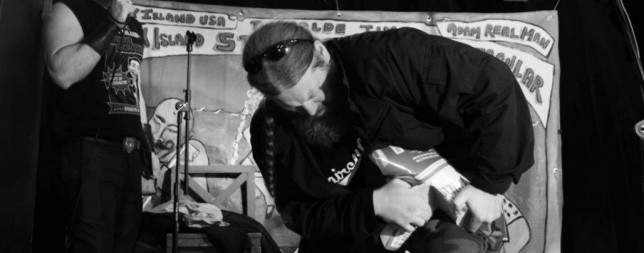
I was having a conversation with a friend who told me about a TV show he had just seen where a guy ripped a phonebook in half. He asked if I could do it, knowing my background with training. I said I didn’t know, hadn’t tried it. With that I grabbed a local directory and on the first attempt tore it in half! We just stood there laughing about it. I was wondering if it was a fluke so I grabbed a second book, larger than the first, and went right through that as well. I found the intensity I was lacking in my training and it was fun!
2) What separates these methods of functional strength training from more modern modalities?
In general day to day life what would someone meet with more often? The need to overcome gravity with a heavy, balanced inanimate object or to overcome resistance from varied, unbalanced angles? Lifting weights on a bar is great, and I do take part in that activity, but there is no substitute for multiple angle resistance that hits the small stabilizers and connective tissue more. No one modality is the best, but a combination builds a more rounded general ability and functional, everyday strength. Add to that a type of cardio, I personally like wind sprints and hill climbs, and one can be better prepared to function in a wide array of circumstances.
3) What benefits have you noticed personally, and among your students, of these methods?
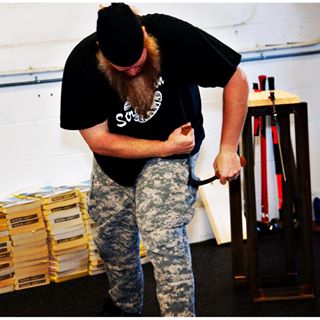
Many whom I know and work with, including myself, have experienced an overall strength increase from overcoming resistance style training. This type of training focuses heavily on isometric style exercises. One of the greatest I’ve found is bending steel in many different forms. Short steel bars of less than 8″ bent with the hands high at the chest, long steel bars greater than 12″ bent over the thigh, twisting horseshoes, bending wrenches, breaking chains, etc. All have the the common theme of overcoming resistance as opposed to overcoming gravity.
Fighting something with everything you have in an effort to have it submit to your will while barely registering on a scale have an incredible effect on the way the body adapts and builds strength. It is a different kind of strength, and a different kind of sore post workout.
The connective tissue is hit in a way that I’ve not experienced with weights. In my experience weights hit the muscle bellies harder and resistance hits the connective tissues, tendons, ligaments. As a coach and workshop leader I have worked with some very strong lifters who have had some issues with the steel bending. I like to put it this way, they built incredible strong muscle which is like the engine of a race car, but the tendons haven’t had the same level of development which like the transmission of the race car. What happens when you bolt a 1,000 horsepower engine to a transmission built for a 150 horsepower engine? Functional resistance training builds the connective tissue and the muscle in more of a balanced state. Again, there is no one best method of training for all tasks, specific goals and tasks benefit highest from specific training for that task, but for me I’ll take resistance training and steel bending for a rounded functionality in day to day life.
4) How do you perceive the future of functional strength training?
As it has been doing for as long as I can remember, trends and gadgets will come and go. But at the root of it will be overcoming resistance and isometric exercises to build strength in body and mind by overcoming the “Immovable object” or more so the “unbendable/unbreakable object”. There is a unique mental shift that occurs when one finds out they can twist a horseshoe or bend a penny. That carryover alone makes the other day to day tasks that could have been perceived as a chore to transform into a simple task. The mental game is the real game.
5) What advice would you give to new students of these ancient methods?
Find a coach who has accomplished the things you desire to accomplish. Walk the path with someone who has already. Stay the course and realize that no training routine is the be all end all, and no matter which course you follow stick with it for the length of the program. A 12 week course isn’t going to have the 12 week effect after 2 weeks. Evaluate the results after the prescribed timeframe and adjust then. Tendons and ligaments develop at a slower rate than the muscles, remember this and stay the course and the results will come with the work.
6) Anything else you’d like to share about your experience in training these methods?
Training with the feats of strength and steel bending have completely rewritten my definition of strength for myself. I’ve experienced a great carryover into my lifting. Even after taking off from the weights for extended periods the strength levels for the lifts stays relatively high even though the specific activity isn’t being performed. If I was to choose just one modality for myself it would be steel bending for all around strength development of body and mind.
1) What is your background and what inspired you to pursue and train these ancient methods of functional strength?
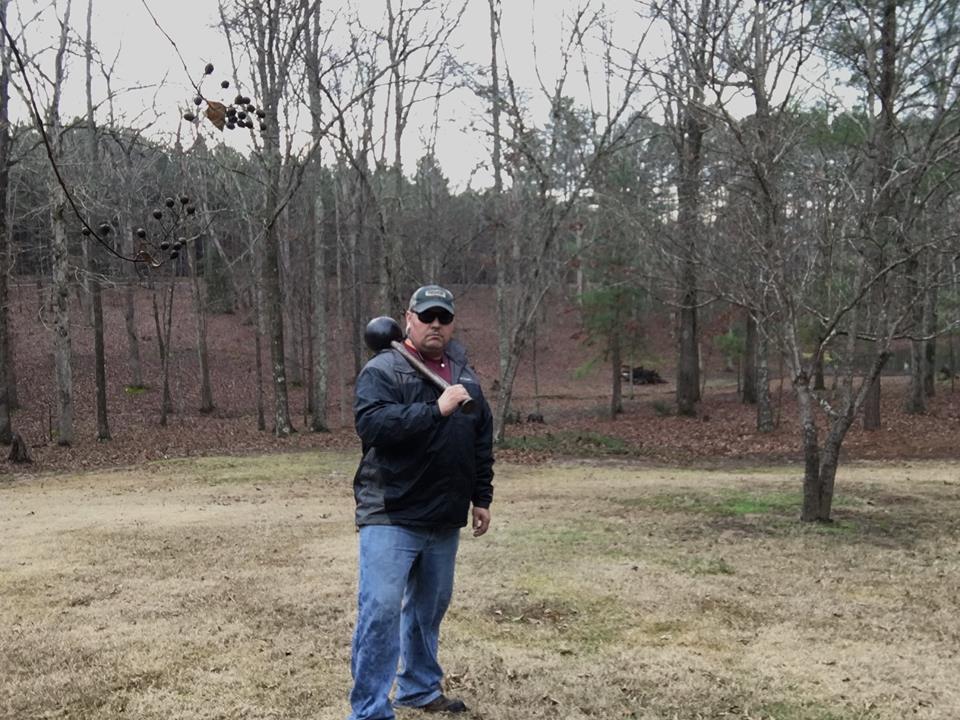
David Glissen for Southern Fried Strength Training. I started practicing karate when I was eight so most of my background is martial arts. I did that for about 20 years and then switched to powerlifting. A good friend of mine trained me in powerlifting and I did that for a couple of years. About six years ago I was doing judo and CrossFit and I injured my shoulder really bad one night at CrossFit. I couldn’t go to the doctor didn’t have insurance so I researched online and found a homemade mace so I made my first mace out of a bowling ball and a section of gas line. It weighs 20 pounds. I watched some videos and I got out in the backyard and started trying them finally I got to where I could use it in 360s it took a little while but I fell in love with it then I discovered clubs and Bulgarian bag and then after that I added the kettlebell to complete the foursome and I’ve been swinging and lifting them ever since!
2) What separates these methods of functional strength training from more modern modalities?
There are several differences between the two. One of the biggest differences in implements like clubs and the mace is the fact that it’s an off-balance weight and farther from your hand. Also you swing these types of implements in circles and usually you’re just going in straight lines with the modern training modalities. The grip you use is a big difference especially with the mace and the club. For example a benchpress goes straight up and straight down but when you do a 360 with a 4 foot Mace it’s much different.
3) What benefits have you noticed personally, and among your students, of these methods?
The biggest difference I’ve noticed is my mobility in my wrist, elbow, shoulders, waist, hips, knees and ankles. It totally rehabbed my shoulder! I think that has a lot to do with the circular motion of the movements on the outside of the body. A good friend of mine, my training partner Jason Tackett, had a stroke in his sleep and he has full mobility now from training in circles
4) How do you perceive the future of functional strength training?
I think the way that you use this equipment in a circular fashion is so different that I think it’ll change the way we think about working out. You can add it to any existing routine or you can make your own with all four of the pieces of equipment (clubs, mace, bulgarian bag, and kettlebell) or individually they are their own mobile gym. I believe it will change the way we look at exercise because of the fact that you can apply this type of circular training with these types of off-balance tools to any situation from sports like football, baseball, golf to combat training, kickboxing boxing. It’s also great for a guy sitting in an office behind a desk
5) What advice would you give to new students of these ancient methods?
The advice I would give to a beginner is start out with light weights. Work your way up and don’t be intimidated even if it’s only a five or 10 pound mace. If it has a 4 foot handle with 10 pounds on the end of it, it becomes way more difficult. If you’ve never lifted any weight at all and you’re not an athlete of any kind I would suggest getting some training from an experienced Coach. Start out low weight and don’t let the fact that you’re swinging it around intimidate you. Learn to use proper form and you’ll be fine.
1) What is your background and what inspired you to pursue and train these ancient methods of functional strength?
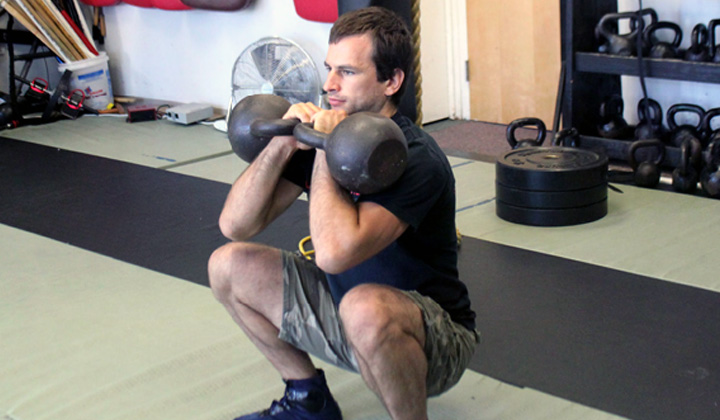
My background is in Martial Arts, Movement and Mobility Training and Performance-Based Strength and Conditioning. I have been doing it professionally for 15 years now, since I was 21, but started training way before that at a very young age.
Currently, I own a school in Red Bank, NJ (which I had for 12 years) where my team of coaches and I teach mobility, kettlebells, bodyweight training, as well as striking, grappling, edged and blunt/improvised weapons, firearms. Training is available via private and semi-private training, workshops, seminars and digital downloads.
Martial art-wise, I’ve studied Sambo, Muay Thai, Brazilian Jiu Jitsu, Catch, Submission Grappling, Boxing, Judo, Pugilism, MMA, Systema, Sayoc Kali, Blade Smart System, Systema Izvor, ROSS, Dog Brothers Martial Arts, Wheeler Martial Arts, Combat Sambo, Kapap, Systema Kotel, Combat Systema, Panantukan and Tactical Shooting. Competed full contact in ten different combat sports.
I’m an instructor in Combat Systema, Muay Thai, Panantukan, Extreme Self Protection, Concealed Pistol, Blade Smart, Systema Izvor and a brown belt in BJJ.
Strength and Conditioning-wise, I specialize in joint mobility, bodyweight and kettlebell training, in both general and specialized applications. Founder of Compound Conditioning Training System and Combat Acrobatic Training (CAT) System, author of 6 training DVDs and a few ebooks, taught dozens of workshops and multi-day certification seminars nationally and internationally.
What inspired me initially, was my granddad, who started training me very young and laid a good foundation of basic movement and coordination. Another early inspiration was the circus across the street from where I grew up that had always had amazing performances by many types of world class professionals, from acrobats and jugglers to martial artists and strongmen.
Later inspiration came from the first coaches that made the biggest initial impact: Dmitry Piasetsky, my first Muay Thai coach and Chris Ascari, the first coach that showed me that one can master many disciplines. Later, there were many others that inspired to be a better practitioner and a coach, people like Jeff Martone (kettlebell juggling), Steve Maxwell (bodyweight, kettlebell and mobility training), Pavel Tsatsouline (strength and flexibility), John Davies (strength, power and agility), Josh Henkin (sandbags), Vladimir Vasiliev (Russian martial art Systema), Martin Wheeler (Wheeler Martial Arts) , Eric Paulson (Combat Submission Wrestling), Rob Kaman (Muay Thai), Mike Burgener (Olympic weightlifting), Rich Graham (Navy SEAL veteran, shooting), Nate Morrison (elite military fitness expert), Joe Allert (BJJ black belt), Arcady Kadochnikov (Kadochnokov Systema), Michael Grudev (Systema Izvor), Jason Scully (BJJ black belt), John Durkin (boxing coach), Alexander Retunskih (ROSS founder and head coach), John Dalaher (grappling expert), Joe Viz (judo and BJJ black belt), Oleg Savitsky (Sambo expert), Sean Brant (Sayoc and Atienza Kali), Boris Byzhak (judo and Sambo black belt), Vitaly Luhvich (sambo and ROSS expert), Sergei Lugin (ROSS expert), Andy Rodgiro (judo black belt), Kevin Secours (Combat Systema), Ted Kucowski (long range precision marksmanship), Alex Costic (Systema Homo Ludens), John Heleotis (BJJ black belt), Daniel Sullivan (Panantukan instructor) and many other outstanding coaches.
Martial arts training and competing always inspired a quest for better strength and conditioning. I was always a believer that a higher purpose can override pretty much anything, and for me the primal reason to get stronger, more coordinated, better conditioned, more efficient, achieve better plasticity and mobility was always so I can become the best martial artist possible from a long term perspective. In other words, I was seeking out and selecting training methods and techniques that improved my functional abilities, while improving my health and longevity in the long run.
Based upon that criteria, as well as my research, training and coaching experience, I formulated my training method, which I call Compound Conditioning. It is a principle-based, movement-based training system, that blends ancient training methods such as kettlebell lifting, bodyweight calisthenics, animal movements, combat acrobatics, joint mobility, yoga, grip conditioning and mental toughness development, along with modern training techniques, such as periodization, as well as restoration techniques, such as sound use of sleep, sauna, cold showers and ice baths, organic wholesome nutrition and supplementation.
2) What separates these methods of functional strength training from more modern modalities?
A clear advantage of the proper training methodology is that it is based on developing proper movement and it is progressive and scalable. Ability to squat, pull, push, hinge, bend, twist, lunge, invert and bridge is valued over training solely for a larger bicep.
Skills such as power generation, shock absorption, plasticity, selective tension and others are honed until they become reflexive actions. The quality of the connective tissue, proper movement patterning, core and posterior chain strength, coordination and dexterity are emphasized over mindless muscle building.
From my perspective, the biggest thing is that any sensible proper training methodology should be designed for a long term development process, as opposed to modern short-term approach. There are certain phases and foundational stages that need to be covered first — there is no skipping of the basics without the consequences later on. In modern terms we are talking about building a solid base of GPP (General Physical Preparedness) before specializing.
By the same token, the nature of principle and movement-based training methodology leads itself very well to more specialized training and movement patterning or SPP, once the foundation is build. Kettlebell juggling, combat acrobatic movements, medicine ball throws and partner training are just some of the many training modalities that could be utilized to optimally facilitate the development of desired movement patterns.
In general, movement-based approach also views the training process from a more holistic and wholesome perspective that takes into the account many factors that directly influence performance, such as spirit-mind-body connection, various specialized breathing techniques, meditation, visualization and various rites of passage rituals and exams. Recognition that the spirit and the mind drive the body and utilizing specific tools to gain better control of that process are some of the key insights.
3) What benefits have you noticed personally, and among your students, of these methods?
I’ve noticed many benefits, namely increased coordination, mental toughness, plasticity, resilience, strength, power, agility, speed, precision and efficiency of movement. Some of the very important benefits include more detailed brain mapping and development, better quality of sleep, reduced injury rate, increased mood and general well-being and high level of performance in chosen sports and activities.
One of the biggest benefits is well-developed discipline to engage in consistent productive well-planned activity, which has a tremendous carry over to any pursuit in life, as showing up and consistency in effort are some of the most important life qualities.
4) How do you perceive the future of functional strength training?
I think that it will move to further integration of training modalities, as currently, there is so much dialog, collaboration and cross-training of so many different disciplines, from parkour and gymnastics to various forms of weightlifting, martial arts and dance.
Another thing that will shape the future of functional strength training is our better, more holistic and wholesome current understanding of anatomy, movement, the role of nervous system, motor learning process and how the brain controls the body.
I also think that further integration of recovery and performance optimization and rehabilitation methods, such as cold water dowsing, use of sauna, meditation and use of various herbs and natural supplements will continue to occur and will be much more common place.
5) What advice would you give to new students of these ancient methods?
I would say, you must have a set of well-defined initial short term goals, but also think long term right away — don’t rush and build a solid foundation of basic movement and motor skills first.
Pay attention to breathing: how do you breathe on daily basis, how to lower your heart rate, how to control your fear and anxiety, how to time your breathing and movement – master your breathing.
Optimize your rest and nutrition. Remember that even great training without proper recovery is destructive to the body. Your only option for sustainable long term well-being and fitness is a lifestyle approach. Optimal sleep, nutrition and hydration are some of the most important training factors.
Value quality over sheer quantity. Take your time with training progressions and be patient with increasing the weight lifted and difficulty – it takes time for tendons, ligaments and grip strength to develop for true strength to develop.
Find some good mentors and training partners that will help you along the way. There is a lot of great information available nowadays. Seek out coaches that walk the walk and have developed good students.
6) Anything else you’d like to share about your experience in training these methods?
To build something solid you need to have a well-defined Dream. Once you do, believe in it and keep moving along YOUR path. Remember, that progress comes in waves, be patient and keep showing up. Also remember, that there is always something to learn and something to improve. Dream, plan, act, reassess, repeat… Keep moving and the rest, as they say, will be history…
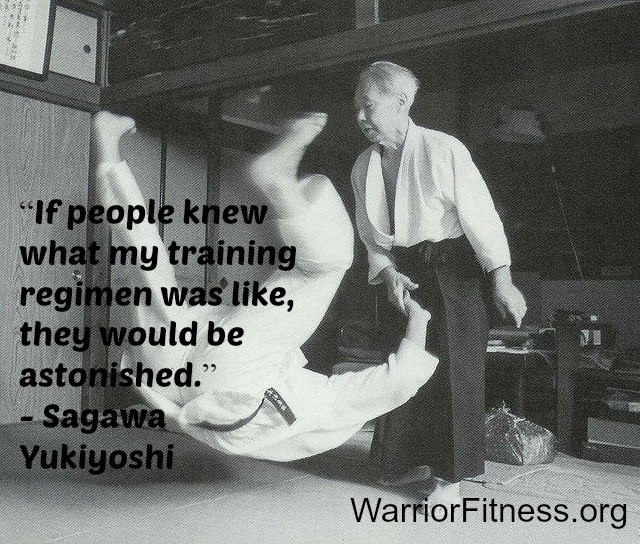
The Aiki Push-up is a literally a one-stop-shop in the study of internal power building. It was rumored to be part of Daito Ryu master, Yukiyoshi Sagawa’s secret training regimen.
Here’s a video where I explain the purpose and it and how to do it.
Watch carefully as the Aiki Push-up may look similar to what you already know, but the entire engine driving it is different!
Don’t fall prey to the common idea of thinking you know something just because you know about something! Be diligent in your study and your training – go deep!
“A little knowledge is a dangerous thing…”
Learn all the fundamental building blocks to the Aiki Push-up, as well as creating Internal Power (plus much more!) HERE!
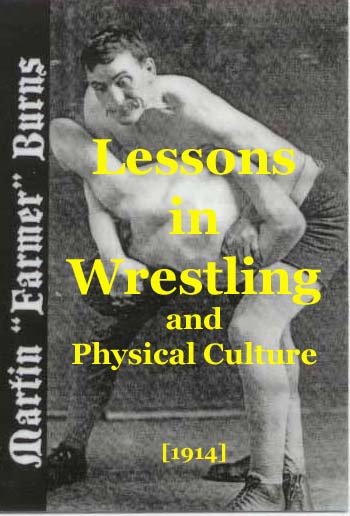
Martin “Farmer” Burns was a world champion Catch-As-Catch-Can Wrestler as well as a coach of many other famous wrestlers such as the great Frank Gotch.
In 1914, Burns published a 96-page mail-order course entitled Lessons in Wrestling and Physical Culture, which incorporated breathing techniques, calisthenics, stamina exercises, and wrestling techniques. It was made famous (again) in recent years by Matt Furey, but back in the early 1900s it was the bible for all aspiring wrestlers.
There are many breathing exercises in the course, but the one that caught my eye is called Breathing for Internal Exercise. In it Burns teaches a form of reverse breathing and contracting the core to “Force the air downward with all the power you possess.” He states that there is nothing better for the development of abdominal muscles than this type of breathing exercise!
“Breathing exercises alone, if done RIGHT, will make many a weak man strong and many a sick man well.” – Farmer Burns, 1914
Here is my version of Farmer Burn’s Breathing for Internal Exercise with a couple slight modifications. Give it a try!
For a complete reference on breathing exercises, make sure to check out my course, Evolve Your Breathing. Also, see my review of Logan Christopher’s book, Upgrade Your Breath.
Balance is an essential quality for the warrior to develop. It directly affects our ability to move with grace, coordination, agility, and power. Yet direct balance training exercises seem to be a neglected area in many people’s training programs unless they are recovering from an injury or trying to fix a specific weakness. Personally, I think they should be an integral part of training.
The following is an introduction to the balance drills I use to train myself as well as my martial arts students and fitness clients. I hope you find them as useful as we do.
There are 3 Systems the Body Uses to Orient Itself in Space
1. Visual – Relying on sight is the second fastest and most efficient mechanism in our balance (unless we are in a dark room!). Most people tend to rely on visual cues for balance, to the detriment of the other 2 systems. The visual system relies on a physiological reflex called the Ocular Gyro Cephalic reflex which creates tension chains that reflexively cause the body to orient toward whatever the eyes see.
2. Vestibular – This system relies on the fluid within the ears to sense balance. As we move, the fluid sloshes around. If we are not used to a particular pattern of movement, we may begin to feel dizzy. The brain works to process this information and integrate it with the information coming in from both the visual and proprioception systems.
3. Proprioception – This our sense of position and movement of the limbs and the sense of muscular tension. Proprioception utilizes information derived from sensory receptors in our muscles, tendons, and joints to inform us of changes in movement, position, and tension. Proprioception is plugged directly into our nervous systems making it possibly the fastest and most efficient mechanism for balance, as long as we train it.
The balance drills shown in the video below will allow you to train all 3 systems concurrently.
For more information on balance and proprioception training, check out my new program:
The current rage in conditioning training, especially when talking about combat conditioning, is to completely change up the workout for each and every session. This has the advantage of keeping the training fresh and throwing the body into chaos each time so it never knows what hit it.
The hardcore advocates of this type of conditioning stress that this environment will create a very broad and general fitness that prepares the trainee for almost every physical contingency, both known and unknowable.
This enables one to prepare for the chaos and uncertainty of combat by training in an uncertain and chaotic environment.
Seems to make a lot of sense on the surface, right?
However, one of the glaring problems with this type of training is that random training yields random results. It’s difficult to measure progress when the parameters are constantly shifting.
In order for the body to produce an adaptation for improved performance in life, sport, or martial art, we must apply specific stimulus as per the SAID Principle(Specific Adaptation to Imposed Demand). This basically means that the body adapts with a specific type of fitness to any demand which is imposed on it. When the same exercise is performed for too long, the body adapts to the stresses of each set and the adaptations or returns get smaller and smaller. Once it has adapted to the stress, then it’s time to change or increase the stress or else we fall into that trap of diminishing returns.
Usually though it takes the body a period of 4-to-6 weeks to adapt and then it is advisable to begin changing exercises. This does not mean that we need to completely throw away everything we have been doing; far from it. An exercise or drill can be changed by increasing intensity, increasing volume, decreasing rest periods, or increasing complexity or sophistication.
What this suggests is that a properly organized training program with incremental progression of increasing complexity and sophistication may actually prepare the body better than a set of random skills strewn together with a nebulous outcome in mind.
Yet we still crave the chaos, right?
So why not have it both ways?
Let’s program chaos into our training to instill the element of surprise and shock to the body. But, and this is key, we will ONLYdo it once a week. This is enough to add the benefits of chaos training without suffering the negative aspects. The rest of the time you must follow a properly programmed training regimen to ensure all the multifaceted fitness qualities required to keep you strong, agile, mobile, and hostile are being met.
How do we program the chaos?
One of my favorite ways to do this is by picking 5-6 different exercises and setting an interval timer for 5 rounds of 3 minutes or 5 rounds of 5 minutes (depending on your fitness level). Instead of setting a rep scheme, move from one exercise to the next in any order you like performing as many or as little reps of each exercise.
If you need active recovery during the round or simply can’t figure out what to do for a few seconds – do Jumping Jacks. The only caveat is that you must not stop for the duration of the round. Take a 1 minute break between rounds to recover your breathing, then go again.
1. Kettlebell Swings or Snatches
2. Jab/Cross Combo on Wave Bag
3. Sit Thrus
4. Med Ball Slams
5. Sandbag Burpees
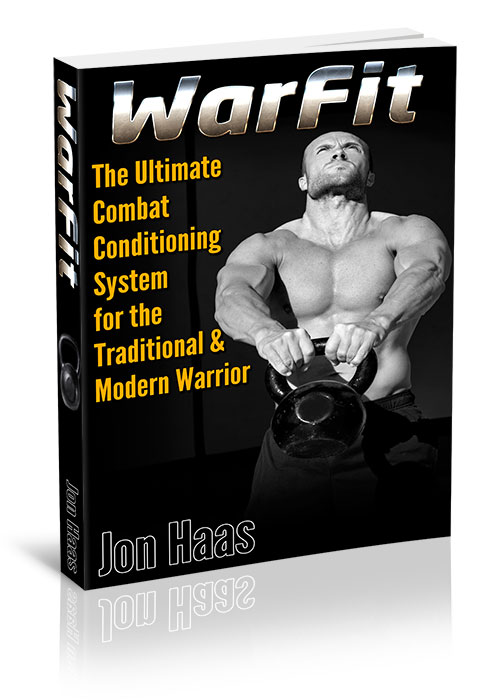
My brand new WarFit Combat Conditioning Program is perfect for the warrior athlete who wants to build superhuman strength, endurance, and conditioning…
A mountain, snowcapped, reaching for the heavens but rooted down to Earth all the same. That is the image I visualize as the pinnacle of martial arts stability. This level of stability is something that marks mastery of the power in your craft. To be a martial artist, stability training is critical; to be a warrior, stability training is indispensable. Stability means being in a position of firmness; being able to combine that stability with mobility requires as much recovery as it does intensity.
Intensity will be the most important factor in overall stability. Stability means “the strength to stand or endure”. You must have strength and endurance to have true stability, and the best way to obtain both is through intensity, like an ore refined under extreme heat. When it comes to endurance, mental and physical endurance are key. The greatest benefits of long distance running are in the mental benefits in endurance you’ll get from driving your body to the brink of its functionality. Nevertheless, I feel like interval cardio training is more advantageous for consistent cardio training as a martial artist.
Interval Training for Martial Arts
Interval cardio training allows you to train your spurts of intensity while increasing your recovery times overall. In a fight, there are often periods of ferocious exchanges followed by lulls to observe the opponent or recover; by training those intervals, you can get your heartbeat back near resting in a much quicker time than were you to solely train long distance. For instance, set your week up so that you perform 20-30 second sprints (it’ll be better to practice sprinting for time instead of sprinting for distance) throughout the week in sets, then perform a longer distance run toward the end of the week to test overall physical and mental endurance.
Remember that training your breathing is just as, if not more important for training your physical and mental endurance as cardio, so adopt a powerful breathing component into your training to help your stability and health.
You Must Train for Strength
Alas, strength seems to be a given to have when it comes to martial arts. People can say that a martial artist does not need strength, just technique, and they’d be enabling the weakness of people in the pursuit of a war art by doing so. Strength training is critical to being a martial artist; karatekas and the Shaolin have had their own weight training implements for centuries, so whoever promoted the idea that martial artists should not weight train was jaded. However, traditional martial arts have just as many methods to build strength using your bodyweight, so a lack of weight shouldn’t be an excuse.
There are hordes of thoughts about the best method of strength training; what I will say is that your regimen should include something that builds your body from the inside out. For me, isometric exercises build strength from the tendons, ligaments, and nerves out to the muscles. I do training that isolates individual muscles for maximal muscle fatigue, and training that involves large muscle groups for fatigue of the central nervous system. As long as your training does not neglect internal principles of strength (like bodybuilding training that focuses solely on muscle without long-term development of the tendons), it can be a part of what gives you stability. Overall, intensity is key, so finding ways to progressively increase your intensity will progressively increase your stability. Coupled with mobility training that can prevent your powerful tendons from being overly rigid, your martial arts can reach an advanced level comparable to the legends of old.
 What would it feel like to know, without a shadow of a doubt, that you could easily control and subdue the most violent opponent with the most minimal effort, like a lion playing with a cub?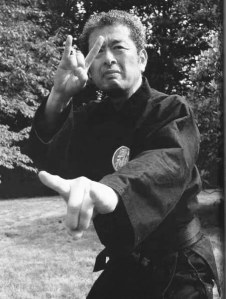
 Definition of elements:
 Personal Profile
 1) What is your background and what inspired you to pursue and train these ancient methods of functional strength?
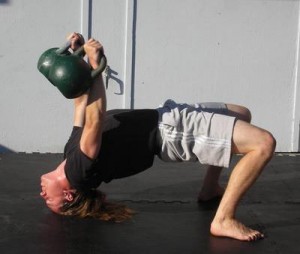 5) What advice would you give to new students of these ancient methods?
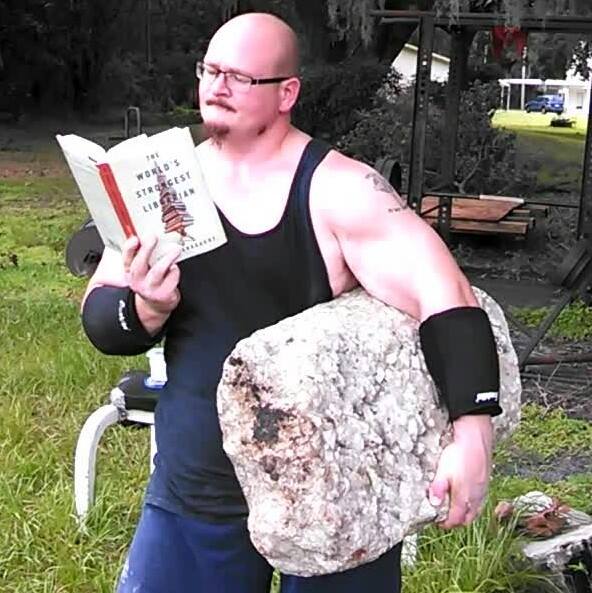 1) What is your background and what inspired you to pursue and train these ancient methods of functional strength?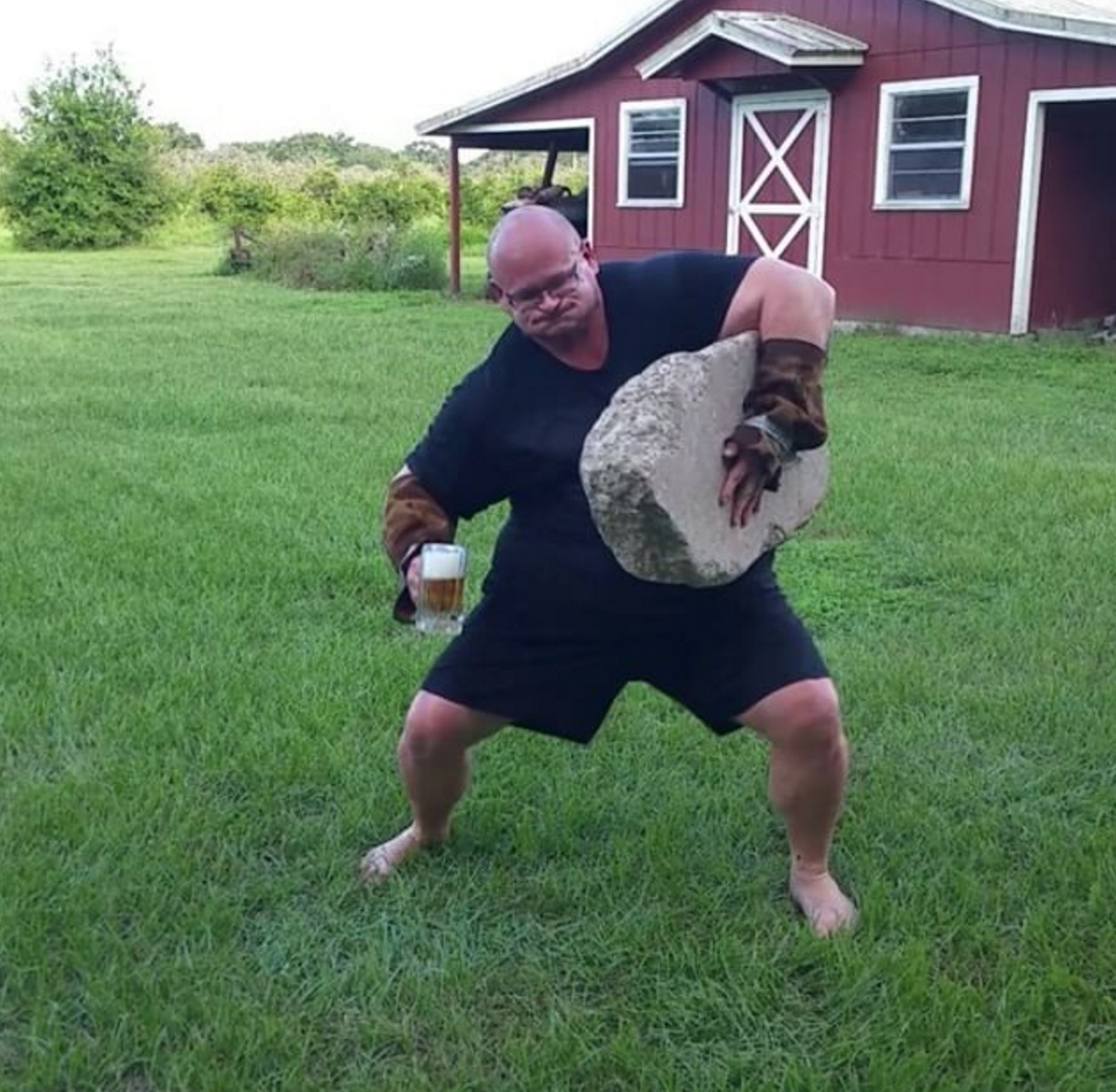
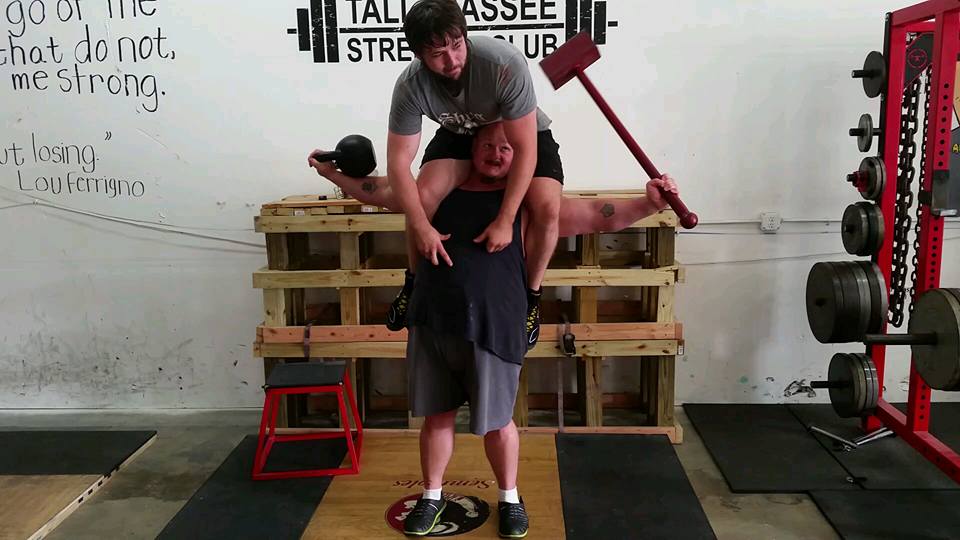 4) How do you perceive the future of functional strength training?
 6) Anything else you’d like to share about your experience in training these methods?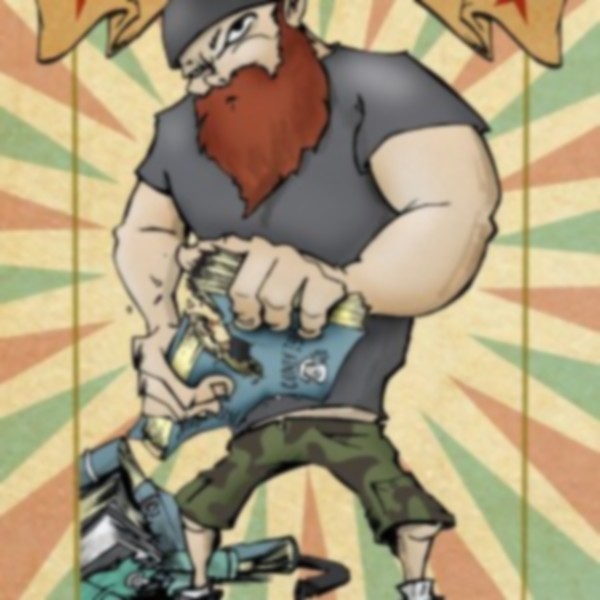
 4) How do you perceive the future of functional strength training?
 1) What is your background and what inspired you to pursue and train these ancient methods of functional strength?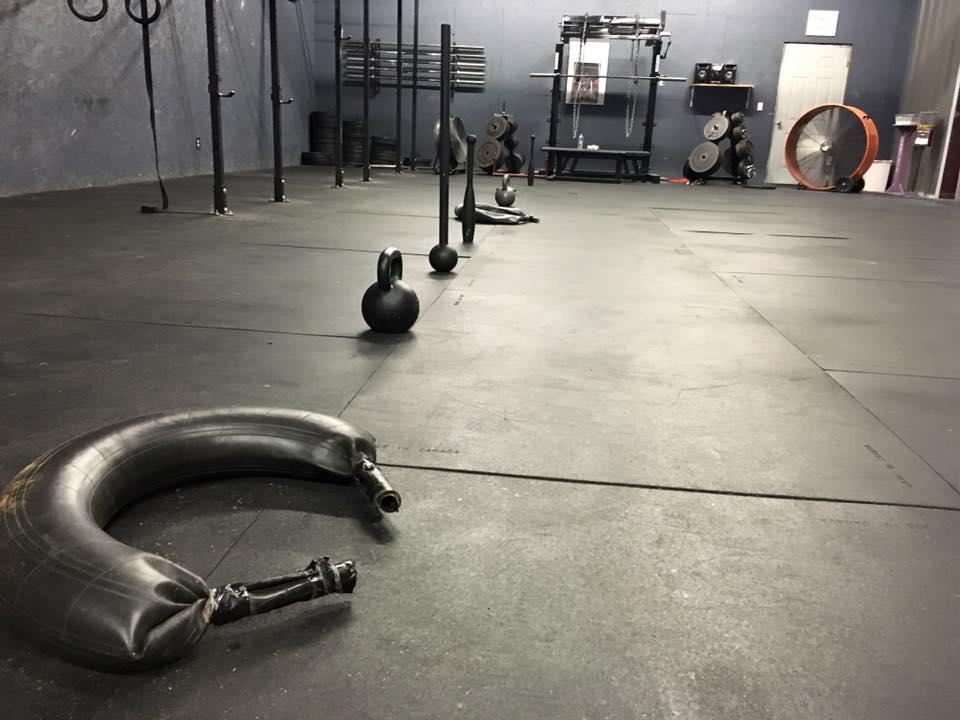
 5) What advice would you give to new students of these ancient methods?
 1) What is your background and what inspired you to pursue and train these ancient methods of functional strength?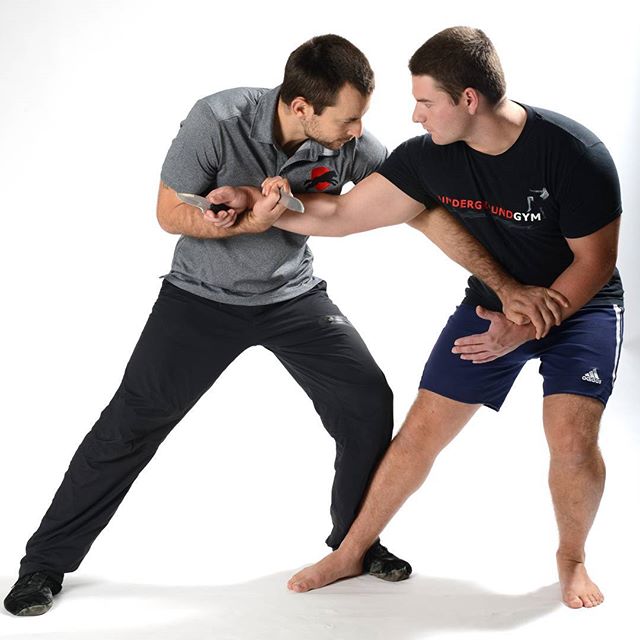
 6) Anything else you’d like to share about your experience in training these methods?