I’m looking at the calendar and this year is winding down quickly. I swear, once we hit September the whole thing just seems to fly by!
And, since this year has been crazy (to say the least) for most of the world, I won’t be sorry to see it go!
But before the year ends, I’ll be turning 49. And, I have to tell you – my training has gotten more intense this year, not less. I feel better and stronger at 49 than I did at 29!
I train hard, but it’s my recovery strategies that I perform every day without fail that allow me to train as hard as I do, and to keep getting stronger (and stay injury free) as I get older!!
I’ve heard it said that if exercise is king, then recovery is queen. However, you want to say it, the key is that your recovery must be equal to, or even greater than, your exercise.
Unless recovery is a priority you will NOT be able to sustain intense training as you get older.
Here are the 3 things I do every day to keep my body performing optimally…
Daily Mobility Training – If you saw my social media posts over the weekend, you know that I highly recommend daily mobility training to keep your body healthy, strong, and injury free. We not only want to have increased range of motion on all our joints as we age, we want to be able to move pain-free as well!
Daily Breath Work – I’ve been studying breathing exercises for well over 20 years now and it’s something that I do every day to make sure I’m energized and healthy. The one greatest indicator of overall health and longevity is lung function – the greater lung capacity you have, the healthier and stronger you are! Breath is life.
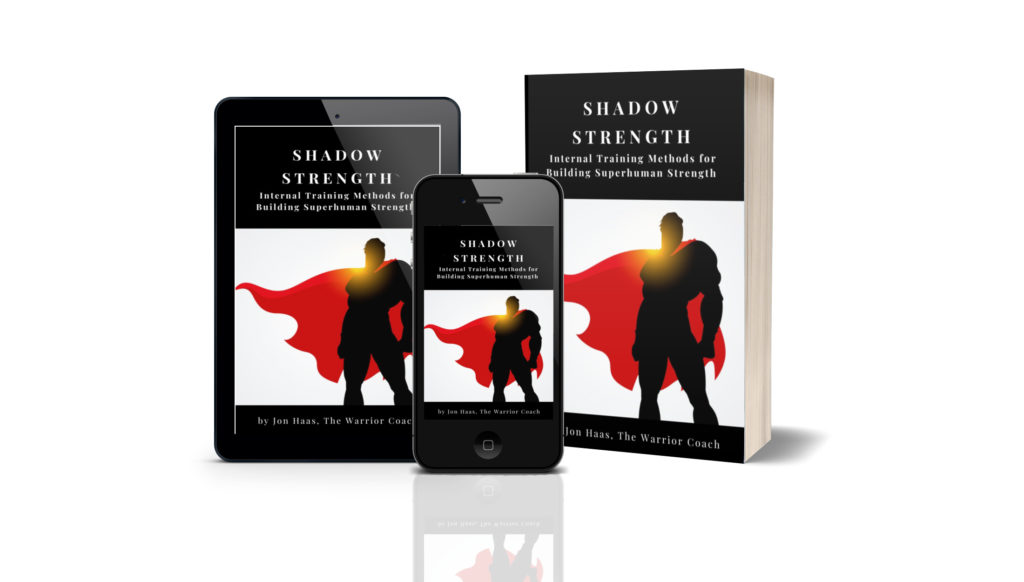
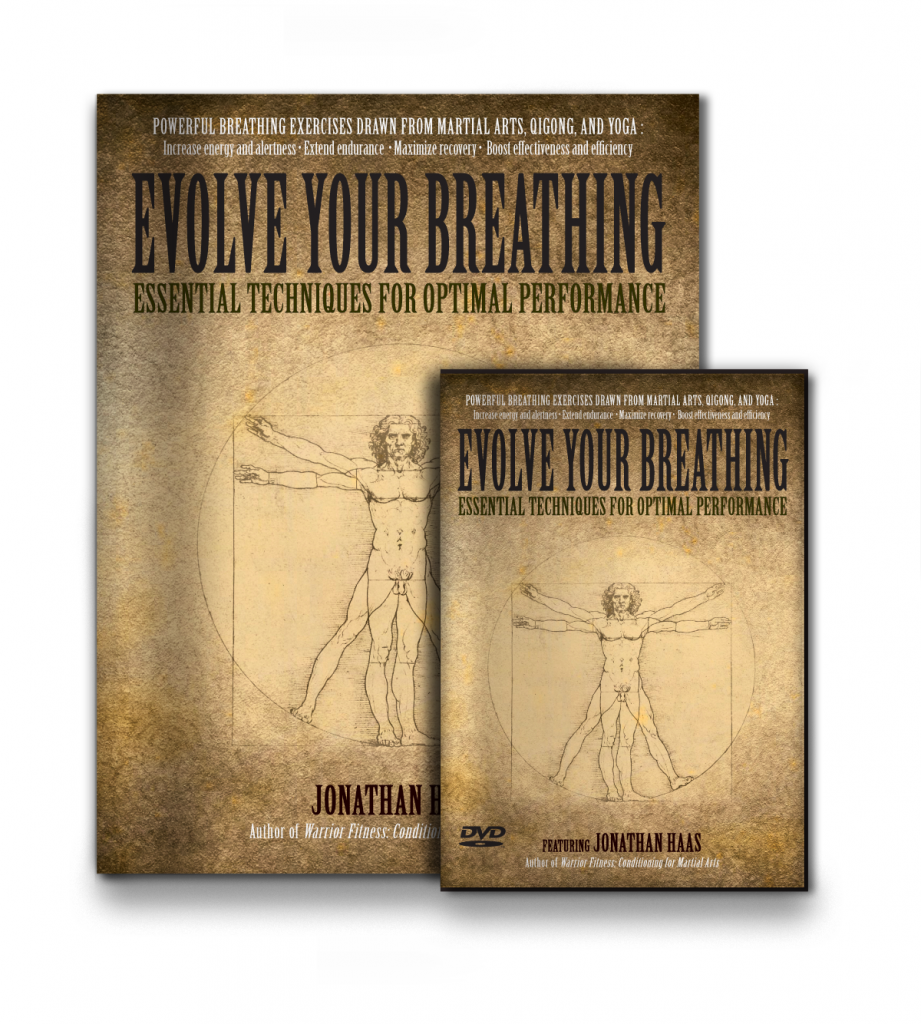
My Evolve Your Breathing Program contains all you need to build lung capacity, increase energy, and create vital health. (also, you can get EYB for free when you pick up a copy of Shadow Strength) My qigong program, Vital Force is also an excellent reference for breath training and energy development.
Pine Pollen – I have been adding this to my morning glass of water and it has made a huge difference in aiding my recovery from intense training. While not absolutely necessary, I do find that it helps give me an edge in my training! Get Pine Pollen<<==
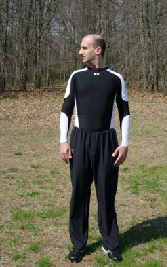
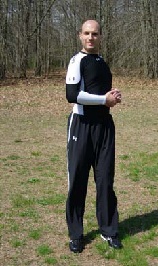
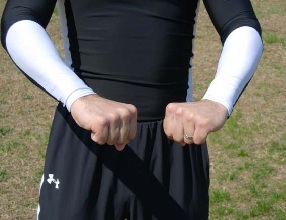
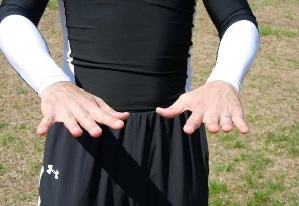
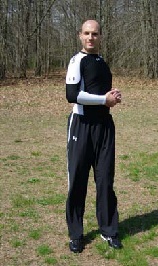
The health preserving and sustaining effects of Wuji Standing have been documented in hospitals and medical clinics across China.
The reason this practice has such a profound impact on health and recovery from exercise is that the standing meditation acts like a system-wide reboot for the whole body.
It stimulates the nervous system, increases circulation, and raises energy levels, while providing deep relaxation for both mind and body.
Aches, pains, old injuries, muscular tensions, and imbalances are highlighted and brought to the forefront by this method and then slowly dissolved over time and completely released.
The practice provides a way of completely relaxing and letting go of the muscular tensions in the body, while the correct alignment of the bones delivers support, creating a profound neutral and relaxed, almost buoyant state.
As the whole body and mind are exercised, both relax and stimulate the nervous system, increasing circulation, opening the joints, and raising energy levels for a feeling of overall well-being.
This exercise looks easy from the outside. After all, you’re just standing there and not moving. However, there is a lot going on inside: the breath and qi (energy) are moving.
This exercise is a challenging, sometimes frustrating, yet highly beneficial and rewarding practice. The only way to truly appreciate it is to experience it for yourself.
Wuji Standing Challenge Instructions
Learn More…
Shadow Strength utilizes a proprietary set of exercises drawn from traditional martial arts and trained in a unique combination to skyrocket your internal strength, power, and resistance to injury.
Using breath, posture, and martial mobility, Shadow Strength breaks down the barriers to superhuman strength and an unbreakable body.
It recently came to my attention (yesterday, as a matter of fact) that several people are under the impression that my Evolve Your Breathing program is only meant for a small demographic of the population, ie – male martial artists.
Correct me if I’m wrong here, but the last time I checked 100%, that means ALL, of the population breathes – am I right? 🙂
So why would someone assume that a program on breathing exercises for health, wellness,performance, and stress management, applies to just a limited segment of the population?
Let me help – No matter who you are and what sort of activity, sport, or martial art (or none) you are engaged in, your breathing is an essential, and I mean critically essential, component of that activity.
To make this an even easier decision, I am so sure that EYB will increase your energy levels, improve your response to stress, and speed your workout recovery that I am offering a 30 day money back guarantee.
Try Evolve Your Breathing for 30 days and if you don’t like it, I will give you 100% of your money back no questions asked. (well, I might ask one question, like – did you actually try it???)
Today, let’s take a look at my top 5 favorite, no-brainer strategies for losing fat like a champ.
If you are not seeing the results you want with your current fat loss plan, implement some, or preferably all of the following strategies and watch the fat literally fall off you! Continue reading →
Ever have one of those days when nothing goes right?
The alarm clock is blaring yet you hit the snooze again for the 5th time dreading the prospect of getting up and facing the day. When you finally drag yourself out of from under the covers and realize just how late it is, your heart jumps into overdrive as you rush through your morning routine desperately trying to get out of the house to make it in to work on time. If you have small children to get ready for school, daycare, or other activities as well, that simply throws more chaos into the mix.
In your rush, you forgot to eat breakfast and left your steaming mug of coffee sitting on the kitchen counter while you ran out of the house. Traffic sucks, of course, because you’re late, and when you finally get in to work there are 6 messages from your boss wondering why you missed the morning project meeting… and your day goes downhill from there.
Some days it just seems like the universe is conspiring against you and this time it’s personal!
What do you do?
How do you respond to the myriad changes and vicissitudes life throws at you?
Do you find yourself tossed about like a small boat on a rough sea constantly overreacting and over-correcting with each wave?
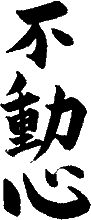
Or, do you have a quiet calm reserve of energy and strength that allows you to maintain a state of fudoshin – “immovable spirit”?
Fudoshin is a state of mind that remains undisturbed and not easily upset by either internal thoughts or external factors. It is the even keel that keeps your craft steady and on course during rough seas of life.
How do you develop fudoshin though? How do you cultivate that quiet reserve of strength and energy?
Prepare Yourself Daily
Daily preparation is the key. A reserve of strength must be built up gradually and nurtured daily, even when you don’t need it, especially when you don’t need it, so it’s there when you do. Like a savings account you invest a little bit each day so that when the unexpected happens the funds are there for you to draw upon. So let’s get to the nuts and bolts.
How do you prepare yourself daily? Here’s what I do…
Get up earlier each morning. Yes, earlier. Allow 30 to 45 minutes BEFORE you actually need to be up to get ready for the day.
Grab a cup of coffee. I love my coffee; there’s nothing like that first sip in the morning. Feel free to skip this step if you don’t drink coffee. 🙂
Head outside for a breath of fresh morning air (feel free to bring your coffee). According to Chinese Medicine, early morning is the springtime of the day and thus best for planting seeds to cultivate good health.
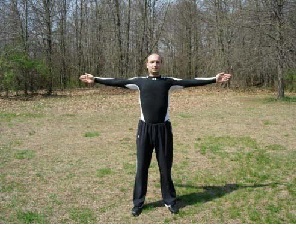
Stand tall, feet shoulder width apart, knees slightly bent, spine straight. Raise the arms laterally up over head breathing in slowly and deeply with the movement. As you inhale imagine the oxygen and energy carried by the breath is filling up your entire body. Hold the full breath for a moment or two, then slowly exhale completely bringing the arms back down. On the exhale, imagine the body is expelling tiredness. Repeat 3 to 5 times. Feel free to add other imagery to this exercise as well. For example, on the inhale imagine drawing in the positive qualities of strength, health, and confidence, and on the exhale imagine the breath drawing out and expelling negative qualities of weakness, sickness, and fear.
Perform a full, head to toe joint mobility routine to further wake up and enliven the body. For a complete discussion on joint mobility work and much, much more, see my book, Warrior Fitness: Conditioning for Martial Arts.
Depending on how much extra time you have, relax a few more minutes enjoying the strength and energy you have cultivated – and finish that cup of coffee before heading in to start your day!
What’s sapping your energy and, unbeknownst to you, hindering your performance in martial arts, athletics, or simply the daily art of living, working, and taking care of your family? Residual muscle tension, or tonus, is the continuous, passive partial contraction of muscles in the body that aids in posture and support. Unfortunately, any type of exercise, stress, fear, and trauma, all cause an unwanted and unnecessary increase in the normal residual muscle tension of the body. Usually this extra tonus goes unnoticed, or worse is simply deemed an acceptable and natural side effect of living. The problem with this added tension is that the continuous contraction of muscle throughout the day, ever day, is using up energy. Energy that can, and should, be available to us is being siphoned off thereby putting the brakes on our performance. It’s like driving a car around all day with the emergency brake on. You can still get where you need to go, but that extra, unnecessary drag is killing the car’s performance and guzzling gas.
So how do we remove these insidious restrictive forces on our body? Besides a daily dose of joint mobility, which has been covered extensively in Warrior Fitness: Conditioning for Martial Arts, and in various other posts, I have come across 2 methods that work wonders:
1. Tension/Relaxation Exercises
At first glance, it may seem odd to increase tension in order to relieve tension, but remember, residual muscle tension is held unconsciously while these exercises will intentionally increase muscular tension for the purposes of identifying and releasing it. Stand naturally and lift your shoulders as high as possible up to your ears while simultaneously squeezing them as tight as possible. Hold for a couple seconds then drop with an exhale. Do it again. Feel the tension in your shoulders, neck, and upper back start to release? You can do this locally with any area of the body, or the whole body all together. For example, tense your left arm as tight as possible on an inhalation, hold for 3 seconds, then completely relax on an exhale. Do this with the legs, the abdomen, chest, back, shoulders. Tense each area while inhaling, hold for 3 seconds, then release and relax on the exhale.
2. Vibration Exercises
These are very simple, yet highly effective exercises which have been used for centuries in yoga and qigong to shake out and release residual muscle tension in the body. So how do you do them? Stand naturally, feet shoulder-width apart, knees slightly bent. Spine straight. Lift up from the crown of your head. Begin to bounce gently with the legs shaking the whole body up and down. On each down bounce allow the body to exhale – don’t force it. Don’t try to breath, just let the motion breath the body. Slightly round the shoulders and tuck the pelvis to help the motion push air out. Continue shaking the body up and down for about 30 seconds to a minute. Stay loose. Stay relaxed. Shake out the tension.
These 2 simple exercises, done on a daily basis, will go a long way toward helping you recover the energy that’s been bound up in holding residual muscle tension. Let me know how they work out for you!
In our last article on breathing exercises, here, we introduced the concept of using the basic push-up form as a vehicle for training the breath. Today we will continue with the push-up as the outward expression, but take a look at different types of breathing patterns to increase the depth and complexity of the the exercise.
4 Phases of Breathing
The breath cycle can be broken down into 4 distinct phases of breathing:
Inhale
Pause after inhale (full hold)
Exhale
Pause after exhale (empty hold)
Each of these phases can be manipulated within the framework of our exercise to create variation and change the focus of the exercise. Previously we had discussed how to use the inhale and exhale phases of breathing to increase capacity by fitting more movement into each breath. Today we will focus on the other 2 phases, pause after inhale and pause after exhale. These breath holds will allow us to teach the body how to utilize the oxygen it already has more effciently by working longer in a state of oxygen deprivation.
As a side note, please be aware of your body’s physiological response to breathing exercises. In general, inhalation causes a slight increase in tension and blood pressure, while exhalation causes a relaxation response and an accompanying lowering of blood pressure. These effects can be magnified by holding the breath after inhalation and holding the breath after exhalation. Therefore, please proceed with caution.
Inhale and Hold
In this exercise we will be working with the pause after inhalation. Assume the push-up position. Inhale deeply by expanding the belly. Don’t force it. Just inhale as much as comfortable for you. Pause. Do not exhale.
Perform 1 push-up.
Exhale at the top and inhale again. Perform 2 push-ups on the full hold. Exhale at the top portion and then inhale and hold. Perform 3 push-ups on the full hold.
How does it feel?
Can you do 4? 5?
Make sure you are not trying to move faster just because you’re holding the breath.
Perform the push-ups smoothly and in a relaxed manner. A side benefit of this type of work is that it helps you to work under stress. When you can’t breathe, the body begins to panic. Even though your mind knows it’s just an exercise and you can breathe at any time, your body is responding to the lack of air and begins to sound the alarm. Understand this and work with it to teach yourself to remain calm in difficult situations.
Exhale and Hold
Now let’s look at the pause after exhale, or empty hold. You know the drill by now – assume the position!
Inhale and exhale in the top portion of the push-up. Hold on the exhale and do 1 push-up. Inhale and exhale. Do 2 push-ups. Inhale at the top, exhale. Do 3 push-ups.
What do you notice about holding on the exhale versus holding on the inhale?
Much more difficult, right?
Again, note the reaction your body is having to the exercise. Are you speeding up to get through it? Are you using more muscle tension than necessary? How does the increased muscle tension affect your body’s oxygen usage? Relax and slow down. You’ll be able to handle more.
Hip to be Square Breathing
Okay. Time to put it all together. Square breathing means that each of the 4 segments or phases of the breath cycle will be of equal length. For example, inhale to a count of 5, hold on the inhale for a count of 5, exhale for a count of 5, then hold on exhale for a count of 5. The count itself doesn’t matter as long as each part is equal. Obvioudly, the difficultly level can be increased with a higher count and decreased with a lower count. For our purposes, let’s stick with the 5 count for one push-up. Begin in the up portion of the push-up. Don’t move yet, but inhale for a count of 5. Now hold the breath and slowly lower down to a count of 5. At the bottom portion of the push-up, exhale in position for a count of 5. Hold on the exhale and raise yourself back up slowly to a count of 5. Make sense?
Let me know how you make out with the above exercises and if there are any questions you have.
Today we are going to talk about push-ups. I can hear the groans already.
But these aren’t the dull, boring, uninspired push-ups you had to do in grade school gym class for some lame physical fitness challenge. Nor are these the repetitious calisthenics you had to do by the hundreds in Army Boot Camp.
Today, we are using the basic push-up as a tool, a vehicle to study and work our breath. The push-up is simply the form our breathing exercise will take, nothing more.
Sound a little more interesting now?
Let’s explore a little more…
Usually, breathing exercises are done in a very relaxed, non-stressful manner in a seated, or even lying down position.
Not today.
Breathing push-ups will help us explore our breath while moving and while under load.
Why is this important, you ask?
Consider that it’s pretty easy to control your breath while comfortably seated on the mat, and easy to relax while lying down. But how much carryover do those types of breathing exercises have to helping you withstand pressures in real life or stress in fighting? Some, certainly, but their emphasis is different. Please don’t misunderstand here though. We need a myriad of exercises to be able to influence and control physiological processes. The stationary relaxed breathing exercises absolutely do have a place in your tool kit and are important for health, stress relief, and relaxation, but are just not the focus of our discussion today.
The Structure of a Push-Up
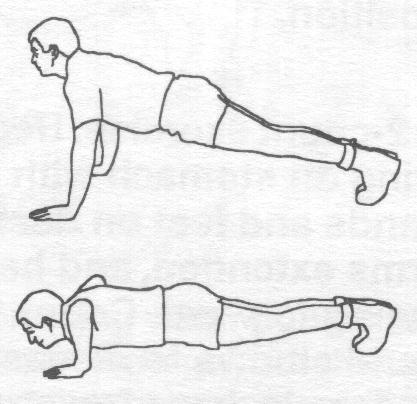
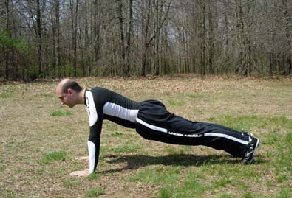
Let’s begin in the up portion of the push-up position. Hands should be about shoulder-width apart, elbow pits facing forward. Back is straight, aligned from crown to coccyx. Very important with all the exercises here, do not use any more muscle tension than absolutely necessary to accomplish the exercise. As you progress, you’ll find less and less muscle power is needed for the same result. We’re working toward efficiency here. So, relax as much as possible and remember that the push-up is just the form, the real goal is the breath work.
Begin to inhale slightly before starting the push-up this way your breath leads the way. As you lower down, continue to inhale by expanding your belly.
No chest breathers here!
Pause at the bottom portion, then begin to exhale again slightly before initiating the upward push. The breath should guide the movement.
Play with this for several repetitions trying to really get the feel of the breath leading and supporting the movement.
Now reverse the breathing pattern. Exhale on the way down and inhale on the way up. Same rules apply.
If you feel excessive muscle tension being used, stop. Stand up and lean against a wall or a staircase in the push-up position. This will greatly reduce the demand of the exercise allowing you to concentrate on the breathing aspect while still performing the movement of a push-up. When you feel comfortable with the movement, drop back down to the floor and try again. Keep the same light feeling you had while doing the push-ups against the wall or stairs.
Building Capacity
Once you get the hang of the breath leading the movement of the push-up, we will begin to work on expanding your breathing capacity. Here we will stretch out the inhale and exhale to fit more movements into each breath cycle.
For example, begin again in the upward portion of the push-up position. Exhale completely without moving. Begin the inhale slightly before the lowering movement and continue to inhale all the way down and all the way back up. Exhale. Now try to do 2 push-ups on one inhale. If you can do 2, try 3. See how many movements you can fit into one inhale, it’s not easy! Make sure you don’t rush that will only add tension and gas you out even quicker. Maintain relaxation and an even pace throughout.
Once you’ve done a few reps by expanding your inhale, try to do the same thing on an exhale. Start in the top portion of the push-up, inhale completely without moving. Begin your exhale slightly before the downward movement and continue through the whole push-up. Try 2, 3, 4, see how many reps you can do on one exhale.
One way to do this in a set is to do a breathing ladder. Do one push-up on one inhale. Exhale at the top. Then do 2 push-ups on one inhale. Exhale at the top. Then do 3 push-ups on one inhale. Exhale at the top. Try to do 4 on one inhale. Now, reverse it, inhale at the top and do 4 push-ups on one exhale. Then 3 on one exhale. Then 2. Then one push-up on one exhale. Get the idea?
Hopefully this is a fun and productive exercise for you. Let me know how it works and if you have any questions!
Stay tuned for Part 2 of this article where we’ll discuss breath holding.
I was planning to title this post, “Breathing for Dummies”after the famous how-to guides, but I realized most dummies aren’t interested in bettering their health, fitness, and extending longevity in their sports, martial arts, or activities. Plus, I dislike the subtle insult of refering to my readers as “dummies”. Nor would I want dummies for readers anyway. So instead today we will go over Breathing 101. These are what I consider to be the most effective ways to integrate breathing exercises into your daily training, and use them to increase lung capacity and efficiency of how your body processes oxygen. We will look at several different exercises that will enable you to lower your heart rate, blood pressure, and stress levels, as well as to increase energy.
Breathing as a Bridge
You may not be aware that breathing is a bridge between our voluntary and autonomic nervous systems. Meaning breath is plugged into both. The autonomic system will keep you breathing continuously without your conscious control, or sometimes, without even your awareness of it going on. But, you also have the power to override that control and decide at any moment to take a deep breath or hold your breath. What does this mean to you though, right? Well, here’s what it means, you have the power, at any time, to consciously choose to influence things like your heart rate and blood pressure which are not under your conscious control. Now that’s fascinating to me! Because breath is tied into both systems it can be used like a bridge to gain access to aspects of your body that you cannot directly control. How do we do this?
Try This Experiment
Take your pulse. Count beats for 10 seconds then multiply by 6. If you’re sitting and relaxed, that number should be your resting heart rate. Now, inhale as deeply as possible and hold your breath and tense your whole body for a few seconds. Are you red in the face? Take your pulse again. What happened? Your hear rate jumped up and your blood pressure spiked right along with it, right? Now try exhaling for a count of 6, but don’t inhale yet. Extend the pause before the inhale a little bit. Feel more relaxed? Check your pulse. It should have dropped. Pretty cool, eh? And this is just the beginning.
The Exercises
Relaxing Breath (Square Breathing)
This is very similar to the experiment we did above. The basic premise of our ability to influence the autonomic nervous system is that inhalation increases heart rate, which subsequently increase blood pressure, to a slight degree, while exhalation lowers heart rate and blood pressure to a slight degree. During our normal cycle of breathing, these changes are too minute to register, or even notice. But, by gradually lengthening our breath and extending the pause before inhaling and exhaling, we compound the effect.
Begin by exhaling through the mouth for 5 seconds.
Do not inhale. Try to extend the breath pause for 5 seconds.
Before tension begins to creep in, inhale for 5 seconds.
Hold the breath on the inhale for 5 seconds.
Repeat the cycle 10 times.
As this becomes easier, and your capacity expands, try increasing the duration to 6, 7, 8 seconds.
Energizing Breath
In this breathing exercise we will utilize a protocol founded by yoga and improved upon by Russian sport science and martial art. Here we will divide the breath into 3 levels: clavicular (upper level), intercostal (mid level), Diaphragmatic (lower level). This exercise will focus only on the clavicular, or upper level. I first learned this exercise, and several others including the next one below, about 10 years ago from my good friends Dave Rusin and Oleg Yakimovich who are ROSS Russian Martial Art instructors. More information about ROSS can be found at their website here. Check it out!
Exhale through the mouth in a short, quick burst by compressing the upper chest.
Do not actively inhale. Allow the inhale to happen by relaxing the muscles in the chest.
Repeat rapidly 20 to 40 times.
Build up to where you can perform continuously for 60 seconds.
If you become dizzy, stop and sit down!
Restoring Breath
Here again we will depend on Russian sport science and martial art for our technique. This one is literally a life saver when doing high intensity anaerobic workouts! It can be used in between exercises as well as in between sets, during the rest period, and at the end of the workout to normalize breathing and dramatically lower heart rate.
Forcefully exhale as deeply as possible by rolling your shoulders forward, tilting the pelvis up, and contracting the core strongly.
Pause before the inhale for a few seconds.
As stated above, do not actively inhale. Allow the breath to be sucked back in through the nose as your body returns to a natural standing posture.
Repeat for about 60 seconds, or as long as needed.
Try these out and let me know how they work for you. Any questions, please feel free to contact me here.
This proves to be quite difficult for many cube-dwelling corporate warriors. This article will provide the reader with concrete examples of ways to increase health, energy, mobility, and core strength all while seated (or standing) at your own desk. Fitness at Work will only require about 10 minutes a day which can even be broken up into shorter increments and done throughout the work day. And, for those concerned with being stared at, most of these can be accomplished surreptitiously!
Before we get started, let’s take a look at some of the specific impediments to our health, vitality, and fitness that may be exacerbated by sitting at a desk, working on a computer 8+ hours a day, 5 days a week:
General fatigue
Short-range stiffness
Stiff neck, neck pain (pain in the neck?)
Low back trouble, ruptured/herniated/bulging discs, etc.
Carpal tunnel syndrome
Expanding waist line
Lack of good overall muscle tone
Try to perform the following exercises a few times a day to reduce tension from the daily grind!
Neck Mobility
Up/Down (Lift up from crown of head, slide down along plane of jaw)
Left/Right (Turn head as far left as possible without pain, turn as far right as possible)
Side/Side (Tilt head down to left, move from corner of jaw, repeat to right)
Full circle
Shoulder Mobility
Roll both shoulders backwards (Lift shoulders up towards ears, roll backward fully articulating the range of motion, drop them down as far as comfortable)
Roll both forward
Alternate shoulder rolls (Roll left shoulder back as described above while pushing right shoulder forward then switch)
Wrist Mobility
Hold both hands in loose fists, make circles clockwise and counter clockwise with wrists
Begin with left wrist, hold in fist as above, lift wrist up, to the outside, down, to the inside, reverse direction and repeat with right wrist
Finger Mobility
Begin circling fingers with thumb (5 times) then continue with each additional finger
Circle fingers from pinky in the opposite direction
Core Strength
Tilt the pelvis up slightly while rolling the shoulders down, creating a “scooped out” concave with your torso. As you do this exhale and tighten all the core muscles and muscles around the core
Hold the tension for 5 – 8 seconds, then release allowing the breath to rush in as your abdomen naturally expands out again
Repeat 5 to 10 reps
Remember, just a short 10 minute break a few times a day will do wonders to increase your concentration, productivity, and mental health!
Let me know how these exercises work for you. Also, how do you relieve stress at work?
 I’m looking at the calendar and this year is winding down quickly. I swear, once we hit September the whole thing just seems to fly by!