The Five Pillars of the Iron Body

How Martial Artists Build Lifelong Strength, Power, and Durability

There is a quiet truth that most martial artists eventually discover.

Technique alone is not enough.

You can know hundreds of techniques, understand strategy, and have decades of experience… but if the body itself is not developed correctly, that knowledge cannot be fully expressed.

The greatest martial artists throughout history understood something very important:

They didn’t just train techniques.

They trained the body itself.

They forged a body that was:

• elastic
• structurally aligned
• internally powerful
• externally durable
• and capable of integrating all these qualities into real movement

This type of body is what I like to call The Iron Body.

And over the decades, after studying internal martial arts, strength training, Qigong, and traditional conditioning methods, I’ve come to understand that the martial body develops through five essential pillars.


The Five Pillars of the Iron Body

Every powerful martial artist develops five core qualities:

  1. Elasticity

  2. Structure

  3. Pressure

  4. Durability

  5. Integration

When these pillars are trained together, the body becomes both powerful and resilient.

Let’s look at each one.


Pillar One: Elasticity

The Spring of the Body

Muscular strength is useful, but true martial power comes from something deeper.

The body must behave like a bow.

When tendons and connective tissue become elastic, they store energy during movement and release it explosively.

This is why skilled martial artists often appear relaxed yet generate tremendous force.

They are not relying on muscular tension.

They are using elastic power.

Training methods that develop elasticity include:

• Yi Jin Jing tendon training
• structural isometrics
• slow movement exercises
• controlled connective tissue loading

This is exactly the focus of my Iron Silk Method program.

Iron Silk is designed to restore the elastic connective tissue qualities that allow martial power to feel effortless.

When elasticity develops, many practitioners notice:

• strikes feel heavier
• movements become smoother
• the body feels springy instead of stiff

Elasticity is the engine of martial power.


Pillar Two: Structure

The Frame That Carries Force

Power does not come only from the muscles or tendons.

It must travel through the body.

Structure is what allows force to move efficiently through the skeleton into the ground.

When structure is correct:

• the body becomes stable
• pressure flows through the frame
• muscles remain relaxed

When structure collapses, power disappears.

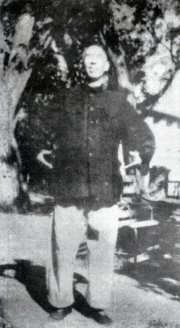
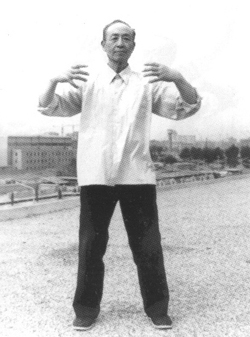
This is why many internal martial arts emphasize standing practice.

Standing training teaches the body to align:

• feet
• hips
• spine
• shoulders
• head

When these elements are stacked correctly, the body becomes capable of carrying tremendous force without strain.

This is the focus of Zhan Zhuang training.

Zhan Zhuang develops:

• posture
• root
• internal connection
• relaxed strength

Over time, standing practice creates a body that feels heavy and stable under pressure.


Pillar Three: Pressure

Breath-Driven Internal Power

Breathing is far more than a relaxation tool.

In traditional martial arts, breath is used to create internal pressure.

This pressure stabilizes the body and fuels movement.

Practices that develop internal pressure include:

• dantien breathing
• whole-body breathing
• compression and expansion drills

When breath and structure work together, something powerful happens.

The body begins to move as one connected unit.

This type of breathing is a key component of both Iron Silk and Martial Qigong training.


Pillar Four: Durability

The Armor of the Body

Elasticity creates power.

Structure directs power.

Breath fuels power.

But the body must also be able to handle power.

That’s where durability comes in.

Durability refers to the strengthening of:

• bones
• tendons
• muscles
• skin
• connective tissue

Historically this was developed through hard Qigong training.

Practices included:

• static posture strength training
• tendon conditioning
• iron body methods
• breath-powered tension

This is exactly what is taught inside my Martial Qigong course.

Martial Qigong develops the external strength and durability that allows martial artists to remain strong and resilient as they age.

Without durability, elasticity becomes fragile.

With durability, the body becomes capable of absorbing and delivering force safely.


Pillar Five: Integration

Turning Training Into Martial Power

The final pillar is integration.

Integration is where everything comes together.

Elasticity, structure, breath, and durability must eventually become one coordinated system.

This is what allows martial artists to move naturally and generate power without thinking.

Integration is developed through:

• slow martial movement
• striking mechanics
• grappling pressure drills
• standing meditation

At this stage, the body begins to express power effortlessly.

Many practitioners describe this as:

• heavy hands
• relaxed strength
• effortless issuing

This is the stage where training becomes true martial skill.


The Foundation of Everything: Daily Practice

All five pillars rest on one essential foundation.

Daily practice.

The martial body is not built through occasional effort.

It is built through consistent, intelligent training over time.

Even short daily practice sessions can create profound changes in the body.

A simple daily structure might include:

Standing practice 
Iron Silk tendon training
Breathing exercises
Martial Qigong conditioning

Over weeks and months, these practices gradually transform the body.

This is how martial artists develop strength that lasts decades instead of years.


Bringing It All Together

When the five pillars are trained together, the body begins to change in remarkable ways.

Elastic connective tissue creates explosive power.

Structure carries force efficiently.

Breath generates internal pressure.

Durability protects the body.

Integration turns all of this into martial ability.

This is the essence of The Iron Body Protocol.

And it is exactly what my training programs are designed to develop.

Iron Silk Method builds elasticity and tendon power
Martial Qigong develops durability and external strength
Zhan Zhuang standing practice creates structure and internal connection

Together, they form a complete system for building a powerful, resilient martial body.


Train for the Long Path

Martial arts are not just about fighting.

They are about developing the body and mind over a lifetime.

When you train the five pillars consistently, the goal is simple:

To become stronger, healthier, and more capable every year.

Not weaker.

Not slower.

But better.

That is the path of the Iron Body.

Train with intent.

— Jon Haas
The Warrior Coach
Living the Warrior Lifestyle


Years ago I wrote down what I considered to be the essence of living the warrior lifestyle and I called it “The Warrior Code” – original, I know! 🙂

Just so you are aware, here is my original “warrior code”:

  • Warriors train to push their body and mind to the limits, and find new ones
  • Warriors are strong to protect and defend self and others
  • Warriors know that not fulfilling their utmost potential is cheating themselves and robbing the world of their brilliance
  • Warriors are knowledgeable knuckledraggers
  • Warriors strive to always become stronger every day

Not bad, right???

But in the past few years I’ve taken it even further.

From the very start of my warrior journey, I’ve always held that the martial arts are a microcosm of life.

And now, my own personal warrior training has become a metaphor for how I live my live. Essentially, my warrior training has become the overarching guiding philosophy in my life, my business, my teaching, and my interaction with all those around me.

I have reaped the benefits of living the warrior lifestyle and would now like to share them with you.

So I am introducing a brand new coaching program…

Warrior Lifestyle Coaching

We are always told that we have unlimited human potential. But sometimes it doesn’t feel that way.

How do we access it?

One of the hallmarks of many warrior cultures is their ability to delve deeply into the psyche and access the full range of human abilities.

How would it feel to be able to access your full human potential in mind body and spirit?

That’s the goal of this coaching program.

Some of the areas we will cover are:

  • How to motivate yourself for best possible results
  • Ninja tactics for goal setting and attainment
  • Warrior time management – How to get incredible results in your training even on the busiest of schedules. Or perhaps you have too much time on your hands and can’t figure out how to organize it
  • The Warriors mental training – sharpening your mind to a razors edge to be able to handle and instantly respond to any stress or challenges life can throw at you
  • Essential Warrior Philosophical principles to incorporate into your life that will guide & streamline your thinking and decision making ability to rapidly and correctly chose the right path for your life
  • Walking meditation exercises with breath work for problem-solving, deep thinking, rapid change of your energetics state
  • The Warrior’s Mindset training – the happiness principle]
  • How to stop the demon of distraction dead in its tracks and really get shit done
  • And, of course – a completely individualized personal warrior program to get you in the best shape of your life

Sound like something that’s been missing from your training and that you absolutely NEED in your life?

Would you like to reap all the benefits of my 30+ years of knowledge and experience without having to make all the mistakes I made to get here?

Go HERE and complete this uber short application. I’ll review and get back to you within 24 hours!!

(Side-note: if you are unwilling to take the 2 minutes to fill out a short form, are you really ready to make a change in your life? Fill out the damn form like the action-taker I know you are, and let’s kick some ass together!!)

Powerful Morning Ritual To Start Your Day


Here is a great way to set yourself up for success on a daily basis.

Spend the first hour of each day working on your own personal development. Discipline yourself to get up earlier and work on yourself each morning – This powerful practice will literally transform your life!


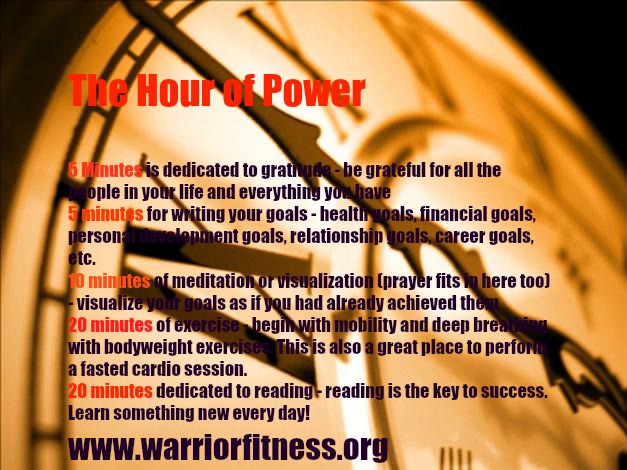
The Hour of Power

Step 1 – 5 minutes is dedicated to gratitude

Practice being grateful for all the people in your life and everything you have. When you start from a place of gratitude each morning, it’s much more powerful to begin each day from a place of abundance, realizing just how many things are going right in your life, rather than coming from a place of lack.

Step 2 – 5 minutes for writing your goals

Take a fresh sheet of paper and write out all your goals on a daily basis – health goals, financial goals, personal development goals, relationship goals, career goals, etc. When you write your goals make sure to write them in the first person and as if they are already accomplished.

For example, if you have a goal to earn one million dollars in your business, you would write – “I earn $1,000,000 in my business.”

Step 3 – 10 minutes of meditation or visualization (prayer fits in here too)

Visualize your goals as if you had already achieved them.

Every morning I sit down on the floor, close my eyes and focus on my breathing.

After each exhale I retain the breath because this is when your body is most quiet – after an exhale, before the next inhale – and silently say to myself, “Every day in every way I am getting stronger and stronger. Every day in every way I am getting better and better.”

I say it several times while holding the breath on the exhale, each time more intently.

When I open my eyes, I am clear, focused, charged up, and ready to start my day!

Here’s a short video I made describing the process…

Give it a try and let me know how it works for you!

Step 4 – 20 minutes of exercise – begin with mobility and deep breathing with bodyweight exercises.

Do you jump out of bed every morning brimming with energy, ready to take on the day?  Yeh, me neither. 🙂

What I have found is that doing 3 simple exercises as soon as I get out of bed in the morning helps to rev up my energy levels and kick start my day.

Tomorrow morning, and every morning after that, I want you to perform the following 3 exercises.  You will be amazed at the powerful effect they have on stimulating your metabolism and getting you ready to kick butt for the day!!

What are the 3 exercises?

  • Breathing Push-ups x 10
  • Breathing Squats x 10
  • Breathing Leg Raises x 10

For each exercise, exhale fully and deeply (diaphragmaticly) while lowering down, and inhale fully and deeply by expanding the belly when raising the body.  Make sure to fully actualize the breath in every movement.

That’s all.  Just one set of 10 for each of those 3 exercises to kick start your day.

Step 5 – 20 minutes dedicated to reading

Great warriors train all the time. Reading is a form of training that must be practiced by the warrior on a daily basis. Feeding and training the mind is just as important as feeding and training the body. Remember – knowledge is power!

Fill your mind with creative, positive and motivational ideas, concepts, and philosiphies – reading is the key to success. Learn something new every day!

Here are 10 books that are a must in every warrior’s library. Expand your mind and pick up these books!

(PS – don’t have a full hour in the morning? change the amount of time spent in each area to fit your schedule)

You will find this powerful practice a great way to start your day and propel you towards success in every area of your life. Make sure that you implement it tomorrow morning!

Looking for more powerful practices to enhance your health, strength, and life?

Check out my new Warrior Lifestyle Coaching Program <<==


21 Day Wuji Standing Meditation Challenge

21 Day Wuji Standing Meditation Challenge

Why Wuji?

The health preserving and sustaining effects of Wuji Standing have been documented in hospitals and medical clinics across China. 
The reason this practice has such a profound impact on health and recovery from exercise is that the standing meditation acts like a system-wide reboot for the whole body.

It stimulates the nervous system, increases circulation, and raises energy levels, while providing deep relaxation for both mind and body.

Aches, pains, old injuries, muscular tensions, and imbalances are highlighted and brought to the forefront by this method and then slowly dissolved over time and completely released.

The practice provides a way of completely relaxing and letting go of the muscular tensions in the body, while the correct alignment of the bones delivers support, creating a profound neutral and relaxed, almost buoyant state.

As the whole body and mind are exercised, both relax and stimulate the nervous system, increasing circulation, opening the joints, and raising energy levels for a feeling of overall well-being.

This exercise looks easy from the outside. After all, you’re just standing there and not moving. However, there is a lot going on inside: the breath and qi (energy) are moving.

This exercise is a challenging, sometimes frustrating, yet highly beneficial and rewarding practice. The only way to truly appreciate it is to experience it for yourself.

Wuji Standing Challenge Instructions

Learn More…

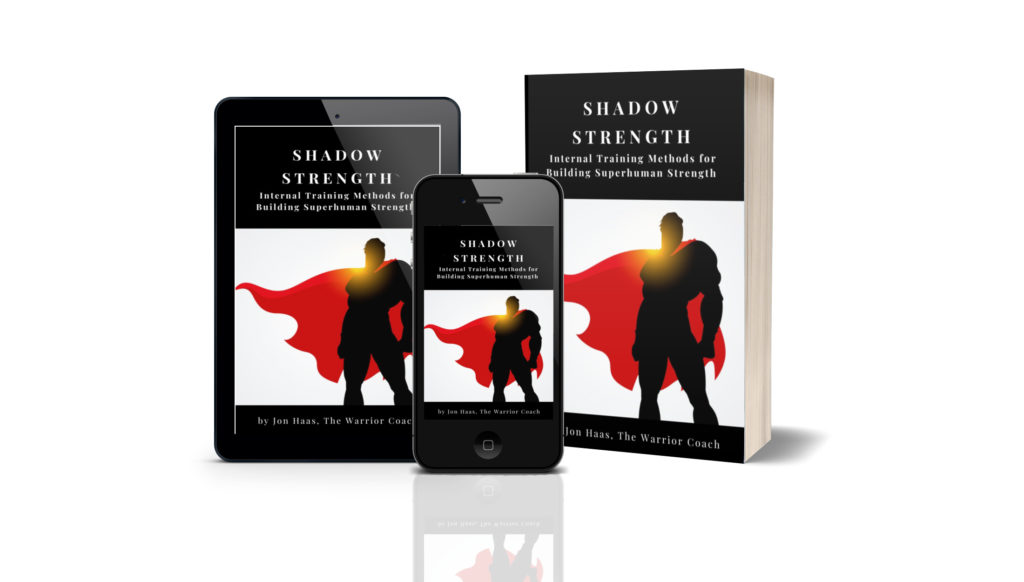
Shadow Strength utilizes a proprietary set of exercises drawn from traditional martial arts and trained in a unique combination to skyrocket your internal strength, power, and resistance to injury.

Using breath, posture, and martial mobility, Shadow Strength breaks down the barriers to superhuman strength and an unbreakable body.


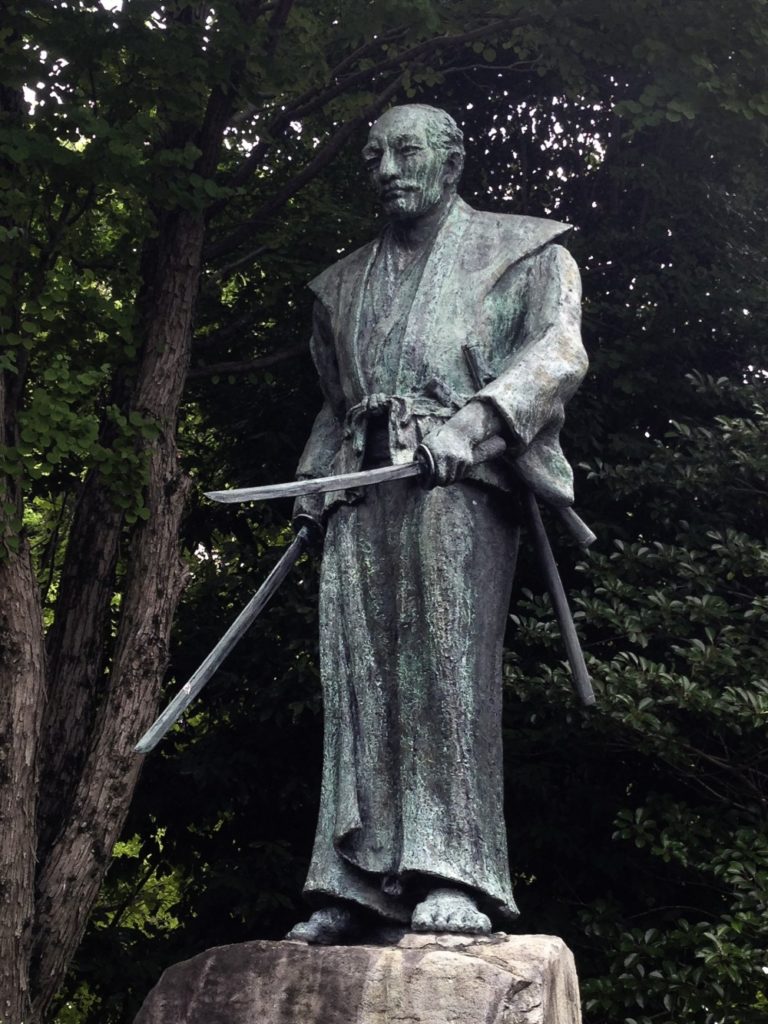
Musashi on Posture in Strategy

In his classic work on the art of strategy, Go Rin No Sho, Musashi gives the following instructions on Posture in his art.

“Keep your neck straight, putting some force in the hollow of the nape; lower your shoulders, with the sensation that the torso from the shoulders down forms a unity; keep the back straight, do not stick out your buttocks, push your force downward from your knees to the tips of your toes, Advance the belly slightly forward so that the pelvis does not lose its stability…

It is necessary for you to have as your posture in strategy just the ordinary one, and it is essential that the posture of strategy be the ordinary one for you. This must be examined well.”


Notice how adamant he is that your stance for combat and your everyday stance be the same…

Isn’t it interesting that Musashi’s instructions for how to stand in his system of strategy sound remarkably similar to zhan zhuang (standing meditation) and shizen no kamae (natural posture).

Coincidence? I think not…

For comparison here is a video I made on how to stand in Shizen no Kamae (natural posture).


Now let’s take a deeper look into the standing practice as the world’s oldest and most effective form of Qigong.


Tachi Geiko (Standing Training) or Ritsu Zen (Standing Zen)

Zhan zhuang, or standing meditation exercise, has been used as a method of relaxation and health cultivation for thousands of years. The earliest known reference to standing appears inThe Yellow Emperor’s Classic of Chinese Medicine. Martial arts master Wang Xiangzhai wrote the following in his book on zhan zhuang:

“It is said that already 2000 years ago there existed the book Internal Canon, the gem of Chinese medicine, which even today is a guide for medical practice. The chapter Simple questions concentrates on cultivating health. For example we can read there: “In ancient times great masters stood on earth, supporting heaven, controlling yin and yang, breathing with essence of qi, standing alone, guarding spirit, with body being as one.”… Before the eastern Han dynasty many scholars and warriors knew the methods of “tranquil cultivating.” The exercises could be done walking, standing, sitting, lying. It was popular form of cultivating health. Later, during reign of Liang dynasty’s emperor Wu, Damo came to China to teach. He transmitted methods of “washing marrow” and “changing tendons.”


The health preserving and sustaining effects of zhan zhuang have been documented in hospitals and medical clinics across China. The reason this practice has such a profound impact on health and recovery from exercise is that the standing meditation acts like a system-wide reboot for the whole body. It stimulates the nervous system, increases circulation, and raises energy levels, while providing deep relaxation for both mind and body.

Aches, pains, old injuries, muscular tensions, and imbalances are highlighted and brought to the forefront by this method and then slowly dissolved over time and completely released. The practice provides a way of completely relaxing and letting go of the muscular tensions in the body, while the correct alignment of the bones delivers support, creating a profound neutral and relaxed, almost buoyant state. As the whole body and mind are exercised, both relax and stimulate the nervous system, increase circulation, open the joints, and raise energy level for a feeling of overall well-being.

This exercise looks easy from the outside. After all, you’re just standing there and not moving. However, inside, there is a lot going on – the breath and the qi (energy) are moving. This exercise is a challenging, sometimes frustrating, yet highly beneficial and rewarding practice. The only way to truly appreciate it is to experience it for yourself.


How Do We Stand?

In practical terms, how should we stand?  Let’s start with the head and work our way down.

  • Begin by standing in a natural stance. Feet shoulder width apart, knees slightly bent.
  • Lift upward slightly with the crown of the head, as if being pulled up by a string, allowing the chin to lower. This straightens the vertebrae at the back of the neck.
  • Shoulders are back and down sitting on the spine.
  • The back should be flat. Do not tuck the pelvis. The spine should be suspended from above like a skeleton hanging in a science classroom.
  • Hold the arms in front of the body, level with the solar plexus, as if hugging a tree. There should be a golf-ball sized space under the armpits.
  • The bottom of the spine pulls straight down from the tailbone, as if there is a weight attached to the sacrum. You should feel like you are sitting on a high stool yet trying to stand up at the same time.
  • Allow the knees to bend slightly. Feet should be shoulder width apart and pointed straight forward as if on railroad tracks.
  • Legs should feel like they are squeezing a beach ball. Remember, though, the ball puts outward pressure on the legs as they squeeze in, so there is pressure both directions, not just one.
  • The weight is carried in the hollow behind the balls of the feet. In Chinese medicine, this is known as the yongquan or bubbling well point.


All of the above points must be maintained to have a truly “natural” standing posture.


Maintaining a relaxed posture is key to beginning your standing meditation.


Supercharge Your Standing Practice

Now that you have the external mechanics down, let’s talk about how to supercharge your relaxation process.

  1. Mentally scan the body for areas of tension. The usual suspects will be the neck, shoulders, low back, and quads.


  1. Begin to actively release each area of tension one by one with your mind. For example, think of the tightness in your shoulders and relax it by telling yourself, “The tightness in my shoulders is letting go and relaxing.” Then proceed to the next area until you have systematically gone through them all.


  1. If one particular area is giving you trouble, then work on breathing into it. Inhale into the area, hold for a few seconds, and then exhale from the area to release it. Use this process over and over again until all the tension has let go.


  1. Once you have removed all the residual tension in the body, continue to stand holding that relaxed feeling. Think of your body as a drop of ink dissolving in the ocean, spreading out in all directions.


  1. Start with ten minutes of zhan zhuang standing. Work up to thirty minutes. In Chinese medicine, it is said that it takes approximately 28 minutes for the blood to complete one full cycle though the body, thus the recommendation to stand for thirty minutes. This can be increased to sixty minutes over time to allow for two full cycles of blood to be completed.


A New Way to Recover

In teaching this method to both my fitness clients and martial arts students I find that in addition to our usual compliment of recovery drills (consisting of mobility exercises, yoga asana, and compensatory movement), the addition of this simple practice of standing meditation has consistently accelerated our recovery process, allowed us to reach new levels of relaxation, and strengthened the mind-body connection beyond any other work we have done. Additionally, it has managed to increase energy levels while fortifying our bodies against the daily rigors of life, work, and family stresses.

While this method is elegantly simple to practice, requires little space and no special equipment, and can be done at virtually any time of day, it also is startlingly deep.

Go Deeper – Take the 100 Day Challenge!

Traditionally it is said that a minimum period of 100 days is necessary for the body to acclimatize and adapt to a practice. As our goal is to completely rewire the nervous system in order to change the body, 100 days seems like the perfect length of time.

How to Do It

  1. Work your way up to standing for 30 minutes a day for 100 days – think you can do it?
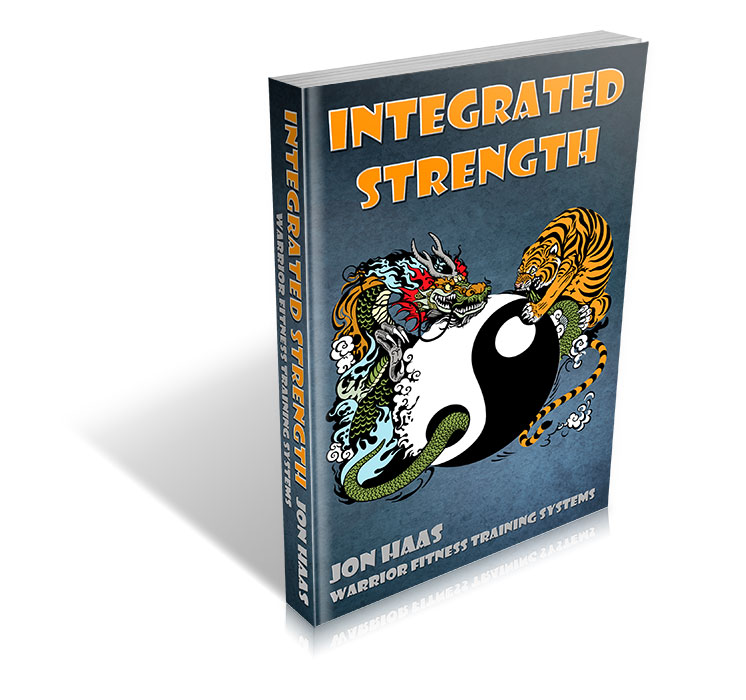
  2. Take the Integrated Strength Program challenge for 100 days and seriously upgrade your strength, health, and martial power!

My Heavy Metal Strength Meditation

Guest blog post by Eric Guttmann, U.S. Navy Officer, Author, Fitness Enthusiast and More!

Its amazing what you can pick up when you are paying attention.  At the 2012 Super Human Workshop I overheard Bud Jeffries tell one of the participants that if she wanted to get conditioned to work up to 50 tire flips.  That was over a year ago, but I remembered.  I then had a conversation with Bud Jeffries were the subject came up and he mentioned again that if you had to do only ONE exercise to get both strength and conditioning that Tire Flipping would definitely be it.  This spurned in me the desire to focus single mindedly in this endeavor, just like a meditation.  Some regard breath counting as a meditation, I decided to do Tire Flipping as a strength meditation where I count the reps instead of breaths, and since I listen to high energy music when I train, it became my heavy metal strength meditation!

My plan is very simple and I will see what happens when the upcoming Navy Physical Readiness Test rolls around and how my body performs.  Originally I was going to work up to 50 consecutive tire flips. On my first workout some of the staff members at US SOUTHERN COMMAND, where I am currently stationed, saw me and asked me about it.  When I mentioned my 50 tire flips, they said, “Oh yes, we use to have a General that loved tire flipping and he would do 100 tire flips.”

Well, if some General can do 100 flips, then so can I!  So after my first workout and that comment 100 tire flips became my new goal.

Here is my three pronged plan of attack:
GOAL 1: Perform 100 tire flips in one workout broken up in sets of 5 reps
GOAL 2: Perform 50 consecutive tire flips
GOAL 3: Perform 100 consecutive tire flips
OK, since I have never flipped a tire except at that Super Human Workshop over a year ago, I am starting slowly and methodically.  My first workout was 10 sets of 5 repetition with a 250lb tire.  I am currently doing 15 sets of 5 repetitions and next week I am looking to increase it to 20 sets of 5 repetition to achieve my first goal of 100 tire flips in one workout.

Believe it or not the limiting factor is your forearms.  If you are strong and conditioned enough you could probably do 100 tire flips on the first go.  At least I felt I had the strength and conditioning to do this in the first week except for ONE detail, and that was that after 50 reps my forearms where blasted and I could feel it was time to STOP.  When I mentioned this to Bud Jeffries he mentioned how tire flipping trains you in the open hand position which is something we RARELY do, most training is done gripping a bar, dumbbell, kettlebell, etc.  Even if it is a “thick-handled” implement it is not the same as the open hand position used in tire flipping.  Hence the workout is built up methodically to allow your forearms to catch up.


Of course if you are deconditioned or have not trained in a long time then you are better off starting with Extreme Military Fitness Basic to achieve the basic levels of strength and conditioning before attempting the 100 tire flips:

extrememilitaryfitnesscover1
What I have noticed is that I go through two stages.  In the first stage the body gets accelerated for tire flipping.  Heartbeat goes up and it is demanding (fun, but demanding).  As the Russians say, “every exercise is a breathing exercise” and I am applying the same rules to my tire flipping experiment.  I slowly get up to the tire and get in that meditative state where I match breath to movements.  Inhale as I slowly lower myself into perfect position and get my grip.  Explode as I exhale and get the tire up to chest level and then a short inhale and another explosive exhale as I forcibly push the tire. Take one breathing step to the base of the tire and repeat.

After about 25 reps I get something like a second wind or I just get in the flow or something, because I merely focus on the breath and then it gets EASIER.  It is almost as working through the effort of matching breath to movements with your heart beating faster during the initial reps that builds a groove and then it becomes a literal STRENGTH MEDITATION!  Again, what will probably stop you is your FOREARMS if they are not trained and strong enough in the open hand position.  Hey, I am the first to admit it, and that is why I am building nice and slow, like a another General here at SOUTHCOM says “easy peasy…”

I will train tire flipping EXCLUSIVELY until I achieve GOAL 2 of 50 consecutive tire flips.  At that point I might add sledgehammers or something, but until that point ALL MY WORKOUTS ARE ALREADY DECIDED!  All I have to do is flip the tire 2-3x a week until I achieve my goal.  I love having this singularity of focus in my training.  Reminds me of that “chop wood, carry water” analogy.  If you have the strength and conditioning (and an available tractor tire) try this with me and let me know your experience.

All my best,
Eric Guttmann

PS – If you want to increase your recovery so that you can improve faster then I HIGHLY RECOMMEND that you add my FULL Mobility program to this experiment by CLICKING HERE NOW! 😉


Read Eric’s complete bio HERE.