Part 1 of this series, Conditioning the Fists for Striking can be found HERE.
Being able to strike with power and precision involves a lot more than merely knowing the technique. Practice must include these principles of effective striking techniques for all martial arts…
1. Whole Body Power
All movement in real life happens in three dimensions, so why train exercises that only incorporate one or two? Training muscles in isolation, unless it is used to rehab a specific injury, range of motion, or strengthen a particular muscle to add to the whole, does not work in martial art.
Our strike conditioning exercises must train movements in three dimensions utilizing diagonal, rotary, and angular strength, as well as prime moving muscles.
2. Stored Elastic Energy (SEE)
Stored Elastic Energy is basically the potential energy stored in tendons and connective tissue as a way to power movement.
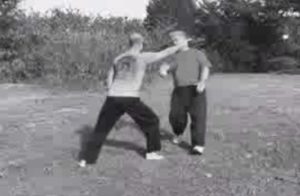
An easy exercise to begin to feel stored elastic energy is to stand in a natural stance with feet shoulder width apart. Bend your right arm and raise it up to shoulder height as if you were about to throw the most telegraphed punch in history (don’t worry, it’s just an exercise). Now, lead from the elbow and pull your fist back. Allow your torso to rotate, but keep the feet planted and the hips facing forward. When you reach the end of your range of motion, hang out there for a second and feel the tension (torque) on the spine. Now simply relax and release that torque to throw the punch. Don’t add any driving forces with muscle. You can’t propel it any faster; you’ll just slow it down.
Feel it?
Try it again.
Do it with the other arm. Remember the feeling. This is stored elastic energy (SEE).
The point here about creating torque or stored elastic energy (SEE) in the spine is essential in being able to move powerfully without winding up or telegraphing the movement.
If you are having trouble feeling it, try to exaggerate the movement.
Make it much larger than necessary to study the feeling. It should feel like a tension in the lower back near the bottom of the spine. When this tension (torque) is relaxed (released), the movement happens.
3. Structure / Kamae
Many people tend to use the terms alignment and structure almost interchangeably but in actuality, alignment is a component of structure.
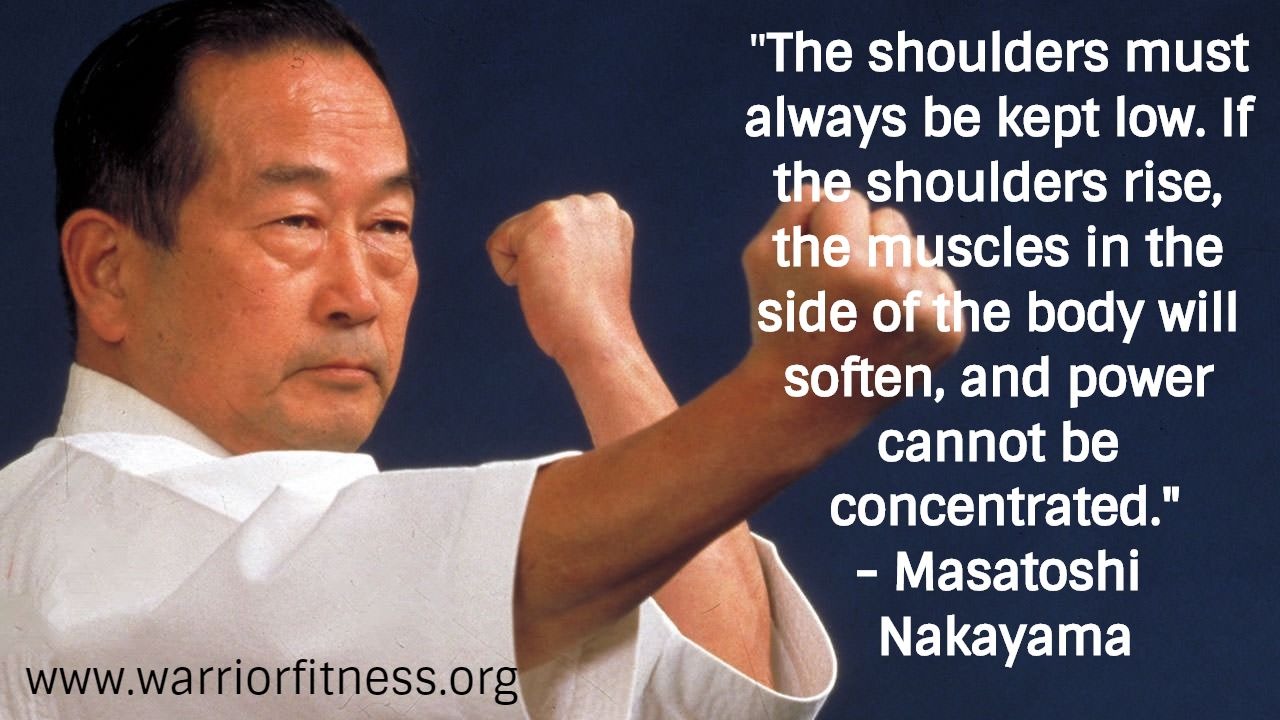 For example, looking at a natural standing posture, good alignment would be:
- Crown up
- Chin down
- Shoulders packed down
- Spine lifting up (through crown)
- Spine pulling down (through the sacrum)
- Hips under shoulders
- Knees under hips
- Mid-foot balance
- Chest is relaxed
- Butt not sticking out nor is pelvis tucked under
- Knees are over the toes
- Weight evenly distributed (50/50)
- No leaning forward or backwardThis puts the whole body into proper alignment.
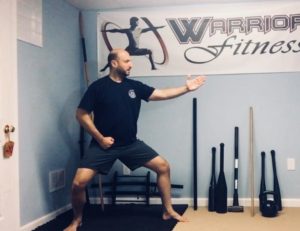
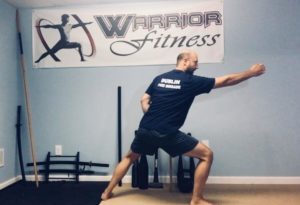
Structure also includes (in my lexicon) the balance of tensions within the body’s soft tissues. The bones act as compressive struts pushing outward from the center while the soft tissues (fascia) act as the stays pulling inward towards the center keeping the tensional balance in the body.
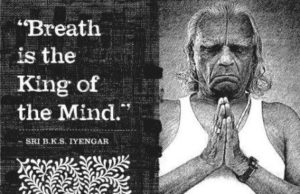
4. Breathing
How often do you think about breathing as it relates to striking?
Yet it is absolutely essential to maintain proper breathing when in combat or simply hitting a heavy bag, mitt, or an opponent. Lack of breath control affects the rest of your body and hinders your overall performance.
5. The S.A.I.D Principle
Why are all the above ideas important to understand in relation to striking and martial movement?
The SAID Principle – Specific Adaptation to Implied Demand says every activity that we repeat consistently causes an adaptation in the body.
The critical thing to note here is that it does not matter at all how we value this adaptation. It can be something that we want like how healthy exercise increases lean muscle mass and burns excess fat, or it can be something we do not want like how eating junk food to an extreme causes our body to adapt by putting on weight.
Both of these are examples of activities that cause adaptations in the body. Our goal is to train adaptations we value highly like the enhanced neural connections in our nervous system that increase our skill level. Keep this in mind when training. We do not want to train bad habits!
5.5 Elements of Efficiency
Efficiency is defined as the amount of useful work divided by the amount of total work. In other words, how much effect are you producing for the amount of effort you are expending?
- Ever see a batter “swing for the fences” only to completely miss the pitch?
- Ever see someone try to pick something up that is really light, but they believe is heavy?
- How about watching someone using the general whole-body tension we discussed above trying to hit a heavy bag?
How much effect, i.e. force from the strike embedded into the target, is gained from the huge effort expended?
You must train to have your strikes be both effective (devestatingly powerful) and efficient (uses the least amount of force or energy to accomplish the movement). Only then can you be said to have mastered the art of striking!
Learn exactly how to upgrade your striking skills in ANY martial art with these resources from Warrior Fitness Training Systems…