This REALLY Bothers Me

Happy New Year, Warriors!

I usually avoid going to shopping malls at all costs. Or, if I have to go to a particular store I’m usually in and out as fast as possible. However, this past Saturday night found me walking around a local mall with my Dad waiting for my Mom and youngest daughter to get out of a movie.

While we walked around and discussed our mutual disdain for shopping – hey, the apple doesn’t fall far from the tree! – I people watched.

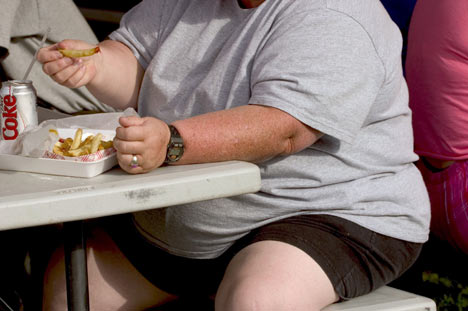
As usual when I people watch the general population, I got upset. Seeing people from all ages and walks of life so totally out of shape makes me sad. It used to make me angry – I got over that. (progress, right?) Now it makes me sad.

obese-4

There is absolutely no reason that people who are otherwise intelligent, successful, knowledgeable, loving, and driven in ALL other aspects of their lives should be so completely neglectful of arguable the most important aspect of all, their health & fitness.

Now as we begin this new year of 2016 with a clean slate, isn’t it time to take care of the one thing that should matter the most? YOU!

How can you take care of others when you allow your own body to break down? How can you be the most effective parent, student, worker, teacher, whatever when you lack the energy and strength???

You now have less than 15 hours to take advantage of my 50% New Year’s Sale on myWarrior Transformation Program <<========

I have done ALL the programming for you. I will hand you a step-by-step plan to become the most capable, strongest version of yourself in 2016. I will coach you and guide you every step of the way. But YOU must take the first step and begin it HERE.

The clock is running down on this offer, my friends. Get on it. You will NOT regret it.

Stronger Every Day!

Psychological Barriers to STRENGTH

You are already strong enough to lift a car. Did you know that? It’s true.

So why can’t you access that strength all the time?

The reason is that your nervous system limits the amount of strength you can use in every day life. If you were truly able to access 100% of the muscular strength you are capable of your muscles would literally tear themselves from attachment points and break bones.  Having a limit in this case is a good thing!

However, the limits are set startlingly low. Most people only have access to about 20-30% of their full potential, even when trying their hardest.

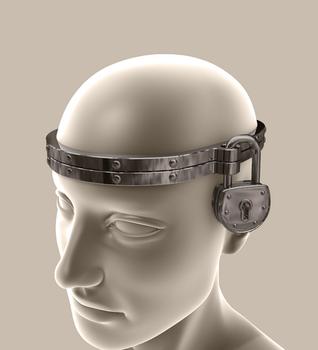
barriers

So how do you access more strength?

Well, there are many different methods to do it. Today, we will cover just one – getting over FEAR.

F.E.A.R can be rewritten as an acronym – False Evidence Appearing Real.

This was the case for one of my clients whenever he went for a max effort lift on his bench press. He was only able to bench 125 lbs even though I knew he was much, much stronger and more capable!

After discussing it with him, he told me that even though he knew I was standing right behind him spotting him every rep, he was still afraid of getting stuck under the bar. This False Evidence Appearing Real was limiting his strength. Because he was afraid, his nervous system was literally slamming on the breaks and cutting his strength potential way back.

So how did we fix it?

I set up the bench in the squat rack and set the pins right over his chest. Now there was absolutely no possibility of him getting stuck under the bar.

So what happened?

With the FEAR gone, he was able to access much more of his strength potential and hit 165 lbs for 2 reps – a 40 lbs increase!!!

Oh, and by the way, he is in his early 70’s!!  So again, what is YOUR excuse?

Check Out The Most Powerful Mental Techniques on the Planet <<=====

What are you waiting for?

Lacking Workout Motivation? Try This!

We all have those days…

You know you should workout on a consistent basis, but sometimes the motivation just isn’t there. Here’s a quick primer on how to set yourself up for success.

1)  Have a Goal.

2) Follow a Program. (read “Which Program is Best for You”) It’s much easier to do the work if you know in advance exactly what you are supposed to be doing for each training session and how it is progressing you towards your main goal.  Remember – random exercise leads to random results!

3) Make Training Your Default Status.  Read THIS if you want to know whether or not to train when sick or injured.

4) Commit to it. Decide beforehand that you ARE going to train. There is no “maybe”…

5) Have a Pre-Workout Ritual. This will get you in state.

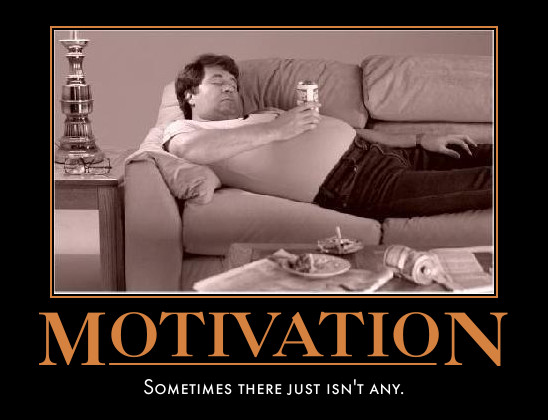
no_motivation

To give you an idea of what a pre-workout ritual looks like here’s mine.  Feel free to model or copy it outright, whatever works to get you training!!

My Pre-Workout Ritual

1) Get into my workout shorts and t-shirt (yes, I wash them…)

2) Take Hercules Pre-Workout Formula. You will feel the rush of the powerful herbs coursing through your system!
3) Crank up workout music. Currently my music anchor is “Invincible” by TOOL.

4) Stand tall, breathe deep, walk powerfully. Visualize yourself performing the workout. This, along with the Hercules Formula, gets my energy building and heart pumping.

5) Perform my general movement preparation – joint mobility work and resistance band exercises.

6) DO THE BLOODY WORK!!

I hope this is helpful.  Please drop a comment and let me know if you have any questions!

Need more help?

Grab over a year’s worth of training at 87% off –  all of the details can be hound HERE  <<==

Who is the Strongest of ALL?

I just finished reading a play with my 7 year old daughter called, Who is the Strongest? The play is about a little red ant who sets out on an adventure to find out who is the strongest of them all.  On his way he encounters different animals and forces of nature whom he thinks are strong, but each one tells him about another who is stronger.

For example fire tells him that water is stronger because water can extinguish him. But then water tells him the sun is stronger because the sun can dry it up.  The sun the proceeds to tell him that wind is stronger because it can blow clouds in front of it to prevent it from shining… and on and on…

In the end he comes to a huge rock cliff face that he finally thinks is the strongest of all, but the rock tells him that little red ants live inside of it and day by day burrow deeper carrying away pieces of the rock itself….

ant-strong-man_2160873k

The moral of the story?

It’s all about how you view yourself in your own mind.  Mindset can be an extremely powerful positive force in your life or an extremely powerful negative one.  You become what you think about most of the time.  If you think you are weak, you will be.  So think that you are strong and you will be – believe that you have no limits!

Just because you are an ant doesn’t mean you cannot possess super human strength!

You can use the power of nature to embody the strength of an ant as well HERE  <<===

Balance Training Drills

Balance is an essential quality for the warrior to develop.  It directly affects our ability to move with grace, coordination, agility, and power.  Yet direct balance training exercises seem to be a neglected area in many people’s training programs unless they are recovering from an injury or trying to fix a specific weakness.  Personally, I think they should be an integral part of training.

The following is an introduction to the balance drills I use to train myself as well as my martial arts students and fitness clients.  I hope you find them as useful as we do.

There are 3 Systems the Body Uses to Orient Itself in Space

1. Visual – Relying on sight is the second fastest and most efficient mechanism in our balance (unless we are in a dark room!).  Most people tend to rely on visual cues for balance, to the detriment of the other 2 systems.  The visual system relies on a physiological reflex called the Ocular Gyro Cephalic reflex which creates tension chains that reflexively cause the body to orient toward whatever the eyes see.

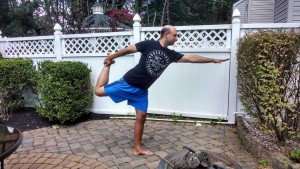
Balance Drill Leg back

2. Vestibular – This system relies on the fluid within the ears to sense balance.  As we move, the fluid sloshes around.  If we are not used to a particular pattern of movement, we may begin to feel dizzy. The brain works to process this information and integrate it with the information coming in from both the visual and proprioception systems.

Balance Drill Leg back hold

3. Proprioception – This our sense of position and movement of the limbs and the sense of muscular tension.  Proprioception utilizes information derived from sensory receptors in our muscles, tendons, and joints to inform us of changes in movement, position, and tension.  Proprioception is plugged directly into our nervous systems making it possibly the fastest and most efficient mechanism for balance, as long as we train it.

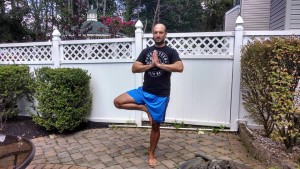
Balance Drill Tree

The balance drills shown in the video below will allow you to train all 3 systems concurrently.


For more information on balance and proprioception training, check out my new program:

Balance: The Fall Prevention System <<==

How to Train for Chaos without Making Training Chaotic

The current rage in conditioning training, especially when talking about combat conditioning, is to completely change up the workout for each and every session. This has the advantage of keeping the training fresh and throwing the body into chaos each time so it never knows what hit it.

The hardcore advocates of this type of conditioning stress that this environment will create a very broad and general fitness that prepares the trainee for almost every physical contingency, both known and unknowable.

This enables one to prepare for the chaos and uncertainty of combat by training in an uncertain and chaotic environment.

samurai

Seems to make a lot of sense on the surface, right?

However, one of the glaring problems with this type of training is that random training yields random results. It’s difficult to measure progress when the parameters are constantly shifting.

In order for the body to produce an adaptation for improved performance in life, sport, or martial art, we must apply specific stimulus as per the SAID Principle (Specific Adaptation to Imposed Demand). This basically means that the body adapts with a specific type of fitness to any demand which is imposed on it. When the same exercise is performed for too long, the body adapts to the stresses of each set and the adaptations or returns get smaller and smaller. Once it has adapted to the stress, then it’s time to change or increase the stress or else we fall into that trap of diminishing returns.

Usually though it takes the body a period of 4-to-6 weeks to adapt and then it is advisable to begin changing exercises. This does not mean that we need to completely throw away everything we have been doing; far from it. An exercise or drill can be changed by increasing intensity, increasing volume, decreasing rest periods, or increasing complexity or sophistication.

What this suggests is that a properly organized training program with incremental progression of increasing complexity and sophistication may actually prepare the body better than a set of random skills strewn together with a nebulous outcome in mind.

Yet we still crave the chaos, right?

So why not have it both ways?

Let’s program chaos into our training to instill the element of surprise and shock to the body. But, and this is key, we will ONLY do it once a week. This is enough to add the benefits of chaos training without suffering the negative aspects. The rest of the time you must follow a properly programmed training regimen to ensure all the multifaceted fitness qualities required to keep you strong, agile, mobile, and hostile are being met.

How do we program the chaos?

One of my favorite ways to do this is by picking 5-6 different exercises and setting an interval timer for 5 rounds of 3 minutes or 5 rounds of 5 minutes (depending on your fitness level). Instead of setting a rep scheme, move from one exercise to the next in any order you like performing as many or as little reps of each exercise.

If you need active recovery during the round or simply can’t figure out what to do for a few seconds – do Jumping Jacks. The only caveat is that you must not stop for the duration of the round. Take a 1 minute break between rounds to recover your breathing, then go again.

Here’s an example Chaos Training Workout:

1. Kettlebell Swings or Snatches
2. Jab/Cross Combo on Wave Bag
3. Sit Thrus
4. Med Ball Slams
5. Sandbag Burpees

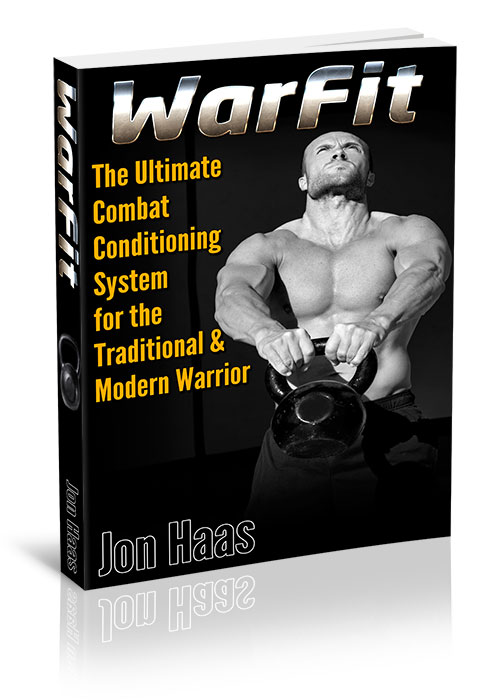
My brand new WarFit Combat Conditioning Program is perfect for the warrior athlete who wants to build superhuman strength, endurance, and conditioning…

warfit3d1


Strength in the Deviation

Usually being deviant is not looked upon as a positive character trait.  However, as we shall see, what makes for a poor character trait is in fact a desirable outcome for increasing performance and injury prevention!

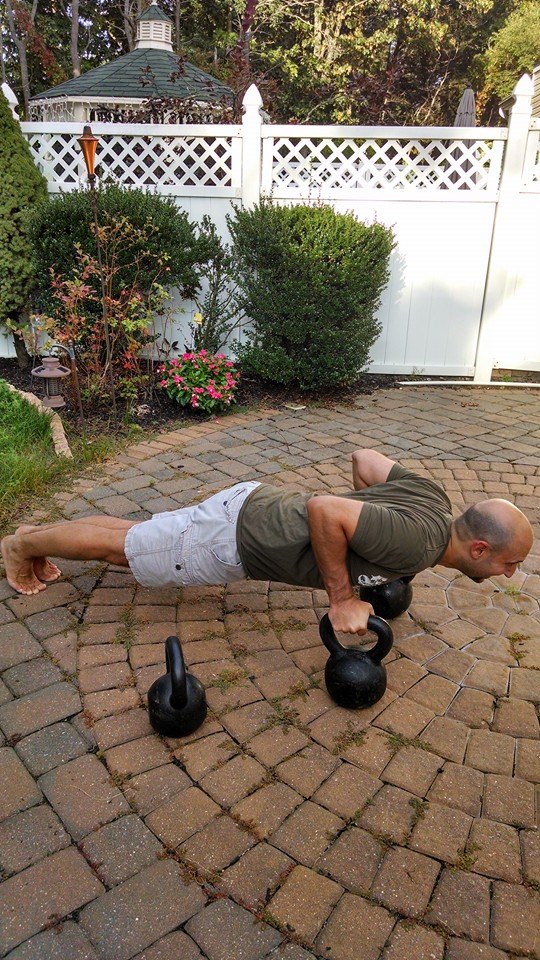
In this article we will explore how building strength into a deviation of “correct” form can create a built in safety valve that will increase your resilience and resistance to injury.

KB Pushup


The problem with always working on “correct” form in any endeavor (for our purposes here: fitness, martial arts, and athletics) is that no matter how well you perform a movement skill, there is always a possibility of moving outside the parameters of the perfect range of motion.  You do not live in a bubble! Whether through fatigue, unfamiliar or uneven terrain, accidental misstep, mental distraction, or being acted upon by an outside force – collision in sport or an opponent in a combative engagement – your movement WILL go awry.

Strength in the Deviation

So now that we established that you will never always have perfect form, how do we insure that any deviation from proper mechanics does not cause injury?  Check out the videos below for examples on how to increase strength throughout a range of motion by building a safety valve into your movement.  Strength in the deviation will not only increase resilience and injury prevention, but performance as well knowing that you have complete confidence in your movement!

Strength in the Deviation – Accident Proof Ankles

Strength in the Deviation – Wrists of Steel

Strength in the Deviation – Sledgehammer Training

Ready to increase your deviant behavior??? 🙂

Kata (Alone) Will Never Build Internal Power

Trying to develop Internal Power by training kata (alone) in martial art is problematic.  On one hand, you may inadvertently have minor success in creating some internal connection over the course of 20-30 years of training, but you will most likely have no idea how you did it, no idea why it worked (minimally at best), and most importantly, no idea how to correctly transmit it to the next generation.

The only advice you will be able to offer your students and fellow seekers is to keep doing this (kata training) and somehow you *might* get the correct result.  This is insufficient and irresponsible, at best, on the part of the teacher.

Assuming that you want to stand out from the crowd as a powerful martial artist, and Internal Power/Aiki is your goal, then the scatter approach to trying (and for the most part, failing) to build IP through kata alone is a waste of a career.  I say this because there exist clearly defined, step-by-step processes that rewire the body for Internal Power specifically for martial arts.

Solo Training Precedes Kata Training

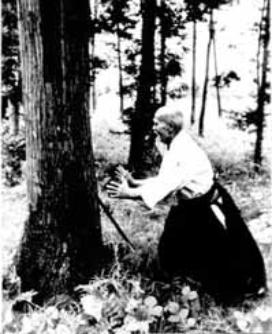
Power building models as solo training exercises have existed for hundreds (if not thousands) of years  throughout the martial arts from India to China to Japan.  Why anyone would try to reinvent the wheel by attempting to create their own hodgepodge of exercises or think that merely training kata would develop real Internal Power is a mystery to me.  The reality is that solo training exercises burn in specific ways of moving that are not normal which create a very stable, powerful structure capable of absorbing, re-translating, and projecting incoming force.
osensei_tree_kokyu1-272x334

Internal Power training is a type of General Physical Preparedness (GPP) for budo.  The goal of regular GPP for fitness, athletics, or martial arts is enhanced work capacity. This is the ability to run faster, jump higher, and hit harder. When work capacity increases, it allows the budding warrior to adapt more easily to increases in both mental and physical demands. In other words, it increases your capacity and level of readiness to absorb higher levels of specificity.

The solo training exercises for internal power training change the way outside forces act on the body.  The structure becomes dynamically stable so that applied force can either be distributed throughout the chain and dissipated or, at a higher level, simply reflected right back onto the opponent.  When force is reflected back this is what is known in Japanese as Yamabiko, or Mountain Echo.

Just to help further differentiate the two practices, solo training exercises for building internal power (there are other types of solo training exercises, obviously) are always made up of the following: standing, open/close, winding, spiraling, and breathing – all supported by Yin/Yang Theory (the union of opposites) and 6 directions (Heaven Earth Man).

Kata are for the purposes of patterning correct martial movement.

These solo training exercises are trained BEFORE kata to condition the body for powerful martial movement. They are not martial movement drills in and of themselves like sanshin no kata, kihon happo, and kata.

Kata – The Slow Boat to China

The reason it is so difficult to train IP via kata is that the vast majority of students get caught up in learning the movements of the kata correctly.  They get caught up in the application of technique and the idea of trying to make it work correctly.  What they don’t realize is that having a correctly trained body built by solo Internal Power exercises makes all the kata work much better and easier.
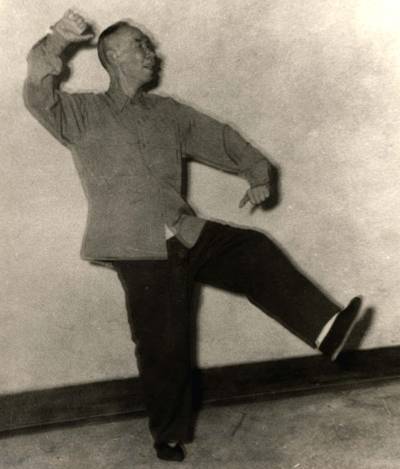
If you have a choice – why not learn a proven step-by-step method of developing unusual strength and Internal Power?


Join My New 21 Lessons on Internal Power Coaching Program <<==

Following a clearly defined path up the mountain is much faster and more effective than wandering around the base working on kata for 30 years and thinking you will somehow magically arrive at the summit.

Caution – While I did just say “more effective and faster” I by no means meant easier!!  Internal Power takes a lot of dedicated work.  Do not think it is a shortcut!
The Failure of Yogic Breathing

There are many different systems of breath work out there that focus on relaxed breathing and stress reduction that also talk about how to increase breath control and expand the practitioner’s lung capacity.  Unfortunately the majority of these systems fall short due to the fact that they tend to focus the bulk (or all) of their work on static posture breathing and breath retention exercises.  Usually the practitioner is either seated on the floor, on a chair, or lying down in a comfortable, meditative posture while the breath is regulated through a series of counts and breath is retained in gradually expanding holds.

Breathing2

Before any of my Yogi friends get upset with me, let me clearly state that yes, this process works and I am a huge fan of Yoga’s Pranayama along with other systems of breath work.  There is nothing wrong with it!  Doing this type of exercise on a regular basis will increase lung capacity and control, to a degree.

So What is the Problem?

The problem with this type of exercise, as I see it, is that very rarely do we require all that enhanced lung power and capacity while sitting on our butts in a comfortable and relaxed position.  Unless you are only interested in showing off how long you can hold your breath at parties and stuff, this way of exercising has limited usefulness.

A much more practical way of exercising lung capacity and breath control is by working the body through a series of simple calisthenics.  By placing the body under stress via exercise while incrementally increasing the retention of the breath on both the inhale (easier) and the exhale (more advanced), we magnify the results.  In my experience, this has a much broader and far reaching effect on the body’s systems.  It is also vastly more practical in terms of real world usage for martial art, athletics, and overall strength & conditioning training.

So, how do we do it?

I’m glad you asked!  Let’s begin with one of the most natural movements in the world, a basic bodyweight squat.

If you are not familiar with a basic bodyweight squat, here is a super quick tutorial:

  1. Stand in a natural position with feet slightly wider than shoulder width apart
  2. Keep the alignment of your spine as straight as possible from crown to tail bone.
  3. Squat down as low as possible while maintaining the alignment of your straight spine.
  4. Keep the weight mid-foot balance.
  5. Pause for a second at rock bottom.
  6. Lift from the crown of the head to “pull” the body back to standing.

Breathing Squats

We will do our breathing squats in the same fashion but with a couple modifications.  First remember that the purpose of these exercises is to train your breathing and expand your breath control and capacity.  They are not meant to “kill” your legs.  Although, depending on your level of conditioning, they might.

  1. Perform a basic bodyweight squat as detailed above.
  2. Just prior to beginning the squat, inhale deeply into the belly and comfortably hold the breath.  Your goal is to do the squats as relaxed as possible while maintaining the breath hold.
  3. Do 3 squats all while holding the breath on the inhale.
  4. After the 3rd squat, exhale and inhale.  Slowly inhale into the belly and exhale sharply to recover your breath.  When you are recovered, do 3 more.  Repeat.
  5. When you can comfortably do 3 squats while holding your breath (meaning you are not out of breath when you stop), then proceed to 5 squats on the breath hold.

Slowly increase the number of squats you can do on the breath hold.  When you can comfortably do 10 squats with the breath held on the inhale, start over again with 3 squats and hold the breath on the exhale.  You will find that holding the breath on the exhale is much more difficult.  The body is already out of breath and now you are adding stress in the form of exercise.  It is here that you will make the greatest gains in teaching the body how to use a limited supply of oxygen in the most efficient manner.  Make sure you proceed slowly and only add more repetitions when you can comfortably hold the breath on the exhale.

Remember – B.I.F (Breathing Is Fundamental)!

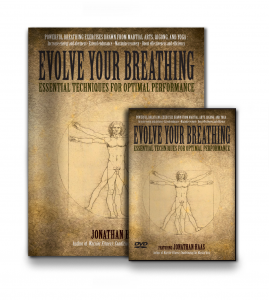
Evolve Your Breathing is a master class in learning how to breathe and respond under stress.  Don’t just breathe to survive – Thrive!!

Learn more here…

EVOLVE_SPOT-1 (2)


Gyokko Ryu’s Internal Power Training

There is no doubt in my mind that Hatsumi Sensei possesses unusual power in his budo.  Anyone who has trained with him can tell you that!  But what is it and where does it come from?  More importantly, how can YOU develop it as well?

Soke’s martial movement displays many of the characteristics associated with Internal Power training: ghostly movement, immovability (static and dynamic), shockingly powerful strikes with little windup, adhesion caused by movement, kuzushi on contact, and others. Continue reading