Get A New Body in 2012

Every year millions of people worldwide make firm, committed New Year’s resolutions.
“I’m going to get in shape this year.”

I’m going to lose x number of pounds this year.”

“This will be the year I reclaim my health and fitness.”

“I’m going to join a gym this year.”

“I’m going to cut my carbs this year.”

Sound familiar?  But what happens to all those firm, committed resolutions?  Continue reading

Warrior Fitness Gym Open House!

Please join us on Saturday, January 7, 2012 for an open house

Warrior Fitness Gym
Hainesport Business Park
4004 Sylon Blvd.
Hainesport, NJ 08036

  • Free Trial Classes!
  • Bujinkan Budo Taijutsu Demonstration!
  • Grand Opening Special Sign-up Savings!
  • Refreshments!

Schedule of Events

Time

Session

10:00 AM Warrior Fitness Group Class
10:30 AM Bujinkan Martial Arts Demo
11:00 AM Little Warriors Class
11:30 AM Bujinkan Adult Martial Arts
12:00 PM Warrior Fitness Group Class
12:30 PM Bujinkan Martial Arts Demo
1:00 PM Little Warriors Class
1:30 PM Bujinkan Adult Martial Arts

For more information about the gym including class descriptions, times, and membership options, please check our Warrior Fitness Gym page HERE.

With It or On It

The ancient Spartan maxim, “with it or on it” is a very stark reminder that we must be fully committed to whatever battle we are waging.  The full meaning of this phrase that Spartan mothers used to say to their sons before heading off to war is, to either come back with your shield – as a returning hero – or come back upon it. 

There is no middle ground. 

No room for wavering or debating. 

No having your cake and eating it too. 

When moving towards a goal, there must be no hesitation in your actions.

In the Bujinkan martial arts that I study, there is a similar saying, “Hell gapes beneath the upraised sword, step in to heaven.”  This may seem like crazy advice, after all who in their right mind would step forward when faced with an opponent armed with a 3 foot razor blade?!  But in training, through experience, one comes to understand and realize that the safest place when facing an upraised sword, paradoxically, is to move forward and step closer, thus finding “heaven”.

Again and again throughout warrior cultures, from ancient Greeks to Japanese Ninja and Samurai, we see this idea of complete and utter commitment, 100% determination in moving forwards towards our goals, no matter what they are.

So how about you?  How committed are you?  How much do you talk about taking action rather than actually taking action?  Do you step forward into heaven and achieve your goals when confronted with difficulty and adversity?  Do you walk the razor’s edge in life, or just in your mind? 

It’s time to step forward.  Take action.  With it or on it.

Click HERE to take action on your health and fitness goals today!

8 Reasons Why YOU Need Striking Power

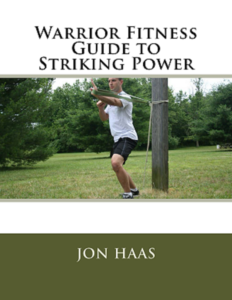
Remember, striking power is not just about hitting harder; it’s about hitting smarter.  Here’s a few reasons why this program is something you should incorporate into your martial training:


  1. New, innovative exercises to push through plateaus in your training and stave off boredom.
  2. The right tools for the job – low tech / high yield!
  3. Teach your body how to increase force production through stored elastic energy rather than recruiting more tension.
  4. Efficiency is the key to preserving energy levels.  Efficiency is defined as useful work over total work.
  5. Coordinated whole body power in 3 dimensions.  Life, sport, and martial art happen in 3D – the same old 2 dimensional exercises are NOT up to task!
  6. Specifically develop angular and rotary strength to augment and assist prime movers.
  7. Target postural and stabilizer muscles to strengthen structure behind the strikes.  You can‘t fire a cannon from a canoe!
  8. Solo training is the key to martial greatness – how do you train?

Want to know more about this unique Warrior Fitness product?  Click HERE!


What Does a Ninja Need?

Historically, ninja were the consummate combination of super spy / super soldier.  They possessed outstanding levels of fitness due to their intensely physical training and highly demanding mission requirements.

Their levels of fitness and training have been the subject of many stories and the genesis for many myths surrounding them.

How did they do it?

How did they train?

What type of methodology did they employ since creating this kind of warrior certainly required a very diverse fitness profile?

Ninja fitness needs were much more multi-faceted than most physical pursuits.  They had to be as they were at once a combination of Olympic decathlete, Navy Seal, and martial arts master rolled into one.  Let’s examine this a little more closely though, what kind of qualities did they possess and what did they need to be able to do?

Ninja Must Possess …

  • Strength
  • Agility
  • Coordination
  • Excellent balance
  • Flexibility / Mobility
  • Whole body power
  • Endurance

Ninja Must Be Able to….

  • Move silently
  • Run fast
  • Walk far
  • Leap high
  • Climb trees, walls, castles fortifications, etc.
  • Wield weapons
  • Fight unarmed – striking, kicking, grappling, locking, choking, etc.
  • Roll / fall / dodge / avoid
  • Crawl
  • And more…

As you can see from the 2 lists above, the ninja had a wide range of skills and abilities that had to be supported by a comprehensive fitness program keeping him at the top of his game.

Remember that for a ninja, fitness wasn’t just a nice to have; it was an absolute necessity to accomplishing his mission and getting him home safely.  And the kicker is, they did it all with little to no fitness equipment.

Certainly a 16th century ninja did not possess a Gold’s Gym membership.  Nor did he own an Olympic weight set or have a stair master at his disposal.  And, while kettlebells and dumbbells would have been great, he most likely had never laid eyes on either one.

So here we have one of the most highly trained and fit agents the world has ever seen created without the use of modern training equipment or modern training methods.

What might some of this training looked like?

I’m glad you asked.  One of my favorite scenes in Hatsumi Sensei’s early Bujinkan training videos (DVDs now for you younger folks!) comes from Shinden Fudo Ryu.  Here’s a short clip I found on Youtube.  This stuff is seriously old school!

“One trains using the things of nature to make the body strong” – Hatsumi Sensei

What if we were to take the spirit of historical ninja fitness training and combine it with a little modern sports science and know how?

Modern methods allow us to take advantage of periodization, or programing and organizing training, to create a comprehensive fitness plan which will apply logical sequences to get the most out of each session.  Protocols like HIIT, high intensity interval training, will be utilized to maximize both aerobic and anaerobic endurance in the same short, high intensity session.

Advances in recovery work from such sessions will allow us to recover faster thus making gains greater, and increasing our overall general physical preparation (GPP) will allow us to push higher into more sophisticated training.  Effectiveness and efficiency will be combined in order to allow for shorter training sessions which maximize the use of one’s time.

As the ancient ninja did, we will create a strong, supple, highly conditioned warrior and accomplish this with little to no fitness equipment.  We will, as Hatsumi Sensei says in the video clip above, use the things of nature to make the body strong.

If I were able to point to just one resource for the warrior that combines old school training with modern sports science, I’d look here… Ninja Missions <<==


Ninja Endurance – Part II

In part one of Ninja Endurance called,  How to Train for the Endurance of a Ninja, we discussed strength endurance and I provided a sample workout to help you build yours.  Here in part 2, I ‘d like to delve a little deeper into the whys of endurance training and how specifically high intensity interval training is an excellent choice for it.

What is Endurance?

Endurance is defined as being able to keep going without fatigue setting in, or being able to push oneself through fatigue.  Essentially, it is the ability to resist or bear fatigue.  What is fatigue?  Fatigue is weariness or exhaustion from exertion, or the temporary loss of power to respond.  An equally critical corollary to the definition of endurance, especially for the warrior,  is that your level of endurance also determines how quickly you are able to recover between bouts of activity.  Combat, like life, does not happen at one constant rate of speed.  It is multi-faceted in nature.  There will be periods of brutally intense activity followed by lulls in the action, again followed by another flurry of activity.  Being able to use those lulls in action to recover is a critical ability for the warrior.

Steady state cardio, Long Slow Distance (LSD) training simply will not cut it.  Running on a treadmill may be appropriate for a hamster in a cage, but human beings require more.  Long distance running can be beneficial for mental toughness and/or active recovery, but it should not be the primary focus of a warrior’s endurance training.  So then how should we train to maximize our ability to endure?

Warriors Need to HIIT!

High Intensity Interval Training (HIIT) is one of the best ways to train for endurance.  It will enhance all 3 energy systems in the body (2 anaerobic and 1 aerobic – see here for an overview), as well as prime the nervous system to recover automatically during lulls in activity.  Simply put, HIIT alternates periods of high intensity exercise with periods of rest and recovery.  It can be performed with almost any exercise and can be utilized both with and without equipment.  The variety and adaptability of this style of training is second to none in results.

How else does improving your endurance through this type of conditioning aid your martial arts training?  I’m glad you asked!  If the benefits discussed above weren’t enough, consider that having a high level of conditioning also aids in learning new skills.  How’s that possible?  To put it simply, when the central nervous system (CNS) is fatigued, the body cannot effectively process new skills, especially technically advanced skills.  So, in essence your lack of a general level of fitness and conditioning will actually impede your learning process as you will tire more readily and not have the ability to recover quickly enough during training.  Want to train more, at a higher level, for a longer period of time?  Want to get more out of your training time both at home and in the dojo?  Want to build new skills and enhance your technical arsenal?  Get yourself in shape!

There are several sample conditioning workouts here on the Warrior Fitness site.  Here are a few examples:

Workout of the Week #1


Workout of the Week #5


Stay tuned for more Warrior Fitness style conditioing workouts to help you get and stay in fighting shape!

The Sanshin of Warrior Fitness

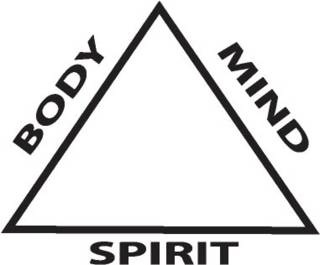
A short introduction may be necessary for those readers not familiar with Bujinkan Budo Taijutsu.  Sanshin no kata is a basic training exercises within the system that templates movement patterns for Bujinkan Budo Taijutsu.  In English, it translates to “form of three hearts”.  These three hearts are mind, body, and spirit.  All three must be united for technique to come alive for the martial arts practitioner.  Without all three aspects of body, mind, and spirit unified the kata become  empty shells of movement, devoid of essence.

Bujinkan martial arts are the wellspring from which my concept of Warrior Fitness sprung as a natural outcropping.  So as my philosophy of Warrior Fitness continues to evolve, it naturally gravitates to this type of structure for me to express it.  In keeping with the trinity of mind, body, and spirit, here is how I see it for Warrior Fitness:

Mind Concentration and focus along with an understanding of the interrelationship of the exercises and how they integrate with and enhance the way we move in the world.

Body Forging a strong body to carry us through the challenges we face. 

Spirit Pushing the edge to consistently increase resistance to failure.

The Sanshin no kata consist of 5 forms which are called, Chi no kata (earth form), Sui no kata (water form), Ka no kata (fire form), Fu no kata (wind form), and Ku no kata (void form).  Those who have read Miyamoto Musashi’s famous work, Go Rin No Sho – A Book of 5 Rings, are most likely familiar with the terminology as well.  Here is how each is expressed in Warrior Fitness:

Earth Building strength, stability, and structure in movement and stillness

Water Freedom of movement through all ranges of motion, flow state

Fire Metabolic conditioning to ignite fat loss and sculpt lean muscle

Wind Breathing exercises to vitalize every cell in the body

Void Pushing the edge of our limitless potential


Hone Your Mind, Invigorate Your Spirit, and Make Fierce the Body with Warrior Fitness!

What is the Essence of Defense?

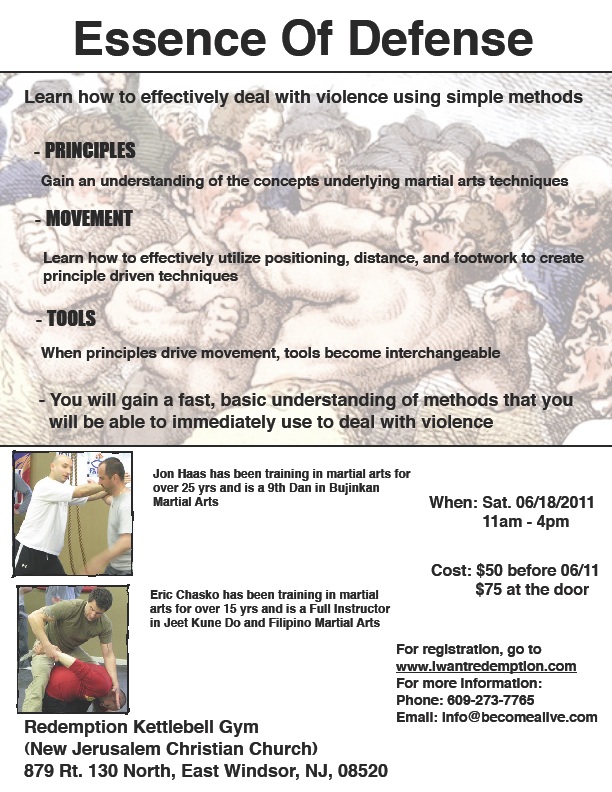
What exactly is the essence of defense?  Suppose you took a martial art(s) and stripped it down to its core principles and functional movements to allow it to be employable with any tool whether it be empty-hand, blunt weapon, edged weapon, long weapon, hidden weapon, or improvised weapon?  What you would have is a fast, effective, no-nonsense approach to communicate years of martial arts training in a short span of time.  This approach would make self defense methods immediately accessible to people who may not want, or have time, to devote decades to becoming effective at defending themselves.  Suppose you want to have the confidence and ability to protect yourself and your family from sudden violence, but don’t want the trappings of tradition and the hours of perfecting forms and kata?  What if the essence of defense could be extracted by 2 highly experienced martial arts practitioners, refined, distilled, and communicated not over years, but in the course of a seminar?

Principles:

  • Get off the line of attack
  • Counter-attack
  • Intercept/destroy the attack
  • Unbalance the opponent
  • Continuous movement
  • Escape
  • Much more….

Movement:

  • Positioning
  • Footwork – angles, distancing
  • Safe space
  • 3 dimensional movement
  • Much more…

Tools:

  • Body weapons
  • Blunt objects
  • Edged weapons
  • Improvised weapons
  • Hidden weapons
  • Much more…


Who should attend The Essence of Defense seminar?

  • Military
  • Law Enforcement Officers
  • Anyone who wants a working knowledge of practical martial arts principles that allows them to create their own techniques in response to a specific threat of violence. 

When:  Saturday, September 8th from 11 AM to 4 PM

Where: Redemption Kettlebell Gym in Robbinsville, NJ

Cost: $65

Who:  Eric Chasko is a fully licensed instructor in Jeet Kune Do/Filipino Martial Arts with over 15 years experience.  

Jon Haas is a 9th dan in Bujinkan Budo Taijutsu with over 30 years experience.

For more information and to sign up, please go to http://www.iwantredemption.com/

See you there!!

Knowing is Not Enough!

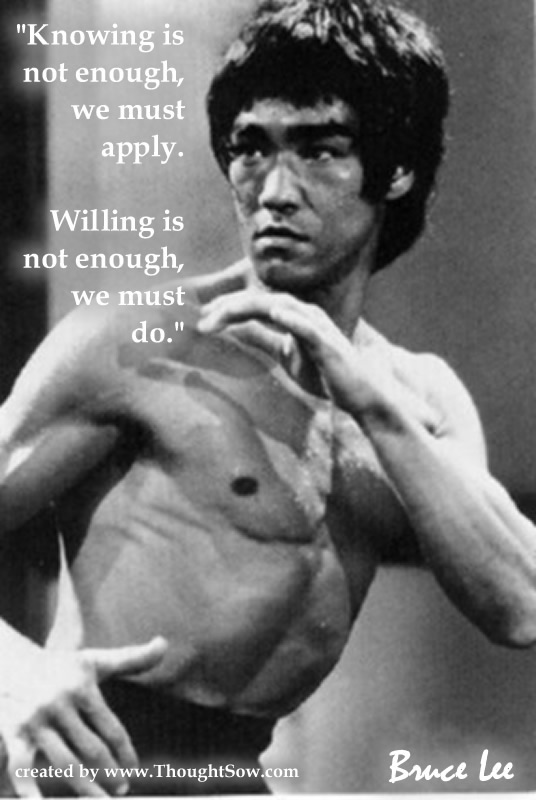
With the proliferation of the Internet and the incredible wealth of resources available in book, DVD, and digital formats, many of us already know more than enough to be martial arts masters!  Yep.  You heard me right – you know more than enough right now to be a master martial artist.  Cool, eh?  Heck, some of us even have more disposable information on budo history, lineage, techniques, kata, and principles at our fingertips than all of the past generations of Bujinkan Soke combined!  Think about that for a second.  Now, at this time in history, the sheer amount of knowledge in the form of information available to us is greater than at any other time, and it’s only going to continue.  Yet, with all of this knowledge, why aren’t we all amazingly skilled?  Why do the legendary feats of past budoka seem so remote and unachievable to us today?  Why are there so few with real skill among the millions of people practicing martial arts worldwide?  Because knowing is not enough, that’s why!  Hatsumi Sensei has emphatically stated on many occasions, that “budo is not an academic subject.”  Why then do we continue to view it as such?  There has only ever been one way to become as highly skilled at a craft as to be called a master.  “Knowing is not enough, we must apply.  Willing is not enough we must do.”    

Is Your Cup Already Full?

Another way we limit ourselves is by equating knowing with being able to do.  For example, when your teacher demonstrates a fundamental principle of movement for the hundredth, or maybe hundred thousandth time, do you smile smugly to yourself and think, “I know that already”?  Maybe you have.  I know I have.  I admit it.  But this type of attitude makes us lazy.  It lowers our skill level because it allows us to hold fast to the superficial without the hard work of plumbing the depths.  It lets us check those basic movement(s) or principles of movement off our mental list and move on to something more advanced; more worthy of our time (we may think)… big mistake.  If we were truly honest with ourselves, we’d be asking a different question.  The better, more appropriate question to be asking ourselves is -”how well can I do that?” or “How well do I truly understand those movement(s) bodily, not intellectually?”   This is hard though because most often the most authentic answer we can give ourselves is, not well enough.   Watch your teacher closely.  Look deeper.  Pay attention because there’s always more.  Be careful.  Practice.  Practice.  Practice!

All Strength is Not the Same for the Warrior!

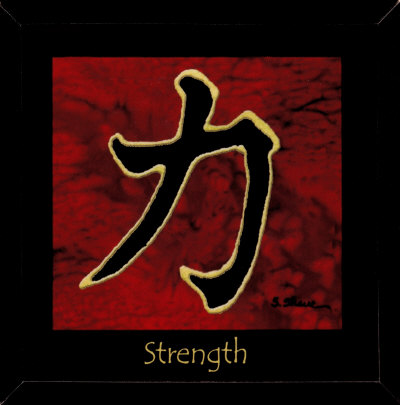
As martial artists most of us tend to cringe and shy away from words like “strength” and “power” in favor of seemingly more budo-friendly fitness words like “agility”, “coordination”, or “balance”. Yet, often we do not understand the actual definitions of the words and simply avoid them because of some misplaced fear that they will be detrimental to our taijutsu and make us “muscle” through our techniques. Nothing could be further from the truth! Let’s examine some of the components that make up strength in more detail to understand just how much they are applicable to creating a strong physical and mental base from which to launch the rest of our Budo Taijutsu skills.

General physical conditioning is essential for the warrior to develop a broad-based platform of strength, endurance, agility, coordination, and flexibility from which to launch and further refine skills. But, what exactly is strength? Strength is defined as “the ability of a given muscle or group of muscles to exert force against resistance.” It is a function of the appropriate muscles contracted by effective nervous stimulation. This alone, however, is insufficient. There are also at least five different sub-categories of strength which we will break down to give you a more complete understanding of the term.

 The first sub-category is Maximal Strength. This is the maximum amount of force that a person can voluntarily produce. Example exercises to cultivate Maximal Strength are: one arm pushups, one arm chin-ups, one legged squats, and heavy weight lifting. But what on earth does Maximal Strength have to do with Budo Taijutsu? Aren’t we training to only use as much force as necessary and appropriate to a specific movement or technique? Why would we need our maximal voluntary strength output when training for taijutsu fitness? These are all good questions. On the surface, it would seem like this sub-category of strength is a big “N/A” for us. What possible benefit could this particular strength quality have for budoka? To begin to appreciate the benefits of training maximal strength, we must first understand the different types of muscle fibers. Generally, when people speak about fast twitch and slow twitch muscle fibers, they tend to separate them out as two distinct types. This can be a little misleading due to the fact that muscle fibers are not either /or, but in actuality they appear to lie somewhere on a continuum between the two. Thus to emphatically state that one type or the other is predominate within certain groups of muscles can cause confusion. Because low intensity exercise, like jogging at a steady-state pace for example, does not activate the fast twitch (FT) muscle fibers, we must increase the intensity of the exercise to stimulate the motor units that contain the FT fibers. If the motor units are not stimulated, then no response occurs and no adaptation occurs. Fast twitch muscle fibers and slow twitch muscle fibers are both recruited in high percentages when performing maximal strength exercises. Maximal strength training creates potent neural adaptations which lead to increased intermuscular and intramuscular coordination. A side bonus for working on maximal strength with body weight exercises is that the majority of them that fall in this category also require balance, coordination, flexibility, and appropriate tension throughout the entire body. Examples include, but are by no means limited to, one arm push-ups, one-legged squats, one arm chin-ups/pull-ups, etc.

Does this mean that we should devote every training session to developing maximal strength? No – far from! As warriors, we must understand the different qualities that make up strength and learn how to apply them to optimize our fitness levels specific to our goals. Since our goals do not revolve around winning any Strongman competitions or Power lifting contests, we can relegate working on maximal strength to only once a week, at the most, or a every couple weeks at the very least, to reap the benefits. The rest of the time, consign maximal strength to its rightful place back in our strength and conditioning toolbox. Too much emphasis on maximal strength can lead to becoming muscle “bound”, as in bound, constrained, unable to move freely and without appropriate tension.

The second sub-category of Strength is Explosive Strength. This is the ability to produce maximal force (see above) in a minimal amount of time. Explosive strength? Jon, you’ve got to be kidding me! We don’t use explosive strength in Bujinkan Budo Taijutsu! Really? Are you sure? Every time you leap, sprint, dive out of the way of an errant sword strike, or (and this is a big one!) use stored elastic energy to create power in your movement, you are using explosive strength. Sure, the terminology sounds like something that will adversely affect our taijutsu and that any serious budoka should avoid like the plague, but rest assured, that the much maligned concept of strength does play an important role in budo taijutsu and utilizing the strength exercises prescribed in this manual will provide a solid physical basis on which to build real skill. Plyometrics is a specific training means for developing explosive strength designed by Russian sports scientist, Yuri Verkhoshansky in the early 1960’s.  Closely linked to Explosive Strength are Speed Strength and Reactive Strength.

The third sub-category of strength is probably one of the most familiar to us. It is Strength-Endurance. OK; much better… now we are in familiar territory. Endurance is a concept that a ninja can relate to! This strength quality involves the production of muscular tension without a noticeable decrease in efficiency over long periods of time. Development of strength-endurance is a fundamental necessity for warriors, whether on the battlefield, in training, or just everyday life. A helpful analogy to keep in mind when applying the different aspects of strength training to budo is that they are like a recipe for success. All of the ingredients in any recipe are not utilized in the same amounts. A little bit of salt may be all that’s required to enhance the flavor, while a lot of flour may be necessary to provide the base. The same idea applies to strength training. Warriors will normally require a lot of strength endurance and cardio-respitory endurance, but maybe only a little bit of maximal strength development is necessary to round out their overall skill. “When effective methodology is used, exercises with resistance promote not only an increase in movement speed but also perfection of coordination, motor reaction, quickness and frequency of movements, the ability to relax muscles, development of local muscular endurance and an increase in maximal anaerobic capacity.” (Verkhoshansky, Special Strength Training – A Practical Manual for Coaches) The key here is in how these various strength qualities are trained. For martial arts, specifically Bujinkan Budo Taijutsu, we want to work exercises which emphasize intermuscular coordination of the whole body. Isolation exercises should be avoided as they are antithetical to what we are trying to accomplish in training. When performing all of the exercises listed here, try to use as little tension and muscular effort as possible; just enough to accomplish the task and no more. Try not to utilize general tension (tightening of the entire body) to carry you through the exercise. Since everything that we do acts as conditioning for our Central Nervous System (CNS), for good or for bad, we want to make sure our exercise philosophy is in harmony with our overall training strategy. Remember that in our day-to-day Bujinkan Budo training we are striving to perform techniques efficiently and effectively with minimal muscular recruitment, therefore our physical fitness training should not use a separate strategy.

Hopefully this short look at the various types of strength has been helpful!