What Does a Ninja Need?

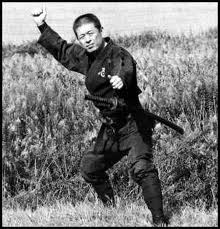
Historically, ninja were the consummate combination of super spy / super soldier.  They possessed outstanding levels of fitness due to their intensely physical training and highly demanding mission requirements.

Their levels of fitness and training have been the subject of many stories and the genesis for many myths surrounding them.

How did they do it?

How did they train?

What type of methodology did they employ since creating this kind of warrior certainly required a very diverse fitness profile?

Ninja fitness needs were much more multi-faceted than most physical pursuits.  They had to be as they were at once a combination of Olympic decathlete, Navy Seal, and martial arts master rolled into one.  Let’s examine this a little more closely though, what kind of qualities did they possess and what did they need to be able to do?

Ninja Must Possess …

  • Strength
  • Agility
  • Coordination
  • Excellent balance
  • Flexibility / Mobility
  • Whole body power
  • Endurance

Ninja Must Be Able to….

  • Move silently
  • Run fast
  • Walk far
  • Leap high
  • Climb trees, walls, castles fortifications, etc.
  • Wield weapons
  • Fight unarmed – striking, kicking, grappling, locking, choking, etc.
  • Roll / fall / dodge / avoid
  • Crawl
  • And more…

As you can see from the 2 lists above, the ninja had a wide range of skills and abilities that had to be supported by a comprehensive fitness program keeping him at the top of his game.
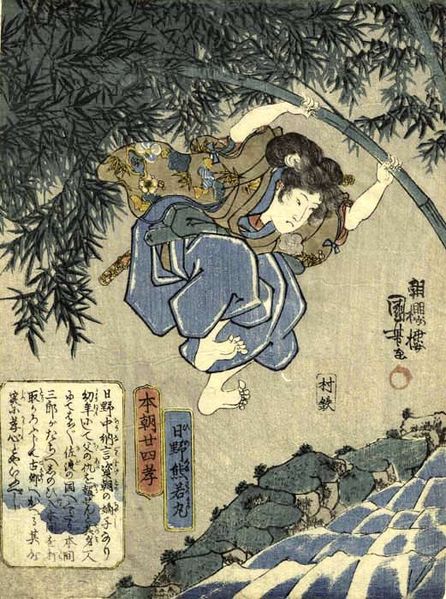
Remember that for a ninja, fitness wasn’t just a nice to have; it was an absolute necessity to accomplishing his mission and getting him home safely.  And the kicker is, they did it all with little to no fitness equipment.

Certainly a 16th century ninja did not possess a Gold’s Gym membership.  Nor did he own an Olympic weight set or have a stair master at his disposal.  And, while kettlebells and dumbbells would have been great, he most likely had never laid eyes on either one.

So here we have one of the most highly trained and fit agents the world has ever seen created without the use of modern training equipment or modern training methods.

What might some of this training looked like?

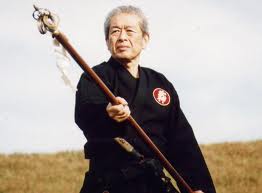
I’m glad you asked.  One of my favorite scenes in Hatsumi Sensei’s early Bujinkan training videos (DVDs now for you younger folks!) comes from Shinden Fudo Ryu.  Here’s a short clip I found on Youtube.  This stuff is seriously old school!

“One trains using the things of nature to make the body strong” – Hatsumi Sensei

What if we were to take the spirit of historical ninja fitness training and combine it with a little modern sports science and know how?

Modern methods allow us to take advantage of periodization, or programing and organizing training, to create a comprehensive fitness plan which will apply logical sequences to get the most out of each session.  Protocols like HIIT, high intensity interval training, will be utilized to maximize both aerobic and anaerobic endurance in the same short, high intensity session.

Advances in recovery work from such sessions will allow us to recover faster thus making gains greater, and increasing our overall general physical preparation (GPP) will allow us to push higher into more sophisticated training.  Effectiveness and efficiency will be combined in order to allow for shorter training sessions which maximize the use of one’s time.

As the ancient ninja did, we will create a strong, supple, highly conditioned warrior and accomplish this with little to no fitness equipment.  We will, as Hatsumi Sensei says in the video clip above, use the things of nature to make the body strong.

If I were able to point to just one resource for the warrior that combines old school training with modern sports science, I’d look here… Ninja Missions <<==
 

Warrior Fitness is Going Primal!


Reprogram Your Genes for Effortless Weight Loss
There are quite literally hundreds of different diet books lining the shelves of bookstores coast to coast.  Each one with a slightly, or radically, different approach than the next to helping its reader shed unwanted pounds, improve body composition, tighten up their waist line, and increase health and longevity.  And do this all quickly and painlessly to boot!  But what if I told you that even though all these numerous programs, approaches, ideas, and methods are valid and do work, to a point, for some individuals some of the time, there is actually only one diet that is suitable for us all?  This is exactly what author Mark Sisson asserts in his book, The Primal Blueprint.  You see, prior to the Agricultural Revolution some 10,000 years ago (give or take), all humans – everyone on the planet – ate basically the same diet.  Of course there were some variations due to geography, climate, and seasons, yes, but basically the same diet.  And what if I told you that this one diet kept our caveman (and woman) ancestors leaner, stronger, fitter, and even healthier than we are today?  It enabled them to survive and thrive for over 2 million years.

Enter the Primal Blueprint.  According to Sisson (and considerable research), our genes have remained virtually unchanged since pre-agricultural times.  We are quite literally cavemen in business suits – some of us more so than others!  The Primal Blueprint premise is that our current genetic expression is influenced, positively or negatively, by our lifestyle.  So that how we eat, how we exercise (or don’t), how we rest, play, and sleep all combine to create the body we have today.  This means that we literally have the ability to optimize our genetic potential one forkful at a time.  Sisson lays out 10 Primal Blueprint Laws to help us begin reprograming our genes by changing our lifestyle behaviors.

Law #1: Eat Lots of Plants and Animals

This is pretty self-explanatory.  Vegetables, fruits, and meat should make up the bulk of your diet.  Round it out with nuts and seeds.  These foods formed the diet that fueled human evolution for 2 million years.  The whole plan is laid out in the book.

Law #2: Avoid Poisonous Things

You’ll notice grains and other processed foods at the top of this list.  Yes, even the supposedly healthy, whole grains.  Why?  Simply because humans did not evolve to digest grains properly.  They make us fat and unhealthy.  Remember our genes have not changed since pre-Agricultural times.  Want to know more?  Read the book.

Law #3: Move Frequently at a Slow Pace

Hunter Gatherers spent a lot of time walking.  This very low intensity aerobic exercise provides a great base upon which to build physical fitness.

Law #4: Lift Heavy Things

Brief intense muscular efforts to climb, lift, carry, drag, pull, etc. were required by our caveman ancestors.  These functional, full body movements prompt improvements in muscular size and strength.

Law #5: Sprint Once in a While

Whether running for your life or sprinting to take down a kill, the ability to run fast was definitely a skill needed 10,000 years ago and today.

Law #6: Get Adequate Sleep

This is a hard one for us.  Studies constantly tell us Americans do not get enough sleep.  Usually 8 hours is recommended as the average, but how many of us get more than 6 hours a night?  Find out why sleep is so important in the book!

Law #7: Play

Hunter Gatherers had much more down time than we do today.  Take some time to get outside in the fresh air and enjoy yourself.

Law #8: Get Adequate Sunlight

Regardless of the term, Caveman, our prehistoric ancestors did not spend much of their time in caves.  They were outdoors most of the day.  Adequate sunlight exposure is one of the best ways to obtain sufficient Vitamin D.

Law #9 Avoid Stupid Mistakes

Back before emergency rooms and doctors for that matter, a careless injury which would sideline us for a short time today would be deadly to a caveman.  They had to maintain awareness – zanshin anyone?

Law #10: Use Your Brain

Creative expression for mental health and well being.

Does It Work? My Primal Experience

Let’s get down to the real question though – does it work and how difficult is it to implement?  Well, I’m half Italian so I love my pasta and bread, and my wife is Filipino so we love our rice and noodles.  I’ve always been taught grains are a staple and necessary for energy not to mention healthy – bottom of the food pyramid, right?  However after reading The Primal Blueprint and understanding why grains are not necessary for you and really not as healthy as we’ve been led to believe, I was more than willing to take Sisson at his word and give it a try.  Dropping grains out of my diet wasn’t as hard as I thought it would be.  Many of us, me included, have strong emotional attachments to our food.  The Italian part of me was literally screaming – no bread?  No pasta?  Are you nuts???  But once I got over the initial hump, it was actually pretty easy.  The fact is though no matter how much I tell you about my own experience you won’t really know until you try it for yourself.  I went cold turkey on the grains – can you?  Give it a shot.  You’ll be surprised at what your body can do! 

What about my results so far?  I’ve been following the Primal Blueprint laws, as laid out above for about 2 weeks now.  I feel great!  Energy levels are high and steady, no post meal crashes.  I’ve already begun to lean out some more and am looking forward to even greater fat loss while increasing lean muscle mass.  The best part for me is that I’m not constantly hungry.  Usually, as those who know me can attest, I’m the first one to be ready to eat at meal times.  Now I hardly even notice what time it is, I just eat when I’m hungry.  I am even able to skip meals with no sluggish side effects.  Warrior Fitness workouts align very well with Primal Fitness concepts (brief high intensity sessions, no chronic cardio) so I have not really made too many modifications there.  Although, I am definitely looking to add some sprinting in to round out my training week now.  It just seems like too much fun not to do it. 

My opinion?  The Primal Blueprint is intelligently written, well researched, and also quite entertaining to read, and it just might save your life.  Highly recommended!! 

For more information, check out Mark Sisson’s blog, Mark’s Daily Apple – HERE!

Sample Exercise from Warrior Fitness Guide to Striking Power

A Word on Strike Conditioning

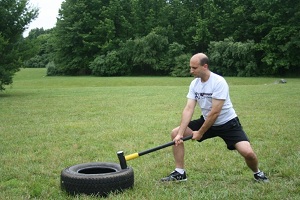
Swinging your sledge hammer at an old tire is an excellent old school conditioning exercise for anaerobic strength and work capacity.  It will insure your strikes have not only power, but endurance and as well.  Old tires are fairly easy to come by, usually any Tire and Auto place will have a bunch of old tires sitting in a pile outside waiting for disposal.  If you ask nicely, they are pretty happy to give you a couple for free.

There are a few different protocols that I like to use for this exercise:

Density training is one option. The concept of Density Training is pretty simple.  Do more work in the same amount of time or do the same amount of work in less time.  So, for example using hitting the tire with a sledge hammer as the exercise and the last time you used this protocol you managed to do 100 swings in 5 minutes, then this session you would either try to increase the number of swings you can do in 5 minutes or strive to do 100 swings in less than 5 minutes.  Not rocket science, right?  What if this is your first time attempting this type of training?  Pick an amount of time, say 5 minutes.  Then try to do as many hammer swings as you possibly can in those 5 minutes.  Crank them out.  Push yourself.  Remember the time limit used and amount of reps achieved, or preferably write it down, and the next time do more.

High Intensity Interval Training (HIIT) is another one.  It is perhaps one of the best ways to train for endurance.  It will enhance all 3 energy systems in the body (2 anaerobic and 1 aerobic – see here for an overview), as well as prime the nervous system to recover automatically during lulls in activity.  Simply put, HIIT alternates periods of high intensity exercise with periods of rest and recovery.  It can be performed with almost any exercise and can be utilized both with and without equipment.  The variety and adaptability of this style of training is second to none in results.

No discussion of interval training would be complete without touching on the Tabata Protocol.  Dr. Izumi Tabata at the National Institute of Fitness and Sports in Tokyo, Japan performed perhaps the most well known study on interval training.   A group exercising with moderate intensity endurance training was compared to another group using high intensity intermittent training.  Each group exercised 5 days a week.  The moderate intensity group exercised for 60 minutes, at 70% VO2 max.  The high intensity group did 8 intervals of 20 seconds, followed by 10 seconds of recovery.  They operated at 170% VO2 max.

After 6 weeks, both groups experienced improvements in maximal oxygen uptake.  The biggest difference between them was that only the high intensity group gained improvement in anaerobic capacity.  The high intensity group actually realized a 28% increase in anaerobic capacity AND a 14% increase in VO2max.  So, the study concluded that high intensity intermittent training can improve both the anaerobic and aerobic systems simultaneously.  Very impressive results!

I know that after reading the amazing results achieved by Dr. Tabata you’ll be ready to try using his protocol, I sure was!  The protocol itself is pretty simple, in theory.  Choose an exercise – say sledge hammer swings, for example (since we’re talking about them).  Perform the exercise for 20 seconds as fast as possible while still keeping good form.  Rest 10 seconds.  Complete 8 rounds.

There are several different ways to swing the sledge hammer.  I don’t care which way you do it – vertically, diagonally, hands apart, hands together, all are fine.  Just make sure that no matter which way you choose, you do not bend your back – we do not train bad habits!

In this particular example, notice the slight turn of the spine where I store energy (SEE) in my lower back.  The hammer swing is powered by the release of that energy, not by my arms.  Also, notice the knees bend as I squat down to hit the tire and not bend my back.  Keep good structure throughout the movement.

Like this exercise?  This one and many more sledge hammer, medicine ball, resistance band, and body weight exercises are described in detail along with sample workouts in the Warrior Fitness Guide to Striking Power Pick up your copy today!!


The Warrior’s Key to Greatness – The Way Lies in Training!

Throughout history a few exceptional martial artists have stood out from the rest of the budo landscape.

Millions of people from every country and culture on the planet have trained in innumerable styles and arts across the centuries, yet we only know a small number of them by name.

These men distinguished themselves and rose to the very uppermost levels of physical, mental, and spiritual skill in their respective arts and in some cases even took their talent to such heights as to create an entirely new martial art.

Looking back at them today, we are awed and inspired by the levels they achieved through their single minded determination in reaching a goal, dogged pursuit of excellence in their craft, and amazing amount of self-sacrifice.

Why are They Different?

What made these men different?

What pushed them to greatness?

What did they do differently or more productively that propelled them to prominence?

Why were their names and storied passed down through the years, sometimes centuries?

What one factor do all great martial artists have in common regardless of style, country, or culture?

And, more importantly, how can we learn from them and apply it to our own training?  Remember, we stand on the shoulders of giants, not to imitate them, but to be able to look farther.

 Quotes from the Greats

Instead of listening to my opinion today, why don’t we go directly to the sources themselves?  Here are some cool quotes I’ve complied by some of the greats talking about their own training.

Morihei Ueshiba – Aikido 

“The instructor can only impart a small portion of the teaching; only through ceaseless training can you obtain the necessary experience allowing you to bring these mysteries alive.  Hence, do not chase after many techniques; one by one, make each technique your own.”

“Always imagine yourself on the battlefield under the fiercest attack; never forget this crucial element of training.”

“This old man must still train and train” – said shortly before his death.

Gozo Shioda – Aikido 

“Kokyu power is produced when we push ourselves to the limit, making the most efficient use of the capabilities that lie within our own bodies.”

“Even though the body has its limits, until your death, the strength of your spirit is limitless.  This is precisely why, in the martial arts, there is no such thing as deteriorating as you age.”

Yukiyoshi Sagawa – Daito Ryu 

“Intermittent training, no matter how intensive, is utterly useless.  You must practice every day for your entire life.  That, and only that, is true training, or shugyo.”

“People who think they can ignore training their bodies and only work on techniques are amateurs.  They don’t know anything.  Actually, if you can’t prepare your body properly, you have no hope of ever perfecting your technique.”

“No matter what level of mastery you attain, you will never achieve perfection.  You should therefore never, ever assume that what you have achieved is good enough.”

“If people knew what my training regimen was like, they would be astonished.”

Masaaki Hatsumi – Bujinkan Budo Taijutsu 

“Modern budo students often forget to practice by themselves.  I used to practice by myself.  When there was no teacher, I found the secret teachings by my own desire.”

“Studying for oneself and making one’s own discoveries is much more important than group learning, and this applies equally well to martial arts.  As I often say, ‘Life is all about solitary training.’  This is because I want serious practitioners to discover the tricks of the trade for themselves.”

Miyamoto Musashi – Niten Ichi Ryu 

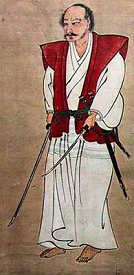
“From the time I was young I have set my mind on the Way of Martial Arts, practiced the one subject of swordsmanship with my entire being, and experienced various and different understandings.”

“See to it that you temper yourself with one thousand days of practice, and refine yourself with ten thousand days of training.”

“Never depart from the way of martial arts.”

Yamaoka Tesshu – Muto Ryu 

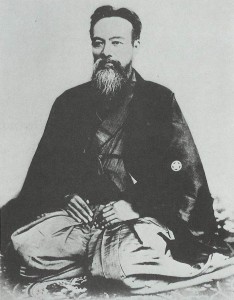
“Study hard and all things can be accomplished; give up and you will amount to nothing.”

“If you want to obtain the secrets of such wonderful techniques, drill yourself, harden yourself, undergo severe training, abandon body and mind; follow this course for years and you will naturally reach the profoundest levels.”

Inspired yet? 

Ready to train and push yourself to the next level? 

Check out the new solo training sensation – The Integrated Strength Program – and get started today!

integratedstrength3D1