The Complete Path to Lifelong Martial Strength

THE IRON BODY PROGRESSION MAP

The Complete Path to Lifelong Martial Strength


The Iron Body Is Not Built All At Once

It Is Built In Layers

There comes a moment in every serious martial artist’s life where something doesn’t quite add up anymore.

It doesn’t happen during training. In fact, during training, everything can feel fine. You’re moving, you’re sweating, you’re working. But afterward… when you sit down, when your body settles, that’s when you start to notice it.

Your understanding is deeper than it’s ever been. Your timing is better. Your awareness is sharper. You see things now that you never saw before.

And yet your body doesn’t respond the way it used to.

Your strikes require more effort. Your structure doesn’t feel as stable under pressure. Recovery takes longer than it should. And the most frustrating part is this—you’re still training. Maybe harder than ever.

So what’s the problem?

The truth is, you’re not losing skill.

You’re losing your ability to express it.

Your mind still understands exactly what to do, but your body no longer has the capacity to carry it out the way it once did. And this has nothing to do with age, effort, or discipline.

It has everything to do with how you’ve been training.


The Real Problem Is Fragmentation

Most martial artists train in pieces.

They build a little strength here, add some conditioning there, work their techniques, maybe sprinkle in mobility or flexibility work. On the surface, it looks complete. It feels like they’re covering all the bases.

But they’re not.

They’re training parts of the body… instead of training the body as a system.

Over time, this creates a kind of internal disconnect. Strength develops without structure. Durability improves without elasticity. Breath is trained, but never fully integrated into movement. And slowly, almost invisibly, the body starts to lose its cohesion.

Power begins to leak. Movement becomes stiff. Effort increases where it used to be effortless.

Because the body doesn’t function in isolated pieces. It functions as an interconnected whole.

This is what the old masters understood—deeply, physically, not just intellectually. They weren’t chasing strength or conditioning as separate qualities. They were developing the body itself. They were building a system.

That’s the idea behind the Iron Body.

And it’s the reason the Iron Body Progression Map exists.


A Map That Shows You What To Do Next

Most people don’t need more information.

They need direction.

They need to know where they are, what they’re missing, and what comes next.

The Iron Body Progression Map gives you that.

It’s not just a concept. It’s a structure you can follow. A way to rebuild your body layer by layer, so that everything begins to work together again instead of fighting against itself.

You can think of it as a ladder. Each step supports the one above it. Skip a step, and everything becomes unstable. Follow it in order, and something powerful begins to happen—the body starts to reconnect.
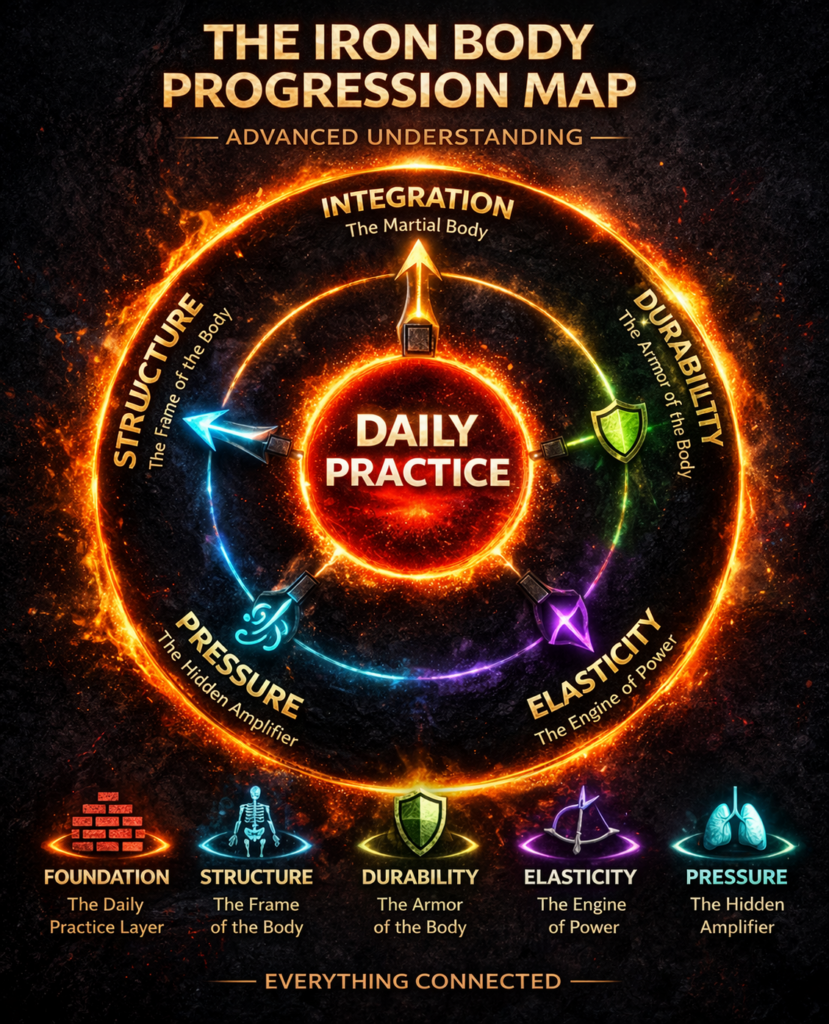

Foundation: Where Everything Begins

At the base of the system is daily practice. This is the Iron Body Daily Eight.

This is where most people go wrong, because it doesn’t look impressive. It’s not intense. It doesn’t leave you exhausted. But that’s exactly why it works.

This layer teaches you how to hold your body correctly. It develops alignment, awareness, and a kind of quiet control over your nervous system. Your posture improves. Your breathing begins to settle. You start to feel your body as a connected whole rather than a collection of parts.

Without this layer, everything else you do sits on unstable ground. No matter how strong or skilled you become, something always feels off. But once this foundation is in place, everything above it has something solid to build on.

👉 If you don’t already have a structured daily practice, this is exactly what the Iron Body Daily Eight Mini-Course was designed to give you—a simple, guided starting point you can implement immediately.


Structure: Building the Frame

Once the foundation is established, the next step is structure.

This is where practices like Zhan Zhuang and isometric training come in. Now you’re no longer just aware of your body—you’re organizing it. You’re learning how to stack the skeleton, how to root into the ground, and how to create clear pathways for force to travel through your body.

This changes everything.

Instead of feeling loose or disconnected, you begin to feel supported. Stable. Grounded. Your body starts to behave like a unified structure rather than a series of moving parts.

Most people try to generate power before they build structure. That’s why their power never holds up under pressure. Because without structure, force has nowhere to go. It collapses.

Structure is what allows power to exist in the first place.

👉 This is why foundational isometric work and standing training are emphasized so heavily inside the system—they’re not “extra work”… they are the work.


Durability: Strengthening the Tissue

With structure in place, the next layer is durability.

Now you begin strengthening the actual material of the body—the tendons, fascia, connective tissue, and even the bones. This is where Martial Qigong comes in.

At this stage, the body starts to feel different. Joints that used to ache begin to settle down. The constant sense of wear and tear starts to fade. You don’t just feel strong—you feel resilient.

There’s a density to your body now. A kind of quiet toughness that doesn’t rely on tension.

This is what allows you to train consistently over time without breaking down. It’s what separates someone who trains hard for a few years from someone who can train for decades.

👉 This is the layer most modern training completely ignores—which is exactly why systems like Martial Qigong become so important as you progress.


Elasticity: The True Source of Power

Once the body is structured and durable, something new becomes possible.

Now you can develop elasticity.

This is where real martial power begins to emerge.

Through methods like Yi Jin Jing and the Iron Silk Method, you train the tendons to behave like springs. Instead of forcing movement with muscular effort, you begin to store and release energy naturally.

This is where things start to feel almost surprising.

Strikes become heavier, but require less effort. Movement becomes lighter, but more effective. The body begins to generate power without you having to consciously push for it.

This is the difference between forcing power and having power.

👉 This is where the Iron Silk Method fits into the system—developing the kind of spring-like power most martial artists never access.


Pressure: The Hidden Amplifier

At this point, everything is in place—but it still needs to be connected internally.

That’s where breath comes in.

Breath is what ties the entire system together. It creates internal pressure. It stabilizes the body from the inside out. It allows force to move through the body in a way that is controlled, efficient, and calm.

Without breath, everything remains mechanical.

With breath, everything becomes alive.

You’re no longer just moving your body—you’re driving it from within.


Integration: The Martial Body

The final layer is integration.

This is where everything you’ve built is tested and expressed through real movement—carries, crawls, loaded patterns, and martial application.

This is where strength becomes usable. Where structure becomes dynamic. Where power becomes something you can apply under pressure without thinking about it.

This is what it means to have a martial body.

Not just strength. Not just technique.

But a body that can express both—effortlessly.


Why This Changes Everything

Once you understand this map, your entire approach to training shifts.

You stop asking random questions like, “What workout should I do today?”

And you start asking a much more important question:

“What layer am I missing?”

That question gives you direction. It removes confusion. It allows you to train with purpose instead of guessing.

And more importantly, it prevents you from wasting years developing one quality while neglecting the others.


Where Are You Right Now?

If you’re honest with yourself, you already know where you are.
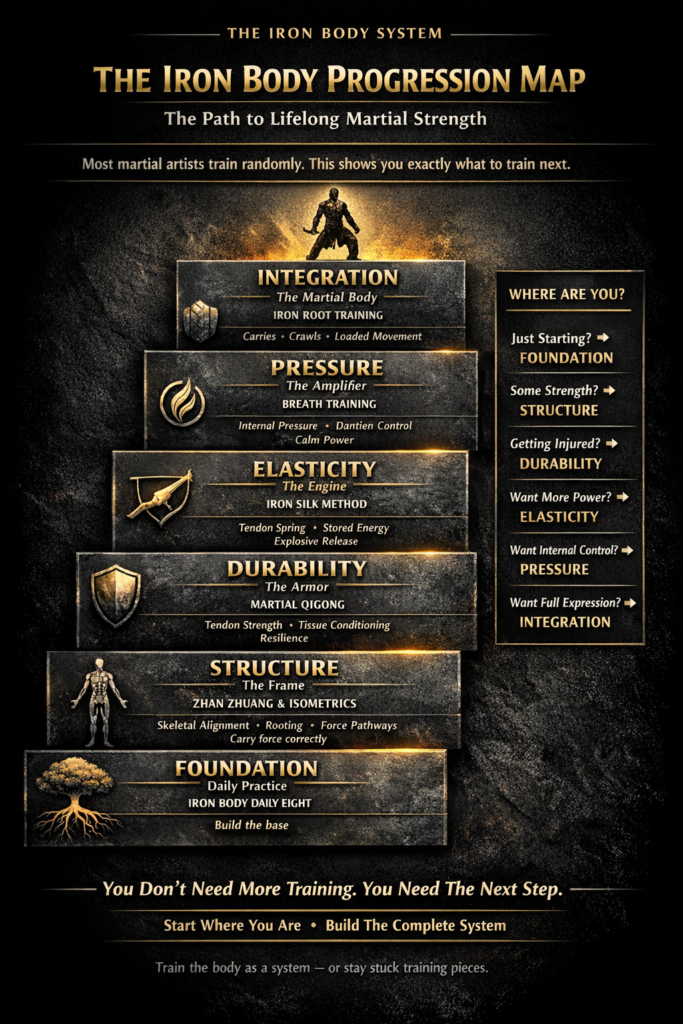
Maybe you’re just starting and need to build a foundation. Maybe you’re strong, but unstable. Maybe your body feels worn down and needs durability. Or maybe you’re chasing power, but haven’t yet developed the elasticity that makes it effortless.

Where you are determines what you should train next.


The Final Truth

You don’t need more intensity.

You don’t need more random training.

You don’t need to push harder.

You need to train the right layer, at the right time, in the right order.

That is how the Iron Body is built.


Start Here

If you want to begin the process the right way, start with the foundation.

The Iron Body Daily Eight is where everything begins. It’s simple, but it’s not easy. It requires attention, consistency, and patience. But if you commit to it, it will change the way your body feels, moves, and performs.

From there, you build upward—structure, durability, elasticity, pressure, and finally integration.

And over time, something shifts.

You don’t just feel stronger.

You feel connected. Stable. Powerful.

Like your body is finally working the way it was meant to.

👉 The Iron Body Daily Eight is the entry point into this entire system.

– -Jon Haas, The Warrior Coach
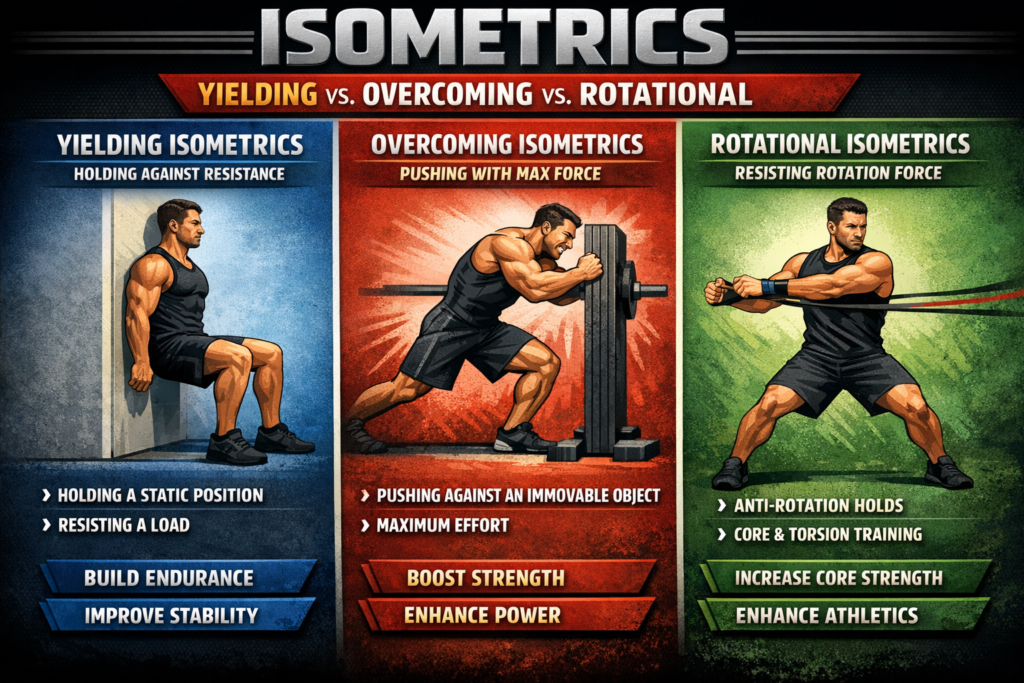
The Third Type of Isometric Training Most People Never Learn

The Third Type of Isometric Training Most People Never Learn (Rotational Isometrics)

Most people think isometric training means one thing:

Holding still.

Planks.
Wall sits.
Horse stance.

And if they go a little deeper, they might discover overcoming isometrics—pushing or pulling against an immovable object.

But there is a third type of isometric training that almost nobody talks about.

And it’s the one that most closely resembles real martial power.

It’s called:

Rotational Isometrics


Why Most Strength Training Falls Short

Most strength training is linear.

Up and down.
Push and pull.

Even most isometric training is linear:

You hold a position.
Or you push in one direction.

But martial arts are not linear.

Punches rotate.
Throws spiral.
Grappling involves torque, pressure, and redirection.

Power doesn’t move in straight lines.

It moves in curves, spirals, and angles.

And if your training doesn’t reflect that…

Your strength won’t transfer.


What Are Rotational Isometrics?

A rotational isometric is when you create tension by resisting rotation or producing force in opposing directions.

Instead of holding still…

You are actively creating twisting force inside the body.

Examples include:

• resisting a band pulling you into rotation
• twisting into a stance without moving
• creating opposing forces between upper and lower body
• diagonal push/pull tension patterns
• rotational squat holds
• Dragon Coil Holds

The key idea:

You are not just holding position.
You are organizing force through the body.


What Rotational Isometrics Train

This is where things get interesting.


1. Fascial Chains (Not Just Muscles)

Rotational tension travels through the body in diagonal patterns.

This activates:

• anterior/posterior sling systems
• cross-body fascial lines
• spiral tension chains

These are the exact pathways used in:

• punching
• throwing
• takedowns
• weapon work


2. Internal Connection

Rotational isometrics teach the body how to:

• connect upper and lower body
• transmit force across the torso
• maintain structure during movement

This is what many internal arts call:

“whole-body power”


3. Torque and Pressure

Linear strength pushes.

Rotational strength twists and compresses.

This is what creates:

• heavy hands
• crushing grappling pressure
• destabilization of opponents


4. Anti-Rotation Stability

Ironically, training rotation improves your ability to resist rotation.

This is critical for:

• defending takedowns
• maintaining base
• staying balanced under pressure


Why This Is the Missing Link

Here’s the problem:

Most people train:

✔ Yielding (structure)
✔ Overcoming (force)

But they skip:

❌ Direction of force

So their strength exists…

…but it doesn’t transfer cleanly into movement.

Rotational isometrics fix that.

They teach the body how to:

organize force through angles


The Martial Connection

If you look at traditional systems:

• Tai Chi → silk reeling
• Bagua → circular walking
• Xing Yi → directional force
• Jujutsu → kuzushi (off-balancing)

They are all based on:

rotation and redirection of force

Rotational isometrics are the modern bridge into that training.

They make those principles:

• measurable
• repeatable
• physically trainable


How I Use Rotational Isometrics

Inside my system, rotational work comes after structure is built.

Because without structure, rotation becomes collapse.

Here’s how it fits:

Step 1 — Yielding Isometrics

Build structure and endurance

Step 2 — Overcoming Isometrics

Build force and power

Step 3 — Rotational Isometrics

Organize and apply that power


Example Drill — Diagonal Push/Pull

Set up:

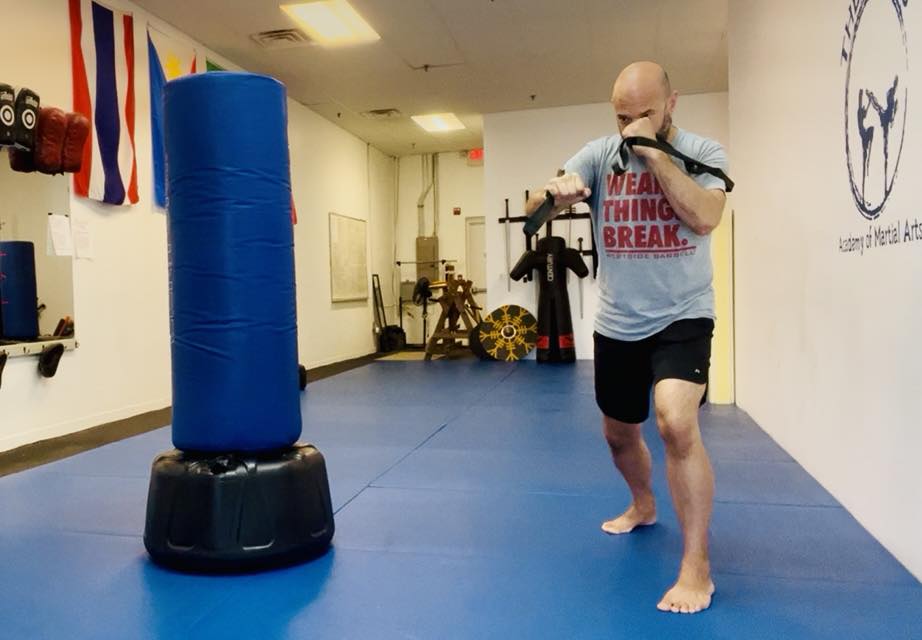
• Attach a band or strap
• One hand pushes forward
• One hand pulls back
• Hips remain stable
• Spine tall

Hold for 30–45 seconds.

Focus on:

• creating tension through the torso
• breathing calmly
• feeling force travel from foot to hand

This is not a “hold.”

This is a force pattern.


Example Drill — Dragon Coil Hold

From a squat:

• rotate the torso
• maintain lower body alignment
• create opposing tension

This develops:

• spiral strength
• hip integration
• rotational power


Where Most People Go Wrong

They try to muscle the movement.

But rotational strength is not about squeezing harder.

It’s about:

• direction
• alignment
• connection

Too much tension kills the effect.

Correct tension distributes it.


How This Fits Into My Programs

If you’ve been following my work, you’ve already seen these layers.

The Isometric Warrior Training Guide

Builds structural foundation through yielding isometrics

👉 Learn more here


The 21-Day Isometric Forge

Introduces overcoming + diagonal tension

👉 (Free bonus program inside the private Isometric Warrior Brotherhood)


The Iron Silk Method

Fully integrates:

• tendon elasticity (Yi Jin Jing)
• rotational force
• breath-driven power

👉 Learn more here


Final Thought

Most people train strength.

Very few train how strength moves through the body.

That’s the difference between:

Looking strong…

and feeling powerful.

Rotational isometrics are the bridge.

Train them seriously, and your strength will begin to show up where it actually matters.


Jon Haas
The Warrior Coach

The Five Pillars of the Iron Body

How Martial Artists Build Lifelong Strength, Power, and Durability

There is a quiet truth that most martial artists eventually discover.

Technique alone is not enough.

You can know hundreds of techniques, understand strategy, and have decades of experience… but if the body itself is not developed correctly, that knowledge cannot be fully expressed.

The greatest martial artists throughout history understood something very important:

They didn’t just train techniques.

They trained the body itself.

They forged a body that was:

• elastic
• structurally aligned
• internally powerful
• externally durable
• and capable of integrating all these qualities into real movement

This type of body is what I like to call The Iron Body.

And over the decades, after studying internal martial arts, strength training, Qigong, and traditional conditioning methods, I’ve come to understand that the martial body develops through five essential pillars.


The Five Pillars of the Iron Body

Every powerful martial artist develops five core qualities:

  1. Elasticity

  2. Structure

  3. Pressure

  4. Durability

  5. Integration

When these pillars are trained together, the body becomes both powerful and resilient.

Let’s look at each one.


Pillar One: Elasticity

The Spring of the Body

Muscular strength is useful, but true martial power comes from something deeper.

The body must behave like a bow.

When tendons and connective tissue become elastic, they store energy during movement and release it explosively.

This is why skilled martial artists often appear relaxed yet generate tremendous force.

They are not relying on muscular tension.

They are using elastic power.

Training methods that develop elasticity include:

• Yi Jin Jing tendon training
• structural isometrics
• slow movement exercises
• controlled connective tissue loading

This is exactly the focus of my Iron Silk Method program.

Iron Silk is designed to restore the elastic connective tissue qualities that allow martial power to feel effortless.

When elasticity develops, many practitioners notice:

• strikes feel heavier
• movements become smoother
• the body feels springy instead of stiff

Elasticity is the engine of martial power.


Pillar Two: Structure

The Frame That Carries Force

Power does not come only from the muscles or tendons.

It must travel through the body.

Structure is what allows force to move efficiently through the skeleton into the ground.

When structure is correct:

• the body becomes stable
• pressure flows through the frame
• muscles remain relaxed

When structure collapses, power disappears.

This is why many internal martial arts emphasize standing practice.

Standing training teaches the body to align:

• feet
• hips
• spine
• shoulders
• head

When these elements are stacked correctly, the body becomes capable of carrying tremendous force without strain.

This is the focus of Zhan Zhuang training.

Zhan Zhuang develops:

• posture
• root
• internal connection
• relaxed strength

Over time, standing practice creates a body that feels heavy and stable under pressure.


Pillar Three: Pressure

Breath-Driven Internal Power

Breathing is far more than a relaxation tool.

In traditional martial arts, breath is used to create internal pressure.

This pressure stabilizes the body and fuels movement.

Practices that develop internal pressure include:

• dantien breathing
• whole-body breathing
• compression and expansion drills

When breath and structure work together, something powerful happens.

The body begins to move as one connected unit.

This type of breathing is a key component of both Iron Silk and Martial Qigong training.


Pillar Four: Durability

The Armor of the Body

Elasticity creates power.

Structure directs power.

Breath fuels power.

But the body must also be able to handle power.

That’s where durability comes in.

Durability refers to the strengthening of:

• bones
• tendons
• muscles
• skin
• connective tissue

Historically this was developed through hard Qigong training.

Practices included:

• static posture strength training
• tendon conditioning
• iron body methods
• breath-powered tension

This is exactly what is taught inside my Martial Qigong course.

Martial Qigong develops the external strength and durability that allows martial artists to remain strong and resilient as they age.

Without durability, elasticity becomes fragile.

With durability, the body becomes capable of absorbing and delivering force safely.


Pillar Five: Integration

Turning Training Into Martial Power

The final pillar is integration.

Integration is where everything comes together.

Elasticity, structure, breath, and durability must eventually become one coordinated system.

This is what allows martial artists to move naturally and generate power without thinking.

Integration is developed through:

• slow martial movement
• striking mechanics
• grappling pressure drills
• standing meditation

At this stage, the body begins to express power effortlessly.

Many practitioners describe this as:

• heavy hands
• relaxed strength
• effortless issuing

This is the stage where training becomes true martial skill.


The Foundation of Everything: Daily Practice

All five pillars rest on one essential foundation.

Daily practice.

The martial body is not built through occasional effort.

It is built through consistent, intelligent training over time.

Even short daily practice sessions can create profound changes in the body.

A simple daily structure might include:

Standing practice 
Iron Silk tendon training
Breathing exercises
Martial Qigong conditioning

Over weeks and months, these practices gradually transform the body.

This is how martial artists develop strength that lasts decades instead of years.


Bringing It All Together
When the five pillars are trained together, the body begins to change in remarkable ways.

Elastic connective tissue creates explosive power.

Structure carries force efficiently.

Breath generates internal pressure.

Durability protects the body.

Integration turns all of this into martial ability.

This is the essence of The Iron Body Protocol.

And it is exactly what my training programs are designed to develop.

Iron Silk Method builds elasticity and tendon power
Martial Qigong develops durability and external strength
Zhan Zhuang standing practice creates structure and internal connection

Together, they form a complete system for building a powerful, resilient martial body.


Train for the Long Path

Martial arts are not just about fighting.

They are about developing the body and mind over a lifetime.

When you train the five pillars consistently, the goal is simple:

To become stronger, healthier, and more capable every year.

Not weaker.

Not slower.

But better.

That is the path of the Iron Body.

Train with intent.

— Jon Haas
The Warrior Coach

Muscle Building Secret of an Escaped Convict

Muscle Building Secret of an Escaped Convict

There’s an 8-second strength and muscle-building trick once used by a Russian spy to literally bend steel jail bars and rip open his heavy shackles to escape prison… not once, but 4 TIMES! Anyway…


Research shows this single trick will explode your muscle and strength gains from your very first workout. Check it out!

=> Muscle building secret of escaped convict (use THIS next workout)

World famous strongman competitors and legendary bodybuilders like Arnold Schwarzenegger have used this technique to make their most stubborn body parts more powerful, dense, and eye-popping…

Even some of the “baddest” cage-fighters like Connor McGregor and Georges St. Pierre…

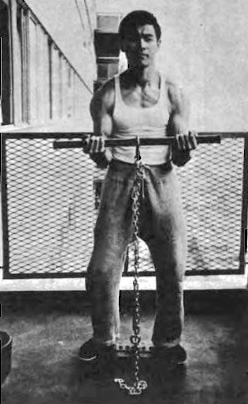
And history’s best martial artists like Bruce Lee and Jean Claude Van Damme have used this method to build lethal force that can instantly put an end to any fight…

I’m talking about a specific kind of isometrics. Which…

According to a recent study published in the Journal of Applied Physiology this method boosts strength by 45% while increasing muscle growth by 5%…

WITHOUT having to perform endless amounts of sets and reps that bombard your joints with painful inflammation and injury…

Basically, adding this one max static muscle stimulation technique to your workouts will have you building muscle FASTER…

While keeping you “in the game” for decades to come. Check it out…

=> Max Muscle Stimulation (do these if you want more strength & muscle)


The Strength of Structure (and How to Train It)

As we discussed in the previous post (see here), all martial movement must be based on a platform of both mobility and stability. Today we will discuss stability.

Kamae is much more than just a stance or ready position. It is the platform from which all movements are made and from which all techniques are delivered. Your kamae is quite literally the foundation upon which your entire martial art practice rests.

A weak, or structurally flawed, kamae will limit the amount of power delivered and reduce the effectiveness of every technique employed. Conversely, a strong kamae is the key to the effective execution of all your techniques. A strong kamae carries the support of the ground and efficiently conducts that power through the user with minimal noise creating, in effect, a transparent power.

“You can’t shoot a cannon out of a canoe.”

Water provides a very poor base of support to maximally fire a cannon ball thus it will not travel very far. This is exactly what happens with a poorly constructed kamae. So much power bleeds off in different directions that the mean effect of the movement is extremely reduced and more energy is required in order to compensate for the inefficiency.

How Do We Build a Strong Kamae?

There are many different forms of strength training but only a few, very specific, methods of strengthening the structure (kamae). The key to strengthening structure, as you will see, is training the connective tissue – fascia, tendons, and ligaments, and strengthening the bones, rather than working on muscle. The benefits of this type of training are enormous; not only does having a stronger structure increase the effectiveness of martial movement and techniques, but also acts as a natural form of injury prevention by improving the strength and elasticity of the tissues and increasing the body’s overall resilience.

We will examine 4 main ones here from the EARTH section of Warrior Fitness working on strength, structure, and stability.

Loaded Carries – These provide a unique challenge to the body as they are a type of moving isometric exercise. Kettlebells or dumbbells are a great place to start, but loaded carries can be done with just about anything.

There are 3 basic loaded carries we will discuss here:

  • Farmer Walk – Hold 2 kettlebells at the sides and go for a walk. Try to maintain a neutral balance and move from center.
  • Rack Walk – Hold 2 kettlebells in the rack position and go for a walk. Try to maintain a neutral balance and move from center.
  • Overhead Carry – Hold 2 kettlebells overhead and go for a walk. Try to maintain a neutral balance and move from center.

Static Holds – Unlike lifting or carrying, static holds can be done anywhere with zero equipment. They also place a great emphasis on strengthening connective tissue for supporting the body.

  • Static Kamae Hold: Pick a kamae and hold it for time. The goal here is to relax in position and allow the connective tissue to do the work, not the muscle.
  • Static Push-up: Hold the top, middle, or bottom portion of a push-up for time. The goal here is to relax in position and allow the connective tissue to do the work, not the muscle.
  • Partial Lifts – Partials allow you to develop the connective tissues and bones in a way that full range of movement lifting cannot. By doing partials you are supporting more weight than you would be able to in a full range lift.

  • Push Testing – The push test is a very practical way of testing the quality of one’s solo training for internal power. The body, when properly trained, acts as an omni-directional structure.  This allows the practitioner to neutralize any incoming force by diffusing it throughout the structure rather than having to surrender to it or resist against it.


I cannot over emphasize how critical this type of training is to your development as a powerful martial artist. Not only does this type of training condition the connective tissues, bones, and muscles, but it forms the body into a cohesive unit that is both resilient and powerful.

Study this well, my friends!

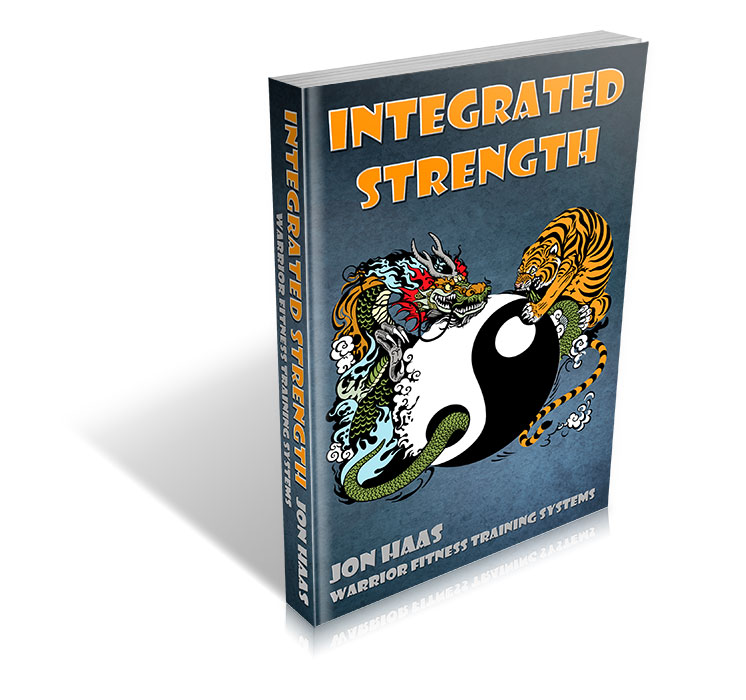
Check out my bestselling Integrated Strength Program for more complete trainiing information…


4 Tips for Bruce Lee Strength

Thanks to my friend, Jarell Lindsey, owner of Muscular Strength System, for this awesome guest blog post!

Bruce Lee is the face of fitness in America. Even 40 years after his death, he is an icon for one of the best physiques that the movie industry has ever seen, and every ounce of his flesh produced terrible strength.  At his bodyweight of around 140, Bruce Lee was known to completely demolish 300 lb heavy bags with his kicks, and punch with a force strong enough to completely splinter pieces of wood. More than power, he had dexterity, able to catch pieces of rice thrown into the air with a pair of chopsticks. He trained for function first and foremost, and the rest seemed to follow.

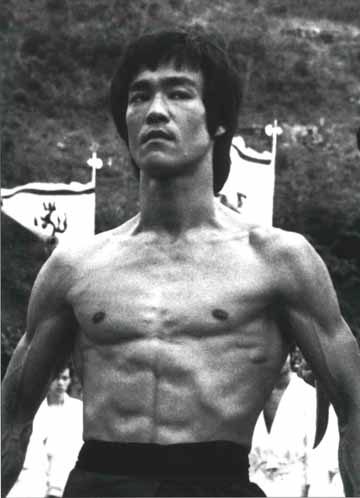
Bruce Lee

So how can one hope to even get near Bruce Lee’s strength? Just as it wasn’t for him, it will not be easy for you. In all honesty, Bruce Lee was one of those one-of-a-kind people, but that shouldn’t discourage you from training your utmost for Bruce Lee strength.  Here are four tips on how to get there:


Dedication. First, if you don’t have dedication, you can forget about the rest of these tips, because you’ll never get anywhere near the Dragon’s level of strength without using his greatest strength, which was his almost manic level of dedication to training. You better believe that if there was a single moment in the day that Bruce Lee wasn’t training, he was thinking about it. Moments like watching TV or standing in line were opportunities for extra training. A walk along the beach turned into sprints or multiple-mile jogs. Are you this dedicated to your strength? If not, that’s okay for now, because you can get there. But you’ve gotta start by doing at least one fitness related thing a day. If you can’t go to the gym everyday, walk a mile or two in the morning. If you feel up to it, make it a jog. Always think about how to improve your strength in the little things you do everyday, and it’ll become second nature.


Pyramids. Bruce Lee did a lot of pyramid training with his workouts; for a man who exercised only for function, pyramids were key. The biggest argument that martial artists had against lifting weights was that it’d make them slow and bulky. Bruce Lee proved that, by starting heavy and working your way down, you can improve strength and power without sacrificing speed. Say, for punch power, Bruce would start punching with 50 lbs for 10 reps, 40 lbs for 15 reps, 30 lbs for 20 reps and so on. So, are you ready for some intense functional strength? Incorporate these into your workouts.


Cardio. I know a lot of big, strong guys who don’t think cardio is necessary as long as they just “lift weights faster”. If Bruce Lee, who had one of the best physiques of the modern era, wasn’t too good for cardio, I’m not either. Truth of the matter is, cardio will give you the endurance to go much longer and harder in your workouts, and leaving out cardio keeps you from reaching your best fitness potential. If you’re a fighter, you know how important cardio is to keep you sane and stable for those last few rounds or that final period of the fight. It takes more that just heavy lifting to have athletic function. Bruce Lee really pushed the limit with his cardio, running 5 and 10 miles like an Energizer bunny, but the most important thing I’ve taken from his running is his interval training. Bruce wouldn’t just run aimlessly for years or sprint himself to heaven; he’d sprint, jog, shadowbox, jog and shadowbox, sprint, and repeat or switch up the pattern. This interval training is the king of cardio; it teaches the heart to be able to spike it’s activity rate from a resting heart rate more comfortably. Basically, interval cardio teaches your heart to go from 0 to 60 faster than other forms of cardio, or a lack of cardio altogether.


Isometrics. This was Bruce Lee’s secret weapon in his training, and it should be yours too. Think of isometrics as taking your body and filling it up with titanium. Isometric exercises train you from the inside out, strengthening your bones and tendons/ligaments in addition to your muscles. This is what helped Bruce Lee get that “sinewy strength” people often talk about. Isometrics are interesting because you don’t move at all during your exercise, but it gives you some incredible strength benefits. You can push or pull against an immovable object like a wall, or you can load the machine up with supra-maximal weight in your strongest range and contract against it like there’s no tomorrow. Trust me, your limbs will feel like they just got treated with adamantium, and your resulting strength will be proof of that. Happy training 🙂


About the Author  

JarellJarell Lindsey is an avid physical culturist, and owner of MuscularStrengthSystem.com. He is an advocate of isometric training, and enjoys catch wrestling, sparring, or exercising in his free time. His training advice can be found on fitness, martial arts, and health sites across the web. Coming from a family plagued with various health conditions, he has been in pursuit of the best methods of health management and strength training around since youth. He is currently studying for a Bachelors in Exercise Science, and he hopes to motivate more youth to pursue physical fitness as a lifestyle. He offers training and diet advice, interviews from leading fitness experts, and self improvement advice. Ultimately, he encourages a physical culture revolution to overcome the modern health crisis.

The Importance Of Isometrics

Thanks to Benjamin Bergman for this great guest post!

In most training methods, you learn to train the big muscles in the major muscle groups or for most in the gym, they isolate the muscle to a certain degree. Many neglect those little muscles that keep you intact and help avoid injuries. When you do your training, keep to your goals as much as possible but don’t forget to add in a little supplemental training. Isometrics work those little muscles like there’s no tomorrow and the amount of angles you can hit are limitless.


A key ingredient to having successful training is to be able to hit your Range Of Motion as best as you can. Some people have terrible ROM because of either an injury, just learning the basics or because of the way their body functions at that particular ROM. We all have different body types and we don’t always have the same leverage as everyone else but Isometrics can help your ROM from a specific position and increase the speed and strength of that position to your best capacity. I had trouble at one time with pull-ups and since I’m a big guy (245+ lbs.) It’s difficult sometimes to do a good amount of them but what helped me was holding specific positions in the pull-up or chin-up and after a while I began to hit reps like crazy being my best at 21 chin-ups and 17 at Pull-ups.


Working muscles especially the big ones can be good but only to a certain degree. When you don’t work the tendons and ligaments as often as possible, you’ll find that your body doesn’t function the way you want it to. Take a bodybuilder for example, he works big muscles but forgets building the tendons and so has a greater risk for injury and it only takes one minor mishap and he’s out for the count. The old-time Physical Culturists used Isometrics to enhance their strength gains in ways very rarely seen since that time. Some of them were Gymnasts, Wrestlers, Bodybuilders, Acrobats and others but one way or another they all used Isometrics to give them that edge because of that positional strength and how it keeps the joints healthy.


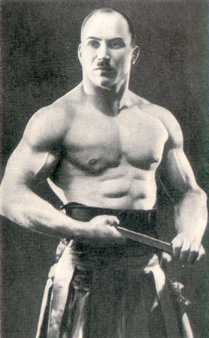
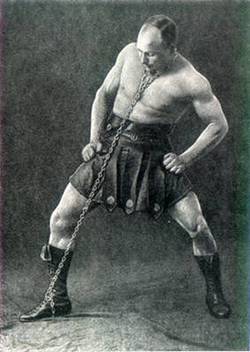
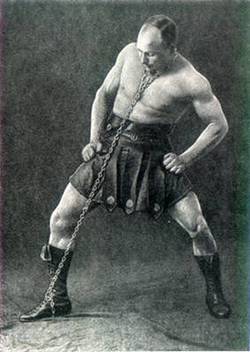
One thing you’ll learn about Isometrics not too many these days tell you is the dense and hardened muscle you develop from working different types of Isometrics. You see no matter how you work specific muscles or specific positions whether you hold for a few seconds or a few minutes, the blood rushing through the body and stressing that particular muscle or position puts density into that muscle. This can help build bone density and keep you from having long-term pain in the joints. One of the perfect examples of hard and sense muscle is the late strongman Alexander Zass, his style of Isometrics came from being in a POW camp during the 1st World War. He was chained up and instead of sulking and feeling sorry for him he pushed and pulled on those chains from as many angles as he can muster. He eventually broke the chains and escaped the camp. The muscle he developed was extraordinary and looked like a man that was carved by Michelangelo himself and this type of training made him one of the strongest men who ever lived by bending bars, twisting steel and bending spikes like they were a clothes hanger.

isometric-exercises-Alexander-Zass


Remember when I told you that you can hit an Isometric exercise from just about any angle? It’s true. One of the greatest wrestlers of his generation Karl Gotch once said “you always work your muscles from as many angles as possible.” This implies to not only dynamic movements but holding positions as well. When you hold a certain position say for instance a curl, you can work that particular exercise in the main three positions (down, middle and upper) but when you turn it in a different angle say if your arm is turned towards away or within the torso you’re still working a curl but your now working different muscles within that curl. You can do this with any exercise doesn’t matter.


Now I must warn you, doing Isometric Training in and of itself isn’t the only way to get super strong but when you add them in your current training, you can go beyond plateaus and this can help your ROM in a particular exercise like I’ve said before. A key thing is to use your imagination, think of what you want to improve and see in your mind’s eye how strong you want to be. One of the things I like to think of when I do Isometrics is when I work on my Arm Wrestling and I put a belt around a tree, I picture as if that tree was going to come down, I see it as a giant redwood and by the power of my own hands that tree will fall and I pull at times with everything I have and just want to toss that sucker right over the fence.


PT Barnum once said “Imagination is the elixir of life.” When you use your imagination no matter what it is, your results can come quicker, your body will move in a different way and your strength will skyrocket in ways you never thought of before. Make it a habit to live your training as if it was an adventure. Sure Isometrics are just holds but pictures how you use those holds, where you are and what is happening. You’d be surprised what you might find.

Check out Benjamin’s blog over at Ben’s Power and Might Writings!

The Holy Grail of Training

Guest blog post by Eric Guttmann, U.S. Navy Officer, Author, Fitness Enthusiast and More

Being in the Navy allows you to meet a lot of interesting people with different backgrounds, training experience and skills sets.  One thing that you come away with when interacting with people who are doing the tough, physically demanding jobs that Hollywood makes movies about is that there is NO one way to train.  I know the fitness industry is dominated by people that would like you to believe that there is ONLY one way to train, theirs.  These people would also like you to believe that they are the sole gatekeepers of this information and for a nice entrance fee you too can also learn their so-called “secrets.”  However, when you talk to people who have “been there and done that” you realize that there are MANY ways to train and when someone shows you something it is merely A WAY to train.
 http://mysteryworlds.files.wordpress.com/2012/11/holygrail.jpg
Unless something is unsafe to do, then it probably has intrinsic value.  Now, whether it has value to YOU depends on your goals and aspirations.  I LOVE going to Bud Jeffries and Logan Christopher’s Super Human Training Workshops!  I am constantly researching and experimenting with my OWN ideas, and when I go there I always get more ideas to experiment with and hang out with an AWESOME group of people.  isometrics5 300x225 10 Ways to Build Mental Toughness
Would a marathon runner benefit as much as me from these type of seminars?  Probably not, a marathon runner’s skill set would benefit more from endurance work and recovery strategies rather than bending steel and advanced grip work.  However a marathon runner’s goals and training would still have value to him regardless of what you or I think about it.  I only have respect for ANYONE who can run 26.2 miles in a row, even though I wonder WHY they would ever WANT to do it.
There is only ONE Holy Grail and that is YOU!  You are the one who will know exactly how to structure your training depending on what fuels your internal fire.  In the beginning you need the help of coaches and mentors if you are learning a new skill set, but after achieving proficiency you NEED to start experimenting and developing your very own and unique style of fitness, just like Bruce Lee’s Jeet Kune Do would be different for each individual depending on their specific bodytype, strengths and weaknesses.
 http://upload.wikimedia.org/wikipedia/en/thumb/5/51/BruceLeecard.jpg/220px-BruceLeecard.jpg
Now in building YOUR Holy Grail you benefit greatly from exposing yourself to as many talented people as you can!  Whether it be through books, DVDs, seminars or my personal favorite, PERSONAL INTERACTION, you can come away with the tips, training ideas and insights to take your training and RESULTS to a whole new level.  Those that were at the last Super Human Training Workshop benefited greatly from Bud’s teaching on isometrics.  Six months later I am still implementing them into my training!  Did you know that the Genesis for this was a PERSONAL INTERACTION that Bud had with the legendary Steve Justa?  One personal interaction led Bud to explore an idea and by the time the seminar had come he had honed his idea to the point where it could produce results for anyone who was PAYING ATTENTION. http://www.superhumantraining.com/offer/SteveJusta.png
I personally find that doing weighted isometric wall sits after any leg workout actually INCREASES RECOVERY!  Also, the toughest thing you can do after training the upper body is to do an isometric pullup hold in the UP position.  After a tough and demanding heavy double kettlebell workout for upper body that ran close to 45 minutes I decided to finish with 50 seconds of the isometric pullup hold.  I had to put forth more effort and willpower on those last 50 seconds than in the previous 45 minutes!
 http://1.bp.blogspot.com/-ADlPhQTlRq4/Tlg87iQkoNI/AAAAAAAAC_o/yahMHbasfG4/s320/pullup2.jpg
So learn all you can, absorb what is useful and drop what is useless.  A great analogy was when I hung out for a while with the All-Navy MMA team at Whidbey Island.  The coach was very cool and patient with any type of talk about this martial art or that martial art being the best, his only reply was, “Get in the ring and prove it!”  That’s the best approach to training, try it out in the ring of personal experience, do battle with it, and become the grizzled training veteran that only YOU can be!  That is the Holy Grail of Training!
All my best, Eric Guttmann
PS – Guys, make sure you check out Eric’s book, Extreme Military Fitness Basic – click below!
extrememilitaryfitnesscover1

Read Eric’s complete bio HERE.

Stopping Power for Kicks & Strikes

The following is a guest post from my friend and fellow Underground Strength Coach, Frank DiMeo. 

It is always an honor to do a guest blog post for another coach, especially regarding martial arts and strength training.
To many people UFC is the only martial arts they are aware of, but the experienced martial artists know how broad a spectrum martial arts cover. Continue reading

Tools of the Trade

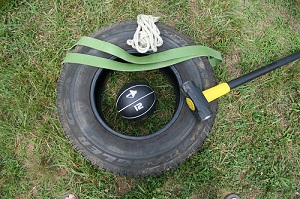
Every warrior requires certain tools to assist them in honing their craft.  Each tool is utilized in a specific manner to create a specific outcome.  In the upcoming Warrior Fitness Guide to Striking Power, we will use several different tools to accomplish the task of super-charging your striking effectiveness.

The Warrior Fitness Guide to Striking Power will utilize a 4-pronged based assault to increasing striking power, effectiveness, and efficiency. 

  1. Sledge Hammer
  2. Medicine Ball
  3. Resistance Bands
  4. Bodyweight Exercises and isometrics

Get ready to change everything you think you know about training your striking ability!