Breathing for Strength, Vitality, and Performance


For millennia breath control exercises have been the secret weapon of advanced yogis, qigong adepts, master healers, and warrior-monks to forge phenomenal strength, super human body control, and extraordinary vitality.

When disciplines such as yoga, Traditional Chinese Medicine, Internal Martial Arts, and Qigong have been successfully used over thousands of years to heal the sick, strengthen the weak, and bring energy to the depleted, you don’t question them – you study them!
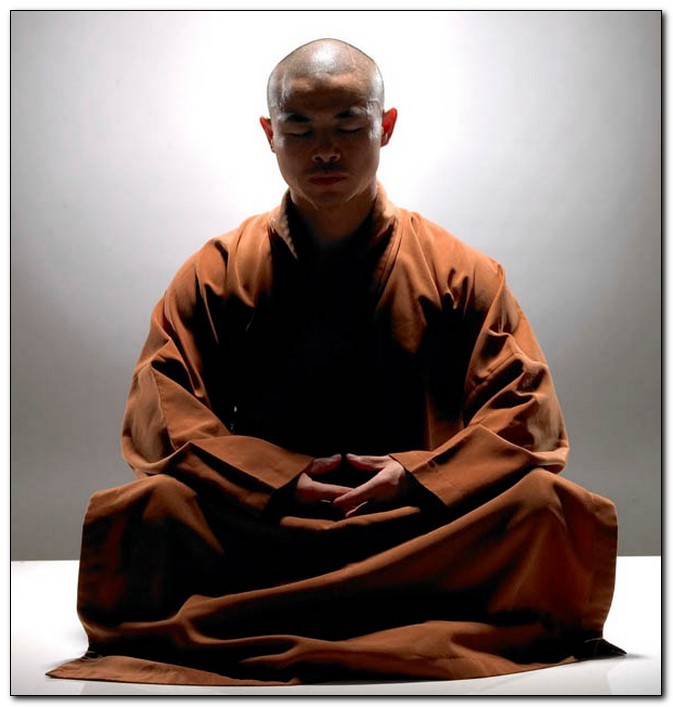
While obviously these disciplines have their own unique modalities and practices, working with the breath is the common thread that runs through each of them. And there’s a very specific reason why each have evolved sophisticated breathing exercises that are used with such a high degree of success.

Breathing as a Bridge

Breathing is the only function of the human body that bridges both the autonomic and the voluntary nervous systems. You can breathe on complete autopilot all day long without ever consciously thinking about, and yet you can also choose to take a deep breath, exhale sharply, or even hold the breath at any time.

Herein lies the secret of breathing exercises – because it spans both sides of the nervous system specific breathing techniques are able to influence things such as heart rate, blood pressure, muscular tension, and stress levels.
Over the centuries, adepts of these disciplines (and others) have created literally hundreds of breathing exercises that have been consistently shown through practical experience to…

• Enhance whole body strength
• Increase lung capacity
• Reduce stress
• Improve endurance
• Fire up the body’s bioenergy
• Increase flexibility and range of motion
• Improve pain tolerance/reduce pain
• Build resilience and resistance to disease
• Improve performance under stress
• Not to mention relax, revitalize, and rejuvenate the body through meditation and relaxation exercises!

Relaxing Breath (Square Breathing)

The basic premise of our ability to influence the autonomic nervous system is that inhalation increases heart rate, which subsequently increase blood pressure, to a slight degree, while exhalation lowers heart rate and blood pressure to a slight degree. During our normal cycle of breathing, these changes are too minute to register, or even notice. But, by gradually lengthening our breath and extending the pause before inhaling and exhaling, we compound the effect. Stand in a natural position or sit comfortably on the floor with spine straight to perform this exercise.

1. Begin by exhaling through the mouth for 5 seconds.
2. Do not inhale. Try to extend the breath pause for 5 seconds.
3. Before tension begins to creep in, inhale for 5 seconds.
4. Hold the breath on the inhale for 5 seconds.
5. Repeat the cycle 10 times.
6. As this becomes easier, and your capacity expands, try increasing the duration to 6, 7, 8 seconds.

Breath Walking Meditation Exercise


Energizing Breath

In this breathing exercise we will utilize a protocol founded by yoga and improved upon by Russian sport science and martial art. Here we will divide the breath into 3 levels: clavicular (upper level), intercostal (mid level), Diaphragmatic (lower level). This exercise will focus only on the clavicular, or upper level. Use this powerful breathing exercise to fire up your energy and prepare your body for training!

1. Exhale through the mouth in a short, quick burst by compressing the upper chest.
2. Do not actively inhale. Allow the inhale to happen by relaxing the muscles in the chest.
3. Repeat rapidly 20 to 40 times.
4. Build up to where you can perform continuously for 60 seconds.
5. If you become dizzy, stop and sit down and breathe normally!

60 Second Energizing Breath Video


Here is another fantastic use for breathing….


Restoring Breath

This exercise is literally a life saver when doing high intensity interval training (HIIT) workouts! It can be used in between exercises as well as in between sets, during the rest period, and also at the end of the workout to normalize breathing and dramatically lower heart rate.
1. Forcefully exhale as deeply as possible by rolling your shoulders forward, tilting the pelvis up, and contracting the core strongly.
2. Pause before the inhale for a few seconds.
3. As stated above, do not actively inhale. Allow the breath to be sucked back in through the nose as your body returns to a natural standing posture.
4. Repeat for about 60 seconds, or as long as needed.


To learn more about how you can incorporate powerful breathing exercises into your own training, check out my Evolve Your Breathing Program.
Also, make sure to check out my review of Logan Christopher’s book, Upgrade Your Breath.

To learn more about the Warrior Fitness Training System, check out the free mini-course I have provided below…

Tanren Mini-Course <<===

The Failure of Yogic Breathing

There are many different systems of breath work out there that focus on relaxed breathing and stress reduction that also talk about how to increase breath control and expand the practitioner’s lung capacity.  Unfortunately the majority of these systems fall short due to the fact that they tend to focus the bulk (or all) of their work on static posture breathing and breath retention exercises.  Usually the practitioner is either seated on the floor, on a chair, or lying down in a comfortable, meditative posture while the breath is regulated through a series of counts and breath is retained in gradually expanding holds.

Breathing2

Before any of my Yogi friends get upset with me, let me clearly state that yes, this process works and I am a huge fan of Yoga’s Pranayama along with other systems of breath work.  There is nothing wrong with it!  Doing this type of exercise on a regular basis will increase lung capacity and control, to a degree.

So What is the Problem?

The problem with this type of exercise, as I see it, is that very rarely do we require all that enhanced lung power and capacity while sitting on our butts in a comfortable and relaxed position.  Unless you are only interested in showing off how long you can hold your breath at parties and stuff, this way of exercising has limited usefulness.

A much more practical way of exercising lung capacity and breath control is by working the body through a series of simple calisthenics.  By placing the body under stress via exercise while incrementally increasing the retention of the breath on both the inhale (easier) and the exhale (more advanced), we magnify the results.  In my experience, this has a much broader and far reaching effect on the body’s systems.  It is also vastly more practical in terms of real world usage for martial art, athletics, and overall strength & conditioning training.

So, how do we do it?

I’m glad you asked!  Let’s begin with one of the most natural movements in the world, a basic bodyweight squat.

If you are not familiar with a basic bodyweight squat, here is a super quick tutorial:

  1. Stand in a natural position with feet slightly wider than shoulder width apart
  2. Keep the alignment of your spine as straight as possible from crown to tail bone.
  3. Squat down as low as possible while maintaining the alignment of your straight spine.
  4. Keep the weight mid-foot balance.
  5. Pause for a second at rock bottom.
  6. Lift from the crown of the head to “pull” the body back to standing.

Breathing Squats

We will do our breathing squats in the same fashion but with a couple modifications.  First remember that the purpose of these exercises is to train your breathing and expand your breath control and capacity.  They are not meant to “kill” your legs.  Although, depending on your level of conditioning, they might.

  1. Perform a basic bodyweight squat as detailed above.
  2. Just prior to beginning the squat, inhale deeply into the belly and comfortably hold the breath.  Your goal is to do the squats as relaxed as possible while maintaining the breath hold.
  3. Do 3 squats all while holding the breath on the inhale.
  4. After the 3rd squat, exhale and inhale.  Slowly inhale into the belly and exhale sharply to recover your breath.  When you are recovered, do 3 more.  Repeat.
  5. When you can comfortably do 3 squats while holding your breath (meaning you are not out of breath when you stop), then proceed to 5 squats on the breath hold.

Slowly increase the number of squats you can do on the breath hold.  When you can comfortably do 10 squats with the breath held on the inhale, start over again with 3 squats and hold the breath on the exhale.  You will find that holding the breath on the exhale is much more difficult.  The body is already out of breath and now you are adding stress in the form of exercise.  It is here that you will make the greatest gains in teaching the body how to use a limited supply of oxygen in the most efficient manner.  Make sure you proceed slowly and only add more repetitions when you can comfortably hold the breath on the exhale.

Remember – B.I.F (Breathing Is Fundamental)!

Evolve Your Breathing is a master class in learning how to breathe and respond under stress.  Don’t just breathe to survive – Thrive!!

Learn more here…

EVOLVE_SPOT-1 (2)