For as long as I can remember, I have always believed that the body is meant to be used as a fully actualized, integrated unit – nothing can (or should!) exist in isolation. By this I mean that muscle, tendon, ligament, and bone are all equally important and must all be unified in producing amazing degrees of strength and skill for fitness, martial arts, sports, or life. And, in most cases this is completely true. Continue reading
Tag Archives: internal power
Internal Power and Bujinkan Training
When I first began talking about internal power in the context of Bujinkan training, I realized that many people might be skeptical of this type of training at the very least, or have many preconceived misconceptions that would not allow them to even consider the method as a viable form of training for budo.
Therefore I decided to write this blog post to gauge the interest of my readership and how accepting you might be of internal power training and my interpretation of its role within Bujinkan training. I hope you find it helpful!
What is Internal Power?
I think it’s best to start with the basics. What is internal power and how can it useful to the practitioner of Bujinkan Budo Taijutsu? Let me state this at the outset to hopefully clear up a rather unfortunate misinterpretation of IP.
Internal Power is physical.
It’s not some mystical mumbo jumbo or a throwing chi balls type of nonsense.
It is actually a way of conditioning the body through specific solo training exercises and paired partner training. The training method spans thousands of years and has been handed down through the ages within the warrior traditions of India, China, and Japan. It is a body technology with a set method and detailed process of instruction that simply cannot be learned by osmosis. It must be explicitly taught.
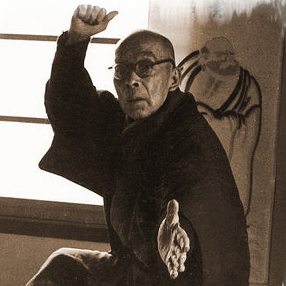
The basis for the method is what is known as the union of opposites or In Yo Ho, in Japanese.
By creating opposing forces within the body (up/down, left/right, front/back) through the use of intent – your own mental direction using imagery, feeling, and visualization – we begin to increase the mind-body connection to a remarkable degree.
Through the solo training exercises we condition and strengthen the entire fascia network, as well as tendons and ligaments, throughout the body. This process serves to create a connected body through the center so that when ‘one thing move, everything moves’.
The Ultimate Ukemi
Internal Power training changes the way outside forces act on the body. The structure becomes dynamically stable so that applied force can either be distributed throughout the chain and dissipated or, at a higher level, simply reflected right back onto the opponent. When force is reflected back this is what is known in Japanese as Yamabiko, or Mountain Echo.
At first blush it may sound like a party trick, but the budo applications are quite staggering. Think about it.
How does every martial art technique work?
What is the first thing you are taught to do prior to applying a technique?
Break the opponent’s balance, right? Get kuzushi.
What if no one can compromise your structure?
What does that do to every throw, lock, and take down applied to you? Yeh. You’re getting it now, aren’t’ you?
And that’s just the beginning.
Every time you move, you are completely and dynamically stable, balanced. You gain the ability to hit like a truck using the full mass of a connected body without dedicating your weight. (Remember – when one thing moves, everything moves.)
This becomes very profound, especially when you start to incorporate weapons.
And, since you are connected through the middle of your body due to the specific solo training exercises, you will finally and probably for the first time, actually be moving from center, hara, or dantien.
Sound interesting?
You can learn my full method of integrating and training the mind-body system HERE.
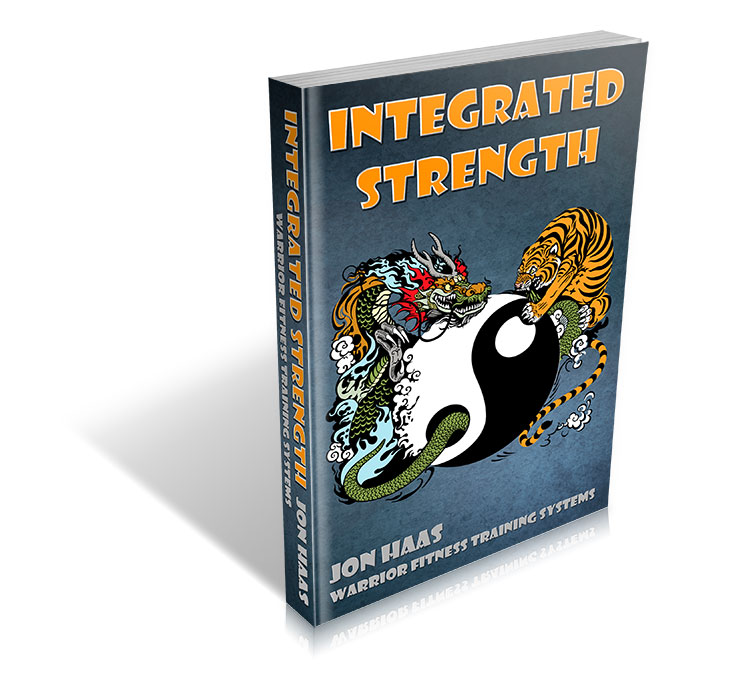
I am also more than happy to share what I know about internal power training, especially in the context of how it can be fully integrated into our Bujinkan Budo Taijutsu practice. I teach it in my weekly classes and seminars upon request. Contact me HERE.
Internally Rotate My What???
This post was inspired by a Facebook conversation started by my friend Jarell Lindsey talking about a mobility-based squatting motion with the feet parallel as opposed to splayed out (BTW, have you check out the Physical Culture Club page yet???)
There are many different ways to squat whether it is bodyweight only or with an implement such as a barbell, kettlebell, sandbag, or even another person.
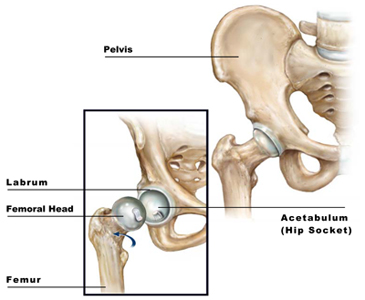
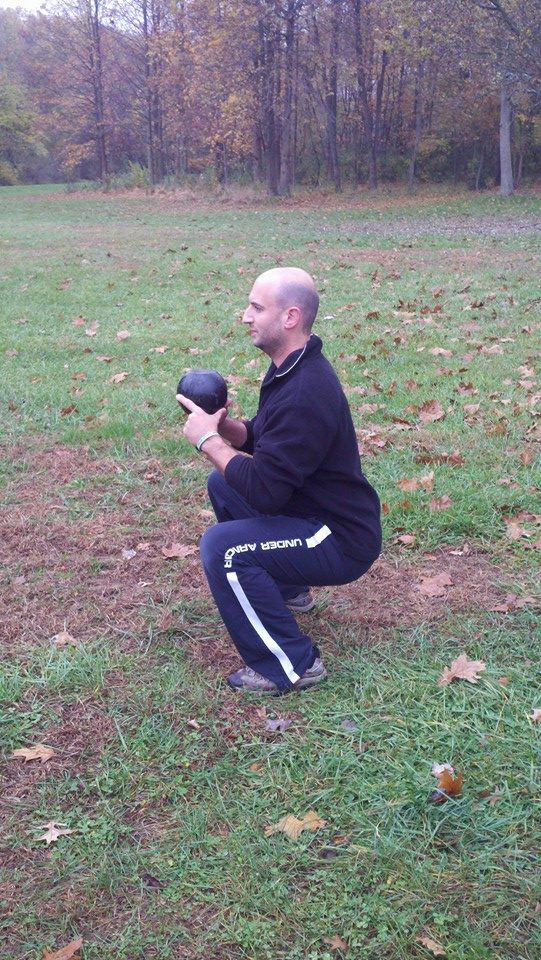
The particular squat I am talking about here is what I refer to as an Internal Rotation Squat. The Internal Rotation Squat differs from the traditional bodyweight squat in that the feet are parallel, as opposed to opened outward, and the squatting motion is accomplished by internally rotating the femoral heads within the hip sockets rather than relying on quad muscle power alone.
The Internal Rotation Squat requires MUCH more mobility, control, and mind power to accomplish since you must actually teach your body how to rotate the bones of the femurs within the hip sockets. This will take some practice!
Why Do This?
In order to begin generating what known as Internal Power (IP), you must have mobility in the inguinal area that the Chinese Internal Martial Arts refer to as the kwa. There is much, much more to IP than this, but having mobility in the kwa is an essential requirement. Additionally, even if you have no interest in IP or Chinese Martial Arts, having this type of mobility and control is an asset in any athletic endeavor or martial art, regardless of style.
Internal Rotation Squat – Bodyweight Version
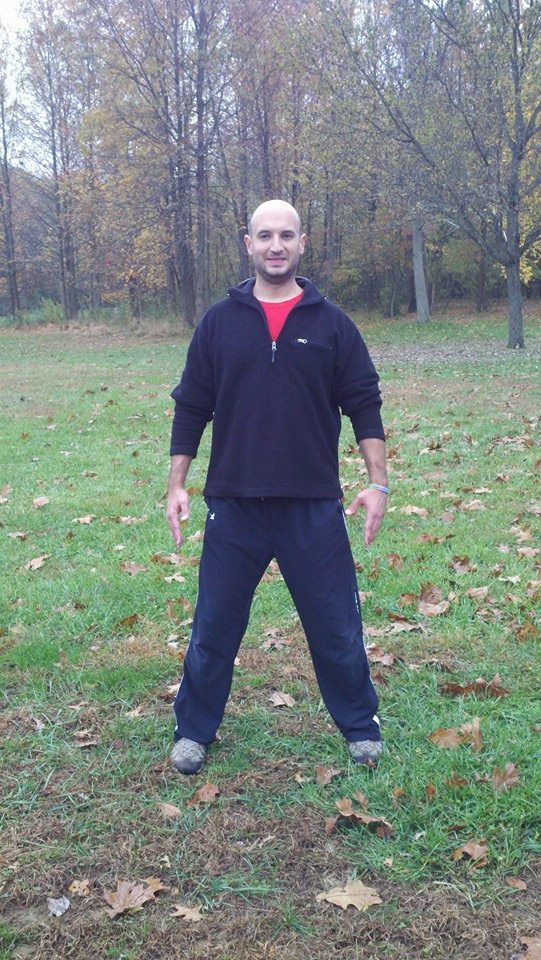
Begin with feet slightly more than shoulder-width apart. Keep the feet facing forwards, as if on railroad tracks.
This will be important later when working on winding the tissues, but for now, just do it. Place your fists on either side of the kwa (inguinal area) where the femur bones connect in to the hip sockets. Use the imagery of turning your fists to aid in turning the bones. Internally rotate the femoral heads and sit down into the kwa.
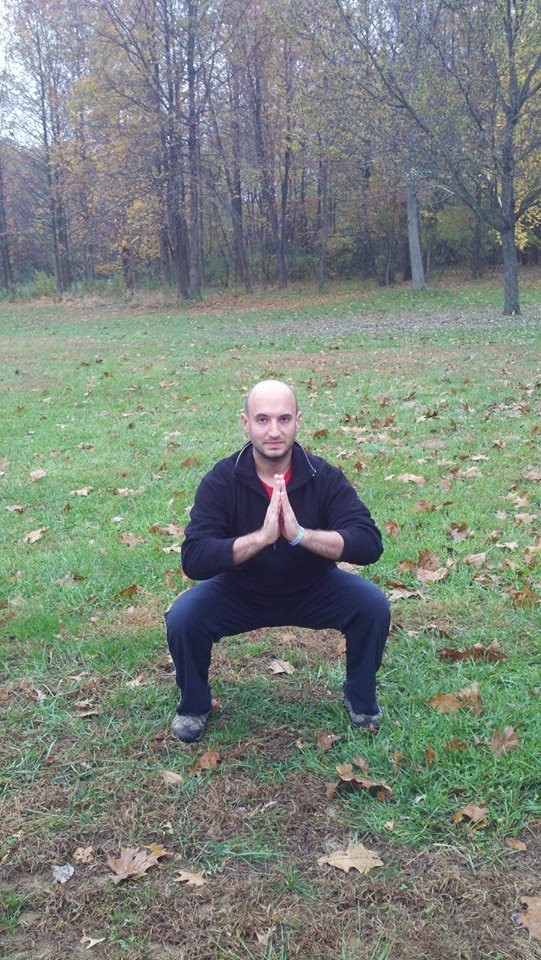
Squat as low as possible while keeping your back straight and the weight mid-foot balance. Pause at the bottom then externally rotate the femoral heads to stand back up.
Internal Rotation Squat – Goblet Squat Version
All requirements are the same as above with the addition of holding the kettlebell in front of your chest in the Goblet Squat position. Use the weight of the kettlebell to allow you to sink further into the kwa.
Thanks to Dan Harden for teaching me this exercise in the context of working on Aiki/IP. Any errors or omissions are my own and not the responsibility of my teachers. Also, thanks to Jaime for helping me to refine the squat and for taking the pictures!
Also, Dan Harden will be back in NJ in March 2014. Details on the seminar can be found HERE <<====
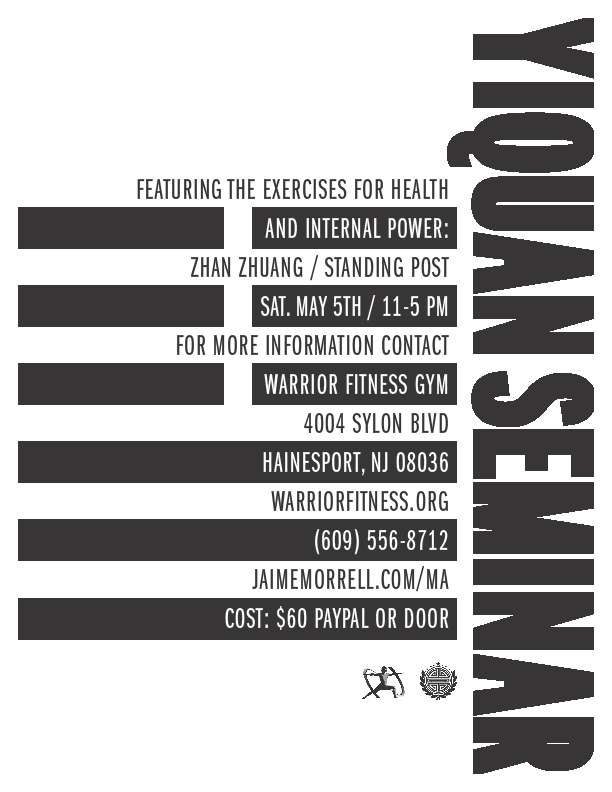
Yiquan Seminar Announcement
Warrior Fitness Gym is proud to present a seminar with Jaime Morrell on Yiquan, featuring exercises for health and internal power.
For more information on Yiquan please see our 2 part interview with Jaime Morrell:
An Introduction to Yiquan: Martial Art, Health, and Physical Fitness
An Introduction to Yiquan: Part 2
Map and Directions to Warrior Fitness Gym are HERE.
Any questions on the Yiquan Seminar or Warrior Fitness Gym Programs, call Jon at (609) 556-8712 or email me HERE.
To pay online, click Paypal link below:
Preparing Ninja for a Mission
My name is Ichiro Watanabe. I am a chunin, a middle level ninja of the Togakure clan.
Our small village is secluded deep in the mountains near Mt. Togakushi, otherwise known as Togakure Mountain. I could tell you exactly where, but I’d have to kill you. No joke, it’s a matter of survival for my family and clan.
You see the year is 1601, one year after the famous Battle of Sekigahara which brought Ieyasu Tokugawa to power uniting Japan. There is still much to do, however, and the need for the services of our ninja clan is still very great. Continue reading
Why Can’t You?
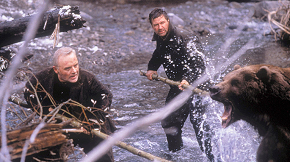
One of my favorite motivational quotes of all time comes from Antony Hopkins in the movie, “The Edge”. They are stranded in the woods and he is tyring to psyche up Alex Baldwin’s character to help him kill a bear. Killing a bear seems like such an impossible task. It’s fraught with danger. It’s incredibly risky. Unbelievable hard. But they must do it.
Hopkins tells him – “What one man can do, another can do!”
Now, most of us will probably never be in a situation where we must kill a bear for survival. But look at it as a metaphor. The bear is any seemingly insurmountable task in your life. Any goal that you long to achieve, yet seems unconquerable. Doesn’t make a difference what it is – what one man can do (or woman, we’re equal opportunity here!), another can do!
It bugs to no end when students place highly skilled martial artists like Morihei Ueshiba, founder of Aikido, or Masaaki Hatsumi, head of the Bujinkan Dojo, or even Bruce Lee, founder of Jeet Kune Do on pedestals and hold them up as unreachable and impassible icons. Are they great? Yes, of course. Are they worthy of our respect and admiration for their skill and achievement? Hell yeah! But are they an enigma? Are they once in a generation geniuses that the rest of us mere mortals cannot hope to reach? No. Not at all. They are men. Human beings like you and me. They put in ungodly amounts of hard work, study, and practice to reach the peak of their craft, but what one man can do, another can do.
Thomas Edison failed over ten thousand of times before he successfully created the first incandescent light bulb. No, that’s not a typo. Ten thousand. What if he gave up after the first failure, or the hundredth, or even after the thousandth failure? Where would we be? In the freakin’ dark, people, that’s where!
Do you want the martial skill of a Hatsumi?
The Internal Power of Ueshiba?
The legacy of a Steve Jobs?
The money of a Bill Gates?
The body and fitness levels of an elite athlete?
The strength of a world champion strongman?
Go out and get it. What one man can do, another can do. Why can’t you?