The Strength of Structure (and How to Train It)

As we discussed in the previous post (see here), all martial movement must be based on a platform of both mobility and stability. Today we will discuss stability.

Kamae is much more than just a stance or ready position. It is the platform from which all movements are made and from which all techniques are delivered. Your kamae is quite literally the foundation upon which your entire martial art practice rests.

A weak, or structurally flawed, kamae will limit the amount of power delivered and reduce the effectiveness of every technique employed. Conversely, a strong kamae is the key to the effective execution of all your techniques. A strong kamae carries the support of the ground and efficiently conducts that power through the user with minimal noise creating, in effect, a transparent power.

“You can’t shoot a cannon out of a canoe.”

Water provides a very poor base of support to maximally fire a cannon ball thus it will not travel very far. This is exactly what happens with a poorly constructed kamae. So much power bleeds off in different directions that the mean effect of the movement is extremely reduced and more energy is required in order to compensate for the inefficiency.

How Do We Build a Strong Kamae?

There are many different forms of strength training but only a few, very specific, methods of strengthening the structure (kamae). The key to strengthening structure, as you will see, is training the connective tissue – fascia, tendons, and ligaments, and strengthening the bones, rather than working on muscle. The benefits of this type of training are enormous; not only does having a stronger structure increase the effectiveness of martial movement and techniques, but also acts as a natural form of injury prevention by improving the strength and elasticity of the tissues and increasing the body’s overall resilience.

We will examine 4 main ones here from the EARTH section of Warrior Fitness working on strength, structure, and stability.

Loaded Carries – These provide a unique challenge to the body as they are a type of moving isometric exercise. Kettlebells or dumbbells are a great place to start, but loaded carries can be done with just about anything.

There are 3 basic loaded carries we will discuss here:

  • Farmer Walk – Hold 2 kettlebells at the sides and go for a walk. Try to maintain a neutral balance and move from center.
  • Rack Walk – Hold 2 kettlebells in the rack position and go for a walk. Try to maintain a neutral balance and move from center.
  • Overhead Carry – Hold 2 kettlebells overhead and go for a walk. Try to maintain a neutral balance and move from center.

Static Holds – Unlike lifting or carrying, static holds can be done anywhere with zero equipment. They also place a great emphasis on strengthening connective tissue for supporting the body.

  • Static Kamae Hold: Pick a kamae and hold it for time. The goal here is to relax in position and allow the connective tissue to do the work, not the muscle.
  • Static Push-up: Hold the top, middle, or bottom portion of a push-up for time. The goal here is to relax in position and allow the connective tissue to do the work, not the muscle.
  • Partial Lifts – Partials allow you to develop the connective tissues and bones in a way that full range of movement lifting cannot. By doing partials you are supporting more weight than you would be able to in a full range lift.
  • Push Testing – The push test is a very practical way of testing the quality of one’s solo training for internal power. The body, when properly trained, acts as an omni-directional structure.  This allows the practitioner to neutralize any incoming force by diffusing it throughout the structure rather than having to surrender to it or resist against it.


I cannot over emphasize how critical this type of training is to your development as a powerful martial artist. Not only does this type of training condition the connective tissues, bones, and muscles, but it forms the body into a cohesive unit that is both resilient and powerful.

Study this well, my friends!

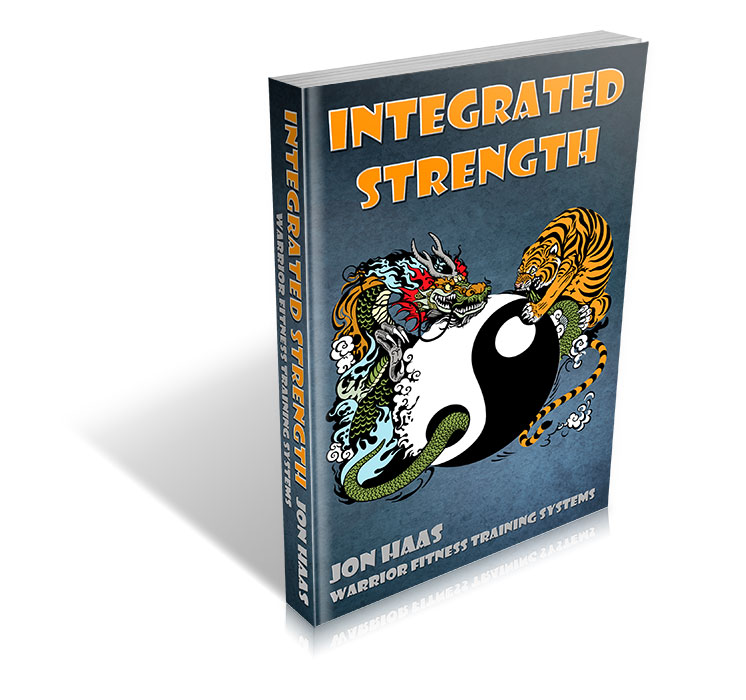
Check out my bestselling Integrated Strength Program for more complete trainiing information…


The Process of Becoming Masterful

“Remember that mastery is not attained once after a lifetime of practice, but earned every day.”

– Jon Haas

Usually when we think of someone who is a master, be it a master martial artist or the master of some other craft, we think of them as attaining mastery at the end of a long lifetime of practice.
But mastery is NOT something that’s attained once after years or decades of training – mastery is something that is EARNED every day!!
You can be masterful in one moment and then a fumbling fool in the next (ask me how I know!).
The goal of becoming masterful isn’t to wait until some distant future when every move you make is perfect and every word that comes out of your mouth is sage advice, it’s to consciously create those moments of mastery every day until you have more of them rather than less of them.

Daily practice is the key.

Do you ever think about what it would be like to be a master martial artist?

Not just to be awarded the title “master” but to really and truly embody all of the sublime skill of martial mastery at the highest level of human achievement…

What would it feel like to know, without a shadow of a doubt, that you could easily control and subdue the most violent opponent with the most minimal effort, like a lion playing with a cub?
What if I told you that mastery is NOT something automatically attained after a lifetime of practice, but is instead conferred only upon those rare few individuals who, through their own efforts, take consistent, specific daily actions to achieve it?

Then mastery would not be just a far away, imagined future state, but instead a real and attainable goal built by taking action every day, right here and right now.


Remember This

Remember this – it is critical to your success – EVERY single legendary martial master: Musashi, Ueshiba, Bruce Lee, Kano, Takeda, Takamatsu, Gracie, Hatsumi, etc…

ALL of them began as unskilled, know nothing novices, white belts without a clue.

Their consistent daily training formed them, forged them, into the revered and feared masters that we know today.

“What one man can do, another can do.”

You can choose to follow in their footsteps. You can choose to be masterful, to be legendary.

However, as you follow them, do NOT seek to become them – instead, seek what they sought, the process of mastery.

Find the process of daily mastery <<==

Finally… There is a Researched, Tested, and PROVEN Method for Developing Internal Power and Unusual Strength from Martial Arts…

The Aiki Push-Up

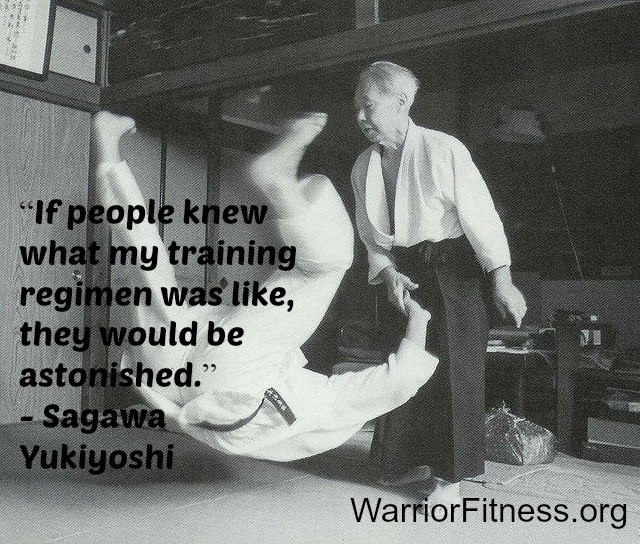
The Aiki Push-up is a literally a one-stop-shop in the study of internal power building. It was rumored to be part of Daito Ryu master, Yukiyoshi Sagawa’s secret training regimen.

Sagawa Training
Here’s a video where I explain the purpose and it and how to do it.

Watch carefully as the Aiki Push-up may look similar to what you already know, but the entire engine driving it is different!

Don’t fall prey to the common idea of thinking you know something just because you know about something! Be diligent in your study and your training – go deep!

“A little knowledge is a dangerous thing…”

Learn all the fundamental building blocks to the Aiki Push-up, as well as creating Internal Power (plus much more!) HERE!

This Simple Practice RESETS Your Body

Let’s face it.  Some days we just need to hit the RESET button.  Whether due to stress, an accumulation of injuries, fatigue, or illness we need to find a way to RESET the body in order to allow its own natural healing function to take over.

Luckily, there is a very simple process whereby we can RESET ourselves and acquire a deep level of whole body relaxation.  It can be accomplished through the Yiquan training method of Wuji standing, otherwise known as Health Standing.

Wuji translates to “without poles” or “pre-heaven” meaning that yin and yang have not yet been determined.  It is a pure untapped potential and possibility.  It is from this untapped potential that we will begin to form a relaxed, connected body primed for internal power training.

Before we get into the particulars of the exercise, you need to know how to stand. Continue reading

Resolving the Tension Paradox for Martial Artists

In order to truly begin our quest for Integrated Strength, we must first resolve the tension paradox between conventional strength training and internal power…

“Don’t use muscle!”

“No power!”

“Relax!”

“Move naturally!” Continue reading

Theme for 2015 – Integrated Strength

New Years Day, 2015

Warrior Fitness HQ

Happy New Year, Warriors!

When I first began Warrior Fitness way back in 2008 the goal was simple – utilize my knowledge, training, and experience from several different disciplines under the broad heading of Strength & Conditioning to enhance the performance of martial arts.  I began by creating a unique series of functional training exercises that encompassed mobility, flexibility, strength, conditioning, balance, agility, coordination, and endurance. Continue reading

A Glimpse Into Internal Power Training – The Push Test

The push test is a very practical way of testing the quality of one’s solo training for internal power.  As explained in Weakest Direction Theory is BS, the body, when properly trained, acts as an omni-directional structure.  This allows the practitioner of internal power to neutralize any incoming force by diffusing it throughout the structure rather than having to surrender to it or resist against it.  Either you can do it or you can’t.  There’s no way to fake it. Continue reading

Martial Software or Martial Hardware?

Remember in The Matrix when Morpheus downloaded those dozens of different martial arts programs (software) into Neo’s brain and he instantly could perform all the techniques from those arts?

That is a perfect example of a software upgrade.  Techniques instantly available at your fingertips – literally! Continue reading

My Morning Routine

For the past several weeks there has been a running theme interwoven throughout my blog posts.  That theme has been practice, Daily Personal Practice (DPP), to be precise.

I’ve gotten several questions about the details of my own DPP since I refer to it several times in my writing.  So I figured I would pull back the curtains and give you a more detailed glimpse into my Morning Routine of DPP in this post. Continue reading

Principles, Techniques, and Internal Power

For some reason people seem to use the terms principles,techniques, and internal power interchangeably within the context of martial arts practice.  Because of this mistake, they then tend to get confused between them.  While they are all obviously related, each term is separate and distinct and should not be interchangeable with one another. Continue reading