Gyokko Ryu’s Internal Power Training

There is no doubt in my mind that Hatsumi Sensei possesses unusual power in his budo.  Anyone who has trained with him can tell you that!  But what is it and where does it come from?  More importantly, how can YOU develop it as well?

Soke’s martial movement displays many of the characteristics associated with Internal Power training: ghostly movement, immovability (static and dynamic), shockingly powerful strikes with little windup, adhesion caused by movement, kuzushi on contact, and others. Continue reading

We Were Once Warriors…

We Were Once Warriors…

For centuries the warrior has been the archetypical model of physical fitness and power.  This is due to the extreme nature of their training and overwhelming odds that they must have had to go through waging war in the ancient world.

The multifaceted development of skills required for the warrior’s brand of life and death combat is second to none.
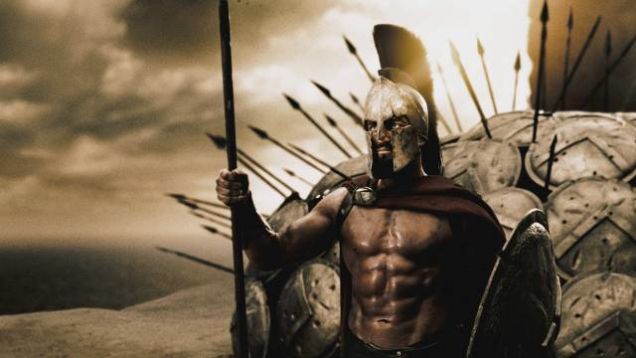
Spartans


Warriors needed to be able to carry heavy loads over long distances on uneven terrain, wield heavy weapons while wearing armor, wrestle and engage in other forms of hand-to-hand combat, fight for hours or perhaps even days on end in mud, sweat, and blood, all while continuing to display power, coordination, agility, and speed.

This was not a game with a medal or trophy at stake, but their lives and the lives of their comrades in arms, not to mention the entire village or tribe who were relying on them for protection.  All of this placed immense demands on the warrior physically, mentally, and spiritually.

Today’s Training from Yesterday’s Triumph

The skills we know today as fitness, or strength and conditioning, depending on whether your term is all inclusive or a specific subset, all evolved over time from man’s need and ability to wage war.  In fact, one of the earliest examples of sport in the western world is from ancient Greece; we now call it the Olympics.  These early games were created as a way for warriors to channel their aggressive and competitive natures, while simultaneously allowing them to hone their battle skills, in times of peace.

So we can see from this quick look back in time that originally almost all athletics and sport competitions were based on the martial skills of the warrior and utilized as a way to sustain and practice those skills.

Now, working backward this time, is there a way to reverse engineer a warrior’s training regimen and use it to improve the components of martial skill, conditioning, AND athletic performance?  Absolutely!!

Try This Warrior Workout on for Size

1)  Heavy Sandbag Carry (Zercher carry, bear hug carry, over head carry) – 3 x 300 ft.

2A) Pike Push-ups on Fists – 4 x 10

2B) Mixed Grip Pull-ups (change grip each set) – 4 x SM

2C)  Loaded Airborne Squats (load up with clubbell, Kettlebell, dumbbell, or sandbag) – 4 x 5/5

3)  H2H Touch & Go Kettlebell Swings x 100

If you train in MMA…

NOW go punch, kick, knee, and elbow a heavy bag or have a partner hold focus mitts for 3 rounds x 3-5 minutes each!  How is your performance?

Or, if you’re really daring and want to test your mettle, now is the time to go spar with a completely fresh opponent for 3 rounds of 3-5 minutes!  How has your performance changed?

If you train in Bujinkan or other form of combatives…

Do the same as above but utilizing the basic techniques of your particular style.  For Bujinkan peeps that means try out all the Kihon Happo on a fresh uke!

My brand new WarFit Combat Conditioning Program is perfect for the warrior athlete who wants to build superhuman strength, endurance, and conditioning:


Theme for 2015 – Integrated Strength

New Years Day, 2015

Warrior Fitness HQ

Happy New Year, Warriors!

When I first began Warrior Fitness way back in 2008 the goal was simple – utilize my knowledge, training, and experience from several different disciplines under the broad heading of Strength & Conditioning to enhance the performance of martial arts.  I began by creating a unique series of functional training exercises that encompassed mobility, flexibility, strength, conditioning, balance, agility, coordination, and endurance. Continue reading

Top 9 Posts From 2014

It’s that time of the year again.  Time for the Top 10, er… 9, best blog posts of 2014!

This year saw 2 distinct themes emerge: a critical examination of what internal power really is and its relationship to martial arts training, specifically, but not limited to, Bujinkan Martial Arts training, and the importance of daily practice in fitness and martial training.  So it’s no surprise that these 2 themes are heavily reflected in the following Top 9 posts of 2014.  ENJOY!!

top-9

Top 9 posts…


1. Internal Power and Bujinkan Training

2.  Training in the Elements

3.  Never Take Ukemi Again

4.  The Un-Natural Athlete

5.  The Warrior’s Way

6.  Best Way to Program Your Training

7.  My Morning Routine

8.  Weakest Direction Theory is BS

9.  A Glimpse Into Internal Power Training – The Push Test

Bonus Post – Reflections on 42

25 Life Lessons from Martial Arts Practice

At 41 years old, I have now been training in the martial arts for over 30 years.  It does not seem like it’s been that long!  Some days I look at the huge expanse of knowledge and history that is real budo and feel dwarfed by its enormity.  Other days I feel like I have a really solid grasp on it.  But that’s the nature of the training.  As Hatsumi Soke has said on many occasions, “If you think you have it, you don’t…”  This is one of the many lessons learned through martial arts training. Continue reading

Imperfect Training for Injury Prevention


“All-round sports training must include the capability of coping with unexpected and sub-optimal conditions”

– Mel Siff, PHD author of Supertraining


In a recent post, Are You Practicing Wrong, I covered why I think the idea of “perfect practice” is utter nonsense when it comes to training yourself how to improve at pretty much any skill.  In this post, I’d like to take it a step further and talk about how crucial Imperfect Training is to your overall development as a warrior. Continue reading

Settling for Imperfection

I’ve got some news for you.  You will never be perfect at anything.  Not your strength, not your conditioning, not your martial art, not your job, not your relationships, nothing.  You will never even be able to make the perfect peanut butter and jelly sandwich.  Nope.  Not ever.

So what does that mean?

Should you simply stop trying right now? I mean, since you’ll never be perfect at anything, what’s the point, right?  Why bother? Why struggle and make the effort?  Well, I think the struggle is the point. It’s the process, not the goal.  It’s what struggling and reaching and trying make of you that is the important thing.  The journey itself, not so much the destination.  In any worthwhile pursuit, like budo (martial arts to you non-budo people) for example, there is no end to the learning.  The study is so vast and so deep you could pursue it for several lifetimes and still not reach the end.

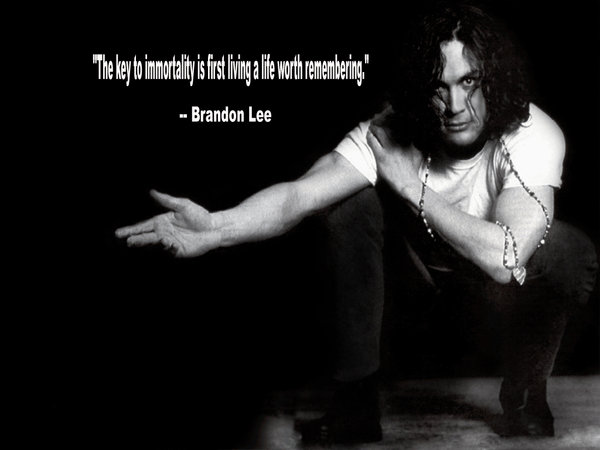
The late, great Brandon Lee once said, “With what level of imperfection will you settle?”  I think this is what he was talking about.

brandon lee

How content are you with your current level of skill in your martial arts practice? How satisfied are you with your current level of strength and conditioning at the gym? How happy are you with your current job, status, level of wealth, or relationship(s)?

Are you willing to settle for where you are right now in one or all of those categories, or do you want more?

The question you need to ask yourself in each of those areas is Brandon’s – with what level of imperfection will you settle? Where will you stop growing, pushing, struggling, changing, expanding your capacity, living up to your potential?  When will you stop?

Or will you ever stop?

Keep Going!

Never Take Ukemi Again

What if you never had to take ukemi again?

Not because you stopped training or avoided it or anything negative like that, but simply because no one who came in contact with you was able to throw you.

Interesting idea, eh?

Although for the sake of paired training and being a good training partner, perhaps a better model would be this – what if you only took ukemi from someone when you wanted to, and not when you had to?

What if you had the skill to naturally reflect incoming force so that an attacker was not able to throw you, joint lock you, take you down, or even off balance you? Continue reading

Training in the Elements

If you are a martial artist, it is essential to train your art outside in the elements.  Since most traditional arts were born outside, and not in a gym or dojo setting, it is important to every once in a while get back to the roots of your art.  Correct me if I’m wrong, but as far as I know most wars have been fought outside in the elements, through all different types of weather conditions, and on changing terrain.  I think we have all become way too spoiled and comfortable by training in a sheltered and heated (or air conditioned) dojo, on a flat, mat covered surface all the time.  Get out of your comfort zone!  Start to get comfortable being uncomfortable!  Get a little wet and dirty.  Have some fun! Continue reading