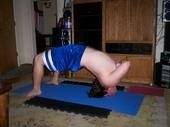
The Ninja 300 Warm-up

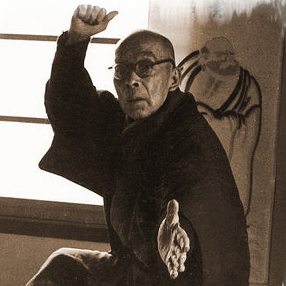
I thought I would share with you today the new Ninja Warm-up I’ve been using in my own daily personal practice.

Since the New Year routinely brings our training focus back to the basics I figured a great way to incorporate more Bujinkan Basics practice was to include them in my warm-up as well.

Of course, I still do my full body mobility routine as taught in the Martial Power Program and ukemi practice too. Continue reading

Top 10 Posts of 2013

Here are my top 10 picks for the best Warrior Fitness Posts of 2013…  What do you think?

Top-10


In no particular order, here they are…  ENJOY!


1)  Top 7 Exercises for Warriors


2) Intelligent Tension for Striking


3) How I Healed My Neck with Mobility and Breathing


4) How to Train More Every Day


5)  How Natural is Your Shizen No Kamae?


6)  Fitness Dangers for Bujinkan Students


7)  Where Do You Locate “Your Control?


8)  Mobility Mobility Mobility


9)  Protect. Break. Leave Behind


10)  Life Advice From Musashi


Wishing you all a very Merry Christmas and a Happy New Year!!

Kettlebell Training for Bujinkan Footwork

Recently I was asked about how to use a single kettlebell to train footwork for Bujinkan martial arts.  Here is a video I put together showing a couple different exercises to enhance stability and mobility for footwork training using the kettlebell.  Enjoy!! Continue reading

A Bridge Worth Crossing

Thanks to my friend, Ben Bergman, owner of Ben’s Power and Might Writings for this guest post on bridging!

When most people think of the bridge they seem to believe it’s just a neck exercise when in fact it goes far beyond that. There are different variations of the bridge which I will discuss in a little bit but they all have one thing in common, it’s a full body workout that will stretch you and the isometric benefits some of them have is incredible.

Like I said it’s not just an exercise for the neck, it can get you breathing harder than being on a cardio machine bar none and its more accessible as well as you can do it pretty much anywhere with a limited amount of space. If you’re an athlete, bridging can give you significant power in your suggested sport for a few examples….

Baseball: You need strong and supple hips and core power to swing the bat or line up the drive to throw the ball.

Football: You’re defending or holding off the line and think of being able to drive the legs powerfully and with speed.

Wrestling: Bridging is the king in wrestling circles for many reasons. Think of your throwing your power when you drive your opponent into the mat, being able to kick over out of a pin or use your neck to slip out of a hold. It’s not jut building a strong neck; it gives your whole body a boost.

Basketball: Now most would never associate bridging with basketball but it has its benefits. Bridging helps build explosiveness and isometric strength so when you jump for the ball to block, rebound or when you getting ready to drive through the lane that explosiveness will come into play.

Ben Bridge

For the variations I’ll only give you a few since there are a lot of them. First one would be what the general public see’s is the hip bridge where you lie on your back and you raise the hips and only your upper back and legs are on the ground. This is a great starting point for most people and it builds strong hips, legs and calves. Now go onto the head and try to touch your nose to the floor and your feet are on the ground heels up or down doesn’t matter. Next would be on nothing but your hands and feet. This variation is also a yoga pose which is called the Wheel; this variation is one of the toughest of them all and one of the most beneficial, holding this posture takes great strength and flexibility. These variations are my favorites and they have greater benefits than almost any other exercises bar none.

What most don’t know about efficient bridge training is the hormone booster that goes along with it. Yes I’m going to go into sexual energy just for a brief moment. When you hold the bridge or practice Bridging Gymnastics (kicking over on the head and/or hands) it builds up a lot of energy in the lower area of the body and builds fluidity in the spine which is the electrical part of your energy, holding a bridge for as long as say three minutes gives off that surcharge of power from within and puts energy into your spine and your sexual organs and build up your libido.

When you practice Bridging Gymnastics correctly, you’ll notice your workout doesn’t last very long. A workout of this caliber takes less than 30 minutes to be cooked, no more than 15 for most people but that’s a good thing. You’re breathing hard real quickly which makes you take in more oxygen and sends more oxygen to your blood cells. You think the burpee is tough, try kicking over, kicking back and standing up in one sequence. I’ve only heard of a few people doing this and the repetition count isn’t that high, at best, 10 reps would have you say “stick a fork in me I’m done” but it is a an advanced variation and shouldn’t be done until you’ve mastered the other variations and there’s someone who know how to teach it.

Be creative and cross that barrier of being normal to be becoming nearly superhuman. You don’t have to be a gymnast to do this kind of training I’m doing it and I’m over 240 lbs. Crossover to the other side of challenging your body and learn the benefits of bridging at their maximum for you.

Happy Bridging!

Ben Bergman.

Please check out Ben’s blog over at Ben’s Power and Might Writings!!

4 Tips for Bruce Lee Strength

Thanks to my friend, Jarell Lindsey, owner of Muscular Strength System, for this awesome guest blog post!

Bruce Lee is the face of fitness in America. Even 40 years after his death, he is an icon for one of the best physiques that the movie industry has ever seen, and every ounce of his flesh produced terrible strength.  At his bodyweight of around 140, Bruce Lee was known to completely demolish 300 lb heavy bags with his kicks, and punch with a force strong enough to completely splinter pieces of wood. More than power, he had dexterity, able to catch pieces of rice thrown into the air with a pair of chopsticks. He trained for function first and foremost, and the rest seemed to follow.

Bruce Lee

So how can one hope to even get near Bruce Lee’s strength? Just as it wasn’t for him, it will not be easy for you. In all honesty, Bruce Lee was one of those one-of-a-kind people, but that shouldn’t discourage you from training your utmost for Bruce Lee strength.  Here are four tips on how to get there:


Dedication. First, if you don’t have dedication, you can forget about the rest of these tips, because you’ll never get anywhere near the Dragon’s level of strength without using his greatest strength, which was his almost manic level of dedication to training. You better believe that if there was a single moment in the day that Bruce Lee wasn’t training, he was thinking about it. Moments like watching TV or standing in line were opportunities for extra training. A walk along the beach turned into sprints or multiple-mile jogs. Are you this dedicated to your strength? If not, that’s okay for now, because you can get there. But you’ve gotta start by doing at least one fitness related thing a day. If you can’t go to the gym everyday, walk a mile or two in the morning. If you feel up to it, make it a jog. Always think about how to improve your strength in the little things you do everyday, and it’ll become second nature.


Pyramids. Bruce Lee did a lot of pyramid training with his workouts; for a man who exercised only for function, pyramids were key. The biggest argument that martial artists had against lifting weights was that it’d make them slow and bulky. Bruce Lee proved that, by starting heavy and working your way down, you can improve strength and power without sacrificing speed. Say, for punch power, Bruce would start punching with 50 lbs for 10 reps, 40 lbs for 15 reps, 30 lbs for 20 reps and so on. So, are you ready for some intense functional strength? Incorporate these into your workouts.


Cardio. I know a lot of big, strong guys who don’t think cardio is necessary as long as they just “lift weights faster”. If Bruce Lee, who had one of the best physiques of the modern era, wasn’t too good for cardio, I’m not either. Truth of the matter is, cardio will give you the endurance to go much longer and harder in your workouts, and leaving out cardio keeps you from reaching your best fitness potential. If you’re a fighter, you know how important cardio is to keep you sane and stable for those last few rounds or that final period of the fight. It takes more that just heavy lifting to have athletic function. Bruce Lee really pushed the limit with his cardio, running 5 and 10 miles like an Energizer bunny, but the most important thing I’ve taken from his running is his interval training. Bruce wouldn’t just run aimlessly for years or sprint himself to heaven; he’d sprint, jog, shadowbox, jog and shadowbox, sprint, and repeat or switch up the pattern. This interval training is the king of cardio; it teaches the heart to be able to spike it’s activity rate from a resting heart rate more comfortably. Basically, interval cardio teaches your heart to go from 0 to 60 faster than other forms of cardio, or a lack of cardio altogether.


Isometrics. This was Bruce Lee’s secret weapon in his training, and it should be yours too. Think of isometrics as taking your body and filling it up with titanium. Isometric exercises train you from the inside out, strengthening your bones and tendons/ligaments in addition to your muscles. This is what helped Bruce Lee get that “sinewy strength” people often talk about. Isometrics are interesting because you don’t move at all during your exercise, but it gives you some incredible strength benefits. You can push or pull against an immovable object like a wall, or you can load the machine up with supra-maximal weight in your strongest range and contract against it like there’s no tomorrow. Trust me, your limbs will feel like they just got treated with adamantium, and your resulting strength will be proof of that. Happy training 🙂


About the Author  

JarellJarell Lindsey is an avid physical culturist, and owner of MuscularStrengthSystem.com. He is an advocate of isometric training, and enjoys catch wrestling, sparring, or exercising in his free time. His training advice can be found on fitness, martial arts, and health sites across the web. Coming from a family plagued with various health conditions, he has been in pursuit of the best methods of health management and strength training around since youth. He is currently studying for a Bachelors in Exercise Science, and he hopes to motivate more youth to pursue physical fitness as a lifestyle. He offers training and diet advice, interviews from leading fitness experts, and self improvement advice. Ultimately, he encourages a physical culture revolution to overcome the modern health crisis.

Breath and Body Coordination

Matching breath to body movement is a key skill in learning how to power movement with the breath.  This matching can be as simple as inhaling on an expanding, opening, or lengthening movements and exhaling on contracting or closing movements.

Under resistance though we begin to look at the idea of exhaling on effort to coordinate breath and body.  Here it can also become a little more sophisticated in using the activation of the core via the breath to send power out to the extremities.

The following is a short clip from my Evolve Your Breathing program showing how the breath can be used to power a push-up.  The concept itself is easy enough to grasp, but the application is a lifetime of study.

EVOLVE_SPOT-1 (2)

The Warrior Workouts – FREE Resource from Warrior Fitness

The Warrior Workouts

A Free Resource Brought to You by Warrior Fitness…

The following is a free preview of my upcoming program of the same name, The Warrior Workouts.

This sample program consists of a complete 4 weeks of training and is designed to give you a taste of the various types of training methods used within the Warrior Fitness Training System.

Each of these workouts has been specifically crafted to provide complete, full-body strength, conditioning, and power for martial art, sport, or anything else life can throw at you!

The Warrior Workouts Cover


Download your FREE copy by clicking ====>>>>Warfit -The Ultimate Combat Conditioning System

Are You a Martial Artist or Martial Hobbyist?

Sometimes the lines between martial artist and martial hobbyist get blurred.  How do you determine whether you are a true martial artist or just a martial hobbyist?  Here is a quick and easy way to find out…

Martial Hobbyist Quiz

  •  Do you train only when it is convenient?
  • Do you train only when you feel good?
  • Do you train only when you have nothing better to do?
  • Do you train as a way to get out of the house?
  • Do you train to socialize?
  • Do you train only when it’s fun?
  • Do you only train when you are in class?
  • Do you only train when someone is watching?

If you answered YES to one or more of these questions, then congratulations, you are a Martial Hobbyist.  Not that there’s anything wrong with that.

hobbyist

Martial Artist Quiz

  • Do you train regardless of whether you feel like it or not?
  • Do you train when you have a headache?
  • Do you train when other people are relaxing?
  • Do you train when it’s raining outside?
  • Do you train even when there is a new episode of Big Bang Theory on TV?
  • Do you train every day no matter what?
  • Do you train for life?
  • Do you train even when there are better things to do?
  • Do you train when it’s boring, repetitive, and dull?
  • Do you train on your own without supervision?
  • Do you constantly strive to get better each time you train?
  • Do you define yourself through your martial practice?
  • Do you look at everything else in life through the lens of your martial training?


If you answered YES to 3 or more of these questions, then congratulations, you are a Martial Artist.

Miyamoto_Musashi_Self-Portrait


This post was inspired by reading about a dedicated yoga practice earlier this morning and what it takes to achieve a committed, dedicated practice.  Hopefully no egos were bruised in the reading of this post!

By the way, if you want to move from hobbyist status to artist status, here is great article on How to Train More Every Day.  Enjoy!


Internally Rotate My What???

This post was inspired by a Facebook conversation started by my friend Jarell Lindsey talking about a mobility-based squatting motion with the feet parallel as opposed to splayed out (BTW, have you check out the Physical Culture Club page yet???)

There are many different ways to squat whether it is bodyweight only or with an implement such as a barbell, kettlebell, sandbag, or even another person.

The particular squat I am talking about here is what I refer to as an Internal Rotation Squat.  The Internal Rotation Squat differs from the traditional bodyweight squat in that the feet are parallel, as opposed to opened outward, and the squatting motion is accomplished by internally rotating the femoral heads within the hip sockets rather than relying on quad muscle power alone.

hip-anatomy-new

The Internal Rotation Squat requires MUCH more mobility, control, and mind power to accomplish since you must actually teach your body how to rotate the bones of the femurs within the hip sockets.  This will take some practice!

 Why Do This?

In order to begin generating what known as Internal Power (IP), you must have mobility in the inguinal area that the Chinese Internal Martial Arts refer to as the kwa.  There is much, much more to IP than this, but having mobility in the kwa is an essential requirement.  Additionally, even if you have no interest in IP or Chinese Martial Arts, having this type of mobility and control is an asset in any athletic endeavor or martial art, regardless of style.

Internal Rotation Squat – Bodyweight Version

Begin with feet slightly more than shoulder-width apart.  Keep the feet facing forwards, as if on railroad tracks.

Squat1

This will be important later when working on winding the tissues, but for now, just do it.  Place your fists on either side of the kwa (inguinal area) where the femur bones connect in to the hip sockets.  Use the imagery of turning your fists to aid in turning the bones.  Internally rotate the femoral heads and sit down into the kwa.

Squat2

Squat as low as possible while keeping your back straight and the weight mid-foot balance.  Pause at the bottom then externally rotate the femoral heads to stand back up.

Internal Rotation Squat – Goblet Squat Version

All requirements are the same as above with the addition of holding the kettlebell in front of your chest in the Goblet Squat position.  Use the weight of the kettlebell to allow you to sink further into the kwa.

Goblet Squat2

Thanks to Dan Harden for teaching me this exercise in the context of working on Aiki/IP.  Any errors or omissions are my own and not the responsibility of my teachers.  Also, thanks to Jaime for helping me to refine the squat and for taking the pictures!

Also, Dan Harden will be back in NJ in March 2014.  Details on the seminar can be found HERE <<====


Coulda Killed Ya (A.I.F)

I have a confession to make.  And after my last post on the 13 Deadly Sins of Fitness this seems to be becoming a theme!

Here goes… sometimes I let my situational awareness slip and find myself in a position where a person with bad intentions could take advantage.  Ever happen to you?danger

Let me back up a little bit and tell you what brought this confession about.  This morning as I sat in my car beside the pump at a busy gas station waiting for the attendant to come over and fill up the tank (yes, there is no self-service in NJ!), I sort of drifted.  It seemed to take forever for the guy to come over to the car so I let my attention wander while I was waiting.  As I was lost in my thoughts about the million and a half things going on in my life, I was suddenly startled out of my reverie by the attendant at the window asking if he could help me.  I flinched slightly (think I covered it up pretty well), and then told him to please fill up the tank with regular.

As he walked away to gas up my car, it occurred to me – he coulda killed me!  I was completely not paying attention and did not even notice him amble up to my car window.  Had he been a bad guy (insert your own bad guy of choice here), I would have been in serious doo-doo (yes, that’s a technical term).

Not only was I embarrassed that he startled me, but I was pissed at my own lack of vigilance .  I usually pride myself on my awareness skills and rarely, if ever, do people sneak up on me.  But rather than chalking it up as just “one of those things” I figured I would write about it as a lesson, not just for you guys, but for me as well.

So what is the moral of the story?  As I tell all my martial arts students and the women in my Women’s Self Defense workshops….

A.I.F!

Awareness is Fundamental.  This is the basic requirement to keep yourself and those around you safe from harm.  Yes, I probably could have beaten up the gas station attendant had he attacked me, but that’s not the point.  The best way to stay safe is to be aware enough to avoid a potentially bad situation to begin with.  So, here’s your homework (and mine!):

When you are out in public, whether it’s at work, at school, in a mall, walking in a park or down a busy street, or – GASP – at a gas station waiting at the pump, you must keep your awareness up.

How do you do this?

1) Look around!  Keep your head and eyes scanning the environment.  Use wide angle vision.

2) Do not fixate all your attention on one task, especially if it takes your eyes off the environment around you.  Look up every once in a while and note the position of people in your general vicinity.  As I am writing this post I am sitting in a Panera nursing a delicious cup of dark roast coffee.  My eyes are on the computer screen and keyboard, but also scanning around me.

3) Keep your ears open!  Rather than blasting music in your ears with your ipod as you walk, run, or sit in public, keep your ears open and listening around you.

4) Listen to your gut!  If something feels wrong, it probably is.  Do not ignore the hair raising on the back of your neck or the feeling in the pit of your stomach that something is off.  Ever feel like someone is staring at you and when you turn around, they are?  You have the primal ability to know when you are in danger.  Do not disregard this sense, it can save your life!