What is Specific Physical Preparation for Martial Arts?

Every once in a while it’s fun to think about how much the exercises we train on a daily and weekly basis actually translate, or carry over, to the activities for which we’re training.

Depending on your training program this can either be a great way to confirm that you are moving in the right direction, continuing to make progress and see results, or it can be a bit disheartening to realize just how little what you are doing actually carries over to your chosen field of endeavor.
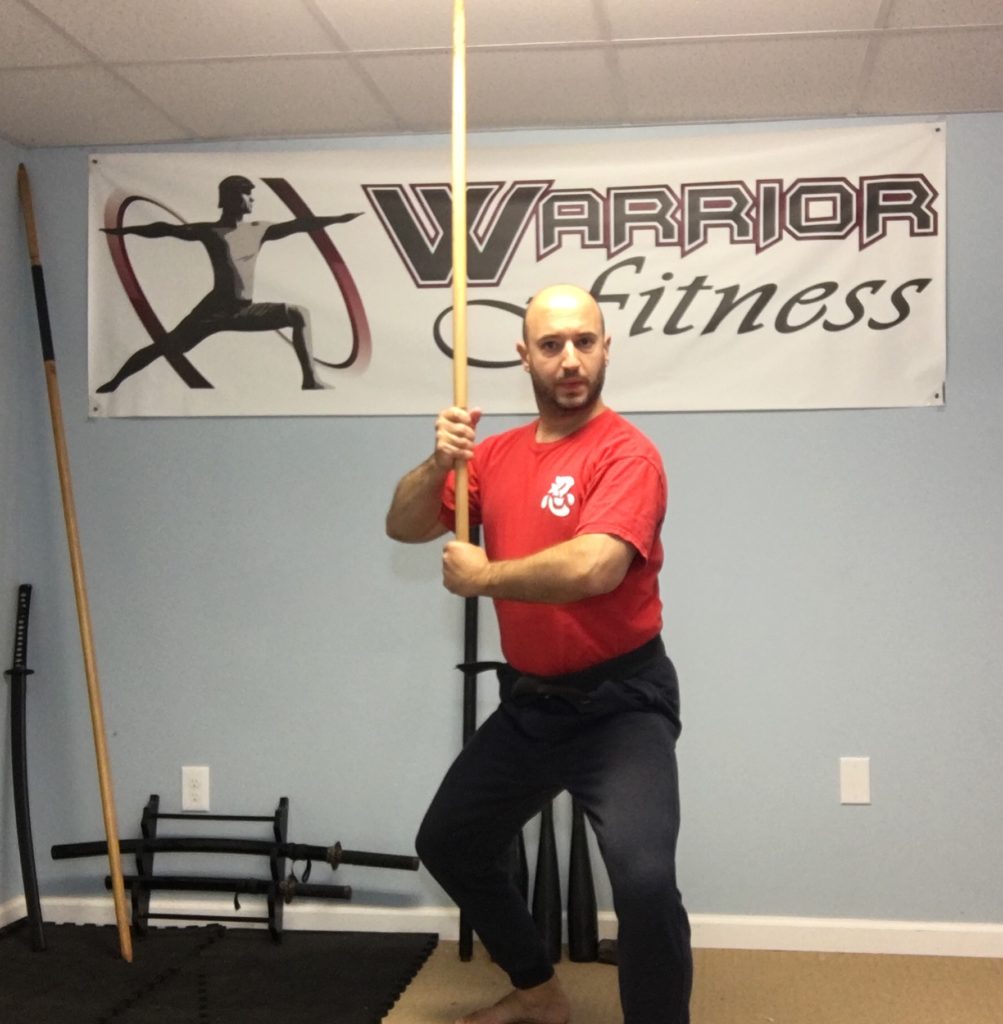
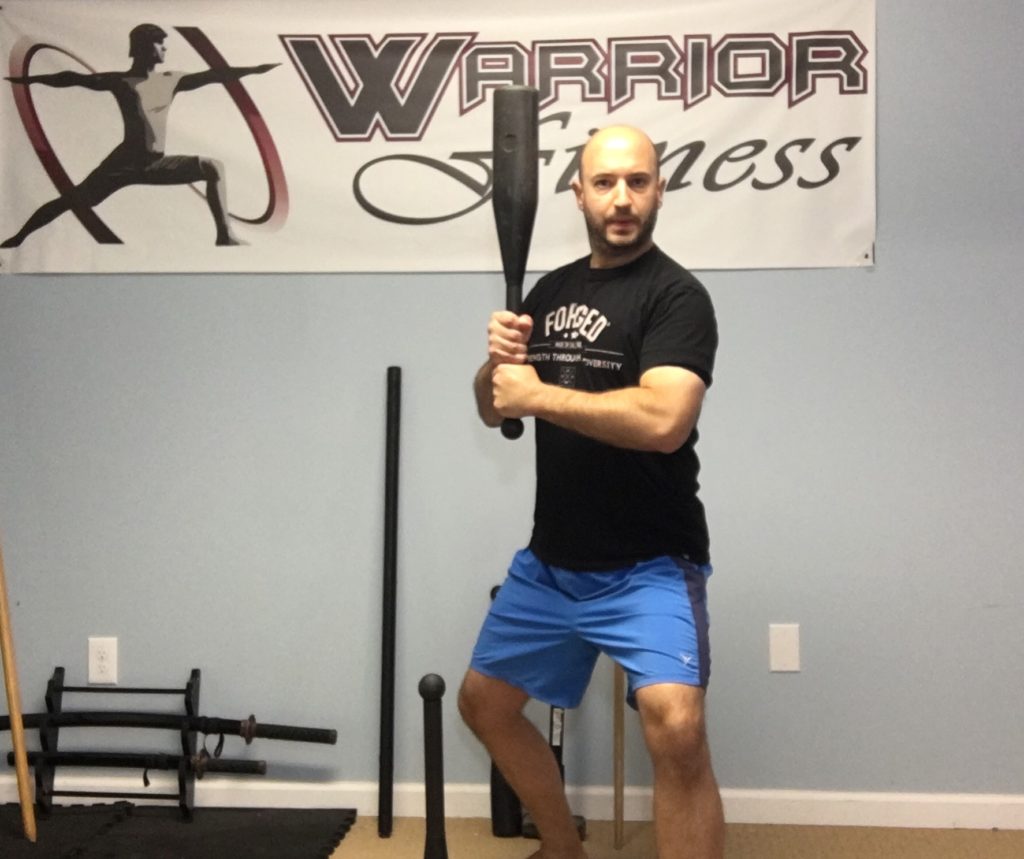
In the case of budo (martial arts) practice, like any other sport or physical activity, there must be exercises specifically crafted to enhance performance. A solid base of General Physical Preparation (GPP) is necessary, but not sufficient.

What is GPP?

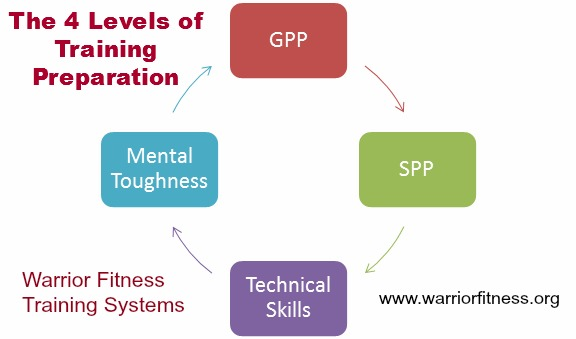
The first step in ensuring you are building martial skills on top of a solid foundation is General Physical Preparedness (GPP). The goal of GPP is enhanced work capacity. This is the ability to run faster, jump higher, and hit harder.

When work capacity increases, it allows the budding warrior to adapt more easily to increases in both mental and physical demands. In other words, it increases your capacity and level of readiness to absorb higher levels of specificity in training. In order to be more, we must become more.

When talking about the martial arts, which tend to be seemingly limitless, one must possess the physical, mental, and spiritual endurance to “keep going!”


Moving From GPP to SPP

While the goal of GPP is muscular adaptation and general readiness for training, the main focus of SPP is neurological adaptation — to train movements, not muscles.

Specific Physical Preparedness builds on GPP by increasing the development of characteristics necessary for a particular sport or activity — or, in our case, martial arts.

It is a uniquely designed and targeted system for enhancing strength, flexibility, endurance, and conditioning which builds on the GPP base by furthering development in the exact physiological profile of the martial art.

Therefore, GPP helps to make you effective while SPP makes you efficient. The end stage goal is of course to be both effective and efficient in each and every movement.

The Training Process Cycle

If your strength and conditioning program is stuck in the GPP phase of development then you may not be realizing the type of performance gains that are possible with a specifically crafted SPP level.

Strength and conditioning training must eventually approach as close as possible to the demands of the activity to maximize the training effect.

Since your body adapts specifically to the stresses placed on it, you improve according to the type of training you do. This is exactly why your training program must cycle through from the general to the specific.

Ready to take your martial art training to the next level?

Check out the vast array of SPP for Martial Art Training Programs Available from Warrior Fitness Training Systems HERE <<===
 

On The Habit of Excellence

“We are what we repeatedly do. Excellence, then, is not an act, but a habit.” –  Aristotle


Lately I have been thinking about the virtue of excellence. This wasn’t always an important virtue to me. When I was younger (and dumber) I believed that I could get by on just being adequate at things and sort of drift my way through life. The only problem with drifting is that things only can drift one way, downstream.

No one has ever drifted to the top of the mountain.

Now I am convinced that we must all live the virtue of excellence in order to have full, complete, productive, and happy lives. And to be of service to others.

The most often talked about value in Greek culture is areté. Translated as “virtue,” the word actually means something closer to “being the best you can be,” or “reaching your highest human potential.”

This is our daily struggle and goal as warriors – to reach our highest human potential. You see the funny thing about excellence is that you can never achieve it, one and done. You must constantly strive to be in a state of excellence every day pushing higher and higher.

The man or woman of areté is a person of the highest effectiveness; they use all their faculties: strength, bravery, wit, and deceptiveness, to achieve real results.

In that spirit, here is the Strength Training Workout I just completed:

1A) Kettlebell Swings 4 x 25
1B) Barbell Back Squats 4 x 10, 6, 4, 2

2A) Pull-ups 4 x SM
2B) Kettlbell Military Press 4 x 6/6
2C) Split Stance DB Rows 4 x 6/6

3) Heavy Partial Squats 4 x 2

4A) DB Hammer Curls 3 x 6-8
4B) Lying KB Triceps Extensions 3 x 12
4C) Warrior Sit-ups 3 x 20

Phew… 

Pursue excellence!

I am opening up a few spots in my Warrior Online Coaching Program. If you are someone who is interested in pursuing excellence in your life, you can apply HERE directly.

 Don’t just think about how you can become excellent “some day”… Learn how to begin creating habits that will make you excellent NOW!

HeavyBody Foundations Course – My Review

The HeavyBody Foundations course is the first section in Coach Chris Davis’ new Martial Body System. The Martial Body system is an attribute-based approach to training. This non-denominational systematic method of training the body is not only revolutionary, but much needed by today’s martial artist!

Coach Chris has spent many years training with high level martial masters from several different arts, researching their approach, understanding and highlighting the commonalities between BJJ world champions, UFC fighters, Chinese martial artists, Koryu adepts and cleverly reverse engineering them into a cohesive, attribute based approach to building the ultimate body for martial arts.

The approach has been “specifically and painstakingly developed with the sole goal of creating real and lasting changes to how martial artists from any style feel to their partners or opponents, and how their body remains strong, healthy and able to perform as they age.”

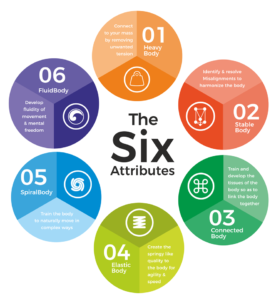
The 6 qualities are presented in the MartialBody system are:

HeavyBody | StableBody | ConnectedBody | ElasticBody | SpiralBody | FluidBody

HeavyBody Foundations

The aim of the HeavyBody section is to develop the quality of heaviness through relaxation in martial exchanges. This allows the practitioner to fully utilize their connection to gravity and turn off unwanted tension in the body.

The course is broken down into 5 chapters, each complete with a series of introductory explanation videos, demonstrations and instructions for each exercise, as well as warm-up and cool down routines, and follow along routines covering all aspects of the training. Coach Chris also covers several examples of push testing designed to act as real time feedback for the process. All in all, an excellent resource for any martial artists!

As you will see inside the course, the exercises act on multiple levels and are designed to increase the level of relaxation, open up the joints, and condition and massage the tissues.

Coach Chris takes great care in explaining and demonstrating each exercise in detail as well as providing commentary as to how each one will develop the HeavyBody attribute and be useful in striking or grappling. I found myself getting up from my computer and turning the monitor around so I could work through the exercises with him as he was demonstrating on video – as they say, FEELING is believing!

HeavyBody may be the first foundations course, but foundation does not mean basic. It is, in my opinion, essential training for all martial artists, regardless of style. The exercises in this module are meant to be trained over a lifetime always coming back and plumbing greater depth.

My recommendation? HeavyBody foundations is a MUST for ANY martial artist’s library. Pick up this course NOW and get started training today!

Get your copy here.


UPDATE – The new courses: StableBody FoundationsConnectedBody Foundations, and ElasticBody Foundations are Available Now!

The Downfall of Functional Training & How to Fix It

What Functional Training Has Become…

The field of functional training has degenerated into seeing who can perform the most meaningless stunt while looking the coolest (ahem… sometimes).

These exploits may look impressive to the uninitiated or easily amused, but they have virtually no carry over and zero application to movement in real life, on the sports field, or on the combative battlefield.

Not to mention their capacity for injury is high while their actual true functionality is exceedingly questionable…

Worse yet their flamboyancy distracts from, and gives a bad name to, real progressive, incremental functional strength training that has been the province of great warriors, strongmen, and great athletes for centuries. This leaves us in a sad state of affairs.

What Functional Training SHOULD Be…

Functional training should instead focus on developing multi-planar, multi-joint movement. It should increase stability, whole-body power, and enhance resistance to injury. It should multiply force production ability for all martial and athletic movement as well as stimulate neuromuscular patterns required for those movements.

Functional training should create a safety valve in ones movement for when the unexpected happens and movement goes awry.

It should provide the functional training practitioner with the ability to absorb and re-translate force without chance of injury.

The training methodologies that were developed and past down by warriors were the ultimate in what we today call “Functional Strength Training”. Certainly, what could be more functional than specific exercises and training methods devised to excel and survive in mortal combat?

These methods still survive today and are the province of a rare breed of modern warriors, martial artists, strongmen, and strength coaches….

Like the tempered steel of the warrior’s blade, the true art of functional strength training has been forged over the centuries by the fires of preparation for life and death combat.

How Do We Fix It…

The first part of fixing the mess of modern functional training is to answer the uncomfortable question – functional for what?

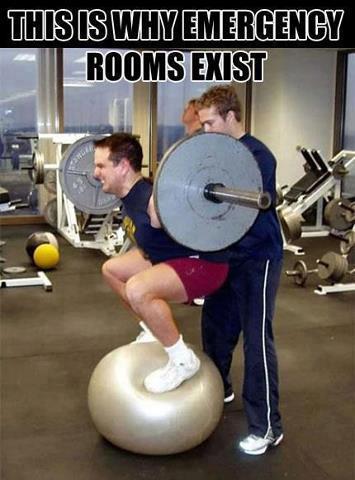
Let’s face it,  none of us really need to be good at pressing 5 lbs dumbbells while standing on a BOSU ball with one foot wearing an altitude mask. 🙂

So what do we need the outcome of purposeful training to be so that it will benefit and improve virtually all human movement?

We need connected whole body strength and power that seamlessly integrates with any martial, athletic, or life event endeavor. We need training that increases mobility, enhances strength, improves resistance to injury, and provides a foundation for excellent health and pain-free movement into old age.

What are we training to become more functional for? Living.

How Do We Train It?

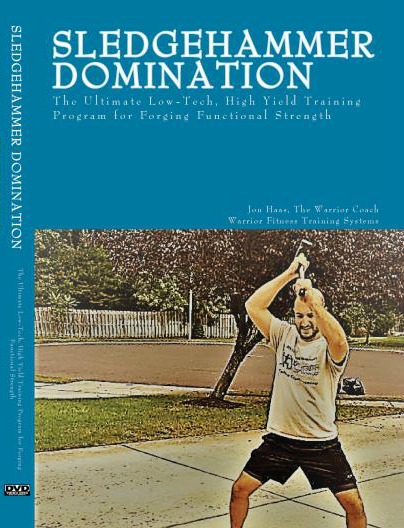
Functional exercise, as we discussed above, is defined as multi-planar, multi-joint movement, in other words, three dimensional movements.  Which means that swinging a weight – club, mace, sledgehammer – is one of the most effective ways to truly train functional strength.

For the warrior, since combat always occurs in a volatile and unpredictable atmosphere, training must prepare the warrior to adapt and overcome.

You cannot be strong in only one direction or just one plane of movement – you must possess all around strength that can be brought to bear no matter what position or weird angle you may find yourself in, and having to move from.

Since sledgehammers are common place and easy to obtain at the local hardware store, they make an ideal functional strength training tool.

Using a sledge hammer in your training is a great way to develop the movement pathways used in striking. It will aid in force production, increase angular, diagonal, and rotational strength throughout the trunk and core, and provide an excellent grip strength workout all at the same time.

Sledgehammer Domination – Volume 1

“The Ultimate Low-Tech, High Yield Training Program for Forging Elite Functional Strength”


What is Fitness?

Fitness is probably one of the most controversial topics bandied about in social media, magazine articles, and by know-it-alls across the planet.  Just about every type of training under the broad heading of fitness has its own staunch supporters and sycophants, as well as its haters and rabid detractors.

Nothing really has a place of neutrality inside the world of fitness.  Here’s a quick idea what I mean:

Crossfit – Either drink the kool aid and become of them, or hate it with a passion

Running – Either sprint or don’t do it

Mobility – Either the tonic of youth and health or just another time wasting fad

Power Lifting – Either those guys are super strong, or just super fat

Zumba – well, let’s just not even call it fitness…

The list of training modalities and their relevant pros and cons goes on and on.  Chances are, if you are serious about your own brand of fitness, you have a love/hate list yourself.

But, are any of the above truly right or wrong?  Well, maybe the one about Zumba… 🙂

Seriously though.  How do we define fitness?  What the heck is it, really?

Here is my definition:  Fitness is having the requisite physical ability (strength, coordination, endurance, energy, power, balance, agility, etc.) to accomplish all your daily tasks, whether work or personal, and to be able to participate fully in any activity, sport, or recreation of your choice.

In other words, fitness is specific to what you as an individual are trying to accomplish daily and to the goals you are working towards.

The real question then is not, are you fit?  The real question is – what are you fit for?  Because the answer determines everything.

So, if all you do is sit on the couch and watch TV all day long and your body has adapted to that state by becoming soft, round, and couch shaped, than you are perfectly FIT for your activity!  Now this may fly in the face of your personal idea of fitness, but if you consider that fitness  is adapting to, and being able to adequately perform the activity of your choice, then you must accept both the marathon runner and the coach potato as being equally fit for their tasks.

By the way, can you be entirely fit and completely UN-healthy?  Yup.  Definitely.  So how do we hone our definition of fitness so that it includes not only looking good, but feeling good as well?

Simple.  Understand that the most important task which you must be fit for is that of being the strongest, healthiest, most productive individual you can be.  This not only insures that you live longer and better for yourself, but for your family and your contribution to society as well.  If this becomes your goal, how then will you change your current routine to make sure your training meets and achieves this objective?

Something to think about.  And, perhaps the topic of another article…

The Top 3.5 Reasons Training is Hard

The other day a student said to me during training: “This is hard.”

My reply was, “Well of course it’s hard. You don’t come to me to learn how to do things you’re already good at, do you?” 

But why is this difficult?

In my experience,training is hard for approximately 3.5 main reasons…

1. You are learning new skills. It’s hard to be good at movements, exercises, and concepts that are new to you. Your nervous system must adapt to the new and different stimulus and create, or sharpen pathways to build competence and skill.

2. You must work on your weak points. Working on things you are already good at is fun, but the only way to truly become all-around strong is to eliminate your weak points.

3. Your ego. No one wants to look inept or silly. But the only way to become better means that we must put ego aside in order to learn.

3.5. Superficial Expert Status. The amount of information available today gives people immediate access to any body of knowledge out there, no matter how obscure, in a matter of seconds.  We have all become SMEs – “Superficial Matter Experts”.  We think that just because we know “about” something we actually understand it. No one wants to spend the time and effort required to learn something deeply.

But these reasons are exactly why we need to train. And why we need to train with people who have greater, or more specialized knowledge, higher levels of experience, and greater levels of skill than we do.

This is why I still train with my martial arts teachers. This is why I still have a strength coach. This is why I participate in masterminds and have business coaches.

Because I know that I need to be pushed and challenged in order to grow, just like I must push and challenge my students and clients in order for them to grow.

Ready to be pushed and challenged?

It begins here <<===

Fasting, Cold Showers, and Black Coffee

This week I decided to run a little experiment and see how long I could fast. I felt that after all the overeating and indulging of the holidays that my body, especially my digestive system, could use a break.

I was inspired by my friend Logan Christopher doing a 5 day fast over New Years. He mentioned using this book The Complete Guide to Fasting: Heal Your Body Through Intermittent, Alternate-Day, and Extended Fasting  as a resource so I picked it up and started reading.
fasting-book

I started my fast Sunday night at 10 PM and continued until Wednesday afternoon at 4 PM for a total of 66 hours. This was by far the longest I’ve ever gone without food.

My normal routine includes daily Intermittent Fasting, but that usually only lasts between 16-18 hours. Here’s a video I made last year talking about how to do it.

What did I consume?

  • Water with lemon
  • Green tea
  • Herbal tea
  • Black coffee with a splash of half and half

How did I feel?

To be honest, I felt great! I was hungry in brief intervals, but it passed. My energy levels were steady for most of it although in the afternoons I felt sleepy and a little drained. Otherwise I had great mental clarity, focus, and energy throughout the whole thing.

I normally use cold exposure and breathing exercises as part of my daily routine but I felt the beneficial effects were magnified even more during my fast. Read about my cold exposure training here.

Did I workout?

Yes I did. Mostly light kettlebell work, hitting the heavy bag, mobility, and cleansing Qigong.

What are some of the benefits of fasting?

  • Fat loss (obviously)
  • Lowers blood sugar (not dangerously low because the body burns fat as fuel – ketosis)
  • Increased insulin sensitivity (remember obesity other metabolic syndromes are caused by insulin resistance)
  • Increased levels of growth hormone
  • Increased clarity, focus, and energy
  • Improved heart health
  • Anti-aging effects
  • Boosts brain power

Why did I stop?

To be honest, I wasn’t hungry. I actually broke my fast because I wanted the socialization experience of eating dinner with my kids. Plus I had to cook for them anyway. 🙂

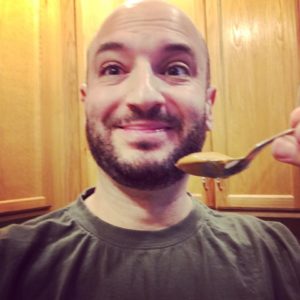
I broke the fast with 1 spoonful of natural peanut butter. After an hour or so I had an arugula salad with cucumbers, carrots, and some red pepper in an olive oil and lemon juice dressing.

jon-peanut-butter

All in all it was a great experience. I plan to continue my foray into fasting!

Got questions? Let me know! Happy to help.

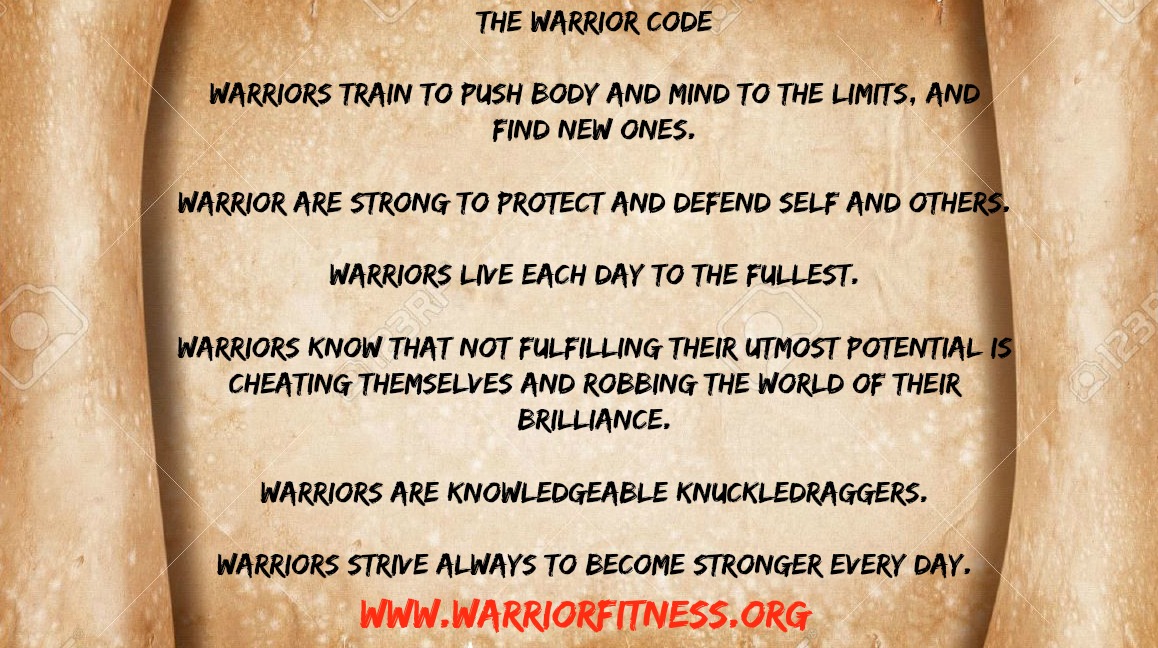
The Warrior Code

Every warrior society throughout history from the Spartans, the Samurai,and the Apache, to the modern day warriors like the SEALs all possess a strong code of ethics that they live by.

The Warrior Fitness Tribe is no different.

When you belong to this tribe, there is a code that must be adhered to.

the-warrior-code

This is the code of the Warrior Fitness Tribe.

Learn it.

Live it.

Share it!

The Yin and Yang of Strength

The art and science of becoming stronger can be broken down into 2 main methods.

  1. The Addition of Driving Forces (Yang), and
  2. The Subtraction of Restrictive Forces (Yin)

When most people train for strength they focus solely on the Yang of Strength – the addition of driving forces.

But this will only get you so far…

It’s like driving a car around all day with the emergency brake on.  You can still get where you need to go, but that extra, unnecessary drag is killing the car’s performance and guzzling gas (consuming energy).

What is the hidden drag in your performance?

Residual muscle tension, or tonus, is the continuous, passive partial contraction of muscles in the body that aids in posture and support. Any type of strength training exercise, stress, fear, and trauma, will all cause an unwanted and unnecessary increase in the normal residual muscle tension of the body.

Usmuscle-boundually this extra tonus goes unnoticed, or worse is simply deemed an acceptable and natural side effect of living.  The problem with this added tension is that the continuous contraction of muscle throughout the day, ever day, is using up energy.  Energy that can, and should, be available to us is being siphoned off thereby putting the brakes on our performance.
Rather than increasing our energy, freeing our movement, and allowing us to access our full strength potential as human beings, the consistent focus on the Yang of Strength makes us literally muscle bound.

The Yin of Strength

The Yin of Strength is how we strategically and systematically remove those restrictive forces to reveal our true strength potential as an Integrated Human Being.

What specific recovery methods are used?

  • Mobility Training
  • Yoga Postures to act as compensatory movement
  • Vibration Training to literally shake out the tension
  • Breathing Exercises
  • Foam Rolling and Fascial Release
  • Qigong

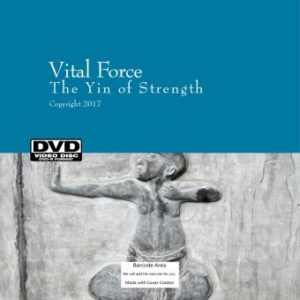
Check out my latest program, Vital Force: The Yin of Strength

Form Begets Function

A new guest blog post by my friend, Jarell Lindsey owner of  Lean Functional Muscle.

Form Begets Function

I was scanning the posts of a fitness forum the other day, and I came across something that confused me a bit.

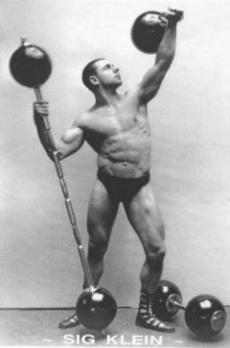
The post was regarding the physique of one Sig Klein, you may have heard of him, and how a modern bodyweight trainer could achieve a physique comparable to such a strength legend.

sig-klein

What could have been a great platform to discuss the merits of old school training methods became a complete misunderstanding of their use. For instance, the poster spoke on how lever work and static training lacked appropriate intensity for muscular growth, despite the incredible physiques that gymnasts possess above most other disciplines of fitness.

He furthermore went to say how he had trained with gymnasts before, and noted that they rarely trained to exhaustion, and more for technique than for musculature; therefore, he wanted a method that would help him develop the musculature, regardless of technique.

Funny that.

For, you see, one of my first lessons in biology was that, even on a molecular level, function begets form. The function of an organelle determines the way that it is structured.

Why wouldn’t it be the same on a macroscopic level? Gymnasts, traceurs, rock climbers, and martial artists all train for function over form, and they offer some of the best physiques the training world has to offer.

If you truly want a physique like Sig Klein with the strength to boot, training for function is key.

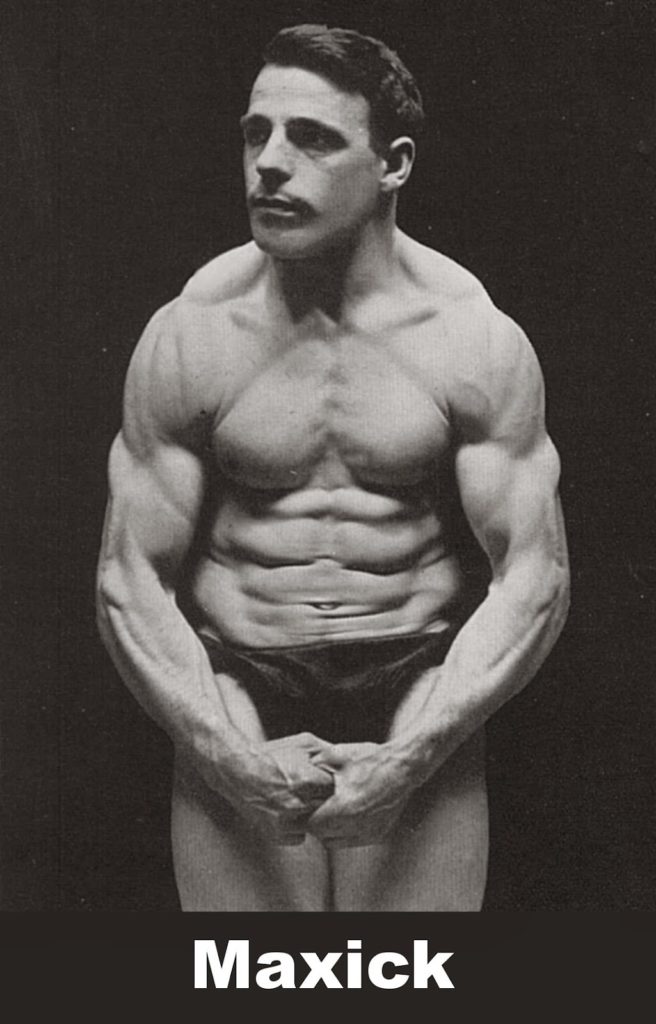
Furthermaxick2more, the poster said that the gymnasts never trained to exhaustion. From the training journals of Maxick, one of the strongest oldtime strongmen there ever were, you train daily so as not to train to exhaustion.


Your body doesn’t get stronger from training; it gets stronger from nourishment from your breath, your food, your blood and organs, etc. Many oldtime strongmen, including Sig Klein, rarely ever trained to failure. Nevertheless, they’d train their whole bodies everyday in a way that nourished their strength without fatiguing it.

Function begets form, my dear Watson.

Observe how well you function, not as a crane, tiger, or bear style, but as the functional patterns of a human, and watch your strength and physique truly begin to soar.