Prepare Yourself Every Day

Ever have one of those days when nothing goes right?

The alarm clock is blaring yet you hit the snooze again for the 5th time dreading the prospect of getting up and facing the day.  When you finally drag yourself out of from under the covers and realize just how late it is, your heart jumps into overdrive as you rush through your morning routine desperately trying to get out of the house to make it in to work on time.  If you have small children to get ready for school, daycare, or other activities as well, that simply throws more chaos into the mix.

In your rush, you forgot to eat breakfast and left your steaming mug of coffee sitting on the kitchen counter while you ran out of the house.  Traffic sucks, of course, because you’re late, and when you finally get in to work there are 6 messages from your boss wondering why you missed the morning project meeting…  and your day goes downhill from there.

Some days it just seems like the universe is conspiring against you and this time it’s personal!

What do you do?

How do you respond to the myriad changes and vicissitudes life throws at you?

Do you find yourself tossed about like a small boat on a rough sea constantly overreacting and over-correcting with each wave?

Or, do you have a quiet calm reserve of energy and strength that allows you to maintain a state of fudoshin – “immovable spirit”?

Fudoshin is a state of mind that remains undisturbed and not easily upset by either internal thoughts or external factors.  It is the even keel that keeps your craft steady and on course during rough seas of life.

How do you develop fudoshin though?  How do you cultivate that quiet reserve of strength and energy?

Prepare Yourself Daily

Daily preparation is the key.  A reserve of strength must be built up gradually and nurtured daily, even when you don’t need it, especially when you don’t need it, so it’s there when you do.  Like a savings account you invest a little bit each day so that when the unexpected happens the funds are there for you to draw upon.  So let’s get to the nuts and bolts.

How do you prepare yourself daily?  Here’s what I do…

  1. Get up earlier each morning.  Yes, earlier.  Allow 30 to 45 minutes BEFORE you actually need to be up to get ready for the day.
  2. Grab a cup of coffee.  I love my coffee; there’s nothing like that first sip in the morning.  Feel free to skip this step if you don’t drink coffee. 🙂
  3. Head outside for a breath of fresh morning air (feel free to bring your coffee).  According to Chinese Medicine, early morning is the springtime of the day and thus best for planting seeds to cultivate good health.
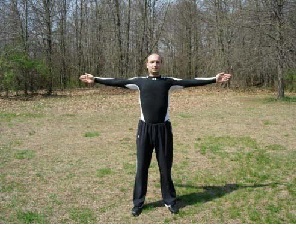
  4. Stand tall, feet shoulder width apart, knees slightly bent, spine straight.  Raise the arms laterally up over head breathing in slowly and deeply with the movement.  As you inhale imagine the oxygen and energy carried by the breath is filling up your entire body.  Hold the full breath for a moment or two, then slowly exhale completely bringing the arms back down.  On the exhale, imagine the body is expelling tiredness.  Repeat 3 to 5 times.  Feel free to add other imagery to this exercise as well.  For example, on the inhale imagine drawing in the positive qualities of strength, health, and confidence, and on the exhale imagine the breath drawing out and expelling negative qualities of weakness, sickness, and fear.
  5. Perform a full, head to toe joint mobility routine to further wake up and enliven the body.  For a complete discussion on joint mobility work and much, much more, see my book, Warrior Fitness: Conditioning for Martial Arts.
  6. Depending on how much extra time you have, relax a few more minutes enjoying the strength and energy you have cultivated – and finish that cup of coffee before heading in to start your day!


 Life is Stressful – Prepare Yourself!
 

Double Your Training Without Doubling Your Training

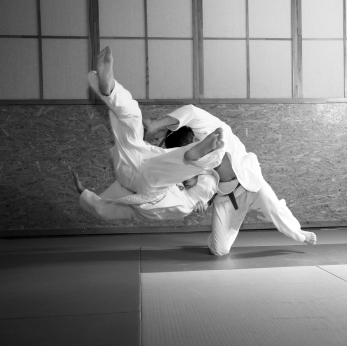
In my teacher’s and my own dōjō (道場 – “martial arts training hall”) we spend a lot of time cultivating our skills as uke. An uke (受け) is a martial arts student who, during a given training session, “receives” a technique from another student acting as the tori (取り). Wikipedia defines the difference as one “who completes a successful technique [tori] rather than who initiates one [uke].” Having a good uke as a training partner is very important, but being a good uke is paramount.

The role of uke often gets a bad rap. Too many times I have seen students relegate themselves to becoming little more than an “I attack, then stand around while the other guy does something to me” participant. When it’s time to be uke, the “pause” button gets pressed and human punching bags are born. That doesn’t seem right, does it?

It certainly doesn’t feel right, at least not to me.

Continue reading

Walking with Mickey Mouse

Before leaving on our 11-day family vacation at Walt Disney World in Florida, I was a little concerned about the possibility of missing my regularly scheduled Warrior Fitness workouts.  While I was looking forward to the family time and the amazing experiences that only Disney (and Universal Studios – Harry Potter was awesome!) can provide, I was also trying to figure out how I could escape from the parks and get in some Warrior Fitness style training every day.  Well, it turns out I couldn’t break away.  We were in the parks almost every day from opening to dinner time, and sometimes back after dinner for fire works too!  But, since I’m a good ninja, I adapted!  Here’s how…

It’s amazing how much walking you do on a daily basis at Disney.  Whether it’s with Mickey, Donald, and Goofy in the Magic Kingdom, or walking through 11 different countries in Epcot, exploring Hogsmeade and Hogwarts Castle at Universal Studios, or hanging with the mammals over at Animal Kingdom, you are walking or standing in line literally all day long.  So, the question for the warrior is, how do you put all this walking and standing to good use?  Train while you do it, of course!  While the walking alone is good enough for most ordinary folks, warriors require a little more.  So here’s a little sample of what I did to enhance it:

  •  Push a child in a stroller as you walk.  Add a backpack to increase the weight.
  • Carry that child intermittently while walking or standing in long lines.  A child is an odd object – who needs kegs, kettlebells, or sandbags when you can carry a kid!  They constantly move, squirm, change posture or position while being carried!!


  • Focus on moving and pushing the stroller from the core (hara) and not from the shoulders.
  • Balance – stand in line on one foot.  Do it while holding your odd object (child).
  • Grip training – crush grip the stroller handle for 5 seconds.  Rest and repeat.  Do left, then right, then both hands.  Contract the core, exhale hard and crush the handle.  Also, isometrically try to “bend” the handle – first make sure it’s sturdy enough, your wife will kill you if you actually succeed!
  • Breathing – there are tons of opportunities to enhance walking and carrying through breath training.  Match your breath to your steps.  1 step inhale, 1 step exhale.  Try to make it up to 10 steps on an inhale followed by 10 steps on an exhale.  Or, 5 steps inhale, 5 steps hold full, 5 steps exhale, 5 steps hold empty.  Try to see how many steps you can take carrying your child on an empty breath hold.  Do the same on a full breath hold.  Don’t forget to ride a rollercoaster too – screaming and laughing are great breath training!
  • Bodyweight squats while holding your child in line. 

These examples above will help keep you focused, training, entertained, challenged, and present while your kids have a magical time in the parks.

If you have any energy left when you get back to the hotel room, bang out a few sets of push-ups to round out your workout for the day.  And, lastly, joint mobility and yoga asana are a great way to prepare your body for the rigours of Disney.  Don’t neglect your 10 minute warm-up in the morning before heading out.  It’s a life saver!!

Trust me, there are ample training opportunies outside of your regular workouts.  You just have to be a little flexible and creative. 


The Warrior Fitness Guide to Striking Power is Here!

by Jonathan Haas, founder of Warrior Fitness Training Systems

  • Specific Physical Preparedness for ALL striking arts from old school Traditional Martial Arts to modern MMA!
  • Learn how to build a powerful structure to stabilize punches, kicks, and martial movement!
  • Discover how to use low-tech, high yield tools to strengthen strikes throughout a range of motion!
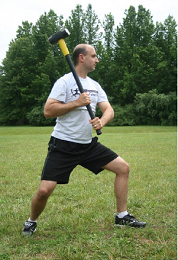
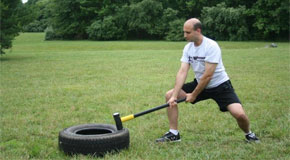
  • Sledge Hammer for force production, rotational strength, grip strength, and old school conditioning!
  • Medicine Ball for explosive strength and rotational strength!
  • Resistance Bands for force production, rotational strength, increased stabilization!
  • Bodyweight Exercise and Isometrics for structure and stabilization!
  • Discover how to use Intelligent Tension rather than general tension to power strikes!
  • Learn Breathing and vibration exercises for recovery and restoration!
  • Over 50 pages of pure, 100% actionable content – no fluff, no BS, no filler!
  • Sample Workouts!

Buy Now for only $15 USD!!

Buy Now

Warrior Fitness Guide to Striking Power is a downloadable e-book. No physical products will be shipped. After you order, you will get INSTANT ACCESS to download the e-book and all the bonus reports onto your computer. The e-book format is adobe acrobat PDF, which can be viewed on Mac or PC.

Blind Spots

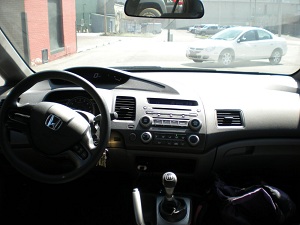
A few years ago I traded in my 2000 Honda Civic for a 2007 Civic. The minute I sat in the seat of this streamlined, yet economical car, I knew it was the one I would own. The way it shifted, its responsiveness to the road, the look of the dash, how the seat seemed to perfectly fit my body, somehow it just felt right and even though I wasn’t planning on buying another car with a manual transmission, I knew this would be the car that I would drive home that day. Training can be very much like as well, often it just “feels right” somehow.

Although the car felt good and right to me; one of the things that I immediately noticed was that it had many blind spots that my other car didn’t have… well, wait a minute, re-thinking that, it wasn’t that my other car didn’t have any blind spots, it’s that I got used to them and I eventually learned how to see around them, so much so that I almost didn’t even know that the car had any blind spots at all. Now, that I have owned this current Civic for a few years now, I don’t notice the blind spots that were so apparent when I first bought it. It is funny to think that once these blind spots were so apparent and difficult to see around, and now my mind has trained itself to see around these dangerous short comings and it is once again giving me the illusion that those spots aren’t even really there at all!

This same concept also applies to training and life. Each method, system and person has its blind spots; things that are just taken for granted and often overlooked until something happens to change that perspective. Growth and evolution sometimes can be a smooth, natural progression and other times, it can be challenging, difficult and cause great conflict.

How a system or person approaches their training be it martial arts, military tactics, verbal communication, health and fitness, strength, conditioning, world philosophy, politics, economics, science, etc., is due to a variety of reasons, including, but not limited to, the environment, context, past experiences, education, conditioning, limitations, strengths, objectives, philosophy, preference, etc.  There are many ways to do many things, all aren’t right, nor are all wrong; however, some ARE better than others for sure. Many believe they have the corner of the market on the “right” way to do whatever they are trying to accomplish. This attitude lends itself to stagnation, justification and conflict with self and others. It is good to be confident; however growth and progress means change and change sometimes can be tough and take you places that were never anticipated.

“1500 years ago, everybody knew that the Earth was the center of the universe. 500 years ago, everybody knew that the Earth was flat. And 15 minutes ago, you knew that people were alone on this planet. Imagine what you’ll know tomorrow.”

 ~Agent K (played by Tommy Lee Jones) talking to Will Smith’s character in the movie Men in Black.

Ok, so let me rein in this article a little bit to focus on the point I am trying to impart:

Always be open to the idea that no matter how good you or your training are, there are blind spots. Things that you just don’t see, obstructions that you have been looking around for so long you no longer see them.  This is why not only instructors, teachers and coaches are necessary, but also having the “beginners mind.” Like the old Zen story about the student coming to a teacher with an empty cup so to speak. We all need to be perpetual students, remain flexible, seek to improve, be curious, and keep our egos in check.

A saying I frequently use is, Learn like you know nothing, perform like you know everything.” This means keeping an open mind when learning, but when it comes time for action, whether in life, in the sports arena, or during a real conflict, where hesitation can cost you more than a trophy; (in the moment) do what you think you need to do with confidence.

No matter if today was your first day training or you’ve been at it for forty years, whether you are training the Israeli Defense Force, for the UFC, or just for fun, here’s your homework:

What are your blind spots? (In training and in life?)  Uncovering those blind spots is a process that never ends. Remember it’s a journey not a destination. Enjoy the ride!

Keep going.

~Craig Gray

www.roninempowermentgroup.com

www.rgi.co

Craig Gray is a world traveler, speaker, trainer and Subject Matter Expert (SME) for numerous law enforcement agencies as well as Nationally Syndicated Talk Radio Show Frontlines of Freedom & WZZM TV 13 Web Community. Craig is responsible for creating the MCOLES (Michigan Commission of Law Enforcement Standards) approved Krav Maga Self Defense for Law Enforcement Training Program. Craig is one of twelve hand picked instructors with Resolution Group International a conflict resolution training organization developed for the needs of military, law enforcement and business organizations. He is an adjunct instructor for hand to hand combatives and warrior ethics at the Homeland Security and Protective Services Academy within the Gerald R. Ford Job Corps. Craig also serves as education director for Her Survival Guide an organization that teaches empowerment skills, risk management and conflict resolution skills to college bound girls and their mothers.

RGI Conflict Resolution Course Review

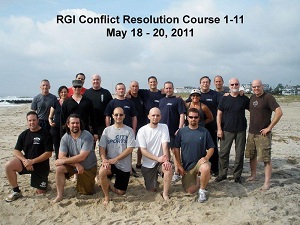
Last week I had the very special privilege of attending the RGI Conflict Resolution Certification Course.  Resolution Group International (RGI) is a conflict resolution company specializing in: Ethics presentations, Leadership training, Tactical Communication, Cross-Culture Conflict Resolution, and Defensive Tactics and Combatives.  It was hosted in Spring Lake, NJ and taught by a panel of experts in the field of conflict with decades of real world experience and credentials behind them. 

The RGI seminar format utilizes a unique teaching methodology which blends values-based lessons, conflict communication skills, and ethics with physical training and exercise to activate and clarify the principles being taught.  The interchange of movement with the classroom style lecture increases the absorption and retention of the intellectual and values-bases lessons.  This concept is backed up by latest research into combining education with physical exercise.  Check out the book, Spark: The Revolutionary New Science of Exercise and the Brain by John J. Ratey, MD for a more detailed discussion of the science behind it. 

RGI’s Conflict Resolution course starts with a premise: in order to resolve conflict one must be moral, knowing right from wrong; one must be ethical, putting that morality into action; and one must have the physical skills and confidence from which to proceed.  The Dual Life Value (DLV) theory is the linchpin holding the course together.  It permeates the philosophy, intellectual discussions, physical skills, and emotional stories.  The DLV states that we are all equal because my life and the lives of my loved ones are as important to me as your life and the lives of your loved ones are to you.  Further, the life value is a universal value by which all other values are judged.  If they support the life value, they are moral, if they don’t, then they are not.  This is a very high level summary of an extremely important concept.  To really gain a full understanding and appreciation of the DLV theory, you really need to attend the course and be immersed in the philosophy.  This review can do nothing more than offer a taste to whet your appetite.  I hope it makes you hungry!

PT with Joe Marine

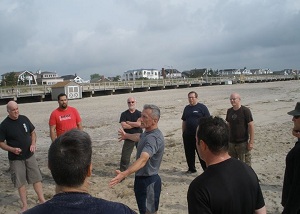
Joseph C. Shusko AKA “Joe Marine” is a decorated veteran who served the United States Marine Corps for over 30 years.  He is now serving as the Deputy Director, Marine Corps Martial Arts Center of Excellence overseeing the Corps’ Martial Arts Program.  Joe Marine is also known as the “combat conditioning guru”.  He took the class through 2 morning PT sessions Thursday and Friday.  The Thursday morning PT session began with a discussion on health and fitness in which Joe Marine shared his outlook and really brought home the importance of taking care of oneself, especially as we get older.  We then proceeded to go through a simple, yet highly effective workout Joe calls “5-10-15-20”.  It’s basically a plug –n- play type workout template which uses a variety of bodyweight exercise for the prescribed number of repetitions, 5, 10, 15, and 20, respectively.  The set is repeated as many times as possible in 10 minutes.  This allows trainees to work at their own pace and to their own fitness level.  But as Joe says, you only get out of it what you put into it!  Friday morning’s PT was a real treat as we moved the location outdoors to the beach on Spring Lake.  This time the workout was done in teams of 2.  This really pulled the participants together as they struggled to overcome the shared adversity of the physical challenges together.

In addition to being the combat conditioning guru, Joe Marine is also known for his “tie-ins”.  These are values-based stories which serve to illustrate points and drive home the intellectual or physical lessons with an emotional impact.  Never miss an opportunity to ask for a tie-in!

Maneuver Martial Arts

Maneuver Martial Arts is the term RGI President, Jack Hoban uses to describe RGI’s approach to physical conflict.  Jack is a speaker, writer and Subject Matter Expert (SME) for the U.S. Marine Corps Martial Arts Program (MCMAP).  His business and military experiences, as well as an extensive 30-year background in martial arts, give him a unique and interesting perspective.  Jack, along with co-instructors Craig Gray and Artie Mark, skillfully introduced the participants to the concept of tactical movement, striking, escapes, takedowns, submissions, and protecting others.  Tactical movement and being able to control the tactical space around the opponent(s) was emphasized as primary, over and above the concept of technique.  This allowed the participants, some of whom had no prior martial arts experience, to gain an understanding and quickly absorb the principles of martial movement as the seminar progressed.  As a martial artist of almost 30 years of experience myself, it was hugely gratifying to watch this process unfold!

The crown jewel of RGI’s martial arts training though is really the protecting others piece.  As Jack mentioned in his introduction to this section, in a typical martial arts school setting, if 100 techniques are taught, 100% of those techniques are geared towards defending yourself.  How many look at how to defend others?  Usually none.  This segment of the training served to rectify that deficiency in current martial arts training, as well as to drive home the importance of the universal life value of self and others – all others.  Protecting others activates the life value and solidifies the concepts, principles, and ethics in a very real and effective way.

Conflict Communication

RGI’s approach to conflict communication is both an art and a science.  Gary Klugiewicz is employed by PoliceOne as a police and corrections subject matter expert. He is retired from the Milwaukee County Sheriff’s Department after 25 years of service where he was promoted to the rank of captain. Gary has been a Verbal Judo Instructor for the last fifteen years.  Gary expertly distilled the essence of Dr. George Thompson’s Verbal Judo, to give the participants a highly beneficial introduction to tactical communication.  Take a look at what Verbal Judo calls the 5 Universal Truths and see if they resonate with you.  They certainly did with me.  Also, try them out on your kids.  You’ll be amazed at the level of compliance!

5 Universal Truths

  1. All people want to be treated with dignity and respect.
  2. All people want to be asked rather than told to do something.
  3. All people want to be told why they are being asked to do something.
  4. All people want to be given options rather than threats.
  5. All people want a second chance.

Real world experience in conflict communication from both the ER and out on the street from a law enforcement perspective was also shared by Joseph Lau, RN, veteran police detective Arthur “Artie” Mark, and decorated veteran detective James Shanahan.  Additional presentations were given by heavy hitters such as Brian Pensak, Marine Corps Martial Arts Program Instructor Trainer and SME, and Bruce Gourlie, Special Agent of the FBI.  There is so much experience, expertise, and information to unpack from just one of these gentlemen’s presentations that it’s impossible to delve into in a short seminar review.  My advice?  If you deal with any type of conflict in your job, in your family, in your life, get to an RGI Conflict Resolution course ASAP – you’ll never look at conflict the same way again!

The RGI Conflict Resolution Course has a synergistic effect whereby the whole is much, much greater than the sum of its individual parts.  The combined impact of the instructors’ professional presentations, the interchange of physical skills with values, morals, and ethics, and the engaging course material create an outstanding professional development course. 5 out of 5 stars – highly recommended!!

For more information on RGI upcoming events and seminars, please click here.

Ninja Endurance – Part II

In part one of Ninja Endurance called,  How to Train for the Endurance of a Ninja, we discussed strength endurance and I provided a sample workout to help you build yours.  Here in part 2, I ‘d like to delve a little deeper into the whys of endurance training and how specifically high intensity interval training is an excellent choice for it.

What is Endurance?

Endurance is defined as being able to keep going without fatigue setting in, or being able to push oneself through fatigue.  Essentially, it is the ability to resist or bear fatigue.  What is fatigue?  Fatigue is weariness or exhaustion from exertion, or the temporary loss of power to respond.  An equally critical corollary to the definition of endurance, especially for the warrior,  is that your level of endurance also determines how quickly you are able to recover between bouts of activity.  Combat, like life, does not happen at one constant rate of speed.  It is multi-faceted in nature.  There will be periods of brutally intense activity followed by lulls in the action, again followed by another flurry of activity.  Being able to use those lulls in action to recover is a critical ability for the warrior.

Steady state cardio, Long Slow Distance (LSD) training simply will not cut it.  Running on a treadmill may be appropriate for a hamster in a cage, but human beings require more.  Long distance running can be beneficial for mental toughness and/or active recovery, but it should not be the primary focus of a warrior’s endurance training.  So then how should we train to maximize our ability to endure?

Warriors Need to HIIT!

High Intensity Interval Training (HIIT) is one of the best ways to train for endurance.  It will enhance all 3 energy systems in the body (2 anaerobic and 1 aerobic – see here for an overview), as well as prime the nervous system to recover automatically during lulls in activity.  Simply put, HIIT alternates periods of high intensity exercise with periods of rest and recovery.  It can be performed with almost any exercise and can be utilized both with and without equipment.  The variety and adaptability of this style of training is second to none in results.

How else does improving your endurance through this type of conditioning aid your martial arts training?  I’m glad you asked!  If the benefits discussed above weren’t enough, consider that having a high level of conditioning also aids in learning new skills.  How’s that possible?  To put it simply, when the central nervous system (CNS) is fatigued, the body cannot effectively process new skills, especially technically advanced skills.  So, in essence your lack of a general level of fitness and conditioning will actually impede your learning process as you will tire more readily and not have the ability to recover quickly enough during training.  Want to train more, at a higher level, for a longer period of time?  Want to get more out of your training time both at home and in the dojo?  Want to build new skills and enhance your technical arsenal?  Get yourself in shape!

There are several sample conditioning workouts here on the Warrior Fitness site.  Here are a few examples:

Workout of the Week #1


Workout of the Week #5


Stay tuned for more Warrior Fitness style conditioing workouts to help you get and stay in fighting shape!

Warrior Fitness T-Shirts Now Available!

Get Your Warrior Fitness T-Shirts Today for only $20 USD – Shipping is Free!!!


    Now you can look cool while working hard!                                                                                       


Sizes

The Sanshin of Warrior Fitness

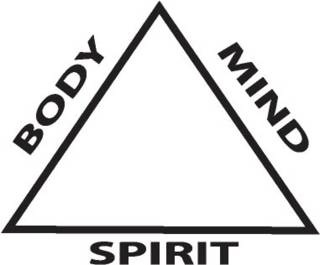
A short introduction may be necessary for those readers not familiar with Bujinkan Budo Taijutsu.  Sanshin no kata is a basic training exercises within the system that templates movement patterns for Bujinkan Budo Taijutsu.  In English, it translates to “form of three hearts”.  These three hearts are mind, body, and spirit.  All three must be united for technique to come alive for the martial arts practitioner.  Without all three aspects of body, mind, and spirit unified the kata become  empty shells of movement, devoid of essence.

Bujinkan martial arts are the wellspring from which my concept of Warrior Fitness sprung as a natural outcropping.  So as my philosophy of Warrior Fitness continues to evolve, it naturally gravitates to this type of structure for me to express it.  In keeping with the trinity of mind, body, and spirit, here is how I see it for Warrior Fitness:

Mind Concentration and focus along with an understanding of the interrelationship of the exercises and how they integrate with and enhance the way we move in the world.

Body Forging a strong body to carry us through the challenges we face. 

Spirit Pushing the edge to consistently increase resistance to failure.

The Sanshin no kata consist of 5 forms which are called, Chi no kata (earth form), Sui no kata (water form), Ka no kata (fire form), Fu no kata (wind form), and Ku no kata (void form).  Those who have read Miyamoto Musashi’s famous work, Go Rin No Sho – A Book of 5 Rings, are most likely familiar with the terminology as well.  Here is how each is expressed in Warrior Fitness:

Earth Building strength, stability, and structure in movement and stillness

Water Freedom of movement through all ranges of motion, flow state

Fire Metabolic conditioning to ignite fat loss and sculpt lean muscle

Wind Breathing exercises to vitalize every cell in the body

Void Pushing the edge of our limitless potential


Hone Your Mind, Invigorate Your Spirit, and Make Fierce the Body with Warrior Fitness!

Got Some Spare Time? Try Isometrics!

If you’re like me and can’t stand to waste any amount of time no matter how short, you’ll love how isometrics can fill in some strength gaps.  Nowadays, my days are jam-packed full with work, meetings, conference calls, networking, family time, training time, teaching time, writing time, and oh yeah – a little sleeping in my spare time.  Since there are never enough hours in the day to accomplish all the things I want to do (not to mention those pesky things I have to do!), I try to make the most of those few free minutes of downtime in between tasks so I can be just a little more productive.

The only way to constantly improve is to consistently work on improving your self.  One of my favorite quotes of all time is from Calvin Coolidge:

“Nothing in this world can take the place of persistence. Talent will not; nothing is more common than unsuccessful people with talent. Genius will not; unrewarded genius is almost a proverb. Education will not; the world is full of educated derelicts. Persistence and determination alone are omnipotent.”

And, since I don’t consider myself particularly talented, or even all that smart, it’s a good thing I am persistent!

So, let’s talk isometrics. 

Isometrics are a great way to work on increasing strength, or shoring up a strength deficiency in a certain movement or exercise, with virtually no equipment and very little time.  They are both effective and efficient – good news for us!

So what exactly are isometrics?  Basically, isometric exercise is exerting force against an immovable object.  The idea is that the length of the muscle does not change, but the tension remains constant during the exercise.  There are 2 general types of isometric exercise:

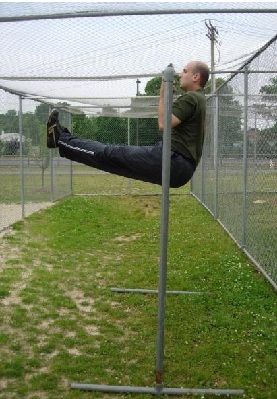
1.  Holding yourself (or a weight) in a static state.  For example holding the mid-point of a push-up position or the mid-point of a squat.  Or, holding yourself statically on a pull-up bar.

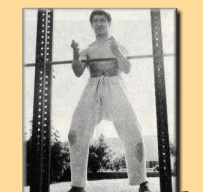
2.  The other type of isometric exercise consists of pushing or pulling against an immovable object.  This picture of Bruce Lee is a great example of just one of the ways he used to train isometrics.

For our purposes, when training the first type of isometric drill, try holding the mid-range or hardest point of the exercise for 30 to 60 seconds.  Make sure to keep breathing!  Then shake it out – see the vibration exercises here  – and go again.

We will use much shorter time frames for the second type of isometric exercise.  Here we will be pushing or pulling against an immovable object as hard as possible (maximal contraction) for 1 to 3 seconds each rep.  Exert force as quickly as possible to improve speed strength.  Studies have found that the intention to move fast was more important for speed development than the actual speed of the the movement.  Interesting, eh?  Train about 4 to 6 reps per set and use the vibration exercises referenced above to remove residual muscle tension between sets.  Since there are innumerable variations here – pushing with the arms (one or both), pushing with the legs (one of both), pulling with the arms (one or both), pulling with the legs (one or both), not to mention the number of different joint angles one can use with either push or pull, I will leave it up to your creativity to determine how to best apply it in your training.  Let me know what you find works best for you.

I hope you enjoyed this short primer on isometrics.  We will be exploring them in more depth, as well as showing how isometrics can be used to not only increase strength, but increase power for your strikes in my upcoming book… Stay tuned!