Four weeks ago I injured my ankle. The diagnosis? Peroneal tendonitis. Walking was painful. Squating was painful. Lunging was out of the question. Heck, even balancing on my injured foot hurt. Continue reading
Training Through Injuries
2

Four weeks ago I injured my ankle. The diagnosis? Peroneal tendonitis. Walking was painful. Squating was painful. Lunging was out of the question. Heck, even balancing on my injured foot hurt. Continue reading
Training outside in the elements has always been one of my favorite ways to practice martial arts and the art of strength, or Warrior Fitness. There’s something special about the fresh air, sunshine, and changing terrain that gives life to the training and makes it hugely satisfying for me. In fact, my weekly Bujinkan Martial Arts class trains outside all year round in all sorts of weather from the bitterly cold and snowy winters to the blisteringly hot and humid summers. This type training not only helps increase our physical resilience, but our mental fortitude as well by helping us to become comfortable being uncomfortable. Continue reading
I’m here in Long Beach Island, NJ for a week of fun and sun with the family. Today, however, was cloudy and cool so instead of heading to the beach we decided to stay at the house in the morning to relax a little bit and then take in an early afternoon movie. So with my parents and 2 kids in tow, we went to see “How to Train Your Dragon 2“. Continue reading
I was never what you would call a natural athlete growing up. In fact, I pretty much sucked at every sport I tried – baseball, basketball, soccer, kickball, tennis… you name it, I sucked at it. To make things worse I was also ridiculously shy and introverted as a kid, so that combination, on top of having little to no athletic skill, made things even worse! Continue reading
For as long as I can remember, I have always believed that the body is meant to be used as a fully actualized, integrated unit – nothing can (or should!) exist in isolation. By this I mean that muscle, tendon, ligament, and bone are all equally important and must all be unified in producing amazing degrees of strength and skill for fitness, martial arts, sports, or life. And, in most cases this is completely true. Continue reading
What if you never had to take ukemi again?
Not because you stopped training or avoided it or anything negative like that, but simply because no one who came in contact with you was able to throw you.
Interesting idea, eh?
Although for the sake of paired training and being a good training partner, perhaps a better model would be this – what if you only took ukemi from someone when you wanted to, and not when you had to?
What if you had the skill to naturally reflect incoming force so that an attacker was not able to throw you, joint lock you, take you down, or even off balance you? Continue reading
If you are a martial artist, it is essential to train your art outside in the elements. Since most traditional arts were born outside, and not in a gym or dojo setting, it is important to every once in a while get back to the roots of your art. Correct me if I’m wrong, but as far as I know most wars have been fought outside in the elements, through all different types of weather conditions, and on changing terrain. I think we have all become way too spoiled and comfortable by training in a sheltered and heated (or air conditioned) dojo, on a flat, mat covered surface all the time. Get out of your comfort zone! Start to get comfortable being uncomfortable! Get a little wet and dirty. Have some fun! Continue reading
Before proceeding onto this Advanced Level of my Ninja 300 Workout, make sure you have successfully completed the Level 1 Warm-up and the Level 2 Intermediate Workout! Continue reading
Did you do the basic level of my Ninja 300 Warm-up? How did you like it? I’ve had several positive responses to the basic version, along with requests for the next level, so here you go! Continue reading
When I first began talking about internal power in the context of Bujinkan training, I realized that many people might be skeptical of this type of training at the very least, or have many preconceived misconceptions that would not allow them to even consider the method as a viable form of training for budo.
Therefore I decided to write this blog post to gauge the interest of my readership and how accepting you might be of internal power training and my interpretation of its role within Bujinkan training. I hope you find it helpful!
I think it’s best to start with the basics. What is internal power and how can it useful to the practitioner of Bujinkan Budo Taijutsu? Let me state this at the outset to hopefully clear up a rather unfortunate misinterpretation of IP.
Internal Power is physical.
It’s not some mystical mumbo jumbo or a throwing chi balls type of nonsense.
It is actually a way of conditioning the body through specific solo training exercises and paired partner training. The training method spans thousands of years and has been handed down through the ages within the warrior traditions of India, China, and Japan. It is a body technology with a set method and detailed process of instruction that simply cannot be learned by osmosis. It must be explicitly taught.
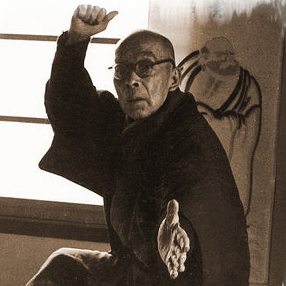
The basis for the method is what is known as the union of opposites or In Yo Ho, in Japanese.
By creating opposing forces within the body (up/down, left/right, front/back) through the use of intent – your own mental direction using imagery, feeling, and visualization – we begin to increase the mind-body connection to a remarkable degree.
Through the solo training exercises we condition and strengthen the entire fascia network, as well as tendons and ligaments, throughout the body. This process serves to create a connected body through the center so that when ‘one thing move, everything moves’.
Internal Power training changes the way outside forces act on the body. The structure becomes dynamically stable so that applied force can either be distributed throughout the chain and dissipated or, at a higher level, simply reflected right back onto the opponent. When force is reflected back this is what is known in Japanese as Yamabiko, or Mountain Echo.
At first blush it may sound like a party trick, but the budo applications are quite staggering. Think about it.
How does every martial art technique work?
What is the first thing you are taught to do prior to applying a technique?
Break the opponent’s balance, right? Get kuzushi.
What if no one can compromise your structure?
What does that do to every throw, lock, and take down applied to you? Yeh. You’re getting it now, aren’t’ you?
And that’s just the beginning.
Every time you move, you are completely and dynamically stable, balanced. You gain the ability to hit like a truck using the full mass of a connected body without dedicating your weight. (Remember – when one thing moves, everything moves.)
This becomes very profound, especially when you start to incorporate weapons.
And, since you are connected through the middle of your body due to the specific solo training exercises, you will finally and probably for the first time, actually be moving from center, hara, or dantien.
Sound interesting?
You can learn my full method of integrating and training the mind-body system HERE.
 I am also more than happy to share what I know about internal power training, especially in the context of how it can be fully integrated into our Bujinkan Budo Taijutsu practice. I teach it in my weekly classes and seminars upon request. Contact me HERE.