About Jon

Jon Haas, "The Warrior Coach" has been training in Bujinkan Budo Taijutsu for more than 25 years and is currently ranked as a Kudan (9th degree black belt) under Jack Hoban Shihan. He has also trained in Okinawan Karate, Tae Kwon Do, Russian Systema, BJJ, Krav Maga, as well as Internal Martial Arts of Yiquan and Aiki.He is a certified Underground Strength Coach-Level 2, a certified Personal Trainer as well as founder of Warrior Fitness Training Systems. In 2008, Jon wrote the book, Warrior Fitness: Conditioning for Martial Arts, and since then has created numerous other online training and coaching programs helping people around the world become the strongest, most capable versions of themselves!

Fitness Requirements for Bujinkan Martial Arts Training

As a 25 year veteran of Bujinkan martial arts training, as well as being the creator of Warrior Fitness Training Systems, one of the things I pride myself on is my ability to access the fitness needs of my fellow martial artists, particularly those who train in the Bujinkan.

A common misconception that you’ll hear bandied about from dojo to dojo all across the world is that strength, and by association overall, general fitness, is not required.

I think this has to do with a fundamental misunderstanding of how we train.  In class, when practicing techniques, it is imperative to be as efficient in one’s movement as possible, and thus avoid using excess, unnecessary power (read – strength).

In order to isolate the study of distance, timing, angling, and space management, one must put strength on the back burner in the dojo to avoid powering through the movements and missing all the wonderful subtleties that taijutsu has to offer.

However, in an actual conflict, you can and in fact, you must, use all your power, including strength, to survive.  As Jack Hoban said in his interview here, “real fights are very physical – tiring and punishing”.  Anyone who thinks physical fitness isn’t required in the traditional martial arts is really just kidding themselves.

Bujinkan Practitioners and Fitness

Why do Bujinkan practitioners need fitness training?

Optimal physical conditioning provides the platform from which the skills can be used.”  

– Fred Hatfield, aka Dr. Squat

Meaning that the specific physical skills of taijutsu MUST be built upon a solid foundation of basics, like sanshin no kata and kihon happo, and even more fundamental, a strong budo-body.  Without this platform in place your martial art skills are like a house built on sand.

From my book, Warrior Fitness: Conditioning for Martial Arts:

 “Since combat occurs in a volatile and unpredictable atmosphere, training must prepare the warrior to adapt. Remember that the goal of all the exercises in this manual is to develop the ability to control the degree of tension in our body and be able to utilize just the right amount of force at the appropriate moment. This way we may be able to sustain activity for longer and longer periods of time without exhausting ourselves.”
 

The first step in ensuring you are building skill on top of a solid foundation is General Physical Preparedness (GPP).  The goal of GPP is enhanced work capacity.  This is the ability to run faster, jump higher, and hit harder.

When work capacity increases, it allows the budding warrior to adapt more easily to increases in both mental and physical demands.  In other words, it increases your capacity and level of readiness to absorb higher levels of specificity.  In a martial art as seemingly limitless as Budo Taijutsu, one must possess the endurance to “keep going!”
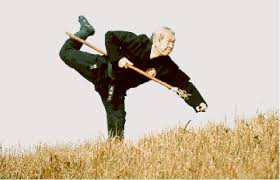
In Part 2 of this series on fitness for Bujinkan practioners, we’ll look at some examples of GPP type exercises and how to incorporate them into an overall training program.

  • Looking to increase your level of readiness for martial arts training and fitness?


Want to train more, at a higher level, for a longer period of time?


Want to get more out of your training time both at home and in the dojo?


Want to build new skills and enhance your technical arsenal?

My brand new program, The Power Protocol, will show you how!
Warrior Fitness Recommended Equipment

A question I often receive through email (which, by the way is great, please keep them coming!) is whether or not Warrior Fitness is strictly a bodyweight training system.  In short, no it’s not, but let me expand on that.  Bodyweight training is an outstanding way to exercise.  It requires absolutely no equipment, no gym membership, a small amount of space, and can be done virtually anywhere.  It works equally well for the business traveler, the stay at home parent, or the vacationer.  In my opinion bodyweight training should be the foundation of your fitness program, especially if you are just starting out.  My rationale behind this is a simple one: if you cannot master your own bodyweight first, you really have no business adding weight.  Now, obviously there are exceptions to this rule.  For example, if you are being treated by a Physical Therapist and they recommend a weighted exercise to help your condition, then you must follow their advice.  Additionally, I said it should be the foundation of your program, but that doesn’t mean equipment cannot be added for variety, to increase the combined exercises effectiveness, or to shore up a particular strength or mobility deficit. 

With that out of the way, here is a short list of the equipment I do use for myself and with my clients and highly recommend.

The Equipment List


1.  Sandbags – Cheap and easy to make yourself.  Great for taking strength and conditioning outside the box.  Want to make one?  Get an army duffle bag, two 50 lb bags of sand from your local Home Dept, a box of gallon freezer bags, and some duct tape.  Fill the freezer bags with sand.  Double bag them, then duct tape them to make sure they are secure.  Place the duct-taped, sand filled freezer bags inside the duffel bag (make heavier or lighter depending on your preference), zip up the bag, secure it, and you’re good to go!

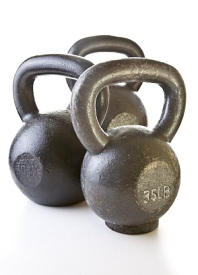
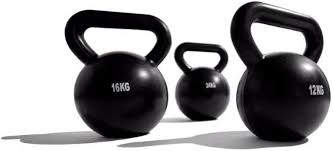
2.  Kettlebells – I got my first kettlebell from Dragondoor back in 2002 when they were the only supplier outside of Russia.  Nowadays kettlebells have gone mainstream and can be found at your local Walmart (along with pretty much anything and everything else!).

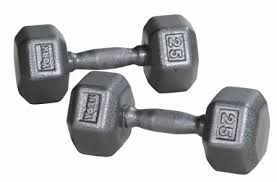
3.  Dumbbells – The cheaper kettlebell alternative, just not as cool looking.

4. Clubbells – These are excellent for targeting angular and rotational strength, as well as sport or activity-specific performance enhancement.  They are currently only available through RMAX.

5.  Resistance Bands – Can be obtained from Elite Fitness Systems here

6.  Pull-up Bar – I made my own in the basement from a couple pieces of wood, some rope, and a metal bar, but there are also portable pull-up bars you can buy for under $40.  Here’s an example: EZ Chin Up Bar – Portable, Powerful, Personal and Effective Exercise Machine.  The other option is to train outside and use a sturdy tree branch.  This is an excellent alternative when the weather turns warmer!
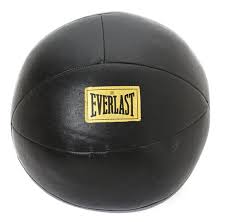
7. Medicine Balls – Can be found at Sports Authority,  or most other sporting good stores, for about $30.

8.  Sledge Hammer and Tire–  Hitting a tire with a sledge hammer is not only an incredible conditioning exercise, it’s also really fun and great stress relief!  Make sure you do this outside though!  Pick up a sledge hammer from your local Home Depot or Lowes.  I got mine for about $25.  Tires are usually free.  Stop by any Tire and Auto shop and ask them for a used tire.  Since they are disposing of them anyway, they are more than happy to allow you to take one.   

As you can see, each piece of equipment is portable, able to cover a wide array of exercises and levels of ability, and, with the exception of clubbells and kettlebells, are all inexpensive to make or buy.  Which one is best?  All of them and none of them, depending on the specific goals you set for your health and fitness.  They are all tools in the Warrior’s arsenal to be used as needed.  Stay tuned for more information as to how the Warrior Fitness Training System utilizes all of the above fitness equipment!

How Dense are You?

In today’s hectic world it seems we are all continually struggling to fit more and more into less and less time.  Whether it’s squeezing more work into a 9 to 5 day, cramming more activities into a 2-day weekend, or condensing a week’s worth of email posts into a digestible digest version, it seems we are all trying to become more dense.  In that spirit, I’d like to offer the option of Density Training.  This is by no means the only way to train, nor is it recommended to use it as your sole form of conditioning, but when you are short on time and are looking for ways to do more with less, Density Training is definitely a viable option.

Density Training Concept

The concept of Density Training is pretty simple.  Do more work in the same amount of time or do the same amount of work in less time.  So, for example if you were using  push-ups as the exercise and the last time you used this protocol you managed to do 100 push-ups in 10 minutes, then this session you would either try to increase the number of push-ups you can do in 10 minutes or strive to do 100 push-ups in under 10 minutes.  Not rocket science, right?  What if this is your first time attempting this type of training?  Pick your exercise, let’s stick with push-ups for continuity’s sake, and pick an amount of time, say 10 minutes.  Then try to do as many push-ups as you possibly can in that 10 minutes.  Crank them out.  Push yourself (pun intended).  Remember the time limit used and amount of reps achieved, or preferably write it down, and the next time do more.  Simple as that.

More Options

Density Training can be used with almost any exercise.  Here are some additional examples:

  • Sprints – pick a relatively short distance, maybe 30 to 50 yards, and see how many sprints you can complete in 10 minutes
  • Rope Skipping – not my thing really, but hey, who’s discriminating?
  • Heavy Bag punching, kicking, elbowing, kneeing, or any combination – how many strikes can you throw in 10 minutes (Yes I know I keep using 10 minutes, but you don’t have to.  Find something that works for you.)
  • Any Bodyweight exercise – Burpees are great for this!
  • Make it martial arts specific and see how many sword cuts you can do in 10 minutes.  Just remember to keep the technique level high or you’re wasting your time!!

Remember, this is not the only option out there for those short on time, but it is a good one.  Give it a try and let me know how it works out for you.  Try it with different exercises.  Experiment.  Have fun!

8 Ways to Fit in Your Fitness

It’s often been said that if you want something done you should give it to a busy person.  While this may be true of some busy people, namely the ones who are highly motivated, highly productive, and highly efficient, what about all the other busy people?

What about those who are busy through poor time management skills, or maybe those who are simply overwhelmed?  How about them?  Does the task they are given merely get thrown on top of a growing pile of “To-Do’s”, or even worse, shuffled to the bottom?  What if the task they are given, or give themselves, is directly related to increasing their quality of life and most likely longevity as well?  What if that task will help them be more productive at all their other tasks by reducing stress levels, increasing energy, and their overall sense of well being?  What if that task would help them to reduce, remove, or otherwise prevent a host of daily aches, pains, and illnesses that are stoically (or sometimes not so) suffered as things that “just happen” as we grow older?


Here’s a list of 8 ways for these busy people to fit in their fitness and reclaim a healthy lifestyle:

1.  Plan it out.

Scheduling is the key to successful time management.  Look at your weekly calendar and plan to exercise just as you would plan an important client meeting, a lunch with an old friend, or coaching your kid’s Little League team.

2.  Exercise wherever you are.

Joint mobility sessions can be done at your desk – see here.

3.  Take the Stairs.

Work in an office building?  Take the stairs instead of the elevator.  See how fast you can make it to your floor – beat those lazy suckers in the elevator to your floor!

4. Get outside.

Have a lunch break?  Go outside and go for a walk.  10 minutes in the fresh air will do wonders for you.  Eat at your desk while you work and then go for a walk.  Want to make your walk more productive?  Try inhaling for 5 steps, holding you breath on the inhale for 5 steps, exhaling for 5 steps, then holding the breath after the exhale for 5 steps.  When you can comfortably do that for the entire duration of your walk, increase to 6, 8, 10 steps!

5. Get up earlier.

Get up earlier and workout **warning – this one requires effort and commitment!!**

6.  Exercise together.

Spend quality time with your kids.  Exercise together – see Warrior Fitness for Kids.

7.  Brief workouts.

Got a spare 15 minutes?  Bring the intensity and lose the long, boring workouts.  See the Warrior Fitness WOWs for some ideas.

8.  Isometrics.

These require very little time to be effective, need no equipment, and can be done literally anywhere.

Obviously, this list is neither exhaustive nor all inclusive,  but I do hope it has helped you and sparked some ideas to help you fit in your fitness no matter how busy you are.  What ideas do you have?

Warrior Fitness Workout of the Week #3

Let’s change it up a little bit this week and spend some time focusing on our core.  Since all movement originates from the core of the body, it makes good sense to target it specifically and ensure our cores are strong, mobile, and integrated with the rest of our body.  Instead of wasting time doing endless crunches, or spending crazy amounts of money on relatively useless tummy flattening gimmicks (as sold on late night TV), try this functional core workout instead! 

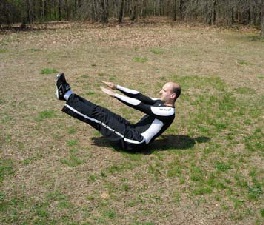
V-up

  • 10 V-ups 

Lie flat on your back with arms stretched out over your head.  Exhale, contract the core and lift arms and legs together.  Inhale as you lay back.  Repeat. 

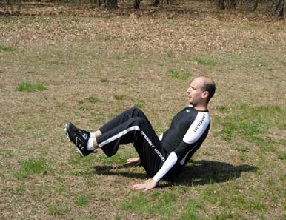
  • 10 Knees to Chest 

Sit with legs extended straight.  Lean back slightly and lift legs, bringing knees to chest.  Exhale as you contract, inhale as you straighten. 

Knees to Chest

  • 10 Crunches with 3 second isometric hold

Yes, sometimes even crunches can be useful.  Just depends on how you do them!  In this case, perform a normal crunch, but as you lift off the ground exhale, contract the core tightly and hold for 3 seconds before descending.

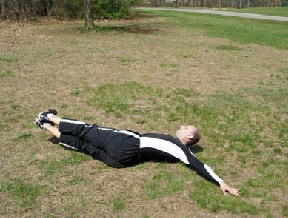
  • 10 Pendulum Leg Lifts (side-to-side) 

Pendulums

 Lie flat on your back with your legs straight up in the air, knees locked.  Exhale and slowly drop your feet to the left side, back to center, then the right side.  This is one rep.  

Instructions

Complete 5 rounds. Rest 90 seconds between each round; no rest between exercises.  

Need a Finisher?

Finishers are used to squeeze just a little bit extra out of the workout.  They are awesome for increasing mental toughness as well!

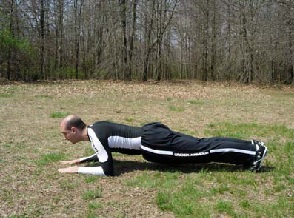
  • Finisher Exercise: Plank hold for time – get in position and hold as long as you can.  See if you can last 5 minutes!

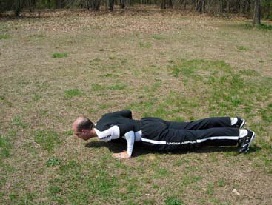
Plank Hold


For more information on the Warrior Fitness Workouts of the Week, please see our User Guide.  And, as always, please let me know if you have any questions or comments.  Reach me here or leave a comment below. 

Want to know more?  Check out Warrior Fitness: Conditioning for Martial Arts!


A Worthy Cause…

Hi Everyone,

My cousin, Karen, is raising money for the Crohn’s and Colitis Foundation by running a 1/2 Marathon in July (yeah, I know, crazy) and I’m asking you to help by making a contribution!  Please use the link in below to donate online quickly & securely.  You will receive email confirmation of your donation and I will be notified as soon as you make your donation. I thank you in advance for your support, and really appreciate your generosity!!

http://www.active.com/donate/boston10newjersey/KarenRunsNapa

This is a great cause and I love the fact that it involves fitness as the mode to raise money for research!  I have already made a donation, please support Karen and the Crohn’s and Colitis Foundation by making yours today!

Top 10 Things to Look for in a Kid’s Martial Arts Class

One of the first things fellow parents tend to ask me after they find out I’ve been involved in the martial arts for over 25 years is, how do I find a good martial arts class for my kids?  Well, after years of answering this question, I realized my answers tend to follow a certain pattern.  They may be expressed in slightly different terms and the order of the points may change each time I’m asked, but the answers remain the same.  So, for all those parents out there who are looking to involve their child(ren) in the martial arts (a highly recommended pursuit, by the way),  I’ve formulated my own “top 10” list:

1.  Is the school a franchise? 

 These typically have cookie-cutter, one size fits all programs and tend to be belt factories.  Steer clear!  There may be franchises out there that do not fall into this category, but I haven’t run into them.

2.  Do the kids in class fear the teacher or respect him? 

This is very telling.  As a kid, I was afraid of my first karate teacher and even though I loved the art and practiced like crazy at home, I’d try to get out of going to class almost every week. 

3.  Are the parents sitting in the waiting room comfortable with the teacher and happy with the class? 

When you visit a school, talk to the parents who have been there awhile.  Do they constantly complain about the teacher, the atmosphere, or even the cost?  Do their kids love the program or simply tolerate it?  Also, what is the vibe you pick up when walking into the school – listen to your gut!

4.  Variety! 

Kids get bored very easily.  And, when they are bored, they don’t learn very well.  Classes should have a wide variety of drills to show children principles and techniques from many different perspectives.  Remember, martial arts are not academic subjects!

5.  Tons of physical exercise. 

Kids have a lot of energy.  Exercises that teach physical skills, as well as give them an outlet for their energy are the best.  Also, in case no one has told you, we have a growing childhood obesity problem in this country.  Exercise, along with a focus on a healthy diet, is key to resolving this issue and giving our kids the tools to ensure a lifetime of health.

6.  Do they teach self-defense applications of kata, or just the forms?

This is essential, not only for the correct transmission of the art, but also for the students to understand how to actually apply the techniques.  Obviously, this must be tempered to make some aspects of practice age appropriate, but it must be taught.

7.  Do they teach rolling and falling techniques?

 Not only are these fun for the kids to practice, but they can, and do, prevent injuries.  Very important both in the dojo and out in real life.  Additionally, they help to develop coordination, agility, and kinesthetic awareness!

8.  Is situational awareness stressed?

This is, without a doubt, the most important aspect of self-defense and must be continuously stressed and communicated.  Bad things do not “just happen” to kids.  There are always pre-incident cues that are present, if one is paying attention.

9.  Do the kids in class appear to be motivated or just going through the motions?

Watch carefully when you visit the class.  Are they lackadaisical in their practice?  Do they look like they don’t want to be there?  Or, are the kids energized and focused throughout the class? 

10.  Leadership. 

A school does not need to have a specific, defined class program on “Leadership” (these are usually a colossal waste of money for parents… hint, hint!).  It should, however, endow the students with leader qualities through the example of the teacher and by getting the kids involved in the class room (dojo) instruction.  This can be done by rotating who leads various drills and allowing children to teach their peers by explaining and demonstrating certain kata, techniques, or exercises.  This is not only good for the child’s self confidence, but also for their overall and long term development.

Training as You Grow Older

 One of the greatest challenges a long term fitness enthusiast faces is the debilitating impact of age.  Certainly everyone understands the concept but what does it actually mean?  The average person has a higher metabolism when they are younger, a faster recovery rate, greater use of energy stores and suppleness around the joints.  So why exactly do we age? Well did you know that for the average person the maximum heart rate is 220 – age?  That means when you are 20 your heart can go up to 200 bpm, whereas at 60 your max is 160bpm.  That’s a big difference.  Essentially like all human tissue the heart is constantly in a state or recreation, cells die and new ones are created.  However as the body gets older this ability to replace old cells with new ones becomes less efficient.  In a sense it is not the body that ages, but the ability to rejuvenate decreases over time.

That is the bad news.  The good news is that a lot can be done to counter-act the effects of ageing via exercise.  This can be divided into circulatory, respiratory, structural and the nerves.

How Does Exercise Help?

As mentioned the heart output decreases with age, generally a very fit endurance athlete has developed a large heart capacity.  That is the volume of blood per pump has increased as a result of training.  If age means that the heart will pump less frequently and become less powerful then what can be done?  Quite simply the best thing to do is make better use of the blood that is being sent around the body.  Exercises that improve blood circulation to the extremities are extremely beneficial at all ages and very useful for combating age.  Joint rotations, light resistance frequent repetition exercises are excellent for this.  Walking is perhaps the best of all.

As many biology students know, a major purpose of blood is to transfer oxygen around the body so focus should also be paid to the respiratory system.  It should also be mentioned that the oxygen in the body is very useful for cell reproduction too.  Breathing exercises not only help with good quality respiration but also assist with the structural stability of primarily the upper body but also the body as a whole.

Structurally speaking the body may be divided into bones, connective tissue and muscles for simplification.  As stated good blood flow and breathing will already provide a boost to these systems.  Perhaps we must accept that due to age repetitive actions will not be maintained to the same count as was possible in youth.  But what about strength?  Scientists have been studying muscle strength and age for at least the last 15 years and concluded that muscles can grow and remain strong at any age.  This means resistance exercises such as moderate and heavy weights will be very useful for maintaining structural strength.  Also bone mass is related to muscle mass directly, so strengthening muscles reduces the risk of damage to bones and increases calcium absorption.  Studies have shown that laboring women in areas with limited calcium in the diet have less cases of Osteoporosis than sedentary women with high calcium diets. In other words resistance exercise not only maintains more youthful strong muscles but also increase the utilization of chemicals like calcium in bone tissue.  Joining the muscles and the bones are connective tissues which get stiffer and less elastic if under utilized.  Lack of flexibility results in lack of mobility, this in turn impacts the benefits of exercise and increases the risk of injury.  Flexibility training such as Yoga or Makko-ho is very useful for combating decreased flexibility and also rejuvenating connective tissue.

Stretching and structural organization is beneficial not only for maintaining mobility but also because it opens up an often forgotten part of the body called the nervous system.  It is not possible to strengthen nerves directly and again age will deteriorate nerve function.  But, by using muscles and working on flexibility the nerves can be stimulated to be more effective in function.  This is important for not just general co-ordination but also the non-voluntary nervous system which is responsible for among many things, yes, the heart.

Taking the Holistic Approach

We have come full circle and this is an important point.  When we are younger we can focus on weights, or marathons and any kind of activity we like.  This is because our general health is fine and we simply pursue excellence in whatever activity we choose.  As we get older however the general health starts to decline if not maintained.  That is why aging persons should take a holistic approach to training to ensure all the important body systems are being stimulated.  The circulation, the breath, the structure and the nerves must all be improved upon.  It is very tempting to wait until the effects of age are experienced before reacting to change.  Of course it is fine to start exercising and focusing on health at any time.  However the best solution to aging is to prepare early on for the kind of body you will need as you do age.  Combine light exercises and breathing with heavy exercises and stretching now and save making major adjustments tomorrow.

About the Author

Tony Notarianni has been training in martial arts since the age of 12.  Up to this point, although quite active, he had very little interest in sports and fitness but that all changed over the coming years.  He started studying Sport as a subject at school and finally graduated with a Bachelors Degree in Sport and Exercise Science in 1998.  Although not a typical sportsman and not a great fan of any one sport, Tony was always keen to try new activities and considers the world to be literally full of physical experiences to explore.  Before graduation he was working at a sports complex where he was a lifeguard and could join and observe many different forms of exercise.  He also taught circuit classes and was a qualified personal fitness instructor.  After graduation he chased the dollar and ended up working in Software Development.  Although becoming more sedentary he still has a deep rooted interest in improving himself physically and developing his knowledge.

Do You Know the Enemy?

Do you know the enemy?

I do.  It inhibits peak performance.  It makes you lazy and keeps you unmotivated.  It cajoles you into seeking comfort.

It distracts you from your goals and dulls your mind. The enemy sells you on an “easy” lifestyle and lulls you into a false sense of security.

It conspires to sabotage every move toward a healthier diet or consistent workout program.  It will aim to destroy any action or activity that moves you towards bettering yourself, be it education, a new job venture, a move towards a more spiritual life, or writing the great American novel.

Ultimately, it weakens your spirit.

What is The Enemy?

The enemy comes in many forms and assumes many guises.  It may tell you that it’s alright to sit down on the sofa and watch Lifetime Television with your wife after dinner; you can get to that workout later.  It may convince you that just one brownie bite is okay, after all, they’re just “bites”.  You may feel tired from a busy day at the office, and rightly so – the enemy will whisper in your ear that you can begin your fitness regimen tomorrow and that will be good enough.  What exactly is this enemy who kills our motivation and procrastinates our calling (sometimes indefinitely)?  Steven Pressfield identifies the enemy as “Resistance” in his excellent book, The War of Art.

“Resistance will tell you anything to keep you from doing your work.  It will perjure, fabricate, falsify; seduce, bully, cajole… If you take Resistance at its word, you deserve everything you get.  Resistance is always lying and always full of shit.”

Sometimes the most insidious form the enemy can take is the form of knowledge.  We fall into the trap of, I know what I need to do, I just need to do it.  Knowledge comforts us.  It allows us to rationalize that since we are in possession of it, we can carry out the action at any time.  We don’t need to do it now.  Tomorrow is fine.  Next week is OK to start.  So, why worry?  One of my favorite quotes (just ask my daughter, she’s heard it often enough!) on this subject is:

“Knowing is not enough; we must apply. Willing is not enough; we must do.”
-Johann Wolfgang von Goethe

How Do I Defeat The Enemy?

In his book, Awakening Spirits, famed wilderness survival guru, Tom Brown Jr., gives the enemy a different name, calling it the “Demon of Distraction”.  No matter what you call it, if you call it anything at all, it’s the very same impersonal, unrelenting force pushing us away from our calling, deferring our goals to a “better time”, or for when “conditions are just right”.

Here’s a hint – conditions are never perfect.

There is no better time than right now.

How do you defeat this omnipresent enemy?  By doing your work.  By starting right now.  Don’t delay.  Don’t defer.  Begin.  Do the work(out).  Trade  the 3 o’clock junk food snack for an apple.  Skip McDonald’s on the way home from work and prepare a healthy meal.  Don’t allow yourself the luxury of excuses.  Be firm.  Be strong.  Get it done.  Be resolute and committed to your health and fitness goals.


Get the First 2 Weeks of Training from My NEW WarFit Program for FREE!

This Program is Designed To Build Whole Body Strength, Power, & Insane Endurance!!