Form Begets Function

A new guest blog post by my friend, Jarell Lindsey owner of  Lean Functional Muscle.

Form Begets Function

I was scanning the posts of a fitness forum the other day, and I came across something that confused me a bit.

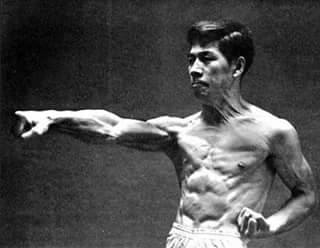
The post was regarding the physique of one Sig Klein, you may have heard of him, and how a modern bodyweight trainer could achieve a physique comparable to such a strength legend.
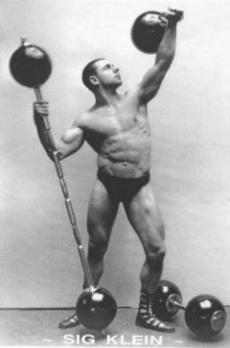
sig-klein

What could have been a great platform to discuss the merits of old school training methods became a complete misunderstanding of their use. For instance, the poster spoke on how lever work and static training lacked appropriate intensity for muscular growth, despite the incredible physiques that gymnasts possess above most other disciplines of fitness.

He furthermore went to say how he had trained with gymnasts before, and noted that they rarely trained to exhaustion, and more for technique than for musculature; therefore, he wanted a method that would help him develop the musculature, regardless of technique.

Funny that.

For, you see, one of my first lessons in biology was that, even on a molecular level, function begets form. The function of an organelle determines the way that it is structured.

Why wouldn’t it be the same on a macroscopic level? Gymnasts, traceurs, rock climbers, and martial artists all train for function over form, and they offer some of the best physiques the training world has to offer.

If you truly want a physique like Sig Klein with the strength to boot, training for function is key.

Furthermaxick2more, the poster said that the gymnasts never trained to exhaustion. From the training journals of Maxick, one of the strongest oldtime strongmen there ever were, you train daily so as not to train to exhaustion.
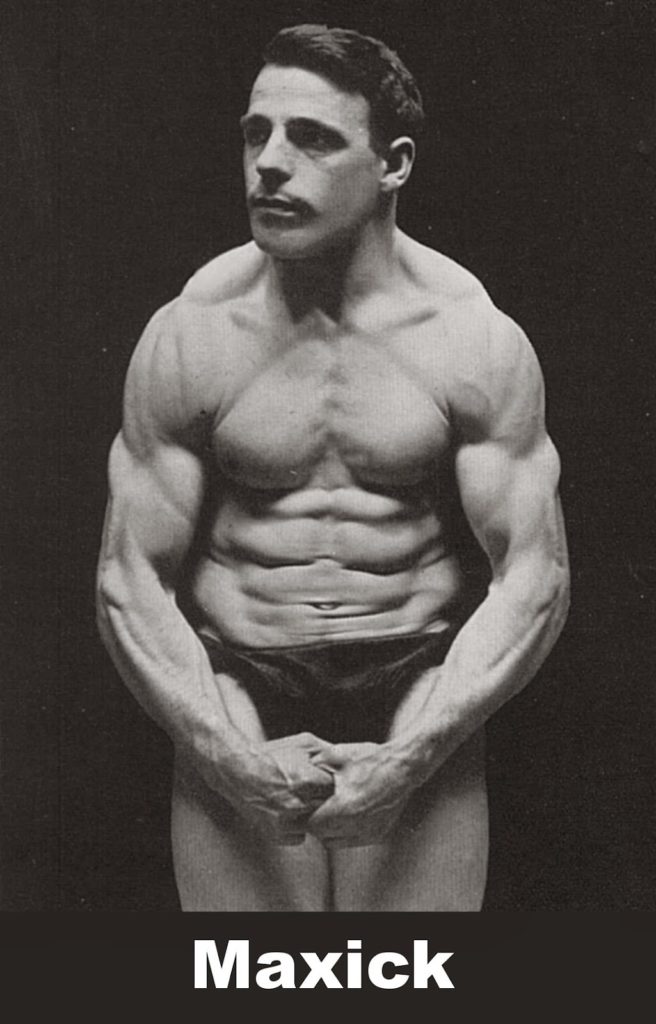
 

Your body doesn’t get stronger from training; it gets stronger from nourishment from your breath, your food, your blood and organs, etc. Many oldtime strongmen, including Sig Klein, rarely ever trained to failure. Nevertheless, they’d train their whole bodies everyday in a way that nourished their strength without fatiguing it.

Function begets form, my dear Watson.

Observe how well you function, not as a crane, tiger, or bear style, but as the functional patterns of a human, and watch your strength and physique truly begin to soar.
Martial Arts Training for Stability

Part 2 – Guest blog post by my friend, Jarell Lindsey from Lean Functional Muscle.  Part 1 is HERE.

Martial Arts Training for Stability

A mountain, snowcapped, reaching for the heavens but rooted down to Earth all the same. That is the image I visualize as the pinnacle of martial arts stability. This level of stability is something that marks mastery of the power in your craft. To be a martial artist, stability training is critical; to be a warrior, stability training is indispensable. Stability means being in a position of firmness; being able to combine that stability with mobility requires as much recovery as it does intensity.

Jarell Pic2

Intensity will be the most important factor in overall stability. Stability means “the strength to stand or endure”. You must have strength and endurance to have true stability, and the best way to obtain both is through intensity, like an ore refined under extreme heat. When it comes to endurance, mental and physical endurance are key. The greatest benefits of long distance running are in the mental benefits in endurance you’ll get from driving your body to the brink of its functionality. Nevertheless, I feel like interval cardio training is more advantageous for consistent cardio training as a martial artist.

Interval Training for Martial Arts

Interval cardio training allows you to train your spurts of intensity while increasing your recovery times overall. In a fight, there are often periods of ferocious exchanges followed by lulls to observe the opponent or recover; by training those intervals, you can get your heartbeat back near resting in a much quicker time than were you to solely train long distance. For instance, set your week up so that you perform 20-30 second sprints (it’ll be better to practice sprinting for time instead of sprinting for distance) throughout the week in sets, then perform a longer distance run toward the end of the week to test overall physical and mental endurance.

Remember that training your breathing is just as, if not more important for training your physical and mental endurance as cardio, so adopt a powerful breathing component into your training to help your stability and health.

You Must Train for Strength

Alas, strength seems to be a given to have when it comes to martial arts. People can say that a martial artist does not need strength, just technique, and they’d be enabling the weakness of people in the pursuit of a war art by doing so. Strength training is critical to being a martial artist; karatekas and the Shaolin have had their own weight training implements for centuries, so whoever promoted the idea that martial artists should not weight train was jaded. However, traditional martial arts have just as many methods to build strength using your bodyweight, so a lack of weight shouldn’t be an excuse.

Jarell Pic1


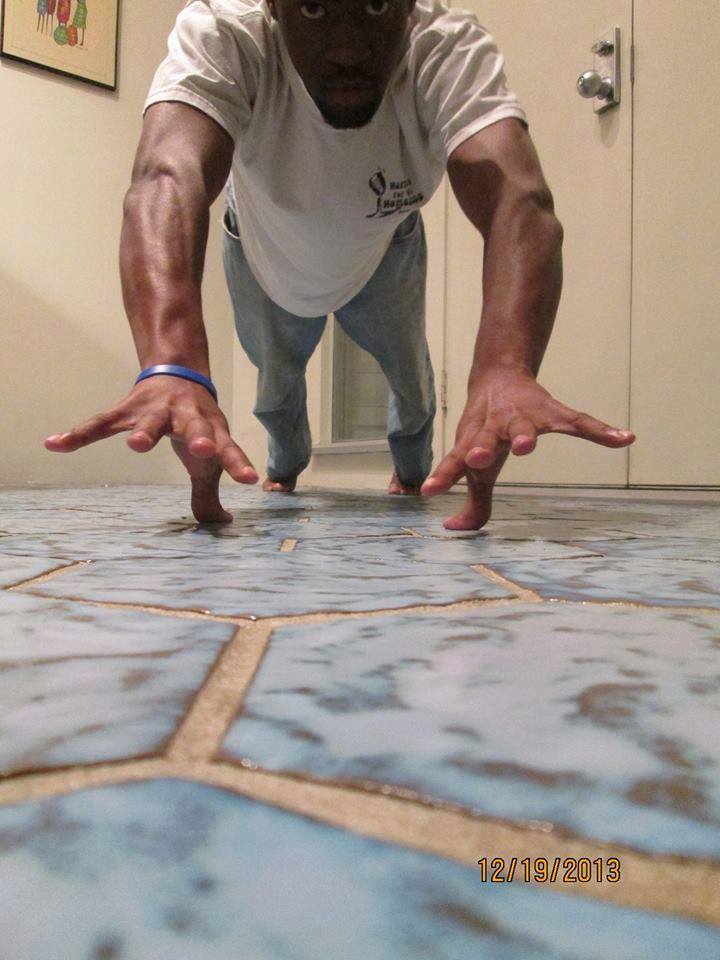
There are hordes of thoughts about the best method of strength training; what I will say is that your regimen should include something that builds your body from the inside out. For me, isometric exercises build strength from the tendons, ligaments, and nerves out to the muscles. I do training that isolates individual muscles for maximal muscle fatigue, and training that involves large muscle groups for fatigue of the central nervous system. As long as your training does not neglect internal principles of strength (like bodybuilding training that focuses solely on muscle without long-term development of the tendons), it can be a part of what gives you stability. Overall, intensity is key, so finding ways to progressively increase your intensity will progressively increase your stability. Coupled with mobility training that can prevent your powerful tendons from being overly rigid, your martial arts can reach an advanced level comparable to the legends of old.

Jarell Pic3

Martial Arts Training for Mobility

A guest blog post by my friend, Jarell Lindsey from Lean Functional Muscle.

Martial Arts Training for Mobility

The martial arts are diluted today. There are maxims and philosophies of how to dictate one’s life, and emphasis on the aspect of skill over strength, and not needing to be stronger than your opponent to claim victory. After all, there’s always someone stronger than you, right?

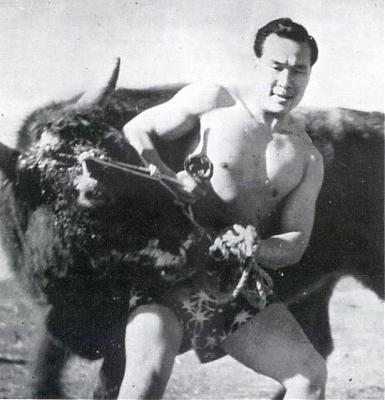
This is the most enabling psychology in the martial arts world today. The simple fact that someone out in the world is stronger than you is enough to fully discourage you from pursuing strength? Martial arts training is about more than that; traditional martial artists of yore weren’t only the most skillful at their arts; they were some of the most physically fit people you could ever encounter. If you look at the physiques of Sosai Oyama, Kanazawa Sensei, so on and so forth, these men had bodies made to fight. After all, TMA’s were designed to prepare fighters for war, not philosophy class.Jarell Post

How, then, does one begin such a pursuit for the physical fitness of the traditional martial arts warrior? Well there are two aspects that are fundamental to the physiology of every human: mobility and stability. Simple enough, let’s look at mobility here.

How Well Can You Move?

How well around can you move? No really, how efficiently can your body move as a unit? Perhaps you have a heavy squat, but can your butt reach the ground without the weight? In fact, most people have two vertebrae in their thoracic spines that all but fuse together, simply because we never make use of that full spinal mobility. If you want full physical preparation for any situation, ability to move your body in any given position should be a priority.

And the way to train mobility is not through intensity. I almost repeated that sentence for its importance; plyometric style programs may develop your explosive power, but is not the key to true mobility. In fact, I was taught that if you want to truly develop speed and control in a movement, practice it slowly. The difference is made with the tendons.

Intensity will be important for muscle training and stability, which I will cover in the next article, but variation and repetition has a precedence in mobility training. Tendons need high reps and consistency for proper development; the explosive movements, while helping the nerves in your muscle fire quicker, threaten the structural integrity of your tendons and ligaments. When practicing mobility slowly, the movements become ingrained into your body, and your connective tissues can develop alongside your nerves and muscles. Practicing those movements consistently over years is how gungfu is developed.

mas_oyama_bull


But for full mobility, variation is needed. Practice the basic, necessary movements daily over time, but when you can, add a variation to the movement you perform. Perhaps practice your squat with a posterior pelvic tilt to open the hips more. Maybe practice bringing your scapula further forward when you punch. Add different variations to your movements, but the variations must have a goal and build upon the basics, not deviate from them.