The Effective to Efficient Continuum of Training

What’s the difference between being effective in your training and becoming efficient?

When you first started to drive a car, you sucked at it, right? You couldn’t turn on the radio and the turn signal at the same time, and I’ll bet when you tried to wave at someone outside on the sidewalk, you turned the wheel in the same direction too. 

In short, you were a disaster.

Gradually, with practice, you got better and better at driving until you became effective. Meaning you could get yourself from point A to point B without crashing or otherwise screwing up.

Now, after years of driving you can effortlessly change lanes, check your mirrors, adjust the air conditioning, change the radio station, and carry on a conversation without even thinking about it. You slowly but surely moved from merely an effective driver (accomplishing the act of driving) to an efficient driver (accomplishing the act of driving with minimum effort AND maximum effectiveness).

Your martial arts training and your strength training are the same.

You cannot hope to progress beyond a basic level if you are just effective at your techniques or exercises. You must move across the continuum from effective to efficient. From mundane to master.

 How can we define efficiency?

Here’s the easiest definition – Efficiency = Useful Work / Total Work

 Look at any martial arts master at the top of his game. He is supremely effective (otherwise he wouldn’t be a master) BUT he’s also extremely efficient in his movement and energy expenditure. The master moves with grace under pressure, with strength and power refined and focused, and an effortlessness that defies belief. His mind and body perfectly integrated, he can do this all day. 

How do you progressively move from effective to efficient? 

Yes, it’s a matter of time and practice of course. But what else?

Throughout the ages, master martial artists have developed specific regimens of solo (and paired) training exercises to hack into the nervous systems software and update the code to bypass years of trial and error. This way they have laid out a clear path of progression for the savvy practitioner to follow step-by-step from effectiveness to efficiency to mastery.


Specific Training + Frequent Practice = Massive Results


What are the specific practices required?

That, my friends, is the subject of the next article… 🙂
 

The Process of Becoming Masterful

“Remember that mastery is not attained once after a lifetime of practice, but earned every day.”

– Jon Haas

Usually when we think of someone who is a master, be it a master martial artist or the master of some other craft, we think of them as attaining mastery at the end of a long lifetime of practice.
But mastery is NOT something that’s attained once after years or decades of training – mastery is something that is EARNED every day!!
You can be masterful in one moment and then a fumbling fool in the next (ask me how I know!).
The goal of becoming masterful isn’t to wait until some distant future when every move you make is perfect and every word that comes out of your mouth is sage advice, it’s to consciously create those moments of mastery every day until you have more of them rather than less of them.

Daily practice is the key.

Do you ever think about what it would be like to be a master martial artist?

Not just to be awarded the title “master” but to really and truly embody all of the sublime skill of martial mastery at the highest level of human achievement…

What would it feel like to know, without a shadow of a doubt, that you could easily control and subdue the most violent opponent with the most minimal effort, like a lion playing with a cub?
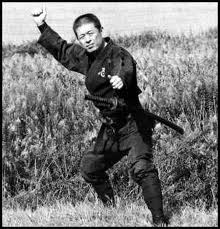
What if I told you that mastery is NOT something automatically attained after a lifetime of practice, but is instead conferred only upon those rare few individuals who, through their own efforts, take consistent, specific daily actions to achieve it?

Then mastery would not be just a far away, imagined future state, but instead a real and attainable goal built by taking action every day, right here and right now.


Remember This

Remember this – it is critical to your success – EVERY single legendary martial master: Musashi, Ueshiba, Bruce Lee, Kano, Takeda, Takamatsu, Gracie, Hatsumi, etc…

ALL of them began as unskilled, know nothing novices, white belts without a clue.

Their consistent daily training formed them, forged them, into the revered and feared masters that we know today.

“What one man can do, another can do.”

You can choose to follow in their footsteps. You can choose to be masterful, to be legendary.

However, as you follow them, do NOT seek to become them – instead, seek what they sought, the process of mastery.

Find the process of daily mastery <<==

Finally… There is a Researched, Tested, and PROVEN Method for Developing Internal Power and Unusual Strength from Martial Arts…

Gyokko Ryu’s Internal Power Training

There is no doubt in my mind that Hatsumi Sensei possesses unusual power in his budo.  Anyone who has trained with him can tell you that!  But what is it and where does it come from?  More importantly, how can YOU develop it as well?

Soke’s martial movement displays many of the characteristics associated with Internal Power training: ghostly movement, immovability (static and dynamic), shockingly powerful strikes with little windup, adhesion caused by movement, kuzushi on contact, and others. Continue reading

What Does a Ninja Need?

Historically, ninja were the consummate combination of super spy / super soldier.  They possessed outstanding levels of fitness due to their intensely physical training and highly demanding mission requirements.

Their levels of fitness and training have been the subject of many stories and the genesis for many myths surrounding them.

How did they do it?

How did they train?

What type of methodology did they employ since creating this kind of warrior certainly required a very diverse fitness profile?

Ninja fitness needs were much more multi-faceted than most physical pursuits.  They had to be as they were at once a combination of Olympic decathlete, Navy Seal, and martial arts master rolled into one.  Let’s examine this a little more closely though, what kind of qualities did they possess and what did they need to be able to do?

Ninja Must Possess …

  • Strength
  • Agility
  • Coordination
  • Excellent balance
  • Flexibility / Mobility
  • Whole body power
  • Endurance

Ninja Must Be Able to….

  • Move silently
  • Run fast
  • Walk far
  • Leap high
  • Climb trees, walls, castles fortifications, etc.
  • Wield weapons
  • Fight unarmed – striking, kicking, grappling, locking, choking, etc.
  • Roll / fall / dodge / avoid
  • Crawl
  • And more…

As you can see from the 2 lists above, the ninja had a wide range of skills and abilities that had to be supported by a comprehensive fitness program keeping him at the top of his game.

Remember that for a ninja, fitness wasn’t just a nice to have; it was an absolute necessity to accomplishing his mission and getting him home safely.  And the kicker is, they did it all with little to no fitness equipment.

Certainly a 16th century ninja did not possess a Gold’s Gym membership.  Nor did he own an Olympic weight set or have a stair master at his disposal.  And, while kettlebells and dumbbells would have been great, he most likely had never laid eyes on either one.

So here we have one of the most highly trained and fit agents the world has ever seen created without the use of modern training equipment or modern training methods.

What might some of this training looked like?

I’m glad you asked.  One of my favorite scenes in Hatsumi Sensei’s early Bujinkan training videos (DVDs now for you younger folks!) comes from Shinden Fudo Ryu.  Here’s a short clip I found on Youtube.  This stuff is seriously old school!

“One trains using the things of nature to make the body strong” – Hatsumi Sensei

What if we were to take the spirit of historical ninja fitness training and combine it with a little modern sports science and know how?

Modern methods allow us to take advantage of periodization, or programing and organizing training, to create a comprehensive fitness plan which will apply logical sequences to get the most out of each session.  Protocols like HIIT, high intensity interval training, will be utilized to maximize both aerobic and anaerobic endurance in the same short, high intensity session.

Advances in recovery work from such sessions will allow us to recover faster thus making gains greater, and increasing our overall general physical preparation (GPP) will allow us to push higher into more sophisticated training.  Effectiveness and efficiency will be combined in order to allow for shorter training sessions which maximize the use of one’s time.

As the ancient ninja did, we will create a strong, supple, highly conditioned warrior and accomplish this with little to no fitness equipment.  We will, as Hatsumi Sensei says in the video clip above, use the things of nature to make the body strong.

If I were able to point to just one resource for the warrior that combines old school training with modern sports science, I’d look here… Ninja Missions <<==


The Warrior’s Key to Greatness – The Way Lies in Training!

Throughout history a few exceptional martial artists have stood out from the rest of the budo landscape.

Millions of people from every country and culture on the planet have trained in innumerable styles and arts across the centuries, yet we only know a small number of them by name.

These men distinguished themselves and rose to the very uppermost levels of physical, mental, and spiritual skill in their respective arts and in some cases even took their talent to such heights as to create an entirely new martial art.

Looking back at them today, we are awed and inspired by the levels they achieved through their single minded determination in reaching a goal, dogged pursuit of excellence in their craft, and amazing amount of self-sacrifice.

Why are They Different?

What made these men different?

What pushed them to greatness?

What did they do differently or more productively that propelled them to prominence?

Why were their names and storied passed down through the years, sometimes centuries?

What one factor do all great martial artists have in common regardless of style, country, or culture?

And, more importantly, how can we learn from them and apply it to our own training?  Remember, we stand on the shoulders of giants, not to imitate them, but to be able to look farther.

 Quotes from the Greats

Instead of listening to my opinion today, why don’t we go directly to the sources themselves?  Here are some cool quotes I’ve complied by some of the greats talking about their own training.

Morihei Ueshiba – Aikido 

“The instructor can only impart a small portion of the teaching; only through ceaseless training can you obtain the necessary experience allowing you to bring these mysteries alive.  Hence, do not chase after many techniques; one by one, make each technique your own.”

“Always imagine yourself on the battlefield under the fiercest attack; never forget this crucial element of training.”

“This old man must still train and train” – said shortly before his death.

Gozo Shioda – Aikido 

“Kokyu power is produced when we push ourselves to the limit, making the most efficient use of the capabilities that lie within our own bodies.”

“Even though the body has its limits, until your death, the strength of your spirit is limitless.  This is precisely why, in the martial arts, there is no such thing as deteriorating as you age.”

Yukiyoshi Sagawa – Daito Ryu 

“Intermittent training, no matter how intensive, is utterly useless.  You must practice every day for your entire life.  That, and only that, is true training, or shugyo.”

“People who think they can ignore training their bodies and only work on techniques are amateurs.  They don’t know anything.  Actually, if you can’t prepare your body properly, you have no hope of ever perfecting your technique.”

“No matter what level of mastery you attain, you will never achieve perfection.  You should therefore never, ever assume that what you have achieved is good enough.”

“If people knew what my training regimen was like, they would be astonished.”

Masaaki Hatsumi – Bujinkan Budo Taijutsu 

“Modern budo students often forget to practice by themselves.  I used to practice by myself.  When there was no teacher, I found the secret teachings by my own desire.”

“Studying for oneself and making one’s own discoveries is much more important than group learning, and this applies equally well to martial arts.  As I often say, ‘Life is all about solitary training.’  This is because I want serious practitioners to discover the tricks of the trade for themselves.”

Miyamoto Musashi – Niten Ichi Ryu 

“From the time I was young I have set my mind on the Way of Martial Arts, practiced the one subject of swordsmanship with my entire being, and experienced various and different understandings.”

“See to it that you temper yourself with one thousand days of practice, and refine yourself with ten thousand days of training.”

“Never depart from the way of martial arts.”

Yamaoka Tesshu – Muto Ryu 

“Study hard and all things can be accomplished; give up and you will amount to nothing.”

“If you want to obtain the secrets of such wonderful techniques, drill yourself, harden yourself, undergo severe training, abandon body and mind; follow this course for years and you will naturally reach the profoundest levels.”

Inspired yet? 

Ready to train and push yourself to the next level? 

Check out the new solo training sensation – The Integrated Strength Program – and get started today!

integratedstrength3D1