This Mistake will Tank Your Fitness Training

We all know people who think they can continue to grow and continue to make gains indefinitely by simply pushing harder and harder in their training day in and day out.


But what always happens to them?


Injury, burn out, sickness, stagnation.


Then what?


Well, once they get back on their feet they start the same cycle all over again.

Why?

Because maybe, just maybe they weren’t pushing hard enough or using enough brute force last time to succeed and this time will be different.


Riiigghhht… How about this instead?


Train Smarter AND Harder.


Bring the intensity every workout, yes.  Push the limits, hell yes.  Keep moving forward, always.  But not always in a straight line.


What do I mean?


Training smarter involves the usage of planned back-off workouts and deload weeks which, in effect, allow the body to take a step back in order to spring forward again with greater energy and intensity.


Additionally, it is of paramount importance to have a properly structured strategy in place for recovery and restoration.


Continued progression and development demands it.  Without a recovery strategy, the gains in fitness slow, plateaus are hit and NOT overcome, injuries occur, and as we said earlier, progress sputters to a screeching halt.


Learn how to train smarter AND harder here <<==


The WarFit Combat Conditioning program is on sale for just $4. Nope that’s not a typo.
Get all the details HERE.

Random Training = Random Results

One of the biggest problems rampant among many types of fitness programs is that random training yields random results.

It is difficult to measure progress when the parameters are constantly shifting.

In order for the body to produce an adaptation for improved performance in life, sport, or martial art, we must apply specific stimulus as per the SAID Principle (Specific Adaptation to Imposed Demand).

This basically means that the body adapts with a specific type of fitness to any demand which is imposed on it.

When the same exercise is performed for too long, the body adapts to the stresses of each set and the adaptations or returns get smaller and smaller.

Once it has adapted to the stress, then it’s time to change or increase the stress or else we fall into that trap of diminishing returns.

Usually though it takes the body a period of 4-to-6 weeks to adapt and then it is advisable to begin changing exercises.

This does not mean that we need to completely throw away everything we have been doing; far from it. An exercise or drill can be changed by increasing intensity, increasing volume, decreasing rest periods, or increasing complexity or sophistication.

Warrior Fitness Training Principle # 9:

Specific Training + Frequent Practice = RESULTS

Instead of training randomly and getting less than ideal (random) results, a properly organized training program with incremental progression of increasing complexity and sophistication will actually prepare the body much better than a set of random skills strewn together with a nebulous outcome in mind.

How do you properly organize a training program for internal strength? <<==

What is Fitness?

Fitness is probably one of the most controversial topics bandied about in social media, magazine articles, and by know-it-alls across the planet.  Just about every type of training under the broad heading of fitness has its own staunch supporters and sycophants, as well as its haters and rabid detractors.

Nothing really has a place of neutrality inside the world of fitness.  Here’s a quick idea what I mean:

Crossfit – Either drink the kool aid and become of them, or hate it with a passion

Running – Either sprint or don’t do it

Mobility – Either the tonic of youth and health or just another time wasting fad

Power Lifting – Either those guys are super strong, or just super fat

Zumba – well, let’s just not even call it fitness…

The list of training modalities and their relevant pros and cons goes on and on.  Chances are, if you are serious about your own brand of fitness, you have a love/hate list yourself.

But, are any of the above truly right or wrong?  Well, maybe the one about Zumba… 🙂
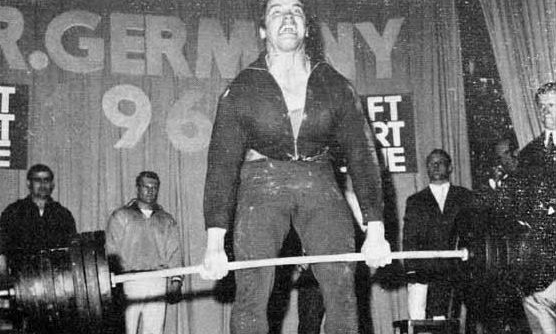
Seriously though.  How do we define fitness?  What the heck is it, really?

Here is my definition:  Fitness is having the requisite physical ability (strength, coordination, endurance, energy, power, balance, agility, etc.) to accomplish all your daily tasks, whether work or personal, and to be able to participate fully in any activity, sport, or recreation of your choice.

In other words, fitness is specific to what you as an individual are trying to accomplish daily and to the goals you are working towards.

The real question then is not, are you fit?  The real question is – what are you fit for?  Because the answer determines everything.

So, if all you do is sit on the couch and watch TV all day long and your body has adapted to that state by becoming soft, round, and couch shaped, than you are perfectly FIT for your activity!  Now this may fly in the face of your personal idea of fitness, but if you consider that fitness  is adapting to, and being able to adequately perform the activity of your choice, then you must accept both the marathon runner and the coach potato as being equally fit for their tasks.

By the way, can you be entirely fit and completely UN-healthy?  Yup.  Definitely.  So how do we hone our definition of fitness so that it includes not only looking good, but feeling good as well?

Simple.  Understand that the most important task which you must be fit for is that of being the strongest, healthiest, most productive individual you can be.  This not only insures that you live longer and better for yourself, but for your family and your contribution to society as well.  If this becomes your goal, how then will you change your current routine to make sure your training meets and achieves this objective?

Something to think about.  And, perhaps the topic of another article…

Protect. Break. Leave Behind.

How can we train for the friction and chaos of battle when following a set fitness routine?

Physical preparation for combat readiness must be, by its very nature, a multifaceted approach.  If the combatants have to be ready for anything, shouldn’t their fitness regimen reflect that?  Surely the idea of training random workouts each and every day must help better prepare the person to face any challenge, right?

Well, yes and no.

As with all things, fitness is a skill.  The body must be adequately prepared at a baseline level through rigorous training AND practice to establish a solid foundation of GPP.   To suddenly subject a trainee to an onslaught of arbitrarily selected workouts is only a recipe for creating a shallow level of skill in a bunch of random areas.  It is also a great way to cause injury rather than seek to prevent it.  Random training produces random, haphazard results.

The Warrior Fitness Training methodology follows the Shu-Ha-Ri model of teaching prevalent in schools of traditional Japanese martial arts.  Shu-Ha-Ri translates to “protect the form, break the form, leave the form behind”.

shuharith

Usually within schools of traditional Japanese Budo this is a linear model where at the beginning of training the student is taught to carefully protect the form without deviation so as to template themselves to the teacher and to the martial system.  After becoming proficient in the exact techniques of the school the student is then encouraged to begin breaking the form.  And then slowly, very, very slowly, after decades of practice the student finally begins to transcend the form and leave it behind thus moving at the level of principle.

The Shu-Ha-Ri model is slightly different in the Bujinkan tradition that I study.  Rather than a strict linear progression, the model is not quite as fixed.  It may be Shu-Ha-Ri, Ri-Ha-Shu, Ha-Shu-Ri, or any combination of the three.  In this way, the student does not have to wait until he has trained for decades to learn how to break the form, nor does he always leave the form behind.  Instead the training progresses in an upward spiral where the teacher may start with the basics, circle up to breaking the form, and finally leave the form behind, followed by working again on the basics.  The same material is always looked at with fresh, new perspective and greater depth each time it is taught no matter where in the cycle it falls.  This allows for better all-around development and faster progression while still inculcating the basic forms and instilling a respect for technique.  It also gives the student the freedom to adapt to the friction and chaos of combat by learning how to both break and throw away the form when required yet still conforming to the strategic and tactical principles of the art.

How Does This Relate to Fitness?

What I have done is take the Shu-Ha-Ri model as taught within the Bujikan martial arts tradition and apply it to the programming in my Warrior Fitness Training System.  This means that within a complete training program, the student will undergo GPP (general physical preparation), SPP (specific physical preparation), TS (technical skills), and MT (mental/emotional toughness) to fully and completely prepare them for the task, goal, or mission at hand (For a more detailed description of each, please see my post on The 4 Levels of Preparation).

Following the Bujinkan model then, the progression of training may not necessarily be a straight line.  Depending on the level of the student, GPP will most likely form the bulk of the training but it will be cycled out of and back into throughout the duration of the program.  As the student progresses and increases in the skill of fitness, their training becomes blended at a higher level of SPP maybe only cycling back into GPP to shore up certain weaknesses and then coming right back out again.  This insures that the student is constantly progressing and also constantly prepared without having to resort to a random workout generator model of training.

Ready to take your Combat Conditioning to the next level? Pick up WarFit Now for Only $7!

Primum Non Nocere

“First, Do No Harm”

This fundamental precept of medical ethics should apply equally, and perhaps even more so, to the fitness industry.  We, as trainers and coaches, who are dispensing knowledge, skill, and advice to our clients and the general public should be held to the same ethical standard as the medical community to first, do no harm.  Yet in the increasingly growing world of fitness this standard seems to be severely lacking.

The vast majority of the population comes to us, the fitness professionals, to become healthier, stronger versions of themselves.  We have a responsibility to deliver this service to them at the highest possible level we are capably of, and to insure that we are placing their health first in our quest to get them fit.  Yet when we look at the fitness landscape it seems as if health has slipped the mind of many trainers, heck some of them don’t even have the word in their vocabulary!

cadeuceus6

In my mind there are a several factors contributing to the madness, but in the interests of time I will list only 2.

Crossfit, A Danger

The first one that comes to mind is the proliferation and popularity of systems (and I use that word loosely), like Crossfit.  It seems the brand has become so popular there’s a new Crossfit box on every corner.  Yes, the intensity is addicting, but where is the accountability?

From the Wikipedia entry on Crossfit:

According to Dr. Stuart McGill, a professor of spine biomechanics at the University of Waterloo, the risk of injury from some CrossFit exercises outweighs their benefits when they are performed with poor form in timed workouts. He added there are similar risks in other exercise programs but noted that CrossFit’s online community enables athletes to follow the program without proper guidance, increasing the risk.[36]

Makimba Mimms, who suffered injuries while performing a CrossFit workout on December 11, 2005, at Manassas World Gym in Manassas, VA under the supervision of an uncertified trainer,[37]claimed that CrossFit poses an elevated risk of rhabdomyolysis. He successfully sued his trainers and was awarded $300,000 in damages.[38]

Articles on many websites criticize CrossFit for its lack of periodization, lack of quality-control accreditation standards for trainers or affiliates, and illogical or random exercise sequences.[27][unreliable source?][39][unreliable source?][40][unreliable source?]

Some publications have raised concerns that CrossFit promotes a potentially dangerous atmosphere that encourages people, particularly newcomers to CrossFit, to train past their limits, resulting in injury.[41]


The human body simply cannot operate at high intensity all the time.  By encouraging people to constantly push past their limits without regard to waving intensity, recovery methods, periodization, and well, simple common sense, the system itself is broken.  Under trained coaches who know nothing but – “push, push, push…” are a liability and danger to the people who put themselves in their hands.

We must do better.

Yes, there are many excellent Crossfit Coaches out there who do understand how to properly program training and intensity to get spectacular results for their clients, but the vast majority who simply drink the Kool Aid and follow the prescribed WODS need to reexamine how they are training in light of a more balanced, health first approach.

Inexperience

The second problem I see with the fitness industry as a whole which greatly contributes to the lack of a health first approach is the unbelievable number of inexperienced personal trainers teaching in gyms, fitness centers, or setting up shop with nothing more than a computer based multiple choice test judging their ability to be a “nationally certified” personal trainer.  These trainers may mean well, but they simply do not yet have the knowledge and hands-on experience to be effective coaches.  They do not have the education and training to effectively craft well-rounded programs for their clients and fall prey to the “flavor of the month” type training method or protocol.

More study, more knowledge, more training, more experience is required.  A balanced understanding of proper warm-up protocols, training approaches and methodologies, and cool down work is necessary.  As trainers and coaches we have a moral responsibility to our clients to give them the very best results they are looking for, but first we must DO NO HARM.

Stopping Power for Kicks & Strikes

The following is a guest post from my friend and fellow Underground Strength Coach, Frank DiMeo. 

It is always an honor to do a guest blog post for another coach, especially regarding martial arts and strength training.
To many people UFC is the only martial arts they are aware of, but the experienced martial artists know how broad a spectrum martial arts cover. Continue reading