Internally Rotate My What???

This post was inspired by a Facebook conversation started by my friend Jarell Lindsey talking about a mobility-based squatting motion with the feet parallel as opposed to splayed out (BTW, have you check out the Physical Culture Club page yet???)

There are many different ways to squat whether it is bodyweight only or with an implement such as a barbell, kettlebell, sandbag, or even another person.

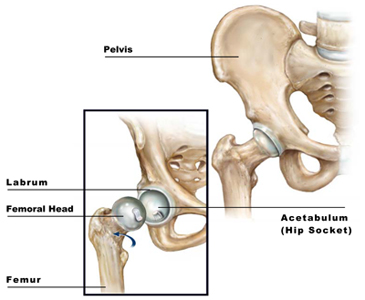
The particular squat I am talking about here is what I refer to as an Internal Rotation Squat.  The Internal Rotation Squat differs from the traditional bodyweight squat in that the feet are parallel, as opposed to opened outward, and the squatting motion is accomplished by internally rotating the femoral heads within the hip sockets rather than relying on quad muscle power alone.
hip-anatomy-new

The Internal Rotation Squat requires MUCH more mobility, control, and mind power to accomplish since you must actually teach your body how to rotate the bones of the femurs within the hip sockets.  This will take some practice!

 Why Do This?

In order to begin generating what known as Internal Power (IP), you must have mobility in the inguinal area that the Chinese Internal Martial Arts refer to as the kwa.  There is much, much more to IP than this, but having mobility in the kwa is an essential requirement.  Additionally, even if you have no interest in IP or Chinese Martial Arts, having this type of mobility and control is an asset in any athletic endeavor or martial art, regardless of style.

Internal Rotation Squat – Bodyweight Version

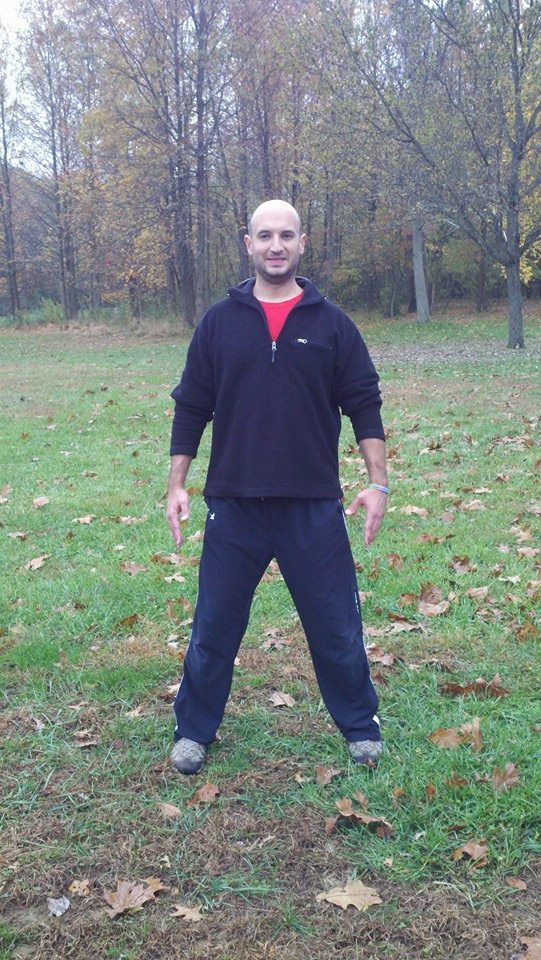
Begin with feet slightly more than shoulder-width apart.  Keep the feet facing forwards, as if on railroad tracks.
Squat1

This will be important later when working on winding the tissues, but for now, just do it.  Place your fists on either side of the kwa (inguinal area) where the femur bones connect in to the hip sockets.  Use the imagery of turning your fists to aid in turning the bones.  Internally rotate the femoral heads and sit down into the kwa.
Squat2

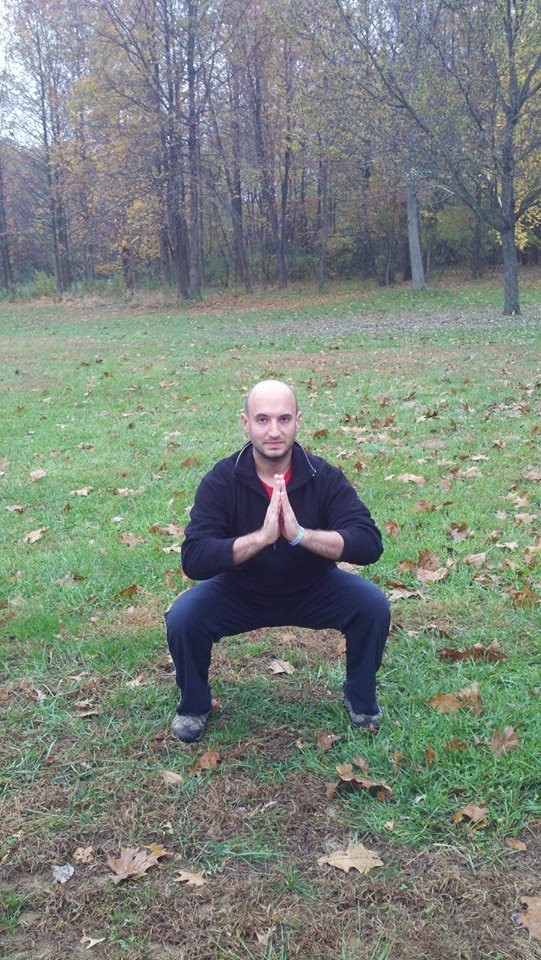
Squat as low as possible while keeping your back straight and the weight mid-foot balance.  Pause at the bottom then externally rotate the femoral heads to stand back up.

Internal Rotation Squat – Goblet Squat Version

All requirements are the same as above with the addition of holding the kettlebell in front of your chest in the Goblet Squat position.  Use the weight of the kettlebell to allow you to sink further into the kwa.
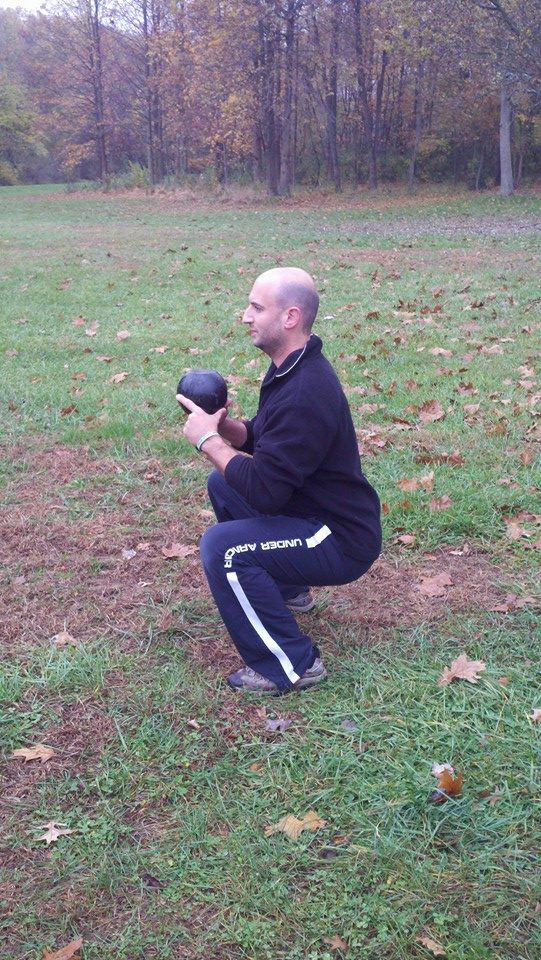
Goblet Squat2

Thanks to Dan Harden for teaching me this exercise in the context of working on Aiki/IP.  Any errors or omissions are my own and not the responsibility of my teachers.  Also, thanks to Jaime for helping me to refine the squat and for taking the pictures!

Also, Dan Harden will be back in NJ in March 2014.  Details on the seminar can be found HERE <<====
 

The 3 Paths of Warrior Fitness

The 3 Paths of the Warrior 

There are 3 Paths of the Warrior, along with the 4 Levels of Preparation, that form the basis of the entire training system.  While each path is unique with its own individual strategies, methods, and characteristics, they are also so deeply interconnected that the sum of the whole system of training is far greater than its individual parts.

The 3 paths are…

Path to Strength

Strength is not only about unleashing our innate physical supremacy, but comprised of mental fortitude and spiritual power as well.  The aim of this trifold path of strength is to forge the strongest version of yourself on all 3 levels of human ability.

The Path to Strength utilizes tools such as Russian kettlebells, Indian Clubs, old objects, and a considerable variety of unique bodyweight exercises to generate strength throughout the entire body in all ranges of motion.  Physical strength is not confined to merely muscle alone, but focuses on training the tendons, ligaments, and fascia as well.  This provides a much more stable and connected body.

Togakushi

Path to Rejuvenation

Health is not merely the absence of disease, but the allowing of the human body to operate at full capacity all of the time.  Rejuvenation increases the resilience of the body through restoration and compensation for the work of Strength.

The Path to Rejuvination is comprised of joint mobility work to keep the body well lubricated and injury free, yoga asana to systematically increase flexibility and act as compensatory movement, breathing and vibration training to flush the system with oxygen, remove residual tension, and energize the body.

Path to Martial Skill

Martial skill is not simply the ability to regurgitate dogma and technique, but the ability to spontaneously use the conditioned budo body to its utmost level and ability in a combative engagement.

Although the considerable bulk of my martial training over the past 30 years has been in the Japanese warrior arts of Bujinkan Budo Taijutsu, I have studied, and continue to study, several other martial arts from around the world as well.  The main arts, aside from the Bujinkan, from which I draw my experience are: Russian Systema – both Ryabko Systema and Systema ROSS, Chinese Yiquan, and the Aiki of Dan Harden.

How do you get started down the Warrior’s Path?  START HERE <<===

Preparing Ninja for a Mission

My name is Ichiro Watanabe.  I am a chunin, a middle level ninja of the Togakure clan.

Our small village is secluded deep in the mountains near Mt. Togakushi, otherwise known as Togakure Mountain.  I could tell you exactly where, but I’d have to kill you.  No joke, it’s a matter of survival for my family and clan.

You see the year is 1601, one year after the famous Battle of Sekigahara which brought Ieyasu Tokugawa to power uniting Japan.  There is still much to do, however, and the need for the services of our ninja clan is still very great. Continue reading