Why Body Skills are Critical to Martial Arts

Body skills are the foundation of ALL martial and athletic movement.

In fact, in my mind, they are the foundation of all good, powerful, pain-free human movement!

What are body skills?

They are the qualities that connect, support, mobilize, and strengthen the body from the inside out. They create a highly resilient, dynamically stable body that underpins all other skill acquisition. In short, you want to get better at the specific skill sets within your martial art, quickly – train the body!

Learn how to develop high level body skills for martial art 

The Trinity of Training for Health and Strength

The ancients who created yoga, qigong, and various systems of martial arts knew a thing or 2 about training the body as a whole, integrated unit and not a series of disparate parts.

In fact the word yoga means “to yolk” or to unite together.

Each separate system that came down to us from the ancient world had one thing in common no matter where they originated…

They all utilized breath, posture, and movement to create a balanced healthy body, energetic, and free from pain.

When you combine exercises using all 3 modalities you get a powerful synergistic effect on health and strength that modern methods lack.

Learn exactly how to unite all 3 here =>
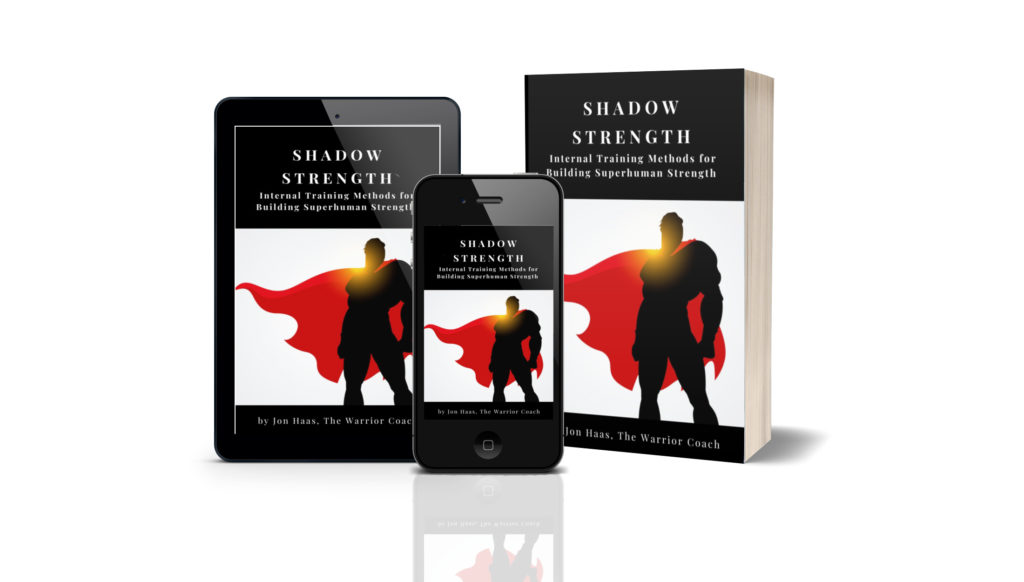
Shadow Strength utilizes a proprietary set of exercises drawn from traditional martial arts and trained in a unique combination to skyrocket your internal strength, power, and resistance to injury.

Using breath, posture, and martial mobility, Shadow Strength breaks down the barriers to superhuman strength and an unbreakable body.

Learn more here =>> http://warriorfitness.org/shadow/
How to Train More Every Day

The only way to go from average martial artists to outstanding is to train more.  You may be limited in how many classes you can attend on a weekly basis or how many seminars you can attend on a monthly basis, but you are not limited in how much solo training you can do on a day to day basis.  The key to greatness lies in solo training.  This is how you build yourself up to mastery.  Step by step, session by session, day by day.  There is no other way.

That being said, I humbly offer the following 4 suggestions on how to train more every day.


1)      Awareness, Awareness, Awareness

Keep your eyes, ears, and senses open to your surroundings.  Make it a habit to not allow anyone to sneak up on you or surprise you.  Make a game out of knowing where people around you are, even if you can’t “see” them.

ZanshinKanji

2)      Don’t Just Walk, Ninja Walk!

Take the opportunity no matter where you are to practice your balance, footwork, and movement skills.  This doesn’t mean you have to stalk your boss in the company restroom – unless you want to get fired!  But when you move, whether it’s in the office, walking down the street, in the grocery store, or out in the woods, pay attention to your balance, body control, and coordination.  Raise and lower each foot purposefully.  Do not let your walking be “controlled falling”.

3)      Mini Training Sessions

All of us seem to think that if we can’t dedicate a solid hour or so to solo training than we just don’t have the time to do it.  My solution for you is this – train in 5 minute increments.  No matter who you are and what type of work you do, you have 5 minutes to spare during your day.  If you look for it, you probably have many blocks of 5 minute increments during your day.  Don’t waste them!  Use them to train.  In 5 minutes you can practice all the Sanshin No Kata 5 times each side.  In 5 minutes you can do 100 push-ups (maybe!). In 5 minutes you can practice ukemi.  In 5 minutes you can do a flow drill.  Be creative, figure it out!  All those mini blocks of 5 minute training sessions add up to huge amounts of time over a week, month, year, and decade.  You’re in this for the long haul, aren’t you?

4)      Set a Goal

Figure out what your own personal training goals are and write them down.  Give yourself a deadline to achieve them.  Add actions steps to help you reach each one.  Develop a plan of attack and hold yourself accountable.  Need help developing a plan?  Ask me.  I can help you.  It’s what I do.


Double Your Training Without Doubling Your Training

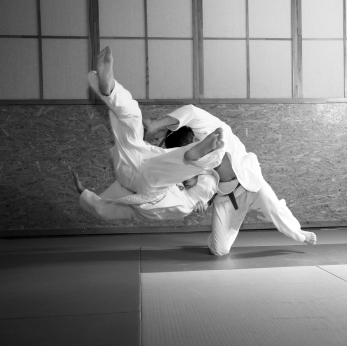
In my teacher’s and my own dōjō (道場 – “martial arts training hall”) we spend a lot of time cultivating our skills as uke. An uke (受け) is a martial arts student who, during a given training session, “receives” a technique from another student acting as the tori (取り). Wikipedia defines the difference as one “who completes a successful technique [tori] rather than who initiates one [uke].” Having a good uke as a training partner is very important, but being a good uke is paramount.

The role of uke often gets a bad rap. Too many times I have seen students relegate themselves to becoming little more than an “I attack, then stand around while the other guy does something to me” participant. When it’s time to be uke, the “pause” button gets pressed and human punching bags are born. That doesn’t seem right, does it?

It certainly doesn’t feel right, at least not to me.

Continue reading

Ukemi Flow Conditioning Workout

This one is for all the martial artists out there –  I created the following ukemi conditioning workout for myself a few years ago to specifically target the transitions between my rolls and begin to unlock flow.  Additionally, it has the effect of really getting your heart pumping and makes a great workout!  Start out slowly and smoothly by practicing for the first few rounds.  Groove the movement and then begin to increase the speed.  Remember, you do yourself and your training a disservice if you rush through the movements simply to say you accomplished the workout.  Flow is not something you do, it’s something you allow – you have to be able to get out of your own way!  That being said, give this a try and let me know how it works for you.

Ukemi Flow

  1. Begin in Shizen No Kamae (natural stance), squat down to ball of foot squat
  2. Zenpo Kaiten (front roll) over the right shoulder
  3. Ushiro Kaiten (back roll)
  4. Stand up into Shizen No Kamae (natural stance), squat down to ball of foot squat
  5. Zenpo Kaiten (front roll) over the left shoulder
  6. Ushiro Kaiten (back roll)
  7. Stand up into Shizen No Kamae (natural stance)
  8. Yoko Nagare (side roll) with the leg crossing in front to the right
  9. Yoko Nagare (side roll) with the leg crossing in front to the left
  10. Stand up into Shizen No Kamae (natural stance)
  11. Zempo Ukemi (forward break fall)
  12. Stand up into Shizen No Kamae (natural stance)
  13. Yoko Nagare (side roll) with the leg crossing behind to the right
  14. Yoko Nagare (side roll) with the leg crossing behind to the left
  15. Stand up into Shizen No Kamae (natural stance) – repeat!

Start out with 4 rounds of 3 minutes each with a 1 minute break between rounds.  Use the minute break to get your breathing back under control and shake out the tension.  When this becomes easier, decrease the rest period to 30 seconds between rounds. Finally, try to perform the Ukemi Flow continuously for 12 minutes.  You can also adjust the difficulty level of the flow by adding directional leaps at the end of each roll.  Or, it can be made easier by performing it from kneeling in Seiza no Kamae instead of standing.

Notes: Make sure you warm-up with brief joint mobility session prior to the workout.

Got your own version of an ukemi-specific workout?  Please share with us in the comments section below!