Musashi on Posture in Strategy

In his classic work on the art of strategy, Go Rin No Sho, Musashi gives the following instructions on Posture in his art.

“Keep your neck straight, putting some force in the hollow of the nape; lower your shoulders, with the sensation that the torso from the shoulders down forms a unity; keep the back straight, do not stick out your buttocks, push your force downward from your knees to the tips of your toes, Advance the belly slightly forward so that the pelvis does not lose its stability…

It is necessary for you to have as your posture in strategy just the ordinary one, and it is essential that the posture of strategy be the ordinary one for you. This must be examined well.”
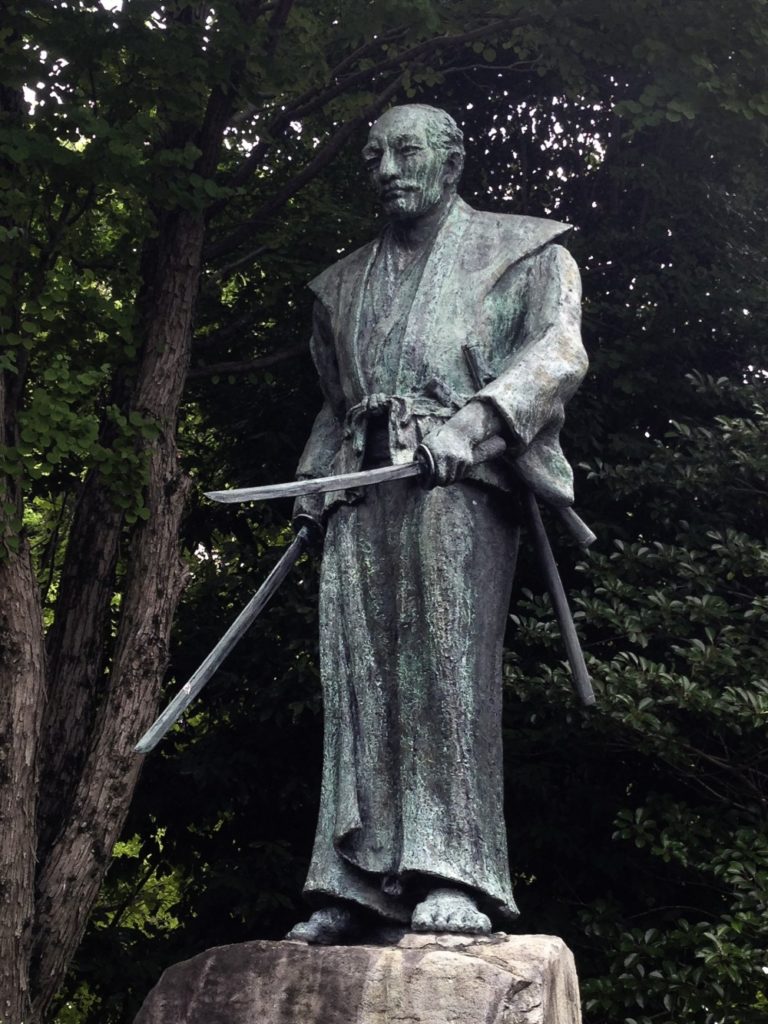

Notice how adamant he is that your stance for combat and your everyday stance be the same…

Isn’t it interesting that Musashi’s instructions for how to stand in his system of strategy sound remarkably similar to zhan zhuang (standing meditation) and shizen no kamae (natural posture).

Coincidence? I think not…

For comparison here is a video I made on how to stand in Shizen no Kamae (natural posture).


Now let’s take a deeper look into the standing practice as the world’s oldest and most effective form of Qigong.


Tachi Geiko (Standing Training) or Ritsu Zen (Standing Zen)

Zhan zhuang, or standing meditation exercise, has been used as a method of relaxation and health cultivation for thousands of years. The earliest known reference to standing appears inThe Yellow Emperor’s Classic of Chinese Medicine. Martial arts master Wang Xiangzhai wrote the following in his book on zhan zhuang:

“It is said that already 2000 years ago there existed the book Internal Canon, the gem of Chinese medicine, which even today is a guide for medical practice. The chapter Simple questions concentrates on cultivating health. For example we can read there: “In ancient times great masters stood on earth, supporting heaven, controlling yin and yang, breathing with essence of qi, standing alone, guarding spirit, with body being as one.”… Before the eastern Han dynasty many scholars and warriors knew the methods of “tranquil cultivating.” The exercises could be done walking, standing, sitting, lying. It was popular form of cultivating health. Later, during reign of Liang dynasty’s emperor Wu, Damo came to China to teach. He transmitted methods of “washing marrow” and “changing tendons.”
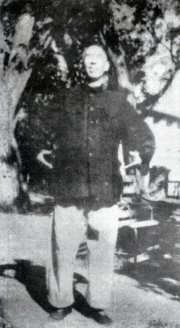
 

The health preserving and sustaining effects of zhan zhuang have been documented in hospitals and medical clinics across China. The reason this practice has such a profound impact on health and recovery from exercise is that the standing meditation acts like a system-wide reboot for the whole body. It stimulates the nervous system, increases circulation, and raises energy levels, while providing deep relaxation for both mind and body.

Aches, pains, old injuries, muscular tensions, and imbalances are highlighted and brought to the forefront by this method and then slowly dissolved over time and completely released. The practice provides a way of completely relaxing and letting go of the muscular tensions in the body, while the correct alignment of the bones delivers support, creating a profound neutral and relaxed, almost buoyant state. As the whole body and mind are exercised, both relax and stimulate the nervous system, increase circulation, open the joints, and raise energy level for a feeling of overall well-being.

This exercise looks easy from the outside. After all, you’re just standing there and not moving. However, inside, there is a lot going on – the breath and the qi (energy) are moving. This exercise is a challenging, sometimes frustrating, yet highly beneficial and rewarding practice. The only way to truly appreciate it is to experience it for yourself.


How Do We Stand?

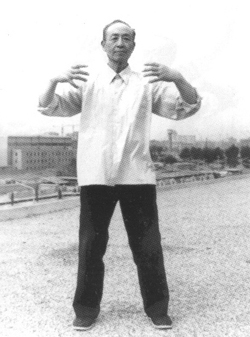
In practical terms, how should we stand?  Let’s start with the head and work our way down.

  • Begin by standing in a natural stance. Feet shoulder width apart, knees slightly bent.
  • Lift upward slightly with the crown of the head, as if being pulled up by a string, allowing the chin to lower. This straightens the vertebrae at the back of the neck.
  • Shoulders are back and down sitting on the spine.
  • The back should be flat. Do not tuck the pelvis. The spine should be suspended from above like a skeleton hanging in a science classroom.
  • Hold the arms in front of the body, level with the solar plexus, as if hugging a tree. There should be a golf-ball sized space under the armpits.
  • The bottom of the spine pulls straight down from the tailbone, as if there is a weight attached to the sacrum. You should feel like you are sitting on a high stool yet trying to stand up at the same time.
  • Allow the knees to bend slightly. Feet should be shoulder width apart and pointed straight forward as if on railroad tracks.
  • Legs should feel like they are squeezing a beach ball. Remember, though, the ball puts outward pressure on the legs as they squeeze in, so there is pressure both directions, not just one.
  • The weight is carried in the hollow behind the balls of the feet. In Chinese medicine, this is known as the yongquan or bubbling well point.


All of the above points must be maintained to have a truly “natural” standing posture.


Maintaining a relaxed posture is key to beginning your standing meditation.
 

Supercharge Your Standing Practice

Now that you have the external mechanics down, let’s talk about how to supercharge your relaxation process.

  1. Mentally scan the body for areas of tension. The usual suspects will be the neck, shoulders, low back, and quads.


  1. Begin to actively release each area of tension one by one with your mind. For example, think of the tightness in your shoulders and relax it by telling yourself, “The tightness in my shoulders is letting go and relaxing.” Then proceed to the next area until you have systematically gone through them all.


  1. If one particular area is giving you trouble, then work on breathing into it. Inhale into the area, hold for a few seconds, and then exhale from the area to release it. Use this process over and over again until all the tension has let go.


  1. Once you have removed all the residual tension in the body, continue to stand holding that relaxed feeling. Think of your body as a drop of ink dissolving in the ocean, spreading out in all directions.


  1. Start with ten minutes of zhan zhuang standing. Work up to thirty minutes. In Chinese medicine, it is said that it takes approximately 28 minutes for the blood to complete one full cycle though the body, thus the recommendation to stand for thirty minutes. This can be increased to sixty minutes over time to allow for two full cycles of blood to be completed.


A New Way to Recover

In teaching this method to both my fitness clients and martial arts students I find that in addition to our usual compliment of recovery drills (consisting of mobility exercises, yoga asana, and compensatory movement), the addition of this simple practice of standing meditation has consistently accelerated our recovery process, allowed us to reach new levels of relaxation, and strengthened the mind-body connection beyond any other work we have done. Additionally, it has managed to increase energy levels while fortifying our bodies against the daily rigors of life, work, and family stresses.

While this method is elegantly simple to practice, requires little space and no special equipment, and can be done at virtually any time of day, it also is startlingly deep.

Go Deeper – Take the 100 Day Challenge!

Traditionally it is said that a minimum period of 100 days is necessary for the body to acclimatize and adapt to a practice. As our goal is to completely rewire the nervous system in order to change the body, 100 days seems like the perfect length of time.

How to Do It

  1. Work your way up to standing for 30 minutes a day for 100 days – think you can do it?
  2. Take the Integrated Strength Program challenge for 100 days and seriously upgrade your strength, health, and martial power!
10 Books Every Warrior Should Read

I am what you would call an avid reader. Some would even say my reading habit borders on a reading obsession since at any one time I can be found to have at least three, sometimes four books going simultaneously. I have several on my nightstand next to my bed, a couple on the coffee table downstairs, one or two on the kitchen counter and, of course, my bathroom book.

Usually I am reading one book on fitness or health, one book on business, and one fiction.  I also continuously have audio books playing in my car anytime I drive, creating a mobile library.

Great warriors train all the time. Reading is a form of training that must be practiced by the warrior on a daily basis. Feeding and training the mind is just as important as feeding and training the body. Remember – knowledge is power!

Here are 10 books that are a must in every warrior’s library. Expand your mind and pick up these books!

Also, if you have any recommendations, be sure to let me know in the Comments section below – I am always on the look out for new books to add to my collection.


1) The Warrior Ethos by Steven Pressfield

WARS CHANGE, WARRIORS DON’T We are all warriors. Each of us struggles every day to define and defend our sense of purpose and integrity, to justify our existence on the planet and to understand, if only within our own hearts, who we are and what we believe in. Do we fight by a code? If so, what is it? What is the Warrior Ethos? Where did it come from? What form does it take today? How do we (and how can we) use it and be true to it in our internal and external lives?

2) The Ethical Warrior: Values, Morals and Ethics – For Life, Work and Service by Jack Hoban

Jack Hoban was shaped by service in the U.S. Marine Corps, a life-changing epiphany at a Cold War bar, and mentorship under two masters: The 34th generation grandmaster of the shadowy art of the Ninja and a sage of the Natural Law who may just have deciphered the meaning of life. He now delivers a revolutionary view of moral values for our time epitomized by the Ethical Warrior – protector of self and others as equal human beings. Hoban’s methodology reaches from the Greek ancients to the counterinsurgency efforts of today’s Marines to provide ethical clarity and confidence in our moral actions.

Having been exposed to both Dr. Humphrey’s and Jack’s teaching on this since I began studying Bujinkan martial arts back in 1989, I cannot recommend this book enough!!

3) The Book of Five Rings by Miyamoto Musashi

Composed in 1643 by the famed duelist and undefeated samurai Miyamoto Musashi, The Book of Five Rings analyzes the process of struggle and mastery over conflict that underlies every level of human interaction. For Musashi, the way of the martial arts was a mastery of the mind rather than simply technical prowess—and it is this path to mastery that is the core teaching in The Book of Five Rings. This brilliant manifesto is written not only for martial artists but for anyone who wants to apply the timeless principles of this text to their life.

The classic book on strategy by Japan’s most famous swordsman. This book is one I read over again every few years and constantly find more nuance and deeper understanding as my training and years of experience grow.

4) Lone Survivor: The Eyewitness Account of Operation Redwing and the Lost Heroes of SEAL Team 10 by Marcus Lutrell

This is the story of the only survivor of Operation Redwing, SEAL fire team leader Marcus Luttrell, and the extraordinary firefight that led to the largest loss of life in American Navy SEAL history. His squadmates fought valiantly beside him until he was the only one left alive, blasted by an RPG into a place where his pursuers could not find him. Over the next four days, terribly injured and presumed dead, Luttrell crawled for miles through the mountains and was taken in by sympathetic villagers who risked their lives to keep him safe from surrounding Taliban warriors.

5) The Rise of Theodore Roosevelt (Modern Library Paperbacks) by Edmund Morris

This book tells the story of TR’s irresistible rise to power. (He himself compared his trajectory to that of a rocket.) It is, in effect, the biography of seven men—a naturalist, a writer, a lover, a hunter, a ranchman, a soldier, and a politician—who merged at age forty-two to become the youngest President in our history. Rarely has any public figure exercised such a charismatic hold on the popular imagination. Edith Wharton likened TR’s vitality to radium. H. G. Wells said that he was  “a very symbol of the creative will in man.” Walter Lippmann characterized him simply as our only “lovable” chief executive.

6) Eric Greitens: Resilience : Hard-Won Wisdom for Living a Better Life (Hardcover); 2015 Edition by Eric Greitens

Eric’s letters—drawing on both his own experience and wisdom from ancient and modern thinkers—are now gathered and edited into this timeless guidebook. Greitens shows how we can build purpose, confront pain, practice compassion, develop a vocation, find a mentor, create happiness, and much more. Resilience is an inspiring meditation for the warrior in each of us.

7) Meditations (Penguin Classics) by Marcus Aurelius (1995) Mass Market Paperback by Marcus Aurelius

One of the world’s most celebrated and persuasive books, Meditations, by the Roman ruler Marcus Aurelius (A.D. 121– 180), fuses the stoic statutes he used to adapt to his life as a warrior and manager of a domain. Rising to the royal position of authority in A.D. 161, Aurelius discovered his rule assailed by catastrophic events and war. In the wake of these difficulties, he set down a progression of private reflections, plotting a logic of sense of duty regarding prudence above joy and peacefulness above joy. Mirroring the sovereign’s own particular honorable and generous set of accepted rules, this persuasive and moving work draws and advances the convention of Stoicism, which focused on the look for internal peace and moral sureness in a clearly confused world.

8) Unbeatable Mind: Forge Resiliency and Mental Toughness to Succeed at an Elite Level (Third Edition) by Mark Divine

You are capable of twenty times more than what you believe. Are you living in your 20X factor?  Or have you settled for a lesser productivity taught by society, your upbringing, or the things you believe about yourself?  I want to wake up the authentic, connected warrior within you.

But waking up to a bigger reality is only the first step.  The next step is learning to win in your mind before you ever enter the battlefield of life.  Unbeatable Mind will teach you to starve your fear, overcome negativity and connect with a deeper and heightened sensitivity to what’s going on around you.  You’ll clear emotional blocks, step into the shoes of self-mastery, and become the leader of others you know you were made to be.

9) Spiritual Journey of Joseph L. Greenstein: The Mighty Atom by Ed Spielman (1-Mar-1998) Paperback by Ed Spielman

The Spiritual Journey of Joseph L. Greenstein, World’s Strongest Man is a fully-documented and illustrated biography that also details the methods Greenstein used to train himself for the “impossible”. As a vaudeville star, he bit through iron bars, crushed steel spikes in his hands, and held back airplanes tied to his hair. These feats were all the more amazing because he stood only five feet four inches and weighed in at just 145 pounds. But The Mighty Atom had developed his own technique for tapping into the “life-force; ” a technique that encompassed Asian methods of concentration, Jewish mystical writings, and a then-unheard-of vegetarian natural diet. He unlearned the subconscious mechanism that forces us to stop when we think we have reached our physical limits. Each time he broke an iron chain, he revealed the enormous potential of the life-force. That potential exists inside every one of us and, as The Mighty Atom showed, it is within our grasp.

This is literally one of my all-time favorite books!

10) The Unfettered Mind: Writings from a Zen Master to a Master Swordsman by Takuan Soho

Here’s the classic samurai-era text that fused Japanese swordsmanship with Zen, and influenced the direction that the art has taken ever since. Written by the 17th-century Zen master Takuan Soho (1573–1645), The Unfettered Mind is a book of advice on swordsmanship and the cultivation of right mind and intention. It was written as a guide for the samurai Yagyu Munenori, who was a great swordsman and rival to the legendary Miyamoto Musashi.

Pick up a free copy of my book, Warrior Fitness: Conditioning for Martial Arts HERE


MEN – Pick up a free copy of my book, Dad Strength HERE 

The Process of Becoming Masterful

“Remember that mastery is not attained once after a lifetime of practice, but earned every day.”

– Jon Haas

Usually when we think of someone who is a master, be it a master martial artist or the master of some other craft, we think of them as attaining mastery at the end of a long lifetime of practice.
But mastery is NOT something that’s attained once after years or decades of training – mastery is something that is EARNED every day!!
You can be masterful in one moment and then a fumbling fool in the next (ask me how I know!).
The goal of becoming masterful isn’t to wait until some distant future when every move you make is perfect and every word that comes out of your mouth is sage advice, it’s to consciously create those moments of mastery every day until you have more of them rather than less of them.

Daily practice is the key.

Do you ever think about what it would be like to be a master martial artist?

Not just to be awarded the title “master” but to really and truly embody all of the sublime skill of martial mastery at the highest level of human achievement…

What would it feel like to know, without a shadow of a doubt, that you could easily control and subdue the most violent opponent with the most minimal effort, like a lion playing with a cub?
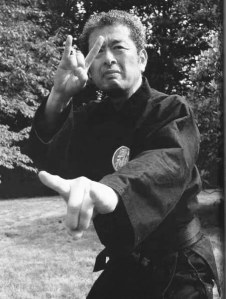
What if I told you that mastery is NOT something automatically attained after a lifetime of practice, but is instead conferred only upon those rare few individuals who, through their own efforts, take consistent, specific daily actions to achieve it?

Then mastery would not be just a far away, imagined future state, but instead a real and attainable goal built by taking action every day, right here and right now.


Remember This

Remember this – it is critical to your success – EVERY single legendary martial master: Musashi, Ueshiba, Bruce Lee, Kano, Takeda, Takamatsu, Gracie, Hatsumi, etc…

ALL of them began as unskilled, know nothing novices, white belts without a clue.

Their consistent daily training formed them, forged them, into the revered and feared masters that we know today.

“What one man can do, another can do.”

You can choose to follow in their footsteps. You can choose to be masterful, to be legendary.

However, as you follow them, do NOT seek to become them – instead, seek what they sought, the process of mastery.

Find the process of daily mastery <<==

Finally… There is a Researched, Tested, and PROVEN Method for Developing Internal Power and Unusual Strength from Martial Arts…

The Mona Lisa and My Disgust with Tourists

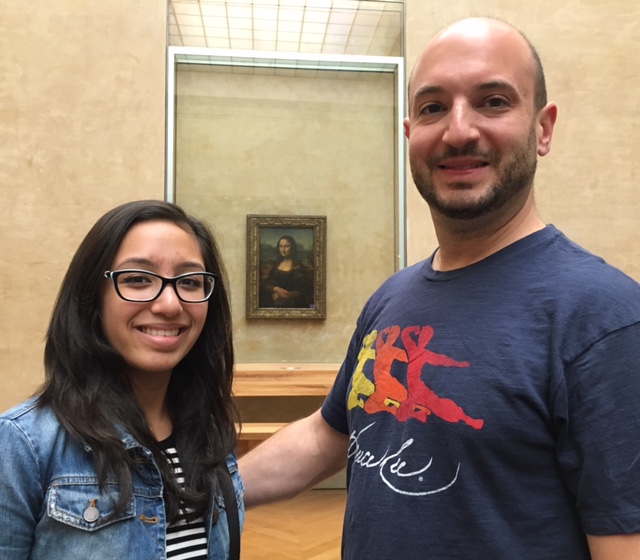
I have to admit that waiting in line the other morning to get into the Louvre in Paris, France I was vibrating with  excitement.

Leonardo Da Vinci has always been a hero of mine (more on Leo later…) and to actually stand in front of his most famous painting, The Mona Lisa, was something I had looked forward to for a long, long time. It was more than just looking at a painting to me, it was the achievement of a lifelong dream.

So naturally when we entered the building, like all the other tourists, we ran up the stairs past other priceless works of art to be able to get a look at the Mona Lisa first.

When we got to the room it was crowded. Dozens of people milled around snapping photos, snapping selfies, taking videos, and rapidly changing positions for others to do the same. Now, don’t get me wrong – we took pics of the painting and with it too.

FullSizeRender

But then something happened…

I put my phone away. Took a position directly in front of the painting and stood like a rock with my arms crossed in front of my chest, gazing deeply at the painting, the flow of tourists churning around me as I stood unmoving in their midst. My eyes welled up with tears as the profound beauty all around me affected me and I actually began to experience it.

I was reminded of a quote by Musashi when he talked about people who look, but don’t  SEE. And suddenly I SAW. The white noise faded into the background, time slowed down and  I stared at the painting and really SAW it.

I looked around at the mass of people milling about me as they quickly took their pictures and moved on to find the next item to cross off their list and it made me angry. None of them were actually SEEING the amazing works of art in front of them. Yeah, they looked and took hundreds of pictures, but it was all so very superficial.

They were not able to appreciate nor experience the magnificence that was right in front of them!

How often does this happen to you in your life?

How many times do you look, but don’t SEE what’s in front of you?

How much of life do you miss by running from one place to the next from one appointment to the next, from one task to the next, without ever experiencing the in-between moments that are so critical for us?

Take time. Don’t just look as your life passes you by, SEE. FEEL. EXPERIENCE IT.

Life Advice from Musashi

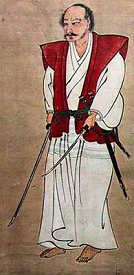
If you are not already familiar, Miyamoto Musashi (宮本 武蔵, c. 1584 – June 13, 1645) is arguably one of Japan’s most famous swordsmen.  He is the author of Go Rin No Sho, or The Book of 5 Rings, one of the most widely read yet probably least understood guides to strategy ever written.

Miyamoto_Musashi_Self-Portrait

The Book of 5 Rings is divided into (as you might expect) 5 chapters.

Within the first chapter, The Ground Book (or “earth” depending on which translation you read), is one of my all time favorite Musashi quotes in which he outlines his broad principles of strategy, he gives 9 principles for those who wish to study his way:

1.Do not think dishonestly.
2.The Way is in training.
3.Become acquainted with every art.
4.Know the Ways of professions.
5.Distinguish between gain and loss in worldly matters.
6.Develop intuitive judgement and understanding for everything.
7.Perceive those things which cannot be seen.
8.Pay attention even to trifles.
9.Do nothing which is of no use.

He then goes on to say how important it is to set these broad principles in your heart in order to begin learning the way of strategy.

While I agree with Musashi that each one of these principles is important and deserves greater exploration, in this post I want to hone in on my favorite one, number 9, “Do nothing which is of no use.”

Do Nothing Which is of No Use

Wow.  Read that again.  What an unbelievable qualifier on how to live your life.  Imagine if you could actually take this principle to heart and follow it every day for the rest of your life.  How much would you accomplish?  To what great heights would you soar?  Think about this deeply…

If you really followed Musashi’s advice to do nothing which is of no use, what would change?

How would your job change is you eliminated all the superfluous crap that you do on a daily basis?  The busy work that seems urgent, but is not very important.  The mundane tasks that you somehow inherited that really contribute nothing to your overall productivity, but you still have to deal with day after day.  What would transform in your job or your business if you simply eliminated them because they are of no use?

How would your relationships with other people change?  Would you continue to make time for people who are a complete drain on your life and your energy?  Would you choose your relationships differently be they business relationships, friend relationships, or intimate relationships?  How much closer and stronger would your real relationships grow if you could push aside and remove the ones that were of no use?

How would your training change if you did nothing which is of no use?  Where would you focus your time?  What unbelievable results could you obtain if you only spent time on the training, the exercises, the movements that contributed the most to your overall development as an individual martial artist or athlete or complete human being?  How fast would you progress towards and achieve your goals if you eliminated the things which were of no use?

How would your entire life change?  Think about it.  Put it into practice.  Live it.  Do Nothing Which is of No Use.


Going Further into Musashi’s Teachings….

Miyamoto Musashi penned several other lesser-known manuscripts prior to his much more widely known Go Rin No Sho, or The Book of 5 Rings.

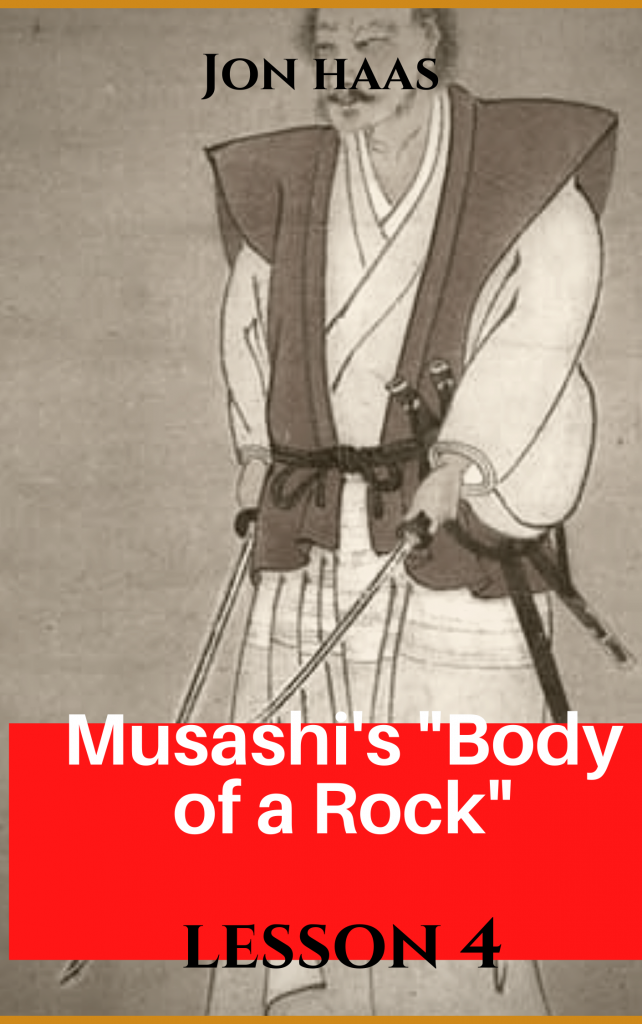
In his Thirty-Five Instructions on Strategy, written 2 years prior in 1641, he discusses The Body of a Rock.

The Body of a Rock

“The body of a rock is the state of an unmoving mind, powerful and large. Something inexhaustible that comes from the universal principle exists in the body. It is through this that the power of the mind resides in every living being.”

How does one obtain the body of a rock where the mind permeates every aspect of the body?

Learn exactly how to implement Musashi’s “Body of a Rock” strategy in both your strength training and martial art practice to build superhuman strength and incredible all around martial power inside Lesson 4 of the Warrior’s Inner Circle – you can grab that here.


The Warrior’s Key to Greatness – The Way Lies in Training!

Throughout history a few exceptional martial artists have stood out from the rest of the budo landscape.

Millions of people from every country and culture on the planet have trained in innumerable styles and arts across the centuries, yet we only know a small number of them by name.

These men distinguished themselves and rose to the very uppermost levels of physical, mental, and spiritual skill in their respective arts and in some cases even took their talent to such heights as to create an entirely new martial art.

Looking back at them today, we are awed and inspired by the levels they achieved through their single minded determination in reaching a goal, dogged pursuit of excellence in their craft, and amazing amount of self-sacrifice.

Why are They Different?

What made these men different?

What pushed them to greatness?

What did they do differently or more productively that propelled them to prominence?

Why were their names and storied passed down through the years, sometimes centuries?

What one factor do all great martial artists have in common regardless of style, country, or culture?

And, more importantly, how can we learn from them and apply it to our own training?  Remember, we stand on the shoulders of giants, not to imitate them, but to be able to look farther.

 Quotes from the Greats

Instead of listening to my opinion today, why don’t we go directly to the sources themselves?  Here are some cool quotes I’ve complied by some of the greats talking about their own training.

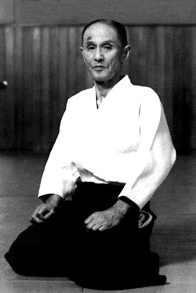
Morihei Ueshiba – Aikido 

“The instructor can only impart a small portion of the teaching; only through ceaseless training can you obtain the necessary experience allowing you to bring these mysteries alive.  Hence, do not chase after many techniques; one by one, make each technique your own.”

“Always imagine yourself on the battlefield under the fiercest attack; never forget this crucial element of training.”

“This old man must still train and train” – said shortly before his death.

Gozo Shioda – Aikido 

“Kokyu power is produced when we push ourselves to the limit, making the most efficient use of the capabilities that lie within our own bodies.”

“Even though the body has its limits, until your death, the strength of your spirit is limitless.  This is precisely why, in the martial arts, there is no such thing as deteriorating as you age.”

Yukiyoshi Sagawa – Daito Ryu 

“Intermittent training, no matter how intensive, is utterly useless.  You must practice every day for your entire life.  That, and only that, is true training, or shugyo.”

“People who think they can ignore training their bodies and only work on techniques are amateurs.  They don’t know anything.  Actually, if you can’t prepare your body properly, you have no hope of ever perfecting your technique.”

“No matter what level of mastery you attain, you will never achieve perfection.  You should therefore never, ever assume that what you have achieved is good enough.”

“If people knew what my training regimen was like, they would be astonished.”

Masaaki Hatsumi – Bujinkan Budo Taijutsu 

“Modern budo students often forget to practice by themselves.  I used to practice by myself.  When there was no teacher, I found the secret teachings by my own desire.”

“Studying for oneself and making one’s own discoveries is much more important than group learning, and this applies equally well to martial arts.  As I often say, ‘Life is all about solitary training.’  This is because I want serious practitioners to discover the tricks of the trade for themselves.”

Miyamoto Musashi – Niten Ichi Ryu 

“From the time I was young I have set my mind on the Way of Martial Arts, practiced the one subject of swordsmanship with my entire being, and experienced various and different understandings.”

“See to it that you temper yourself with one thousand days of practice, and refine yourself with ten thousand days of training.”

“Never depart from the way of martial arts.”

Yamaoka Tesshu – Muto Ryu 

“Study hard and all things can be accomplished; give up and you will amount to nothing.”

“If you want to obtain the secrets of such wonderful techniques, drill yourself, harden yourself, undergo severe training, abandon body and mind; follow this course for years and you will naturally reach the profoundest levels.”

Inspired yet? 

Ready to train and push yourself to the next level? 

Check out the new solo training sensation – The Integrated Strength Program – and get started today!

integratedstrength3D1