
What Have You Done (to yourself)?

Do you people watch? I do. Traveling a few weekends in a row earlier this month gave me ample opportunity. The people watching was especially entertaining at the various rest stops along the highways, turnpikes, and parkways the length of the northeastern corridor from NJ up to MA, and out through PA on the way to OH.

rest stop

In all my recent people watching adventures I’ve notice something pretty sad.  On the whole, in general, there are many, many people out there in very poor shape.  Actually, horribly pathetic shape is a more apt description. Now I know this is not a revelation to you, my dear readers, nor is it one to me either.  It’s just that in crowded spots where people are traveling from all over are congregated, it becomes very noticeable.

Formula for Failure

The question I kept coming back to, as I looked around at these horribly out of shape people from all walks of life and all ages, was WHY? Why are people so enormously overweight? Why is their physical condition so screwed up? Why do they struggle for breath just standing up or sitting down? What happened along the way to get them in such a state? Surely no one started out wanting to be fat, out of shape, and de-conditioned.  Surely no one wanted to feel so devoid of energy and vitality. Surely it was a slow, slow decline. Surely it was an insidious series of small errors over the course of a long, long time that brought them to this, right?


Formula for Failure

“A few errors in judgment repeated every day.” – Jim Rohn


  • What does it matter when you decide not to exercise?
  • What does it matter when you have that extra dessert?
  • What does it matter when you sit all day?
  • What does it matter when you skip your mobility practice?
  • What does it matter when you don’t breathe fresh air and walk in the sunshine?
  • What does it matter when you smoke that pack of cigarettes?
  • What does it matter when you watch TV for hours at a time?
  • What does it matter when you KNOW the right thing, but don’t DO it?
  • What does it matter when you don’t eat your vegetables?
  • What does it matter when you add 4 sugars to your coffee?
  • What does it matter if you don’t get enough sleep a night?
  • What does it matter when you consistently eat too many carbs?

The truth is, it does matter. The little things you do, or don’t do, on a daily basis matter very much in the long run.

The only one ultimately responsible for your health and well-being is you.  Not your doctor. Not your spouse. Not your friends. Not the government. You.  You alone.  Make the right choices.
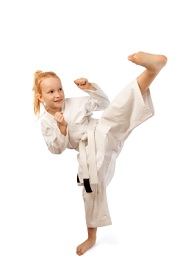
Top 10 Things to Look for in a Kid’s Martial Arts Class

One of the first things fellow parents tend to ask me after they find out I’ve been involved in the martial arts for over 25 years is, how do I find a good martial arts class for my kids?  Well, after years of answering this question, I realized my answers tend to follow a certain pattern.  They may be expressed in slightly different terms and the order of the points may change each time I’m asked, but the answers remain the same.  So, for all those parents out there who are looking to involve their child(ren) in the martial arts (a highly recommended pursuit, by the way),  I’ve formulated my own “top 10” list:

1.  Is the school a franchise? 

 These typically have cookie-cutter, one size fits all programs and tend to be belt factories.  Steer clear!  There may be franchises out there that do not fall into this category, but I haven’t run into them.

2.  Do the kids in class fear the teacher or respect him? 

This is very telling.  As a kid, I was afraid of my first karate teacher and even though I loved the art and practiced like crazy at home, I’d try to get out of going to class almost every week. 

3.  Are the parents sitting in the waiting room comfortable with the teacher and happy with the class? 

When you visit a school, talk to the parents who have been there awhile.  Do they constantly complain about the teacher, the atmosphere, or even the cost?  Do their kids love the program or simply tolerate it?  Also, what is the vibe you pick up when walking into the school – listen to your gut!

4.  Variety! 

Kids get bored very easily.  And, when they are bored, they don’t learn very well.  Classes should have a wide variety of drills to show children principles and techniques from many different perspectives.  Remember, martial arts are not academic subjects!

5.  Tons of physical exercise. 

Kids have a lot of energy.  Exercises that teach physical skills, as well as give them an outlet for their energy are the best.  Also, in case no one has told you, we have a growing childhood obesity problem in this country.  Exercise, along with a focus on a healthy diet, is key to resolving this issue and giving our kids the tools to ensure a lifetime of health.

6.  Do they teach self-defense applications of kata, or just the forms?

This is essential, not only for the correct transmission of the art, but also for the students to understand how to actually apply the techniques.  Obviously, this must be tempered to make some aspects of practice age appropriate, but it must be taught.

7.  Do they teach rolling and falling techniques?

 Not only are these fun for the kids to practice, but they can, and do, prevent injuries.  Very important both in the dojo and out in real life.  Additionally, they help to develop coordination, agility, and kinesthetic awareness!

8.  Is situational awareness stressed?

This is, without a doubt, the most important aspect of self-defense and must be continuously stressed and communicated.  Bad things do not “just happen” to kids.  There are always pre-incident cues that are present, if one is paying attention.

9.  Do the kids in class appear to be motivated or just going through the motions?

Watch carefully when you visit the class.  Are they lackadaisical in their practice?  Do they look like they don’t want to be there?  Or, are the kids energized and focused throughout the class? 

10.  Leadership. 

A school does not need to have a specific, defined class program on “Leadership” (these are usually a colossal waste of money for parents… hint, hint!).  It should, however, endow the students with leader qualities through the example of the teacher and by getting the kids involved in the class room (dojo) instruction.  This can be done by rotating who leads various drills and allowing children to teach their peers by explaining and demonstrating certain kata, techniques, or exercises.  This is not only good for the child’s self confidence, but also for their overall and long term development.

Warrior Fitness for Kids!

This will be the first in a continuing series of posts chronicling my thoughts and discoveries on Warrior Fitness for Kids.  As the father of 2 young girls, ages 9 and 1, I have a very vested interest in assuring my daughters are among the healthiest, fittest, and most well-informed kids out there.  Follow along and yours will be too!

It doesn’t take a genius to see that America has become a nation of over weight, physically lazy, comfort-seekers.  The saddest part is the effect this perverse attitude has had on our children.  How can we call ourselves responsible parents when our kids consume more McDonald’s than broccoli, and watch more TV than play outside?  What happened to running, jumping, playing tag, climbing trees and fences, or riding bikes as fast as you can just for the sheer thrill of it?  Has watching Sponge Bob and playing video games replaced playing outside from the time school lets out until dinner is ready?  I remember my mother having to shout for my brothers and me almost on a daily basis to call us home for supper.  And, in the summertime, we were playing outside until well after dark!

What Can We Do to Reverse This Trend?

To me, the answer is simple: Lead from the front!  What impetus do your children have to eat healthy and exercise if you do not?  You, as a parent, must set the example for your kids.  My daughters constantly see me exercising, whether it’s stretching, working on the technical details of an exercise, practicing martial arts, or a full-blown conditioning routine, I’m setting an example for them on a daily basis.  Coming home from work and sitting on our butts in front of the television while we “relax” and “unwind” is more than just detrimental to your health.  It sets up a poor pattern of conditioning that you’re children will follow for a lifetime.

Train With Your Kids

Want to spend some quality time with your kids and help them become fitter in the process?  Workout with them.  Make it fun, not drudgery.  That means stay out of the commercial gym and away from the damn treadmills!  You’re people, not hamsters.  One of the ways my oldest daughter and I spend time together during the warmer weather is to go on walks after dinner, while the sun is still up.  But just walking around the block is boring, so we found a couple ways to spice it up:

  • Pick a landmark – mailbox, telephone pole, tree – and race to it.  Recover by walking a little bit, then race again.
  • Leap like a frog until you get tired – see who gets tired first!
  • Crawl on hands and feet (be careful of the terrain), then get up and run.
  • Let your child ride their bike and you try to keep up, or you ride a bike and let them keep up!

These are just a few examples of how you can change a simple walk around the block to a fun workout for you and the kids.  Shhh… don’t tell them they’re doing High Intensity Interval Training (HIIT)!

As this series continues, I’ll be sharing more ideas about how to workout with you kids in ways that are fun and effective for both of you.  Additionally, I have workouts that I’ve designed for my 9 year old daughter that I’ll be sharing here as well – stay tuned!

How about you?  Do you workout with your kids?  What are some of the things you do to help keep them inspired and keep going?