Martial Arts Training for Mobility

A guest blog post by my friend, Jarell Lindsey from Lean Functional Muscle.

Martial Arts Training for Mobility

The martial arts are diluted today. There are maxims and philosophies of how to dictate one’s life, and emphasis on the aspect of skill over strength, and not needing to be stronger than your opponent to claim victory. After all, there’s always someone stronger than you, right?

This is the most enabling psychology in the martial arts world today. The simple fact that someone out in the world is stronger than you is enough to fully discourage you from pursuing strength? Martial arts training is about more than that; traditional martial artists of yore weren’t only the most skillful at their arts; they were some of the most physically fit people you could ever encounter. If you look at the physiques of Sosai Oyama, Kanazawa Sensei, so on and so forth, these men had bodies made to fight. After all, TMA’s were designed to prepare fighters for war, not philosophy class.Jarell Post
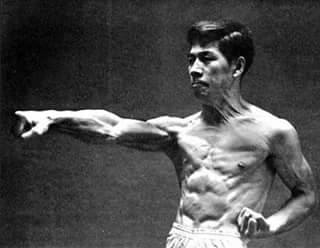
How, then, does one begin such a pursuit for the physical fitness of the traditional martial arts warrior? Well there are two aspects that are fundamental to the physiology of every human: mobility and stability. Simple enough, let’s look at mobility here.

How Well Can You Move?

How well around can you move? No really, how efficiently can your body move as a unit? Perhaps you have a heavy squat, but can your butt reach the ground without the weight? In fact, most people have two vertebrae in their thoracic spines that all but fuse together, simply because we never make use of that full spinal mobility. If you want full physical preparation for any situation, ability to move your body in any given position should be a priority.

And the way to train mobility is not through intensity. I almost repeated that sentence for its importance; plyometric style programs may develop your explosive power, but is not the key to true mobility. In fact, I was taught that if you want to truly develop speed and control in a movement, practice it slowly. The difference is made with the tendons.

Intensity will be important for muscle training and stability, which I will cover in the next article, but variation and repetition has a precedence in mobility training. Tendons need high reps and consistency for proper development; the explosive movements, while helping the nerves in your muscle fire quicker, threaten the structural integrity of your tendons and ligaments. When practicing mobility slowly, the movements become ingrained into your body, and your connective tissues can develop alongside your nerves and muscles. Practicing those movements consistently over years is how gungfu is developed.
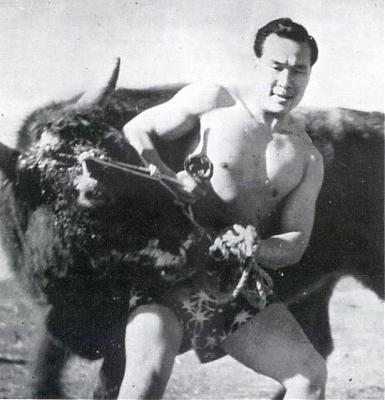
mas_oyama_bull


But for full mobility, variation is needed. Practice the basic, necessary movements daily over time, but when you can, add a variation to the movement you perform. Perhaps practice your squat with a posterior pelvic tilt to open the hips more. Maybe practice bringing your scapula further forward when you punch. Add different variations to your movements, but the variations must have a goal and build upon the basics, not deviate from them.
Kata (Alone) Will Never Build Internal Power

Trying to develop Internal Power by training kata (alone) in martial art is problematic.  On one hand, you may inadvertently have minor success in creating some internal connection over the course of 20-30 years of training, but you will most likely have no idea how you did it, no idea why it worked (minimally at best), and most importantly, no idea how to correctly transmit it to the next generation.

The only advice you will be able to offer your students and fellow seekers is to keep doing this (kata training) and somehow you *might* get the correct result.  This is insufficient and irresponsible, at best, on the part of the teacher.

Assuming that you want to stand out from the crowd as a powerful martial artist, and Internal Power/Aiki is your goal, then the scatter approach to trying (and for the most part, failing) to build IP through kata alone is a waste of a career.  I say this because there exist clearly defined, step-by-step processes that rewire the body for Internal Power specifically for martial arts.

Solo Training Precedes Kata Training

Power building models as solo training exercises have existed for hundreds (if not thousands) of years  throughout the martial arts from India to China to Japan.  Why anyone would try to reinvent the wheel by attempting to create their own hodgepodge of exercises or think that merely training kata would develop real Internal Power is a mystery to me.  The reality is that solo training exercises burn in specific ways of moving that are not normal which create a very stable, powerful structure capable of absorbing, re-translating, and projecting incoming force.

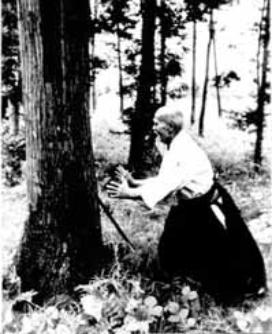
osensei_tree_kokyu1-272x334

Internal Power training is a type of General Physical Preparedness (GPP) for budo.  The goal of regular GPP for fitness, athletics, or martial arts is enhanced work capacity. This is the ability to run faster, jump higher, and hit harder. When work capacity increases, it allows the budding warrior to adapt more easily to increases in both mental and physical demands. In other words, it increases your capacity and level of readiness to absorb higher levels of specificity.

The solo training exercises for internal power training change the way outside forces act on the body.  The structure becomes dynamically stable so that applied force can either be distributed throughout the chain and dissipated or, at a higher level, simply reflected right back onto the opponent.  When force is reflected back this is what is known in Japanese as Yamabiko, or Mountain Echo.

Just to help further differentiate the two practices, solo training exercises for building internal power (there are other types of solo training exercises, obviously) are always made up of the following: standing, open/close, winding, spiraling, and breathing – all supported by Yin/Yang Theory (the union of opposites) and 6 directions (Heaven Earth Man).

Kata are for the purposes of patterning correct martial movement.

These solo training exercises are trained BEFORE kata to condition the body for powerful martial movement. They are not martial movement drills in and of themselves like sanshin no kata, kihon happo, and kata.

Kata – The Slow Boat to China

The reason it is so difficult to train IP via kata is that the vast majority of students get caught up in learning the movements of the kata correctly.  They get caught up in the application of technique and the idea of trying to make it work correctly.  What they don’t realize is that having a correctly trained body built by solo Internal Power exercises makes all the kata work much better and easier.

If you have a choice – why not learn a proven step-by-step method of developing unusual strength and Internal Power?


Join My New 21 Lessons on Internal Power Coaching Program <<==

Following a clearly defined path up the mountain is much faster and more effective than wandering around the base working on kata for 30 years and thinking you will somehow magically arrive at the summit.

Caution – While I did just say “more effective and faster” I by no means meant easier!!  Internal Power takes a lot of dedicated work.  Do not think it is a shortcut!