Breath and Body Coordination

Matching breath to body movement is a key skill in learning how to power movement with the breath.  This matching can be as simple as inhaling on an expanding, opening, or lengthening movements and exhaling on contracting or closing movements.

Under resistance though we begin to look at the idea of exhaling on effort to coordinate breath and body.  Here it can also become a little more sophisticated in using the activation of the core via the breath to send power out to the extremities.

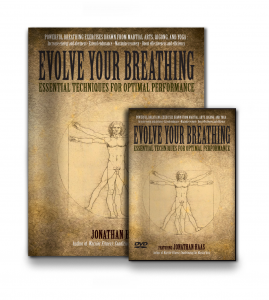
The following is a short clip from my Evolve Your Breathing program showing how the breath can be used to power a push-up.  The concept itself is easy enough to grasp, but the application is a lifetime of study.

EVOLVE_SPOT-1 (2)

The Warrior Workouts – FREE Resource from Warrior Fitness

The Warrior Workouts

A Free Resource Brought to You by Warrior Fitness…

The following is a free preview of my upcoming program of the same name, The Warrior Workouts.

This sample program consists of a complete 4 weeks of training and is designed to give you a taste of the various types of training methods used within the Warrior Fitness Training System.

Each of these workouts has been specifically crafted to provide complete, full-body strength, conditioning, and power for martial art, sport, or anything else life can throw at you!

The Warrior Workouts Cover


Download your FREE copy by clicking ====>>>>Warfit -The Ultimate Combat Conditioning System

Are You a Martial Artist or Martial Hobbyist?

Sometimes the lines between martial artist and martial hobbyist get blurred.  How do you determine whether you are a true martial artist or just a martial hobbyist?  Here is a quick and easy way to find out…

Martial Hobbyist Quiz

  •  Do you train only when it is convenient?
  • Do you train only when you feel good?
  • Do you train only when you have nothing better to do?
  • Do you train as a way to get out of the house?
  • Do you train to socialize?
  • Do you train only when it’s fun?
  • Do you only train when you are in class?
  • Do you only train when someone is watching?

If you answered YES to one or more of these questions, then congratulations, you are a Martial Hobbyist.  Not that there’s anything wrong with that.

hobbyist

Martial Artist Quiz

  • Do you train regardless of whether you feel like it or not?
  • Do you train when you have a headache?
  • Do you train when other people are relaxing?
  • Do you train when it’s raining outside?
  • Do you train even when there is a new episode of Big Bang Theory on TV?
  • Do you train every day no matter what?
  • Do you train for life?
  • Do you train even when there are better things to do?
  • Do you train when it’s boring, repetitive, and dull?
  • Do you train on your own without supervision?
  • Do you constantly strive to get better each time you train?
  • Do you define yourself through your martial practice?
  • Do you look at everything else in life through the lens of your martial training?


If you answered YES to 3 or more of these questions, then congratulations, you are a Martial Artist.

Miyamoto_Musashi_Self-Portrait


This post was inspired by reading about a dedicated yoga practice earlier this morning and what it takes to achieve a committed, dedicated practice.  Hopefully no egos were bruised in the reading of this post!

By the way, if you want to move from hobbyist status to artist status, here is great article on How to Train More Every Day.  Enjoy!


Internally Rotate My What???

This post was inspired by a Facebook conversation started by my friend Jarell Lindsey talking about a mobility-based squatting motion with the feet parallel as opposed to splayed out (BTW, have you check out the Physical Culture Club page yet???)

There are many different ways to squat whether it is bodyweight only or with an implement such as a barbell, kettlebell, sandbag, or even another person.

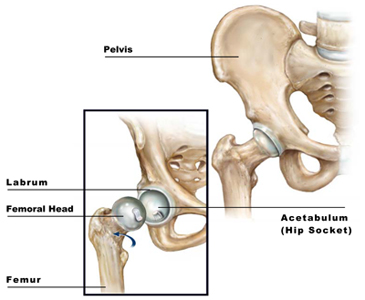
The particular squat I am talking about here is what I refer to as an Internal Rotation Squat.  The Internal Rotation Squat differs from the traditional bodyweight squat in that the feet are parallel, as opposed to opened outward, and the squatting motion is accomplished by internally rotating the femoral heads within the hip sockets rather than relying on quad muscle power alone.
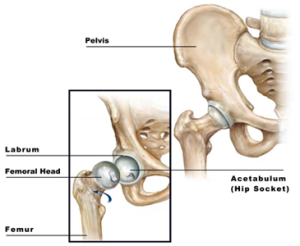
hip-anatomy-new

The Internal Rotation Squat requires MUCH more mobility, control, and mind power to accomplish since you must actually teach your body how to rotate the bones of the femurs within the hip sockets.  This will take some practice!

 Why Do This?

In order to begin generating what known as Internal Power (IP), you must have mobility in the inguinal area that the Chinese Internal Martial Arts refer to as the kwa.  There is much, much more to IP than this, but having mobility in the kwa is an essential requirement.  Additionally, even if you have no interest in IP or Chinese Martial Arts, having this type of mobility and control is an asset in any athletic endeavor or martial art, regardless of style.

Internal Rotation Squat – Bodyweight Version

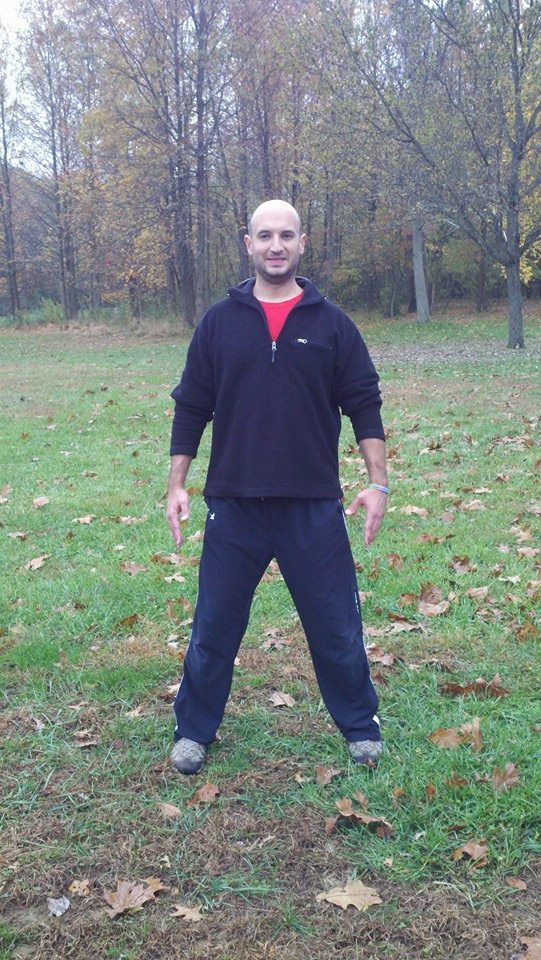
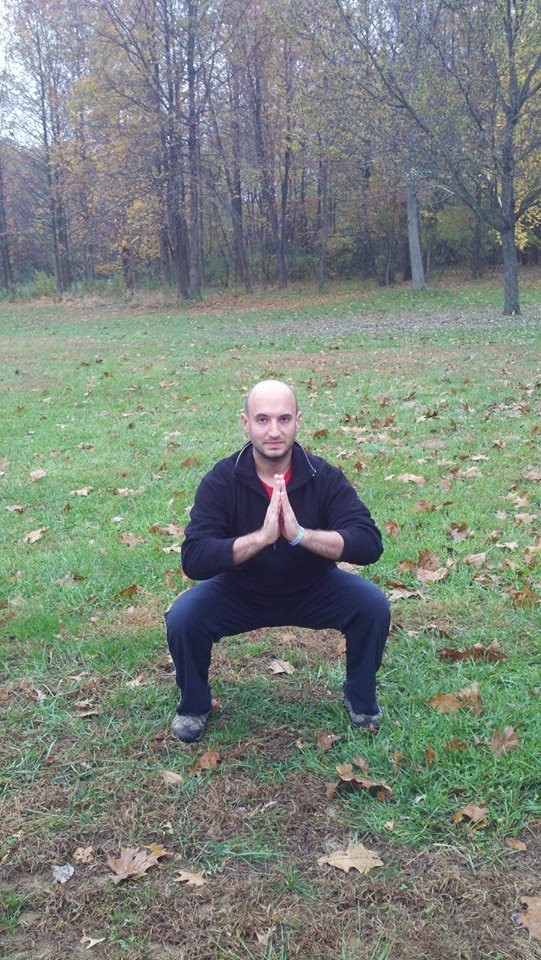
Begin with feet slightly more than shoulder-width apart.  Keep the feet facing forwards, as if on railroad tracks.
Squat1

This will be important later when working on winding the tissues, but for now, just do it.  Place your fists on either side of the kwa (inguinal area) where the femur bones connect in to the hip sockets.  Use the imagery of turning your fists to aid in turning the bones.  Internally rotate the femoral heads and sit down into the kwa.
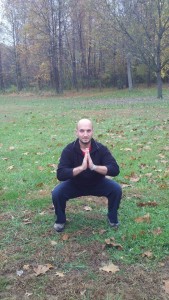
Squat2

Squat as low as possible while keeping your back straight and the weight mid-foot balance.  Pause at the bottom then externally rotate the femoral heads to stand back up.

Internal Rotation Squat – Goblet Squat Version

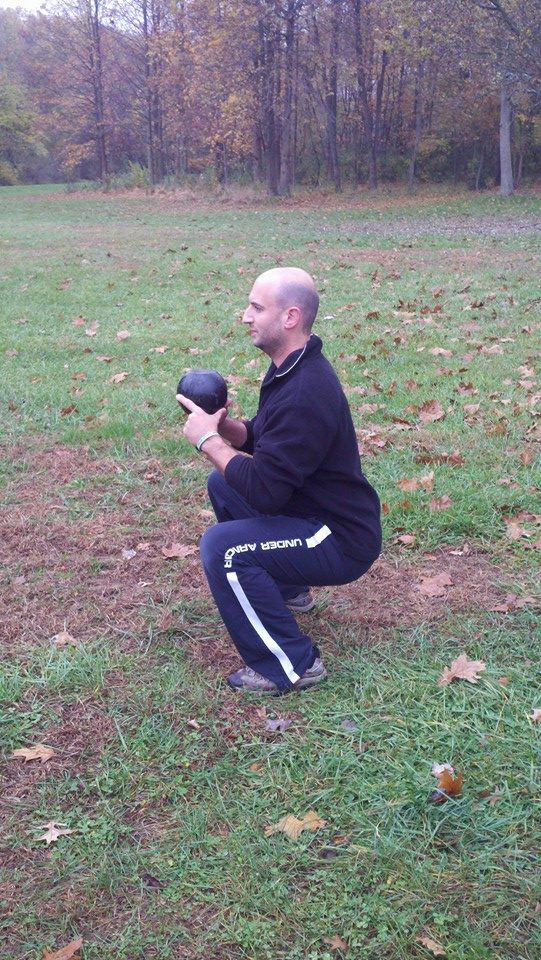
All requirements are the same as above with the addition of holding the kettlebell in front of your chest in the Goblet Squat position.  Use the weight of the kettlebell to allow you to sink further into the kwa.
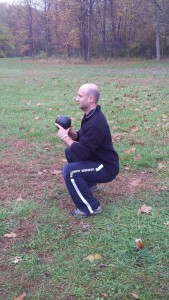
Goblet Squat2

Thanks to Dan Harden for teaching me this exercise in the context of working on Aiki/IP.  Any errors or omissions are my own and not the responsibility of my teachers.  Also, thanks to Jaime for helping me to refine the squat and for taking the pictures!

Also, Dan Harden will be back in NJ in March 2014.  Details on the seminar can be found HERE <<====