What is Fitness?

Fitness is probably one of the most controversial topics bandied about in social media, magazine articles, and by know-it-alls across the planet.  Just about every type of training under the broad heading of fitness has its own staunch supporters and sycophants, as well as its haters and rabid detractors.

Nothing really has a place of neutrality inside the world of fitness.  Here’s a quick idea what I mean:

Crossfit – Either drink the kool aid and become of them, or hate it with a passion

Running – Either sprint or don’t do it

Mobility – Either the tonic of youth and health or just another time wasting fad

Power Lifting – Either those guys are super strong, or just super fat

Zumba – well, let’s just not even call it fitness…

The list of training modalities and their relevant pros and cons goes on and on.  Chances are, if you are serious about your own brand of fitness, you have a love/hate list yourself.

But, are any of the above truly right or wrong?  Well, maybe the one about Zumba… 🙂
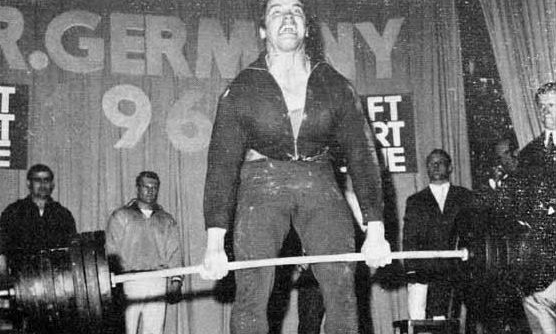
Seriously though.  How do we define fitness?  What the heck is it, really?

Here is my definition:  Fitness is having the requisite physical ability (strength, coordination, endurance, energy, power, balance, agility, etc.) to accomplish all your daily tasks, whether work or personal, and to be able to participate fully in any activity, sport, or recreation of your choice.

In other words, fitness is specific to what you as an individual are trying to accomplish daily and to the goals you are working towards.

The real question then is not, are you fit?  The real question is – what are you fit for?  Because the answer determines everything.

So, if all you do is sit on the couch and watch TV all day long and your body has adapted to that state by becoming soft, round, and couch shaped, than you are perfectly FIT for your activity!  Now this may fly in the face of your personal idea of fitness, but if you consider that fitness  is adapting to, and being able to adequately perform the activity of your choice, then you must accept both the marathon runner and the coach potato as being equally fit for their tasks.

By the way, can you be entirely fit and completely UN-healthy?  Yup.  Definitely.  So how do we hone our definition of fitness so that it includes not only looking good, but feeling good as well?

Simple.  Understand that the most important task which you must be fit for is that of being the strongest, healthiest, most productive individual you can be.  This not only insures that you live longer and better for yourself, but for your family and your contribution to society as well.  If this becomes your goal, how then will you change your current routine to make sure your training meets and achieves this objective?

Something to think about.  And, perhaps the topic of another article…
Kata (Alone) Will Never Build Internal Power

Trying to develop Internal Power by training kata (alone) in martial art is problematic.  On one hand, you may inadvertently have minor success in creating some internal connection over the course of 20-30 years of training, but you will most likely have no idea how you did it, no idea why it worked (minimally at best), and most importantly, no idea how to correctly transmit it to the next generation.

The only advice you will be able to offer your students and fellow seekers is to keep doing this (kata training) and somehow you *might* get the correct result.  This is insufficient and irresponsible, at best, on the part of the teacher.

Assuming that you want to stand out from the crowd as a powerful martial artist, and Internal Power/Aiki is your goal, then the scatter approach to trying (and for the most part, failing) to build IP through kata alone is a waste of a career.  I say this because there exist clearly defined, step-by-step processes that rewire the body for Internal Power specifically for martial arts.

Solo Training Precedes Kata Training

Power building models as solo training exercises have existed for hundreds (if not thousands) of years  throughout the martial arts from India to China to Japan.  Why anyone would try to reinvent the wheel by attempting to create their own hodgepodge of exercises or think that merely training kata would develop real Internal Power is a mystery to me.  The reality is that solo training exercises burn in specific ways of moving that are not normal which create a very stable, powerful structure capable of absorbing, re-translating, and projecting incoming force.

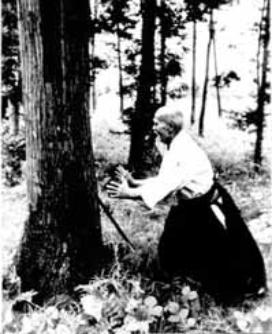
osensei_tree_kokyu1-272x334

Internal Power training is a type of General Physical Preparedness (GPP) for budo.  The goal of regular GPP for fitness, athletics, or martial arts is enhanced work capacity. This is the ability to run faster, jump higher, and hit harder. When work capacity increases, it allows the budding warrior to adapt more easily to increases in both mental and physical demands. In other words, it increases your capacity and level of readiness to absorb higher levels of specificity.

The solo training exercises for internal power training change the way outside forces act on the body.  The structure becomes dynamically stable so that applied force can either be distributed throughout the chain and dissipated or, at a higher level, simply reflected right back onto the opponent.  When force is reflected back this is what is known in Japanese as Yamabiko, or Mountain Echo.

Just to help further differentiate the two practices, solo training exercises for building internal power (there are other types of solo training exercises, obviously) are always made up of the following: standing, open/close, winding, spiraling, and breathing – all supported by Yin/Yang Theory (the union of opposites) and 6 directions (Heaven Earth Man).

Kata are for the purposes of patterning correct martial movement.

These solo training exercises are trained BEFORE kata to condition the body for powerful martial movement. They are not martial movement drills in and of themselves like sanshin no kata, kihon happo, and kata.

Kata – The Slow Boat to China

The reason it is so difficult to train IP via kata is that the vast majority of students get caught up in learning the movements of the kata correctly.  They get caught up in the application of technique and the idea of trying to make it work correctly.  What they don’t realize is that having a correctly trained body built by solo Internal Power exercises makes all the kata work much better and easier.

If you have a choice – why not learn a proven step-by-step method of developing unusual strength and Internal Power?


Join My New 21 Lessons on Internal Power Coaching Program <<==

Following a clearly defined path up the mountain is much faster and more effective than wandering around the base working on kata for 30 years and thinking you will somehow magically arrive at the summit.

Caution – While I did just say “more effective and faster” I by no means meant easier!!  Internal Power takes a lot of dedicated work.  Do not think it is a shortcut!