Maintaining Preparedness

Guest blog post by Combat Systema Instructor, David Rusin.

If you are like most people, you don’t have the luxury of spending hours each day in the training hall to prepare yourself for violent confrontation. So for the time we are able to spend in training, it is in our best interest to get the most out of the opportunities we have.

Fortunately, most people will not have to experience a violent encounter. But daily life imposes demands upon our bodies, too. So the question becomes, are there things that we can do in our training that will help keep us prepared for violent threats while also translating into a positive experience in our everyday lives?

Joint Health and Mobility

An aspect of physical life which has a direct and immediate impact on the quality of our experience, regardless of the activity, is the health of our joints. Because of this, joint mobility exercises should be an integral part of a training regimen.

As we age the only way we are able to properly nourish and lubricate our joints is to move them through their full range of motion. You’ve probably heard the phrase, “use it or lose it.” With regard to joint mobility, this statement is literally true. Neglect of any particular range of motion (ROM) in a joint can result in a loss of mobility in that joint over time.

Having access to the full range of motion within our joints provides for more options when dealing with a threat of any type. Limited mobility yields limited options. Therefore, it is paramount that training includes means to recover any lost mobility, and to maintain access to the full range of motion in our joints.
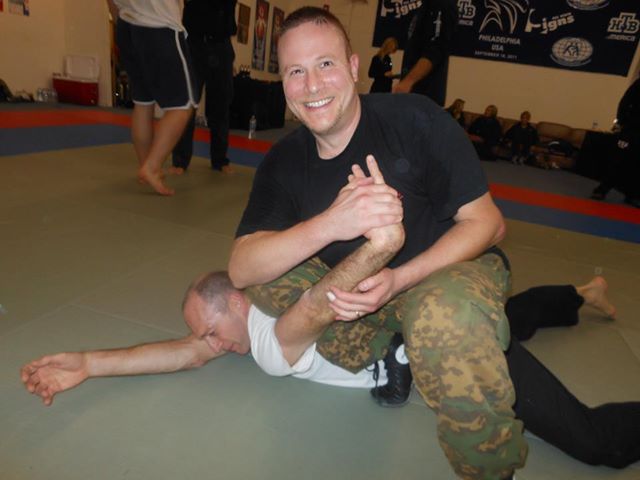
Dave Rusin Systema


Movement in Combat Systema

Here is a practical example of this concept. In Combat Systema we consider two ways of responding to externally applied force – movement by part and movement by whole. Movement by part simply means that only the part of the body upon which force is applied will move in response to that force. Movement by whole means the entire body will move in response to applied force.

When moving by part, our structural stability begins to become compromised at the point at which maximum range of motion of the affected body part is reached. Thus, the greater mobility and joint function we have available to us, the more we are able to accommodate external force, moving by part, without having our structure compromised.

An effective means of recovering and maintaining full mobility in the joints is through the use of joint circles. This simply means moving each joint through a circular pattern at the maximum ROM to which you currently have access. Slow, smooth and controlled motion is best in order to remain relaxed and to be sensitive to any problem areas. Breathing should be coordinated with the movements, which also facilitates moving through areas of tension.

Movement through multiple planes simultaneously is more efficient than movement through a single plane. Therefore, a progression from joint circles to figure eight or helical movement patterns develops greater efficiency of motion while also contributing to healthy joints. These movements also have direct martial value, such as with evasions and strikes, so incorporating them into regular practice has multiple benefits.

Injuries can often occur when sudden, unexpected motion outside our normal ROM occurs. If you have ever stepped off a curb or stair, and had your ankle twisted, you’ll understand this concept. A sprain or other injury can occur if the joint is not accustomed to movement through the maximum range of motion. In a violent encounter, sudden movement outside normal range of motion is a distinct possibility. Thus, recovering and maintaining full ROM in all of our joints, and developing a level of comfort moving through extreme ranges of motion can help to keep our joints safe in any situation.

The benefits of healthy joints affect not only our daily life where most demands are imposed upon us on a regular basis, but also help to keep the body better prepared for dealing with threats. Simple movement patterns such as joint circles and figure eights can be incorporated at the beginning of a training session to warm the joints up for the session. Done regularly, these exercises can also help to maintain bodily preparedness when not in the training hall.

About the Author

David Rusin has studied various forms of martial arts for over two decades. For the last 13 years his primary training focus has been the study of Russian Martial Arts. During this time he has achieved instructor certifications in the ROSS Training System of Russian Martial Art under the tutelage of the American national ROSS Instructor Cadre, and more recently in Combat Systema under that system’s founder, Kevin Secours. He currently offers private and group instruction in Russian Martial Art near his home in Ocean Township, NJ. He can be reached via email at RMAinNJ@gmail.com
Breathing 101

I was planning to title this post, “Breathing for Dummies” after the famous how-to guides, but I realized most dummies aren’t interested in bettering their health, fitness, and extending longevity in their sports, martial arts, or activities.  Plus, I dislike the subtle insult of refering to my readers as “dummies”.  Nor would I want dummies for readers anyway.  So instead today we will go over Breathing 101.  These are what I consider to be the most effective ways to integrate breathing exercises into your daily training, and use them to increase lung capacity and efficiency of how your body processes oxygen.  We will look at several different exercises that will enable you to lower your heart rate, blood pressure, and stress levels, as well as to increase energy.

Breathing as a Bridge

You may not be aware that breathing is a bridge between our voluntary and autonomic nervous systems.  Meaning breath is plugged into both.  The autonomic system will keep you breathing continuously without your conscious control, or sometimes, without even your awareness of it going on.  But, you also have the power to override that control and decide at any moment to take a deep breath or hold your breath.  What does this mean to you though, right?  Well, here’s what it means, you have the power, at any time, to consciously choose to influence things like your heart rate and blood pressure which are not under your conscious control.  Now that’s fascinating to me!  Because breath is tied into both systems it can be used like a bridge to gain access to aspects of your body that you cannot directly control.  How do we do this?

Try This Experiment

Take your pulse.  Count beats for 10 seconds then multiply by 6.  If you’re sitting and relaxed, that number should be your resting heart rate.  Now, inhale as deeply as possible and hold your breath and tense your whole body for a few seconds.  Are you red in the face?  Take your pulse again.  What happened?  Your hear rate jumped up and your blood pressure spiked right along with it, right?  Now try exhaling for a count of 6, but don’t inhale yet.  Extend the pause before the inhale a little bit.  Feel more relaxed?  Check your pulse.  It should have dropped.  Pretty cool, eh?  And this is just the beginning.

The Exercises


Relaxing Breath (Square Breathing)

This is very similar to the experiment we did above.  The basic premise of our ability to influence the autonomic nervous system is that inhalation increases heart rate, which subsequently increase blood pressure, to a slight degree, while exhalation lowers heart rate and blood pressure to a slight degree.  During our normal cycle of breathing, these changes are too minute to register, or even notice.  But, by gradually lengthening our breath and extending the pause before inhaling and exhaling, we compound the effect.

  1. Begin by exhaling through the mouth for 5 seconds.
  2. Do not inhale.  Try to extend the breath pause for 5 seconds.
  3. Before tension begins to creep in, inhale for 5 seconds.
  4. Hold the breath on the inhale for 5 seconds.
  5. Repeat the cycle 10 times.
  6. As this becomes easier, and your capacity expands, try increasing the duration to 6, 7, 8 seconds.


Energizing Breath

In this breathing exercise we will utilize a protocol founded by yoga and improved upon by Russian sport science and martial art.  Here we will divide the breath into 3 levels: clavicular (upper level), intercostal (mid level), Diaphragmatic (lower level).  This exercise will focus only on the clavicular, or upper level.  I first learned this exercise, and several others including the next one below, about 10 years ago from my good friends Dave Rusin and Oleg Yakimovich who are ROSS Russian Martial Art instructors.  More information about ROSS can be found at their website here.  Check it out!

  1. Exhale through the mouth in a short, quick burst by compressing the upper chest.
  2. Do not actively inhale.  Allow the inhale to happen by relaxing the muscles in the chest.
  3. Repeat rapidly 20 to 40 times.
  4. Build up to where you can perform continuously for 60 seconds.
  5. If you become dizzy, stop and sit down!

Restoring Breath

Here again we will depend on Russian sport science and martial art for our technique.  This one is literally a life saver when doing high intensity anaerobic workouts!  It can be used in between exercises as well as in between sets, during the rest period, and at the end of the workout to normalize breathing and dramatically lower heart rate.

  1. Forcefully exhale as deeply as possible by rolling your shoulders forward, tilting the pelvis up, and contracting the core strongly.
  2. Pause before the inhale for a few seconds.
  3. As stated above, do not actively inhale.  Allow the breath to be sucked back in through the nose as your body returns to a natural standing posture.
  4. Repeat for about 60 seconds, or as long as needed.

Try these out and let me know how they work for you.  Any questions, please feel free to contact me here.