What Functional Training Has Become…
The field of functional training has degenerated into seeing who can perform the most meaningless stunt while looking the coolest (ahem… sometimes).
These exploits may look impressive to the uninitiated or easily amused, but they have virtually no carry over and zero application to movement in real life, on the sports field, or on the combative battlefield.
Not to mention their capacity for injury is high while their actual true functionality is exceedingly questionable…
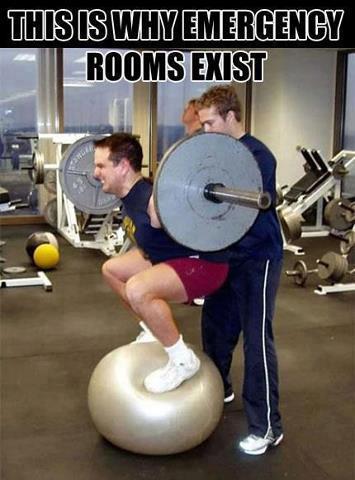
Worse yet their flamboyancy distracts from, and gives a bad name to, real progressive, incremental functional strength training that has been the province of great warriors, strongmen, and great athletes for centuries. This leaves us in a sad state of affairs.
What Functional Training SHOULD Be…
Functional training should instead focus on developing multi-planar, multi-joint movement. It should increase stability, whole-body power, and enhance resistance to injury. It should multiply force production ability for all martial and athletic movement as well as stimulate neuromuscular patterns required for those movements.
Functional training should create a safety valve in ones movement for when the unexpected happens and movement goes awry.
It should provide the functional training practitioner with the ability to absorb and re-translate force without chance of injury.
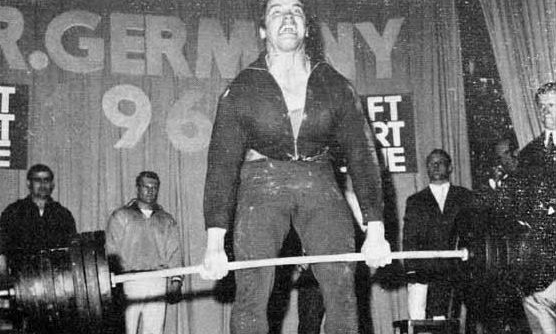
The training methodologies that were developed and past down by warriors were the ultimate in what we today call “Functional Strength Training”. Certainly, what could be more functional than specific exercises and training methods devised to excel and survive in mortal combat?
These methods still survive today and are the province of a rare breed of modern warriors, martial artists, strongmen, and strength coaches….
Like the tempered steel of the warrior’s blade, the true art of functional strength training has been forged over the centuries by the fires of preparation for life and death combat.
How Do We Fix It…
The first part of fixing the mess of modern functional training is to answer the uncomfortable question – functional for what?
Let’s face it, none of us really need to be good at pressing 5 lbs dumbbells while standing on a BOSU ball with one foot wearing an altitude mask. 🙂
So what do we need the outcome of purposeful training to be so that it will benefit and improve virtually all human movement?
We need connected whole body strength and power that seamlessly integrates with any martial, athletic, or life event endeavor. We need training that increases mobility, enhances strength, improves resistance to injury, and provides a foundation for excellent health and pain-free movement into old age.
What are we training to become more functional for? Living.
How Do We Train It?
Functional exercise, as we discussed above, is defined as multi-planar, multi-joint movement, in other words, three dimensional movements. Which means that swinging a weight – club, mace, sledgehammer – is one of the most effective ways to truly train functional strength.
For the warrior, since combat always occurs in a volatile and unpredictable atmosphere, training must prepare the warrior to adapt and overcome.
You cannot be strong in only one direction or just one plane of movement – you must possess all around strength that can be brought to bear no matter what position or weird angle you may find yourself in, and having to move from.
Since sledgehammers are common place and easy to obtain at the local hardware store, they make an ideal functional strength training tool.
Using a sledge hammer in your training is a great way to develop the movement pathways used in striking. It will aid in force production, increase angular, diagonal, and rotational strength throughout the trunk and core, and provide an excellent grip strength workout all at the same time.
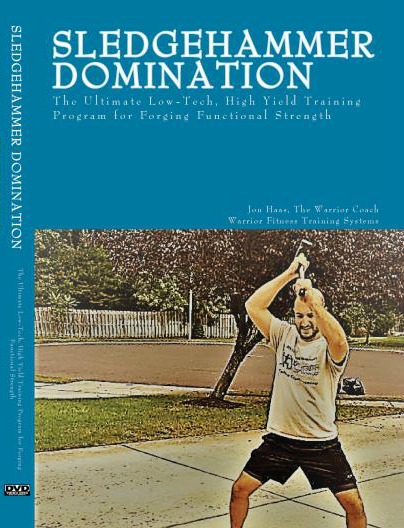
Sledgehammer Domination – Volume 1
“The Ultimate Low-Tech, High Yield Training Program for Forging Elite Functional Strength”